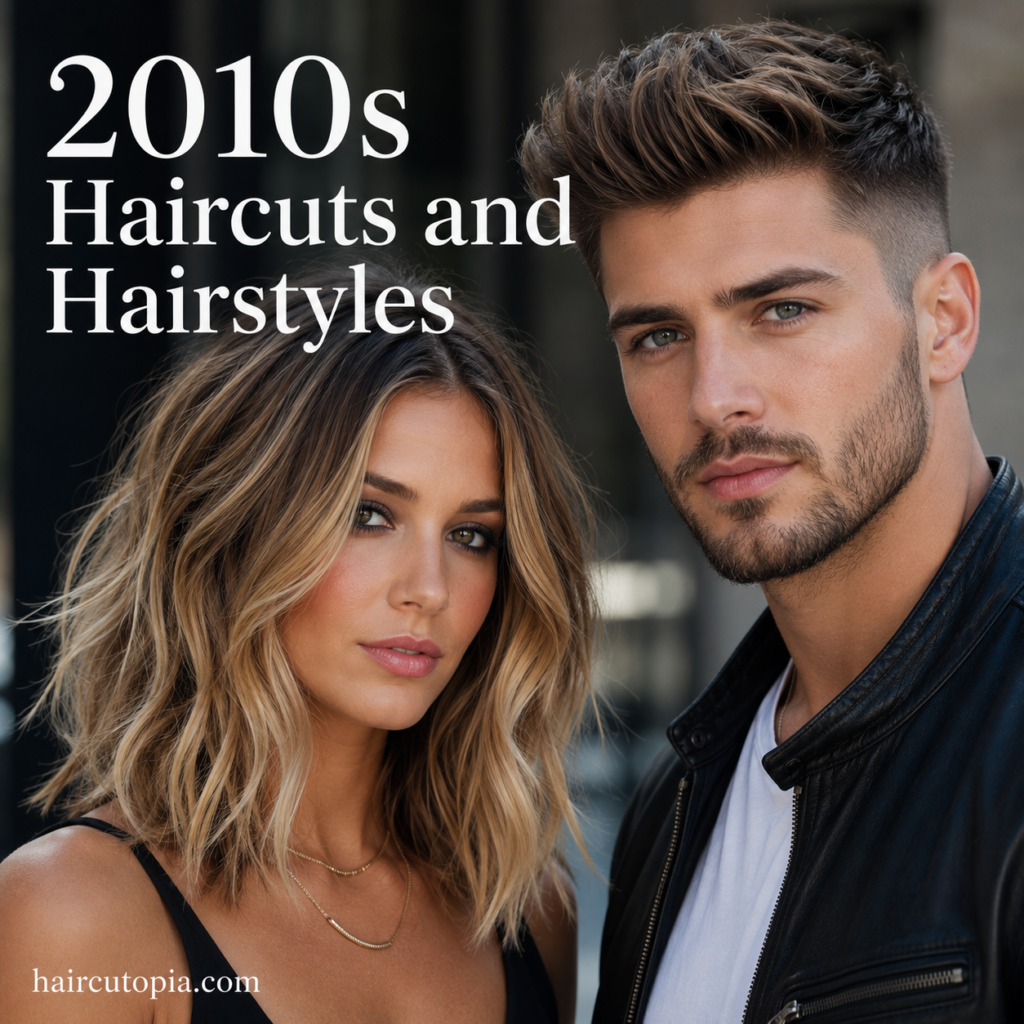
The 2010s may not feel like ancient hair history just yet, but the decade had a bigger influence on modern hairstyles than you might realize.
Think about some of the looks that seemed to be everywhere: beachy waves, long ombré hair, balayage, the lob, undercuts, pompadours, top knots, fades, messy textured crops, and the increasingly popular return of natural curls and coils.
Social media changed everything, too.
Instagram, Pinterest, YouTube, beauty blogs, and online tutorials gave people immediate access to new hairstyles. Instead of waiting for a magazine or celebrity red carpet appearance to introduce a trend, a haircut could spread around the world almost overnight.
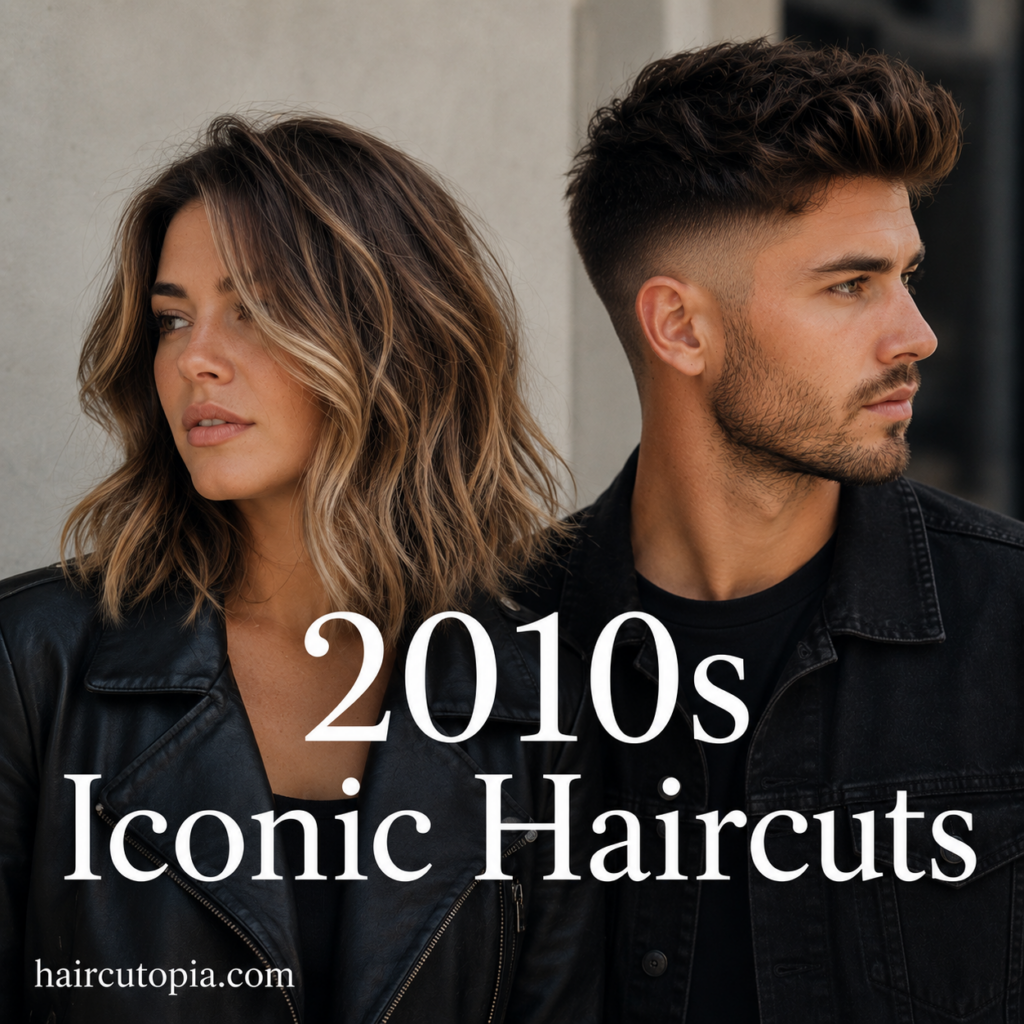
Women’s hair shifted from the long, heavily layered styles and deep side parts of the late 2000s toward textured lobs, effortless waves, braids, natural texture, and eventually center parts. Men’s grooming experienced an equally dramatic transformation as fades, undercuts, pompadours, quiffs, and carefully styled facial hair became increasingly mainstream.
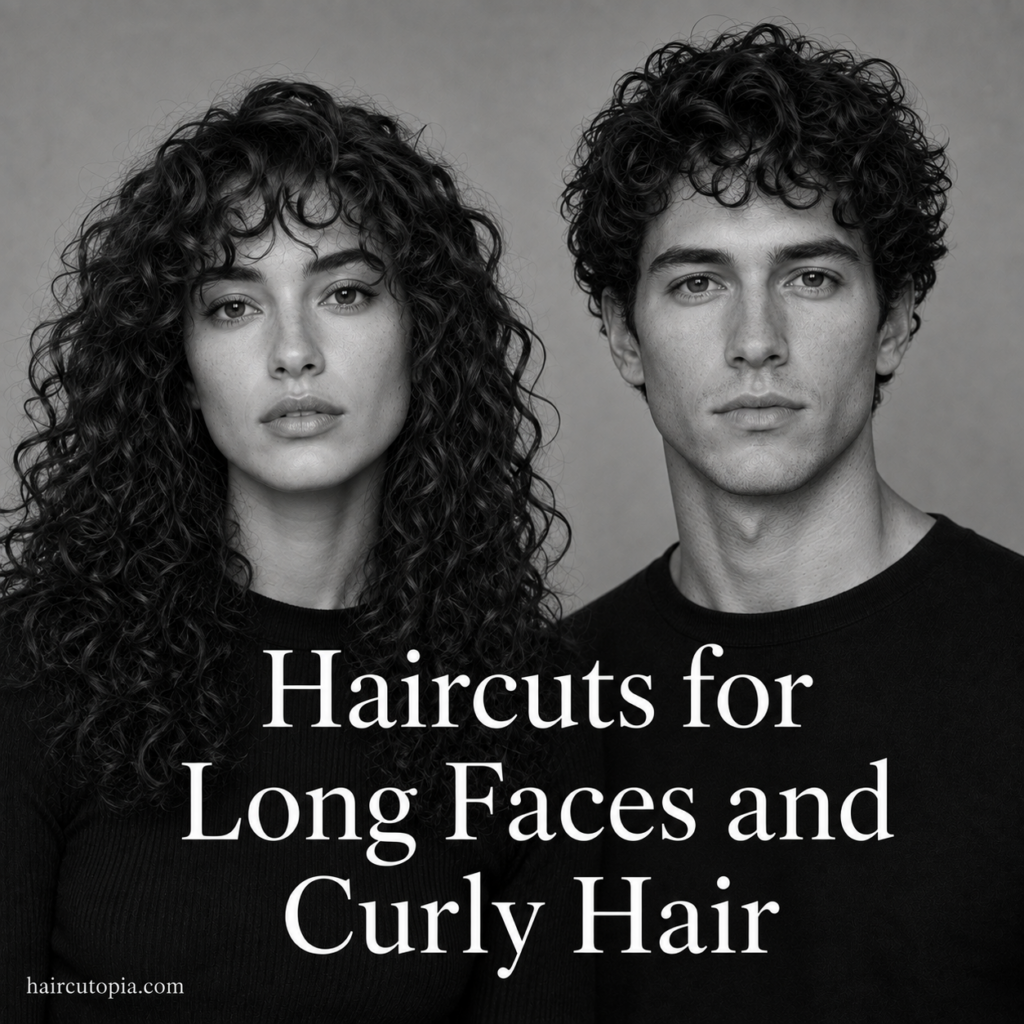
The decade also saw growing appreciation for individualized texture. Rather than expecting every hair type to achieve the same finish, more people began embracing curls, coils, waves, and natural movement.
Many hairstyles associated with the 2010s remain common today, although the way they’re cut and styled continues to evolve.
Here’s a closer look at the haircuts, hairstyles, color trends, and cultural influences that defined the decade.
What Defined 2010s Hair?
The 2010s were less about one dominant haircut and more about customization.
Hair could be:
- Sleek or messy
- Long or dramatically short
- Natural or carefully styled
- Classic or edgy
- Blunt or heavily textured
What mattered increasingly was finding a style that matched the individual.
The decade also blurred the line between salon trends and internet trends.
A hairstyle seen on Instagram in Los Angeles could inspire someone across the world almost immediately.
Several major influences shaped the decade:
- Social media
- Celebrity culture
- YouTube beauty tutorials
- Music festivals
- Street style
- Barbering culture
- The natural hair movement
- Vintage hairstyle revivals
Together, these influences created an unusually broad range of popular styles.
How Hair Changed from the 2000s to the 2010s
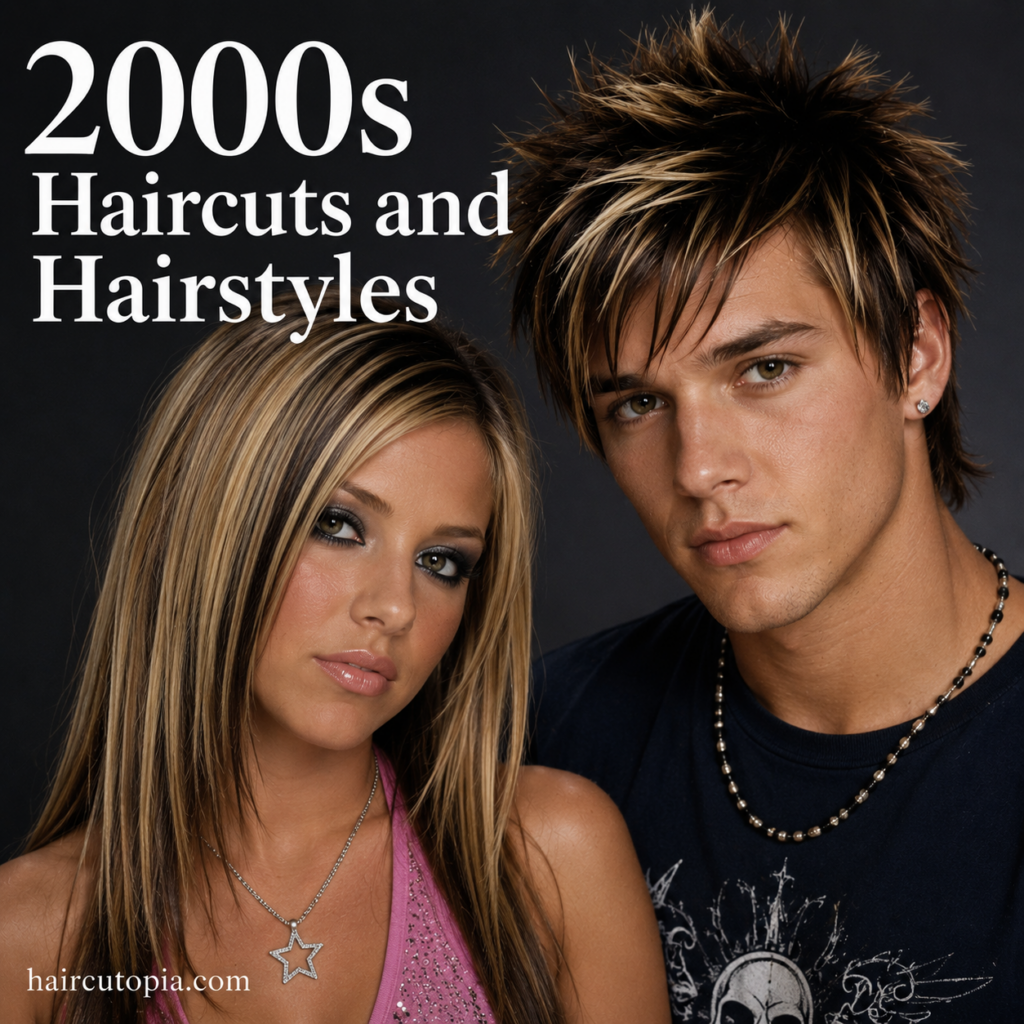
The transition from 2000s haircuts and hairstyles into the 2010s was gradual. Many early-2010s hairstyles still carried distinctly late-2000s influences, including long layers, side-swept bangs, flat-ironed finishes, and dramatic side parts.
Over time, however, styling became softer.
Pin-straight hair increasingly competed with:
- Loose waves
- Beachy texture
- Tousled curls
- Messy updos
- Natural texture
Hair color also became more blended.
The obvious chunky highlights of earlier years gave way to techniques designed to create softer transitions between shades.
By the middle of the decade, ombré and balayage had become major salon trends.
Defining Features of 2010s Hairstyles
Several characteristics became closely associated with the decade.
Effortless Texture
One of the biggest styling goals was making hair look as though it hadn’t been overly styled.
Of course, creating “effortless” waves could still require a curling iron, texturizing spray, and plenty of time.
The finished result typically emphasized:
- Loose bends
- Separation
- Natural movement
- Soft volume
Long Layers
Long layered hair remained a major trend, particularly during the early part of the decade.
Layers created movement without sacrificing overall length.
Blunt Ends
Later in the decade, blunt cuts became increasingly fashionable.
Instead of heavily feathered ends, stylists created stronger perimeters that made hair look thicker.
Texture Over Perfection
A few loose strands weren’t necessarily considered a problem.
Messy buns, tousled waves, textured braids, and undone updos intentionally avoided an overly polished finish.
Personalized Haircuts
Haircuts increasingly considered:
- Natural texture
- Face shape
- Density
- Lifestyle
- Styling habits
This personalized approach continues to influence salon consultations today.
The Most Popular Women’s Haircuts of the 2010s
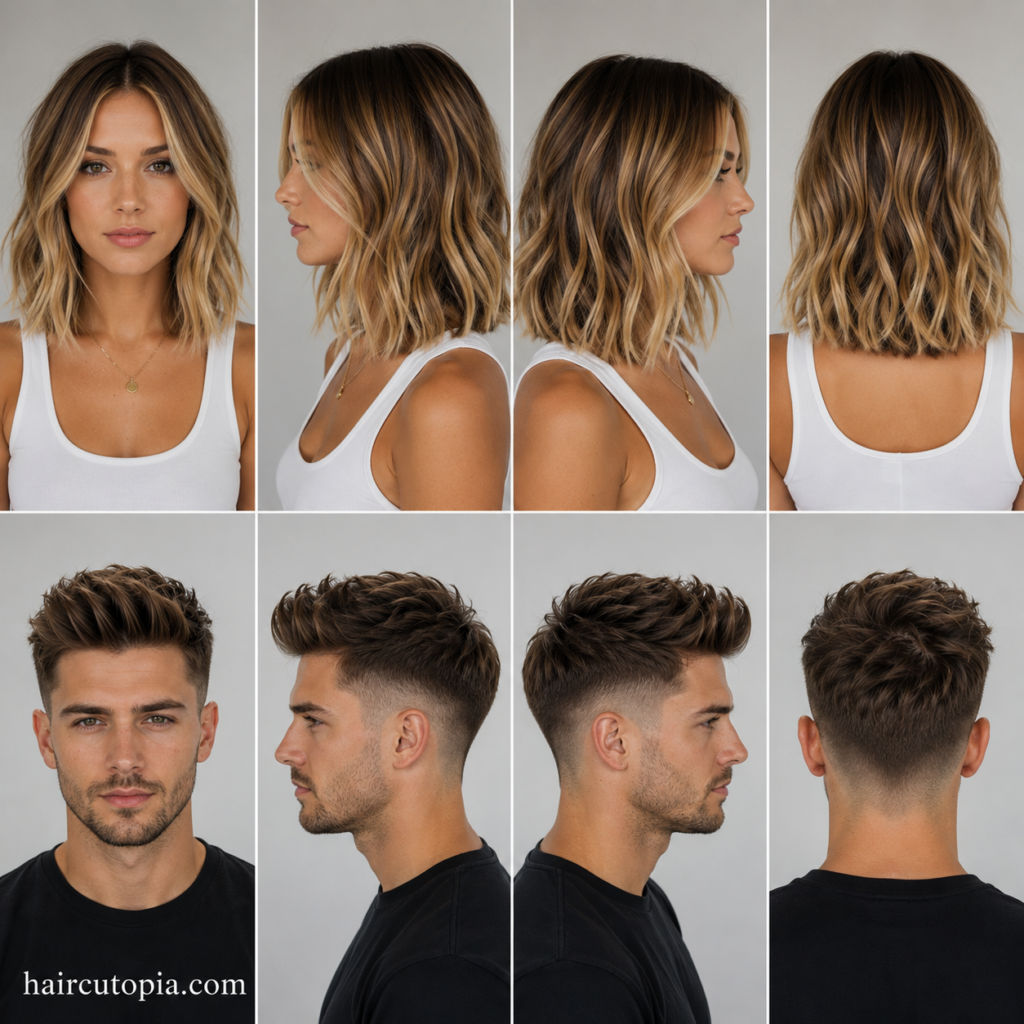
Several women’s haircuts became defining trends.
The Lob
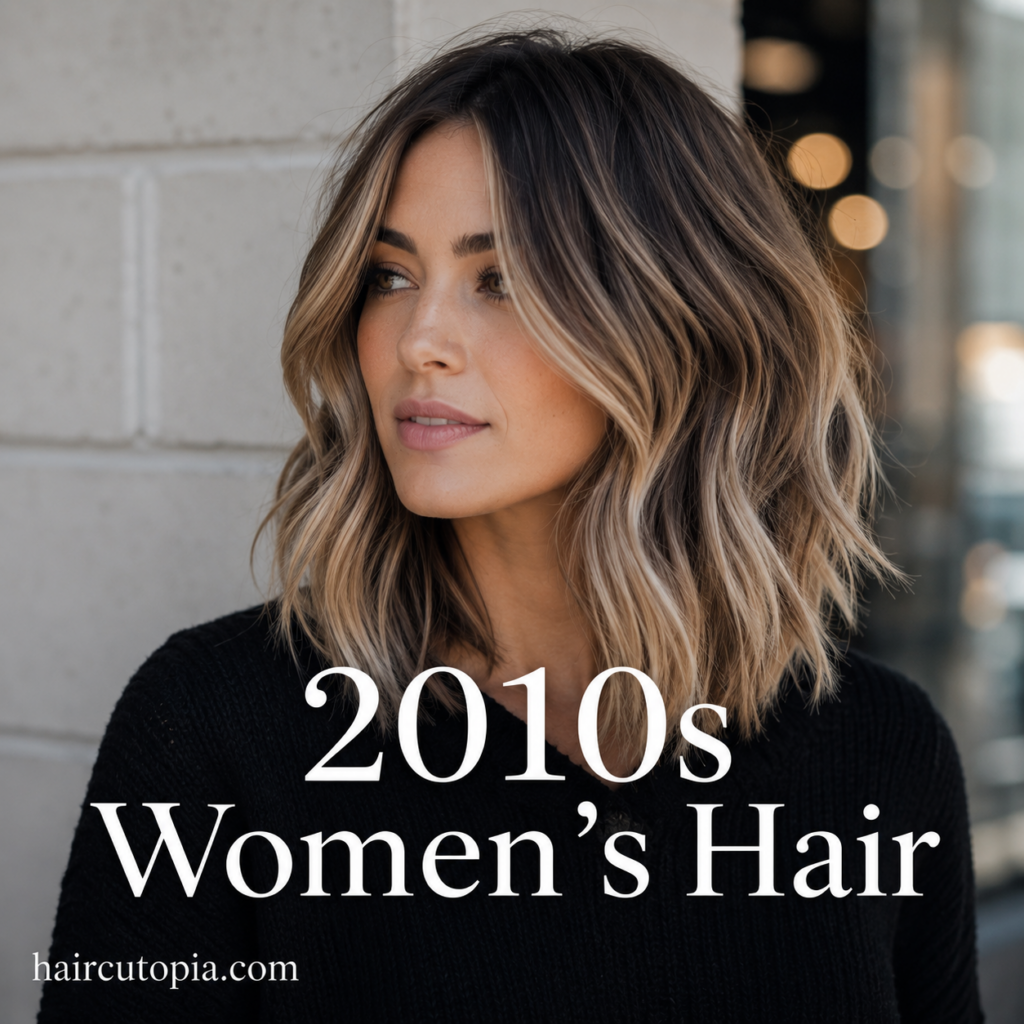
The long bob—or lob—was arguably one of the most important women’s haircuts of the decade.
Usually falling somewhere between the chin and collarbone, the lob offered the versatility of longer hair without the commitment of a short bob.
It could be:
- Blunt
- Layered
- Wavy
- Straight
- Side-parted
- Center-parted
Its versatility helped make it a salon favorite.
The lob also photographed extremely well, which made it perfectly suited to the social-media era.
Blunt Bob
Shorter bobs became increasingly clean and structured.
A blunt perimeter created a stronger silhouette while making the ends appear fuller.
Popular variations included:
- Chin-length bob
- Jaw-length bob
- Shoulder-skimming bob
- Center-parted bob
The cut provided a polished contrast to the decade’s more relaxed textured styles.
Long Layered Cut
Long layers continued to dominate, especially during the first half of the decade.
Rather than the heavily razored layers associated with some 2000s hairstyles, 2010s versions generally became softer and more blended.
Pixie Cut
Pixie cuts experienced another major fashion moment.
Modern versions ranged from:
- Classic crops
- Long pixies
- Textured pixies
- Side-swept pixies
- Undercut pixies
Short hair became a powerful celebrity style statement throughout the decade.
Undercut
The undercut became increasingly visible on women’s hairstyles as well as men’s.
Sections around the sides or back were clipped short while longer hair remained above.
Some undercuts were hidden underneath long hair, while others were intentionally visible.
The Lob Becomes the Haircut of the Decade
Few haircuts represented 2010s salon culture better than the lob.
It solved a common dilemma.
Someone could cut off substantial length without feeling as though they suddenly had short hair.
The length also allowed plenty of styling options.
A lob could still be:
- Curled
- Straightened
- Braided
- Pulled into a small ponytail
- Styled into beach waves
Celebrities repeatedly adopted the cut, helping keep it relevant for years rather than a single season.
Modern versions remain popular because the basic idea is so adaptable.
The Most Iconic Women’s Hairstyles of the 2010s
Hair styling increasingly emphasized texture and movement.
Beach Waves
Beachy waves became one of the defining looks of the decade.
Unlike traditional polished curls, these waves were intentionally loose.
The style typically featured:
- Straighter ends
- Irregular bends
- Soft volume
- Tousled texture
Salt sprays and texturizing products became popular ways to create the effect.
Messy Bun
The messy bun became practically universal.
Hair was gathered loosely at the crown or back of the head while strands were intentionally allowed to escape.
It worked for everything from casual weekends to deliberately relaxed formal styling.
Top Knot
The top knot placed the bun higher on the head.
Versions ranged from sleek to extremely loose.
The style was especially practical for long hair and became closely associated with casual 2010s fashion.
Half-Up Bun
Part bun, part loose hairstyle, the half-up bun became another recognizable trend.
The upper section was gathered into a small knot while the remaining hair stayed loose.
Loose Braids
Braids became softer and more intentionally undone.
Popular styles included:
- Side braids
- Fishtail braids
- Crown braids
- French braids
- Dutch braids
Pulling gently at sections of the braid created a fuller, more relaxed appearance.
Ombré Hair Takes Over
Hair color became just as important as the haircut.
Ombré was one of the decade’s biggest color trends.
The basic concept involved transitioning from darker roots into lighter ends.
Rather than maintaining one consistent shade from roots to tips, the color intentionally changed through the length.
Popular combinations included:
- Brunette to blonde
- Dark brown to caramel
- Black to brown
- Blonde to lighter blonde
One practical advantage was reduced pressure to constantly maintain the roots.
The grow-out became part of the look.
Balayage Changes Hair Color
Balayage became another defining salon trend.
The technique involves strategically painting lightener or color onto sections of hair to create customized dimension.
Compared with traditional uniform highlights, balayage could produce a softer, more blended effect.
It became especially popular for creating:
- Sun-kissed highlights
- Dimensional brunettes
- Soft blonde transitions
- Face-framing brightness
Balayage remains one of the most requested salon coloring techniques today.
Pastel and Fantasy Hair Colors
Social media helped unconventional hair colors become considerably more visible.
Popular shades included:
- Pastel pink
- Lavender
- Blue
- Silver
- Rose gold
- Peach
Some people colored their entire head, while others incorporated colorful sections or ombré effects.
The rise of fantasy color demonstrated how dramatically mainstream attitudes toward hair color were changing.
The Natural Hair Movement in the 2010s
One of the decade’s most important developments was the growing visibility and celebration of natural Black hair.
More people began embracing their natural:
- Curls
- Coils
- Kinks
- Texture
Online communities played a major role.
YouTube tutorials, blogs, forums, and social media made it easier to share information about natural hair care, styling techniques, protective styles, and products.
Popular natural hairstyles included:
- Twist-outs
- Braid-outs
- Wash-and-go styles
- Afros
- Puffs
- Tapered natural cuts
The movement wasn’t simply about following a fashion trend. It also challenged narrow beauty standards and encouraged greater acceptance of natural Black hair in mainstream beauty and professional spaces.
Protective Hairstyles in the 2010s
Braids, twists, and locs gained enormous visibility throughout the decade.
Popular styles included:
- Box braids
- Senegalese twists
- Cornrows
- Marley twists
- Faux locs
- Braided updos
These hairstyles have histories and cultural significance extending far beyond the 2010s.
Social media and celebrity visibility, however, helped expose wider audiences to the versatility of protective styling.
Popular Men’s Haircuts of the 2010s
Men’s grooming experienced one of its biggest modern transformations during this decade.
The Undercut
The undercut became one of the defining men’s hairstyles.
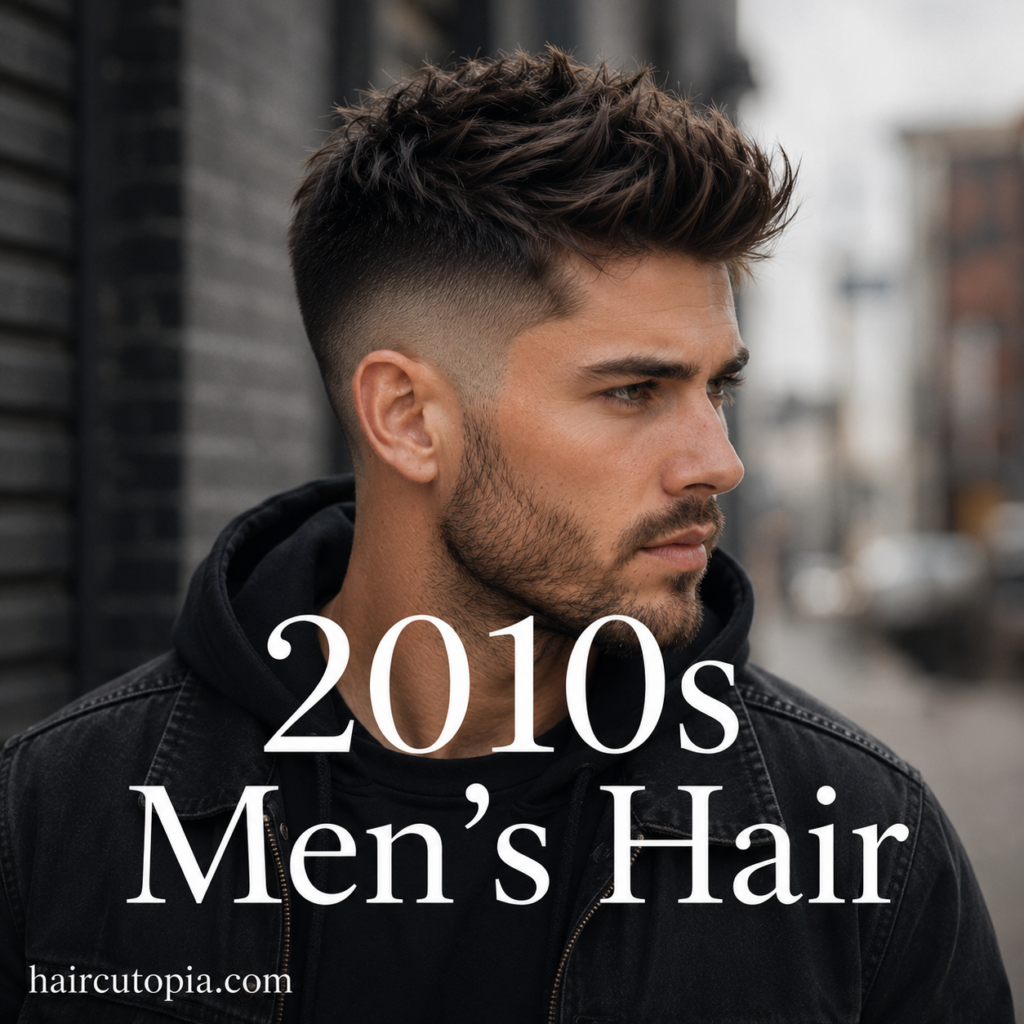
Hair was clipped very short around the sides and back while remaining substantially longer on top.
The longer section could be styled:
- Backward
- Sideways
- Upward
- Textured
The dramatic contrast made the haircut instantly recognizable.
The Pompadour
Vintage barbering returned in a major way.
Modern pompadours combined significant height at the front with shorter sides.
Unlike vintage versions, many contemporary pompadours incorporated:
- Fades
- Undercuts
- Matte products
- Textured finishes
The Quiff
The quiff became another hugely popular men’s style.
Hair was left longer at the front and styled upward and slightly backward.
It offered volume without requiring the highly sculpted shape of a traditional pompadour.
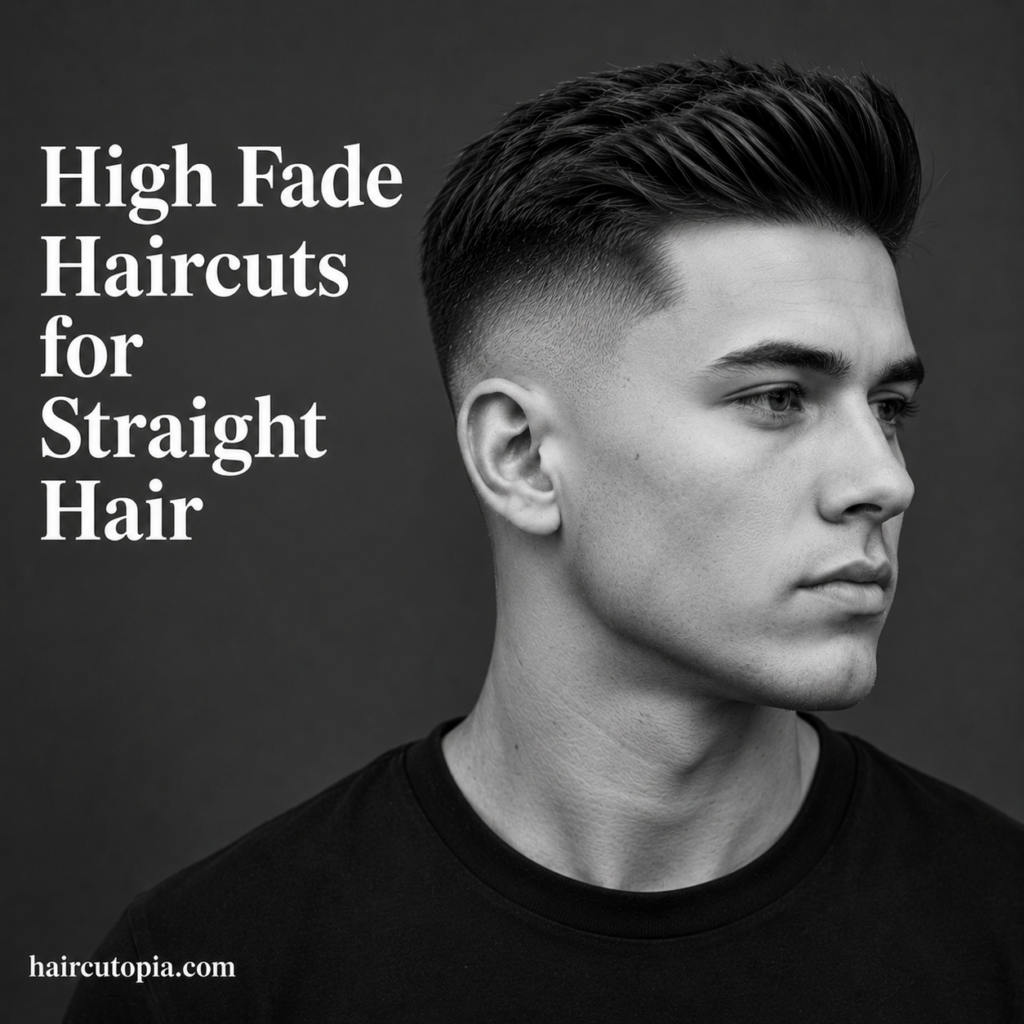
The Fade
Fades became one of the most important elements in modern men’s barbering.
Popular variations included:
- Low fade
- Mid fade
- High fade
- Skin fade
- Taper fade
The technique could be combined with countless hairstyles on top.
Textured Crop
Toward the later years of the decade, shorter textured crops gained popularity.
These cuts often featured:
- Short sides
- Choppy top
- Forward fringe
- Matte texture
They offered an easier alternative to heavily styled pompadours.
The Rise of Modern Barber Culture
Barbering became increasingly visible during the 2010s.
Social media allowed barbers to showcase highly detailed cuts to enormous audiences.
Instagram became particularly influential.
Photographs and videos highlighted:
- Skin fades
- Beard shaping
- Lineups
- Pompadours
- Hard parts
- Hair designs
This visual exposure helped barbering trends spread rapidly.
Men also became increasingly interested in dedicated grooming products and regular professional haircuts.
The Man Bun
Few men’s hairstyles generated as much discussion during the decade as the man bun.
As longer men’s hair became fashionable, tying it back became a practical styling option.
The bun could sit:
- High on the crown
- Around the middle of the head
- Low near the neckline
Some versions were paired with an undercut, creating dramatic contrast between the long upper section and closely clipped sides.
The style became closely associated with mid-2010s fashion.
Slicked-Back Undercut
Another defining men’s look combined an undercut with longer hair brushed backward.
The style created a strong contrast between:
- Short sides
- Long top
- Smooth styling
Pomade could create a classic glossy finish, while matte products produced a more contemporary appearance.
Hard Part Haircuts
The hard part became a noticeable barbering detail.
Instead of relying only on the natural parting of the hair, a barber created a clearly defined line using clippers or a razor.
Hard parts were frequently paired with:
- Fades
- Pompadours
- Comb overs
- Quiffs
The result was sharp and deliberately precise.
Men’s Long Hair in the 2010s
Short fades dominated much of men’s grooming, but longer hair also gained popularity.
Common longer styles included:
- Man buns
- Shoulder-length waves
- Slicked-back hair
- Long undercuts
- Natural curls
These styles reflected the broader trend toward greater flexibility in men’s grooming.
Beard and Hair Combinations
Facial hair became an important part of the overall men’s hairstyle during the decade.
Full beards were frequently paired with:
- Undercuts
- Pompadours
- Slick backs
- Fades
- Man buns
Barbers increasingly treated the haircut and beard as one coordinated look.
This helped fuel the rise of specialized men’s grooming culture.
Celebrity Influence on 2010s Hair
Celebrities remained powerful trendsetters, but social media made their hairstyles visible almost instantly.
Women’s hairstyle inspiration came from figures such as:
- Rihanna
- Beyoncé
- Taylor Swift
- Jennifer Lawrence
- Emma Stone
- Kim Kardashian
- Zendaya
- Miley Cyrus
Men’s hair trends were influenced by figures including:
- David Beckham
- Zayn Malik
- Justin Bieber
- Chris Hemsworth
- Harry Styles
- Ryan Gosling
Different celebrities represented completely different aesthetics, which reflected the decade’s emphasis on individual style.
The Evolution of Justin Bieber’s Hair
Few male celebrities demonstrated the decade’s changing trends as clearly as Justin Bieber.
His early hairstyle featured long, side-swept fringe that became widely recognizable.
As the decade progressed, his hairstyles evolved toward:
- Shorter sides
- Textured tops
- Undercuts
- Bleached hair
- Messier styling
The evolution mirrored broader changes in men’s grooming throughout the decade.
Social Media Changes Hairstyle Trends
The 2010s were the first full decade in which social media became central to beauty culture.
Previously, hairstyle inspiration largely came from:
- Magazines
- Television
- Movies
- Celebrity photographs
Now people could follow:
- Hairstylists
- Barbers
- Colorists
- Beauty influencers
- Hair brands
Tutorial videos also changed how people learned to style their own hair.
A complicated braid or curling technique could be demonstrated step by step rather than explained through a few photographs.
Instagram Hair
Certain hairstyles and colors became particularly well suited to social media.
High-contrast transformations performed especially well visually.
These included:
- Dramatic balayage
- Fantasy colors
- Sharp fades
- Long-to-short transformations
- Elaborate braids
Before-and-after photographs became an important way for stylists to showcase their work.
This changed salon marketing as much as it changed hair trends.
Pinterest and Hairstyle Inspiration
Pinterest became another major source of hairstyle discovery.
People could create inspiration boards before visiting a salon.
Instead of trying to describe a haircut verbally, clients increasingly arrived with several reference photographs.
That practice is completely normal today, but it became much more widespread during the 2010s.
Festival Hairstyles
Music festival fashion developed its own recognizable beauty aesthetic.
Popular hairstyles included:
- Loose waves
- Braids
- Half-up buns
- Space buns
- Hair accessories
- Temporary color
The goal was usually playful and relaxed.
Festival fashion helped push certain bohemian and braided hairstyles into mainstream popularity.
Space Buns
Space buns became a playful styling trend, particularly during the latter half of the decade.
Hair was divided into two sections and formed into buns on either side of the head.
Variations included:
- Full space buns
- Half-up space buns
- Braided space buns
- Messy space buns
The style combined retro influences with contemporary festival fashion.
Hair Accessories of the 2010s
Accessories evolved considerably throughout the decade.
Popular choices included:
- Headbands
- Flower crowns
- Decorative clips
- Bobby pins
- Hair scarves
- Claw clips
- Scrunchies
Flower Crowns
Flower crowns became strongly associated with festival and bohemian fashion during the middle of the decade.
Decorative Bobby Pins
Instead of hiding bobby pins, people sometimes arranged visible pins into deliberate geometric patterns.
Scrunchies Return
Toward the end of the decade, scrunchies made a significant comeback.
Once strongly associated with earlier decades, they became fashionable again as nostalgia increasingly influenced style.
Hair Products of the 2010s
The preference for texture changed styling products.
Popular products included:
- Dry shampoo
- Sea salt spray
- Texturizing spray
- Matte pomade
- Hair oil
- Curl cream
- Heat protectant
- Smoothing serum
Dry Shampoo
Dry shampoo became an everyday styling product for many people.
Beyond absorbing oil, it could also add:
- Texture
- Volume
- Grip
That made it useful for messy buns, braids, and tousled hairstyles.
Sea Salt Spray
Sea salt sprays became closely associated with beach-wave styling.
They helped create separation and a slightly rougher texture.
Matte Men’s Products
Men increasingly moved away from the wet, heavily gelled finishes associated with earlier decades.
Matte pastes, clays, and pomades created more natural-looking texture.
Early 2010s vs. Late 2010s Hairstyles
Hair evolved noticeably throughout the decade.
Early 2010s Hair
Common trends included:
- Long layers
- Side-swept bangs
- Deep side parts
- Ombré
- Straightened hair
- Quiffs
- Early undercuts
There was still a strong connection to late-2000s styling.
Mid-2010s Hair
Popular styles included:
- Lobs
- Beach waves
- Balayage
- Undercuts
- Pompadours
- Man buns
- Messy buns
- Braids
This period arguably produced the decade’s most recognizable aesthetic.
Late 2010s Hair
Trends gradually shifted toward:
- Blunt bobs
- Center parts
- Natural texture
- Textured crops
- Softer balayage
- Scrunchies
- Claw clips
- Tapered natural styles
These trends would carry directly into the 2020s.
2010s Hairstyles for Different Hair Lengths
The decade provided plenty of options at every length.
Short Hair
Popular styles included:
- Pixie cut
- Blunt bob
- Undercut pixie
- Textured crop
- Fade
- Buzz cut
Medium Hair
Medium lengths were ideal for:
- Lobs
- Beach waves
- Blunt shoulder-length cuts
- Layered styles
- Quiffs
- Pompadours
Long Hair
Popular long hairstyles included:
- Beach waves
- Long layers
- Balayage
- Ombré
- Braids
- Top knots
- Man buns
How to Wear a 2010s Hairstyle Today
Because the decade ended relatively recently, many 2010s hairstyles still look completely wearable.
A few styling adjustments can make them feel more current.
Update the Lob
Keep the collarbone length but choose a slightly stronger perimeter and subtle internal movement.
Soften Beach Waves
Use larger, irregular bends instead of creating identical curls throughout the hair.
Modernize the Undercut
Blend the contrast slightly or combine it with a contemporary taper.
Update the Pompadour
Reduce the height and use matte texture for a more relaxed finish.
Keep Balayage Dimensional
Use subtle transitions rather than an extremely dramatic light-to-dark contrast.
2000s Hair vs. 2010s Hair
The transition between these decades reveals how quickly styling preferences changed.
2000s hair commonly emphasized:
- Side bangs
- Flat-ironed lengths
- Chunky highlights
- Razor-cut layers
- Spiky texture
- Highly separated ends
2010s hair increasingly emphasized:
- Loose waves
- Blended layers
- Balayage
- Ombré
- Textured styling
- Natural movement
The change was essentially a shift from obvious styling toward deliberately effortless styling.
2010s Hair vs. 2020s Hair
The distinction is more subtle because many 2010s trends continue today.
However, several preferences have changed.
The 2010s were strongly associated with:
- Beach waves
- Deep side parts
- Lobs
- Undercuts
- Ombré
- Man buns
The early 2020s increasingly favored:
- Center parts
- Curtain bangs
- Shags
- Mullets
- Butterfly layers
- Natural texture
- Softer, lower-maintenance styling
Many of these newer trends actually reach further back into the 1970s, 1980s, and 1990s for inspiration.
Why 2010s Hairstyles Still Matter
Unlike earlier eras that can immediately look vintage, many 2010s hairstyles haven’t yet left everyday fashion.
The lob remains common.
Balayage remains popular.
Fades remain fundamental to modern barbering.
Natural texture continues to receive greater attention.
Textured men’s cuts remain salon and barbershop staples.
The decade helped establish many of the techniques and styling preferences we now consider normal.
The Lasting Influence of 2010s Haircuts and Hairstyles
The decade’s biggest legacy may be variety.
There wasn’t one correct way for fashionable hair to look.
Instead, the 2010s encouraged experimentation with:
- Length
- Texture
- Color
- Gender expression
- Natural hair
- Vintage influences
- Barbering techniques
Social media exposed people to more hairstyle possibilities than ever before.
At the same time, stylists could showcase specialized skills to audiences far beyond their local communities.
That helped create the highly diverse hair culture we see today.
Choosing a 2010s-Inspired Hairstyle
There are plenty of options depending on the aesthetic you prefer.
For a Relaxed Look
Consider:
- Beach waves
- Messy bun
- Long layers
- Half-up bun
For a Polished Look
Try:
- Blunt bob
- Sleek lob
- Soft balayage
- Smooth long layers
For Short Hair
Consider:
- Pixie cut
- Undercut pixie
- Blunt bob
- Textured crop
For Men’s Hair
Try:
- Fade
- Quiff
- Pompadour
- Undercut
- Textured crop
For a Subtle 2010s Influence
Add one recognizable detail:
- Loose waves
- Soft balayage
- Collarbone-length cut
- Textured finish
- Half-up styling
Because so many of these trends remain relevant, creating a modern version is relatively easy.
Frequently Asked Questions
What were the most popular hairstyles of the 2010s?
Popular hairstyles included lobs, beach waves, long layers, blunt bobs, pixie cuts, messy buns, undercuts, pompadours, quiffs, fades, and textured crops.
What was the most popular women’s haircut of the 2010s?
The lob was one of the decade’s defining women’s haircuts. Its collarbone-length shape offered the versatility of longer hair while creating the fresh appearance of a shorter cut.
What men’s hairstyles were popular in the 2010s?
Undercuts, fades, pompadours, quiffs, textured crops, slicked-back styles, and man buns were among the most recognizable men’s trends.
Was ombré popular in the 2010s?
Yes. Ombré became one of the decade’s biggest hair-color trends, particularly during the early and middle years.
When did balayage become popular?
Balayage became increasingly mainstream during the 2010s as clients sought softer, more natural-looking dimensional color.
Were side parts popular?
Yes, especially during the early and middle portions of the decade. Center parts became increasingly fashionable toward the end.
Were beach waves popular?
Extremely. Loose, intentionally imperfect waves became one of the defining styling trends of the decade.
Was the man bun a 2010s hairstyle?
Yes. Although tying long men’s hair into buns certainly wasn’t invented during the decade, the “man bun” became a highly visible mainstream fashion trend during the 2010s.
What role did social media play in hair trends?
Social platforms allowed hairstyles, coloring techniques, tutorials, and salon transformations to spread quickly around the world. They also gave hairstylists and barbers direct access to large audiences.
Are 2010s hairstyles still fashionable?
Many are. Lobs, balayage, fades, textured crops, natural curls, blunt bobs, and loose waves remain common, although styling details continue to evolve.
Final Thoughts
The 2010s changed more than the hairstyles people wore. The decade changed how people discovered hair trends in the first place.
Instagram, Pinterest, YouTube, and beauty blogs turned hairstyling into a constantly evolving global conversation. A dramatic color transformation, perfectly blended fade, or new way of styling a lob could suddenly appear on millions of screens.
That environment produced an enormous range of trends.
Women embraced lobs, beach waves, balayage, ombré, pixies, blunt bobs, messy buns, and natural texture. Men’s grooming moved toward fades, undercuts, quiffs, pompadours, textured crops, and longer styles such as the man bun.
At the same time, the natural hair movement helped broaden mainstream conversations about texture, representation, and beauty.
Perhaps that’s the most important legacy of 2010s hair.
Instead of moving toward one universally fashionable haircut, hairstyling became increasingly personalized.
Straight, wavy, curly, coily, short, long, natural, colorful, polished, or deliberately messy could all have a place.
Many of the decade’s hairstyles are still with us today. Others are just beginning to look nostalgic.
And if hair history teaches us anything, the trends that eventually disappear will probably return sooner than anyone expects.