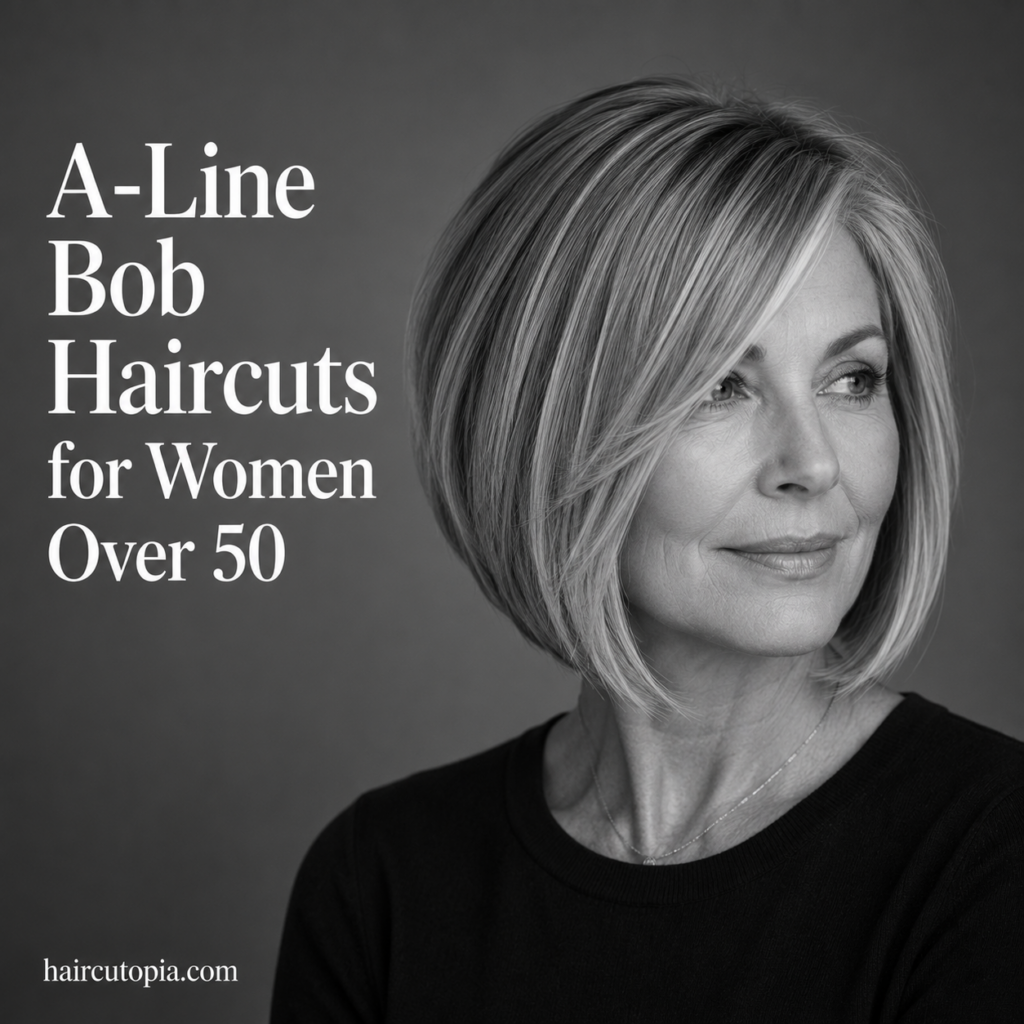
An A-line bob can be a fantastic choice when you want a haircut that feels fresh without becoming difficult to manage. The shorter back creates shape and lift, while the longer pieces toward the front frame the face and give the style its distinctive angled silhouette.
For women over 50, that versatility is particularly useful. The cut can be adapted for fine hair that needs more body, thick hair that feels too heavy, natural gray or silver hair, and straight, wavy, or curly textures. You can keep the angle subtle and classic or make it sharper for a more contemporary finish.
There isn’t one “correct” A-line bob for a certain age. The best version depends on your hair texture, density, face shape, lifestyle, and how much time you actually want to spend styling it.
Here are 27 A-line bob haircuts for women over 50, along with practical tips for choosing, styling, and maintaining your favorite look.
What Is an A-Line Bob?
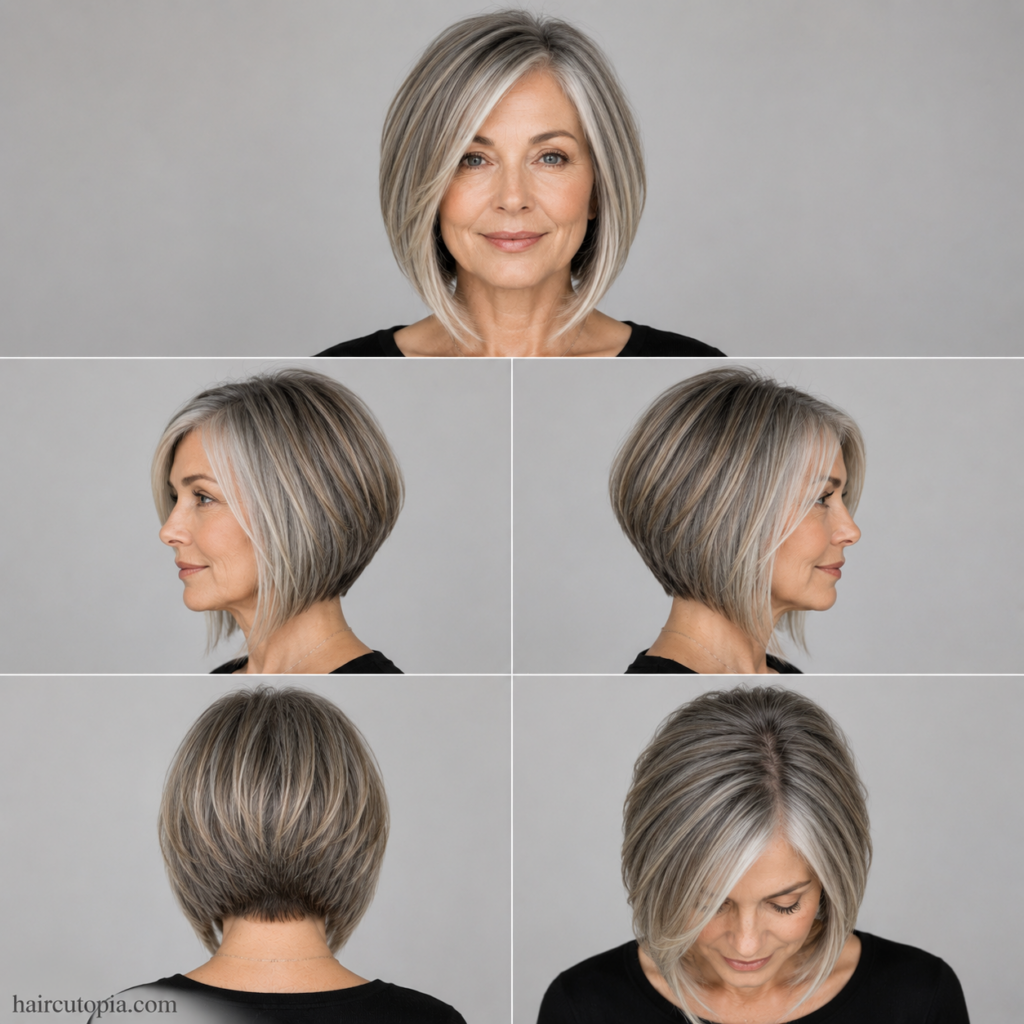
An A-line bob is shorter at the back and gradually becomes longer toward the front. When viewed from the side, the bottom edge creates an angled line rather than sitting at one uniform length.
That angle can be barely noticeable or quite dramatic.
A subtle A-line bob tends to look softer and more traditional, while a steep angle gives the haircut a stronger, more architectural appearance.
The back can also be customized. Some versions have a clean, minimally layered shape, while others use graduation or stacking to build volume around the crown.
Why an A-Line Bob Works So Well After 50
One reason the A-line bob remains popular is that it doesn’t depend on a particular hair color or texture to look good.
It can also address several practical concerns that become more noticeable as hair changes over time.
An A-line bob can:
- Give fine hair a fuller appearance
- Remove unnecessary weight from thick hair
- Add shape around the crown
- Frame the cheekbones and jawline
- Showcase gray, silver, white, or highlighted hair
- Make everyday styling more manageable
- Provide movement without requiring long layers
- Transition easily from casual to polished
Most importantly, you can adjust virtually every element of the cut.
Length, layering, bangs, texture, graduation, and the severity of the angle can all be changed to create a haircut that actually suits you.
27 A-Line Bob Haircuts for Women Over 50
1. Classic A-Line Bob
Start with the timeless version: a shorter back that gradually transitions into longer front sections.
Keeping the angle moderate gives this haircut an elegant appearance without making it feel overly structured. It’s an especially good starting point if you’ve never worn an angled bob before.
2. Chin-Length A-Line Bob
A chin-length cut puts more emphasis on the jawline and creates a crisp silhouette.
The front can finish directly at the chin or slightly below it, depending on how much face framing you prefer.
3. Long A-Line Bob
Not ready for genuinely short hair? Try an A-line lob.
The back can sit around the shoulders while the front extends slightly longer. You get the visual interest of an angled cut while retaining enough length for ponytails and other pulled-back styles.
4. Layered A-Line Bob
Layers introduce movement and prevent the haircut from looking overly solid.
The trick is choosing the right amount. Fine hair often benefits from fewer layers, while dense hair may need more internal shaping.
5. Blunt A-Line Bob
Blunt ends create a strong perimeter that can make the hair appear denser.
This is particularly useful when your hair is naturally fine or has become thinner over time.
6. Stacked A-Line Bob
Stacked layers through the back build volume around the crown while maintaining longer pieces toward the face.
It’s a great option if you enjoy a rounded, salon-styled shape.
7. Graduated A-Line Bob
A graduated bob uses progressively shorter layers toward the back to create lift and structure.
Compared with a heavily stacked bob, the graduation can be kept softer for a more understated finish.
8. A-Line Bob With Side-Swept Bangs
Side-swept bangs flow naturally into the longer front sections of the haircut.
They can also add softness around the forehead and temples without requiring the commitment of full fringe.
9. A-Line Bob With Curtain Bangs
Curtain bangs create movement around the eyes and cheekbones.
Keep them long enough to blend naturally into the sides of the bob for an easy, cohesive look.
10. A-Line Bob With Wispy Bangs
If full bangs feel too heavy, wispy fringe offers a lighter alternative.
A few soft pieces across the forehead can change the entire character of the haircut while remaining relatively easy to grow out.
11. Side-Parted A-Line Bob
Moving the part slightly off center is a simple way to create additional lift at the roots.
It also gives the haircut an asymmetrical quality without actually cutting the two sides at different lengths.
12. Center-Parted A-Line Bob
A center part emphasizes the clean geometry of an A-line cut.
Pair it with smooth styling for a contemporary look or soft waves if you prefer something less structured.
13. A-Line Bob for Fine Hair
For fine hair, preserving density is usually more important than adding lots of layers.
A blunt or lightly graduated perimeter can make the ends appear thicker, while subtle lift through the crown adds body.
14. Voluminous A-Line Bob
If volume is your priority, ask for shaping that supports lift through the crown.
A round-brush blowout can enhance the effect without requiring excessive teasing or heavy styling products.
15. A-Line Bob for Thick Hair
Thick hair can look beautiful in an A-line shape, but removing weight in the right places matters.
Internal layers can reduce bulk without destroying the strong outer silhouette that makes the haircut distinctive.
16. Sleek Straight A-Line Bob
Straight styling puts the angle front and center.
Use a smoothing product and heat protectant before blow-drying, then refine only the areas that need it rather than repeatedly flat-ironing the entire haircut.
17. Soft Wavy A-Line Bob
Loose waves make an angled bob feel relaxed and less precise.
They also introduce movement that can highlight dimensional hair color beautifully.
18. Naturally Curly A-Line Bob
An A-line shape isn’t limited to straight hair.
With curly hair, the stylist needs to account for shrinkage and how individual curls fall once dry. The resulting shape can be incredibly flattering, with fullness through the back and longer curls framing the face.
19. Tousled A-Line Bob
Not every bob needs a perfectly smooth blowout.
A little texture gives the cut an effortless, lived-in quality. Try a lightweight texturizing product and use your fingers rather than a brush to finish the style.
20. Silver A-Line Bob
Silver hair and a structured bob make a striking combination.
Instead of hiding natural silver, the clean shape can turn it into one of the haircut’s defining features.
21. Gray Blended A-Line Bob
If you’re transitioning to gray rather than going completely natural at once, dimensional highlights and lowlights can help blend the transition.
The movement within an A-line bob can make those tonal variations particularly noticeable.
22. White A-Line Bob
Bright white hair paired with a precise bob can look exceptionally polished.
A smooth finish emphasizes both the haircut’s silhouette and the brightness of the hair.
23. Highlighted A-Line Bob
Highlights can add visual dimension to the angled shape.
Rather than using one uniform color, strategically placed lighter pieces around the face can emphasize the longer front sections.
24. Face-Framing A-Line Bob
Keep the front noticeably longer if face framing is your priority.
The pieces can fall around the jaw or extend toward the collarbone, depending on the overall length.
25. Asymmetrical A-Line Bob
For something more adventurous, make one front section slightly longer than the other.
The difference doesn’t have to be extreme. Even subtle asymmetry can give a classic bob a contemporary edge.
26. Low-Maintenance A-Line Lob
A longer bob provides more flexibility between trims because the shape doesn’t lose its structure quite as quickly as a very short precision cut.
Keep the graduation subtle and the front around collarbone length for an easy everyday option.
27. Soft Textured A-Line Bob
If you want something between sleek and tousled, try a softly textured finish.
Light layering combined with gentle waves creates movement while preserving the recognizable A-line silhouette.
Best A-Line Bob Lengths for Women Over 50
Choosing the right length can make just as much difference as choosing the haircut itself.
Jaw-Length A-Line Bob
This is one of the bolder choices.
It draws attention toward the jaw and neck and works especially well if you like a defined, structured haircut.
Chin-Length A-Line Bob
Chin length offers a nice middle ground. It’s clearly a short haircut without feeling extremely cropped.
It also provides enough length at the front for noticeable face framing.
Neck-Length A-Line Bob
Letting the front fall below the chin creates a softer effect.
This length also gives your stylist more room to adjust the angle.
Shoulder-Length A-Line Lob
A lob is the safest transition if you’re cutting longer hair.
You’ll retain considerably more styling flexibility while still getting the angled shape.
Choosing an A-Line Bob for Your Hair Type
Hair density and texture should influence how your bob is cut.
Fine or Thinning Hair
Avoid automatically assuming that more layers will create more volume.
Too many layers can actually remove the density you’re trying to preserve. A stronger perimeter with subtle graduation is often a better approach.
Lightweight volumizing products can then provide additional lift.
Thick Hair
Dense hair may need internal weight removal so the bob doesn’t become too triangular or bulky.
Ask your stylist about invisible or internal layers rather than relying exclusively on obvious surface layers.
Straight Hair
Straight hair naturally displays the precision of an angled bob.
If you want something softer, subtle layering or slightly textured ends can keep the cut from appearing too severe.
Wavy Hair
Natural waves complement this haircut beautifully.
A slightly longer length may give the waves enough room to form naturally without creating excessive width.
Curly Hair
Curl pattern, density, and shrinkage all need to be considered.
For that reason, choosing a stylist who is comfortable cutting your specific curl pattern can make a substantial difference.
Best A-Line Bobs for Different Face Shapes
Face shape doesn’t need to dictate your haircut, but it can help you decide where you want the length and volume to sit.
Round Face
Longer front sections can create more vertical lines around the face.
Consider a bob that finishes below the chin rather than directly at the widest point of the cheeks.
Oval Face
An oval face works with a wide variety of bob lengths.
This gives you more freedom to choose based primarily on your hair texture and personal style.
Square Face
Soft waves, textured ends, or gentle layers can contrast nicely with a defined jawline.
If you prefer sleek hair, extending the front below the jaw can also create an elegant shape.
Heart-Shaped Face
A chin-length or slightly longer bob can create fullness around the lower portion of the face.
Curtain or side-swept bangs can complement the shape as well.
Long Face
You may prefer less extreme length at the front.
Bangs and additional volume through the sides can also create a more balanced appearance.
Should You Add Bangs to an A-Line Bob?
You certainly don’t have to, but bangs are one of the easiest ways to customize the haircut.
Curtain Bangs
Choose these if you want softness and movement without a heavy fringe.
Side-Swept Bangs
A versatile option that blends easily into an angled bob.
Wispy Bangs
Good for creating a light, delicate effect across the forehead.
Full Bangs
Full fringe creates a stronger statement and works especially well with sleek or blunt bobs.
Just remember that shorter bangs generally require more frequent maintenance.
How to Style an A-Line Bob at Home
A good bob shouldn’t require professional styling every morning.
For a Smooth Finish
- Apply heat protectant to damp hair.
- Add a small amount of smoothing or volumizing product.
- Rough-dry until the hair is mostly dry.
- Finish with a round brush, directing the ends slightly inward.
- Apply a tiny amount of serum to the mid-lengths and ends.
For Soft Waves
- Start with dry hair and heat protectant.
- Curl sections away from and toward the face, alternating directions.
- Leave the very ends slightly straighter for a relaxed finish.
- Allow the curls to cool.
- Loosen them gently with your fingers.
For Natural Texture
Apply a lightweight curl or texture product to damp hair, scrunch gently, and allow the hair to air-dry or use a diffuser.
Avoid touching it excessively while it dries, which can encourage frizz.
Styling Products Worth Having
You don’t need an entire shelf of products for an A-line bob.
A simple routine might include:
- Heat protectant
- Lightweight volumizing mousse
- Root-lifting spray
- Smoothing cream
- Texture spray
- Lightweight hair serum
- Flexible-hold hairspray
- Dry shampoo
Fine hair generally does better with lighter formulas, while thick or coarse hair may benefit from slightly richer smoothing products.
How Often Should an A-Line Bob Be Trimmed?
The shorter and more precise the haircut, the more frequently you’ll notice it growing out.
As a general guide:
- Precision A-line bob: every 5–7 weeks
- Layered or textured bob: every 6–8 weeks
- Longer A-line lob: every 8–10 weeks
You don’t necessarily need to follow an exact schedule. If the back starts feeling bulky or the angle becomes difficult to see, it’s probably time for a trim.
How to Ask Your Stylist for the Right A-Line Bob
Instead of simply saying, “I want an A-line bob,” give your stylist more information.
Discuss:
- Where you want the shortest section to fall
- Where you’d like the front pieces to end
- How dramatic you want the angle
- Whether you want visible layers
- How much volume you’d like through the crown
- Whether you normally air-dry or blow-dry
- How frequently you’re willing to get trims
- Whether you want to keep enough length for a ponytail
Reference photos are particularly helpful because terms such as “stacked,” “graduated,” and “angled” can mean slightly different things to different people.
A-Line Bob vs. Stacked Bob
These hairstyles are closely related, but they’re not exactly the same.
| Feature | A-Line Bob | Stacked Bob |
|---|---|---|
| Overall shape | Longer toward front | Rounded with layered back |
| Back | Shorter | Short with stacked layers |
| Front | Usually noticeably longer | May be longer |
| Crown volume | Varies | Usually more pronounced |
| Layering | Optional | Important to shape |
| Look | Sleek to textured | Rounded and voluminous |
You can also combine the two styles by choosing an A-line silhouette with gentle stacking through the back.
Is an A-Line Bob Low Maintenance?
It can be, but that depends on the version you choose.
A precision-cut, very short bob may require frequent trims and regular blow-drying to maintain its intended shape. A longer, softly layered A-line bob can be considerably more forgiving.
If low maintenance is important, consider:
- Keeping the front slightly longer
- Choosing subtle rather than extreme graduation
- Working with your natural texture
- Avoiding bangs that require daily styling
- Choosing a length that still allows you to pull some hair back
Tell your stylist how much styling you’re realistically willing to do. A haircut should fit your routine, not create another chore.
Frequently Asked Questions
Is an A-line bob flattering for women over 50?
It can be extremely flattering because the cut is highly customizable. The length, angle, layers, volume, and fringe can all be adjusted according to your features and hair texture rather than your age alone.
Is an A-line bob good for fine hair over 50?
Yes. A blunt or lightly layered version can preserve density and make fine hair appear fuller. Excessive layering, however, may make very fine ends look thinner.
Can women over 50 with gray hair wear an A-line bob?
Absolutely. Gray, silver, and white hair can look particularly striking with the defined silhouette of an angled bob.
Does an A-line bob work with glasses?
Yes. Consider how the longer front sections interact with the frames. Your stylist can adjust the face-framing pieces or add bangs to complement your glasses.
Can an A-line bob work with curly hair?
Yes, although the cut should account for curl pattern and shrinkage. A stylist experienced with curly hair can adapt the angle without compromising the natural shape of your curls.
What’s the easiest A-line bob to maintain?
A longer A-line bob with a moderate angle and minimal layering is generally one of the easiest options. It grows out more gradually and provides more flexibility for ponytails and half-up hairstyles.
Can an A-line bob make fine hair look thicker?
A strong perimeter can give fine hair a denser appearance, particularly when the ends are kept relatively blunt. Strategic graduation can add lift without sacrificing too much fullness.
Should an A-line bob have layers?
Not necessarily. Fine hair may look better with minimal layering, while thick hair often benefits from internal layers that remove weight. The best approach depends on density and texture.
Final Thoughts
A-line bob haircuts for women over 50 can range from classic and understated to bold and contemporary. That’s exactly what makes this haircut so useful. You’re not locked into one specific length, texture, or styling routine.
If your hair is fine, a blunt or lightly graduated version can create a fuller appearance. If it’s thick, strategic layers can remove weight and improve movement. Natural waves and curls can soften the silhouette, while straight hair can emphasize its clean, angled lines.
Gray and silver hair don’t need to be treated differently, either. In fact, a beautifully shaped A-line bob can showcase natural color and dimension exceptionally well.
The key is customization. Choose the length and angle based on your features, hair texture, and everyday routine rather than simply copying a haircut because it looks good on someone else.
A well-cut A-line bob should still feel like your hair—just with better shape, easier movement, and a fresh new finish.
Related Posts
 Beach Waves Hairstyles for Special Events: Elegant Looks for Weddings, Parties, and More
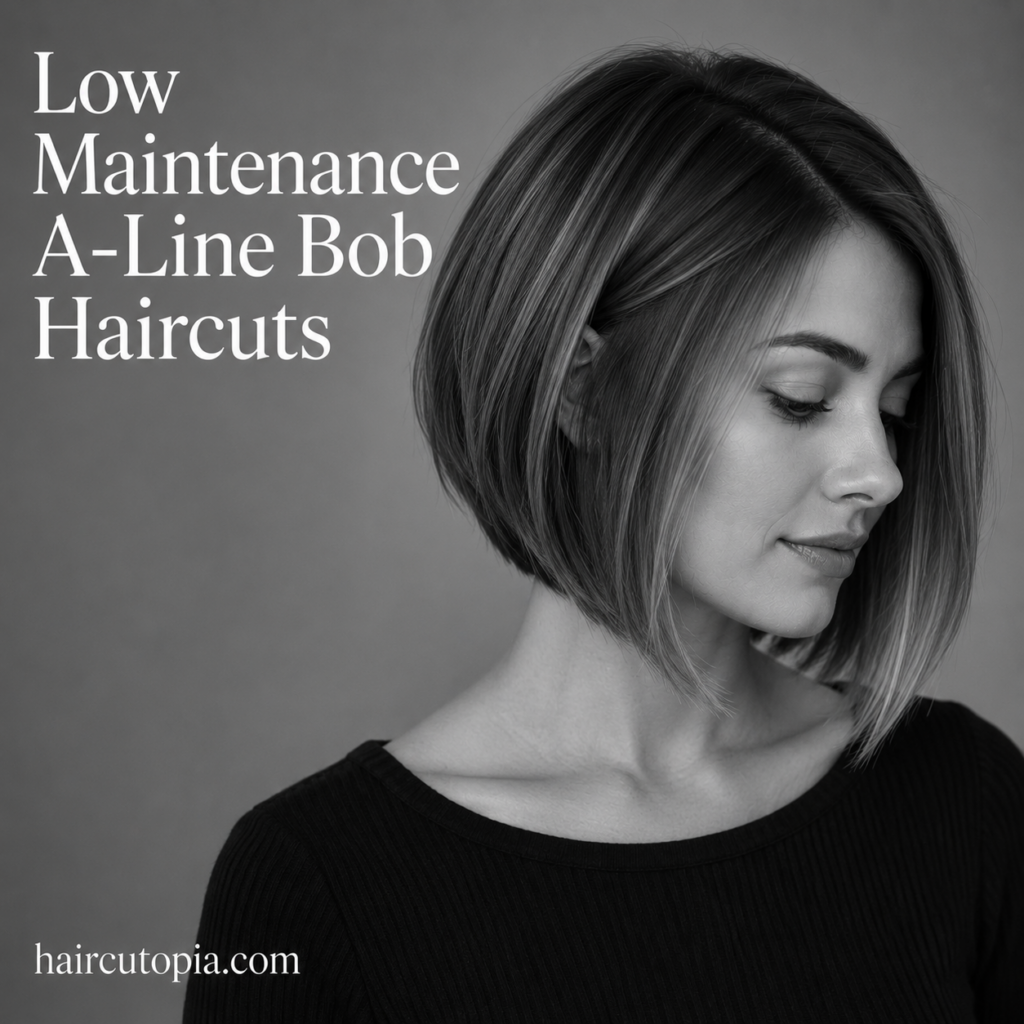 Low Maintenance A-Line Bob Haircuts: 35 Effortless Styles That Always Look Chic
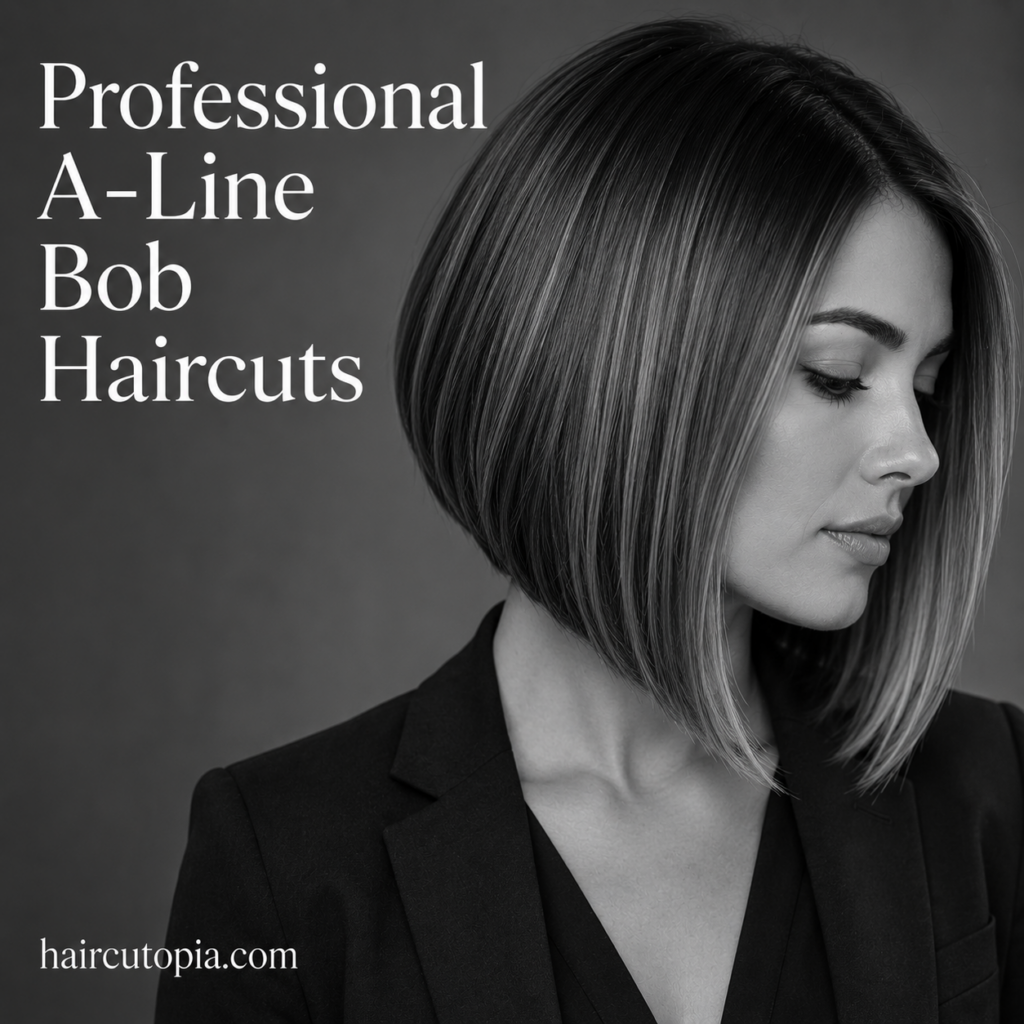 Professional A-Line Bob Haircuts: 35 Polished Styles for a Smart, Sophisticated Look
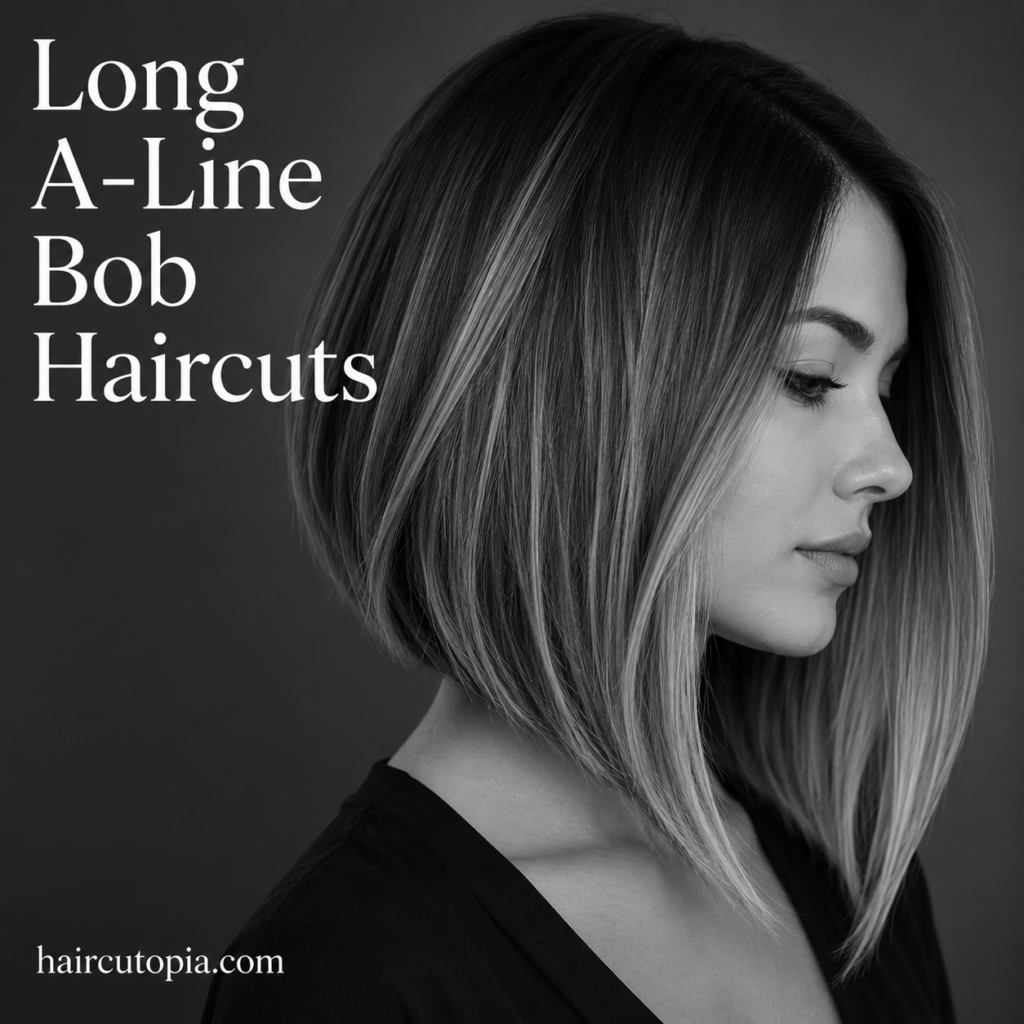 Long A-Line Bob Haircuts: 35 Elegant Styles for a Chic, Modern Look