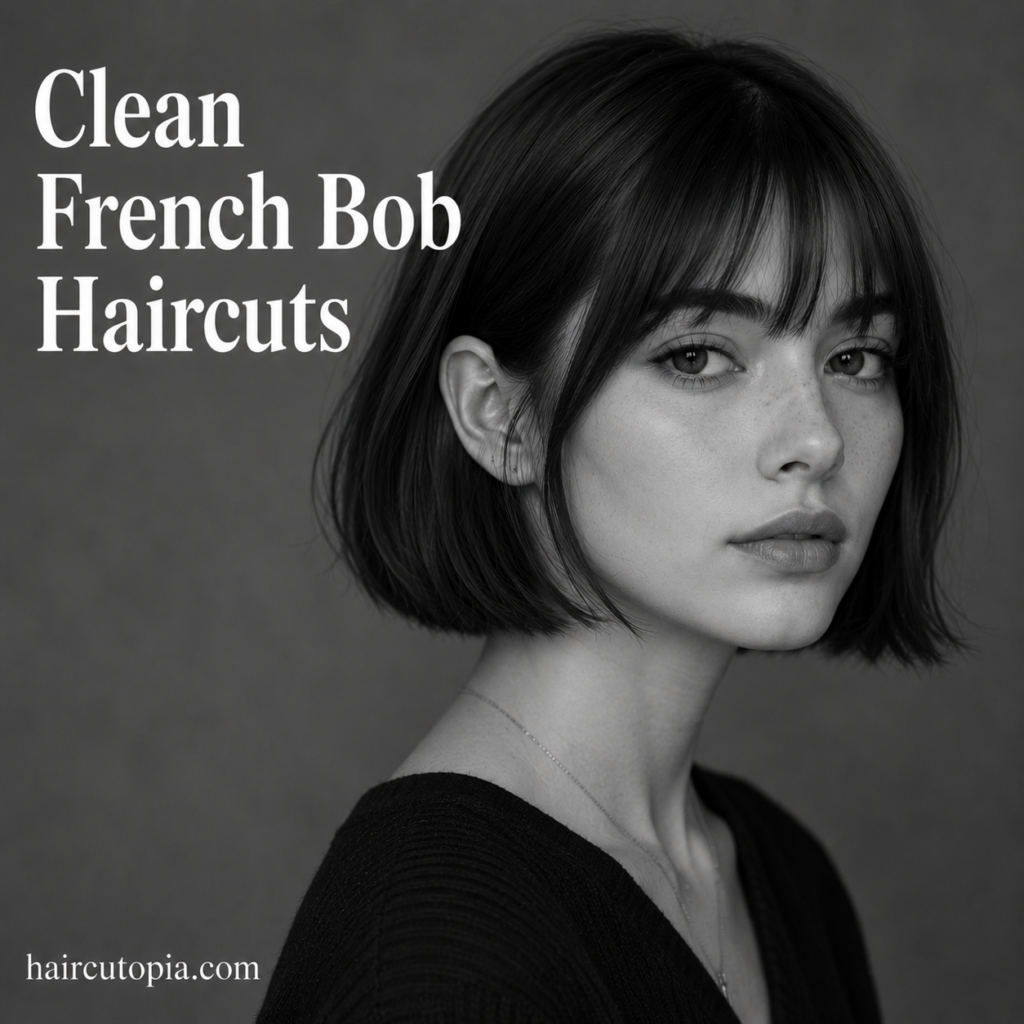
Clean French bob haircuts are all about shape. They take the effortless character of the classic French bob and give it a more refined finish with neat ends, balanced proportions, and a silhouette that looks intentional from every angle.
That doesn’t mean the hair has to be perfectly straight or completely free of texture. A clean bob can still have soft waves, natural curls, subtle layers, or bangs. What matters most is that the overall shape feels controlled rather than overly tousled.
For some people, that means a crisp chin-length bob with blunt ends. For others, it’s a smooth longer bob with a center part or a softly curved shape that follows the jawline.
If you like hairstyles that feel simple, modern, and put-together, a clean French bob gives you plenty of options.
What Is a Clean French Bob?
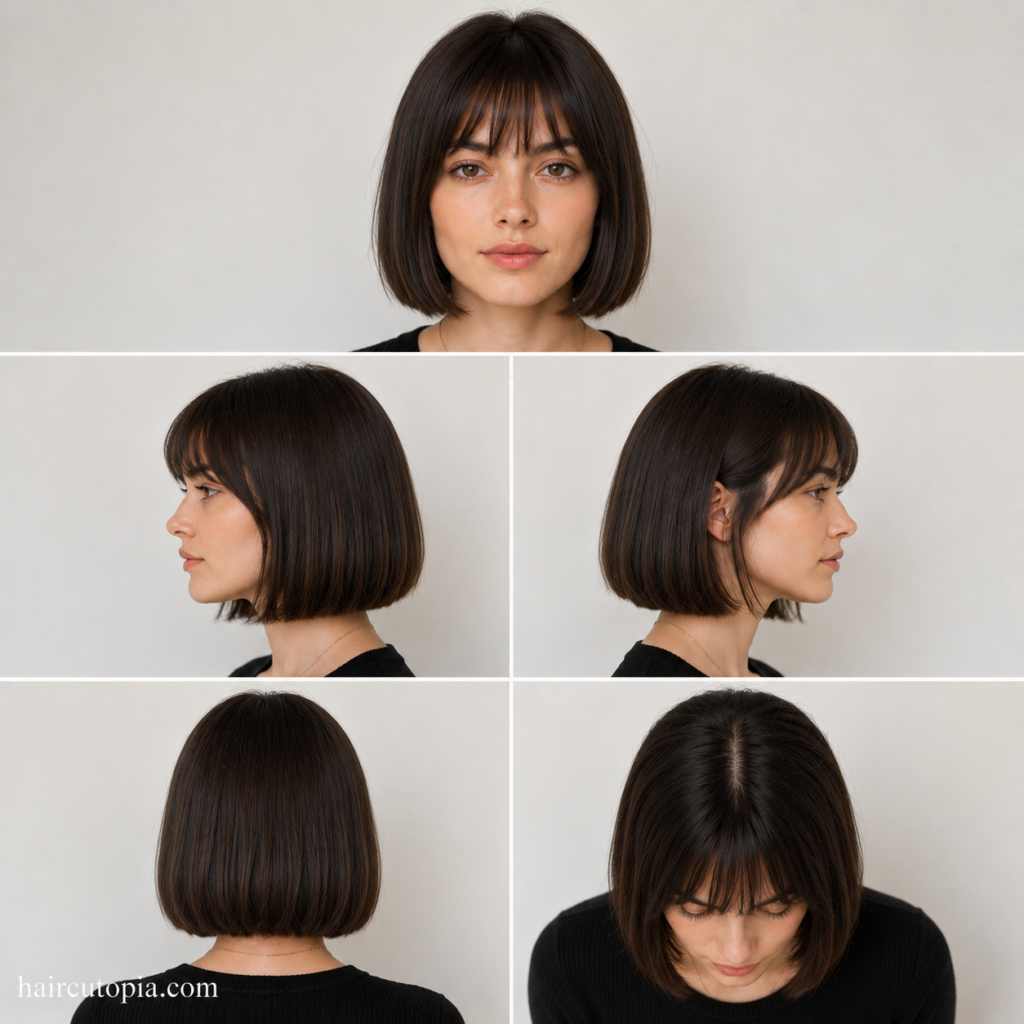
A clean French bob is a refined variation of the traditional French bob that emphasizes a defined perimeter and balanced shape.
Classic French bobs are usually associated with chin-length hair, often paired with bangs and natural texture. A cleaner interpretation keeps those basic characteristics but reduces some of the deliberately messy or heavily tousled styling.
Common features include:
- A defined bob silhouette
- Neat, healthy-looking ends
- Chin-length to shoulder-length hair
- Minimal or controlled layering
- Soft or blunt bangs
- Balanced volume
- Smooth or gently textured styling
- A shape that looks polished from the front, sides, and back
A clean French bob doesn’t need to look severe.
Softening the ends, adding subtle movement, or incorporating light face-framing pieces can keep the haircut relaxed while preserving its polished shape.
15 Clean French Bob Haircuts to Consider
1. Classic Clean French Bob
The classic version keeps everything straightforward.
The hair sits around the chin with a clearly defined perimeter and minimal layering. Soft bangs can complete the French-inspired look without making the haircut overly complicated.
This style works particularly well when the ends are neat but not completely rigid.
A smooth blow-dry can emphasize the shape, while a small amount of natural movement keeps it from looking too formal.
If you’re looking for a recognizable French bob with a polished finish, this is a strong starting point.
2. Clean Blunt French Bob
A blunt perimeter makes the shape of a French bob especially noticeable.
Instead of heavily texturizing the ends, the hair is cut into a relatively consistent baseline. This creates a fuller-looking edge and gives the haircut a crisp silhouette.
Naturally straight hair can make this style especially easy to showcase.
Fine hair may also benefit from the stronger perimeter because keeping more density through the ends can make the bob appear fuller.
Wear it sleek or add a subtle bend to soften the finish.
3. Clean French Bob With Bangs
Bangs can give a clean French bob its classic character.
A tidy fringe creates definition around the forehead while the bob frames the jawline below.
The bangs don’t necessarily need to be extremely heavy or perfectly straight. Softly shaped fringe can provide the same framing effect while looking a little more relaxed.
Regular bang trims will help maintain the clean appearance.
If you don’t want frequent maintenance, ask your stylist to leave the fringe slightly longer so it can transition naturally as it grows.
4. Clean French Bob Without Bangs
Skipping bangs creates an even simpler silhouette.
The front sections remain approximately the same length as the rest of the bob or gradually become slightly longer toward the face.
This opens the forehead and puts more emphasis on the perimeter.
It’s also practical.
You can tuck the hair behind your ears, change your part, or pin the front sections back without dealing with shorter fringe.
For a minimalist French bob with relatively easy upkeep, this version is hard to beat.
5. Sleek Clean French Bob
A sleek finish emphasizes every line of the haircut.
The hair is styled smooth with controlled volume and a clearly visible perimeter. A center part can create symmetry, while a side part adds a little softness.
Heat protectant is important if you regularly use a blow-dryer or flat iron to achieve the look.
You don’t need to remove every bit of natural movement, though.
Leaving the ends slightly flexible prevents the bob from appearing stiff.
6. Clean French Bob With Soft Bangs
Soft bangs create a middle ground between blunt fringe and wispy bangs.
They provide enough coverage to frame the eyes but don’t form an overly heavy line across the forehead.
This can make a clean bob feel approachable rather than severe.
The bangs can be styled straight down or separated slightly for a lighter effect.
As they grow, they can gradually transition into longer fringe or face-framing pieces.
7. Center-Parted Clean French Bob
A center part works naturally with the balanced geometry of a clean bob.
The hair falls evenly on both sides of the face, making the perimeter and overall symmetry especially noticeable.
This version looks particularly striking with straight or softly curved hair.
You can also tuck both sides behind the ears for an even more minimal finish.
If your hair naturally falls slightly off-center, don’t worry about forcing perfect symmetry. A subtle variation in the part can still create a clean appearance.
8. Side-Parted Clean French Bob
A side part adds asymmetry without sacrificing polish.
The heavier side gains a little extra volume, while the opposite side can be tucked neatly behind the ear.
This works with both short and medium French bobs.
It’s also a useful option if you want to soften a very blunt perimeter.
The change in volume around the front can make the haircut feel less geometric while preserving the clean overall shape.
9. Clean French Bob With Subtle Layers
Clean doesn’t have to mean completely layer-free.
Long, carefully placed layers can remove excess weight while keeping the perimeter intact.
This is especially useful for thick hair.
Instead of allowing the bob to become bulky around the jaw, internal shaping can help the hair sit closer to the head and move more naturally.
The layers shouldn’t necessarily be obvious.
When done well, you notice the movement rather than individual steps in the haircut.
10. Clean French Bob for Fine Hair
Fine hair often works beautifully with a clean bob because the strong shape can create the appearance of greater density.
Keeping the ends relatively blunt is usually helpful.
Excessive layering can make fine hair appear thinner, so subtle texture is often enough.
A lightweight volumizing product at the roots can provide lift without interfering with the clean perimeter.
If you prefer a polished finish, a simple blow-dry may be all the styling you need.
11. Clean French Bob for Thick Hair
Thick hair can create a substantial, luxurious-looking French bob.
The challenge is controlling the weight.
A completely solid haircut may become wider toward the bottom, especially around chin length. Internal layers or strategic weight removal can help prevent that.
The outer perimeter can remain clean while the interior is shaped for easier movement.
This gives you the polished appearance of a blunt bob without unnecessary bulk.
12. Clean Wavy French Bob
Waves and clean lines can work together.
Instead of creating highly tousled texture, keep the waves soft and controlled. A few gentle bends can add movement without hiding the overall shape of the haircut.
Naturally wavy hair may only need a lightweight styling product.
If you’re creating the texture with heat, use larger, looser bends rather than tight curls.
Once the hair cools, gently separate the waves with your fingers.
The perimeter should still remain visible.
13. Clean Curly French Bob
A curly French bob can look just as defined as a straight one.
Here, the clean effect comes from the overall silhouette rather than having every strand perfectly aligned.
The curls should form a balanced shape around the head, with the perimeter designed around their natural movement.
Shrinkage needs to be considered carefully.
A stylist familiar with curly hair can account for how the curls settle when dry and shape the bob accordingly.
The result can be polished while still allowing the natural texture to remain the focus.
14. Clean Medium French Bob
A medium French bob extends below the chin while maintaining a defined perimeter.
This extra length softens the overall silhouette and provides more styling flexibility.
You can tuck the hair behind the ears, create gentle waves, or potentially pin sections back.
The longer length is also more forgiving as it grows.
If you want a clean bob without committing to a shorter jawline cut, a medium version offers a practical compromise.
15. Clean Long French Bob
A long French bob brings the ends closer to the shoulders or collarbone.
At this length, the haircut begins to overlap with a lob, but a defined perimeter and simple styling can maintain the French-inspired feel.
A clean long bob is especially versatile.
It can be worn sleek for a sharper look, softly waved for movement, or pulled into a small low ponytail depending on the exact length.
It’s also one of the easiest versions to grow out because the transition into longer hair is gradual.
Blunt vs. Soft Clean French Bob
A clean French bob doesn’t have to have razor-sharp ends.
There are two main directions you can take.
A blunt French bob emphasizes a stronger baseline. The ends appear relatively uniform, creating a graphic and structured shape.
A softer French bob maintains the same overall silhouette but introduces subtle texture through the perimeter.
Neither approach is automatically cleaner than the other.
The right choice depends on your hair.
Fine, straight hair may benefit from a stronger blunt line. Thick or wavy hair may sit more naturally with a slightly softened perimeter.
You can also combine both ideas by keeping the overall baseline strong while lightly texturizing selected areas.
Clean French Bob With Bangs vs. Without Bangs
Bangs can make a clean French bob feel more distinctly French-inspired.
Blunt fringe creates the strongest visual statement. Soft bangs are more understated, while wispy or curtain bangs add movement around the forehead.
The downside is maintenance.
Shorter bangs usually need trimming more often than the rest of the haircut.
Without bangs, the style becomes simpler.
You’ll have more freedom to switch between center and side parts, and the front pieces can easily be tucked behind your ears.
If easy upkeep is a priority, no bangs or longer fringe may make more sense.
Choosing a Clean French Bob for Your Hair Type
A polished haircut should still work with the hair you naturally have.
Choosing the right shape for your texture can reduce styling time and make the clean finish much easier to maintain.
Fine Hair
Fine hair generally benefits from preserving density.
Consider:
- A blunt or lightly softened perimeter
- Minimal layers
- Chin-to-shoulder length
- Lightweight volumizing products
- Soft or wispy bangs
Avoid removing unnecessary weight from the ends.
A clean baseline can make the haircut appear noticeably fuller.
Thick Hair
Thick hair may require internal shaping even when the exterior looks simple.
Strategic layers can remove excess bulk while leaving the outer perimeter relatively intact.
This helps prevent the bob from becoming overly wide around the jaw or shoulders.
Straight Hair
Straight hair naturally displays the geometry of a clean bob.
A strong perimeter can look especially polished because the line remains clearly visible.
If you want a softer finish, subtle point cutting or a slight bend through the ends can introduce movement.
Wavy Hair
A clean wavy bob should work with the natural pattern rather than flattening it completely.
Strategic shaping can control volume while allowing the waves to remain visible.
The result doesn’t need to be perfectly symmetrical.
The overall silhouette is more important than individual strands.
Curly Hair
For curly hair, a clean bob depends on creating a balanced dry shape.
Curls naturally move in different directions, so trying to create a perfectly straight perimeter isn’t always necessary.
Instead, focus on proportion, volume, and how the haircut frames the face when completely dry.
How to Ask Your Stylist for a Clean French Bob
“Clean” can mean different things to different stylists.
Explain the specific characteristics you’re looking for rather than relying on the word alone.
Before your appointment, decide:
- Where you want the perimeter to fall.
- Whether you want blunt or slightly softened ends.
- How much layering you’re comfortable with.
- Whether you want bangs.
- How you normally part your hair.
- Whether you usually air-dry or heat-style.
- How precise you want the finished shape to look.
Reference photos can help considerably.
If possible, bring examples showing the front, sides, and back.
A bob’s silhouette depends heavily on its side and back shape, so a front-facing photo doesn’t always give your stylist enough information.
How to Style a Clean French Bob
You don’t need a complicated routine to keep the haircut looking polished.
The styling method depends on your natural texture and the finish you want.
For a Smooth Finish
Apply heat protectant to damp hair.
Blow-dry the hair in sections, directing the airflow downward to create a smoother surface.
Use a flat iron only on sections that need additional refinement.
Finish with a small amount of lightweight serum through the ends.
For a Natural Clean Finish
Not every clean bob needs to be sleek.
Allow your hair to air-dry or partially air-dry with a lightweight styling product.
Once dry, adjust the part and gently arrange the ends with your fingers.
This keeps some natural texture while preserving the haircut’s overall shape.
For Soft Waves
Create loose bends through a few sections.
Avoid curling every strand exactly the same way.
Keeping the waves subtle allows the perimeter to remain visible.
For a Polished Side Part
Create your part while the hair is still slightly damp.
Dry the roots in the direction you want them to sit.
Tuck the lighter side behind your ear and leave the fuller side loose.
This creates a polished look with minimal effort.
For a Tucked-Behind-the-Ears Style
A clean bob is particularly well suited to being tucked behind the ears.
Tuck one side for an asymmetrical finish or both sides for a more minimal look.
A small amount of smoothing product can help control shorter pieces around the hairline.
How to Keep a French Bob Looking Clean
The haircut itself provides most of the structure, but a few habits can help maintain it.
Try to:
- Keep the ends regularly trimmed.
- Avoid excessive product buildup.
- Use heat protection when styling.
- Choose lightweight products for your hair type.
- Keep bangs at a manageable length.
- Protect the ends from unnecessary heat damage.
- Address split or damaged ends during trims.
- Maintain a shape that works with your natural texture.
Healthy-looking ends make a particularly big difference.
Because a bob puts so much visual emphasis on the perimeter, dry or damaged ends can become more noticeable than they might on a heavily layered haircut.
How Often Should You Trim a Clean French Bob?
Clean bobs tend to show growth more clearly than heavily textured styles.
A short, precise French bob may benefit from a trim around every six to eight weeks if maintaining the exact shape is important to you.
Softer or longer versions can usually go longer.
Around eight to twelve weeks may work if you don’t mind the haircut gradually becoming a medium or long bob.
Bangs may require separate trims sooner.
If frequent salon visits aren’t appealing, ask your stylist to create a slightly softer shape that still looks intentional as it grows.
Is a Clean French Bob High Maintenance?
It depends on the version you choose.
A clean blunt bob on naturally straight hair can be surprisingly simple.
The same haircut on very curly hair might require significant styling if your goal is to wear it completely straight every day.
That’s why working with your natural texture matters.
Lower-maintenance options generally include:
- Minimal bangs
- A medium length
- A softly defined perimeter
- Strategic rather than excessive layering
- Styling that works with your natural texture
The more the haircut depends on changing your natural hair every morning, the more maintenance it will require.
Clean French Bob vs. Textured French Bob
Both styles share the same basic bob foundation, but the finish is different.
A clean French bob emphasizes the silhouette.
The perimeter tends to be more visible, the styling is controlled, and layers are generally subtle.
A textured French bob emphasizes movement.
The ends may be more separated, waves or curls are more prominent, and the haircut may have more visible layering.
There can be overlap.
You can have a clean perimeter with lightly textured ends, giving you a polished shape without making the haircut look rigid.
Clean French Bob vs. Classic Bob
A classic bob is a broad haircut category that can include many lengths, shapes, and styling approaches.
The French bob is generally associated with a shorter silhouette, often around the chin, along with an effortless finish and optional fringe.
A clean French bob takes those characteristics and gives them a more refined edge.
That might mean:
- A more defined perimeter
- Controlled texture
- Balanced volume
- Neatly shaped bangs
- Minimal layering
The differences can be subtle, and modern bob styles often borrow elements from several variations.
Is a Clean French Bob Good for Work?
A clean French bob can transition easily between casual and professional settings.
Its defined shape naturally creates a put-together appearance without requiring an elaborate hairstyle.
For a more polished finish, you can wear it:
- Smooth with a center part
- Tucked behind one ear
- With a neat side part
- Softly waved
- With controlled natural curls
Longer versions may also provide enough length for a small ponytail or pinned-back style.
Who Should Consider a Clean French Bob?
A clean French bob can be a great option if you like simple hairstyles with a noticeable shape.
Consider one if you:
- Prefer defined haircut silhouettes
- Like short or medium-length hair
- Want something polished but modern
- Prefer minimal layering
- Like blunt or softly defined ends
- Want a haircut that works in different settings
- Enjoy simple styling
- Want bangs without choosing a heavily layered cut
The haircut can be adjusted considerably.
You don’t need perfectly straight hair or one particular face shape to wear it.
The best version is the one adapted to your natural texture and daily routine.
Frequently Asked Questions
What is a clean French bob?
A clean French bob is a polished variation of the French bob with a defined perimeter, controlled texture, and balanced shape. It can be worn with or without bangs and may be chin-length or slightly longer.
Does a clean French bob have to be blunt?
No. A blunt perimeter creates a particularly sharp finish, but the ends can also be lightly softened while maintaining a clean overall silhouette.
Does a clean French bob need bangs?
No. Bangs are optional. A French bob can be worn with blunt, soft, wispy, or curtain bangs, or without fringe entirely.
Is a clean French bob good for fine hair?
Yes. Keeping a strong perimeter and limiting excessive layering can help fine hair look fuller through the ends.
Can thick hair have a clean French bob?
Yes. Internal layering or strategic weight removal can reduce bulk while preserving a clean exterior shape.
Can wavy hair have a clean French bob?
Absolutely. Soft waves can add movement while the defined perimeter keeps the overall haircut looking polished.
Can curly hair have a clean French bob?
Yes. With curly hair, the clean effect comes from a balanced overall silhouette rather than perfectly aligned strands. The haircut should account for shrinkage and natural volume.
Is a clean French bob low maintenance?
It can be, particularly if the haircut works with your natural texture. Very precise short bobs and blunt bangs generally require more frequent maintenance.
How often should a clean French bob be trimmed?
A short, precise bob may benefit from trims around every six to eight weeks. Softer or longer versions may comfortably go eight to twelve weeks depending on how much growth you’re comfortable with.
What’s the difference between a clean and textured French bob?
A clean French bob emphasizes a defined perimeter and controlled shape. A textured French bob places more emphasis on separated ends, waves, curls, and visible movement.
Final Thoughts
Clean French bob haircuts prove that simple doesn’t have to mean boring.
A strong perimeter, balanced shape, and thoughtful details can give the haircut plenty of personality without relying on dramatic layers or complicated styling.
Go blunt and sleek if you love sharp lines. Add soft bangs for a classic French-inspired feel. Keep the front long for something minimalist, or embrace your natural waves and curls while maintaining a defined overall silhouette.
The key is choosing a version that looks polished without making your everyday routine unnecessarily difficult.
A good clean French bob should hold its shape, complement your natural texture, and look intentional from every angle—even when you haven’t spent much time styling it.