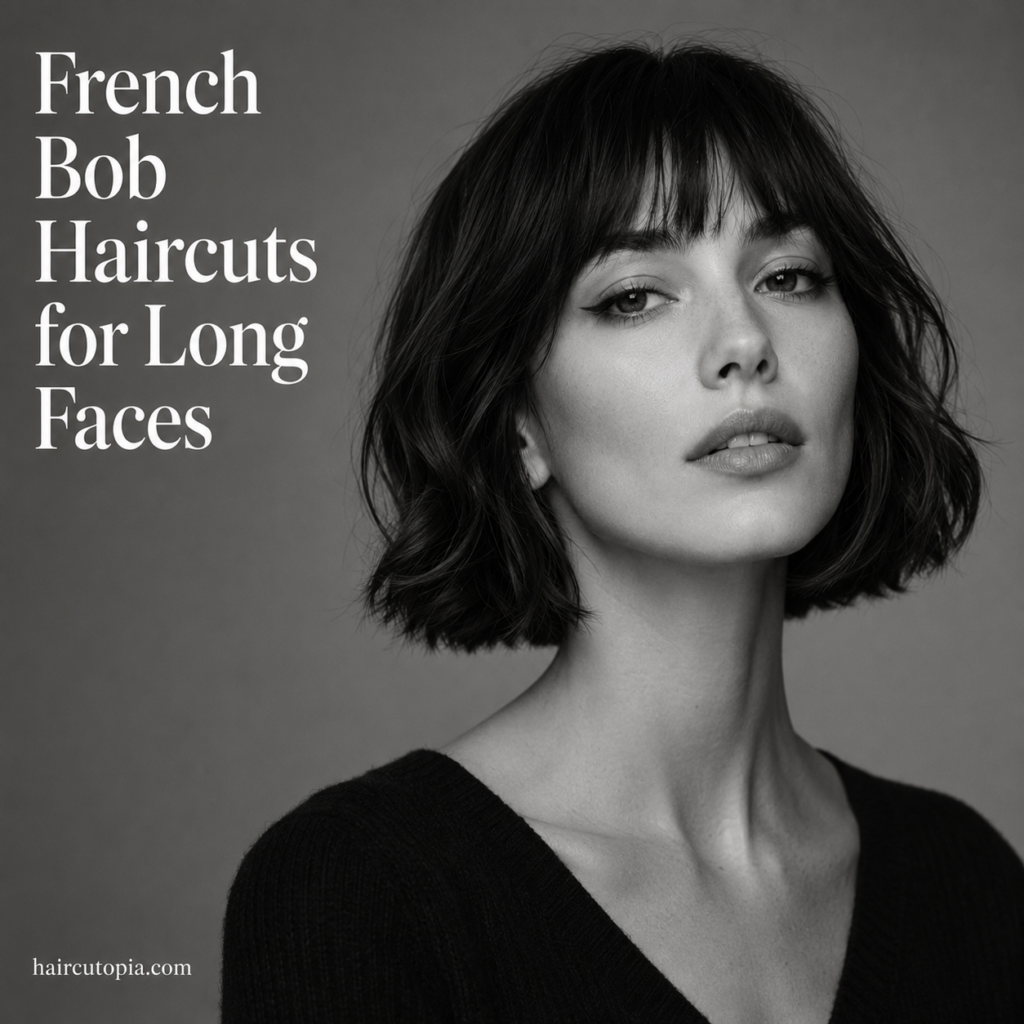
A French bob can be an especially flattering short haircut for a long face. Its compact shape creates a strong horizontal line around the cheeks, jaw, or chin, while bangs can visually shorten the forehead and bring more attention to the eyes.
It also happens to be incredibly versatile.
You can wear a French bob blunt and polished, softly waved, naturally curly, or intentionally tousled. Add full bangs for a classic French-inspired look, choose curtain fringe for something softer, or skip bangs altogether and create balance through volume and texture.
If you’re thinking about going short, here are 15 French bob haircuts for long faces, along with tips for choosing the right length, bangs, and styling approach.
What Is a French Bob?
A French bob is a short bob haircut that typically falls somewhere between the cheekbones and chin. It’s often paired with bangs and styled with a natural, slightly undone finish.
Compared with longer bobs and lobs, the French bob has a more compact silhouette.
Typical characteristics include:
- Cheekbone-to-chin length
- Blunt or softly textured ends
- Bangs or face-framing fringe
- Natural-looking movement
- Minimal or subtle layering
- A relaxed finish
There isn’t one strict version of the cut. Modern French bobs can be straight, curly, wavy, layered, sleek, or heavily textured.
For a longer face, the short length and fringe options offer plenty of ways to play with proportions.
Does a French Bob Suit a Long Face?
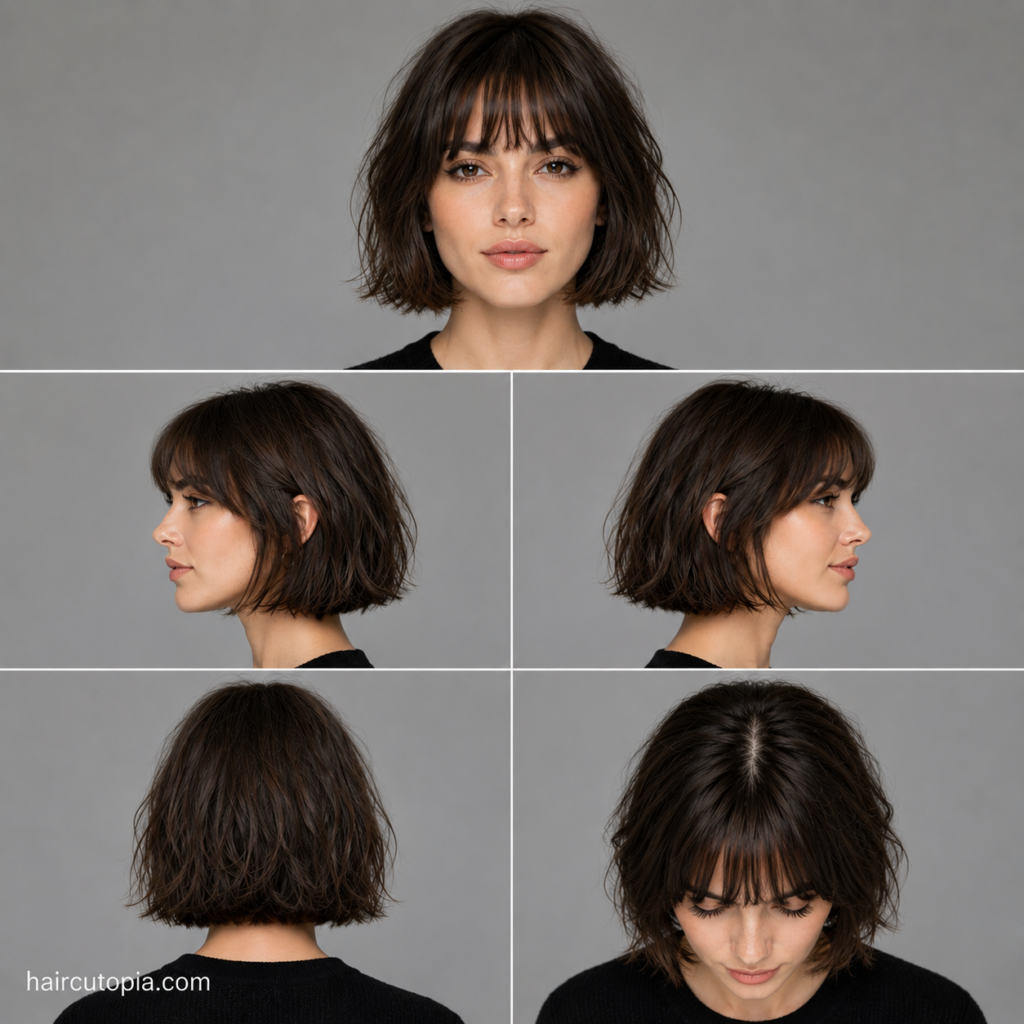
Yes. A French bob can work particularly well on a long face because its short shape can create the appearance of more width through the sides.
Long faces are generally noticeably longer than they are wide. The forehead, cheeks, and jaw may have relatively similar widths, although individual features vary considerably.
A French bob can create balance by placing more visual emphasis horizontally rather than vertically.
Features that often work well include:
- Cheekbone, jaw, or chin-length ends
- Full or wispy bangs
- Curtain fringe
- Loose waves
- Side volume
- Softly rounded ends
- A slightly off-center part
You don’t need to incorporate every one of these elements.
The goal isn’t to hide the length of your face. Instead, you can use the shape of the haircut to create whatever proportions you find most appealing.
Best French Bob Haircuts for Long Faces
The French bob gives you plenty of options, from traditional cuts with full bangs to softer versions designed around natural texture.
1. Classic French Bob With Bangs
If you want the traditional look, a short French bob with bangs is a natural starting point.
The bob creates a horizontal line around the lower face, while the fringe visually breaks up the length of the forehead.
For a classic finish, keep the hair somewhere between the jaw and chin and let the bangs sit around eyebrow level.
The haircut can be worn slightly tousled rather than perfectly smooth for that relaxed French-inspired effect.
2. Chin-Length French Bob
Chin length is one of the easiest French bob lengths to wear.
It keeps the haircut distinctly short while creating some visual width around the lower portion of a long face.
A slightly blunt perimeter can make the ends appear fuller, while subtle texturing creates a softer finish.
You can also add waves around the sides if you want more volume.
3. French Bob With Full Bangs
Full bangs can make a noticeable difference on a longer face.
By covering part of the forehead, they visually reduce the amount of vertical space between the hairline and chin.
They also direct attention toward the eyes.
Keep the fringe relatively soft if you don’t want a highly structured look, or choose a cleaner blunt edge for something more dramatic.
4. Wavy French Bob
Loose waves create width and movement around the sides of the face.
That makes a wavy French bob particularly useful if you want to balance a longer facial shape without relying entirely on bangs.
Keep the waves relaxed rather than tightly curled.
A few irregular bends through the mid-lengths and ends can create plenty of movement while maintaining an effortless finish.
5. French Bob With Wispy Bangs
If full bangs feel too heavy, wispy fringe offers a lighter alternative.
The separated pieces partially cover the forehead while allowing some skin to remain visible.
This gives you some of the proportion-changing effect of bangs without creating a strong horizontal block across the upper face.
Wispy bangs also blend naturally into textured and tousled French bobs.
6. French Bob With Curtain Bangs
Curtain bangs are another softer option.
They usually separate near the center and gradually become longer toward the sides, creating movement around the forehead and cheekbones.
For a longer face, keep enough fullness in the fringe that it doesn’t simply disappear into the rest of the haircut.
Pair curtain bangs with loose waves for a soft, balanced silhouette.
7. Blunt French Bob
A blunt French bob creates a strong horizontal line around the face.
That can be particularly flattering on a long face because the haircut visually emphasizes width.
The exact placement of the perimeter makes a difference.
A jaw or chin-length blunt cut creates a bold silhouette without introducing additional vertical length.
Fine hair may also benefit from this style because keeping the ends together can make them appear denser.
8. Tousled French Bob
A tousled French bob gives the haircut more width and personality without requiring precise styling.
The idea is to create movement through the sides rather than excessive height at the crown.
Use a lightweight styling product and work the hair with your fingers.
Natural-looking bends, slightly separated ends, and a little volume can make the haircut feel casual rather than overly sculpted.
9. Curly French Bob
Curly hair naturally brings width and movement to a short bob.
That can complement a longer face beautifully.
Rather than flattening your curls, allow them to create shape around the cheeks and jaw. Depending on your curl pattern, subtle layering can help distribute that volume evenly.
Remember that curly hair can shrink significantly when dry, so discuss the finished length with your stylist before cutting.
10. French Bob With Rounded Ends
Softly rounded ends can create a fuller silhouette around the lower face.
Instead of keeping every strand completely straight, the ends curve slightly inward or outward to give the bob more shape.
This doesn’t need to look like an exaggerated vintage blowout.
A subtle bend is enough to make the perimeter feel fuller and less flat.
Pair rounded ends with bangs for a particularly balanced shape.
11. French Bob With Side-Swept Bangs
Side-swept bangs create a softer alternative to a full fringe.
They break up the forehead while introducing diagonal movement around the face.
For a long face, avoid making the fringe excessively long and flat if your goal is to create more width.
A fuller side-swept bang that blends around the cheekbone can work beautifully with a jaw-length bob.
12. Textured French Bob
A textured French bob keeps the overall shape short while creating movement through the ends.
This can be particularly useful for thick hair that might otherwise feel heavy in a blunt bob.
The texture also helps create a more casual silhouette.
Ask for enough movement to prevent the haircut from looking rigid without removing so much hair that you lose fullness through the sides.
13. French Bob With a Side Part
A side part can create more volume on one side of the haircut.
This asymmetry adds visual interest while helping the hair feel fuller around the face.
You don’t necessarily need a dramatic deep part.
Moving your normal part slightly away from the center may be enough to change the shape.
A side part works particularly well with waves and side-swept bangs.
14. Layered French Bob
A lightly layered French bob can create additional movement and volume.
The key is keeping the layers strategically placed.
Too many short layers at the crown may create more vertical height, which isn’t always desirable if you’re trying to visually balance a long face.
Instead, focus on movement through the sides and ends.
This approach works especially well for wavy, curly, or thick hair.
15. French Bob Without Bangs
Bangs aren’t required to make a French bob work on a long face.
If you prefer an open forehead, you can create balance through the length and volume of the bob itself.
A jaw or chin-length cut with waves or softly rounded sides can create plenty of horizontal emphasis.
Consider an off-center or side part if you want to avoid the stronger vertical line sometimes created by a very flat center part.
What French Bob Length Is Best for a Long Face?
Length is particularly important because one of the advantages of a French bob is its compact silhouette.
Cheekbone Length
A very short French bob can create considerable width around the middle of the face.
It also exposes more of the jaw and neck, giving the haircut a bold, distinctive appearance.
Adding bangs can make this short version especially effective if you want to visually shorten the face.
Jaw Length
Jaw length is an excellent middle ground.
The perimeter creates a horizontal line around the lower face without feeling quite as cropped as a cheekbone-length bob.
This length works with blunt, wavy, textured, and curly styles.
Chin Length
Chin length gives you slightly more versatility while still maintaining the French bob look.
It provides enough hair for waves and rounded styling while creating visual width around the lower face.
If you’re unsure about going extremely short, chin length is a comfortable place to start.
Should You Go Longer Than the Chin?
You certainly can, although the haircut gradually moves away from the traditional French bob silhouette as it becomes longer.
If your main goal is balancing a long face, a compact jaw-to-chin length often creates more horizontal emphasis than a bob extending toward the shoulders.
That doesn’t make longer styles wrong. It simply produces a different effect.
Best Bangs for Long Faces With a French Bob
Bangs are one of the easiest ways to customize a French bob for a longer face.
Full Bangs
Full bangs visually shorten the forehead and create a strong horizontal line.
They’re also one of the most recognizable features of a traditional French bob.
Wispy Bangs
Wispy fringe gives you forehead coverage without looking heavy.
It works particularly well if you prefer a softer or slightly messy haircut.
Curtain Bangs
Curtain bangs frame the forehead and cheekbones while blending gradually into the sides.
Keep them relatively full if you want them to have a noticeable effect on facial proportions.
Side-Swept Bangs
Side-swept fringe introduces asymmetry while partially covering the forehead.
It pairs naturally with side-parted and wavy bobs.
Textured Bangs
Textured bangs have a slightly irregular perimeter rather than one perfectly straight line.
They work beautifully with a tousled French bob and can make thicker fringe feel less severe.
French Bob Styles to Approach Carefully
There are no strict rules about what someone with a long face can or can’t wear.
Still, certain styling choices tend to emphasize vertical length more than others.
If your goal is to create a wider or more balanced appearance, pay attention to:
- Excessive height at the crown
- Very flat hair against the sides
- Long, straight front pieces with little side volume
- Extremely long curtain bangs that pull the eye downward
- A flat center part combined with pin-straight hair
- A bob that extends significantly below the chin without side volume
You don’t necessarily have to avoid these features.
Instead, balance them with another element. For example, if you love a center part, add waves through the sides. If you prefer a sleek bob, consider adding bangs or keeping the perimeter short and defined.
Choosing a French Bob for Your Hair Type
Face shape is only one consideration. Your natural texture determines how the haircut actually falls and how much styling it requires.
Fine Hair
Fine hair often benefits from a relatively blunt French bob.
Keeping more density at the ends can make the hair appear fuller and create a stronger horizontal silhouette.
Avoid excessive layering if you’re trying to maximize volume.
A blunt chin-length bob with bangs can be an especially strong combination.
Thick Hair
Thick hair may require some internal weight removal to prevent the bob from becoming too bulky.
The goal isn’t necessarily to eliminate volume. Side volume can actually complement a long face.
Instead, your stylist can control where that fullness sits so the haircut maintains a flattering shape.
Straight Hair
Straight hair showcases the clean lines of a French bob.
A blunt perimeter and full fringe can create strong horizontal elements, while soft bends through the sides can add extra width.
If you prefer a sleek finish, keep the haircut compact rather than allowing it to become overly long and flat.
Wavy Hair
Wavy hair is naturally suited to a French bob.
The bends create movement and fullness through the sides, often requiring minimal styling.
A lightly textured cut can help your natural waves fall into place more easily.
Curly Hair
Curly hair can create a beautiful rounded silhouette around a longer face.
Rather than removing too much volume, work with your natural curl pattern to create fullness through the cheeks and jaw.
Your stylist should account for shrinkage when choosing the final length.
How to Style a French Bob for a Long Face
Styling can change the proportions of the haircut almost as much as the cut itself.
If you want to visually balance a longer face, concentrate on movement and fullness through the sides.
For Loose Waves
- Apply heat protectant or your preferred styling product.
- Create loose bends through the mid-lengths.
- Alternate the direction of some sections.
- Allow the hair to cool.
- Gently separate the waves with your fingers.
Avoid creating too much lift directly at the crown.
A little root volume is fine, but the main emphasis should remain through the sides.
For a Tousled Finish
Apply a lightweight mousse or styling cream to damp hair.
Allow the hair to air-dry, then add a few bends where additional movement is needed.
Finish by separating the ends with your fingers.
The result should look relaxed rather than perfectly styled.
For a Sleek Finish
Blow-dry the hair smooth after applying heat protectant.
Keep the sides from becoming completely flat by maintaining a little natural body through the lengths.
A subtle inward or outward bend at the ends can also create additional width.
For Natural Curls
Apply your preferred curl product to damp hair and scrunch gently.
Air-dry or diffuse depending on your routine.
Once dry, gently separate curls around the sides if you want additional fullness.
How to Ask Your Stylist for a French Bob
Bring reference photos to your appointment, but also explain what you like about them.
One person’s idea of a French bob may be cheekbone length with blunt bangs, while another person’s version may be a wavy chin-length cut with curtain fringe.
Discuss:
- Where you want the finished length
- Whether you want bangs
- How full you want the fringe
- Whether you prefer blunt or textured ends
- Where you want volume
- Your natural hair texture
- Your usual part
- How often you heat-style
- Whether you regularly air-dry
- How frequently you’re willing to get trims
If your goal is to visually balance a long face, tell your stylist that you’d like the haircut to create some width through the sides rather than excessive height at the crown.
That gives them something specific to work toward.
How Often Should You Trim a French Bob?
A French bob generally requires more frequent trims than longer hair because a small amount of growth can noticeably change its proportions.
A trim every 6 to 8 weeks is a reasonable starting point if you want to preserve the original shape.
A textured or tousled version may grow out more gracefully, allowing you to wait a little longer.
Bangs often require more frequent maintenance.
Full or short fringe may need trimming every few weeks, while curtain and side-swept bangs usually give you more flexibility.
Is a French Bob High Maintenance?
It depends on the version you choose and how closely it matches your natural texture.
A blunt bob with precise bangs may require regular trims to maintain its shape.
If you naturally have waves or curls, a textured French bob may require surprisingly little daily styling.
For a lower-maintenance option, consider:
- Chin-length hair
- Natural waves or curls
- Softly textured ends
- Wispy or curtain bangs
- A slightly tousled finish
- A shape designed to air-dry well
The salon consultation is the right time to be realistic about your routine.
If you normally spend five minutes on your hair, don’t choose a haircut that requires a complicated blowout every morning unless you’re ready for that change.
French Bob vs. Regular Bob for Long Faces
Both can work well, but they create different proportions.
A regular bob can range from around the jaw to near the shoulders. It may be angled, layered, graduated, asymmetrical, or blunt.
A French bob is generally shorter and more compact.
It’s commonly associated with:
- Cheekbone-to-chin length
- Bangs or fringe
- Natural texture
- A fuller short silhouette
- A slightly undone finish
For a long face, that shorter silhouette can be useful because it emphasizes width rather than adding more vertical length.
A longer bob may offer more styling flexibility, but you’ll want to consider how the extra length interacts with your facial proportions.
Frequently Asked Questions
Is a French bob flattering on a long face?
Yes. A French bob can be particularly flattering on a long face because its short shape creates horizontal emphasis around the cheeks, jaw, or chin. Bangs and side volume can further balance the overall proportions.
What French bob length is best for a long face?
Jaw-to-chin length is a versatile choice. A shorter cheekbone-length bob can also work if you want more width through the middle of the face.
Are bangs good for a long face with a French bob?
Yes. Full, wispy, curtain, textured, and side-swept bangs can all work. Full bangs have the strongest visual shortening effect because they cover more of the forehead.
Can a long face wear a French bob without bangs?
Absolutely. Choose a compact jaw or chin-length cut and create some volume through the sides with waves, curls, or softly rounded styling.
Is a blunt bob good for a long face?
Yes. The strong horizontal perimeter of a blunt bob can create visual width, making it a good option for longer facial proportions.
Should a long face avoid a center part?
Not necessarily. A center part can look great, especially when the bob has enough volume or movement through the sides. If your hair is very straight and flat, an off-center or side part may create more fullness.
Can curly hair wear a French bob with a long face?
Yes. Curly hair can work especially well because its natural volume creates width around the sides of the face. Make sure the cut accounts for curl shrinkage and your natural volume pattern.
Final Thoughts on French Bob Haircuts for Long Faces
A French bob is a strong option if you want a short haircut that complements a longer face without feeling overly calculated.
The compact length naturally creates horizontal emphasis, and you can adjust the effect with bangs, waves, curls, or side volume.
For a classic look, try a jaw-to-chin-length French bob with full or wispy bangs. If you prefer something softer, loose waves and curtain fringe can create movement around the cheeks. And if bangs aren’t your thing, a short wavy or rounded bob can create plenty of balance on its own.
As always, face shape is a useful starting point rather than a rulebook.
The right French bob should work with your natural texture, suit the amount of styling you actually want to do, and highlight the features you like most.

Related Posts
 Haircuts for Thick Hair: The Complete Guide to Flattering Cuts for Every Length and Texture
 Haircuts for Women with Curly Hair: 25 Flattering Styles for Every Curl Type
 Haircuts for Women with Fine Hair: 18 Flattering Styles That Add Volume and Fullness
 Haircuts for Long Faces and Straight Hair: 25 Flattering Styles That Create Perfect Balance