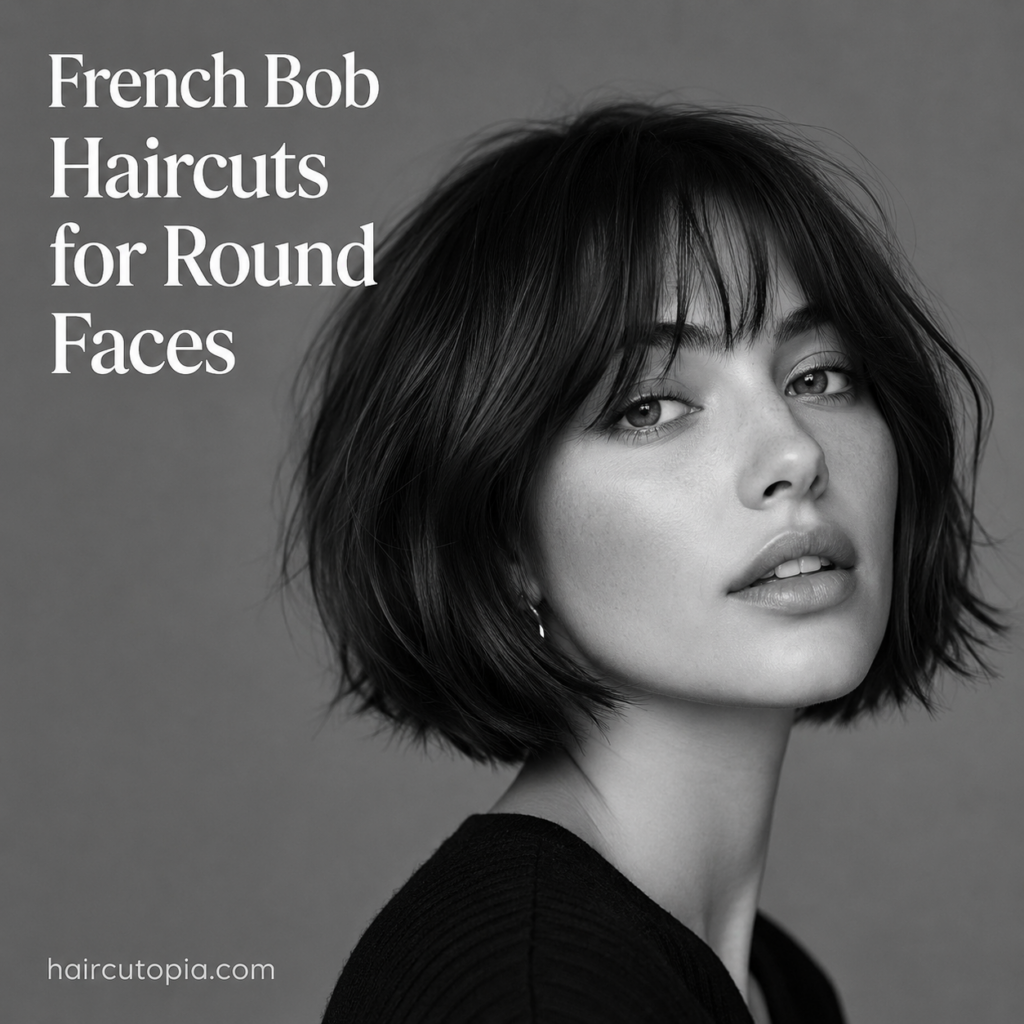
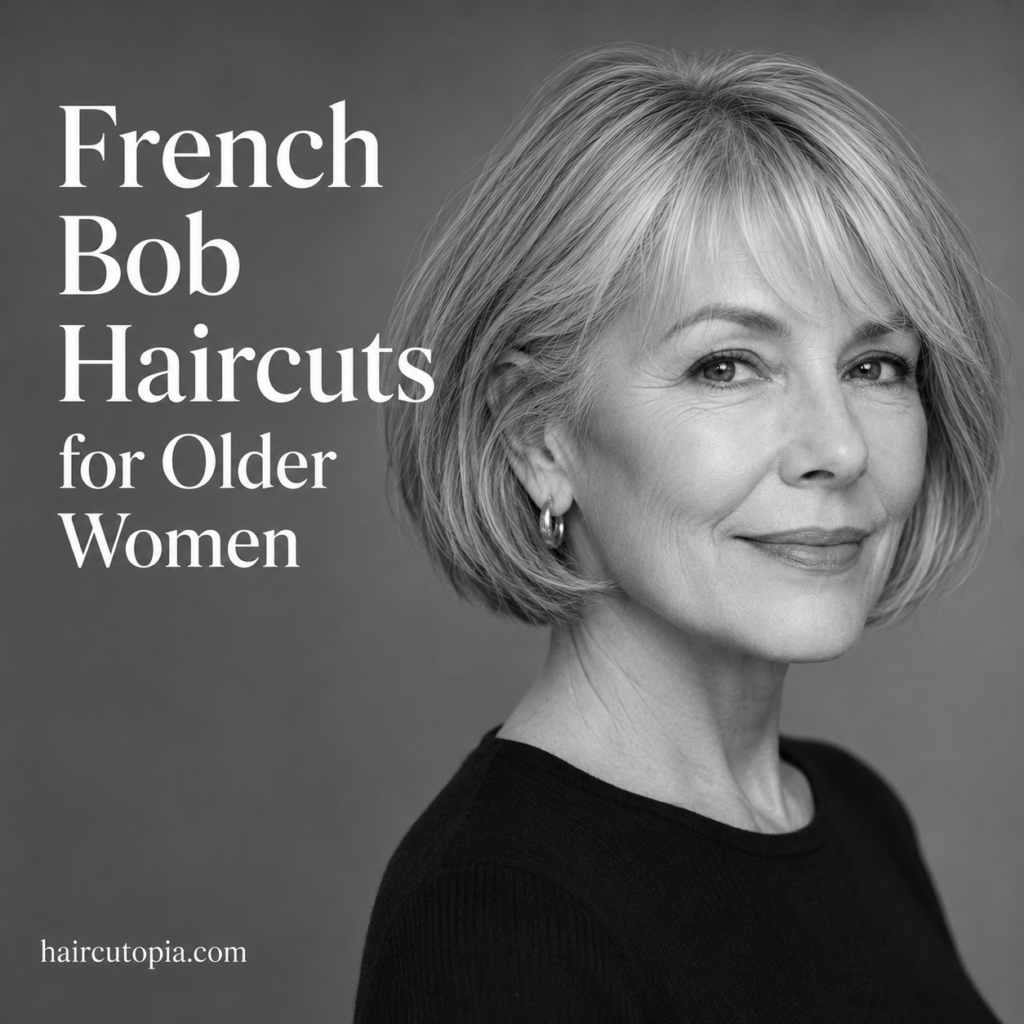
The French bob proves that a short haircut doesn’t have to feel predictable. With its face-framing length, simple shape, and slightly undone finish, it can look polished without appearing overly styled.
Traditionally, a French bob falls somewhere between the cheekbones and chin, often paired with bangs. Today’s versions are much more flexible. You can go sleek and blunt, soft and layered, naturally curly, tousled, or slightly longer around the jaw.
That versatility makes French bob haircuts for older women especially appealing. The cut can be adapted to changes in hair density and texture while still feeling modern and personal. Fine hair can benefit from a fuller perimeter, thick hair can be lightened with subtle layers, and gray or silver hair can become a standout feature of the style.
If you’re considering a shorter cut, here are 20 French bob ideas and plenty of practical advice for finding the version that works for you.
Why the French Bob Works So Well for Older Women
There’s no age when you suddenly need to cut your hair short. But if you already want a shorter style, the French bob offers a useful combination of structure and flexibility.
The relatively short length can make hair feel lighter and give the overall style a more defined shape. It can also remove thinner or weathered ends that sometimes make longer hair appear less full.
More importantly, a French bob can be customized.
You can adjust:
- The overall length
- The amount of layering
- The shape around the jaw
- The type of bangs
- The amount of volume
- How blunt or textured the ends appear
The result doesn’t need to resemble anyone else’s French bob. Small adjustments can make a big difference.
1. Classic Chin-Length French Bob
The classic French bob sits around the chin and usually includes a soft fringe.
It’s simple, recognizable, and easy to personalize.
A relatively strong perimeter gives the haircut structure, while a little texture prevents it from looking too rigid.
If you’re trying a French bob for the first time, chin length is a comfortable starting point. It gives you the short-bob effect without going as high as the cheekbones.
2. French Bob With Wispy Bangs
Wispy bangs give the traditional French bob a lighter finish.
Rather than forming a thick line across the forehead, the fringe is broken into softer pieces. This keeps the haircut open around the face while still creating definition near the eyes.
They’re also fairly versatile as they grow.
Longer pieces can gradually blend into the sides of the bob instead of creating an obvious grow-out line.
3. Layered French Bob
A layered French bob introduces movement while preserving the basic bob shape.
The layering can be very subtle. In fact, a few strategically placed layers are often more effective than heavily layering the entire haircut.
They can help remove weight from thick hair, encourage waves, or add movement around the crown and sides.
If your hair tends to become bulky when it’s short, internal layering can also help control the silhouette without making the ends appear thin.
4. French Bob for Fine Hair
A shorter bob can work beautifully with fine hair when the cut preserves enough density through the ends.
A relatively blunt perimeter is often helpful because it creates a stronger visual line at the bottom.
Too many short layers can sometimes make fine hair look thinner, particularly toward the ends.
Consider:
- A chin-length perimeter
- Minimal layering
- Wispy rather than heavy bangs
- Gentle root volume
- Lightweight styling products
The goal is to create movement without removing the fullness you already have.
5. French Bob for Thinning Hair
Fine hair and thinning hair aren’t necessarily the same thing, so the haircut should reflect what your individual hair needs.
If density has decreased in certain areas, strategic shaping can help make the most of the hair that’s there.
Keeping the cut relatively short can reduce the weight pulling down on the roots, while maintaining a fuller perimeter can give the ends more visual substance.
Avoid assuming that lots of layers will automatically create volume. Removing too much hair can sometimes make lower-density areas more noticeable.
Talk to your stylist about where you’ve noticed changes so the cut can be designed accordingly.
6. Wavy French Bob
Waves give a French bob natural movement and an effortless finish.
Instead of smoothing every bend, allow the haircut to follow the hair’s existing texture.
Loose waves create dimension through the sides and soften a more structured perimeter.
For everyday styling, a lightweight wave product may be enough. Work it through damp hair, gently encourage the texture with your fingers, and air-dry or diffuse.
The waves don’t need to be identical. A little irregularity is part of the appeal.
7. Curly French Bob
Naturally curly hair can create a completely different interpretation of the French bob.
The curl pattern adds volume and movement, while the shorter length creates a defined overall silhouette.
Depending on your curls, the haircut might be softly rounded or more layered through the sides and back.
Shrinkage is important when choosing the final length. Hair that reaches the chin when wet may sit noticeably higher when dry.
A stylist familiar with curly hair can account for that difference and shape the cut around how your curls naturally fall.
8. Blunt French Bob
A blunt French bob has a clean, defined perimeter with relatively little visible layering.
This can be especially effective for fine or medium-density hair because the solid baseline creates the appearance of fuller ends.
The haircut doesn’t need to be perfectly sleek.
You can keep the blunt perimeter while adding subtle movement through the interior, giving you the visual density of a blunt cut without making the style feel stiff.
9. Textured French Bob
If a completely blunt bob feels too structured, try a textured version.
The overall shape remains short and defined, but the ends have more separation and movement.
This works particularly well with naturally wavy or thick hair.
Texture can also make daily styling more forgiving. Instead of needing every strand to fall into a precise position, the haircut is designed to look good with a slightly undone finish.
10. French Bob With Curtain Bangs
Curtain bangs provide a softer alternative to a traditional full fringe.
They’re usually shorter near the center and become longer toward the sides, where they blend into the rest of the bob.
You can wear them more prominently across the forehead or sweep them away from the face.
That flexibility makes curtain bangs a good choice if you’re unsure about committing to a shorter fringe.
They pair especially well with a slightly longer French bob.
11. French Bob With Side-Swept Bangs
Side-swept bangs work naturally with a side part and create gentle movement across the forehead.
They’re also one of the easier fringe styles to grow out.
As the bangs become longer, they gradually transition into face-framing pieces rather than needing to be completely reshaped.
For a softer French bob, combine side-swept bangs with subtle layers and a little natural texture through the ends.
12. French Bob With Full Bangs
Full bangs create the most traditional French bob appearance.
The fringe typically falls around the eyebrows and creates a stronger frame around the eyes.
It can be cut relatively blunt for a graphic look or lightly textured for something softer.
Keep maintenance in mind.
Full bangs generally need more frequent trimming than curtain or side-swept styles, particularly if you want them to remain at a precise length.
13. French Bob Without Bangs
Bangs are optional.
Without them, the French bob takes on a simpler, more open appearance and gives you more freedom to change your part.
Try a center part for a balanced look or a side part for additional volume through the front.
This version also requires less fringe maintenance and can be a good option if you prefer keeping hair away from your forehead.
14. Gray French Bob
Natural gray hair and a French bob can make an excellent combination.
The shorter shape puts more emphasis on the different silver, white, charcoal, and gray tones throughout the hair.
A little texture can make those variations even more noticeable.
Gray hair can sometimes behave differently from pigmented hair, so pay attention to what your texture actually needs. If it feels drier or coarser, moisturizing products may help keep the bob soft and manageable.
15. Silver French Bob With Soft Layers
Silver hair looks especially striking when subtle layers create movement through the color.
Instead of keeping the haircut completely blunt, soft layering allows individual sections to catch the light differently.
This can create more visible dimension without relying on added color.
Keep the layering subtle if preserving fullness is important. You want movement without making the bottom of the haircut appear sparse.
16. Tousled French Bob
The tousled French bob is ideal if you prefer hair that doesn’t look overly finished.
Soft bends, slightly separated ends, and natural volume give the style an easygoing feel.
You don’t need to curl every section.
In fact, concentrating on a handful of pieces around the face and through the top can look more natural than creating perfectly uniform waves.
Finish with your fingers rather than trying to make every strand sit exactly in place.
17. Sleek French Bob
A sleek French bob highlights the haircut’s clean shape.
The hair is worn relatively smooth, with the perimeter sitting around the chin or jaw.
This version works naturally with straight hair but can also be created with careful blow-drying.
A center part gives it a modern, minimalist appearance, while adding bangs makes it feel more traditionally French.
If you use heat regularly, apply heat protection and avoid using higher temperatures than your hair requires.
18. French Bob With Face-Framing Layers
Face-framing layers soften the transition around the cheeks and jaw.
Instead of having every strand end at exactly the same point, shorter front sections gradually blend into the main bob.
These layers can be especially useful if you want movement without adding lots of layering through the back.
They also pair naturally with curtain or side-swept bangs.
19. Voluminous French Bob
If your hair naturally has body, there’s no need to flatten it.
A voluminous French bob uses lift through the crown and sides as part of the overall shape.
The trick is keeping the volume balanced.
Too much width at the bottom can make the haircut feel heavy, so strategic layering may be useful for thick hair.
Fine hair can create a similar effect with gentle root lift and a fuller perimeter.
20. Slightly Longer French Bob
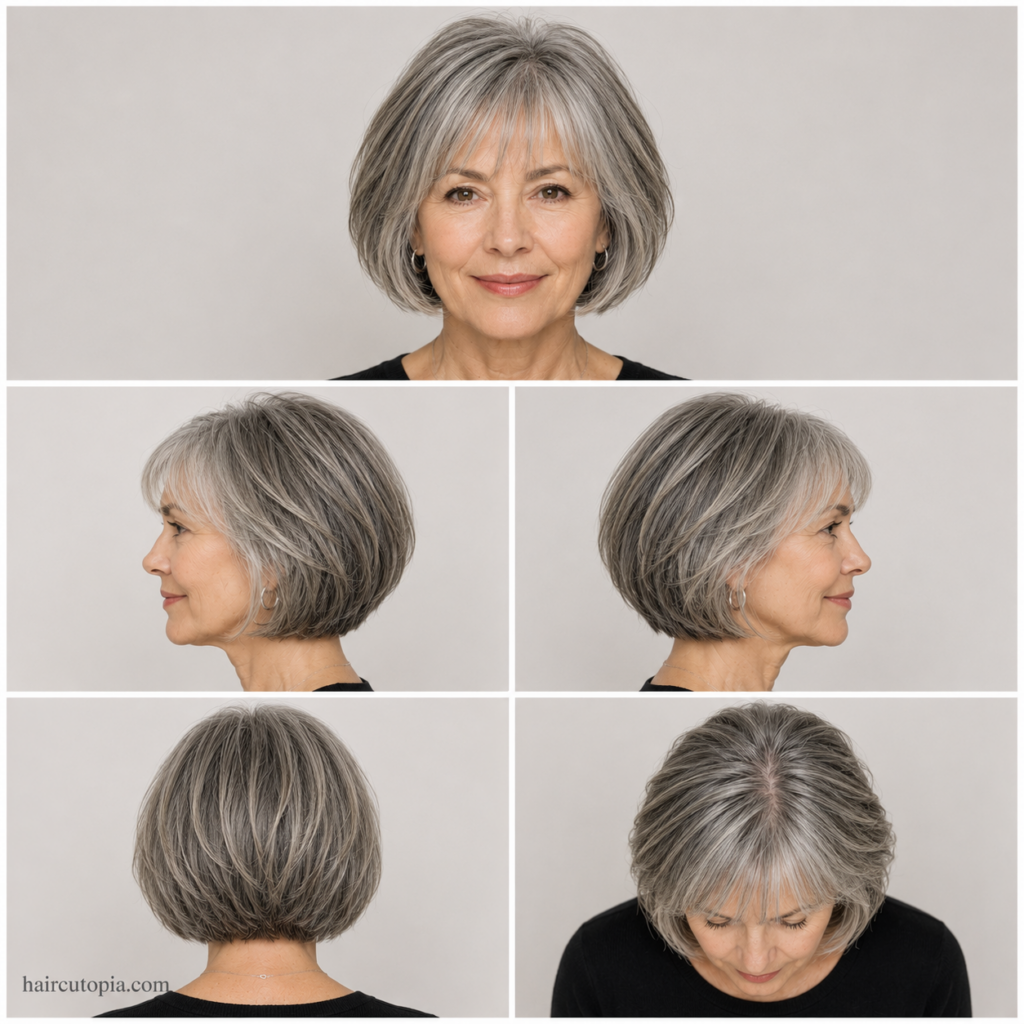
You don’t have to start with an extremely short bob.
A longer French bob that reaches the chin or slightly below gives you the overall look with a little more flexibility.
The additional length makes it easier to tuck hair behind your ears, add waves, or experiment with different parts.
It’s also a practical choice if you’re transitioning from shoulder-length or long hair.
If you decide you want the classic shorter shape later, your stylist can gradually take the length higher.
Choosing a French Bob for Your Face Shape
Face shape can provide some guidance when choosing your haircut, but it isn’t a set of rules.
Length, volume, fringe, and texture can all be adjusted to change how the haircut frames your features.
Round Face
Consider keeping the bob around the chin or slightly below.
A side part, curtain bangs, or some volume through the crown can create additional visual length.
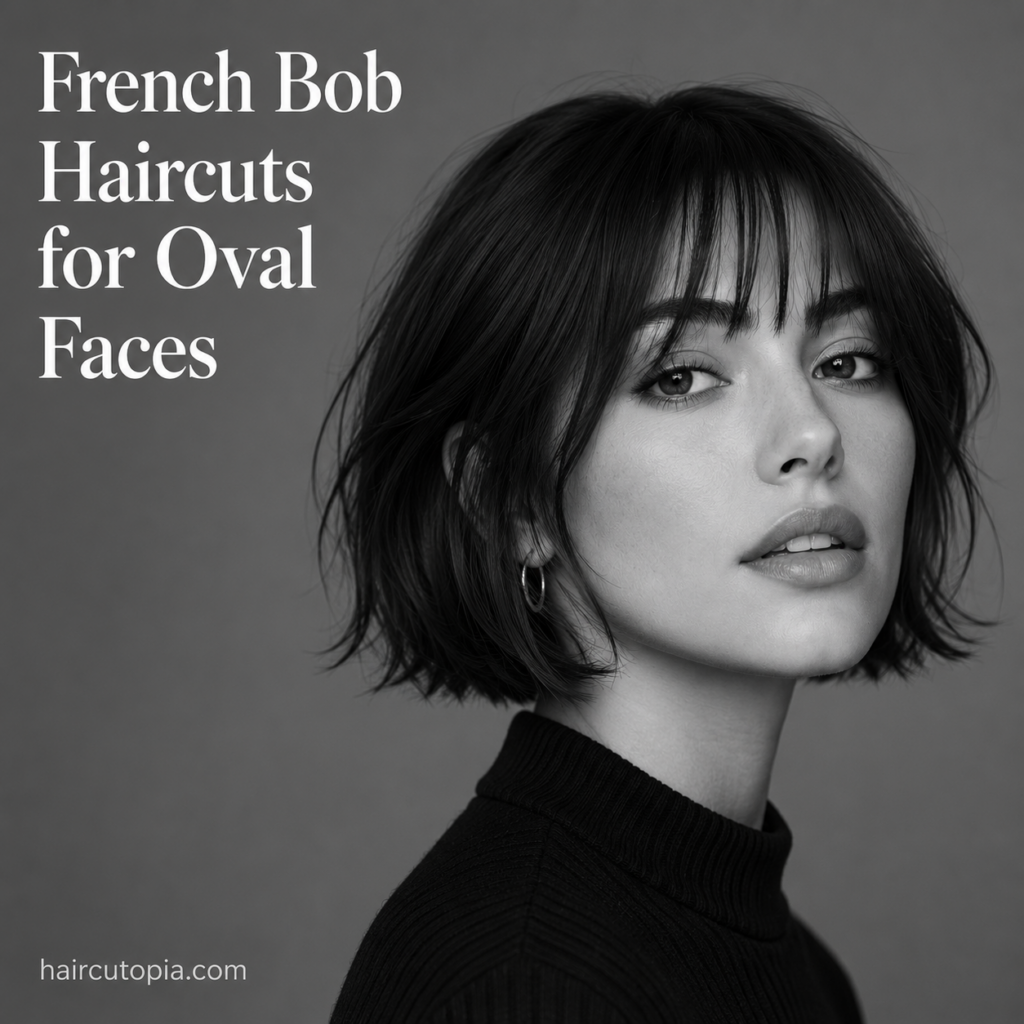
Oval Face
Oval faces can experiment with many French bob variations.
A classic bob with bangs creates a traditional appearance, while a blunt center-parted version feels more contemporary.
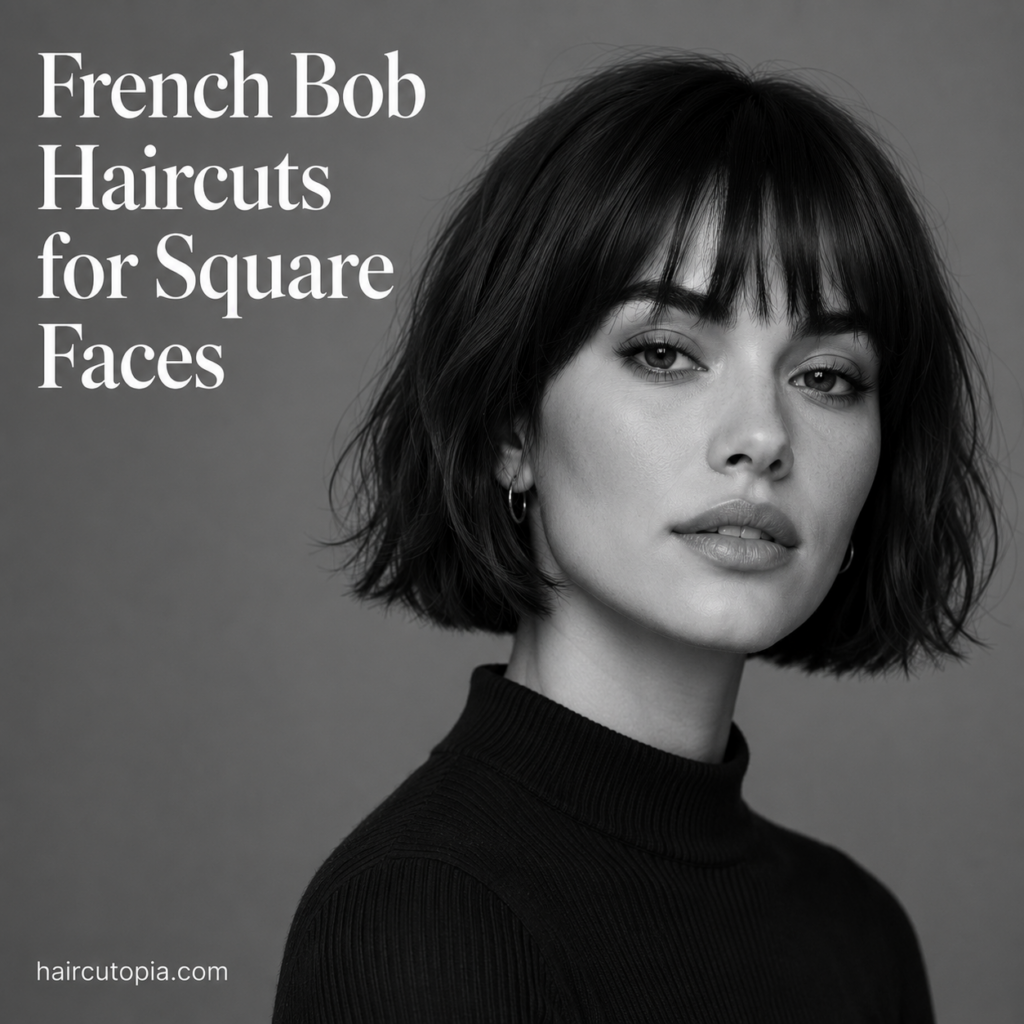
Square Face
Soft waves, textured ends, and subtle face-framing pieces can introduce movement around a defined jawline.
You might also prefer keeping the bob slightly below the jaw rather than ending directly at its widest point.
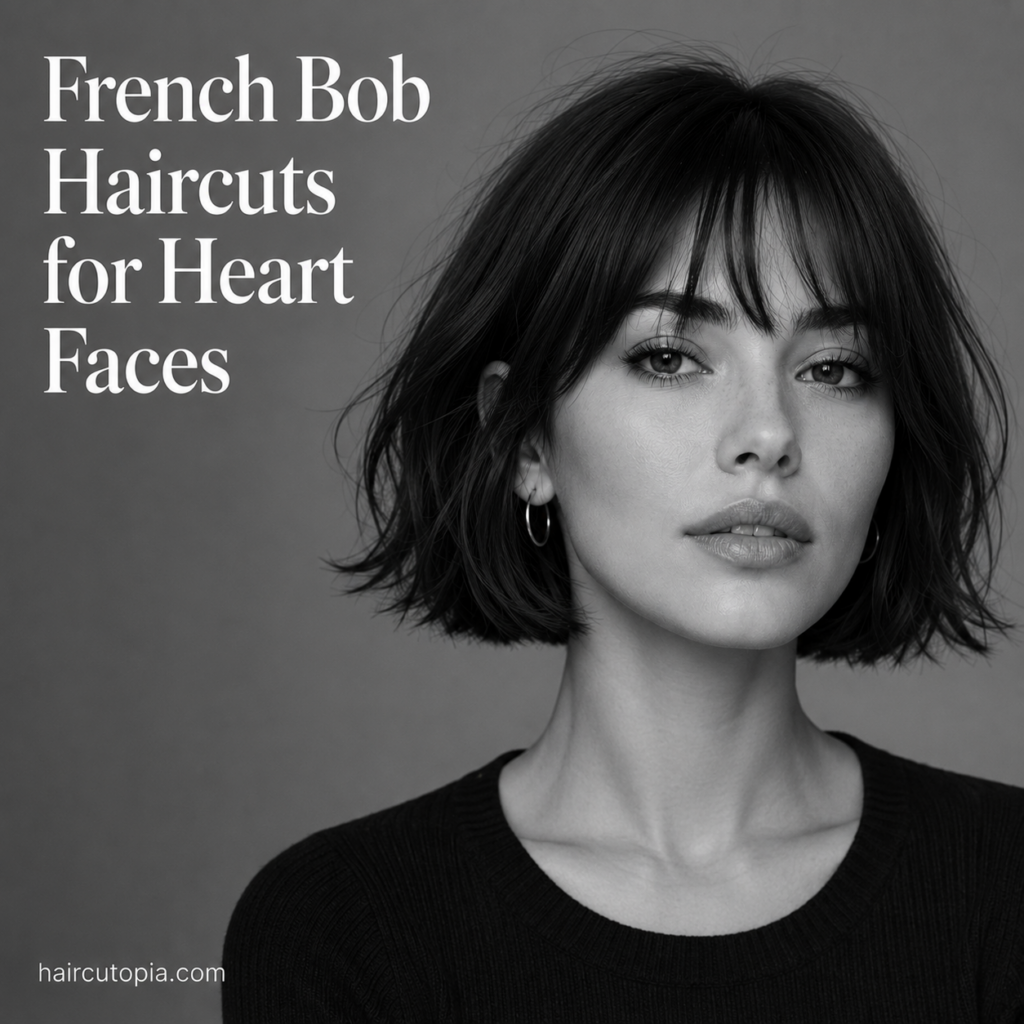
Heart-Shaped Face
A chin-length bob can add visual interest around the lower portion of the face.
Curtain, wispy, and side-swept bangs are all options for creating softness through the upper portion.
Long Face
A French bob with some volume through the sides can create balance.
Bangs can also visually reduce the amount of exposed forehead and draw attention toward the eyes.
Ultimately, choose the version you actually enjoy. A stylist can adjust most French bob ideas to suit your individual features.
How to Choose Bangs for a French Bob
The right bangs can completely change the character of your haircut.
If you want the traditional French look, full bangs are the obvious choice. They create a strong frame around the eyes and give the haircut its recognizable silhouette.
For something softer, consider wispy bangs.
Curtain bangs offer even more flexibility because they can be worn toward the center or swept away from the face.
Side-swept bangs work naturally with an asymmetrical part and are relatively easy to grow into longer layers.
And if you don’t enjoy maintaining fringe, skip it entirely.
The best option is the one that works with your normal routine.
French Bobs for Fine and Lower-Density Hair
When hair is fine or has become less dense, preserving visual fullness is often more useful than adding lots of layers.
A strong perimeter can make the ends appear thicker.
Keeping the overall length around the chin can also remove excess weight, potentially giving the roots more natural lift.
Styling products matter, too.
Heavy oils and creams can flatten fine hair quickly. Lightweight mousse, root-lifting products, or a small amount of texturizing product may provide enough support without weighing the haircut down.
Most importantly, ask your stylist to work with your actual density rather than following a standard layering formula.
French Bobs for Thick Hair
With thick hair, the challenge is often the opposite.
A one-length short bob can become bulky around the bottom if too much weight accumulates near the jaw.
Internal layering or strategic weight removal can help the haircut move more naturally.
The key is maintaining enough density at the perimeter to preserve the bob shape.
You don’t necessarily want to thin the entire haircut. Instead, your stylist can target the areas where your hair naturally becomes heaviest.
How to Style a French Bob
A French bob can be surprisingly simple to style once you understand how your hair behaves at the shorter length.
For Natural Texture
Apply a lightweight product to damp hair and use your fingers to encourage its natural movement.
Air-dry or diffuse depending on your texture.
For More Volume
Concentrate on the roots.
A lightweight mousse or root-lifting product can provide support without making the ends heavy.
For Soft Waves
Create a few loose bends rather than curling every section identically.
Leave the ends relaxed for a more natural finish.
For a Tousled Look
Work a small amount of texture product through dry hair and separate a few sections with your fingers.
Avoid using so much product that the hair becomes stiff.
For a Sleek Finish
Blow-dry the hair smooth while gently directing the ends into place.
Use a small amount of smoothing product on flyaways if necessary.
What to Ask Your Hairstylist
Simply asking for a French bob leaves plenty of room for interpretation.
Reference photos help, but explain exactly what you like about them.
Discuss:
- Where you want the perimeter to fall.
- Whether you want blunt or textured ends.
- How much layering your hair needs.
- Whether you want bangs.
- How much volume you prefer.
- How you normally dry your hair.
- How often you’re willing to get trims.
It’s equally useful to explain what you don’t want.
If you dislike a rounded shape, don’t want heavy bangs, or need enough length to tuck behind your ears, mention that before the haircut begins.
How Often Should a French Bob Be Trimmed?
Short hair tends to show growth relatively quickly because even a small change in length alters the silhouette.
For a precise French bob, trims around every six to eight weeks can help maintain the shape.
A longer, softer, or deliberately tousled version may be able to go longer.
Bangs often need attention before the rest of the haircut does.
Your stylist can recommend a schedule based on your growth rate and how structured you want the haircut to remain.
Is a French Bob Low Maintenance?
Daily maintenance can be quite manageable, especially when the haircut works with your natural texture.
Salon maintenance is another consideration.
Shorter bobs generally require more frequent reshaping than longer hairstyles because growth changes the proportions of the cut.
For an easier routine, consider:
- A slightly longer length
- Soft texture rather than a highly precise perimeter
- Curtain or side-swept bangs
- Minimal layering on fine hair
- Strategic layering on thick hair
- A shape designed to air-dry well
The less you have to fight your natural texture, the easier the haircut will usually be to maintain.
Are French Bobs Flattering for Older Women?
They certainly can be, but age alone isn’t what determines whether the haircut works.
Hair texture, density, face shape, lifestyle, and personal taste are much more useful factors.
One woman might love a sharp, blunt French bob with full bangs. Someone else may feel more comfortable with a longer, softly layered version that embraces natural gray waves.
Neither approach is more appropriate because of age.
The best French bob is simply one that complements your hair and makes sense for the way you want to wear it.
Final Thoughts on French Bob Haircuts for Older Women
French bob haircuts for older women can be classic, contemporary, polished, or deliberately undone.
Fine and thinning hair may benefit from a stronger perimeter that preserves fullness. Thick hair can gain movement from strategic layering, while waves and curls can become part of the haircut rather than something that needs to be straightened away.
Gray and silver hair bring another dimension to the style, especially when texture and layers allow the natural variation in color to stand out.
Then there’s the fringe. Full bangs create a classic French look, wispy bangs feel softer, curtain bangs provide flexibility, and going without bangs keeps things simple.
Start with the features that matter most to you: your preferred length, your natural texture, how much maintenance you want, and how you actually style your hair at home.
Once those pieces are right, the French bob becomes much more than a trend. It’s a versatile short haircut that can be shaped around you.