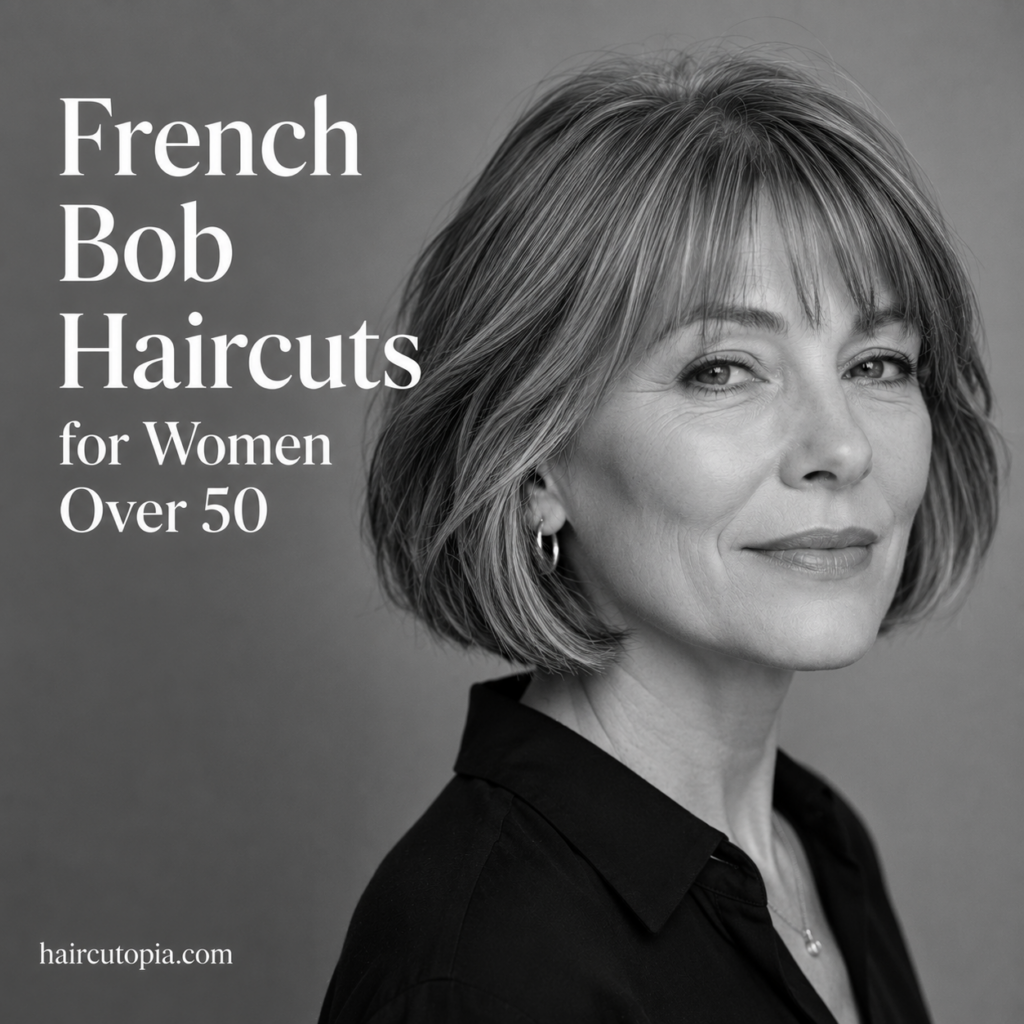
A French bob has a way of looking polished without seeming like you’ve spent an hour styling it. Short, softly structured, and full of personality, it’s a great option for women over 50 who want a haircut that feels fresh while still being easy to make their own.
The traditional French bob usually falls somewhere between the cheekbones and chin. Bangs are common, but they’re not required. Modern versions can be layered, wavy, curly, blunt, tousled, or slightly longer around the jaw.
That flexibility is especially useful when your hair has changed in texture or density over the years. Fine hair can benefit from a fuller-looking perimeter, while thick hair may need some strategic layering. Gray and silver hair can also look striking in a short bob because the shape helps showcase the natural variation in color.
Here are 18 French bob haircuts for women over 50, along with practical tips for choosing a version that works with your hair and everyday routine.
Why French Bobs Work So Well for Women Over 50
There’s no haircut you’re supposed to have after 50. Hair length is a personal choice, and plenty of women prefer longer styles.
But if you’re already thinking about going shorter, the French bob has a lot going for it.
The length creates a defined shape around the face while still leaving room to customize the cut. A stylist can adjust the perimeter, layers, fringe, and volume depending on your features and natural texture.
It can also be surprisingly versatile.
You can wear a French bob smooth for a polished finish one day and embrace your natural waves the next. A slightly messy texture doesn’t ruin the style, either. In many cases, it makes the haircut look even better.
1. Classic Chin-Length French Bob
The classic version is an ideal starting point.
Hair falls around the chin with a fairly defined perimeter, while soft bangs complete the traditional French-inspired shape.
The length brings attention toward the jaw and cheekbones without requiring an extremely short cut.
If you want something timeless, ask for a chin-length bob with enough texture to create movement but not so much layering that the overall shape disappears.
2. French Bob With Wispy Bangs
Wispy bangs create a lighter alternative to a full fringe.
Instead of forming a solid line across the forehead, the bangs have separation between individual pieces. This keeps the front of the haircut soft and allows some of the forehead to remain visible.
They’re particularly useful if you like the appearance of bangs but don’t want them to dominate the haircut.
Wispy fringe can also transition naturally into face-framing pieces as it grows.
3. Layered French Bob
A few well-placed layers can give a French bob more movement.
The key is keeping enough structure around the perimeter that the haircut still reads as a bob.
Subtle layering can help:
- Reduce bulk in thick hair
- Encourage waves and natural movement
- Create lift around the crown
- Soften the shape around the face
- Prevent the ends from feeling too heavy
You don’t necessarily need layers everywhere. Your stylist can concentrate them where your hair needs movement or weight removal.
4. French Bob for Fine Hair
A shorter bob can be a useful option when fine hair starts feeling flat at longer lengths.
Keeping the bottom relatively blunt preserves density through the ends, which can make the overall shape appear fuller.
Too many short layers may have the opposite effect by removing hair from areas where you want more visual weight.
For fine hair, consider a French bob with:
- A strong perimeter
- Minimal internal layering
- Soft or wispy bangs
- Gentle root volume
- Lightweight styling products
A chin-length cut can also prevent fine hair from being pulled down by excess length.
5. Wavy French Bob
Natural waves bring an effortless quality to a French bob.
Rather than trying to straighten every bend, the haircut can be shaped to encourage your existing texture.
Loose waves also create dimension through the sides of the cut, making the style feel less rigid.
For everyday styling, you may only need a lightweight wave cream or mousse. Apply it to damp hair, gently shape the waves, and allow the hair to air-dry if your texture responds well to that method.
A little imperfection works beautifully with this style.
6. French Bob With Curtain Bangs
Curtain bangs are a versatile choice if you’re not sure about committing to traditional bangs.
The fringe typically separates around the center and becomes longer toward the sides, creating a gradual frame around the face.
Because the longer edges blend into the bob, curtain bangs can feel less disconnected from the rest of the haircut.
They can also be swept farther to the sides when you want your forehead more open.
Pair them with a chin-length or slightly longer French bob for a softer interpretation of the classic style.
7. Blunt French Bob
A blunt French bob puts the focus on clean, full-looking ends.
Rather than creating lots of visible layers, the haircut maintains a relatively solid perimeter.
This can work especially well with fine or medium-density hair because the bottom of the cut appears thicker.
Blunt doesn’t have to mean perfectly straight or severe, though.
Soft movement through the interior can keep the hairstyle relaxed while preserving the stronger baseline.
8. French Bob for Thick Hair
Thick hair provides plenty of natural volume for a French bob, but too much weight around the bottom can create a triangular shape.
That’s where subtle internal layering can help.
A stylist can remove bulk from specific areas without making the ends look thin or overly feathered.
If your hair tends to expand when it’s short, talk to your stylist about where you naturally carry the most volume. The goal is to create movement while keeping the recognizable bob silhouette.
9. Curly French Bob
A French bob can look fantastic with curls.
Instead of relying on a perfectly straight baseline, the natural curl pattern creates the shape and movement.
The result may be rounded, softly layered, or slightly asymmetrical depending on how your curls fall.
Shrinkage is an important consideration. Curly hair can appear considerably shorter once it dries, so the cutting length should account for how much your curls naturally spring upward.
You can even add curly bangs for a more distinctive finish.
10. French Bob Without Bangs
Bangs may be associated with the French bob, but they’re not mandatory.
Skipping the fringe creates a simpler, open shape around the face.
It also gives you more freedom to experiment with your part.
Try a:
- Center part for a balanced, modern look
- Soft side part for gentle volume
- Deep side part for more dramatic movement
- Slightly off-center part for an understated finish
A no-bangs version may also be easier to maintain if you don’t want frequent fringe trims.
11. French Bob With Side-Swept Bangs
Side-swept bangs can create softness around the forehead while blending naturally into the rest of the haircut.
They’re particularly useful if you already prefer wearing your hair with a side part.
Unlike a short blunt fringe, side-swept bangs have a relatively forgiving grow-out period. As they become longer, they gradually turn into face-framing layers.
That makes them a practical choice if you like changing your hairstyle without constantly reshaping your bangs.
12. Tousled French Bob
A French bob doesn’t have to look perfectly finished.
The tousled version embraces soft waves, separated ends, and slightly undone texture.
It’s a good choice if you want your haircut to feel casual rather than highly structured.
Instead of trying to make every section identical, use a small amount of styling product to define a few individual pieces.
The goal is movement and texture, not stiffness.
13. Sleek French Bob
For a more polished approach, the sleek French bob emphasizes the shape of the haircut.
Hair is worn relatively smooth, allowing the chin-length perimeter to stand out.
A center part creates a clean modern look, while adding bangs brings the haircut closer to the traditional French bob aesthetic.
This style tends to work naturally with straight hair, although other textures can achieve it with blow-drying or heat styling.
If you regularly use hot tools, heat protection and moderate temperatures can help minimize unnecessary damage.
14. French Bob With Face-Framing Layers
Face-framing layers can soften the transition between your bangs or front pieces and the main length of the bob.
The shorter sections typically begin somewhere around the cheekbones and gradually blend toward the jaw.
They can create movement without requiring heavy layering throughout the entire haircut.
This approach works particularly well if you want to emphasize your natural texture or soften a more defined perimeter.
15. Textured French Bob
A textured French bob maintains the basic short-bob shape while introducing more separation through the ends.
It’s less precise than a blunt bob but not as layered as a shag.
This middle ground can make the haircut easier to style casually.
Texture also helps prevent thick or naturally wavy hair from forming one solid block around the jaw.
A small amount of styling cream can emphasize individual pieces without making the hair look overly styled.
16. French Bob With Full Bangs
Full bangs create one of the most recognizable French bob combinations.
The fringe usually falls near the eyebrows and creates a strong frame around the eyes.
You can keep the bangs relatively blunt for a graphic appearance or add subtle texture for a softer effect.
The main consideration is maintenance.
Full bangs generally need trims more frequently than curtain or side-swept bangs. They may also require a quick refresh in the morning, particularly if your hair develops cowlicks overnight.
17. Gray or Silver French Bob
A French bob is a beautiful way to showcase naturally gray, white, or silver hair.
Shorter lengths give the hair a defined shape, while layers and movement can highlight the different tones running through it.
Gray hair isn’t one uniform texture. Some people find that their hair becomes coarser or more wiry, while others notice that it becomes finer.
Your haircut should reflect how your individual hair behaves.
If dryness is an issue, moisturizing products can help maintain softness without sacrificing the bob’s natural movement.
18. Slightly Longer French Bob
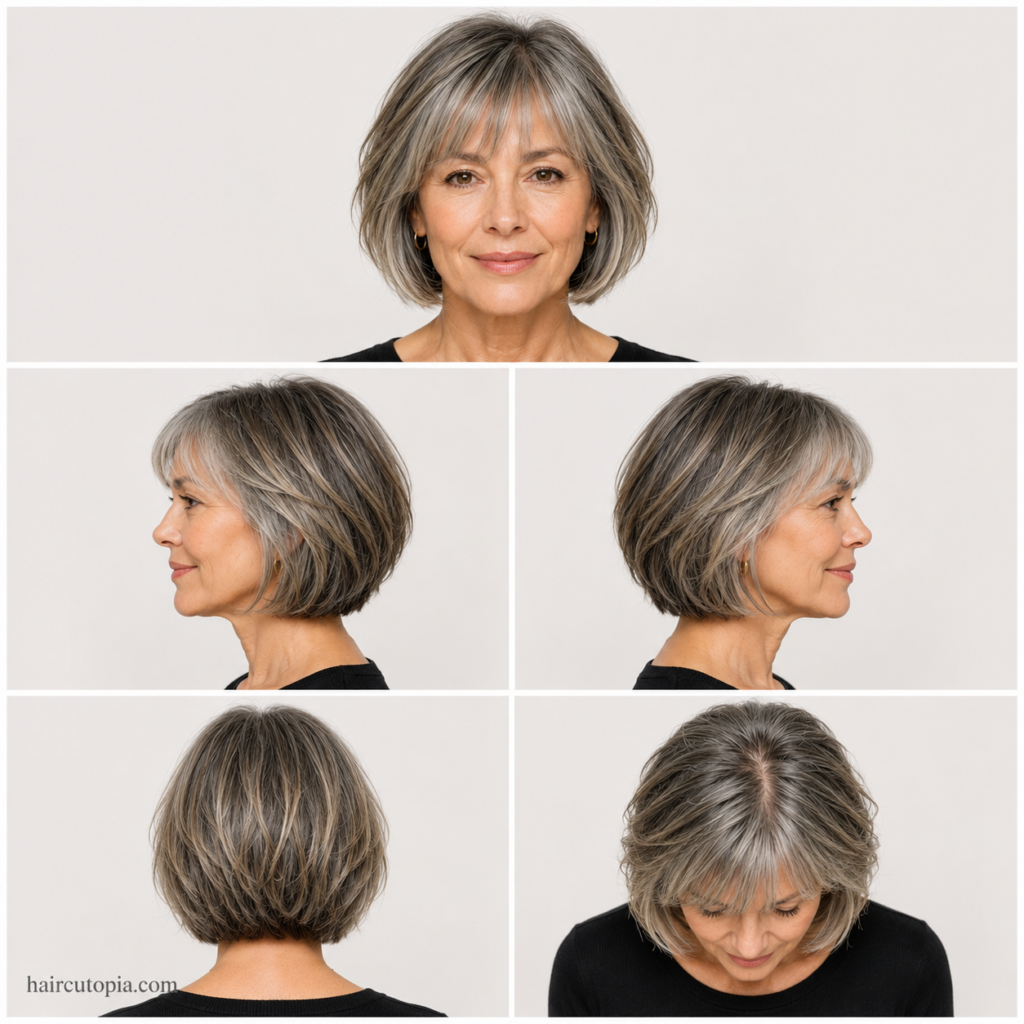
If a traditional jaw-length bob feels too short, start with a longer version.
Keeping the hair around the chin or just below it maintains the overall French bob feeling while providing additional styling flexibility.
That extra length can make it easier to:
- Tuck the hair behind your ears
- Add loose waves
- Experiment with different parts
- Create small half-up styles
- Transition gradually from longer hair
It’s also a sensible option if this is your first major haircut in a while.
You can always take another inch off later.
Choosing a French Bob for Your Face Shape
Face shape can help guide your haircut, but it doesn’t need to dictate it.
Think of it as one factor among several. Hair texture, density, styling habits, and personal preference are equally important.
Round Face
A French bob that reaches the chin or slightly below can create a longer visual line.
A soft side part, curtain bangs, or some volume near the crown can also change the overall proportions of the cut.
Oval Face
Oval faces can usually experiment with a wide range of bob lengths and fringe styles.
A classic chin-length bob with bangs creates a traditional look, while a center-parted blunt bob feels more contemporary.
Square Face
If you want to soften a defined jawline, consider waves, textured ends, or gentle face-framing pieces.
A slightly longer French bob can also give you additional movement around the jaw.
Heart-Shaped Face
A chin-length bob naturally adds visual interest around the lower portion of the face.
Wispy or curtain bangs can create additional softness through the forehead and cheek area.
Long Face
Volume through the sides can help create visual balance.
Full or wispy bangs can also reduce the amount of visible forehead and draw attention toward the eyes.
These aren’t hard rules. If you love a haircut that supposedly isn’t designed for your face shape, a stylist can usually adjust the details to make it work.
The Best French Bob Bangs for Women Over 50
Bangs can make a dramatic difference to a French bob, so it’s worth choosing them based on more than appearance alone.
Think about maintenance and how your hair naturally behaves.
Wispy Bangs
Choose wispy bangs if you want a lightweight fringe that doesn’t completely cover your forehead.
They work particularly well with softer, textured bobs.
Curtain Bangs
Curtain bangs are one of the most flexible options.
You can wear them more prominently around the face or sweep them farther to the sides.
Side-Swept Bangs
These work naturally with side parts and can transition easily into longer face-framing pieces.
Full Bangs
Full fringe creates the strongest classic French bob look.
It’s a bigger commitment but can beautifully frame the eyes.
No Bangs
You don’t need fringe at all.
If you prefer keeping your forehead open or don’t want additional maintenance, a French bob without bangs can look equally stylish.
French Bobs for Thinning or Lower-Density Hair
If your hair has become less dense, the details of the haircut become particularly important.
More layers aren’t automatically better.
Heavy layering can sometimes make already-fine ends appear even thinner. A relatively strong perimeter can preserve visual density while still allowing some strategic movement.
Length matters as well.
Taking fine hair from a longer style to a chin-length bob removes some of the weight that can pull the roots downward.
When talking to your stylist, mention where you’ve noticed changes in density. That information can help them determine where to preserve fullness and where subtle layering might be useful.
How to Style a French Bob
One of the advantages of a French bob is that it doesn’t necessarily require elaborate styling.
The best routine depends on the finish you’re trying to achieve.
For Natural Texture
Apply a small amount of lightweight styling product to damp hair.
Use your fingers to encourage waves or curls, then air-dry or diffuse depending on your texture.
For More Volume
Focus on lifting the roots rather than coating the entire haircut with volumizing products.
A light mousse or root-lifting product can provide support without making the ends stiff.
For a Tousled Finish
Create a few loose bends rather than curling every strand.
Use your fingers to separate the finished texture.
For a Smooth Finish
Blow-dry the hair in sections, gently directing the ends into the desired shape.
Finish with a small amount of smoothing product if needed.
What to Tell Your Hairstylist
“French bob” can mean different things to different people.
Reference photos are useful, but explaining what you like about those photos gives your stylist much more information.
Be specific about:
- Where you want the length to fall.
- Whether you prefer blunt or textured ends.
- How much layering you want.
- Whether you want bangs.
- How you normally style your hair.
- Whether you usually air-dry or blow-dry.
- How often you’re comfortable getting trims.
Also talk about what you don’t want.
If you dislike excessive volume at the sides or don’t want hair touching your face, those details can affect how the cut should be shaped.
How Often Should a French Bob Be Trimmed?
Shorter haircuts tend to show growth relatively quickly.
If you want to preserve a precise chin-length shape, a trim around every six to eight weeks is a reasonable starting point.
A longer or deliberately tousled French bob may be able to go longer between appointments.
Bangs often need attention sooner than the rest of the haircut.
Your stylist can give you a more personalized schedule based on how quickly your hair grows and how precise you want the style to remain.
Is a French Bob High Maintenance?
It can be low maintenance day to day, but there’s a tradeoff.
Short hair may take less time to wash, dry, and style, yet maintaining the actual haircut usually requires more frequent salon visits than keeping long hair.
The lowest-maintenance French bobs tend to work with your natural texture rather than against it.
If easy styling is your priority, consider:
- A slightly longer bob
- Soft rather than highly precise ends
- Minimal layering for fine hair
- Strategic layering for thick hair
- Curtain or side-swept bangs
- A shape that works when air-dried
The closer the haircut is to your natural texture, the less work you’ll usually need to do at home.
Should Women Over 50 Get a French Bob?
Age doesn’t determine whether you can wear a French bob.
The more useful questions are whether you enjoy short hair, whether the cut works with your texture, and whether you’re comfortable with the maintenance.
A French bob can be adjusted considerably.
It can be sharp and sleek, soft and wavy, curly and voluminous, or deliberately tousled. You can wear it with full bangs, barely-there fringe, or no bangs whatsoever.
And if you’re nervous about making a dramatic change, you don’t have to start with the shortest version.
Begin with a slightly longer bob. Once you’ve lived with that length for a while, you can decide whether you want to go shorter.
Final Thoughts on French Bob Haircuts for Women Over 50
French bob haircuts for women over 50 offer much more variety than the classic chin-length cut might suggest.
A blunt perimeter can help fine hair appear fuller, while subtle layers can give thick hair more movement. Waves and curls bring natural softness to the shape, and gray or silver hair can look especially striking in a short, defined cut.
Then there are the bangs. Wispy fringe feels light and relaxed, curtain bangs offer flexibility, and full bangs create that unmistakable French-inspired look.
The most important part is customization.
Instead of choosing a haircut based entirely on age or trends, look at your natural texture, density, styling routine, and the features you personally want to highlight.
That’s when a French bob goes from being simply a fashionable short haircut to one that genuinely works for you.
Related Posts
 French Bob Haircuts for Women Over 40: Chic, Modern Styles to Try
 Short A-Line Bob Haircuts: 35 Chic Ideas, Styling Tips, and Who They Suit Best
 A-Line Bob Haircuts for Round Faces: 25 Flattering Ideas, Styling Tips & Expert Advice
 A-Line Bob Haircuts for Fine Hair: 25 Chic Styles That Instantly Add Volume