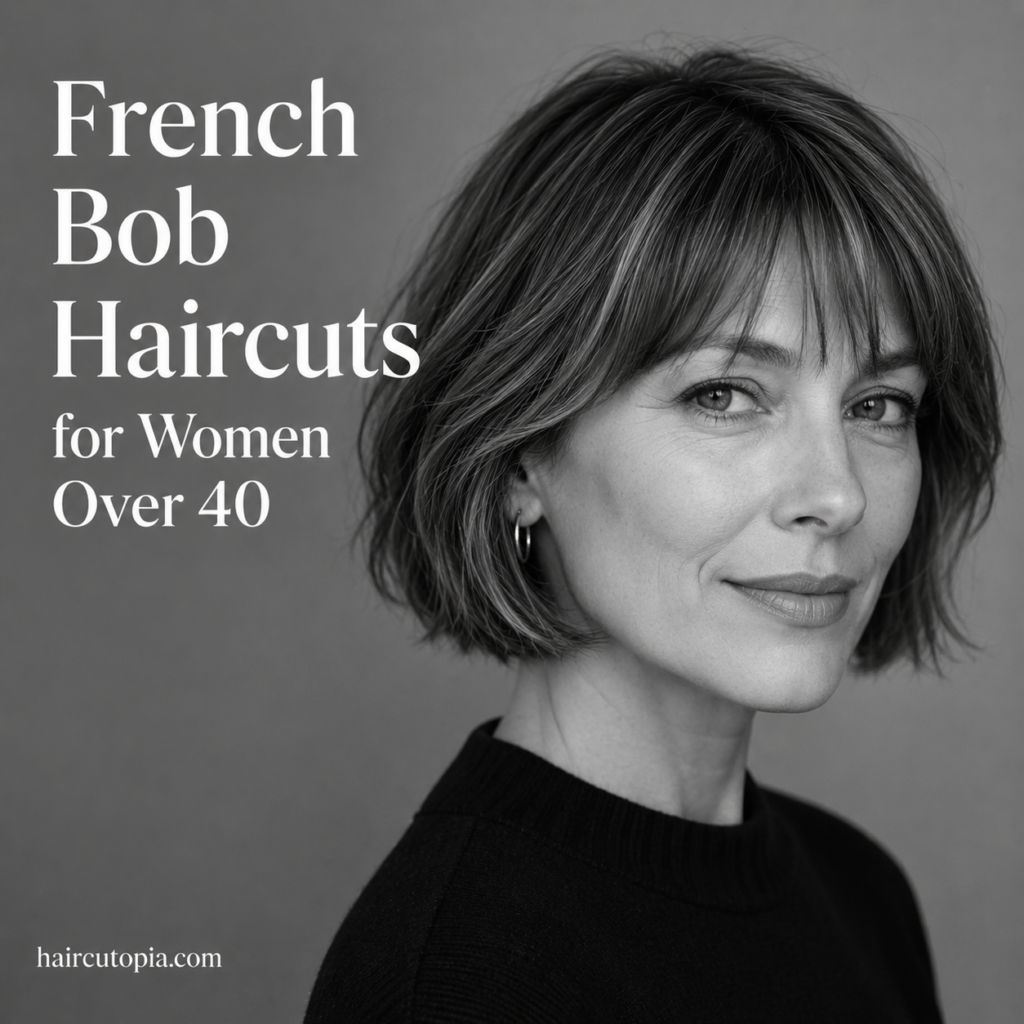
A French bob is one of those haircuts that can feel timeless and current at the same time. It’s short, stylish, and surprisingly versatile, which makes it an appealing choice for women over 40 who want a fresh haircut without something overly complicated.
The classic French bob usually falls somewhere between the cheekbones and chin, often with bangs and a softly textured finish. Modern versions are much more flexible. You can wear it sleek and blunt, loose and wavy, softly layered, curly, or slightly longer around the jaw.
The right version can also work with changes in hair texture and density. Instead of forcing the hair into a rigid shape, a good French bob can use natural movement, strategic layers, and face-framing details to create a flattering, easy-to-wear style.
If you’re thinking about going shorter, these French bob haircuts for women over 40 offer plenty of inspiration.
Why the French Bob Works So Well Over 40
There’s no rule saying that reaching a certain age means you need to cut your hair short. But if you already want a shorter haircut, the French bob has several advantages.
It creates a defined shape around the face without requiring a lot of length. Depending on how it’s cut, it can emphasize the cheekbones, soften the jawline, or bring more attention to the eyes.
It’s also adaptable to different hair types.
Fine hair can benefit from a stronger perimeter that creates the appearance of fuller ends. Thick hair can be shaped with subtle layers to remove excess weight. Waves and curls naturally give the cut movement and dimension.
And because the French bob isn’t supposed to look overly perfect, a little natural texture can actually make it better.
1. Classic Chin-Length French Bob
The traditional chin-length French bob is a great place to start.
The hair ends close to the chin, creating a clean silhouette that frames the lower half of the face. Pair it with soft bangs and you get the recognizable French-inspired shape.
This version works particularly well if you prefer a haircut that looks polished but still has some movement.
Rather than making the ends completely rigid, subtle texturing can keep the cut from feeling too heavy.
2. French Bob With Wispy Bangs
Wispy bangs soften the front of a French bob without completely covering the forehead.
They’re lighter and more separated than traditional blunt bangs, which gives the haircut an airy appearance.
They can also be easier to blend into the rest of the style as they grow.
If you’ve been considering bangs but aren’t ready for a thick fringe, wispy bangs offer a less dramatic way to change the shape around your face.
3. Wavy French Bob
A French bob doesn’t need to be perfectly straight.
In fact, loose waves are one of the easiest ways to give this haircut a relaxed, modern finish.
Natural waves create volume through the sides while preventing the ends from looking overly structured. If your hair already has some bend to it, a stylist can shape the bob around that movement.
A small amount of lightweight styling cream or wave-enhancing product may be all you need for everyday styling.
4. Layered French Bob
Layers can make a French bob feel lighter and more flexible.
Instead of cutting everything to exactly the same length, a stylist can add subtle layers through the interior or around the face.
This can help:
- Remove bulk from thick hair
- Encourage natural movement
- Create volume in specific areas
- Soften the outline of the haircut
- Give waves and curls more room to form
The layers don’t have to be dramatic. Even small adjustments can noticeably change how the bob moves.
5. French Bob With Curtain Bangs
Curtain bangs are a good match for women who want face-framing softness without committing to a full fringe.
They’re typically shorter near the center and become gradually longer toward the sides, allowing them to blend into the rest of the haircut.
Because they can be parted and swept away from the face, they’re also quite versatile.
Pair curtain bangs with a chin-length or slightly longer French bob for a softer take on the traditional style.
6. Blunt French Bob
A blunt French bob emphasizes clean lines and fuller-looking ends.
Instead of heavily layering the bottom of the haircut, the perimeter stays relatively solid. This can be particularly helpful for fine or medium-density hair because it preserves visual weight around the ends.
A blunt bob doesn’t necessarily have to look severe.
Adding slight texture through the interior or a soft bend through the lengths can keep the overall look relaxed.
7. French Bob for Fine Hair
Hair density and texture can change over time, and a well-designed haircut can make fine hair easier to work with.
For a French bob, keeping the perimeter relatively full is often a good approach.
Too many layers can remove density from the ends, while a stronger baseline can make the hair appear thicker.
A stylist may recommend:
- Minimal layering
- A chin-length perimeter
- Soft face-framing pieces
- Lightweight volumizing products
- Gentle root lift when styling
Keeping styling products light is especially important. Heavy creams and oils can quickly flatten fine hair.
8. French Bob for Thick Hair
Thick hair gives a French bob plenty of natural body, but managing that volume is important.
If every strand is cut to the same length, the bottom of the haircut can sometimes become too wide or bulky.
Subtle internal layers can remove some of that weight without destroying the bob’s overall shape.
The result should still look full, just with more movement and less heaviness around the jaw.
9. Curly French Bob
Curls can transform a French bob into a soft, dimensional haircut.
Instead of creating a perfectly straight perimeter, the shape follows the natural curl pattern. This can produce beautiful volume around the cheekbones and jaw.
Length is particularly important with curly hair because of shrinkage.
Hair that appears chin-length when wet may sit noticeably higher once dry. Working with a stylist who understands curly hair can help ensure the finished shape lands where you want it.
Curly bangs can also complement the style without needing to be straightened.
10. French Bob Without Bangs
Although bangs are closely associated with the classic French bob, they’re completely optional.
Without bangs, the haircut takes on a simpler and slightly more contemporary appearance.
You can experiment with different parts, including:
- Center part
- Soft side part
- Deep side part
- Slightly off-center part
Changing the part can alter the entire balance of the haircut without requiring another trip to the salon.
A no-bangs French bob is also useful if you prefer lower-maintenance styling around the forehead.
11. French Bob With Side-Swept Bangs
Side-swept bangs create softness while maintaining some openness around the face.
They can blend naturally into a bob and work especially well if you already wear your hair with a side part.
Another advantage is the grow-out process.
As side-swept bangs become longer, they can gradually transition into face-framing layers instead of creating an obvious line between the fringe and the rest of the hair.
12. Tousled French Bob
Not every bob needs to look perfectly styled.
A tousled French bob embraces irregular waves, natural volume, and slightly separated ends.
This relaxed texture can make the haircut feel more casual and contemporary.
Instead of trying to create identical curls, work with the movement already present in your hair. A small amount of texture spray or lightweight styling cream can help define individual pieces.
The finished result should feel effortless rather than overly controlled.
13. Sleek French Bob
If you prefer a more polished look, the sleek French bob puts the focus on clean lines and smooth texture.
It works especially well with straight or easily smoothed hair.
The ends can sit directly at the chin or slightly below it, while a center or side part creates structure through the front.
You can also combine a sleek finish with bangs for a more classic French-inspired appearance.
When using heat regularly, apply heat protection and use only as much heat as your hair needs.
14. Slightly Longer French Bob
Going short doesn’t mean you have to immediately jump to cheekbone-length hair.
A slightly longer French bob typically falls around the chin or just below it.
That extra length offers several advantages. You may have more room to tuck the sides behind your ears, create soft waves, or pull small sections away from the face.
It’s also a comfortable transition if you’ve had long hair for years and aren’t sure how you’ll feel about a dramatic cut.
You can always shorten it later.
15. French Bob With Face-Framing Layers
Strategic face-framing pieces can completely change how a bob sits around your features.
Instead of having one solid line around the face, slightly shorter pieces create movement near the cheeks and jaw.
These layers can be subtle or more noticeable depending on your preference.
They also pair nicely with curtain bangs, creating a gradual transition from the fringe into the main length of the haircut.
16. Textured French Bob
The textured French bob falls somewhere between a blunt bob and a heavily layered style.
The overall silhouette remains recognizable as a bob, but the ends and interior have enough texture to create separation and movement.
This works especially well for hair that tends to look heavy when cut completely blunt.
A textured finish can also make everyday styling more forgiving because the haircut doesn’t rely on every strand sitting perfectly in place.
17. French Bob With Full Bangs
Full bangs create a classic, distinctive French bob.
They typically fall near the eyebrows and create a stronger frame around the eyes.
The fringe can be cut completely blunt or slightly textured depending on how bold you want the result to look.
Keep in mind that full bangs generally require more maintenance than curtain or side-swept styles.
They may need regular trims to keep them at the desired length.
18. Gray French Bob
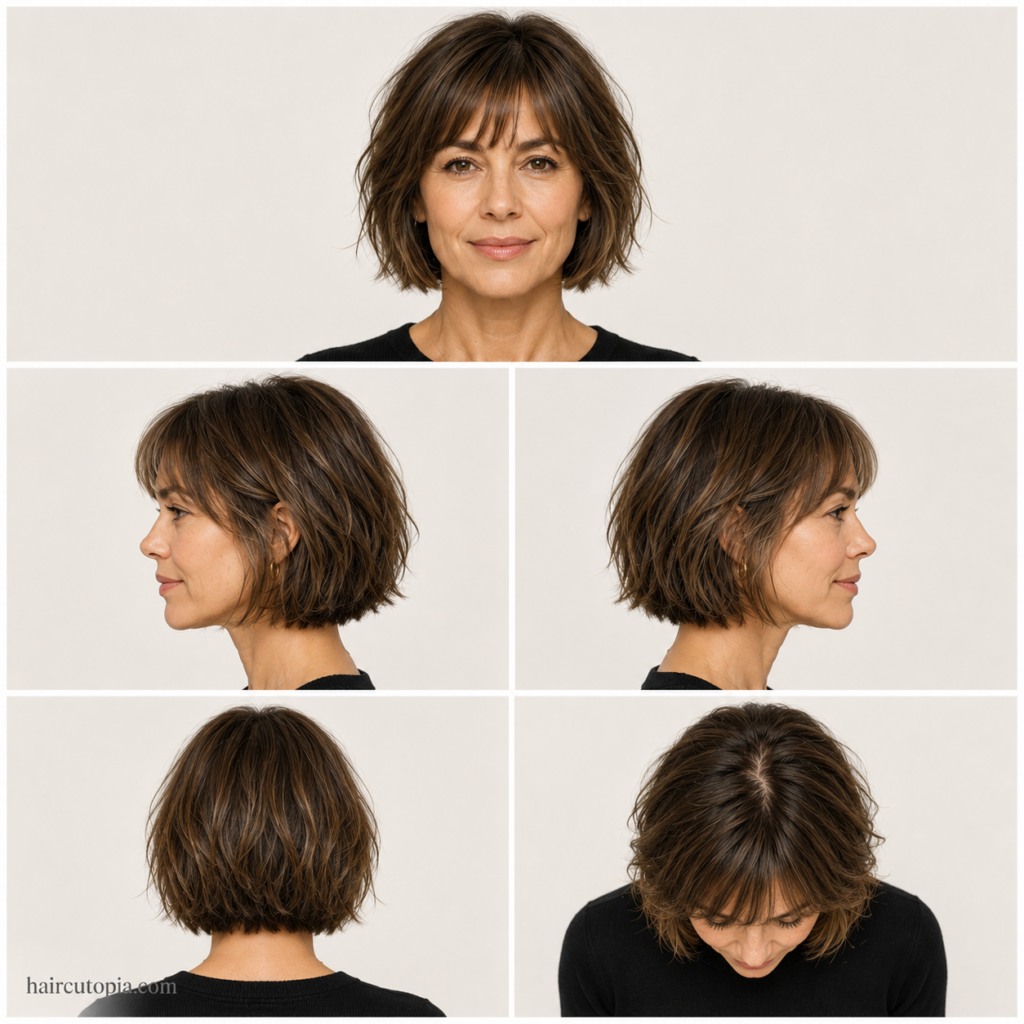
A French bob can be a beautiful way to showcase naturally gray or silver hair.
The clean shape gives the hair structure, while texture and layering can highlight different tones throughout the strands.
You can wear gray hair sleek for a polished finish or embrace waves and natural texture for something softer.
If your gray hair has become more coarse or dry, moisturizing products and gentle styling can help maintain softness and shine.
Choosing a French Bob for Your Face Shape
Face shape can be useful when choosing the details of a bob, but it shouldn’t be treated as a strict set of rules.
Small changes in length, bangs, volume, and parting can customize the haircut considerably.
Round Faces
A bob that falls near or slightly below the chin can create a little more vertical balance.
Curtain bangs or a soft side part can also keep the front of the haircut open.
Oval Faces
Oval faces can generally experiment with many French bob variations.
You might try a traditional chin-length cut, full bangs, a sleek center part, or a more textured version.
Square Faces
Soft waves and subtle layers can create movement around a stronger jawline.
A slightly longer bob can also provide more flexibility around the lower part of the face.
Heart-Shaped Faces
Chin-length bobs can work particularly well because they add visual interest near the jaw.
Curtain bangs, wispy fringe, or side-swept bangs can complement the shape.
Long Faces
A bob with some width through the sides can create balance.
Bangs are another option because they visually shorten the forehead and bring more attention toward the center of the face.
How to Choose the Right Bangs
The fringe is one of the biggest decisions you’ll make when choosing a French bob.
Think about how much maintenance you’re comfortable with.
If you want something flexible, curtain or side-swept bangs are easier to move away from the face.
Wispy bangs provide the look of a fringe without as much density.
Full bangs create the strongest French bob aesthetic but generally require more frequent trims.
And if you don’t want bangs at all, skip them. A French bob can still look stylish without a fringe.
How to Style a French Bob
You don’t need an elaborate routine to make a French bob look good.
In many cases, simple styling works best.
For a Natural Finish
Apply a lightweight styling product to damp hair and let your natural texture develop.
You can scrunch wavy or curly hair gently with your hands.
For More Volume
Concentrate volume near the roots rather than applying heavy products through the ends.
A lightweight volumizing mousse or root-lifting product can help.
For Soft Waves
Loose bends tend to suit a French bob better than perfectly uniform curls.
If you’re using a heated tool, alternate the direction of a few sections and leave the ends slightly relaxed.
For a Sleek Finish
Blow-dry the hair smooth and gently shape the ends.
A tiny amount of smoothing product can control flyaways, but avoid using so much that the bob loses movement.
What to Ask Your Hairstylist
A reference photo is useful, but it doesn’t tell your stylist everything.
Explain exactly what you like about the haircut you’re showing them.
You might say:
- I want the length to fall around my chin.
- I’d like movement without too many layers.
- I want the ends to look full rather than thin.
- I’d like bangs that can easily grow into face-framing pieces.
- I usually air-dry my hair, so I want the cut to work naturally.
Also mention how much time you’re willing to spend styling your hair.
A haircut that looks fantastic after a professional blowout isn’t particularly useful if you want a five-minute morning routine.
How Often Should You Trim a French Bob?
Because the French bob relies heavily on its shape, growth tends to become noticeable faster than it does with long hair.
A trim roughly every six to eight weeks can help maintain a shorter, more precise shape.
If you’re wearing a longer or deliberately tousled version, you may be comfortable going longer between appointments.
Bangs can require more frequent maintenance than the rest of the haircut.
Ask your stylist how often your specific fringe should be trimmed.
Is a French Bob Easy to Maintain?
Daily styling can be quite simple, particularly if the cut works with your natural hair texture.
Salon maintenance is a little different.
Short bobs generally require more frequent trims because even an inch of growth can noticeably change the silhouette.
If you want a lower-maintenance version, consider:
- Keeping the bob slightly longer
- Choosing soft texture instead of a precise blunt shape
- Wearing curtain or side-swept bangs
- Working with your natural waves or curls
- Choosing a cut that air-dries well
The easier your haircut works with your natural hair, the less effort you’ll need to put into styling it.
Should You Get a French Bob After 40?
If you like the look, absolutely.
Being over 40 doesn’t require a particular haircut, and there’s no reason to choose a style simply because it’s considered “age appropriate.”
The better question is whether a French bob suits your hair, lifestyle, and personal style.
If you love defined shapes, shorter lengths, and haircuts that frame the face, it’s certainly worth considering.
You can make the change gradually, too. Start with a longer chin-length bob, see how you feel about it, and go shorter at a future appointment if you want a more traditional French bob.
Final Thoughts on French Bob Haircuts for Women Over 40
French bob haircuts for women over 40 can be sleek, tousled, curly, blunt, layered, or somewhere in between.
That’s what makes this haircut so useful. You don’t have to copy one specific version to get the French bob look.
Fine hair may benefit from a fuller perimeter. Thick hair can use subtle layering to reduce bulk. Curly and wavy hair can embrace natural movement, while straight hair can highlight the bob’s clean shape.
Bangs are optional, too. Full fringe creates a classic finish, while curtain, wispy, and side-swept bangs offer softer alternatives.
The best French bob is ultimately one that’s designed around the hair you actually have and the way you actually style it. Get those details right, and this short, timeless haircut can feel effortlessly modern at any age.
Related Posts
 Haircuts for Women with Round Faces: 40 Flattering Styles for Every Hair Length
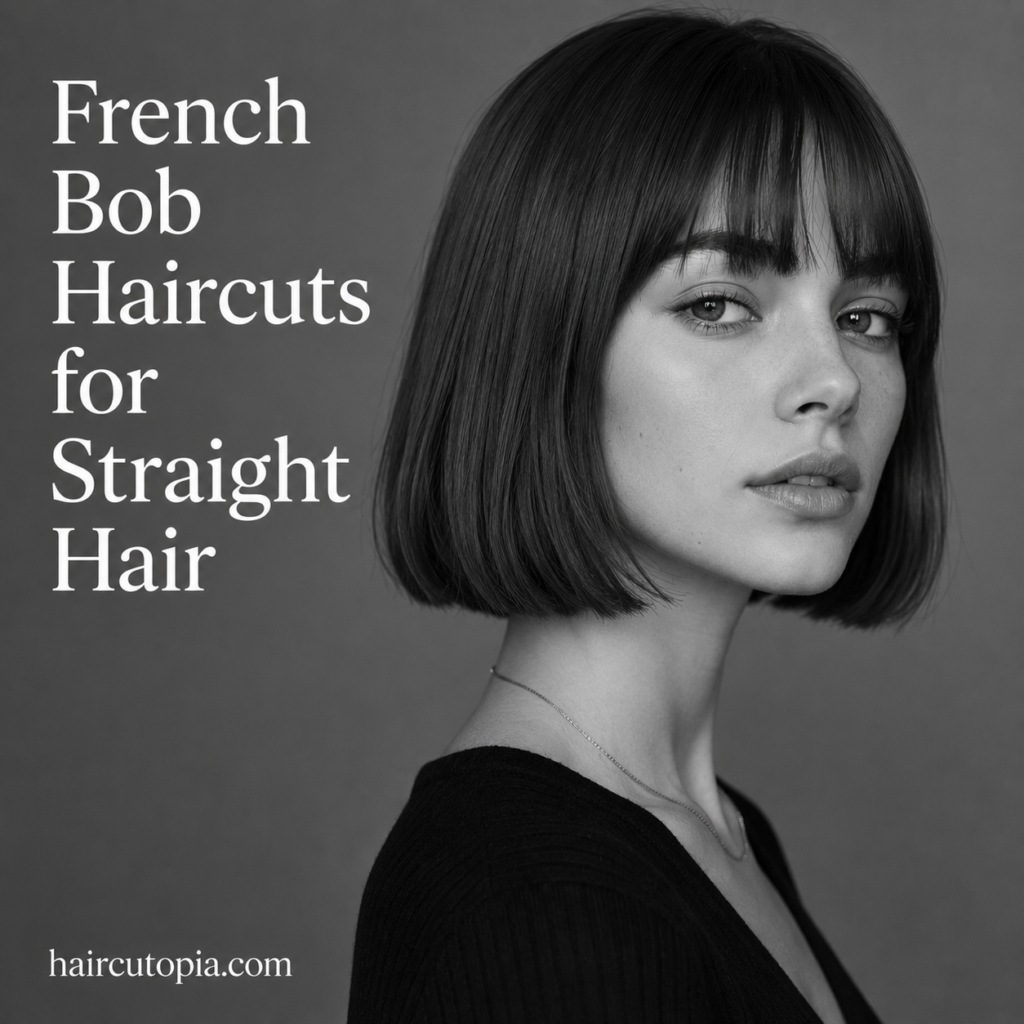 French Bob Haircuts for Straight Hair: Chic, Polished Styles to Try
 A-Line Bob Haircuts for Thin Hair: 25 Flattering Styles That Add Volume and Movement
 Professional Textured Bob Haircuts: 35 Polished Styles for a Modern, Workplace-Ready Look