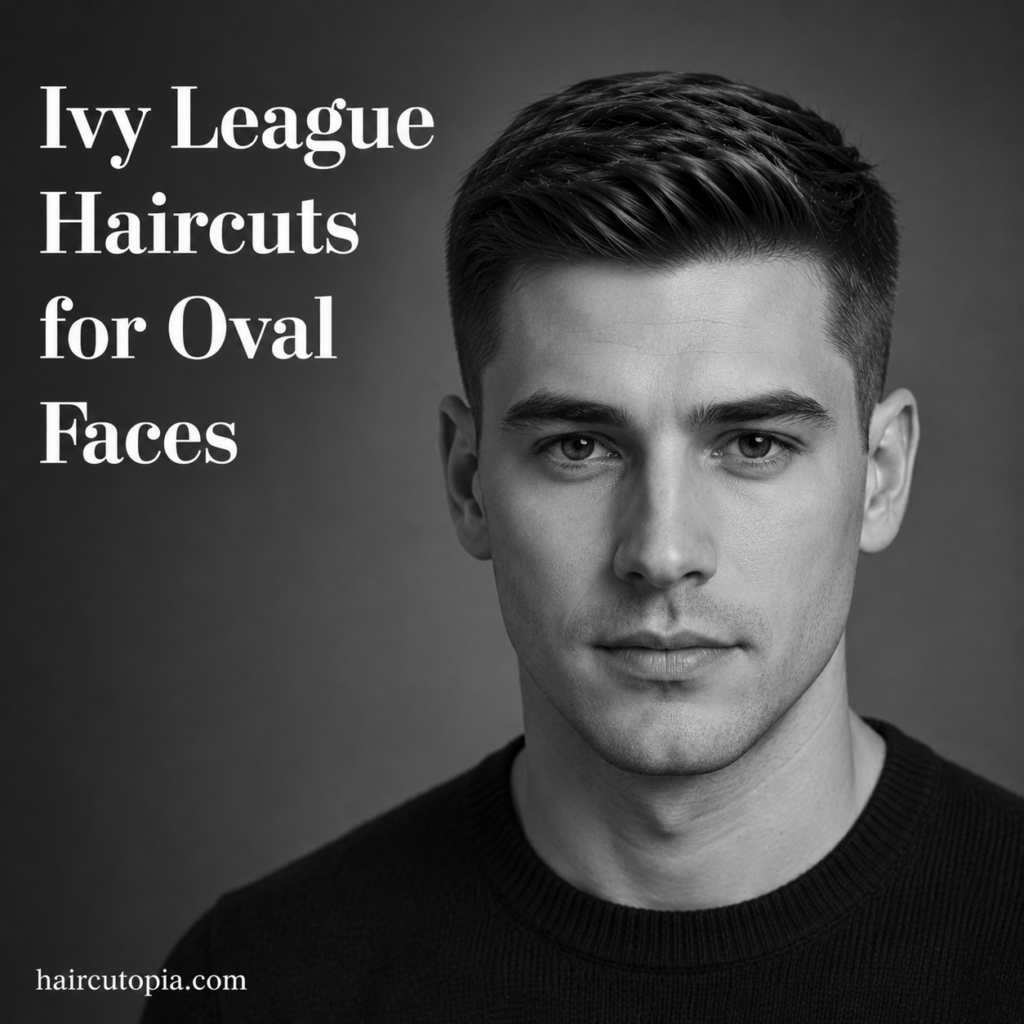
If you’ve ever looked up the best face shape for men’s hairstyles, you’ve probably seen the same answer over and over: oval faces tend to work with almost everything.
While that’s generally true, not every haircut takes full advantage of an oval face shape. Some styles can make the face appear too long, while others may hide the naturally balanced proportions that make oval faces so versatile in the first place.
That’s one reason the Ivy League haircut remains such a popular choice.
It offers a clean, timeless appearance while allowing enough styling flexibility to enhance your facial features. Whether you’re aiming for a professional look, a modern textured finish, or something easy to maintain, an Ivy League haircut can complement an oval face exceptionally well.
What Is an Ivy League Haircut?
The Ivy League haircut is often described as a longer version of the classic crew cut.
Unlike a traditional crew cut, the hair on top remains long enough to be styled, parted, brushed upward, or swept to the side. The sides and back are typically tapered or faded, creating a neat and structured appearance.
Key characteristics include:
- Short, clean sides
- Longer top section
- Tapered neckline
- Versatile styling options
- Low-maintenance upkeep
The result is a haircut that looks polished without appearing overly formal.
Why Oval Faces Pair So Well with Ivy League Haircuts
Oval face shapes are naturally balanced.
Typically, the face is slightly longer than it is wide, with a gently rounded jawline and forehead. Because the proportions are already harmonious, the goal isn’t to correct anything—it’s simply to enhance what’s already there.
An Ivy League haircut works particularly well because it:
- Maintains facial balance
- Highlights natural symmetry
- Frames the face cleanly
- Offers flexibility in styling
- Works with nearly every hair type
Unlike some face shapes that require strategic volume or specific proportions, men with oval faces have far more freedom when choosing an Ivy League variation.
Characteristics of an Oval Face Shape
You may have an oval face if:
- Your face is longer than it is wide
- Your forehead is slightly wider than your jawline
- Your chin is softly rounded
- Your features appear balanced and symmetrical
- There are no dominant angles or sharp edges
Many barbers consider oval faces the most adaptable face shape because they work with a wide range of haircut styles and lengths.
Best Ivy League Haircuts for Oval Faces
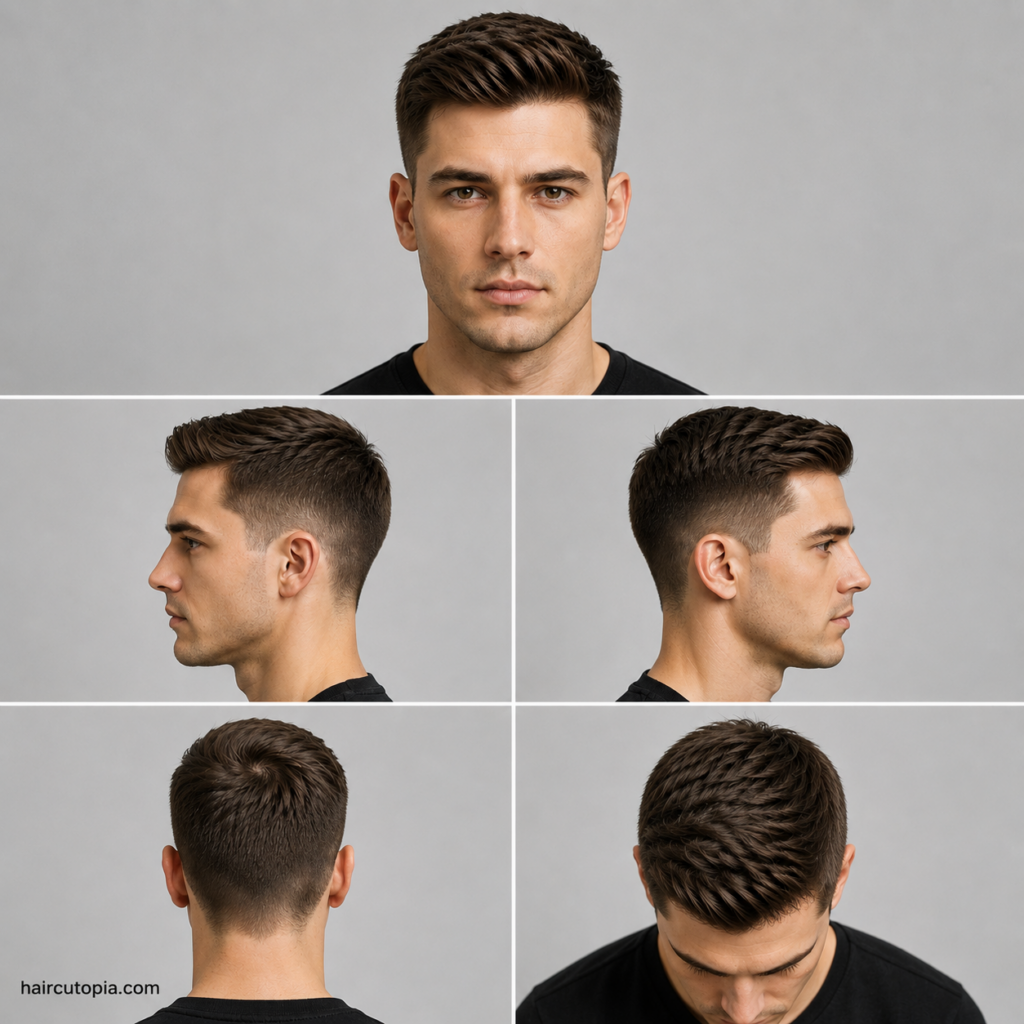
Classic Ivy League
The traditional Ivy League haircut is almost tailor-made for oval faces.
The balanced proportions of the haircut complement the balanced proportions of the face.
Features include:
- Moderate length on top
- Tapered sides
- Clean side part
- Neat overall appearance
This style works equally well in professional and casual environments.
Textured Ivy League
Adding texture gives the classic Ivy League a more modern feel.
Instead of a smooth, polished finish, the top is layered and styled with natural movement.
Benefits include:
- Increased volume
- Contemporary appearance
- Easy styling
- Enhanced dimension
A textured Ivy League works especially well for younger men or those looking for a slightly more relaxed look.
Ivy League with Low Fade
A low fade adds subtle contrast while maintaining a refined appearance.
The fade begins near the ears and gradually blends upward, creating a clean transition.
Why it works:
- Sharpens the overall haircut
- Keeps the look modern
- Doesn’t overpower facial features
- Suitable for most workplaces
For men who want a current look without going too bold, this is an excellent option.
Ivy League with Mid Fade
A mid fade introduces more contrast and structure.
Because oval faces can comfortably handle stronger proportions, this variation creates a sharper silhouette while preserving balance.
Best for:
- Thick hair
- Straight hair
- Active lifestyles
- Modern grooming preferences
Side-Part Ivy League
The side-part variation remains one of the most sophisticated versions of the haircut.
The defined part adds structure and visual interest without appearing rigid.
Advantages include:
- Professional appearance
- Timeless styling
- Easy maintenance
- Works for all ages
It’s a great choice for men who prefer classic grooming.
Ivy League with Quiff
Adding a small quiff to the front creates extra height and texture.
Since oval faces already have balanced proportions, the key is moderation rather than excessive volume.
This style offers:
- Modern styling
- Greater personality
- Additional texture
- A youthful appearance
Ivy League with Tapered Sides
For men who prefer a softer look than a fade, tapered sides provide the perfect compromise.
This version:
- Looks natural
- Requires less maintenance
- Maintains professional appeal
- Complements all hair textures
It’s often the most versatile Ivy League haircut available.
Best Ivy League Haircuts by Hair Type
Thick Hair
Thick hair naturally provides volume and density.
A textured Ivy League can help remove excess bulk while maintaining shape and control.
Recommended features:
- Textured top
- Taper fade
- Light styling products
- Reduced side weight
Thin Hair
Thin hair benefits from strategic styling that creates fullness.
A slightly longer Ivy League can:
- Improve density appearance
- Add lift
- Create movement
- Enhance overall shape
Avoid overly short tops that may expose the scalp.
Fine Hair
Fine hair often responds well to shorter Ivy League styles.
Consider:
- Light layers
- Matte products
- Side-swept styling
- Minimal weight
The goal is creating natural volume without overcomplicating the haircut.
Curly Hair
Curly-haired men can absolutely wear an Ivy League haircut.
Natural texture adds visual interest and character.
Tips include:
- Maintain shape through regular trims
- Keep curls controlled
- Reduce side bulk
- Use moisturizing styling products
Wavy Hair
Wavy hair may be one of the best textures for an Ivy League.
Natural movement helps create a relaxed yet polished appearance.
Benefits include:
- Effortless texture
- Easy styling
- Modern appearance
- Versatile finishes
How to Style an Ivy League Haircut
One of the biggest advantages of the Ivy League haircut is how easy it is to style.
Step 1: Start with Damp Hair
After showering, lightly towel dry your hair.
Hair that’s slightly damp is easier to shape and control.
Step 2: Apply Product
Choose a product based on your desired finish.
Popular options include:
- Matte clay
- Texture paste
- Fiber
- Styling cream
Use a small amount initially and add more only if needed.
Step 3: Create Direction
Depending on the variation:
- Comb to the side
- Brush slightly upward
- Add light texture
- Create a subtle quiff
The Ivy League looks best when it appears natural rather than overly styled.
Step 4: Finish Lightly
Avoid excessive product buildup.
The goal is movement, texture, and control—not stiffness.
What to Ask Your Barber
Communication makes a huge difference when getting an Ivy League haircut.
Try saying:
“I’d like an Ivy League haircut that works well with an oval face shape, with enough length on top for styling and tapered sides.”
Additional details may include:
- Textured top
- Side part
- Low fade
- Mid fade
- Tapered neckline
- Natural finish
Bringing photos is always helpful.
Common Mistakes to Avoid
Too Much Height
While volume can look great, excessive height may make an oval face appear longer than necessary.
Aim for balanced proportions.
Overly Tight Sides
Extremely high skin fades can sometimes create too much contrast.
A moderate fade often looks more refined.
Ignoring Hair Texture
The best Ivy League haircut works with your natural texture rather than fighting against it.
Using Too Much Product
Heavy product application can flatten movement and make the haircut appear unnatural.
Less is usually more.
Professional vs Casual Ivy League Styles
One reason the Ivy League remains so popular is its versatility.
Professional Styling
For office environments:
- Defined side part
- Clean taper
- Smooth finish
- Moderate volume
Casual Styling
For weekends or social settings:
- Textured top
- Relaxed finish
- Matte products
- Slightly messy appearance
The same haircut can easily transition between both looks.
Maintenance and Upkeep
The Ivy League is relatively low maintenance compared to many modern hairstyles.
Daily
- 2–5 minutes of styling
- Light product application
- Quick comb-through
Every 3–5 Weeks
- Trim sides
- Clean neckline
- Refresh shape
Every 6 Weeks
- Full haircut maintenance
- Texture refinement
- Length adjustment
Consistent trims help preserve the clean lines that make the Ivy League so appealing.
Why the Ivy League Never Goes Out of Style
Hair trends come and go, but the Ivy League continues to remain relevant.
Its appeal comes from a combination of:
- Classic proportions
- Practical styling
- Professional versatility
- Adaptability across generations
Whether you’re in your twenties or your fifties, the haircut feels appropriate and modern.
Final Thoughts
If you have an oval face shape, the Ivy League haircut is one of the easiest and most reliable choices you can make. Its balanced proportions complement your natural facial structure while offering enough flexibility to match your personal style.
From classic side parts and textured tops to modern fades and tapered finishes, there’s an Ivy League variation that can fit virtually any lifestyle, profession, or hair type.
The beauty of this haircut lies in its simplicity. It looks polished without trying too hard, modern without chasing trends, and timeless enough to remain relevant year after year. For men with oval faces, that’s a combination that’s hard to beat.

Related Posts
 Haircuts for Oval Faces: The Complete Guide to Finding Your Most Flattering Style
 Haircuts for Men with Diamond Faces: The Best Styles to Complement Your Features
 Haircuts for Men with Heart Faces: 25 Styles That Balance Your Features
 Haircuts for Men with Oval Faces: 35 Stylish Cuts That Always Look Good