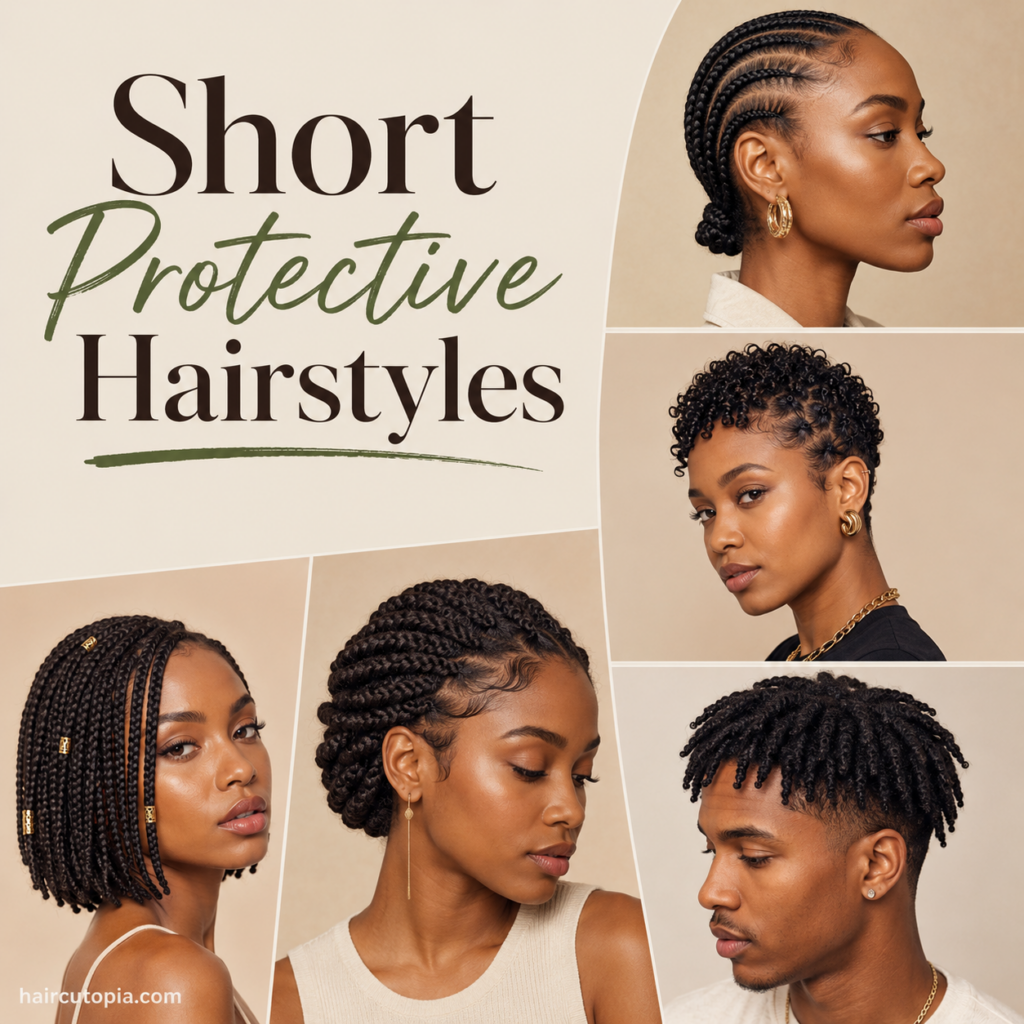
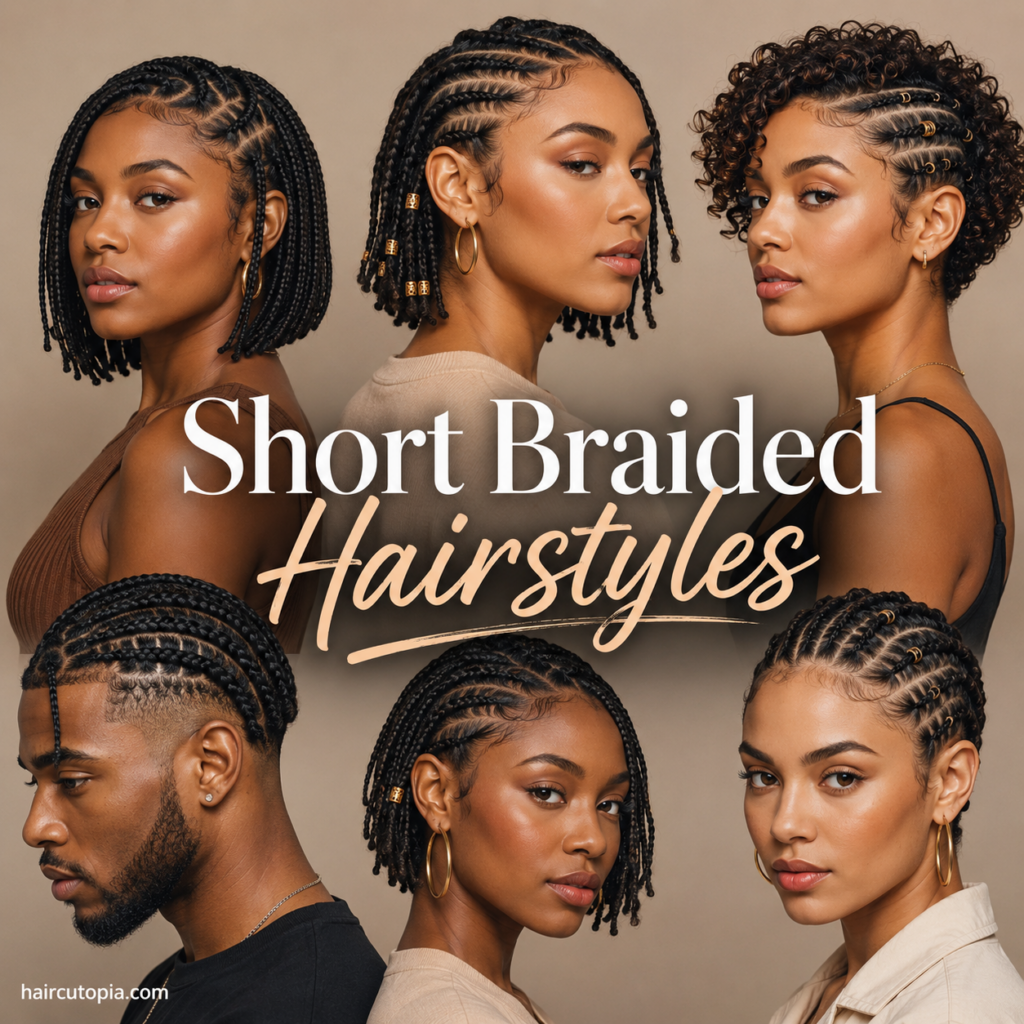
Short hair and braids work surprisingly well together. You don’t need waist-length hair or hours in a salon chair to get a braided style that looks polished, creative, and intentional.
In fact, short braided hairstyles have a personality of their own. They can be neat and understated, bold and geometric, soft and romantic, or somewhere in between. Depending on your hair length and texture, braids can also be a practical way to keep hair controlled while changing up your everyday look.
From short box braids and cornrows to braided bobs, twists, and small accent braids, there are plenty of directions you can take.
Here are some of the best short braided hairstyles to consider, along with tips for choosing a style that works with your hair.
Why Braids Work So Well With Short Hair
One of the biggest misconceptions about braided hairstyles is that you need long hair to pull them off.
You don’t.
While extremely short hair can limit certain techniques, many braided styles work beautifully on hair that’s only a few inches long. Extensions can also create additional length and fullness without requiring you to grow your natural hair first.
Short braids have a few practical advantages, too.
They can be:
- Lighter than extra-long braids
- Easier to wash and maintain
- Faster to style in the morning
- Comfortable in warmer weather
- Versatile enough for casual and polished looks
- A good option for showcasing your face and neckline
The shorter length can also make individual braid patterns more noticeable. Instead of the length being the main feature, details like parts, texture, braid size, and accessories get more attention.
Best Short Braided Hairstyles
There isn’t one single way to wear short braids. Some styles use natural hair alone, while others use extensions to create a particular shape or add volume.
Here are several ideas worth considering.
1. Short Box Braids
Short box braids are one of the easiest places to start if you like classic braided styles but don’t want a lot of length.
They can fall around the chin, jawline, or shoulders depending on the look you’re going for. Smaller braids tend to create more movement, while medium or chunky box braids make a stronger visual statement.
A short box-braid style also frames the face nicely without overwhelming it.
Try wearing them with:
- A center part
- A deep side part
- Beads at the ends
- Metallic braid cuffs
- Subtle color mixed throughout the braids
Keeping the ends blunt can create an especially clean, modern shape.
2. Braided Bob
The braided bob combines the structure of a traditional bob haircut with the texture of individual braids.
Most versions sit somewhere between the jaw and shoulders. Because the length is relatively uniform, the finished hairstyle has a defined silhouette rather than the cascading shape associated with long braids.
A chin-length braided bob can feel sharp and contemporary, while a slightly longer version around the shoulders gives you more movement.
You can also experiment with asymmetry by wearing one side slightly longer than the other.
3. Short Knotless Braids
If you like the appearance of box braids but want a softer transition at the roots, short knotless braids are another option.
Knotless braids gradually incorporate extension hair rather than beginning with a prominent knot. This creates a flatter appearance near the scalp.
On shorter styles, that smooth transition can make the overall look feel especially lightweight and natural.
Try shoulder-length knotless braids for more styling flexibility or keep them around chin length for a true short-braid look.
4. Short Cornrows
Cornrows don’t depend on hanging length, which makes them particularly useful for short hair.
Instead of focusing on the ends, the hairstyle puts the braid pattern itself on display.
Classic straight-back cornrows are simple and timeless, but there are many other possibilities, including:
- Curved cornrows
- Side-swept patterns
- Zigzag parts
- Alternating thick and thin braids
- Geometric designs
- Center-parted cornrows
Even a relatively simple pattern can look striking when the sections are clean and balanced.
5. Side Cornrows
You don’t necessarily have to braid your entire head.
Adding a few cornrows to one side creates contrast between tightly braided sections and loose hair. This can work especially well with short curly, coily, or wavy hair because the natural texture remains part of the finished hairstyle.
The result can resemble an undercut from certain angles without actually removing any hair.
It’s also a good option if you want to experiment with braids before committing to a full braided style.
6. Short Braids With Beads
Beads can completely change the character of a short braided hairstyle.
Because the braids don’t extend very far past the face, the accessories become more visible. A few beads at the ends can add detail without making the style feel overly busy.
Options include:
- Wooden beads
- Clear beads
- Metallic beads
- Neutral-toned beads
- Colorful statement beads
You don’t have to decorate every braid. Adding beads selectively often creates a more balanced look.
7. Short Fulani Braids
Fulani-inspired braided styles typically combine cornrows with individual braids and decorative details.
On shorter hair, the style can be adapted into a compact version that keeps the recognizable front and side braid patterns while reducing the overall length.
Beads, cuffs, or other accessories can highlight specific sections.
The combination of scalp braiding and free-hanging braids also gives the hairstyle more dimension than using a single braid technique throughout.
8. Short Braided Pixie
A braided pixie is proof that braids can work even when you want to keep your hairstyle very short.
Rather than creating long individual braids, the hair is braided close to the scalp or styled into short braided sections that follow the shape of a pixie cut.
This can create a sleek, sculpted appearance while keeping the overall silhouette compact.
It’s especially effective when the braid direction follows the natural shape of the head.
9. Braided Mohawk
A braided mohawk uses braids to emphasize the center of the hairstyle.
The sides may be cornrowed toward the middle while the center remains fuller, curly, twisted, or braided. You get the drama of a mohawk-inspired shape without necessarily shaving the sides.
On short hair, the compact proportions can make the style look particularly defined.
The center section can be subtle for everyday wear or given extra volume for something more dramatic.
10. Short Crochet Braids
Crochet techniques can create the appearance of braids even when your natural hair isn’t long enough for the finished style you want.
Your natural hair is typically braided underneath, and pre-looped or prepared hair is attached to the foundation.
For a shorter hairstyle, crochet braids can be cut or installed at bob length.
They can mimic several different looks, including:
- Box braids
- Twists
- Curly braids
- Loc-inspired styles
The final result depends heavily on the type of hair used and how densely it is installed.
11. Short Micro Braids
Micro braids create a much finer texture than standard box braids.
Their small size gives short hairstyles plenty of movement and can make the braids appear almost like individual strands from a distance.
A micro-braided bob, for example, can move similarly to loose hair while still maintaining the detail of a braided style.
The tradeoff is time. Smaller braids generally take longer to install and remove, so consider the maintenance commitment before choosing them.
12. Short Braided Twists
If you like braided hairstyles but prefer a softer, more rope-like texture, twists are worth considering.
Two-strand twists, Senegalese-style twists, and similar techniques can all be adapted to shorter lengths.
Short twists tend to have a relaxed, natural appearance and work particularly well at chin or shoulder length.
Depending on the hair used, they can be sleek and uniform or intentionally fluffy and textured.
13. Braided Crown on Short Hair
A crown braid doesn’t always require long hair.
If you have enough length around the perimeter, sections can be braided around the head to create a partial or complete crown effect. On shorter hair, smaller braids can also be pinned strategically to mimic the shape.
This style works well when you want something softer and more romantic than structured box braids or cornrows.
Leaving a few loose pieces around the face can make the finished look feel less formal.
14. Half-Braided Short Hairstyle
Can’t decide between wearing your hair loose or braided? Do both.
The top or front portion of the hair can be braided while the rest remains loose.
For example, you could combine:
- Cornrows with a curly bob
- Small front braids with loose waves
- Braided sides with natural coils
- Mini braids with a textured pixie
- A braided top section with loose ends
Half-braided styles are especially useful when your hair isn’t long enough for a full braided look.
15. Short Braids With Curly Ends
Braids don’t always have to continue all the way to the ends.
Leaving the ends curly adds softness and creates contrast between the structured braided sections and loose texture.
This works particularly well with short knotless braids, box braids, and bob-length styles.
The curls can be subtle or more defined depending on the hair and styling method used.
16. Mini Accent Braids
Sometimes one or two braids are enough.
Mini accent braids can be added near the hairline, temples, or around the face while the rest of the hair stays loose.
They’re an easy way to make a short haircut look different without dramatically changing your hairstyle.
Accent braids work with many short cuts, including:
- Bobs
- Lobs
- Shags
- Curly cuts
- Short layered hairstyles
Small beads or cuffs can make the braids stand out even more.
17. Braided Bangs
If the front of your hair is long enough, braiding your bangs or face-framing pieces can create an entirely different look.
Small braids can fall naturally around the forehead or be swept toward one side.
This technique is particularly useful if the rest of your hair is too short to braid comfortably.
It also lets you experiment with braided texture without covering your entire head.
Short Braided Hairstyles for Different Hair Textures
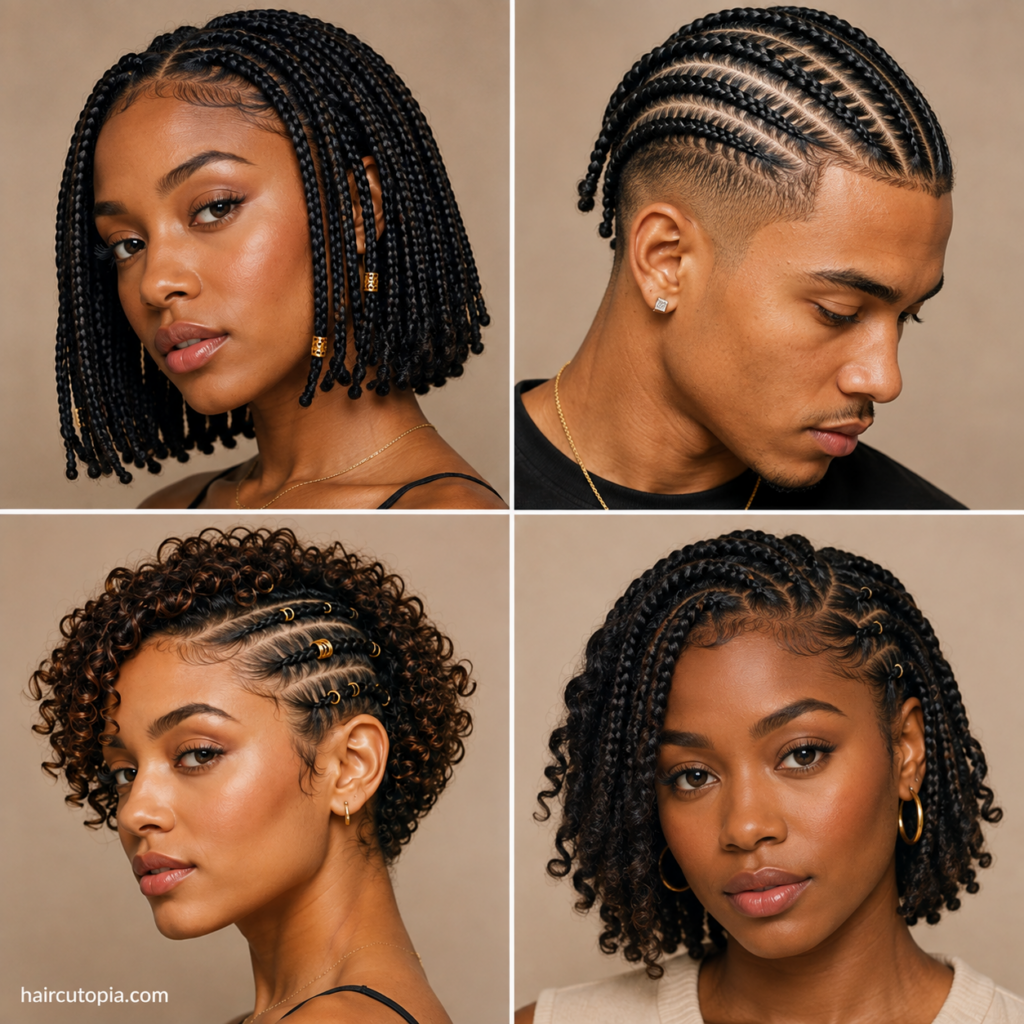
Your hair texture can influence which braiding techniques are easiest to achieve and how the finished hairstyle behaves.
Straight Hair
Braids can sometimes slip more easily on very straight or silky hair, particularly when the hair is short.
Smaller sections and appropriate styling products can help provide grip. French braids, Dutch braids, mini braids, and braided accents are all possibilities depending on your length.
Wavy Hair
Natural waves can add texture around braided sections, making half-braided hairstyles particularly effective.
Instead of trying to smooth everything completely, you can let the natural wave pattern become part of the look.
Curly Hair
Curly hair gives you plenty of opportunities to combine braids with natural texture.
Cornrowed sides with loose curls, braided bangs, and partially braided styles can all highlight both textures at once.
Coily Hair
Coily hair works especially well with many protective-style-inspired braiding techniques, including box braids, knotless braids, cornrows, and twists.
The right choice will depend on your hair’s current length, condition, density, and the amount of tension involved in the style.
How Short Does Hair Need to Be for Braids?
There’s no universal minimum length because different braid techniques require different amounts of hair.
Some experienced braiders can work with relatively short hair, particularly when creating cornrows or adding extensions. Other styles need more natural length to stay secure.
As a general rule, having a few inches of workable hair gives your stylist more options.
If your hair is extremely short, you may still be able to use:
- Small cornrows
- Partial braids
- Braided extensions
- Crochet techniques
- Accent braids
A professional braider can assess whether your current length is suitable for the specific style you’re considering.
Choosing the Right Short Braided Hairstyle
A hairstyle can look great in a photo and still not be the right choice for your hair or lifestyle.
Before deciding, consider a few practical factors.
Think About Your Desired Length
“Short” can mean anything from ear length to just above the shoulders.
Decide where you want the braids to fall before installation. If you’re adding extensions, this also helps determine how much hair you’ll need.
Consider Braid Size
Tiny braids and chunky braids create completely different effects.
Smaller braids provide more movement and styling possibilities but usually require more installation time. Larger braids can be quicker and make the braid pattern more prominent.
Consider Your Hairline
Braids shouldn’t have to feel painfully tight to look neat.
If you have delicate areas around your edges or hairline, talk with your stylist about reducing tension and choosing braid sizes that don’t place unnecessary stress on those sections.
Decide How Much Maintenance You Want
Some braided hairstyles require more upkeep than others.
Loose curls, decorative accessories, intricate parts, and very small braids may need more attention than simple medium-sized braids or cornrows.
Choose something that fits the amount of maintenance you’re realistically willing to do.
How to Care for Short Braided Hairstyles
Braids simplify everyday styling, but they aren’t completely maintenance-free.
A few habits can help keep both your braids and natural hair in better condition.
Protect Your Hair at Night
Sleeping with a satin or silk scarf, bonnet, or pillowcase can reduce friction.
This can help prevent the braids from becoming fuzzy as quickly, especially around the hairline.
Keep Your Scalp Clean
Product, sweat, and natural oils can accumulate between braided sections.
Clean your scalp as needed using a method appropriate for your hair and braid type. Avoid aggressively rubbing the braids together, which can create unnecessary frizz.
Don’t Overload the Hair With Product
More product doesn’t necessarily mean healthier braids.
Heavy oils, creams, and gels can build up around the scalp and make the hairstyle look dull. Use products intentionally rather than layering them on every day.
Watch for Excessive Tension
Some tightness immediately after braiding can occur, but significant pain shouldn’t be treated as normal.
If the braids are pulling excessively around your scalp or hairline, address the issue rather than simply waiting for them to loosen.
Know When It’s Time to Take Them Out
Braids aren’t meant to stay in indefinitely.
How long you can comfortably wear a style depends on the braiding method, your hair, your scalp, and how well the style is holding up.
Once the braids become heavily grown out, tangled, uncomfortable, or difficult to keep clean, it’s probably time for removal.
How to Make Short Braids Feel More Personal
The basic braid style is only the starting point.
Small details can make your hairstyle feel completely different.
Try experimenting with:
- Middle or side parts
- Asymmetrical braid patterns
- Different braid thicknesses
- Curved or geometric sections
- Beads
- Metallic cuffs
- Hair jewelry
- Subtle highlights
- Contrasting extension colors
- Curled or textured ends
You can keep these details minimal or make them the centerpiece of the hairstyle.
Are Short Braided Hairstyles Low Maintenance?
They can be, especially compared with hairstyles that require daily heat styling or reshaping.
But “low maintenance” doesn’t mean “no maintenance.”
Your scalp still needs attention, your natural hair still needs care, and the braids need protection if you want them to stay neat.
Short braids can have an advantage here because there’s simply less length to manage. They’re usually easier to gather, cover at night, and keep out of the way than very long braids.
Short Braids Can Make a Big Statement
You don’t need dramatic length to make braids interesting.
Short braided hairstyles put more attention on shape, texture, parting, and the details around your face. A chin-length braided bob can look completely different from short cornrows, while a few tiny accent braids can transform an otherwise simple haircut.
The key is finding a style that works with your actual hair—not just choosing one because it looks good in a photo.
Consider your natural length, texture, hairline, maintenance preferences, and how long you want to wear the style. From there, you can decide whether you want something classic and understated or a look that’s much more creative.
Either way, short hair gives you far more room to experiment with braids than you might think.