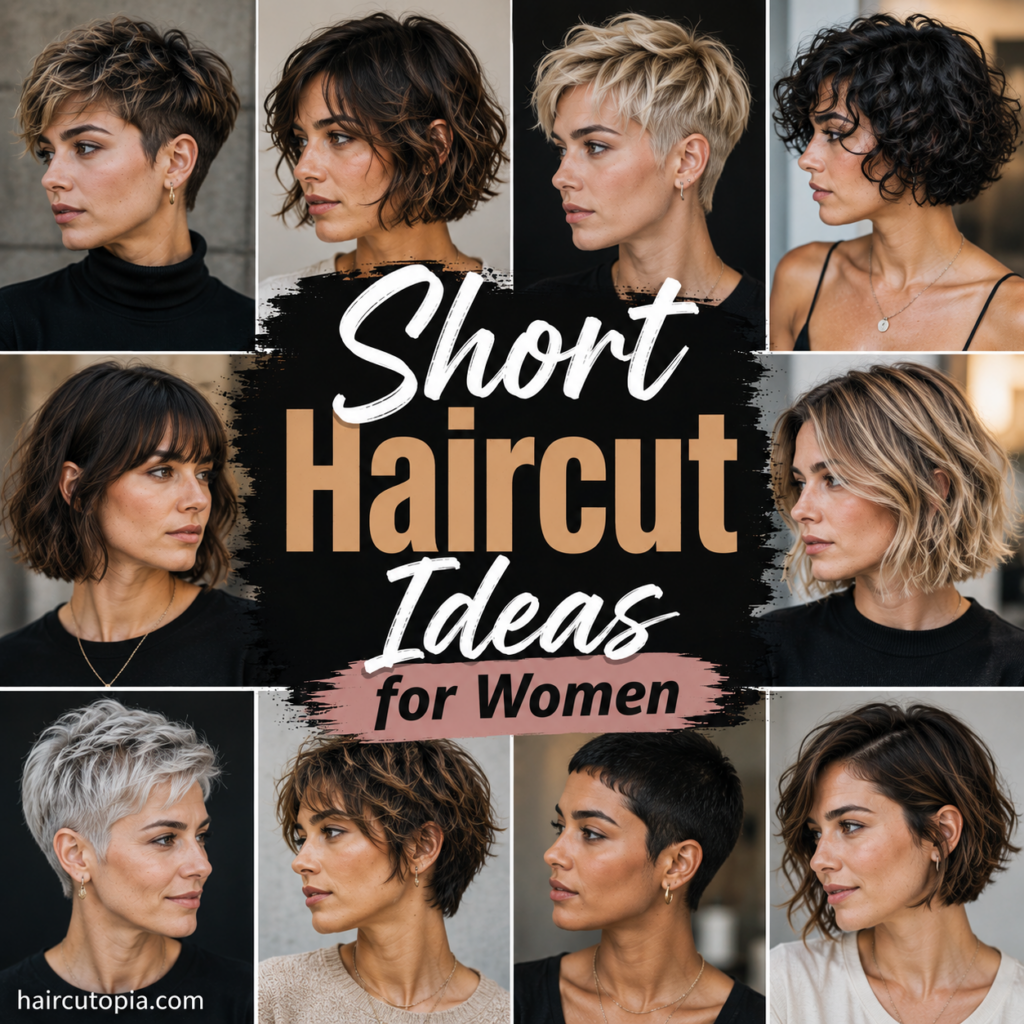
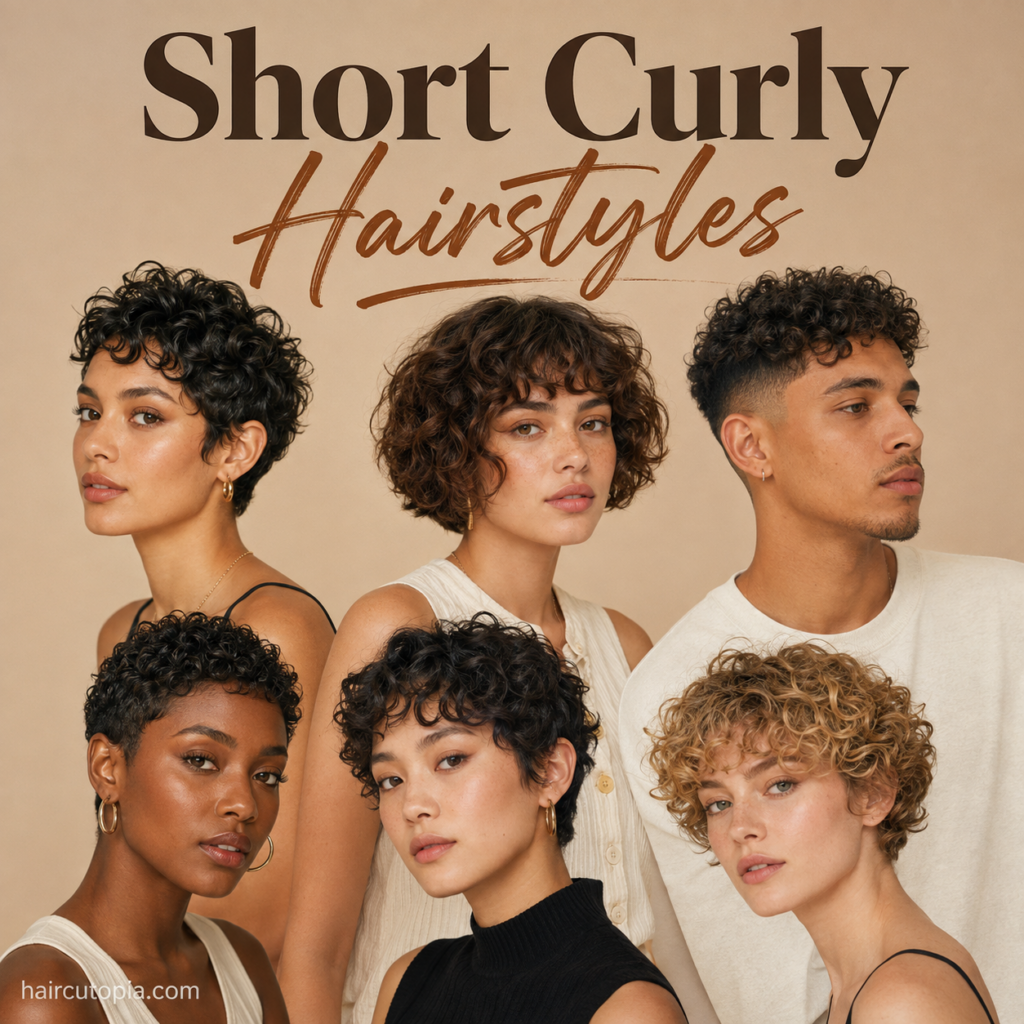
Short curly hair has a personality of its own. A little volume here, a tighter curl there, and suddenly a simple haircut looks completely different depending on how your hair decides to behave that morning.
That unpredictability is also part of what makes curls so versatile.
The right short curly hairstyle can bring out your natural texture instead of forcing it into a shape it doesn’t want to hold. From cropped cuts and curly bobs to fades, shags, and styles with plenty of volume on top, there are options for almost every curl pattern and personal style.
The trick is choosing a haircut that works with your curls, your face shape, and — just as importantly — how much time you actually want to spend styling your hair.
Here are some of the best short curly hairstyles to consider, along with practical tips for choosing, styling, and maintaining your cut.
Why Short Hair Works So Well With Curls
Going shorter can completely change the way curly hair behaves.
Longer hair has more weight pulling the curls downward. Once some of that length comes off, curls often become lighter, springier, and more defined. Hair that seemed loosely wavy at shoulder length may even develop a much stronger curl pattern after a shorter cut.
Short styles can also make everyday maintenance easier. There is simply less hair to wash, condition, detangle, dry, and style.
That doesn’t necessarily mean short curls are maintenance-free, though. Shape becomes especially important when there isn’t much length to hide an uneven cut.
A good short curly haircut should:
- Complement your natural curl pattern
- Create a balanced overall shape
- Control bulk without removing too much volume
- Allow movement through the curls
- Work with your normal styling routine
- Still look good as it grows out
The best result usually comes from treating texture as part of the haircut rather than something that needs to be controlled afterward.
1. Short Curly Bob
The curly bob is one of those styles that keeps finding its way back into fashion because there are so many ways to wear it.
A classic version typically falls somewhere between the ears and jawline. On curly hair, that relatively small difference in length can dramatically change the finished shape.
A jaw-length curly bob creates a fuller silhouette, while a slightly shorter version can feel more playful and lightweight.
Subtle layering can help prevent the bottom of the haircut from becoming too heavy. The goal isn’t necessarily to create lots of obvious layers. Instead, carefully placed layers can give individual curls more room to form.
This style works particularly well if you want something short without committing to a dramatically cropped haircut.
2. Curly Pixie Cut
A curly pixie takes the traditional short pixie and lets natural texture become the main feature.
Instead of trying to smooth every strand into place, curls can be left soft and slightly tousled. The sides and back are generally kept shorter, while additional length on top provides room for texture.
The contrast creates shape without requiring much overall length.
You can style the top forward for a softer finish, lift the curls for more volume, or sweep them slightly to one side.
Because a pixie exposes more of the face and neckline, even small styling changes can noticeably change the overall look.
3. Curly Pixie With Longer Top
Not quite ready for a super-short pixie?
Keep more length on top.
A longer curly top gives you additional styling flexibility while maintaining the easy feel of short hair. The sides can be cropped close without necessarily being faded or shaved.
This creates enough contrast to emphasize the curls while keeping the style soft.
The longer top can be worn:
- Naturally forward
- Swept to one side
- Voluminous and lifted
- Slightly messy
- More defined for special occasions
It’s a useful middle ground between a traditional pixie and a fuller short curly cut.
4. Short Layered Curly Hair
Layers can make a huge difference in short curly hair.
Without them, some curl types can become concentrated around the bottom of the haircut, creating a triangular shape. Strategic layering redistributes that volume and helps the curls sit more naturally.
Short layers near the crown can add lift, while longer layers around the perimeter preserve fullness.
The exact placement matters.
Too many short layers can create unwanted volume, especially with tighter curls. Too few can leave the haircut looking heavy.
A stylist experienced with curly textures can adjust the layers according to curl density, shrinkage, and the shape you’re trying to achieve.
5. Short Curly Shag
The shag and curly hair are natural partners.
A short curly shag uses layers to create an intentionally loose, slightly undone shape. Instead of perfectly uniform curls, the style embraces movement and variation.
Typical features include:
- Shorter layers around the crown
- Face-framing curls
- A textured perimeter
- Natural volume
- Optional curly bangs
It’s especially appealing if you prefer hair that looks better slightly messy.
Unlike more structured cuts, a shag doesn’t depend on every curl falling into exactly the same position each day. A little unpredictability actually helps the style.
6. Short Curly Hair With Bangs
Curly bangs can completely change a short haircut.
They bring texture toward the face and can make a basic bob, shag, or cropped cut feel much more distinctive.
The biggest consideration is shrinkage.
Curly hair can look considerably longer when wet or stretched. Cutting bangs based on their wet length can result in a much shorter fringe once the curls dry.
For that reason, curly bangs are often cut conservatively and adjusted after the natural curl pattern settles.
You don’t need a perfectly straight line across the forehead either. A softer fringe with curls of slightly different lengths usually looks more natural.
7. Curly French Bob
A French bob typically sits around the jaw or slightly above it, making it an excellent option for curls.
Compared with a longer bob, it has a more compact silhouette that puts extra emphasis on the face.
Add curly bangs or a loose fringe and the style becomes even more distinctive.
The cut can be polished, but it doesn’t need to look overly precise. In fact, letting a few curls fall differently around the face can give it the relaxed character that makes this style appealing.
8. Short Curly Crop
A curly crop keeps things simple.
Hair is cut relatively short overall while leaving enough length for the natural curl pattern to remain visible. Depending on the texture, that might mean soft waves, small ringlets, or tightly defined curls.
It’s a practical choice if you want less hair to manage without going extremely short.
Styling can also be minimal. A lightweight curl cream or leave-in product may be enough to define the texture before letting the hair air-dry.
9. Curly Taper Cut
A taper gradually shortens the hair around areas such as the sideburns and neckline while maintaining more length elsewhere.
On curly hair, this creates a clean shape without removing the texture that makes the style interesting.
The curls on top can be kept fairly short or allowed to grow longer depending on the amount of volume you want.
One advantage of a taper is versatility. It can look neat and professional when styled with defined curls, then more relaxed when the texture is left loose.
10. Short Curly Fade
For a sharper contrast, consider combining curls with a fade.
The sides and back gradually transition from very short hair into the longer curls above. That contrast puts most of the visual emphasis on the texture at the top.
There are several variations to consider, including:
- Low fade
- Mid fade
- High fade
- Temple fade
- Drop fade
A low fade tends to preserve more fullness around the sides, while a higher fade creates a stronger difference between the curls and the closely cropped sections.
The trade-off is maintenance. Fades generally need more frequent barber visits if you want the transition to remain crisp.
11. Curly Undercut
An undercut creates an even more dramatic contrast.
Rather than gradually transitioning in length like a fade, the sides or back are cut significantly shorter than the curls above.
That allows you to maintain substantial curl length on top without the entire hairstyle becoming bulky.
It’s also a good option for thick hair because removing some of the density underneath can make the overall style feel lighter.
Keep the top relatively short for an understated version, or grow it longer for a much bolder silhouette.
12. Short Curly Afro
A short curly afro celebrates natural texture while maintaining a compact, balanced shape.
The hair can be shaped evenly or subtly tapered around the sides and neckline for additional definition.
Although the style may look simple, shaping is important. The goal is to create a silhouette that works with the natural density and growth pattern rather than cutting every section to an identical length.
You can keep the finish soft and natural or use curl-defining products to create more separation.
13. Rounded Curly Cut
A rounded shape can work beautifully with dense curls and coils.
Instead of flattening the sides, the haircut intentionally maintains fullness around the head. Careful shaping keeps the volume balanced so that the overall silhouette feels deliberate.
This is particularly effective if you enjoy wearing your natural volume rather than trying to minimize it.
The haircut itself does much of the work, which can also simplify everyday styling.
14. Short Curly Hair With a Side Part
Sometimes you don’t need a completely different haircut to change your look.
A side part can shift the volume of short curly hair and create an asymmetrical shape. One side becomes fuller while the other sits closer to the head.
A deep side part creates more drama, while a subtle off-center part keeps things relaxed.
Because curls don’t always follow a perfectly straight part, there’s no need to make the line overly precise. Allowing the curls to naturally separate often creates a softer result.
15. Tousled Short Curls
Not every curl needs to be perfectly defined.
Tousled short curls have a looser, more casual appearance that works especially well with layered cuts and shags.
Instead of separating every curl into an individual ringlet, styling focuses on movement and volume.
Try working a small amount of lightweight styling product through damp hair, then allow the curls to form naturally. Once dry, gently loosen them with your fingers.
The finished style should look effortless rather than carefully arranged.
16. Short Defined Curls
At the opposite end of the spectrum are highly defined curls.
This style emphasizes separation and curl formation, giving short hair a more polished appearance.
Start with very wet or damp hair and distribute a curl-defining product evenly. Depending on your texture, scrunching, finger coiling, or using a styling brush can encourage more consistent curl groups.
Then leave the curls alone while they dry.
Constantly touching curly hair during the drying process is one of the easiest ways to create frizz.
Once everything is completely dry, you can gently soften any stiffness from the styling product.
17. Short Curly Hair With Volume on Top
Keeping more height at the crown can give short curls a completely different silhouette.
The sides are generally kept somewhat shorter or less bulky while the top remains full.
This doesn’t require an extreme fade or undercut. Even subtle differences in length can shift the visual weight upward.
For styling, apply products primarily through the curls rather than directly at the roots. Heavy products near the scalp can weigh the hair down and work against the volume you’re trying to create.
18. Curly Mohawk or Faux Hawk
For something bolder, curls can be concentrated through the center of the head in a mohawk-inspired shape.
A true curly mohawk may feature very closely cropped or shaved sides. A faux hawk creates a similar silhouette without such a dramatic difference in length.
The faux-hawk version is easier to grow out and provides more flexibility for everyday styling.
Both options put natural texture front and center.
How to Choose the Right Short Curly Hairstyle
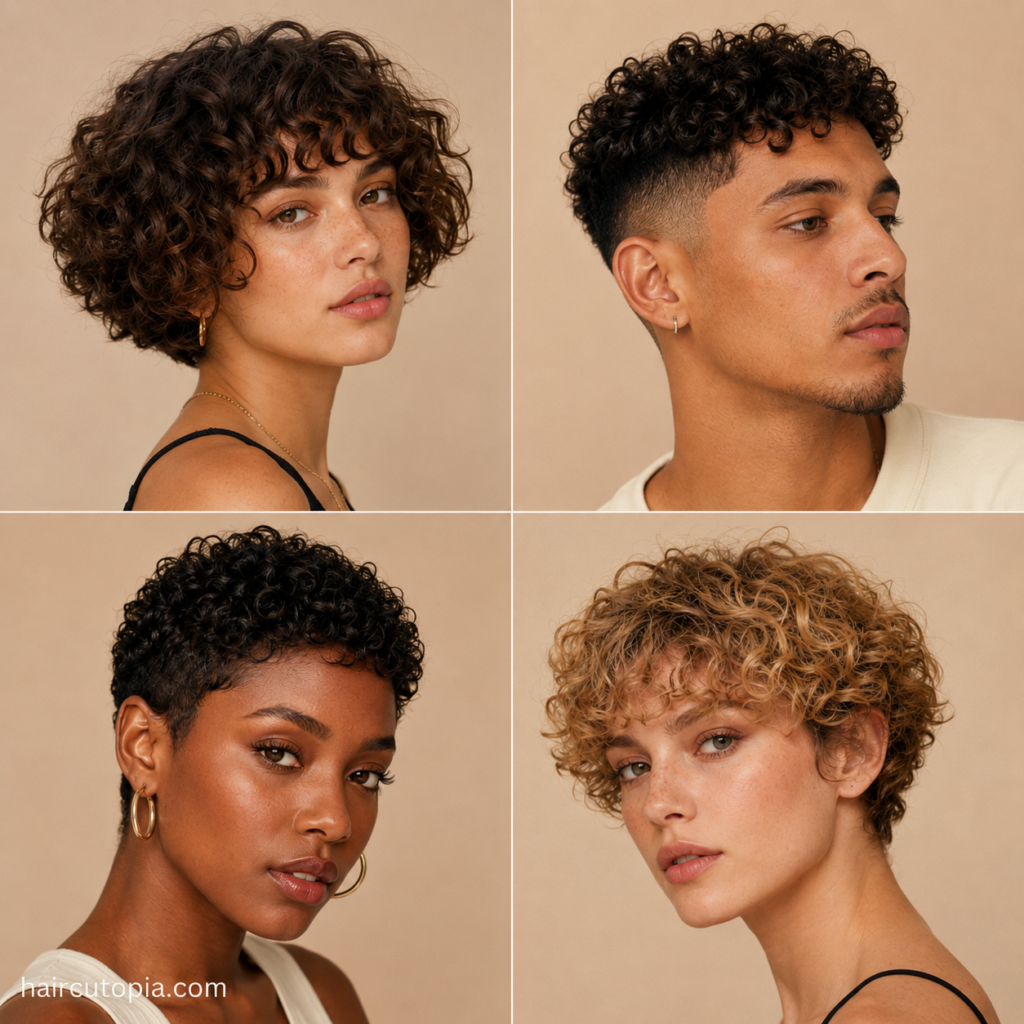
A haircut that looks great on someone else won’t necessarily behave the same way with your curls.
Before choosing a style, think about more than the reference photo.
Consider Your Curl Pattern
Loose waves and tight coils respond differently to short lengths.
Removing weight may make loose curls spring up significantly, while tighter textures may experience substantial shrinkage.
Rather than choosing a haircut based entirely on curl “type,” look at how your individual hair behaves when it’s dry.
Think About Hair Density
Curl pattern and density aren’t the same thing.
You can have fine but extremely dense curly hair, or thick individual strands with relatively low density.
Dense curls may benefit from carefully removing internal weight, while lower-density hair may need to preserve as much fullness as possible.
Account for Shrinkage
This is especially important when going short.
Your hair might appear considerably longer while wet than it does after drying. A seemingly small trim can therefore produce a much bigger visual change.
If you’re unsure, start slightly longer. You can always take off more.
Putting it back is considerably harder.
Be Realistic About Maintenance
Ask yourself how often you’re willing to visit a stylist or barber.
A curly bob or shag can often grow out fairly gracefully. A sharp fade, very short pixie, or precisely tapered style may need regular cleanup to maintain its original shape.
Neither approach is better. It simply depends on your routine.
How to Style Short Curly Hair
One of the benefits of going short is that styling doesn’t have to involve ten different products and a complicated routine.
For many people, simpler works better.
1. Start With Damp Hair
Curly styling products generally distribute more evenly through damp or wet hair.
Starting with enough moisture can also help curls clump together instead of separating into frizz.
2. Apply a Lightweight Leave-In
A leave-in conditioner can provide moisture and make the hair easier to manage.
Use only as much as your hair needs. Fine curls can become weighed down quickly.
3. Add Curl Definition
Depending on the finish you want, apply a curl cream, mousse, foam, or gel.
Creams tend to provide softness and moisture, while gels can offer stronger hold and definition. Mousses and foams are useful when you want volume without much weight.
4. Shape the Curls
You can scrunch the hair, finger-coil individual sections, or simply let your natural pattern form on its own.
There’s no requirement to define every curl.
In many short hairstyles, a combination of defined and naturally separated curls creates a more relaxed result.
5. Air-Dry or Diffuse
Air-drying is simple, but a diffuser can speed up the process and help create additional volume.
When diffusing, lower heat and airflow settings can reduce unnecessary movement and frizz.
Avoid repeatedly touching the curls before they’re dry.
6. Finish Once Dry
Once the hair is completely dry, gently separate curls where you want additional volume.
You can also lift the roots with your fingertips or a pick.
The key is waiting until the hair is dry before doing too much manipulation.
How to Keep Short Curls Looking Good
A good haircut makes curly hair easier to manage, but the way you treat your hair between appointments matters too.
Try to avoid over-washing if it leaves your curls feeling dry. How often you need to shampoo depends on your scalp, products, activity level, and hair texture, so there isn’t one schedule that works for everyone.
Condition regularly and pay attention to how your hair feels rather than following a rigid routine.
It can also help to:
- Detangle gently when the hair has plenty of slip
- Limit excessive high-heat styling
- Avoid using too much heavy product
- Refresh curls with water between washes when needed
- Sleep on a satin or silk pillowcase to reduce friction
- Get occasional trims to maintain the haircut’s shape
Short curly hair can sometimes look noticeably different from one morning to the next. That’s normal. You don’t necessarily need to completely restyle it.
A little water and a small amount of product may be enough to reactivate curls that became flattened overnight.
What to Ask Your Stylist Before Going Short
Communication matters when cutting curly hair because the finished dry length can be very different from what you see during the haircut.
Bring reference photos, but also explain what you like about them.
Is it the length? The volume? The bangs? The shape around the ears? The amount of texture on top?
Before the cut, discuss:
- How much your curls normally shrink
- Whether you usually air-dry or diffuse
- Where you prefer volume
- How much daily styling you’re comfortable doing
- How often you’re willing to get trims
- Whether you regularly straighten your hair
- Any areas that tend to become especially bulky or flat
The goal isn’t to duplicate someone else’s haircut exactly. It’s to adapt the idea to your own texture.
Are Short Curly Hairstyles Low Maintenance?
They certainly can be.
Less length usually means faster washing, conditioning, detangling, and drying. Some short styles can also be refreshed in just a few minutes.
But “short” doesn’t automatically mean “low maintenance.”
Very precise cuts may require frequent trims. A fade can grow noticeably within a few weeks, while a longer curly bob may continue looking intentional for much longer.
Your styling preference matters too. Natural, tousled curls generally require less precision than perfectly defined curls.
If low maintenance is your priority, look for a haircut with a shape that continues to work as it grows.
Frequently Asked Questions About Short Curly Hair
Does curly hair look good short?
Absolutely. Shorter lengths can reduce weight and allow natural curls to become more visible and springy. The key is choosing a shape that complements your curl pattern, density, and shrinkage.
What is the easiest short haircut for curly hair?
A layered curly crop, short bob, or simple tapered cut can all be relatively easy to maintain. The easiest option depends on your texture and how much styling you prefer to do.
Should short curly hair have layers?
Often, yes, but not always. Layers can distribute volume and help curls move more freely. However, too many short layers may create excessive volume in dense hair. Layer placement should be customized to the individual curl pattern.
Are bangs a good idea with curly hair?
Curly bangs can work beautifully with bobs, shags, pixies, and other short styles. Just remember that curls shrink as they dry, so the fringe needs to be cut with the dry length in mind.
How often should short curly hair be trimmed?
It depends on the haircut. Highly structured styles, fades, and very short pixies may need more frequent maintenance, while curly bobs and shags can often grow out longer between appointments.
How do you stop short curly hair from getting frizzy?
Keeping the hair moisturized, applying styling products while it’s damp, minimizing friction, and avoiding excessive touching while the curls dry can all help. A gel or other hold product can also help curls maintain their shape.
Final Thoughts on Short Curly Hairstyles
The best short curly hairstyles don’t fight natural texture. They give it a shape that makes the curls easier to wear.
That might mean a classic curly bob, a layered shag, a cropped pixie, a tapered cut, or a bold fade with plenty of curls left on top. There’s no single version of short curly hair that works for everyone.
Pay attention to your curl pattern, density, shrinkage, and everyday routine when choosing a cut. And don’t underestimate the importance of finding someone who understands how curly hair changes between wet and dry.
A well-shaped short haircut can make curls feel lighter, more defined, and much easier to style — while still leaving enough flexibility to wear them differently from one day to the next.