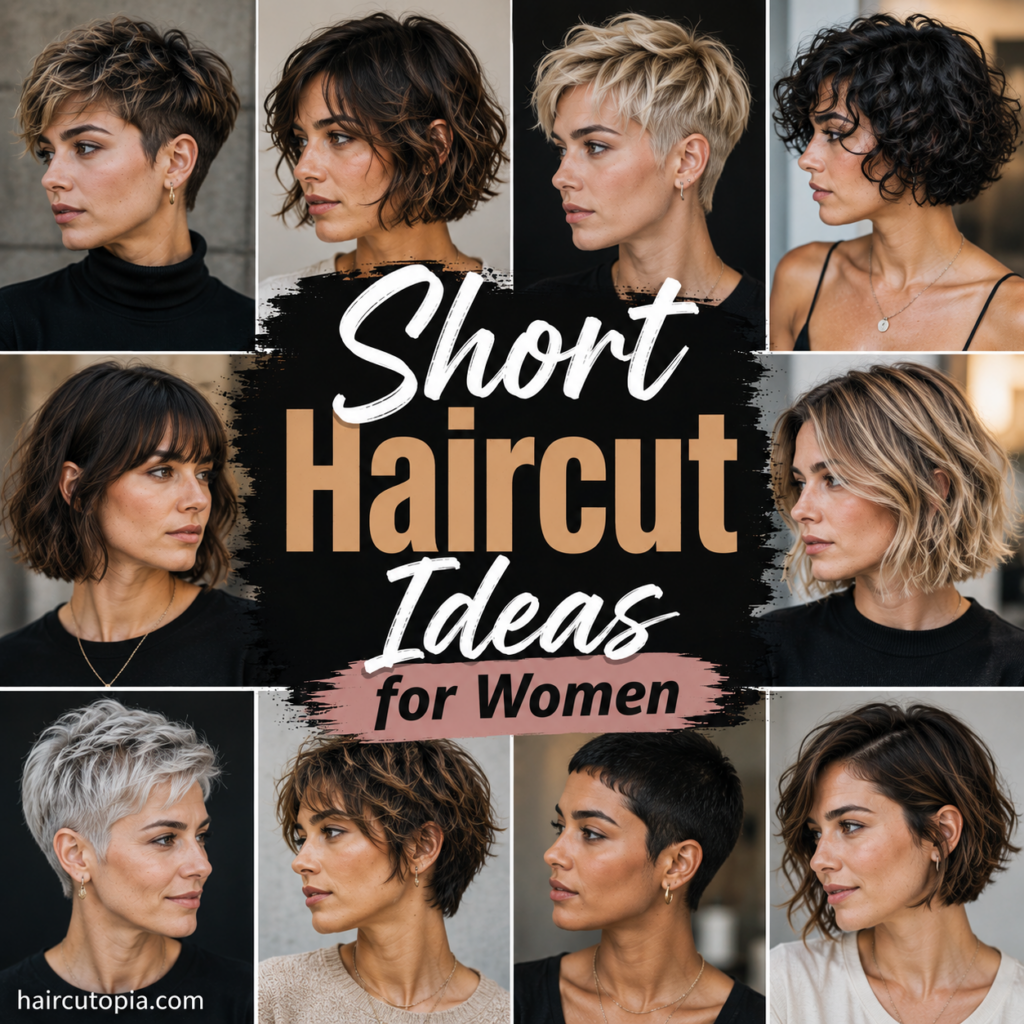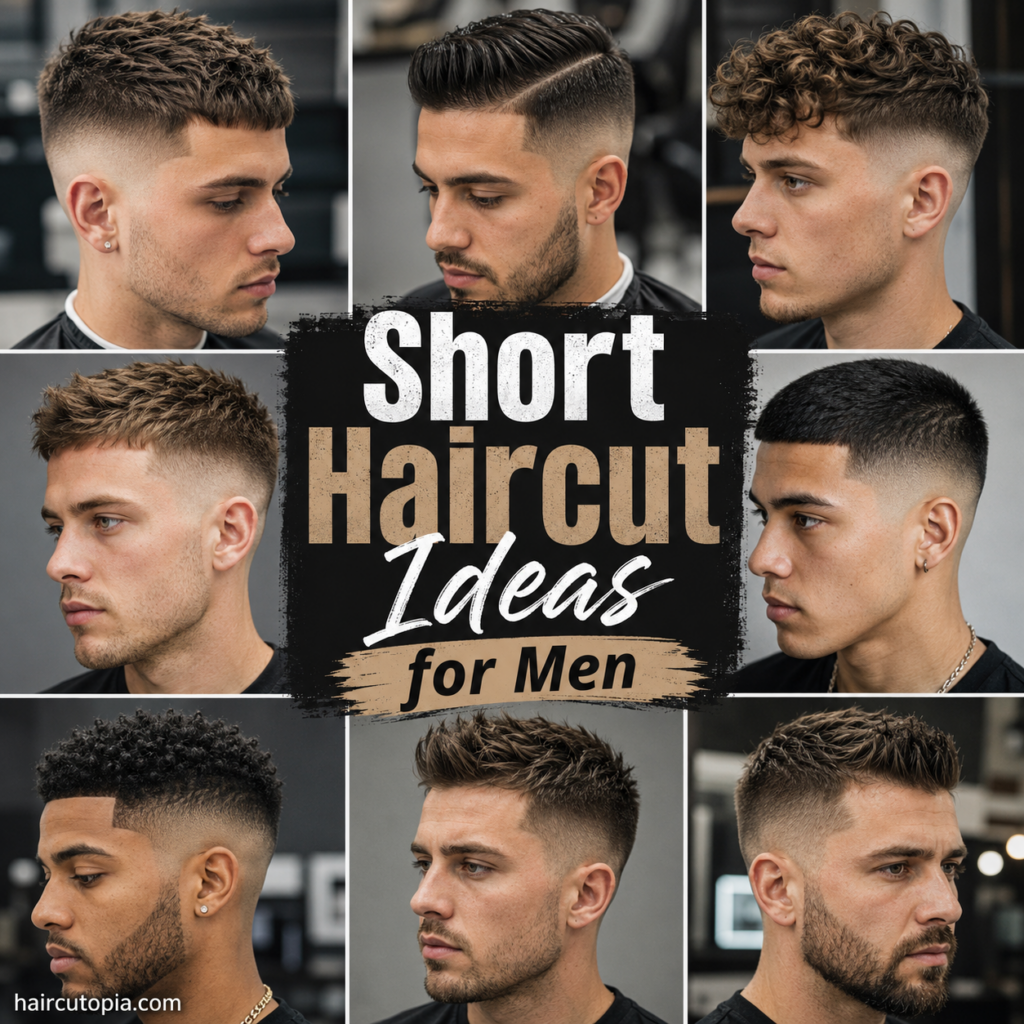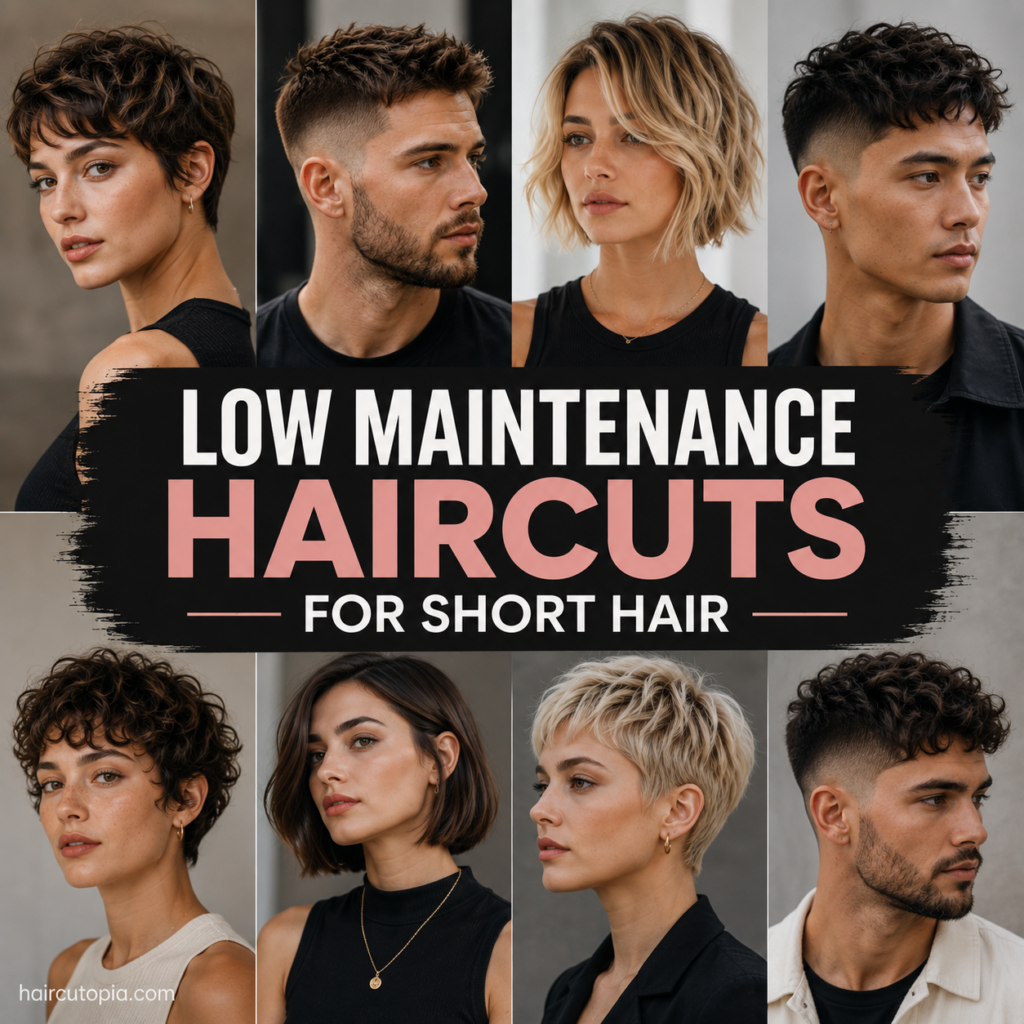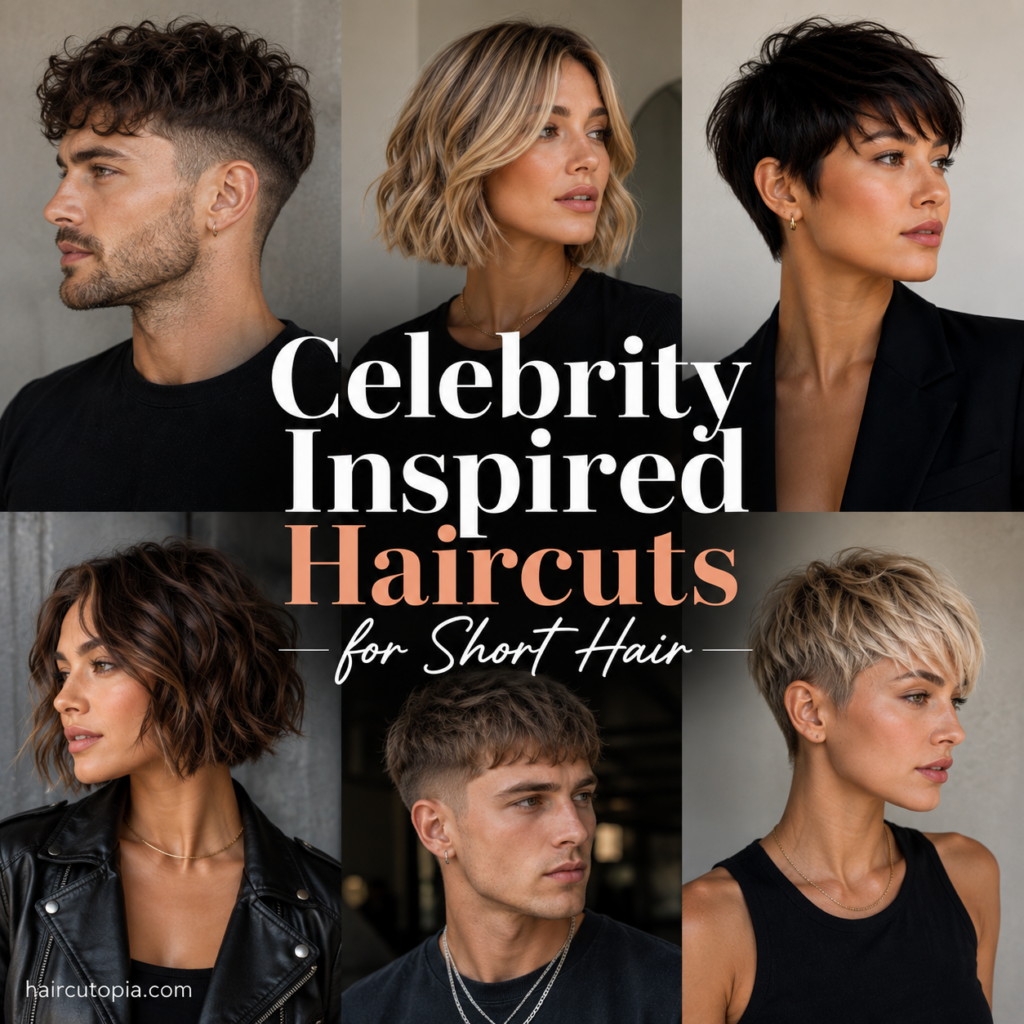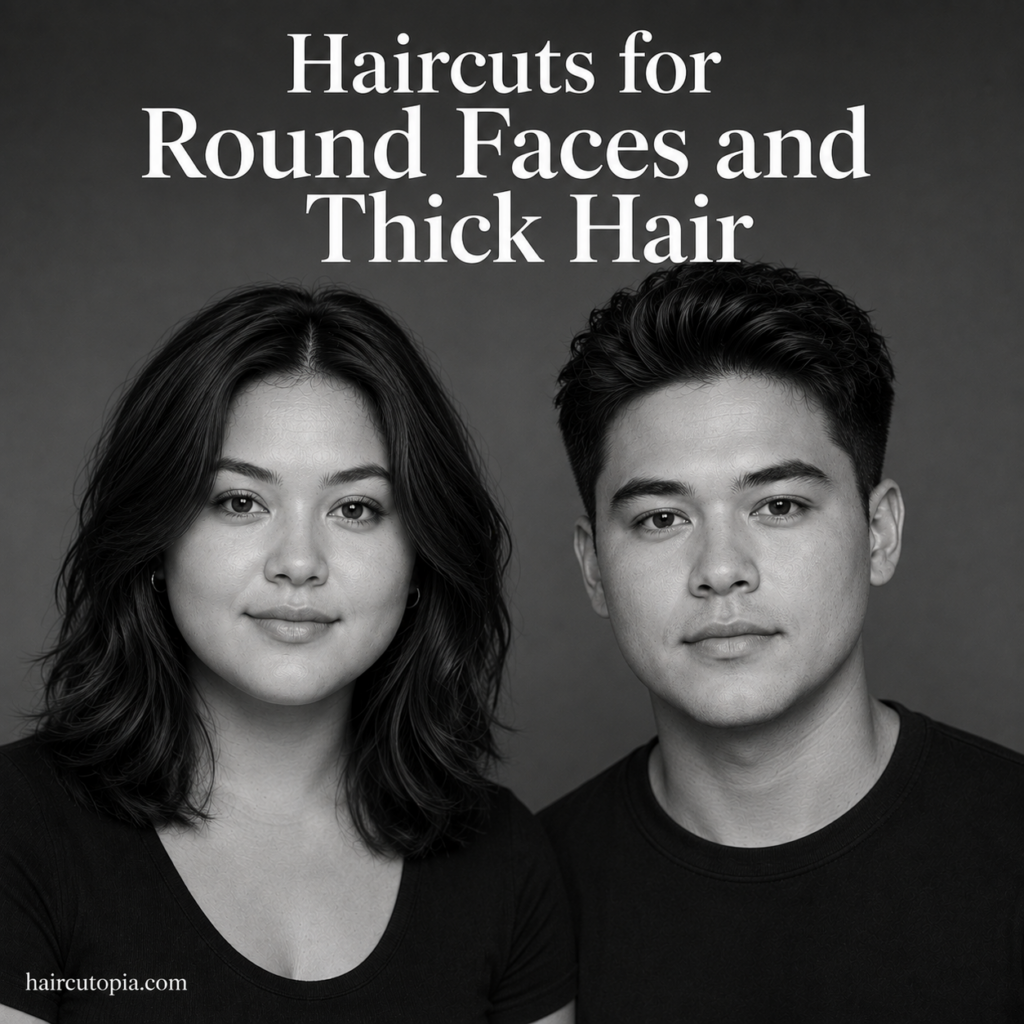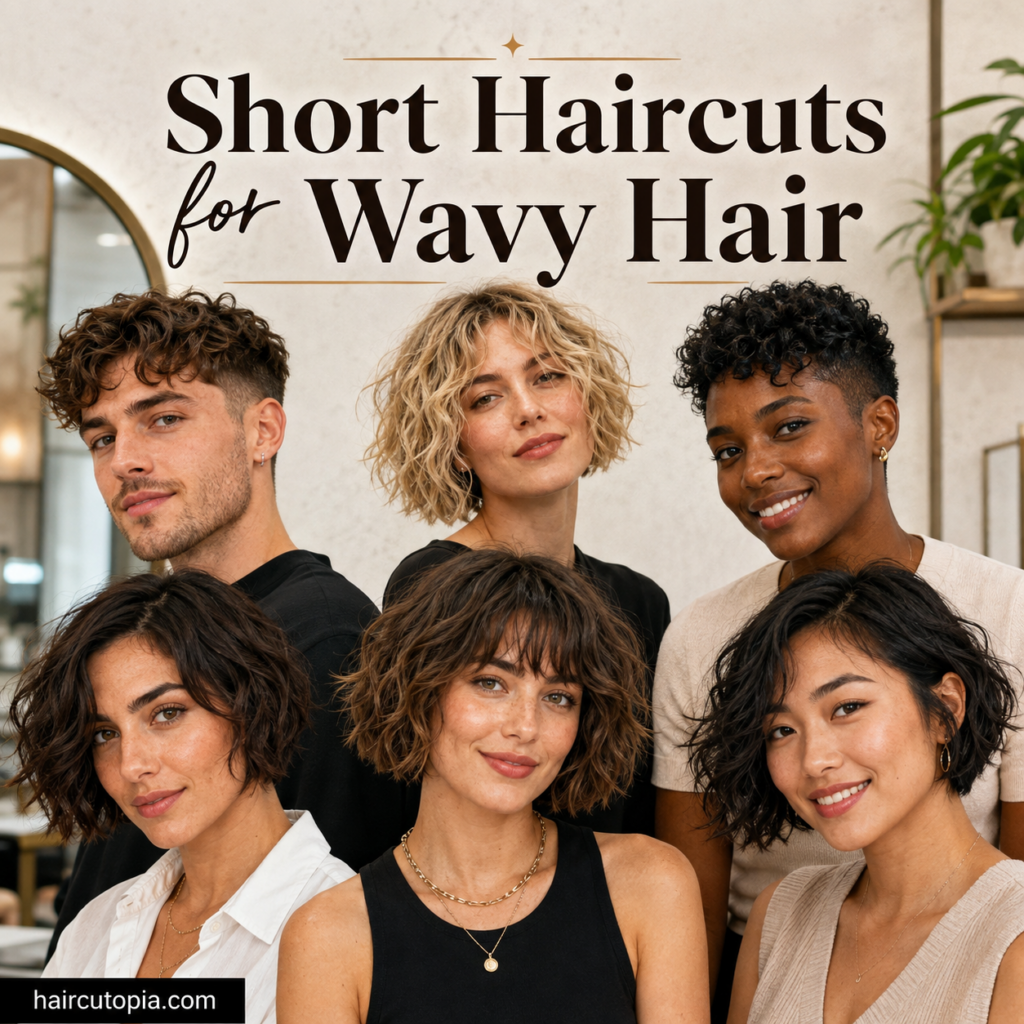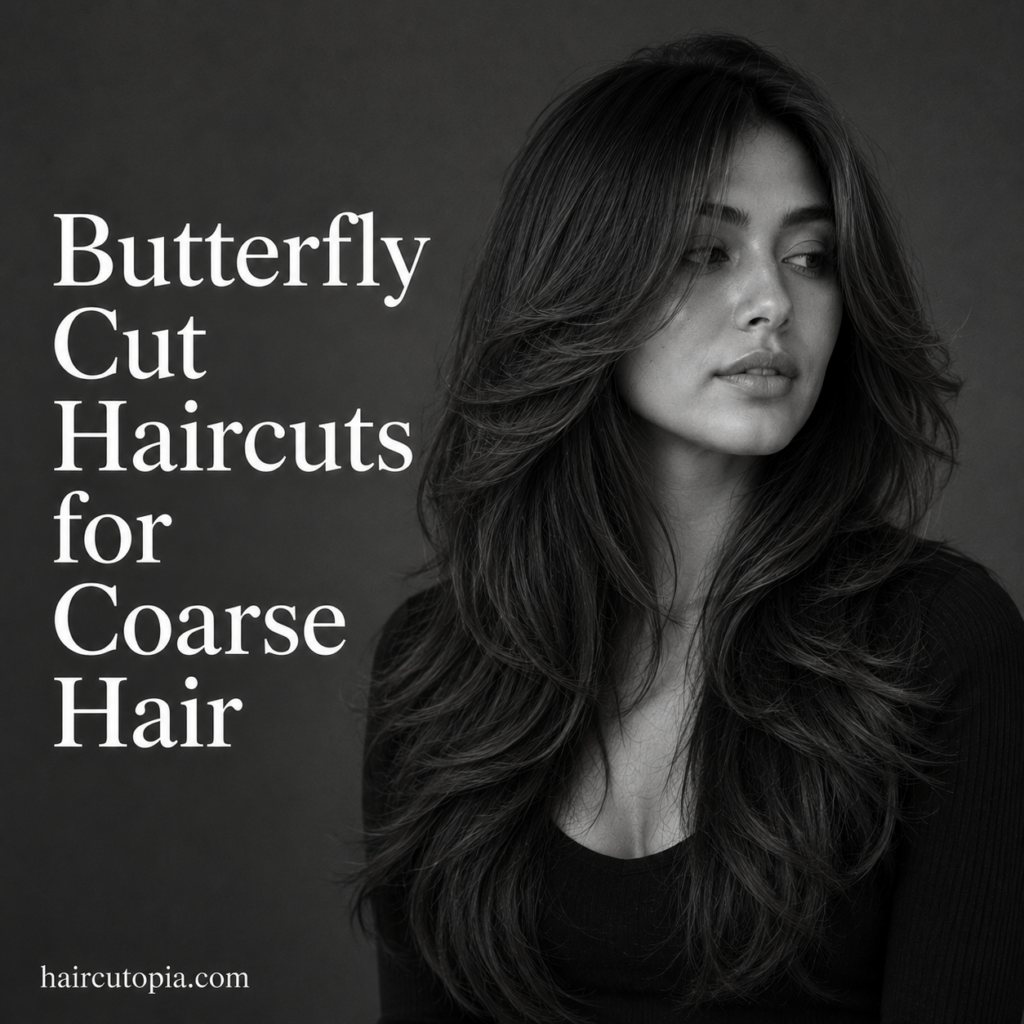
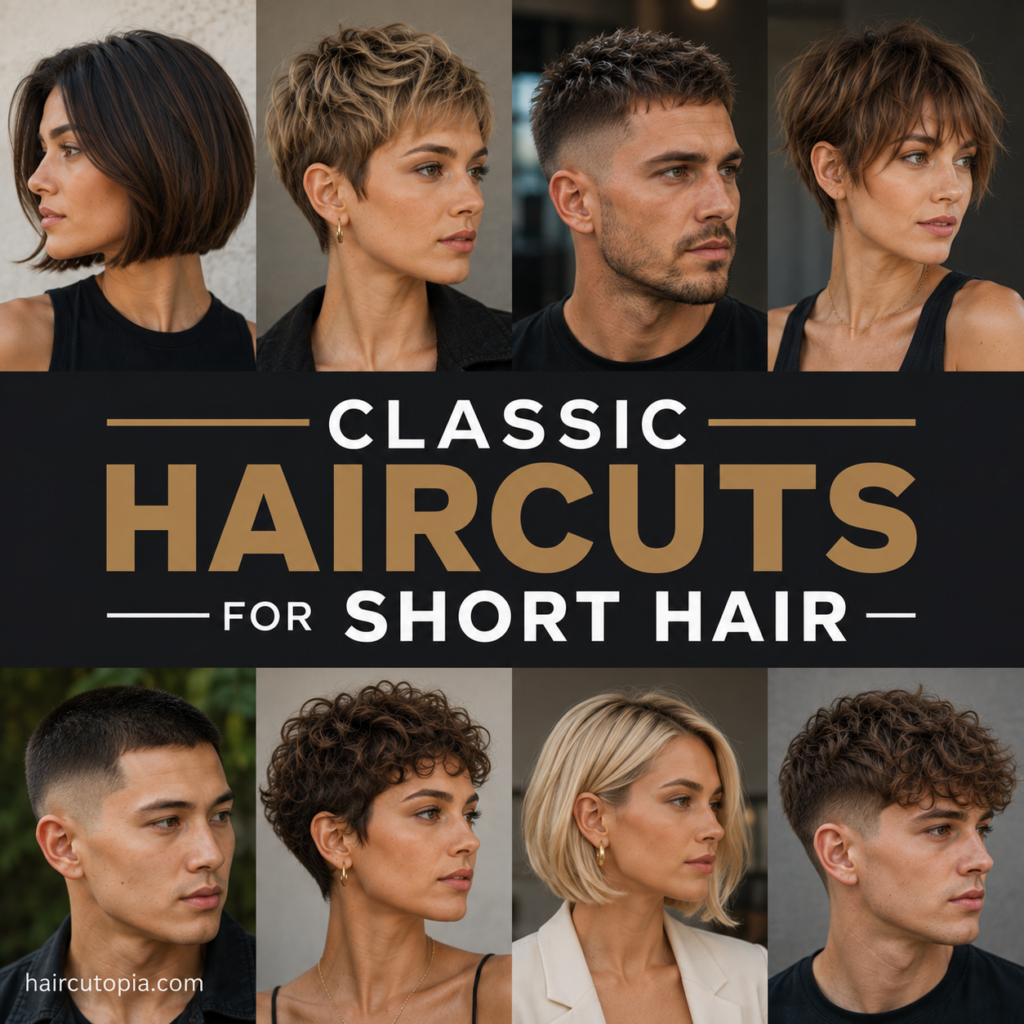
Short hair has a way of making a haircut feel intentional. There’s less length to hide behind, so the shape, texture, and small details tend to stand out.
That may be one reason classic short haircuts continue to come back. A bob, pixie, crop, crew cut, or neatly tapered style can be updated without losing the qualities that made it popular in the first place.
Some classic cuts are polished and structured. Others are textured, relaxed, or deliberately messy. And despite what “classic” might suggest, none of them has to look old-fashioned.
Whether you’re considering a dramatic chop or simply want to refresh an existing short style, these classic haircuts for short hair offer plenty of ideas that still feel current.
What Makes a Short Haircut Classic?
Classic haircuts usually have a recognizable shape that survives changing trends.
The styling might evolve, but the basic haircut continues to work.
With short hair, that often means:
- Clean proportions
- A defined silhouette
- Manageable styling
- Versatility across different hair textures
- A shape that can be personalized
- Enough flexibility for modern updates
Think about the bob. It has appeared in countless variations, from perfectly blunt versions to tousled, layered styles.
The same is true of the pixie. One person might wear it sleek and sculpted while another chooses longer, textured pieces through the top.
A classic cut gives you the foundation. The details make it yours.
1. The Classic Bob
The bob is one of the most recognizable short haircuts ever created.
Traditionally, it falls somewhere around the jaw or chin and maintains a fairly defined perimeter. But there is plenty of room for variation.
A bob can be sleek, softly rounded, textured, wavy, or lightly layered.
Why the bob stays relevant
Few short haircuts offer the same balance of structure and versatility.
Depending on the length and layering, a bob can emphasize the jawline, create the appearance of fuller ends, or give natural waves and curls more shape.
Modern versions often feel more relaxed than their highly polished predecessors.
2. The Blunt Bob
A blunt bob emphasizes a strong perimeter with minimal visible layering.
The result is a clean, graphic shape that works particularly well when you want the ends to appear fuller.
Straight hair makes the precise outline especially noticeable, but blunt bobs can also be styled with waves.
That contrast—structured cut, relaxed styling—is one of the easiest ways to make a classic bob feel contemporary.
Best lengths for a blunt bob
Popular options include:
- Jaw length
- Chin length
- Just below the chin
- Above the shoulders
A stylist can adjust the exact length according to your hair texture, density, and preferred amount of maintenance.
3. The French Bob
The French bob is usually shorter than a conventional bob, often sitting around the jaw.
Bangs are common but not mandatory.
What separates the style from a very structured bob is often the finish. French bobs tend to look particularly good with a little movement rather than being styled perfectly smooth.
Natural waves, soft bends, and subtle texture can all complement the shape.
If you want short hair that feels polished without looking overly formal, the French bob offers a useful middle ground.
4. The Rounded Bob
The rounded bob creates a softer silhouette than a sharply blunt cut.
Instead of emphasizing a perfectly straight line, the haircut follows the shape of the head and may curve gently inward toward the ends.
The result can feel polished without being severe.
A rounded bob is also easy to modernize. Rather than creating an extremely smooth finish, you can introduce subtle movement or a slightly undone texture.
5. The Graduated Bob
A graduated bob is typically shorter through the back and gradually becomes longer toward the front.
The graduation creates additional shape around the back of the head while preserving some face-framing length.
Older versions sometimes featured dramatic stacking. Contemporary versions can be considerably softer.
Subtle graduation creates movement and structure without making the haircut feel overly sculpted.
6. The Angled Bob
The angled bob shares some characteristics with the graduated bob, but the forward angle tends to be more noticeable.
Hair is shorter at the back and becomes progressively longer toward the face.
This creates a strong silhouette even without complicated styling.
The angle can be subtle or dramatic. A softer angle usually feels more timeless, while a significant difference between the front and back creates a bolder look.
7. The Pixie Cut
The pixie is another short haircut that has repeatedly reinvented itself.
Traditional pixies are cropped closely through the sides and back with slightly more length on top.
Modern pixies might include:
- Longer bangs
- Choppy texture
- Tapered sides
- Soft layers
- A tousled finish
- Extra volume through the crown
The pixie is particularly good at highlighting facial features because there isn’t much hair surrounding the face.
Is a pixie cut low maintenance?
It can be very easy to style each morning.
Maintaining the actual shape, however, may require regular trims. Short hair tends to make new growth more noticeable.
So while a pixie can reduce daily styling time, it isn’t necessarily a haircut you can ignore for months.
8. The Long Pixie
If a traditional pixie feels too short, a long pixie offers a softer alternative.
The sides and back remain relatively short, but additional length is kept through the top, crown, or fringe.
That extra hair creates more styling possibilities.
You can wear a long pixie:
- Smooth and side-swept
- Tousled
- Textured
- Voluminous
- Tucked behind the ears
- With a longer fringe
It’s also a practical option for anyone transitioning between a pixie and a bob.
9. The Bixie
The bixie sits somewhere between a bob and a pixie.
It has more length and movement than a typical pixie but doesn’t quite reach the structure of a traditional bob.
Layers are usually an important part of the shape.
This gives the haircut a light, textured appearance that works particularly well with natural movement.
Despite the modern name, variations of this short layered shape have been around for decades.
10. The Short Shag
The shag isn’t limited to medium or long hair.
A short shag uses layers to create movement through the crown, sides, and ends. Bangs or a textured fringe often complete the look.
Compared with a classic bob, the shape is deliberately less precise.
That’s the appeal.
Short shags work especially well when you want your natural texture to contribute to the style rather than trying to make every strand fall into exactly the same position.
11. The Short Layered Cut
A short layered haircut offers a less dramatic alternative to a shag.
Instead of creating an intentionally piecey silhouette, layers can be blended throughout the hair to add movement and reduce excess weight.
The amount of layering matters.
Fine hair may benefit from fewer, strategically placed layers so the perimeter retains fullness. Thick hair can often handle more layering to remove bulk and create movement.
12. The Pageboy
The pageboy is one of the more distinctive classic short haircuts.
Traditional versions feature a rounded shape, relatively consistent length, and often a full fringe.
Modern interpretations tend to be less rigid.
A stylist might soften the ends, introduce subtle layers, or use a lighter fringe while maintaining the recognizable rounded silhouette.
The result still has vintage character without necessarily looking like a reproduction of a hairstyle from another era.
13. The Bowl Cut
The bowl cut has undergone a surprising transformation.
Once associated with extremely uniform, homemade-looking cuts, modern versions use professional layering, texture, undercutting, and careful shaping.
A contemporary bowl cut can be sleek and architectural or deliberately tousled.
It isn’t the most understated option, but that’s exactly why it works for someone looking for a classic shape with a more fashion-forward edge.
14. The Crop
A crop keeps the hair short while leaving enough length to create texture.
Depending on the version, the top can be styled forward, sideways, upward, or allowed to follow its natural movement.
The haircut can also be adapted for different genders and hair textures.
For a softer appearance, keep some length around the perimeter. For a sharper finish, combine the crop with tapered sides and a more defined neckline.
15. The Caesar Cut
The Caesar is traditionally associated with men’s grooming, but the basic shape can work as a gender-neutral short haircut.
Hair is kept short with a fringe directed toward the forehead.
Modern versions can incorporate softer texture, choppy ends, or additional length through the top.
It’s a particularly interesting option if you like short hair with a visible fringe but don’t want the rounded shape of a bowl cut.
16. The Crew Cut
The crew cut is one of the most practical classic short haircuts.
The sides and back are kept short while slightly more length remains through the top.
Although traditionally associated with men, crew cuts can work for anyone who likes a clean, minimal hairstyle.
The top can be kept neat or given a little texture for a more relaxed appearance.
17. The Buzz Cut
Few haircuts make as much impact with so little hair.
A buzz cut removes most of the length, placing the focus on the shape of the head, hairline, and facial features.
Different clipper lengths can create surprisingly different results.
A very close buzz feels bold and minimal, while a slightly longer version creates more visible texture.
What to consider before getting a buzz cut
Because the haircut is so short, consider:
- Your natural hairline
- Scalp visibility
- Head shape
- How quickly your hair grows
- How often you want to trim it
Daily styling is virtually nonexistent, but maintaining a consistently short length can mean frequent trims.
18. The Classic Taper
A taper gradually shortens the hair toward the ears and neckline.
Unlike a dramatic skin fade, a classic taper usually creates a softer transition and leaves some visible hair at the shortest points.
This makes it extremely adaptable.
The top can be:
- Textured
- Side-parted
- Brushed backward
- Curly
- Wavy
- Styled into a small quiff
If you prefer a neat haircut without an extreme contrast between lengths, the classic taper remains one of the most reliable choices.
19. The Side-Parted Short Cut
A side part can give even a simple short haircut more structure.
The top needs enough length to move naturally toward one side, while the sides can be tapered, scissor-cut, or kept at a similar length.
A precise part creates a polished finish.
For something more casual, establish the direction with your fingers rather than drawing a perfectly straight line with a comb.
20. The Short Curly Cut
Curly hair doesn’t need to be long to show off its natural pattern.
A well-shaped short curly haircut can concentrate volume where you want it while controlling bulk around the sides and back.
Rather than cutting every curl to an identical length, the stylist can shape the haircut according to the curl pattern.
This is especially important because curly hair can appear considerably shorter when dry than when wet.
Styling short curls
Start with moisture rather than heavy hold.
A lightweight curl cream, mousse, or gel can help define the pattern while maintaining movement.
The goal is usually definition without making the curls stiff.
21. The Short Afro
The short Afro is another enduring style that puts natural texture at the center of the haircut.
The shape can be rounded and traditional or modified with subtle tapering around the temples and neckline.
Keeping the overall silhouette balanced is key.
Depending on the desired finish, the hairline can be softly natural or more sharply defined.
Regular conditioning and moisture-focused care can also help keep the texture looking healthy and defined.
22. The Textured Short Cut
Not every short haircut needs a strict name.
Sometimes a textured short cut is simply about creating enough layering and variation in length for the hair to move naturally.
This works particularly well for thick, wavy, or straight hair that tends to look bulky when cut to one uniform length.
Texture can be concentrated:
- Through the crown
- Around the fringe
- At the ends
- Across the entire top
- Around the face
The final result can be subtle or deliberately messy.
23. Short Hair With Bangs
Adding bangs can completely change a short haircut without significantly altering the rest of the shape.
A bob, pixie, shag, or crop can all be paired with a fringe.
Options include:
- Blunt bangs
- Curtain bangs
- Side-swept bangs
- Wispy bangs
- Textured bangs
- Micro bangs
The right choice depends on the haircut and how much maintenance you’re comfortable with.
Bangs tend to require more frequent trimming than the rest of the hair, especially if they’re worn near the eyes or eyebrows.
24. The Slicked-Back Short Cut
Slicking short hair away from the face can transform a fairly simple haircut into something much more polished.
The style works particularly well when the top has a few inches of length.
It can be worn with neatly tapered sides or with a softer scissor-cut perimeter.
For a modern finish, you don’t necessarily need the extremely glossy appearance associated with traditional slicked-back styles. A lightweight cream or low-shine pomade can provide control while preserving some natural texture.
Classic vs. Modern Short Haircuts
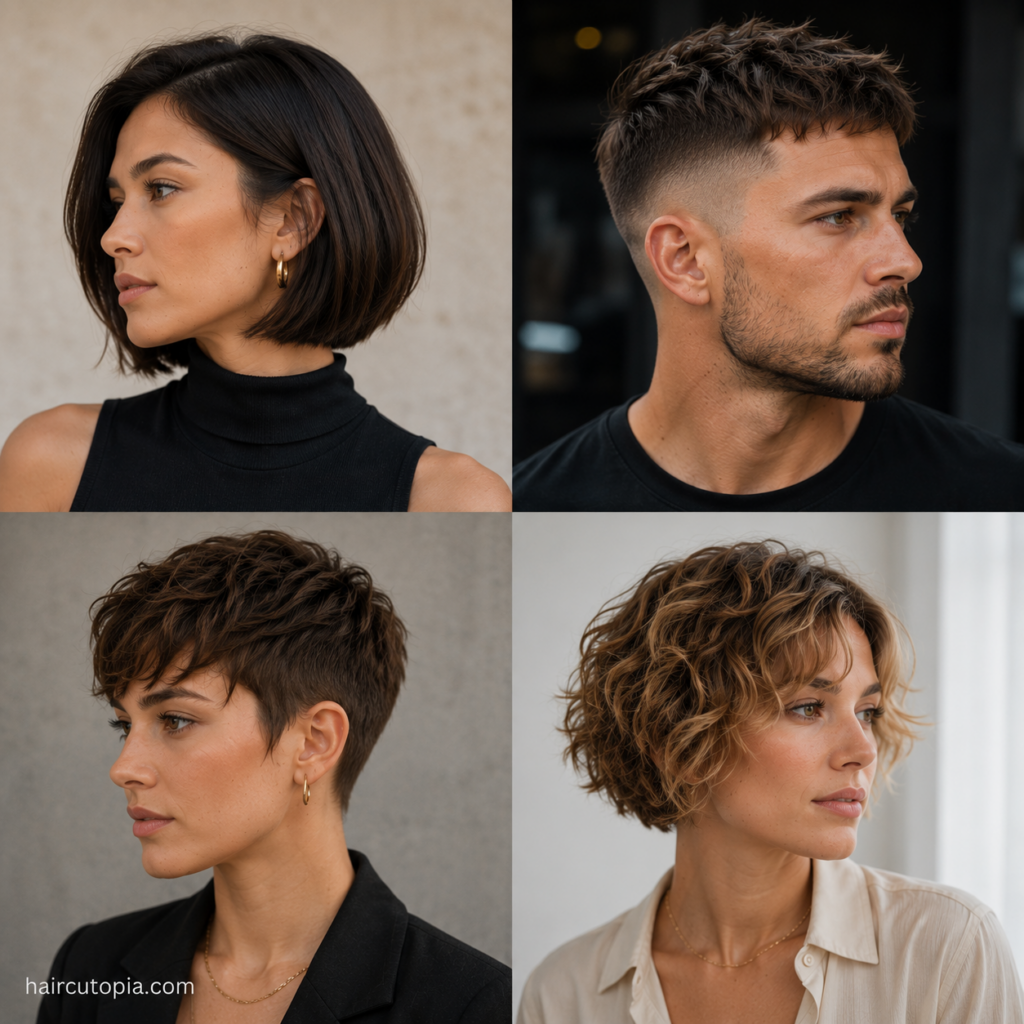
Many modern short haircuts are based on shapes that have existed for decades.
What’s changed is how they’re cut and styled.
Classic short haircuts often feature:
- Balanced proportions
- Softer tapering
- Defined silhouettes
- Controlled styling
- Simple shapes
- Gradual transitions between lengths
Modern versions may introduce:
- Heavier texture
- Undercuts
- Skin fades
- Disconnected sections
- Messier finishes
- Dramatic fringes
- Asymmetry
You don’t have to choose one approach exclusively.
A classic bob with tousled texture or a traditional taper with a modern fringe can combine elements of both.
How to Choose a Classic Short Haircut
Going short makes the proportions of a haircut particularly important.
Before choosing a style, consider your hair texture, density, growth patterns, styling routine, and how often you’re willing to get it trimmed.
Consider your natural texture
Straight hair tends to emphasize clean lines, making it especially suited to blunt bobs, crops, and structured cuts.
Wavy hair brings natural movement to layered bobs, bixies, shags, and longer pixies.
Curly and coily textures can create beautiful short shapes when the haircut works with the natural curl pattern.
Think about hair density
Fine hair can sometimes look fuller with a strong perimeter and limited layering.
Thicker hair may need internal layers, texturizing, or graduation to prevent a short cut from becoming bulky.
Consider your styling routine
If you want minimal morning styling, look toward cuts that naturally fall into place.
Buzz cuts, crew cuts, textured pixies, and some curly styles can require very little daily work.
A polished bob or voluminous short style may involve more blow-drying or heat styling.
Choosing Short Hair for Your Face Shape
Face shape can help guide a haircut, but it doesn’t need to dictate your choices.
Instead of searching for a strict list of cuts for round, oval, square, or heart-shaped faces, think about where the haircut creates volume and where the perimeter ends.
For example:
- A jaw-length bob draws attention toward the jaw.
- Volume through the crown can visually add height.
- Bangs bring attention toward the eyes.
- Longer front pieces can create additional vertical lines.
- Very short sides expose more of the face.
- Soft layers can reduce the severity of a geometric shape.
If you love a particular haircut, a stylist can often modify its length, fringe, or volume to better suit your features.
How to Ask Your Stylist or Barber for a Short Haircut
Short hair leaves less room for vague instructions.
Instead of simply asking for “a pixie” or “a short bob,” explain what you actually like about the style.
Discuss:
- Where you want the perimeter to fall.
- How short you’re comfortable going around the ears.
- Whether you want the neckline tapered or left softer.
- How much length you want through the top.
- Whether you want bangs.
- How much daily styling you’re willing to do.
- How often you plan to return for trims.
Reference photos are extremely useful.
Try to find examples featuring hair with a texture and density similar to your own. That makes it easier to understand how the haircut might actually behave outside the salon.
How to Make a Classic Short Haircut Look Modern
You don’t necessarily need a completely new haircut.
A few changes can refresh a classic style.
Add texture
Breaking up a perfectly smooth finish can immediately make a traditional cut feel more relaxed.
Change the fringe
Try curtain bangs, a choppy fringe, micro bangs, or a longer side-swept section.
Adjust the taper
A subtle taper around the ears and neckline can sharpen a short haircut without turning it into a dramatic fade.
Work with your natural texture
Instead of straightening waves or curls every day, consider shaping the haircut around them.
Change your styling product
Switching from a glossy product to a matte paste—or from a heavy gel to a lightweight cream—can significantly change the appearance of the same haircut.
Best Styling Products for Short Hair
Short hair usually doesn’t require much product, which makes choosing the right one more important than using a lot of it.
Styling cream
Useful for softer control, natural movement, and light definition.
Matte paste or clay
Good for pixies, crops, short textured cuts, and styles that need separation without much shine.
Pomade
Works well for side parts, slicked-back styles, and polished short cuts.
Mousse
Can add lightweight volume and help define waves or curls.
Curl cream
Useful for enhancing curl definition while helping control frizz.
Texture spray
Adds separation and movement to bobs, shags, bixies, and layered short hair.
Start with a small amount. With short hair, excess product becomes noticeable quickly.
How Often Should Short Hair Be Trimmed?
There isn’t one schedule that works for every short haircut.
Very close cuts can begin losing their shape relatively quickly, while longer bobs may grow out more gracefully.
How frequently you need a trim depends on:
- Hair growth rate
- Haircut length
- How precise the shape is
- Whether the sides are tapered or faded
- How much growth you’re comfortable with
A structured pixie or buzz cut may need attention sooner than a layered bob or shag.
If you’re intentionally growing your hair, your stylist can also reshape it along the way instead of simply cutting it back to the original length.
Are Classic Short Haircuts Still Trending?
Definitely.
Short hair trends continually borrow from familiar shapes.
Bobs become shorter or more textured. Pixies gain longer fringes. Shags become softer. Buzz cuts return as minimalist statement styles. Classic tapers are paired with contemporary texture.
Even highly modern cuts often have something familiar underneath.
That’s what gives classic short haircuts their staying power. They provide a proven shape that can be adjusted as styling preferences change.
Final Thoughts on Classic Haircuts for Short Hair
Going short doesn’t limit your options nearly as much as it might seem.
From bobs, pixies, bixies, and shags to crops, buzz cuts, tapers, and short curly styles, classic short haircuts cover an enormous range of looks.
The best choice is the one that works with your natural texture and fits the amount of styling and maintenance you actually want to do.
Start with a shape you genuinely like. Then adjust the length, layers, texture, fringe, and finish until it feels like your own.
That’s ultimately why classic haircuts keep coming back. They aren’t frozen in the past. They’re easy to reinvent.