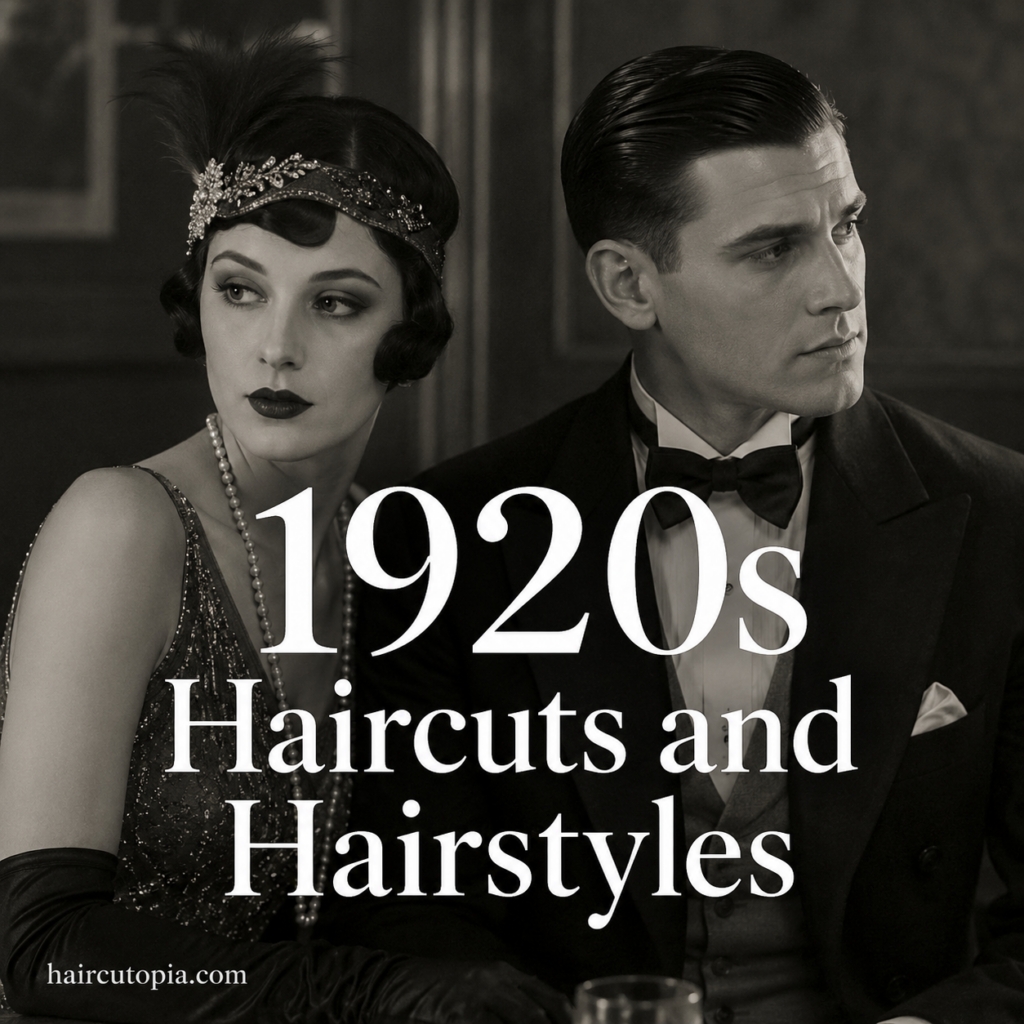
The 1920s marked one of the biggest turning points in hairstyle history. As fashion, music, and culture evolved after World War I, women embraced shorter, more daring hairstyles that symbolized independence and modern living. Men also adopted cleaner, more refined cuts that reflected the era’s polished style.
The decade became known for sleek bobs, finger waves, sharply tailored cuts, and glamorous evening styles. Many of today’s most popular hairstyles—from French bobs to pixie-inspired crops and vintage waves—can trace their roots back to the Roaring Twenties.
Whether you’re fascinated by vintage fashion, considering a 1920s-inspired haircut, or simply curious about the hairstyles that defined an iconic era, this guide explores everything you need to know.
Why the 1920s Changed Hairstyles Forever
Before the 1920s, long hair was considered the standard for women. Hair was often pinned up into elaborate buns and pompadours, with very few women daring to cut it short.
That changed dramatically during the Roaring Twenties.
The rise of the flapper movement encouraged women to reject many traditional beauty standards. Haircuts became shorter, easier to manage, and more expressive. Short hair represented confidence, freedom, and a willingness to embrace modern life.
Several cultural changes influenced hairstyle trends during the decade:
- Women’s growing independence
- Jazz culture
- Hollywood films
- Art Deco fashion
- Increased participation in the workforce
- New beauty salons and hairdressing techniques
As the decade gave way to the 1930s, many of these sleek foundations evolved into softer waves, longer silhouettes, and the polished Hollywood glamour that would define 1930s haircuts and hairstyles.
Defining Features of 1920s Hairstyles
Although many styles emerged during the decade, most shared several recognizable characteristics.
Short Lengths
The bob haircut became the defining look of the era. Hair often ended:
- At the jawline
- Just below the ears
- Around chin length
This dramatic departure from long Victorian hairstyles shocked many people at first but quickly became fashionable.
Sleek Finish
Rather than embracing volume, many 1920s hairstyles focused on smooth, polished finishes.
Hair was often styled close to the head using pomades, brilliantine, or hair creams.
Finger Waves
One of the most recognizable trends of the decade was the finger wave.
These sculpted “S”-shaped waves created an elegant, glossy appearance that worked beautifully with shorter cuts.
Precise Lines
Haircuts featured:
- Clean perimeters
- Blunt ends
- Neatly trimmed necklines
- Symmetrical silhouettes
This precision complemented the geometric designs popular during the Art Deco movement.
The Most Popular Women’s Haircuts of the 1920s
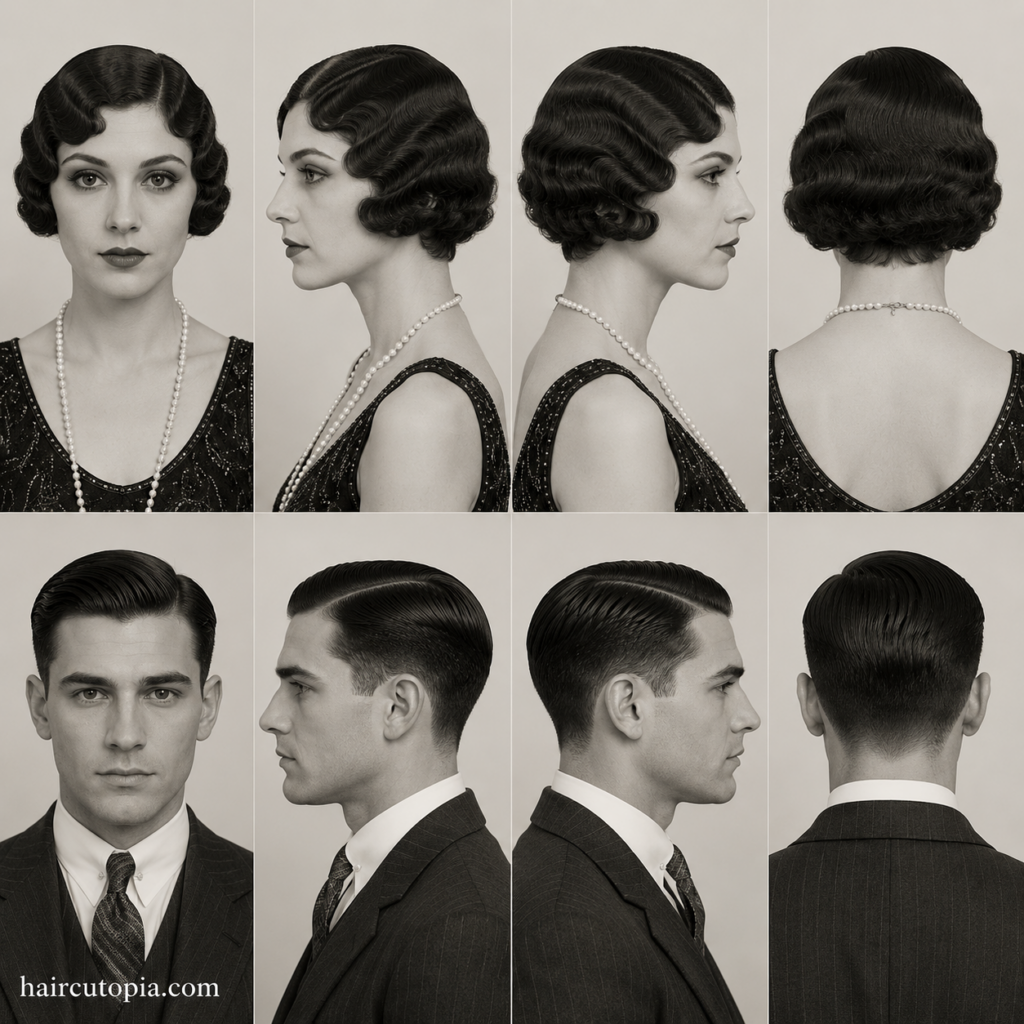
Classic Bob
No hairstyle defines the 1920s more than the classic bob.
Usually cut straight around the jawline with minimal layering, it created a bold yet sophisticated look.
It was practical, fashionable, and surprisingly versatile.
Women often styled it:
- Straight
- Curled under
- With finger waves
- Tucked behind one ear
- With decorative headbands
Today, many modern bob variations still borrow from this timeless haircut.
Shingle Bob
The shingle bob added a dramatic twist to the traditional bob.
Instead of maintaining one uniform length, the back was tapered tightly against the neck while the front remained longer.
The result created:
- A sculpted neckline
- Soft graduation
- Elegant side profile
- More movement
This haircut became especially fashionable toward the middle of the decade.
Eton Crop
The Eton crop pushed short hair to a completely new level.
Inspired by men’s hairstyles, this cut featured:
- Very short sides
- Cropped back
- Smooth top
- Close-fitting silhouette
Although controversial at the time, it became one of the boldest symbols of women’s liberation.
Many modern pixie cuts owe part of their heritage to the Eton crop.
Dutch Boy Bob
Inspired by children’s hairstyles seen in illustrations, the Dutch Boy Bob featured:
- Straight fringe
- Rounded shape
- Blunt perimeter
- Even length
Its playful appearance made it popular among younger women.
Curled Bob
Some women softened their bobs with curls.
Instead of wearing perfectly straight hair, they added:
- Soft curls
- Marcel waves
- Finger waves
- Curled ends
This created a more romantic appearance for evening events.
Iconic 1920s Hairstyles
Haircuts were only part of the look.
Styling played an equally important role.
Finger Waves
Finger waves remain one of history’s most recognizable hairstyles.
Using fingers, combs, clips, and styling lotion, hairdressers sculpted graceful wave patterns across the head.
These waves looked glamorous while keeping hair sleek and controlled.
They’re still popular today for:
- Weddings
- Red carpet events
- Vintage parties
- Formal occasions
Marcel Waves
Marcel waves differed slightly from finger waves.
Created with heated curling irons, they produced deeper, more defined wave patterns.
The style offered:
- More texture
- Longer-lasting curls
- Elegant movement
- Luxurious finish
Side-Parted Bob
A deep side part became one of the signature looks of the decade.
Combined with finger waves or sleek styling, it framed the face beautifully while emphasizing delicate features.
Tucked-Behind-the-Ear Style
Many women tucked one side behind the ear to showcase:
- Earrings
- Decorative clips
- Facial features
This simple styling trick added elegance without requiring complicated techniques.
Popular Men’s Haircuts of the 1920s
Although women experienced the biggest hair revolution, men’s grooming also became increasingly sophisticated.
Side-Part Haircut
The classic side part dominated men’s fashion.
Features included:
- Short sides
- Longer top
- Sharp part line
- Smooth styling
Brilliantine kept every strand perfectly in place.
Slicked-Back Hair
Men frequently combed hair straight back for a polished appearance.
The look paired well with:
- Three-piece suits
- Fedoras
- Formal evening wear
Ivy League-Inspired Cuts
Although later decades refined the Ivy League haircut, many early versions appeared during the 1920s.
Hair remained neat without appearing overly severe.
Tapered Business Cut
Professional men preferred conservative hairstyles featuring:
- Tapered sides
- Clean neckline
- Moderate length
- Natural side part
This timeless style remains popular today.
Hair Accessories That Defined the Decade
Accessories became an essential part of 1920s fashion.
Popular choices included:
- Feather headbands
- Jeweled headpieces
- Decorative combs
- Silk ribbons
- Crystal clips
- Pearl hairpins
Many accessories complemented evening dresses and Art Deco jewelry.
Hair Care and Styling Products in the 1920s
Creating sleek hairstyles required specialized products.
Common styling products included:
- Brilliantine
- Hair creams
- Pomades
- Setting lotions
- Hair tonics
Women also visited salons regularly for:
- Finger waves
- Marcel waving
- Trims
- Hair coloring
Professional salons became increasingly popular throughout the decade.
Hollywood’s Influence on 1920s Hairstyles
Silent film stars became beauty icons.
Women across the country copied hairstyles worn by famous actresses.
Some of the biggest influences included:
- Louise Brooks
- Clara Bow
- Colleen Moore
- Josephine Baker
- Greta Garbo (late 1920s)
Their glamorous appearances helped popularize short hairstyles worldwide, while the growing influence of Hollywood would continue shaping 1930s women’s hair, where softer waves, curls, and more polished silhouettes became increasingly prominent.
Fashion and Hairstyles Worked Together
The sleek hairstyles of the decade perfectly matched contemporary fashion.
Popular clothing featured:
- Drop-waist dresses
- Beaded gowns
- Fringed evening wear
- Cloche hats
- Long pearl necklaces
Short hairstyles allowed hats to fit comfortably while showcasing elegant necklines.
Why Cloche Hats Became So Popular
The famous cloche hat practically required shorter hair.
Long hairstyles created uncomfortable bulk beneath the fitted design.
Short bobs fit perfectly underneath while allowing women to remove their hats without disturbing their hairstyles.
How Hairdressers Created 1920s Styles
Without today’s electric styling tools, creating fashionable hairstyles required patience.
Hairdressers often used:
- Hair lotion
- Fine-tooth combs
- Finger wave clips
- Heated Marcel irons
- Setting methods
- Brilliantine for shine
Many appointments lasted several hours depending on the complexity of the hairstyle.
How the 1920s Influenced Modern Haircuts
Many popular hairstyles today borrow ideas from the Roaring Twenties.
Examples include:
- French Bob
- Classic Bob
- Chin-Length Bob
- Pixie Cut
- Finger Waves
- Vintage Waves
- Side Parts
- Sleek Bobs
Even contemporary fashion regularly revisits these timeless silhouettes.
Are 1920s Hairstyles Still Fashionable?
Absolutely.
Modern stylists frequently recreate 1920s-inspired looks because they remain elegant and surprisingly wearable.
Today’s interpretations often include:
- Softer texture
- Modern layering
- Updated coloring techniques
- Relaxed finger waves
- Contemporary styling products
The result preserves vintage charm while fitting today’s fashion.
Choosing the Right 1920s Hairstyle
Different styles suit different face shapes and hair types.
Round Faces
Consider:
- Longer bobs
- Side parts
- Soft waves
These styles help create visual length.
Oval Faces
Almost every 1920s haircut works well.
Options include:
- Classic Bob
- Finger Waves
- Shingle Bob
- Eton Crop
Square Faces
Soft waves and rounded bobs help balance stronger jawlines.
Heart-Shaped Faces
Choose styles with:
- Chin-length volume
- Side-swept fringe
- Gentle waves
These soften wider foreheads.
Can You Wear a 1920s Hairstyle With Modern Fashion?
Definitely.
Many people combine vintage-inspired hair with contemporary clothing.
Popular combinations include:
- Finger waves with evening gowns
- French bob with casual outfits
- Chin-length bob with business attire
- Vintage waves for weddings
The hairstyle becomes a subtle nod to history rather than a full costume.
Frequently Asked Questions
What was the most popular haircut of the 1920s?
The classic bob was easily the decade’s defining haircut, symbolizing modern fashion and women’s independence.
Why did women cut their hair short in the 1920s?
Short hair reflected changing social attitudes, practicality, fashion trends, and the influence of the flapper movement.
Were finger waves a haircut?
No. Finger waves are a styling technique that can be worn with various haircuts, especially bobs.
Did everyone have short hair in the 1920s?
Not everyone. Many women kept their hair long, but short hairstyles became increasingly fashionable throughout the decade.
What products were used to style hair?
Brilliantine, pomades, setting lotions, hair creams, and Marcel irons were commonly used to create smooth, glossy hairstyles.
Are 1920s hairstyles difficult to recreate?
Some styles, such as finger waves, require practice or professional styling. Simpler bobs and side parts are much easier to wear daily.
Final Thoughts
The 1920s transformed hairstyles in ways that continue to shape modern beauty trends. What began as a bold break from tradition evolved into one of the most influential decades in hair history.
From sleek bobs and finger waves to sharply tailored men’s cuts, the hairstyles of the Roaring Twenties reflected a generation eager to embrace change, confidence, and individuality. Many of these timeless looks remain just as stylish today, proving that great hair never truly goes out of fashion.
Whether you’re exploring vintage fashion, searching for your next haircut, or simply appreciating the evolution of hairstyling, the 1920s remain an enduring source of inspiration.
Related Posts
 1930s Haircuts and Hairstyles: The Complete Guide to Elegant Vintage Hair Trends
 1980s Haircuts and Hairstyles: The Complete Guide to Big Hair, Bold Cuts, and Iconic Styles
 1930s Men’s Hair: Classic Haircuts, Hairstyles and Grooming Trends
 1980s Iconic Haircuts: The Most Memorable Cuts That Defined the Decade