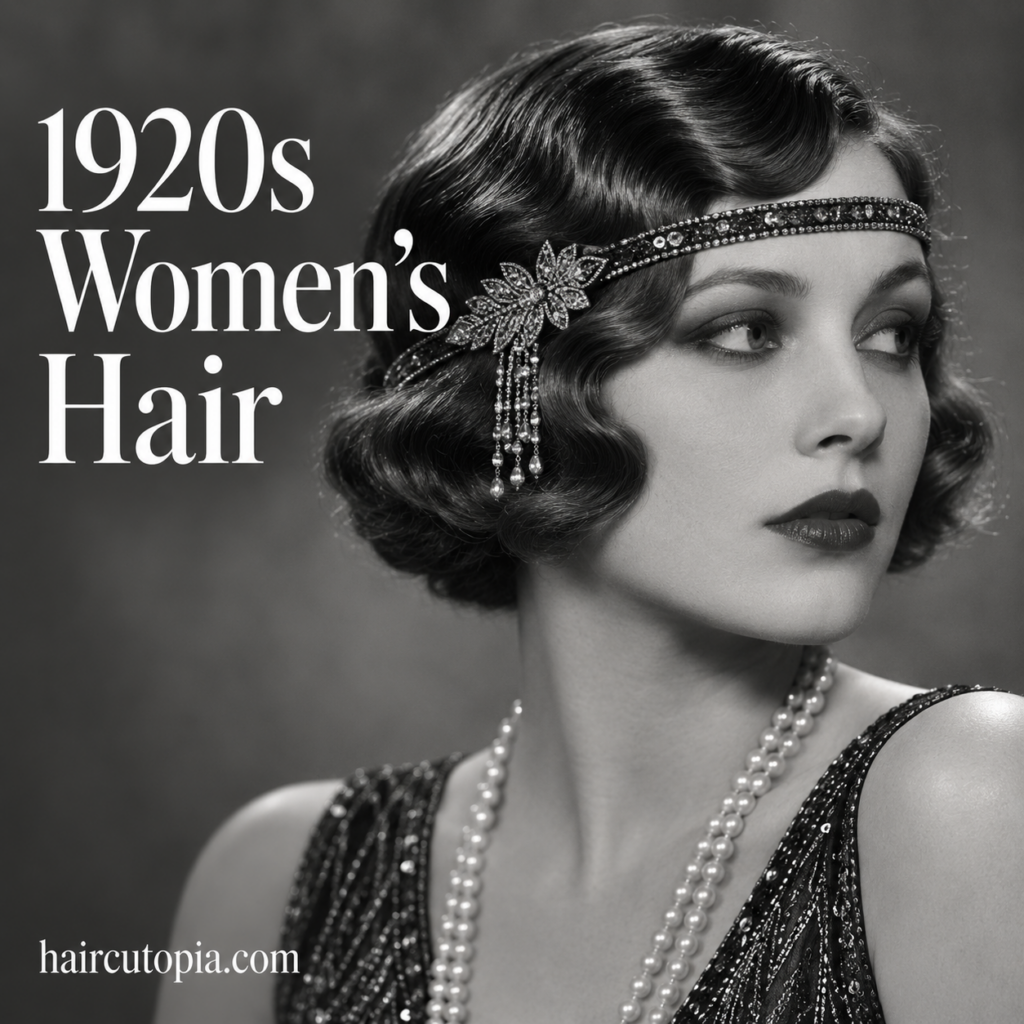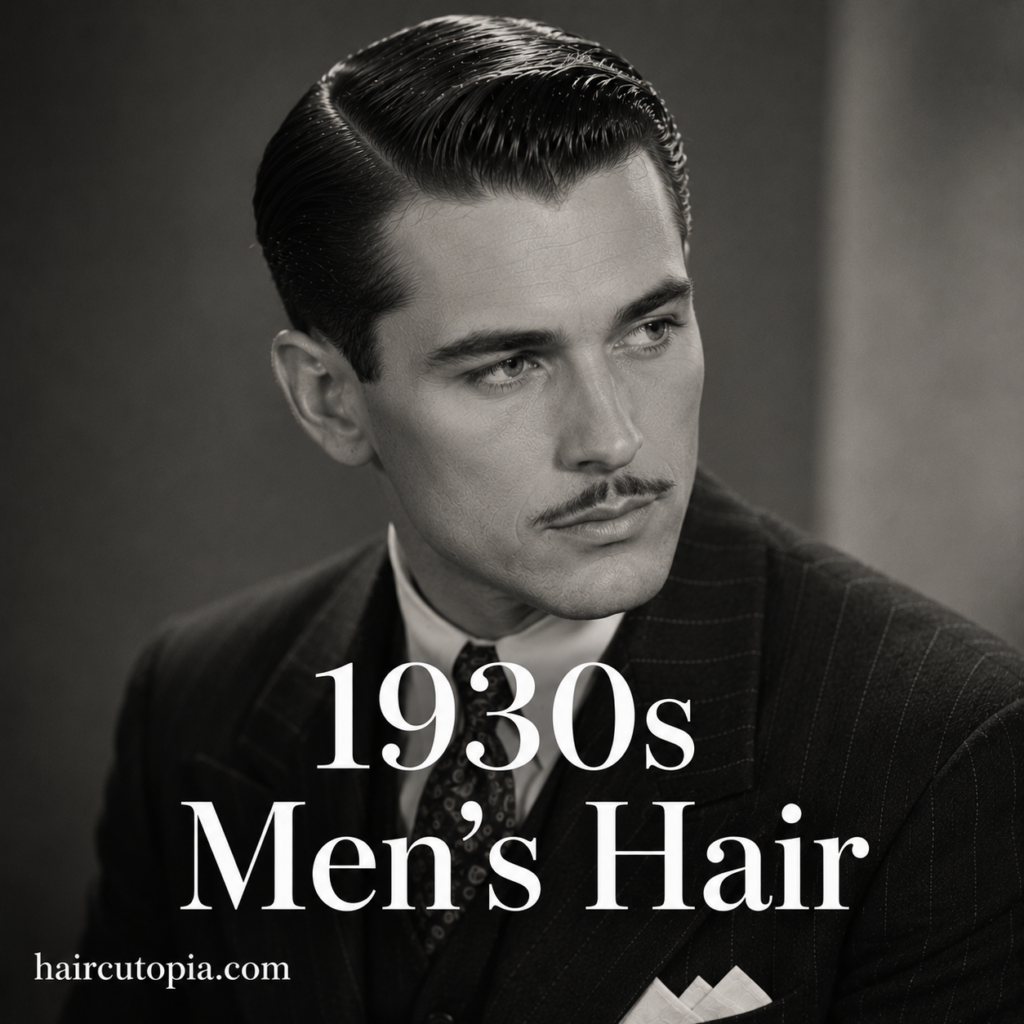
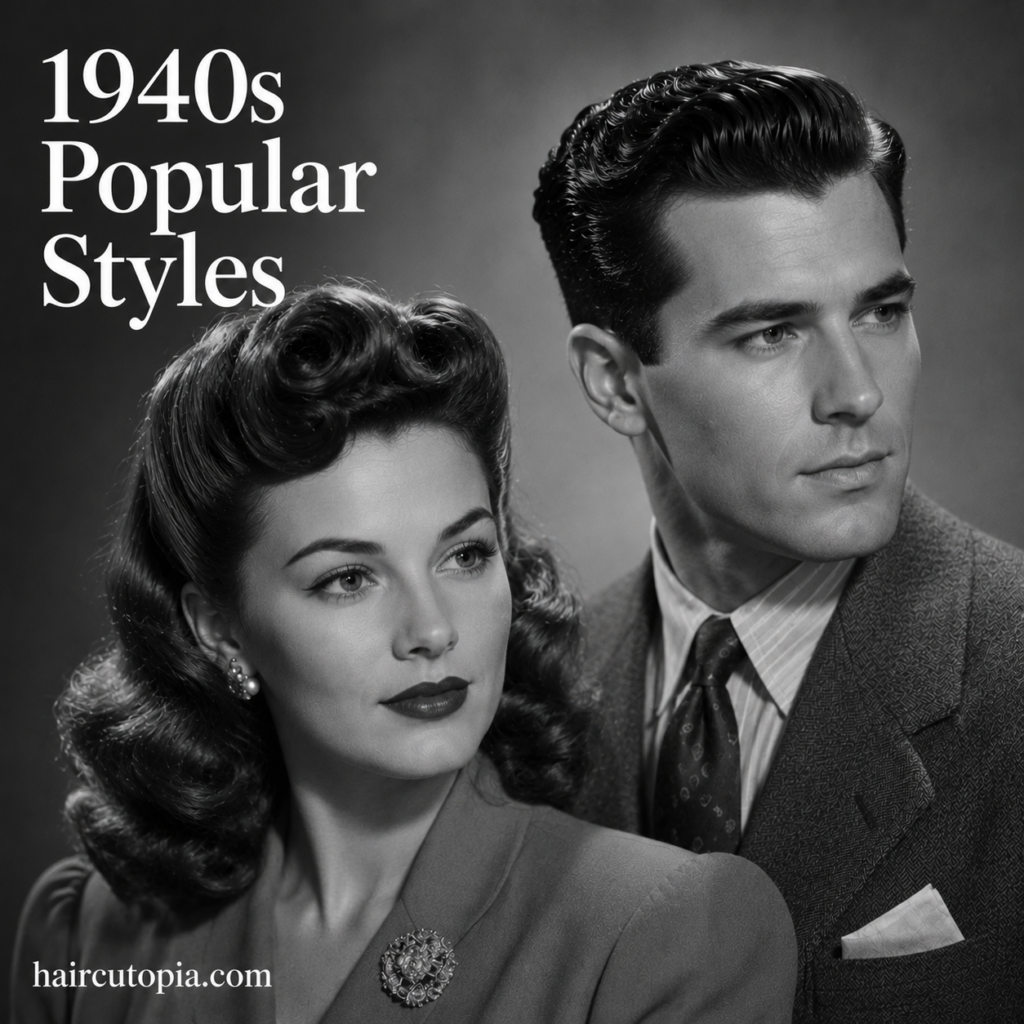
The 1940s produced some of the most recognizable hair looks of the twentieth century. Victory rolls, glossy waves, curled bobs, neat side parts, and carefully groomed men’s styles all became part of the decade’s visual identity.
What makes the era especially interesting is that these styles developed during a period of enormous change.
World War II influenced how people dressed and groomed themselves. Women entering factories and other workplaces needed practical ways to control longer hair. Men serving in the military encountered grooming requirements that favored short, manageable cuts. At the same time, Hollywood continued to provide glamorous inspiration through movie stars with polished curls, waves, and immaculate styling.
The result was a decade where practical and glamorous hair existed side by side.
Some styles were elaborate. Others were surprisingly simple. And many of the most popular 1940s styles still influence modern hair today.
What Hair Styles Were Popular in the 1940s?
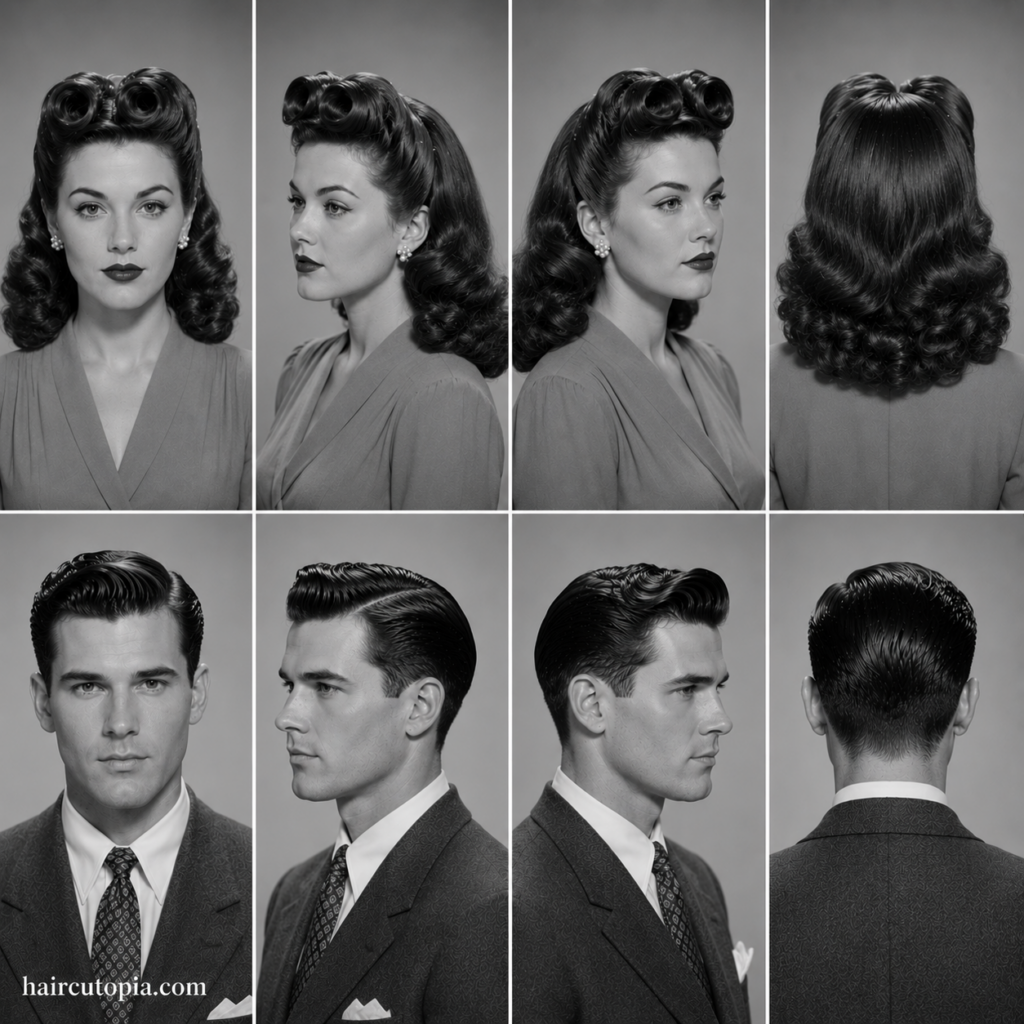
Popular 1940s hair was generally neat, structured, and intentionally styled.
For women, curls were everywhere. Hair might be arranged into victory rolls, brushed into smooth waves, pinned away from the face, or tucked into a snood. Medium lengths were especially versatile because they could be worn down or transformed into elaborate rolled styles.
Men usually kept the sides and back shorter while retaining enough length on top for a side part, wave, pompadour, or brushed-back finish.
Some of the most popular styles of the decade included:
- Victory rolls
- Pin-curl hairstyles
- Hollywood waves
- Pageboy styles
- Rolled bangs
- Women’s pompadours
- Snood hairstyles
- Scarf and turban styles
- Curled bobs
- Men’s side parts
- Brushed-back men’s hair
- Slicked-back styles
- Men’s pompadours
- Crew cuts
- Military-inspired short hair
These looks weren’t necessarily worn throughout the entire decade in exactly the same way. Hair evolved from the early wartime years into the softer postwar styles that began appearing toward the end of the 1940s.
Victory Rolls
Victory rolls are probably the style most people immediately associate with women’s 1940s hair.
Large sections near the front of the head were rolled into cylindrical shapes and secured with pins.
Double victory rolls created the classic symmetrical look, but there were plenty of variations. A woman might wear one prominent roll, offset rolls, or smaller rolls combined with curls.
The remaining hair could be worn in several ways:
- Loose and curled
- Rolled underneath
- Pinned into an updo
- Contained inside a snood
- Partially covered with a scarf
Victory rolls created height while keeping the front sections away from the face.
They’re still one of the first styles people turn to when recreating a strong 1940s look.
Pin-Curl Hairstyles
Pin curls were fundamental to women’s hair during the era.
Rather than being just one finished style, they were a method used to create many different looks.
Small sections of damp hair were wrapped into curls and pinned against the scalp. Once completely dry, the pins were removed.
The resulting curls could then be brushed, shaped, and arranged.
Pin curls could help create:
- Soft waves
- Defined curls
- Rolled bangs
- Curled ends
- Face-framing volume
- Vintage updos
The placement and direction of the curls affected how the finished hairstyle behaved.
This made the initial set an important part of styling rather than simply a way to make the hair curly.
Hollywood Waves
Hollywood offered a glamorous alternative to more practical wartime hair.
Long, smooth waves were especially striking when combined with a deep side part.
Unlike modern beach waves, the goal wasn’t a deliberately undone finish. The curls were often brushed together so they flowed into a continuous pattern.
The finished style looked glossy, soft, and controlled.
Hollywood-inspired waves worked especially well for evening wear and formal occasions.
They’ve also aged remarkably well. Vintage-inspired waves continue to appear at weddings, red carpets, and formal events without necessarily looking like a costume.
The Pageboy
The pageboy offered a smoother silhouette than heavily curled or rolled hairstyles.
Hair was generally worn around shoulder length and shaped inward toward the ends.
This created a rounded appearance around the bottom of the hairstyle.
A pageboy could be worn with a side part and relatively smooth top, giving it an understated sophistication compared with more elaborate victory-roll styles.
Modern pageboy cuts can be shorter and more geometric, but the vintage version emphasized smoothness and a softly curved shape.
Rolled Bangs
The front section of the hair offered plenty of opportunities for creativity.
Rather than wearing soft, wispy bangs across the forehead, women could roll the front into a distinct barrel-shaped curl.
This roll might sit high above the forehead or slightly toward one side.
Rolled bangs worked particularly well when the rest of the hair was contained.
They could be paired with:
- Scarves
- Snoods
- Turbans
- Curled lengths
- Updos
- Victory rolls
Because the front remained visible even when much of the hair was covered, a single roll could provide a strong decorative element.
Women’s Pompadour Styles
Another popular way to keep hair away from the face was the women’s pompadour.
The front sections were lifted upward and backward, creating volume above the forehead.
The effect could be smooth and rounded or incorporated into a more elaborate arrangement of curls.
Women’s pompadours shared some visual similarities with victory rolls but weren’t necessarily formed into obvious cylindrical shapes.
They created an open silhouette around the face while giving the hairstyle noticeable height.
Shoulder-Length Curls
Not every popular 1940s style required complicated construction.
Shoulder-length curled hair was a versatile option that could move between everyday and glamorous settings.
Hair could be parted to the side and curled through the lower lengths, creating fullness around the shoulders.
Brushing the curls softened their appearance and helped them blend into a cohesive shape.
This style is particularly easy to reinterpret today.
Modern tools can create the curls quickly, while brushing them together produces a more period-inspired finish.
Curled Bob Styles
Women with shorter hair could embrace the decade’s love of curls as well.
A bob might feature:
- Curled-under ends
- Side-parted waves
- Sculpted curls
- Volume around the sides
- Rolled front sections
The overall finish tended to remain controlled.
Where a contemporary bob might emphasize texture and movement, a 1940s-inspired bob often looked deliberately shaped.
That difference in styling can completely change the character of essentially the same haircut.
Snood Hairstyles
Snoods became both practical and fashionable.
A snood enclosed the back portion of the hair inside a netted or fabric covering.
The visible front could still be styled with curls, rolls, or volume.
This allowed longer hair to remain controlled without sacrificing the decorative elements of the hairstyle.
Snoods could be simple or decorative, making them useful across different settings.
They’re especially associated with the practical side of wartime women’s fashion.
Hair Scarf Styles
Hair scarves became another defining look of the decade.
For women working around machinery, securing loose hair was important for safety.
A scarf could contain much of the hair while leaving the front sections exposed.
Those visible sections might be arranged into:
- Victory rolls
- Rolled bangs
- Pin curls
- Pompadour-style volume
This created one of the most recognizable working-woman looks of World War II.
The scarf wasn’t simply functional, though. Different colors, patterns, and tying methods allowed it to become part of the outfit.
Turban Styles
Turbans provided greater coverage while still allowing room for styling.
Fabric could be wrapped around much of the head with a curl, roll, or small section of hair visible near the front.
The folds of the fabric became part of the overall silhouette.
Like scarves and snoods, turbans demonstrate how practical hair management became integrated into 1940s fashion rather than existing separately from it.
Classic Men’s Side Part
For men, few styles were more dependable than the side part.
Hair was kept relatively short around the sides and back with enough length through the top to comb neatly into position.
A clean part established the shape.
The front might be combed across, slightly upward, or backward depending on the wearer’s hair texture and preference.
Styling products helped maintain the smooth finish.
The classic side part remains one of the most wearable 1940s styles today because it never really disappeared.
Wavy Side-Parted Hair
Men with naturally wavy hair could incorporate that texture into the traditional side-part style.
Instead of flattening every strand, the front could form a controlled wave.
The result looked softer while maintaining the polished appearance expected from men’s grooming during the period.
The important distinction was control.
Hair could have movement without looking deliberately messy or tousled.
Brushed-Back Men’s Hair
Another popular approach was brushing the top away from the forehead.
The hair could move backward without requiring a sharply defined part.
This worked especially well with thicker hair.
A grooming product helped maintain the shape and gave the style the smoother finish visible in many period photographs.
Modern versions often emphasize separation and matte texture. A more traditional 1940s interpretation generally looks smoother and more cohesive.
Slicked-Back Styles
Slicked-back hair took the polished finish even further.
Hair was combed away from the face and held neatly in position.
The sides remained controlled, creating a streamlined silhouette.
Depending on hair density and texture, the top could retain some natural volume rather than sitting completely flat.
A slicked-back style complemented the tailored clothing and formal grooming associated with much of men’s fashion during the decade.
Men’s Pompadour
The pompadour added more height through the front.
Hair was lifted above the forehead and swept backward while the sides remained relatively neat.
1940s versions could be more restrained than the larger pompadours that became closely associated with 1950s rock-and-roll culture.
Still, the basic idea was already present.
By the later 1940s, increased volume through the front was helping establish some of the men’s hair trends that would become more prominent during the following decade.
Crew Cuts
The crew cut offered a practical alternative to carefully combed hairstyles.
Hair remained short around the sides and back with slightly more length toward the top.
The result required relatively little daily styling.
Crew cuts were particularly suited to military and athletic settings, but their straightforward appearance also allowed them to transition easily into civilian life.
Like the side part, the crew cut has remained relevant long after the decade ended.
Military-Inspired Styles
World War II had an enormous influence on men’s grooming.
Millions of men encountered military grooming requirements, making short and practical hair highly visible throughout the decade.
Military cuts emphasized manageability.
The exact style varied, but the general preference for short sides, tidy backs, and limited excess length influenced the broader appearance of men’s hair during the wartime years.
Civilian men could retain more styling length on top while still reflecting the same preference for neat grooming.
Popular Working Women’s Hair
The hairstyles women wore while working deserve special attention because they reflect how fashion adapted to changing social roles.
As women entered factories and industrial jobs, loose hair could pose a safety risk around machinery.
Hair therefore needed to be secured.
Common solutions included:
- Scarves
- Snoods
- Hairnets
- Turbans
- Pinned curls
- Rolled sections
- Updos
Instead of abandoning style, women incorporated decorative front sections and accessories into these practical arrangements.
A roll or curl near the forehead could give a covered hairstyle a distinctive appearance.
Practicality became part of the fashion.
Popular Evening Styles
Evening hair could move in a more glamorous direction.
Smooth waves, polished curls, decorative accessories, and carefully arranged updos complemented evening clothing.
Hollywood provided plenty of inspiration.
For women, a practical daytime style could sometimes be transformed simply by releasing or rearranging sections of hair.
Men generally maintained the same underlying haircut while refining the styling for formal occasions.
A smooth side part or carefully brushed-back finish worked naturally with a suit.
Popular Hair Accessories of the 1940s
Accessories played a major role in women’s hair.
Some served practical purposes, while others were primarily decorative.
Popular options included:
- Scarves
- Snoods
- Hairnets
- Turbans
- Decorative combs
- Hairpins
- Ribbons
- Flowers
- Clips
Hairpins were particularly important because elaborate styles often depended on them even when they weren’t visible.
Scarves and snoods, meanwhile, could become prominent visual elements rather than hidden styling tools.
How Popular 1940s Styles Were Created
Creating these hairstyles required patience.
Women often set their hair before actually styling it.
A typical routine could involve:
- Starting with damp hair.
- Dividing the hair into sections.
- Creating pin curls or using rollers.
- Securing each section.
- Allowing the hair to dry thoroughly.
- Removing the set.
- Brushing the curls together.
- Shaping waves, rolls, or volume.
- Pinning sections where necessary.
- Finishing and smoothing the hairstyle.
The brushing stage made a major difference.
Instead of preserving every individual curl, brushing helped multiple curls merge into larger waves and shapes.
Men’s styling was generally quicker.
A side part could be established with a comb before the hair was shaped using pomade, tonic, or another grooming product.
Early 1940s Popular Styles
The early years of the decade were increasingly shaped by World War II.
Practical hairstyles became especially important.
Women’s hair frequently incorporated rolls, curls, scarves, and pinned sections that helped keep it controlled.
Men’s hair remained neat and relatively conservative, with military grooming becoming a strong visual influence.
The polished styles inherited from the 1930s didn’t disappear, but they adapted to wartime circumstances.
Mid-1940s Popular Styles
By the middle of the decade, many of the styles now strongly associated with the 1940s were firmly established.
Victory rolls, pin curls, snoods, scarves, and rolled bangs gave women’s hair its distinctive wartime identity.
Hollywood waves provided a glamorous contrast.
Men continued wearing side parts, brushed-back styles, short cuts, and controlled waves.
This period contains many of the looks that modern vintage styling draws from most heavily.
Late 1940s Popular Styles
Late-1940s hair began moving gradually toward the next decade.
Women’s styles could become softer and increasingly glamorous while maintaining the curls and polished finishes established earlier.
Men began experimenting with additional height and volume through the front.
The transition wasn’t immediate.
A hairstyle from 1949 could easily share characteristics with one from the early 1950s.
Fashion rarely changes simply because the calendar reaches a new decade.
How 1940s Popular Styles Differed From the 1930s
There was considerable overlap between the 1930s and 1940s.
Both decades embraced waves, curls, side parts, and polished grooming.
Women’s 1930s styles often emphasized elegant waves and shapes that remained relatively close to the head.
During the 1940s, visible rolls and increased volume became particularly recognizable. Wartime accessories and practical pinned styles also became more prominent.
Men’s hair remained traditionally groomed, but military influence became much more significant during the 1940s.
How 1940s Popular Styles Differed From the 1950s
The boundary between 1940s and 1950s hair can be surprisingly blurry.
Many trends evolved gradually.
Still, the 1950s introduced new cultural influences that changed hair significantly.
Men’s pompadours eventually became larger and more strongly connected with youth and rock-and-roll culture.
Women’s hair expanded into a wide range of shorter cuts, sculpted curls, and polished silhouettes.
By comparison, the defining styles of the 1940s were closely tied to wartime practicality, traditional grooming, and Hollywood glamour.
Which 1940s Styles Are Still Popular Today?
Quite a few.
Some have survived almost unchanged, while others appear as subtle influences.
Popular modern interpretations include:
- Hollywood waves
- Deep side parts
- Victory rolls
- Vintage scarves
- Classic men’s side parts
- Brushed-back hair
- Pompadours
- Crew cuts
- Traditional tapers
- Curled bobs
Hollywood waves are particularly common for weddings and formal events.
Men’s side parts and crew cuts barely register as vintage anymore because they’ve remained part of mainstream grooming for generations.
How to Wear a 1940s Style Without Looking Like a Costume
The easiest approach is to borrow one defining feature rather than recreating an entire period look.
For women, that might mean wearing modern hair with a deep side part and brushed waves.
A single victory roll can add a stronger vintage reference without requiring a full pin-up hairstyle.
For men, a traditional side part or brushed-back top can provide a subtle period influence.
If you want a more authentic silhouette, avoid an extremely high skin fade. Keeping additional weight through the sides usually creates a shape closer to traditional 1940s grooming.
The same principle applies to styling products.
A smoother finish tends to look more period-inspired than heavily separated matte texture.
Frequently Asked Questions About 1940s Popular Styles
What was the most popular women’s hairstyle in the 1940s?
There wasn’t one hairstyle worn by every woman, but victory rolls are among the most recognizable. Pin curls, shoulder-length waves, pageboy styles, rolled bangs, snoods, and scarf hairstyles were also popular during the decade.
What was the most popular men’s hairstyle in the 1940s?
The neatly groomed side part was one of the decade’s most characteristic men’s styles. Brushed-back hair, controlled waves, crew cuts, pompadours, and military-influenced short styles were also common.
Why were victory rolls popular?
Rolled hairstyles allowed women to create decorative volume while keeping sections of hair controlled and away from the face. Victory rolls became particularly associated with wartime-era fashion and remain strongly connected with the 1940s today.
Why did women wear scarves in their hair?
Scarves helped contain hair, which was especially useful for women working around machinery during World War II. They also became fashionable accessories and could be paired with visible curls or rolls.
Did women wear long hair in the 1940s?
Yes, although longer hair was often pinned, rolled, or contained rather than worn completely loose. Medium and shoulder-length hair was especially versatile for the curled and rolled styles of the period.
Did men have long hair in the 1940s?
Men’s hair was generally much shorter than many contemporary styles. The sides and back were typically kept neat while enough length remained on top for side parts, waves, pompadours, and brushed-back styling.
What was a popular casual hairstyle in the 1940s?
For women, simple curls, scarves, snoods, and practical pinned styles worked well for everyday wear. Men could rely on a neat side part or straightforward short haircut.
What 1940s style is easiest to wear today?
A side-parted wave is an accessible option for women, while a classic side-part haircut works easily for men. Both reference the decade without requiring elaborate vintage styling.
Are 1940s styles the same as 1950s styles?
No, although there is considerable overlap between the late 1940s and early 1950s. The 1940s were more strongly influenced by wartime practicality, while the 1950s gradually introduced more dramatic volume and new youth-driven trends.
Why 1940s Popular Styles Still Stand Out
The most popular styles of the 1940s weren’t created in isolation from the world around them.
They reflected it.
Women found ways to make practical hair fashionable, turning rolls, scarves, snoods, and pin curls into distinctive looks. Hollywood offered polished waves and glamorous curls that provided another source of inspiration.
Men balanced military-influenced practicality with traditional grooming, wearing side parts, brushed-back styles, controlled waves, and early pompadours.
That’s what gives the decade such a recognizable identity.
1940s hair could be practical without being plain and glamorous without always being extravagant.
More than eight decades later, many of those styles remain surprisingly familiar. Victory rolls still immediately evoke vintage fashion. Hollywood waves continue appearing at formal events. Men’s side parts, crew cuts, and brushed-back styles have barely left the barbershop.
The tools and routines may have changed, but the shapes created during the 1940s continue to influence how people wear their hair today.