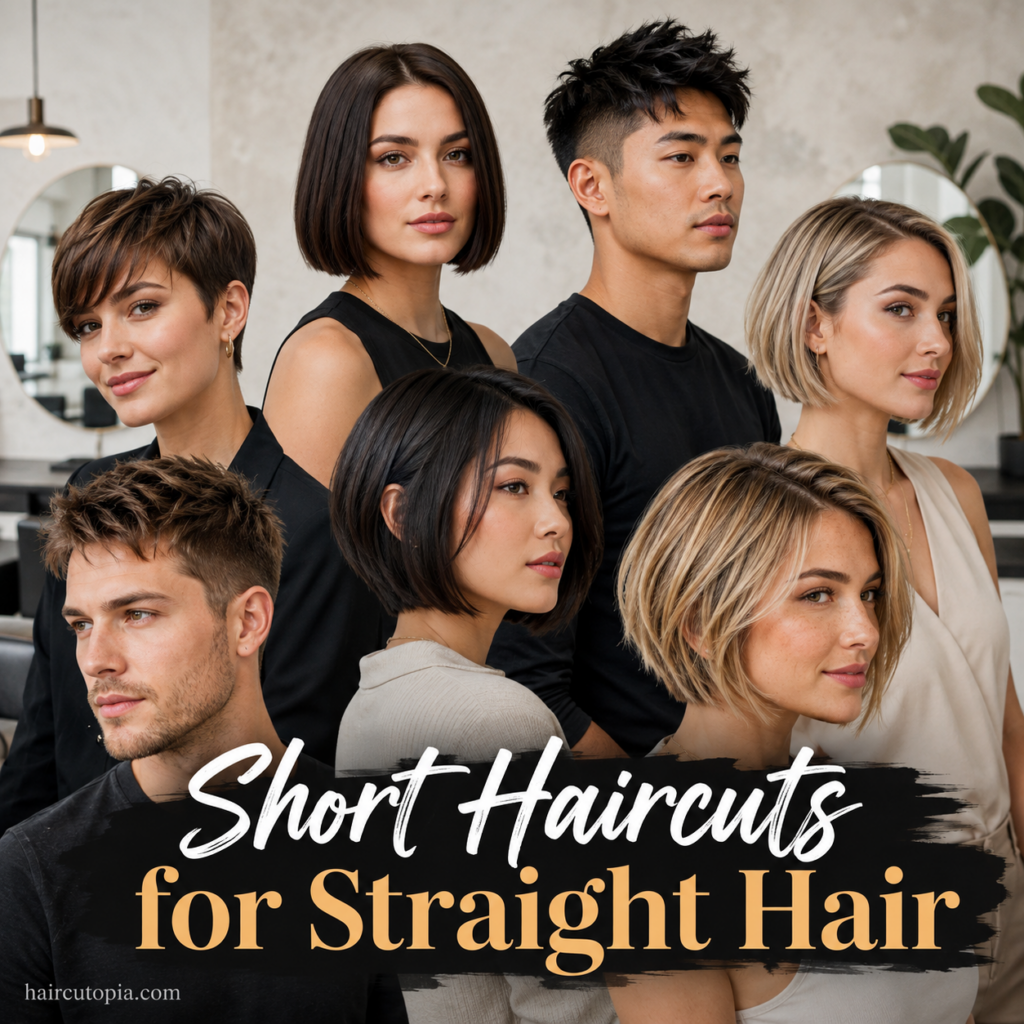
Straight hair can be surprisingly versatile when it comes to going short. Without curls or waves changing the shape of the cut, clean lines, layers, bangs, and texture tend to show up clearly. That makes short haircuts for straight hair a great option if you want something polished, modern, or simply easier to manage.
The trick is choosing a cut that works with your hair rather than expecting it to behave like a completely different texture. Fine straight hair may benefit from blunt edges that create the appearance of fullness, while thick straight hair often feels lighter and moves better with strategic layering.
From classic bobs to cropped pixies and textured short styles, there are plenty of ways to make straight hair look anything but boring.
Why Short Hair Works So Well With Straight Hair
Straight hair naturally highlights the structure of a haircut. A precise bob looks especially sharp because the ends fall into a defined line, while layers are easy to see because they aren’t hidden within curls.
Going shorter can also remove excess weight. This is particularly useful for thick straight hair that tends to feel heavy or flat when it’s long.
Depending on the cut, short straight hair can offer:
- Faster washing and drying
- Less weight around the face and neck
- More visible shape and structure
- Easier everyday styling
- A fuller appearance for some fine hair types
- More opportunities to experiment with bangs and face-framing pieces
Short doesn’t necessarily mean high maintenance, either. Some styles require regular shaping, but many can be washed, lightly styled, and left alone.
Best Short Haircuts for Straight Hair
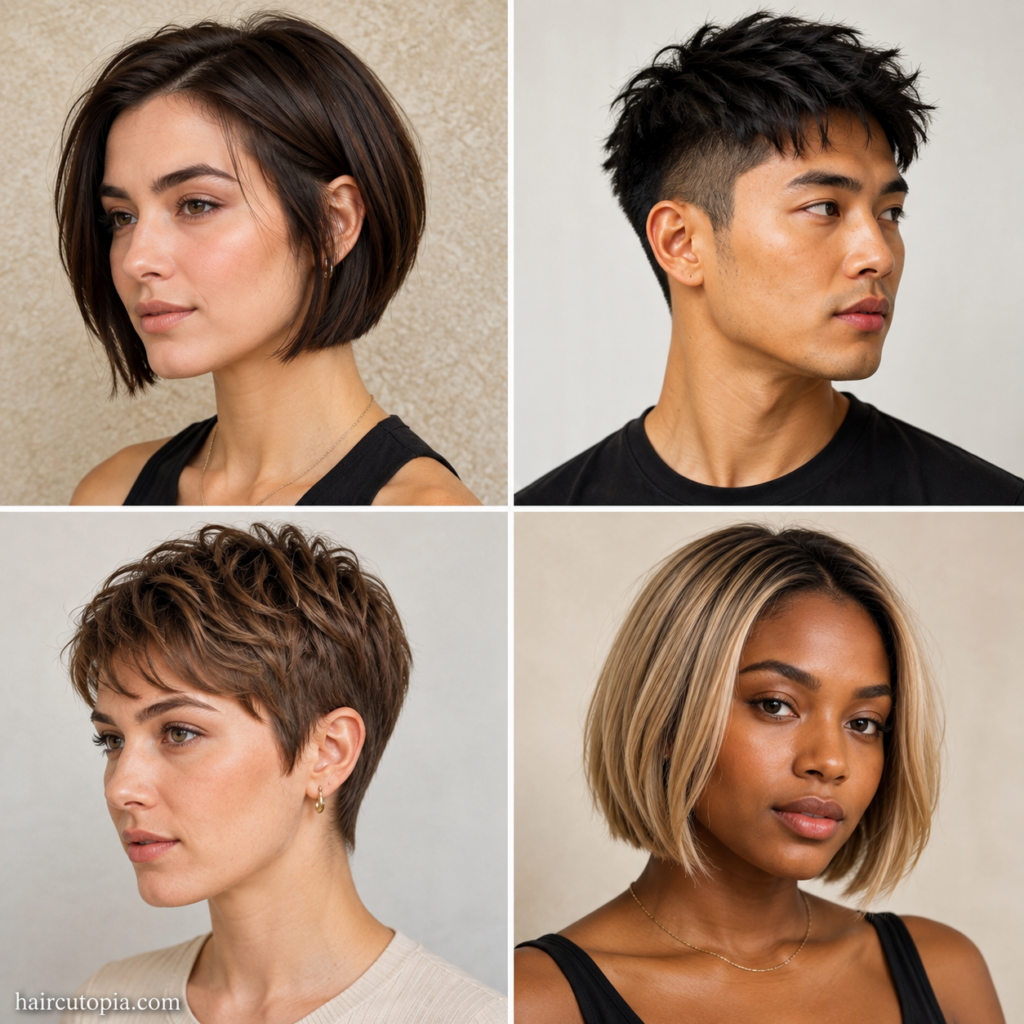
There isn’t one short haircut that works for everyone with straight hair. Density, thickness, face shape, growth patterns, and how much styling you’re willing to do all matter.
Here are some of the most versatile options.
Classic Bob
The classic bob remains one of the easiest short haircuts to adapt to straight hair.
Usually cut somewhere between the jaw and shoulders, a bob creates a strong outline that naturally suits straight strands. It can look sleek and precise or slightly tousled depending on how it’s styled.
A jaw-length bob creates a sharper, more noticeable shape, while a slightly longer version tends to feel softer.
For fine straight hair, keeping the ends fairly blunt can make the perimeter appear denser.
Blunt Bob
If your straight hair tends to look thin at the ends, consider a blunt bob.
Instead of using lots of layers, the hair is cut primarily to one length. That creates a solid edge and can make the hair appear thicker.
Blunt bobs work especially well on naturally straight hair because very little styling is needed to show off the shape.
They can be worn with:
- A center part
- A deep side part
- Straight-across bangs
- Curtain bangs
- Subtle face-framing pieces
The cut can also be adjusted from chin length to just above the shoulders depending on how short you want to go.
French Bob
A French bob typically sits around the jaw or slightly higher and is often paired with bangs.
Compared with a perfectly polished blunt bob, this style usually has a softer, more relaxed finish. A little texture around the ends keeps it from looking overly rigid.
Straight hair provides a good foundation for the cut because the basic shape remains visible even with minimal styling.
If you like short hair that feels stylish without looking overly done, this is worth considering.
Textured Bob
Not every straight-hair bob needs razor-sharp edges.
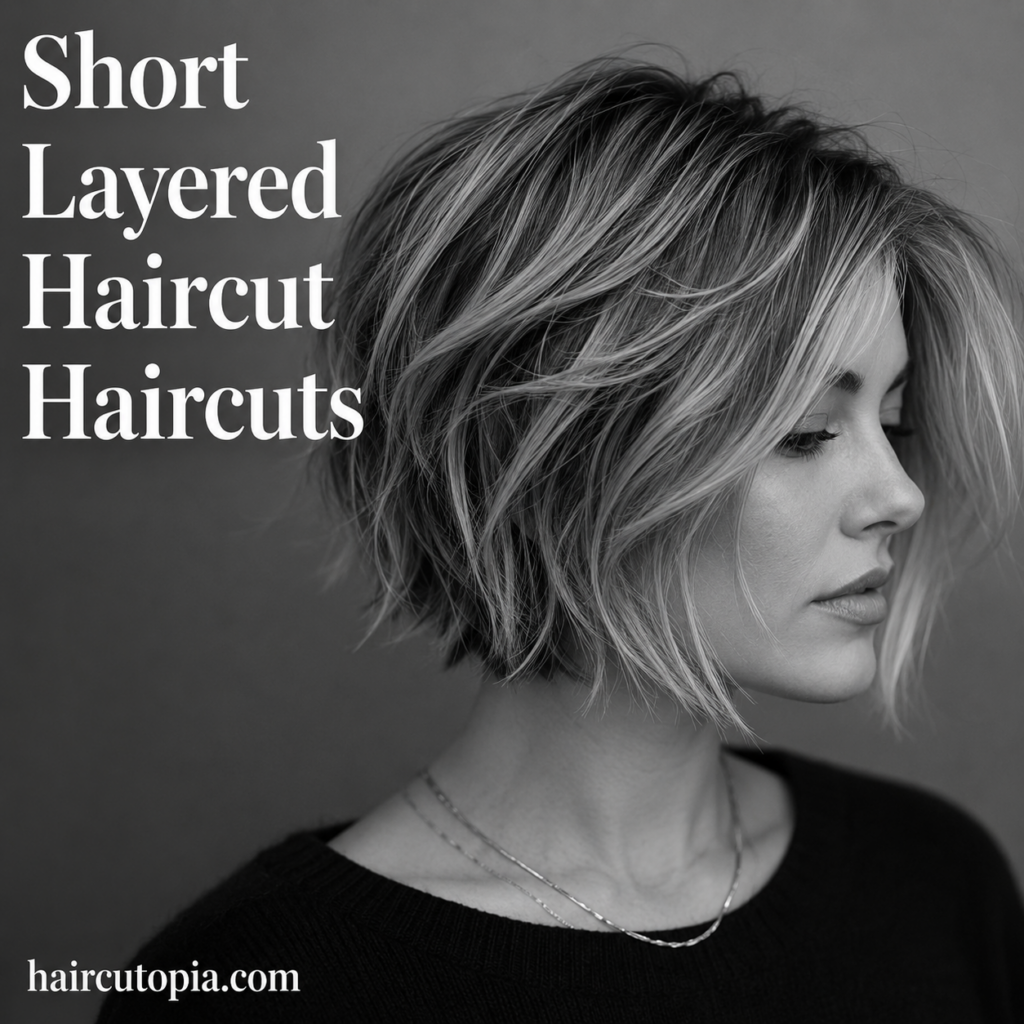
A textured bob introduces subtle layers or piecey ends to create more movement. It’s particularly useful when straight hair tends to fall flat against the head.
The goal isn’t necessarily to create waves. Instead, the added texture breaks up the solid shape and gives the haircut a more casual appearance.
A small amount of lightweight styling cream or texturizing product can help separate the ends.
Layered Bob
A layered bob can be a good middle ground between a blunt cut and a heavily textured style.
Layers remove some weight while creating movement through the sides and ends. They’re especially helpful for thick straight hair that can become bulky in a one-length bob.
Fine hair requires a little more caution. Too many layers can remove density and make the ends appear thinner.
If your hair is fine, ask for minimal or strategically placed layers rather than aggressive thinning.
A-Line Bob
An A-line bob is typically shorter toward the back and gradually becomes longer toward the front.
That subtle angle creates a defined silhouette without requiring dramatic styling.
On straight hair, the graduation is particularly visible, making this a good choice if you like clean, architectural cuts.
The difference between the front and back can be subtle or dramatic depending on the look you’re after.
Short Shag
A short shag offers almost the opposite effect of a blunt bob.
Instead of emphasizing a single clean perimeter, the shag relies on layers, movement, and intentionally imperfect texture.
Straight hair can sometimes lack natural volume, so shorter layers around the crown may help create lift. Face-framing pieces can also soften the overall shape.
The cut works particularly well if you prefer hair that looks a little undone rather than perfectly smooth.
Bixie Cut
The bixie sits somewhere between a bob and a pixie.
It keeps more length than a traditional pixie, particularly around the sides and back, while still feeling noticeably shorter than a bob.
This extra length makes the bixie a useful transition haircut if you’re interested in going short but aren’t ready for a full pixie.
On straight hair, layers can create separation and prevent the cut from sitting too close to the head.
Classic Pixie Cut
A pixie is one of the shortest options, but there are plenty of ways to customize it.
Some pixies are cropped closely around the sides and back, while others leave more length through the top. Straight hair works particularly well with longer sections because they can be swept sideways, styled forward, or given a slightly piecey finish.
A pixie can also emphasize facial features more than longer hairstyles because there’s less hair surrounding the face.
Long Pixie
If a traditional pixie feels too short, a long pixie offers more flexibility.
Extra length through the top and front provides enough hair to experiment with different parts and styling directions.
You can wear it:
- Sleek and side-swept
- Brushed forward
- Tucked behind the ears
- Lightly textured
- Styled with extra volume at the roots
It’s also a practical stepping stone between a bob and a shorter crop.
Pixie Bob
A pixie bob combines the cropped feel of a pixie with some of the shape and length of a short bob.
The back is generally shorter, while the front and sides retain enough length to frame the face.
For straight hair, this can provide more shape than a basic one-length cut while remaining relatively easy to style.
Cropped Cut With Long Bangs
Keeping the sides and back short while leaving longer bangs creates contrast without requiring much overall length.
The fringe can be swept across the forehead, parted in the middle, or tucked to the side.
This style is particularly useful if you like the convenience of short hair but don’t want your face completely exposed.
Short Haircuts for Fine Straight Hair
Fine straight hair often becomes flat because it doesn’t have much natural volume or texture.
The solution isn’t always adding more layers. In fact, excessive layering can sometimes make fine hair appear even thinner.
Cuts with a stronger perimeter tend to preserve density.
Good options include:
- Blunt bobs
- Chin-length bobs
- French bobs
- Long pixies
- Bixie cuts with restrained layering
- Cropped cuts with fuller bangs
A slightly shorter length can also prevent fine hair from being weighed down.
When styling, lightweight products are usually better than heavy creams or oils, which can quickly make fine straight hair look limp.
Short Haircuts for Thick Straight Hair
Thick straight hair presents a different challenge: bulk.
A completely blunt short haircut can create a triangular or overly heavy shape if too much density remains around the ends.
Internal layering, graduation, and carefully placed texture can remove weight without making the haircut look thin.
Consider styles such as:
- Layered bobs
- A-line bobs
- Short shags
- Bixie cuts
- Textured pixies
- Graduated bobs
Your stylist may also adjust the cut based on where your hair naturally becomes bulky rather than thinning everything evenly.
Short Haircuts for Straight Hair With Bangs
Bangs can completely change the appearance of a short haircut.
Because straight hair naturally falls smoothly, many fringe styles work without extensive daily styling.
Curtain Bangs
Curtain bangs are longer toward the sides and usually part near the center.
They blend naturally into bobs and layered short cuts while providing face framing without the commitment of a full straight-across fringe.
They’re also relatively forgiving as they grow.
Wispy Bangs
Wispy bangs use less hair than a dense fringe, creating a softer effect across the forehead.
They can be particularly flattering with fine straight hair because they don’t remove as much hair from the rest of the cut.
Blunt Bangs
Blunt bangs make a stronger statement.
They pair particularly well with sharp bobs and geometric cuts, creating a clean, intentional silhouette.
Keep in mind that blunt bangs generally require more frequent trims to maintain their shape.
Side-Swept Bangs
Side-swept bangs are one of the easiest options to incorporate into short straight hairstyles.
They work particularly well with pixies, bixies, and short layered bobs because the fringe can blend into longer sections around the face.
Choosing a Short Straight Hairstyle for Your Face Shape
Face shape can be a useful starting point, but it shouldn’t be treated as a strict rule. Hair density, features, personal style, and how you actually like wearing your hair are just as important.
Round Faces
Cuts that add some height or create slightly longer vertical lines can balance a round face.
You might consider:
- Angled bobs
- Long pixies
- Side-swept bangs
- Bobs that fall below the chin
That doesn’t mean chin-length styles are off-limits. Small changes in length, parting, and layering can make a big difference.
Oval Faces
Oval faces generally work with a wide range of short cuts.
Pixies, blunt bobs, French bobs, bixies, and layered styles can all work depending on hair density and personal preference.
Square Faces
Soft layers and face-framing pieces can contrast nicely with a stronger jawline.
Textured bobs, longer pixies, curtain bangs, and short shags are all options worth exploring.
A blunt jaw-length bob can also emphasize the angular shape if that’s the effect you prefer.
Heart-Shaped Faces
Styles with movement around the jaw can help balance a wider forehead and narrower chin.
Chin-length bobs, side-swept pixies, French bobs, and curtain bangs can work especially well.
Long or Oblong Faces
Short styles that create width around the sides can visually balance a longer face.
Bobs, bangs, and textured cuts are often useful because they prevent the hairstyle from adding too much vertical height.
How to Make Short Straight Hair Look Fuller
Straight hair can sometimes lie very close to the scalp, especially when it’s fine.
A few small changes can make a noticeable difference.
Choose the Right Length
Removing excess length reduces weight, which may allow the roots to lift more easily.
A chin-length or jaw-length cut can sometimes appear noticeably fuller than longer straight hair.
Avoid Too Many Layers
Layers can create volume, but they also remove hair.
If density is already limited, excessive layering may leave the perimeter looking sparse.
A stylist can add movement strategically while keeping enough weight through the ends.
Change Your Part
Hair becomes accustomed to falling in the same direction.
Moving your part slightly to the opposite side can create temporary root lift with almost no effort.
Keep Styling Products Lightweight
Heavy oils, creams, and waxes can flatten straight hair.
Look for lighter products designed for volume, texture, or root lift, and start with a small amount.
You can always add more.
How to Style Short Straight Hair
One advantage of straight hair is that many short cuts already have a defined shape when they air-dry.
For a simple everyday routine:
- Start with damp, towel-dried hair.
- Apply a small amount of lightweight styling or heat-protectant product if needed.
- Blow-dry while directing the roots slightly away from the scalp for lift.
- Use a brush to smooth the ends if you want a polished finish.
- Add a small amount of texture product to the ends for separation.
You don’t necessarily need a flat iron simply because your hair is straight. In some cases, making already-straight hair extremely flat can remove the natural movement that makes a short haircut interesting.
For a more casual look, use your fingers instead of a brush while blow-drying.
How Often Should You Trim Short Straight Hair?
Short hairstyles usually need trimming more frequently because changes in length become noticeable faster.
As a general guide:
- Pixies: around every 4–6 weeks
- Bixies and cropped styles: around every 5–8 weeks
- Short bobs: around every 6–10 weeks
These aren’t hard rules. A precise blunt cut may need more frequent maintenance, while a textured or shaggy style can often grow out more naturally.
Bangs may also need separate trims between full haircut appointments.
What to Ask Your Stylist Before Going Short
A reference photo is useful, but the conversation with your stylist matters just as much.
Before the haircut, talk about:
- Your natural hair density
- Whether your strands are fine, medium, or coarse
- How your hair behaves when air-dried
- Cowlicks or unusual growth patterns
- How much time you spend styling
- Whether you regularly use heat tools
- How often you’re willing to get trims
- The shortest length you’re comfortable with
It’s also worth asking how the haircut will grow out.
A cut can look fantastic immediately after an appointment but become frustrating several weeks later if its shape depends on constant maintenance.
Low-Maintenance Short Haircuts for Straight Hair
If easy styling is your priority, choose a haircut that works with your natural fall pattern.
Some of the simpler options include:
- Blunt bobs
- Long pixies
- Bixie cuts
- Softly layered bobs
- Side-parted cropped cuts
Very precise geometric cuts and short styles with structured bangs may require more frequent salon visits even if daily styling is simple.
The best low-maintenance haircut isn’t necessarily the shortest one. It’s the cut that behaves predictably with your particular hair.
Common Mistakes to Avoid With Short Straight Hair
Short straight hair can be easy to manage, but a few choices can make styling unnecessarily difficult.
Removing Too Much Weight From Fine Hair
Aggressive thinning can leave fine hair looking sparse.
If fullness is the goal, preserving density through the ends is often more useful than adding lots of layers.
Ignoring Cowlicks
Cowlicks become much more noticeable when hair is short.
This is particularly important around the hairline, crown, and bangs. Your stylist should take your natural growth pattern into account before choosing the final length.
Choosing a Cut Based Only on a Photo
Two people can have straight hair and still have completely different density, strand thickness, growth patterns, and styling needs.
Use inspiration photos as a direction rather than expecting an exact copy.
Going Too Short Too Quickly
If you’ve had long hair for years and aren’t sure how you’ll feel about a dramatic crop, consider transitioning gradually.
A long bob can become a chin-length bob, then a bixie or pixie later.
There’s no requirement to make the entire change in one appointment.
Finding the Right Short Haircut for Straight Hair
The best short haircut for straight hair should complement the way your hair naturally falls while fitting your everyday routine.
Fine hair often benefits from stronger, blunter shapes that preserve density. Thick straight hair may need layers or internal weight removal to keep the cut from becoming bulky. If you want something classic, a bob is difficult to beat. If you’re ready for a bigger change, a pixie or bixie opens up an entirely different range of styling options.
Most importantly, don’t assume straight hair needs elaborate styling to look interesting. A well-designed haircut can provide much of the shape on its own.
Whether you choose a sharp blunt bob, relaxed French bob, layered crop, or short pixie, the right cut can make straight hair feel lighter, fuller, and much easier to work with.