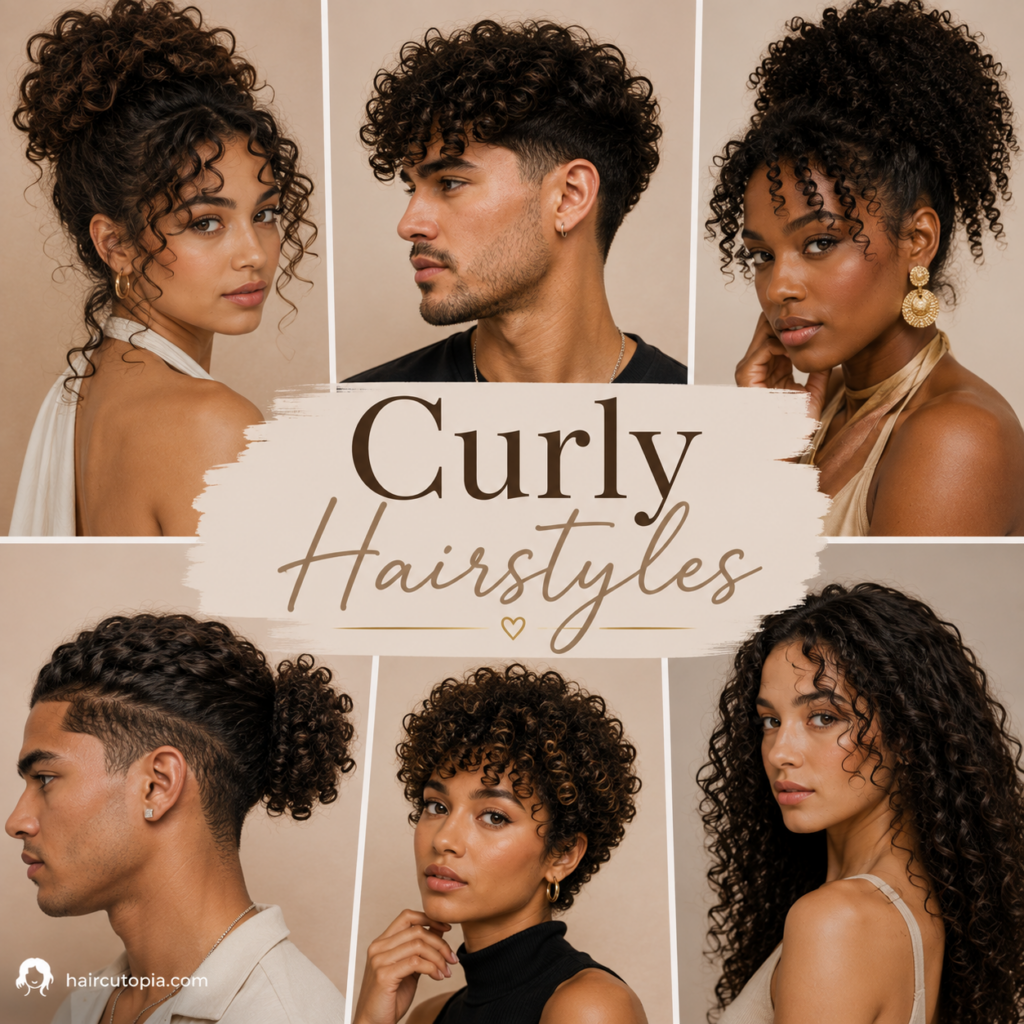
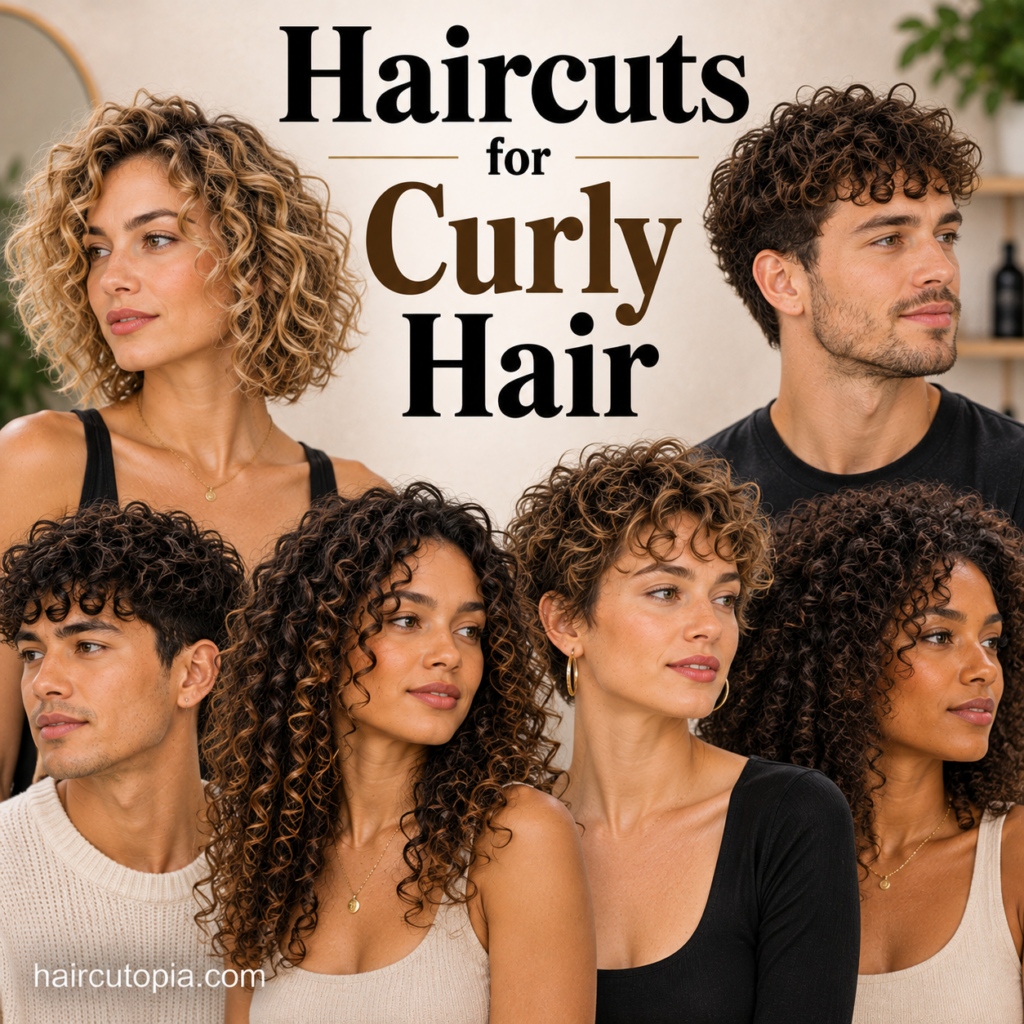
Curly hair can completely change depending on the haircut.
A few well-placed layers can help curls spring into shape. Too much weight can stretch them out and leave the roots looking flat. Cut too much in the wrong place, and a style that looked shoulder-length while wet may end up several inches shorter once it dries.
That’s what makes choosing a haircut for curly hair a little different.
You aren’t just deciding how long you want your hair. You’re deciding how the haircut will distribute volume, how individual curls will sit together, and how much shrinkage needs to be considered.
The good news is that curly hair gives you an enormous range of options.
Pixies can emphasize texture. Bobs create compact, defined shapes. Shags bring out movement and volume. Long layers can keep curls from becoming bottom-heavy while preserving plenty of length.
The best haircut isn’t necessarily the one that makes curly hair easier to straighten. It’s the one that gives your natural texture a shape you actually enjoy wearing.
What Is Curly Hair?
Curly hair naturally forms bends, loops, spirals, or tighter coils rather than falling completely straight.
But “curly” covers a huge range of textures.
Some curls are loose and almost wavy. Others form distinct spirals. Tighter patterns may create compact corkscrews or coils with significant shrinkage.
It’s also common to have more than one curl pattern on the same head.
You might have tighter curls around the face and looser sections near the back. The hair underneath may behave differently from the crown.
That’s normal.
When choosing a haircut, consider more than curl type alone:
- Curl pattern
- Hair density
- Strand diameter
- Shrinkage
- Porosity
- Natural volume
- How the curls behave when dry
- Whether you normally air-dry or diffuse
Two people with similar-looking curls may need completely different haircuts because their density and shrinkage aren’t the same.
Understanding Curl Patterns
Curl typing can be useful as a general reference, but it shouldn’t become a rulebook.
Type 2: Wavy Hair
Type 2 wavy hair forms an S-shaped wave rather than a complete spiral.
It’s usually divided into 2A, 2B, and 2C, ranging from loose waves to more defined patterns that can border on curly.
Type 3: Curly Hair
Type 3 hair forms recognizable curls and spirals.
Type 3A curls are generally larger and looser, while 3B and 3C patterns become progressively tighter.
Type 4: Coily Hair
Type 4 hair includes tight curls and coils with substantial texture and shrinkage.
Patterns are commonly described as 4A, 4B, and 4C.
These categories can help describe your hair, but your stylist should still look at how your actual curls behave rather than choosing a haircut solely from a number and letter.
What Makes a Good Haircut for Curly Hair?
A good curly haircut creates a balanced silhouette.
That doesn’t necessarily mean reducing volume.
For some styles, volume is the entire point.
Instead, think about where that volume sits.
Useful haircut techniques may include:
- Long layers
- Rounded layering
- Face-framing pieces
- Crown layers
- Strategic weight removal
- Stronger perimeters
- Dry shaping
- Curl-by-curl refinement
The exact technique depends on your texture.
Loose curls may behave beautifully with long blended layers, while dense coils may benefit from a more deliberately sculpted shape.
Best Haircuts for Curly Hair
Curly hair works with virtually every length.
Here are 15 haircut ideas that make natural texture part of the style.
1. Curly Pixie
A curly pixie puts natural texture front and center.
The sides and back can be kept relatively short while additional length through the top allows curls to form.
This creates plenty of shape without requiring much overall length.
The haircut can be softly rounded, tapered, or more dramatic depending on your curl pattern.
Because curls shrink, discuss the desired dry length before cutting.
2. Long Curly Pixie
If a traditional pixie feels too short, leave more length through the top, fringe, and sides.
A long curly pixie gives you more styling flexibility while still removing much of the weight associated with longer hair.
You can wear the curls forward, swept to one side, or pushed away from the face.
3. Curly Bixie
The bixie combines elements of a pixie and bob.
On curly hair, that creates a soft, textured shape with more movement than a very short crop.
Layers can encourage the curls to spring upward while the slightly longer perimeter provides balance.
It’s a useful transition cut if you’re growing out a pixie or considering going shorter than a bob.
4. Curly Bob
The curly bob is a classic for a reason.
It provides enough length for the curl pattern to show while keeping the overall silhouette compact.
The cut may sit around the jaw, chin, or slightly below.
A rounded version creates fullness, while a more elongated bob preserves additional length around the front.
5. Layered Curly Bob
Layers can prevent a curly bob from becoming overly triangular.
Instead of allowing most of the volume to collect around the bottom, the haircut distributes curls throughout the shape.
The amount of layering should depend on density.
Lower-density hair may need fewer layers to preserve fullness, while very dense curls can often support more.
6. Curly Lob
A curly lob usually falls somewhere between the shoulders and collarbone.
It’s long enough to provide styling flexibility but short enough to keep the curls from being excessively weighed down.
This can be a particularly comfortable length if you’re nervous about shrinkage after going short.
7. Shoulder-Length Curly Cut
Shoulder length gives curls plenty of room to form.
Longer layers can create movement while maintaining enough weight for control.
This is also a practical length if you regularly wear your hair up.
Just remember that a wet shoulder-length cut may sit higher once completely dry.
8. Curly Shag
The shag works naturally with curls.
Shorter layers around the crown create lift, while longer layers through the sides and back maintain movement.
The result is intentionally textured and slightly undone.
A curly shag can be dramatic or subtle.
If you want less crown volume, ask for a softer version with longer layers.
9. Curly Wolf Cut
The wolf cut combines shag-like layering with a more dramatic contrast between the crown and length.
Curly hair gives the style even more texture.
This is a strong choice if you actively want volume and movement rather than trying to make your curls lie flatter.
Because the cut can involve significant layering, density should be considered carefully.
10. Curly Butterfly Cut
The butterfly haircut can be adapted for curly hair using shorter face-framing sections that transition into longer layers.
The shape provides movement while preserving overall length.
It works particularly well for medium and long curls that feel heavy around the front.
11. Rounded Curly Cut
A rounded haircut celebrates volume.
The curls are shaped into a balanced silhouette rather than being thinned aggressively.
This works beautifully with dense curls and coils.
The exact shape can range from a subtle rounded outline to a much fuller, more dramatic silhouette.
12. Medium Curly Layers
Medium-length curls can become bottom-heavy without enough shape.
Layers redistribute volume and allow curls higher on the head to form more freely.
The shortest layer doesn’t necessarily need to begin near the crown.
Longer layering can create movement while maintaining a softer overall shape.
13. Long Curly Layers
Long layers are one of the most versatile options for long curly hair.
They preserve length while preventing the haircut from becoming one dense mass.
The layers can begin around the chin, shoulders, or farther down depending on how much movement you want.
14. U-Shaped Curly Cut
A U-shaped perimeter keeps more length through the center back while gradually becoming shorter toward the sides.
On long curly hair, this creates a soft outline without sacrificing too much fullness.
Long layers can be incorporated to distribute volume.
15. Long Curly Shag
A long curly shag combines significant movement with plenty of length.
Crown and face-framing layers create lift while the longest sections preserve the overall silhouette.
This works especially well if your curls tend to become flat near the roots when your hair gets long.
Short Haircuts for Curly Hair
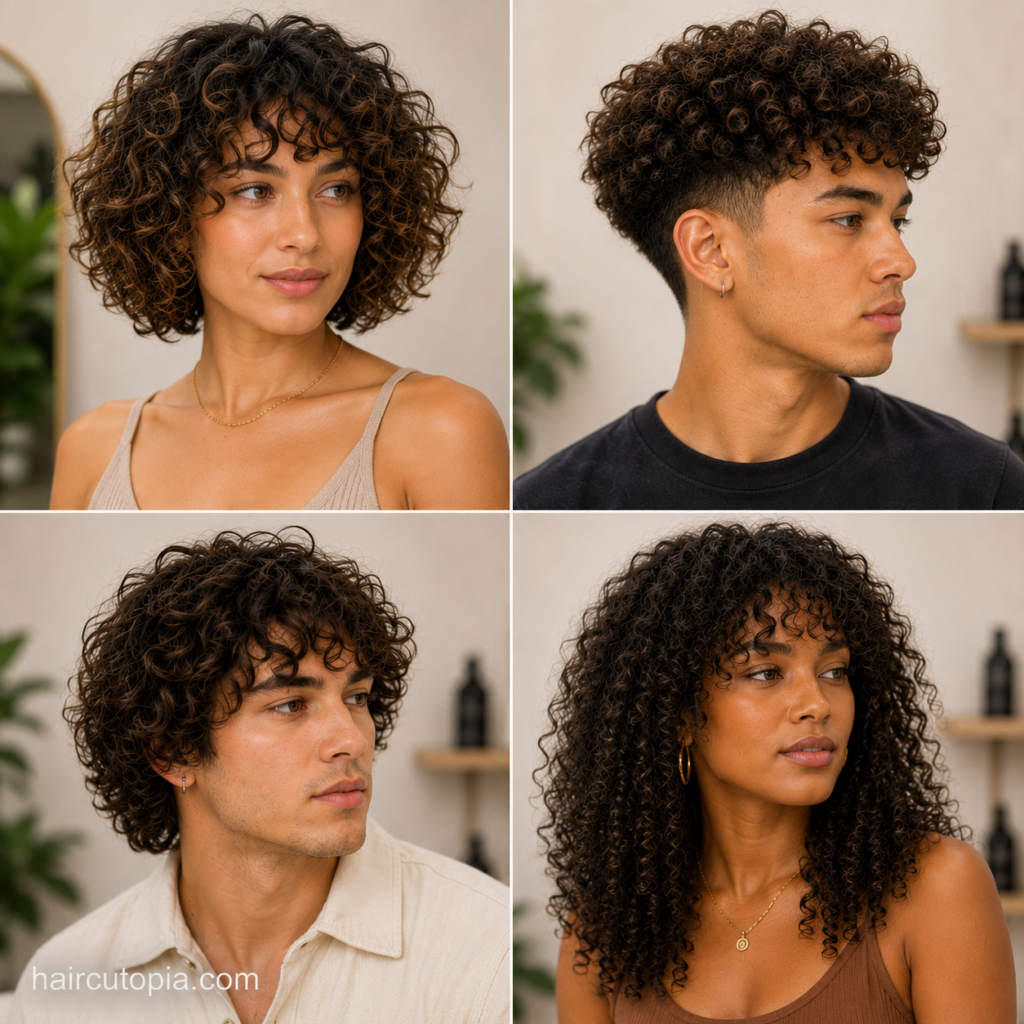
Short curls can be expressive, practical, and surprisingly versatile.
Removing length reduces weight, which often allows the curl pattern to become tighter or more noticeable.
That means your hair may look curlier after a significant chop.
Good options include:
- Curly pixies
- Long curly pixies
- Curly bixies
- Curly bobs
- Short rounded cuts
- Short curly shags
- Tapered curly cuts
Shrinkage becomes especially important at shorter lengths.
A difference of an inch can dramatically change where the haircut sits around the face.
Medium Haircuts for Curly Hair
Medium length provides a useful balance between control and movement.
There’s enough length to pull the hair back, but not so much that every curl is stretched downward.
Consider:
- Curly lobs
- Shoulder-length curls
- Medium curly layers
- Curly shags
- Butterfly-inspired curly cuts
- Rounded medium cuts
Medium hair is also a good starting point if you’re experimenting with more layering.
You can create movement without committing to a very short shape.
Long Haircuts for Curly Hair
Long curls can look dramatic, but weight becomes increasingly important.
As hair gets longer, the weight may stretch the curl pattern and flatten the roots.
Layers can help.
Popular choices include:
- Long curly layers
- Long curly shags
- U-shaped cuts
- Butterfly cuts
- Long face-framing layers
- Rounded long cuts
You don’t necessarily need lots of short layers.
If you prefer a more controlled shape, keep the layers longer and more blended.
Haircuts for Loose Curls
Loose curls can sometimes become nearly wavy when weighed down.
Removing a little length or adding layers may encourage the pattern to become more defined.
Good choices include:
- Layered bobs
- Curly lobs
- Soft shags
- Butterfly cuts
- Long layered styles
Avoid assuming more layering is always better.
If your density is low, maintaining a stronger perimeter may still be important.
Haircuts for Tight Curls
Tighter curls can support highly sculpted shapes.
Rounded cuts, tapered cuts, layered bobs, and carefully shaped medium styles can all work beautifully.
Shrinkage tends to be more noticeable, so dry length becomes particularly important.
The haircut should account for how the curls naturally group together rather than forcing them into a shape that only exists when the hair is stretched.
Haircuts for Coily Hair
Coily hair offers tremendous possibilities for shape.
Short tapered cuts can emphasize texture, while rounded medium and long styles create dramatic volume.
Options include:
- Tapered cuts
- Rounded cuts
- Coily pixies
- Layered shapes
- Shaped Afros
- Longer layered coils
The best approach depends on density, shrinkage, and how you normally style your hair.
Preserving moisture and minimizing unnecessary manipulation may also influence which haircut feels easiest to maintain.
Haircuts for Thick Curly Hair
Thick curly hair usually needs thoughtful weight distribution.
The goal isn’t necessarily to make the hair thin.
Instead, the haircut can prevent all that density from collecting in one area.
Consider:
- Rounded cuts
- Curly shags
- Layered bobs
- Medium curly layers
- Long layers
- Butterfly-inspired cuts
Strategic internal weight removal may help extremely dense curls, but aggressive thinning can create shorter pieces that behave unpredictably.
Haircuts for Fine Curly Hair
Fine curly hair can create plenty of visible volume.
Because the individual strands are lightweight, curls may spring easily when excess length is removed.
Good options include:
- Curly bobs
- Long curly pixies
- Rounded short cuts
- Lightly layered lobs
- Medium curly styles
Overall density determines how much layering the haircut can support.
If density is low, preserving fullness through the perimeter becomes more important.
Haircuts for Thin Curly Hair
Thin curly hair benefits from shapes that make the most of the available volume.
Short and medium cuts often work particularly well.
Consider:
- Curly bobs
- Rounded short cuts
- Long curly pixies
- Soft layered lobs
- Shoulder-length curls
Avoid automatically thinning curly hair.
If overall density is already low, removing more internal weight may make the haircut appear sparse.
Haircuts for Frizzy Curly Hair
Frizz is a natural part of many curl patterns, and choosing a cut that works with frizzy hair rather than fighting its natural expansion can make the overall shape easier to maintain.
A haircut doesn’t need to eliminate every flyaway to look good.
Styles with natural movement often make frizz less visually disruptive.
Curly shags, rounded cuts, layered bobs, and long layers are all strong options.
Choose a shape that still looks intentional when your curls become slightly larger or softer in humid conditions.
Should Curly Hair Be Layered?
Often, yes.
Layers can help:
- Reduce bottom-heavy shapes
- Create crown volume
- Encourage curl formation
- Distribute density
- Add movement
- Frame the face
But the amount of layering should depend on the individual.
Too many short layers may create more volume than you want.
Too few can leave long curls flat near the top.
The best layering pattern is the one that creates the silhouette you’re trying to achieve.
What Are the Best Layers for Curly Hair?
Long layers are a versatile choice when you want movement without dramatic volume.
Shorter crown layers create more lift.
Face-framing layers bring curls forward around the cheeks and jaw.
Rounded layers distribute volume throughout the shape.
None is universally better.
Tell your stylist where you want volume and, just as importantly, where you don’t.
Should Curly Hair Be Cut Wet or Dry?
Both methods can work.
Wet cutting allows a stylist to establish structure and create clean sections.
Dry cutting allows them to see how individual curls actually sit and how much they shrink.
Some stylists use one method exclusively, while others combine them.
What’s more important is that the stylist understands curly hair and accounts for its dry behavior.
If your curls shrink significantly, make sure the final length is evaluated when the hair is in its natural state.
What Is a Curl-by-Curl Haircut?
Curl-by-curl cutting involves shaping individual curls or curl groups while considering how they naturally fall.
This can provide a highly customized result.
It’s particularly useful when different areas of the head have noticeably different curl patterns.
However, it’s not the only valid way to cut curly hair.
Many excellent curly haircuts use traditional sectioning, wet cutting, dry refinement, or a combination of techniques.
Are Bobs Good for Curly Hair?
Yes.
Curly bobs can create a strong, recognizable shape without requiring long hair.
A bob may be:
- Blunt
- Layered
- Rounded
- Angled
- Jaw-length
- Chin-length
- Slightly longer in front
The right version depends on density and shrinkage.
If your curls become significantly shorter when dry, plan the length accordingly.
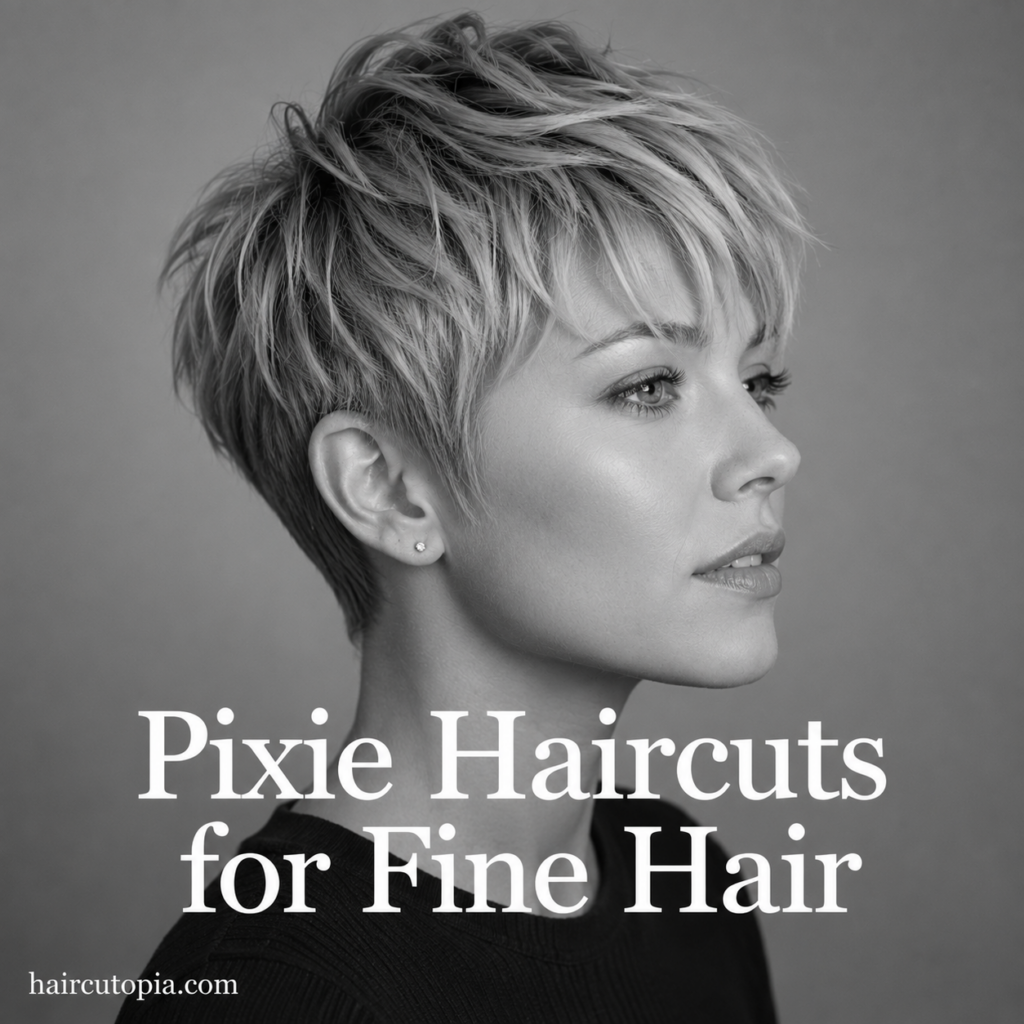
Are Pixie Cuts Good for Curly Hair?
Pixies can work beautifully.
Natural curls provide built-in texture, so the haircut doesn’t need to rely on extensive styling to create movement.
A long curly pixie provides more flexibility, while a shorter tapered version creates a cleaner silhouette.
Remember that removing length may cause the curl pattern to tighten.
Are Shags Good for Curly Hair?
Curly hair and shags are an excellent combination.
The multiple layers encourage movement and crown volume.
Because the style is supposed to look textured, it doesn’t require every curl to sit perfectly.
A shag is particularly useful if long curls become flat around the top.
If you prefer less volume, choose a softer shag with longer layers.
Bangs for Curly Hair
Curly bangs can completely change a haircut.
Options include:
- Full curly bangs
- Curtain bangs
- Side-swept fringe
- Wispy curly bangs
- Long face-framing fringe
The most important consideration is shrinkage.
Never judge curly bang length only while the hair is stretched or wet.
Starting slightly longer gives you more room to adjust.
Curly Haircuts by Face Shape
Face shape can help refine a haircut, but it shouldn’t override your natural texture.
Round Faces
Longer layers, asymmetrical shapes, and volume toward the crown can create vertical movement.
But a full rounded cut can also look fantastic if that’s the style you want.
Oval Faces
Most curly lengths work well.
Pixies, bobs, shags, and long layers are all possibilities.
Square Faces
Soft curls naturally contrast with stronger facial angles.
Face-framing layers and curly bobs can work particularly well.
Heart-Shaped Faces
Curls around the jaw and lower face can create balance.
Curly bobs, lobs, and curtain fringe are good options.
Long Faces
Volume around the sides can add horizontal balance.
Medium curly cuts, bobs, shags, and bangs can all help create that effect.
Treat these as ideas rather than rules.
Low-Maintenance Haircuts for Curly Hair
The most low-maintenance curly haircut is usually one designed around your natural pattern.
Good options may include:
- Rounded cuts
- Curly bobs
- Long curly layers
- Soft curly shags
- Shoulder-length layered cuts
- Long curly pixies
A haircut that requires you to straighten your natural texture every morning isn’t really low maintenance.
Choose a shape that still works when you air-dry or use your normal styling routine.
How to Style Curly Hair After a Haircut
The right haircut creates the shape, but styling helps define it.
Apply Products to Wet or Damp Hair
Curl products generally distribute more evenly when the hair still contains moisture.
Depending on your texture, you might use:
- Leave-in conditioner
- Curl cream
- Mousse
- Foam
- Gel
- Lightweight serum
You don’t need every product.
Start with a simple routine.
Distribute Product Evenly
Dense curly hair can hide entire sections from styling products.
Working in sections can help ensure the underneath receives product too.
Avoid Excessive Touching While Drying
Constantly touching curls while they’re forming can separate curl groups and create more frizz.
Once you’ve shaped the hair, allow it to dry with minimal disturbance.
Diffuse When Needed
A diffuser distributes airflow over a larger area.
It can speed up drying while helping preserve the curl pattern.
Scrunch Out Stiffness
Some gels create a firm cast as they dry.
Once the hair is completely dry, gently scrunching can soften that cast while maintaining definition.
What to Ask Your Stylist
A curly haircut consultation should cover how your hair behaves outside the salon.
Tell your stylist:
- How much your curls shrink.
- Whether different areas have different curl patterns.
- Where you want more volume.
- Where you want less volume.
- Whether you air-dry or diffuse.
- How often you straighten your hair.
- Whether you regularly wear it up.
- How much styling time you’re comfortable with.
- What you dislike about your current shape.
If possible, arrive with your hair close to its normal natural state.
That lets the stylist see your actual curl pattern and volume.
Common Haircut Mistakes with Curly Hair
Ignoring Shrinkage
This is one of the biggest mistakes.
Curly hair may become considerably shorter as it dries.
Always plan around dry length.
Removing Too Much Weight
Aggressive thinning can create shorter pieces that spring outward.
Weight removal should be deliberate.
Using the Same Layers Everywhere
Different sections of curly hair may behave differently.
Uniform layering isn’t always the best approach.
Choosing Inspiration with a Different Curl Pattern
A haircut shown on loose waves may look completely different on tight curls.
Look for inspiration with a texture similar to your own.
Assuming Frizz Means the Haircut Failed
Natural texture isn’t supposed to look identical every day.
A good curly haircut should tolerate some variation.
How Often Should Curly Hair Be Cut?
There’s no single schedule.
As a general starting point:
- Curly pixies: around 4–8 weeks
- Curly bobs: around 6–12 weeks
- Medium curly cuts: around 8–16 weeks
- Long curly cuts: around 12–16 weeks or longer
A highly structured shape may need more frequent maintenance than long layers.
Pay attention to how the haircut behaves.
When the shape becomes bottom-heavy or difficult to style, it’s probably time for a trim.
How to Choose the Best Haircut for Curly Hair
Start with your natural curl pattern.
Then look at density and shrinkage.
Those three factors tell you far more than curl type alone.
Next, decide where you want volume.
If your roots feel flat, crown layers may help. If your hair already becomes extremely full, longer layers may give you more control.
Consider your routine too.
If you air-dry almost every day, choose a haircut that works when air-dried.
Finally, bring realistic inspiration to your stylist.
Look for people with curls, density, and length similar to yours.
The goal isn’t to copy another person’s hair exactly.
It’s to identify the shape you like and adapt it to your own texture.
Final Thoughts
Curly hair doesn’t need to be controlled into one particular shape.
It can be short and sculpted, medium and rounded, heavily layered, softly shaped, or worn long with plenty of movement.
The most important part is understanding how your curls react to weight.
Shorter cuts may create more spring. Layers can distribute volume. Longer lengths can stretch the curl pattern and provide control.
Shrinkage, density, and individual curl patterns all affect the final result.
Instead of choosing a haircut based only on how it looks while freshly styled, choose one that works with the way your curls naturally move.
That’s when a curly haircut becomes much easier to live with.