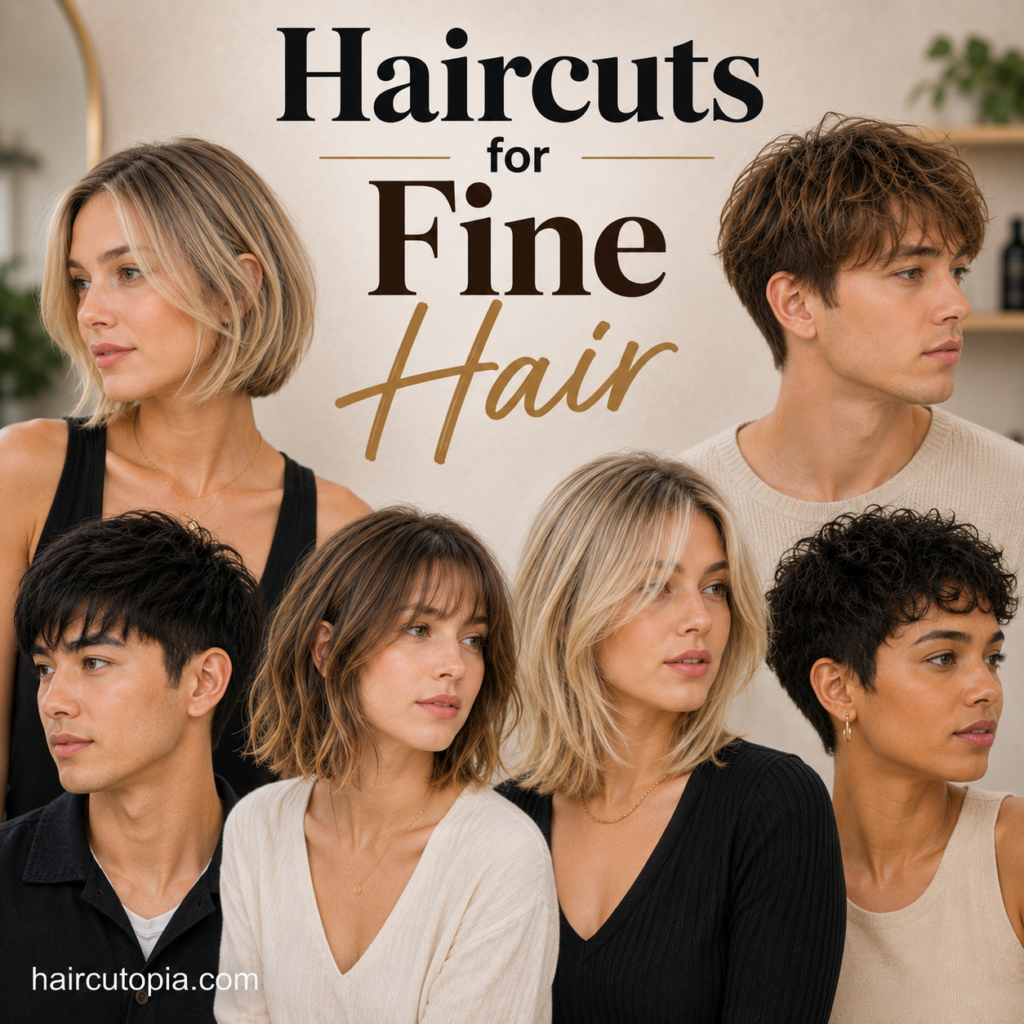
Fine hair can look soft, silky, and polished, but it comes with its own set of haircut challenges.
It may fall flat quickly. Heavy products can overwhelm it. Long lengths sometimes pull the roots down, while too many layers can leave the ends looking wispy. And if you’ve ever spent time creating volume only to watch it disappear an hour later, you already know that styling alone isn’t always the answer.
The haircut matters.
The best haircuts for fine hair create shape without removing more weight than necessary. Shorter cuts can encourage lift, blunt perimeters can make the ends appear more substantial, and carefully placed layers can create movement without making the haircut look overly feathered.
Fine hair also isn’t necessarily thin hair. You can have very fine individual strands and still have plenty of them.
Understanding that difference is the first step toward choosing a haircut that actually works.
What Is Fine Hair?
Fine hair refers to the diameter of each individual strand.
If the strands themselves are relatively small in diameter, your hair is considered fine.
That doesn’t tell us how much hair you have.
Someone can have fine strands with very high density, meaning there are lots of hairs growing across the scalp. Another person can have fine strands and lower density.
That’s why fine hair and thin hair shouldn’t automatically be treated as the same thing.
In simple terms:
- Fine hair describes strand diameter.
- Thin hair generally describes lower overall density.
- Fine hair can still be very dense.
- Coarse hair can still have relatively low density.
Your density influences how much layering your haircut can support, while the fineness of the strands affects how easily the hair becomes weighed down.
Both matter.
What Makes a Good Haircut for Fine Hair?
Fine strands tend to respond well to haircuts that create structure.
The exact approach depends on density and texture, but helpful features often include:
- Strong perimeters
- Blunt or softly textured ends
- Strategic layers
- Shorter lengths for natural lift
- Light face-framing pieces
- Crown movement
- Shapes that don’t require heavy styling products
The goal isn’t always maximum volume.
Some people love sleek fine hair.
A good haircut simply gives you control over the shape rather than leaving the hair looking flat because there’s too much length or movement removed in the wrong places.
Best Haircuts for Fine Hair
Fine hair can support far more styles than it’s sometimes given credit for.
Here are 15 cuts worth considering.
1. Blunt Bob
A blunt bob creates a strong, clean baseline.
Because most of the hair ends at approximately the same point, the perimeter can appear more substantial than it would with heavily layered ends.
This works especially well for fine straight hair.
Jaw, chin, and slightly longer versions can all be flattering.
You can wear the haircut sleek for a polished finish or add loose bends for additional dimension.
2. Chin-Length Bob
A chin-length bob removes enough length to create natural lift while maintaining a full-looking perimeter.
Fine hair often becomes flatter as it grows longer because even lightweight strands are affected by gravity.
Taking the length up can make the roots feel noticeably lighter.
This style also frames the face without requiring complicated styling.
3. French Bob
The French bob usually sits around the jaw and has a relaxed, slightly imperfect finish.
That makes it useful for fine hair.
Instead of requiring the hair to look extremely smooth and flat, subtle movement adds character.
You can pair the cut with a light fringe or leave the front open.
Fine wavy hair works particularly well with this style because the natural texture creates additional dimension.
4. Italian Bob
The Italian bob is generally fuller and slightly longer than a classic French bob.
It often sits around the chin or just below and maintains a substantial perimeter.
That fuller silhouette can work beautifully with fine hair, particularly when density is moderate to high.
Wear it with a center part, side part, or softly flipped ends.
5. Textured Bob
Fine hair doesn’t have to be completely blunt.
A lightly textured bob can create movement without sacrificing too much fullness.
The key word is lightly.
Excessive razor work or aggressive texturizing may make fine ends look wispy.
Subtle internal movement usually gives you enough separation while preserving the overall shape.
6. Blunt Lob
A blunt lob gives you more length while maintaining a strong perimeter.
It’s an excellent option if you want something that can still be pulled into a ponytail.
The haircut usually sits between the shoulders and collarbone.
Keeping the bottom relatively full can help fine strands look more substantial, while soft waves can add dimension when you want a less sleek finish.
7. Collarbone-Length Cut
Collarbone length is a versatile choice for fine hair.
It provides enough length for different styling options without creating the weight of very long hair.
You can keep the haircut mostly one length or add minimal layering.
This is also a practical transition cut if you’re considering going from long hair to a bob but aren’t ready for a dramatic chop.
8. Bixie Cut
A bixie combines the cropped shape of a pixie with some of the movement of a short bob.
Fine hair benefits from the shorter overall length because there’s less weight pulling the roots down.
Additional length through the crown and front provides styling flexibility.
You can wear it tousled, swept to the side, or more polished depending on the occasion.
9. Long Pixie
A long pixie keeps enough hair around the crown and fringe to create movement.
Fine strands can be styled upward or across the head without needing large amounts of heavy product.
This is particularly useful if your hair naturally falls flat at longer lengths.
The shorter sides and back also keep the overall shape defined.
10. Textured Pixie
A textured pixie uses small sections of movement to create visual dimension.
Instead of styling every strand in the same direction, the haircut encourages separation.
Fine hair can work very well with this because the individual strands are lightweight.
A small amount of mousse, paste, or lightweight styling product may be enough to create the desired finish.
11. Soft Shag
Fine hair can wear a shag, but the layering needs to match the density.
A soft shag uses strategic layers around the crown and face rather than aggressively removing hair throughout the ends.
This can create lift and movement while maintaining a reasonably full perimeter.
Fine wavy hair is particularly well suited to this style.
12. Lightly Layered Lob
If a blunt lob feels too solid, a few subtle layers can create movement.
The goal is to avoid turning the bottom into lots of thin, disconnected pieces.
Longer layers through the front or interior can provide enough shape without dramatically changing the density of the perimeter.
This works well for fine hair with moderate or high density.
13. Shoulder-Length Cut with Face-Framing Layers
You don’t necessarily need layers throughout your entire haircut.
A mostly blunt shoulder-length cut can be paired with subtle face-framing pieces.
This creates movement around the cheeks, jaw, or collarbone while keeping most of the hair at a similar length.
It’s an easy way to add shape without sacrificing much fullness.
14. Short Wavy Bob
Natural waves can make fine strands appear more dimensional.
A short wavy bob allows that texture to develop without being stretched downward by excessive length.
The haircut doesn’t need to be perfectly symmetrical or smooth.
A relaxed finish often makes the style look fuller.
15. Soft Curly Bob
Fine curly hair can have plenty of visual volume.
A shorter bob allows curls to create shape while keeping the strands light enough to spring naturally.
The amount of layering should depend on density.
If you have lots of fine strands, you may be able to support more layering. If your density is lower, preserving a stronger perimeter may be preferable.
Short Haircuts for Fine Hair
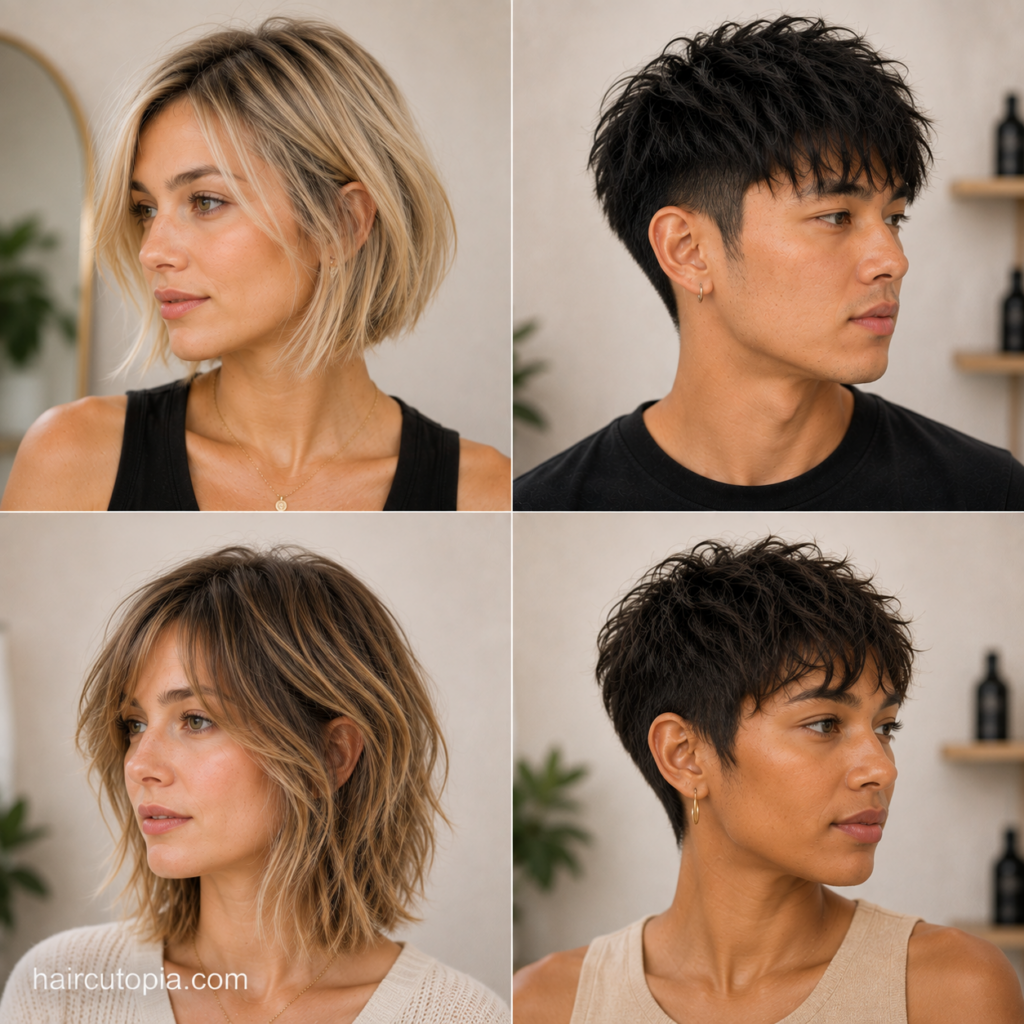
Short hair can be especially effective for fine strands.
Less length means less weight.
That can help the roots lift naturally and make styling products more effective.
Good options include:
- Blunt bobs
- Chin-length bobs
- French bobs
- Bixie cuts
- Long pixies
- Textured pixies
- Short wavy bobs
One of the advantages of short fine hair is that you may need very little product.
A well-shaped cut can create much of the movement on its own.
Medium Haircuts for Fine Hair
Medium hair gives you versatility without the weight of very long lengths.
Shoulder and collarbone cuts are particularly useful.
Consider:
- Blunt lobs
- Collarbone-length cuts
- Lightly layered lobs
- Shoulder-length cuts
- Soft shags
- Medium wavy styles
The right amount of layering depends heavily on density.
Fine hair with lots of strands may handle significant layering surprisingly well.
Fine hair with lower density usually benefits from keeping more hair through the perimeter.
Long Haircuts for Fine Hair
Fine hair can absolutely be worn long.
The assumption that everyone with fine hair should have a bob isn’t accurate.
If your hair has enough density and the ends remain healthy, longer styles can look beautiful.
Useful approaches include:
- Mostly one-length long cuts
- Soft U-shaped perimeters
- Minimal long layers
- Subtle face-framing pieces
- Long cuts with fuller ends
The biggest issue is often weight.
If your roots become extremely flat as your hair grows, adding subtle layers or removing some overall length may restore movement.
Haircuts for Fine Straight Hair
Fine straight hair tends to emphasize the exact shape of the haircut, which is why strong perimeters work particularly well.
Strong perimeters work particularly well.
Consider:
- Blunt bobs
- Italian bobs
- Chin-length cuts
- Blunt lobs
- Collarbone-length cuts
- Long pixies
Straight hair also makes clean lines very visible, which can turn the fineness of the strands into an advantage.
A sleek blunt bob, for example, doesn’t need enormous volume to look intentional.
Haircuts for Fine Wavy Hair
Fine wavy hair naturally creates more movement, which means you can often use slightly more layering without losing the appearance of fullness.
Good options include:
- Wavy bobs
- French bobs
- Soft shags
- Layered lobs
- Collarbone-length wavy cuts
Avoid layers that are so short they create disconnected sections unless you’re deliberately going for a highly textured style.
The goal is usually to encourage the wave pattern without making the ends appear overly wispy.
Haircuts for Fine Curly Hair
Fine curly hair can create plenty of visual fullness because the curl pattern occupies more space.
The challenge is keeping fine strands from becoming weighed down by length or heavy products.
Short curly bobs, rounded cuts, and medium curly styles can all work well.
Layers may help the curls spring upward.
But again, density matters.
Fine strands with high density can support more layering than fine strands with lower density.
Haircuts for Fine Frizzy Hair
Fine frizzy hair needs a balance between control and movement, since reducing frizz without weighing down delicate strands can require a different approach.
Heavy anti-frizz products may smooth the hair but flatten it at the same time.
The haircut can reduce how much product you need.
Consider:
- Blunt bobs
- Soft textured bobs
- Collarbone-length cuts
- Lightly layered lobs
- Long pixies
- Wavy bobs
Avoid excessive thinning.
Fine strands generally don’t need large amounts of internal weight removed unless the overall density is unusually high.
Haircuts for Fine Thick Hair
Fine hair can still be thick in terms of density, and this combination gives you many options.
If you have a large number of fine strands, your hair may feel surprisingly heavy even though each individual strand is delicate.
Strategic layering can help.
Good choices include:
- Butterfly-inspired layers
- Medium shags
- Layered lobs
- Long layered cuts
- Textured bobs
The difference is that the stylist can remove some density while still accounting for how delicate the individual strands are.
Should Fine Hair Be Layered?
Yes, if the layering serves a purpose.
Layers can create:
- Movement
- Crown lift
- Face framing
- Wave or curl definition
- A lighter overall shape
But excessive layering can make fine ends look feathery or sparse.
If you have lower density, fewer layers may be better.
If you have very dense fine hair, you may be able to support considerably more.
There’s no universal rule that fine hair should never be layered.
Is a Blunt Cut Good for Fine Hair?
Yes.
Blunt cuts are popular for fine hair because they create a strong perimeter.
When many strands terminate around the same point, the ends can look more substantial.
Blunt bobs and lobs are particularly effective.
However, you don’t need to keep every section exactly one length.
Subtle internal shaping or face-framing pieces can still be incorporated while maintaining the appearance of a blunt baseline.
Are Bobs Good for Fine Hair?
Bobs are one of the most versatile options.
The shorter length reduces weight and allows fine strands to move more freely.
Different versions create different effects.
A blunt bob emphasizes fullness.
A French bob creates a softer, more relaxed finish.
An Italian bob provides a fuller silhouette.
A lightly textured bob adds movement.
Choose the variation that fits your texture and styling habits.
Are Pixie Cuts Good for Fine Hair?
Fine hair can work beautifully with pixies.
Because fine strands are lightweight, they can often be styled into texture without requiring strong products.
A textured pixie creates separation, while a long pixie gives you more hair through the crown and fringe.
Short hair also eliminates the weight that may cause longer fine hair to fall flat.
Are Shags Good for Fine Hair?
Yes, but density should determine how dramatic the shag becomes.
Fine hair with high density can support substantial layering.
Fine hair with low density may look better with a softer shag that preserves more hair around the perimeter.
The shag works especially well with natural waves because texture creates additional dimension.
Are Layers or One-Length Cuts Better for Fine Hair?
Neither is automatically better.
A one-length cut maximizes the appearance of fullness through the perimeter.
Layers create more movement.
The right choice depends on what your hair needs.
If your hair already has plenty of density but feels flat, layers may improve it.
If your ends look sparse, a stronger one-length shape may be more flattering.
You can also combine the two approaches with a mostly blunt perimeter and subtle internal layers.
Bangs for Fine Hair
Fine strands can create soft, lightweight bangs.
Popular options include:
- Wispy bangs
- Curtain bangs
- Side-swept bangs
- Bottleneck bangs
- Long fringe
Heavy bangs require taking more hair from farther back on the head.
If your density is lower, that may reduce fullness elsewhere.
A lighter fringe usually gives you more flexibility.
Best Haircuts for Fine Hair by Face Shape
Your texture and density should guide the haircut first, but face shape can help refine it.
Round Faces
Lobs, side parts, long pixies, and face-framing pieces can create vertical movement.
A bob that falls slightly below the chin can also work well.
Oval Faces
Most haircut lengths work with an oval face.
Fine hair considerations such as density and volume are usually more important.
Square Faces
Soft bobs, waves, curtain bangs, and collarbone-length cuts can introduce movement around a stronger jawline.
Heart-Shaped Faces
Chin-length and jaw-length bobs can add visual weight around the lower face.
Curtain bangs and side-swept fringe can also work nicely.
Long Faces
Bobs, waves, fringe, and medium cuts can create more horizontal movement.
Extremely long, flat hair may emphasize vertical length.
These are suggestions, not restrictions.
Choose a haircut you actually enjoy wearing.
Haircuts for Fine Hair Over 40, 50, and 60
Fine hair doesn’t require a specific haircut once you reach a certain age.
The same principles continue to apply.
Choose a length that works with your density and natural texture.
Options include:
- Blunt bobs
- French bobs
- Bixies
- Long pixies
- Collarbone-length cuts
- Soft layered lobs
- Short textured cuts
Long hair is still an option if you enjoy it and the ends maintain enough fullness.
There is no age when you suddenly have to cut fine hair short.
Low-Maintenance Haircuts for Fine Hair
Fine hair often responds well to simple shapes.
Good low-maintenance options include:
- Blunt bobs
- Long pixies
- Bixie cuts
- Collarbone-length cuts
- Soft wavy bobs
- Mostly one-length lobs
The easiest haircut will depend on your natural texture.
If your hair dries straight, a blunt cut may require almost no styling.
If it naturally waves, a textured bob or soft shag may cooperate better.
How to Add Volume to Fine Hair
The haircut provides the foundation, but styling can enhance it.
Focus on the Roots
Volume at the roots often has a bigger visual impact than adding lots of texture to the ends.
Apply lightweight volumizing products near the root area rather than coating the entire strand.
Change Your Part
Switching your part can create immediate lift because the roots aren’t accustomed to falling in that direction.
Even moving it slightly can make a difference.
Add Soft Waves
Loose bends create dimension without separating the hair into lots of tiny sections.
That can make the overall style appear fuller.
Use Products Sparingly
Fine strands become weighed down quickly.
Start with a small amount.
Adding more product is easy. Removing too much usually means washing your hair again.
Avoid Excessive Oil Near the Roots
Hair oils can be useful on dry ends, but applying too much near the scalp may flatten fine hair.
Keep heavier products concentrated where they’re actually needed.
Styling Products for Fine Hair
Lightweight products generally work best.
Depending on your hairstyle, consider:
- Volumizing mousse
- Lightweight foam
- Root-lifting spray
- Light texturizing spray
- Flexible hairspray
- Lightweight leave-in conditioner
- Small amounts of styling cream
Avoid assuming you need every product at once.
A simple routine often keeps fine hair looking lighter and more natural.
What to Ask Your Stylist
Tell your stylist more than simply, “My hair is fine.”
Discuss:
- Your overall density.
- Where your hair tends to fall flat.
- Whether your ends become wispy.
- How you normally style your hair.
- Whether you air-dry or blow-dry.
- How much volume you want.
- Whether previous layers worked well.
- How much maintenance you’re comfortable with.
- Whether you regularly wear your hair up.
Ask how much density will remain through the perimeter after layering.
That can help prevent surprises.
Common Haircut Mistakes with Fine Hair
A few haircut choices can make fine strands more difficult to style.
Excessive Texturizing
Fine strands usually don’t need aggressive thinning.
Too much texturizing can make the ends appear weak or wispy.
Too Many Layers for the Density
Layers may create movement, but if overall density is low, excessive layering can leave the haircut looking sparse.
Growing Hair Longer Than It Holds Well
Fine hair can absolutely be long.
But if the ends become increasingly transparent or difficult to style, removing a few inches may make the entire haircut look healthier and fuller.
Choosing a Cut That Requires Heavy Product
Fine hair is easily weighed down.
A haircut that only works with large amounts of wax, cream, or oil may become frustrating.
Ignoring Natural Texture
Fine straight hair and fine curly hair need very different shapes.
Choose a haircut that works with your actual texture rather than treating all fine hair the same way.
How Often Should Fine Hair Be Cut?
The style determines the schedule more than the strand diameter.
As a general guide:
- Pixies: around 4–8 weeks
- Bobs: around 6–10 weeks
- Lobs and medium cuts: around 8–12 weeks
- Long cuts: around 8–12 weeks or longer
Fine ends may begin looking uneven sooner if they’re exposed to frequent heat styling or other damage.
Pay attention to how the perimeter looks and feels.
How to Choose the Best Haircut for Fine Hair
Start by separating strand diameter from density.
If you have lots of fine strands, you may have far more haircut options than you think.
If your hair is both fine and lower density, preserving fullness becomes more important.
Next, look at texture.
Straight fine hair often benefits from clean lines. Wavy fine hair can use natural movement for dimension. Fine curls may need enough layering to spring upward without losing too much density.
Then consider length.
If your roots constantly feel flat, taking off some length may help.
Finally, choose a haircut that matches your actual routine.
The perfect cut isn’t the one that looks best after an hour in a salon chair.
It’s the one that still works when you’re getting ready on an ordinary morning.
Final Thoughts
Fine hair doesn’t need to be treated as a limitation.
Its lightweight strands can create sleek bobs, airy pixies, soft waves, textured shags, and polished medium-length styles.
The key is understanding how much density you have and choosing a haircut that uses it effectively.
Blunt perimeters can create a fuller appearance. Shorter lengths can encourage lift. Strategic layers can introduce movement without leaving the ends overly wispy.
And if you prefer long hair, there’s no rule saying fine strands have to be cut short.
Choose a shape that complements your density, keep styling products lightweight, and let the haircut do as much of the work as possible.
Related Posts
 Haircuts for Women with Fine Hair: 18 Flattering Styles That Add Volume and Fullness
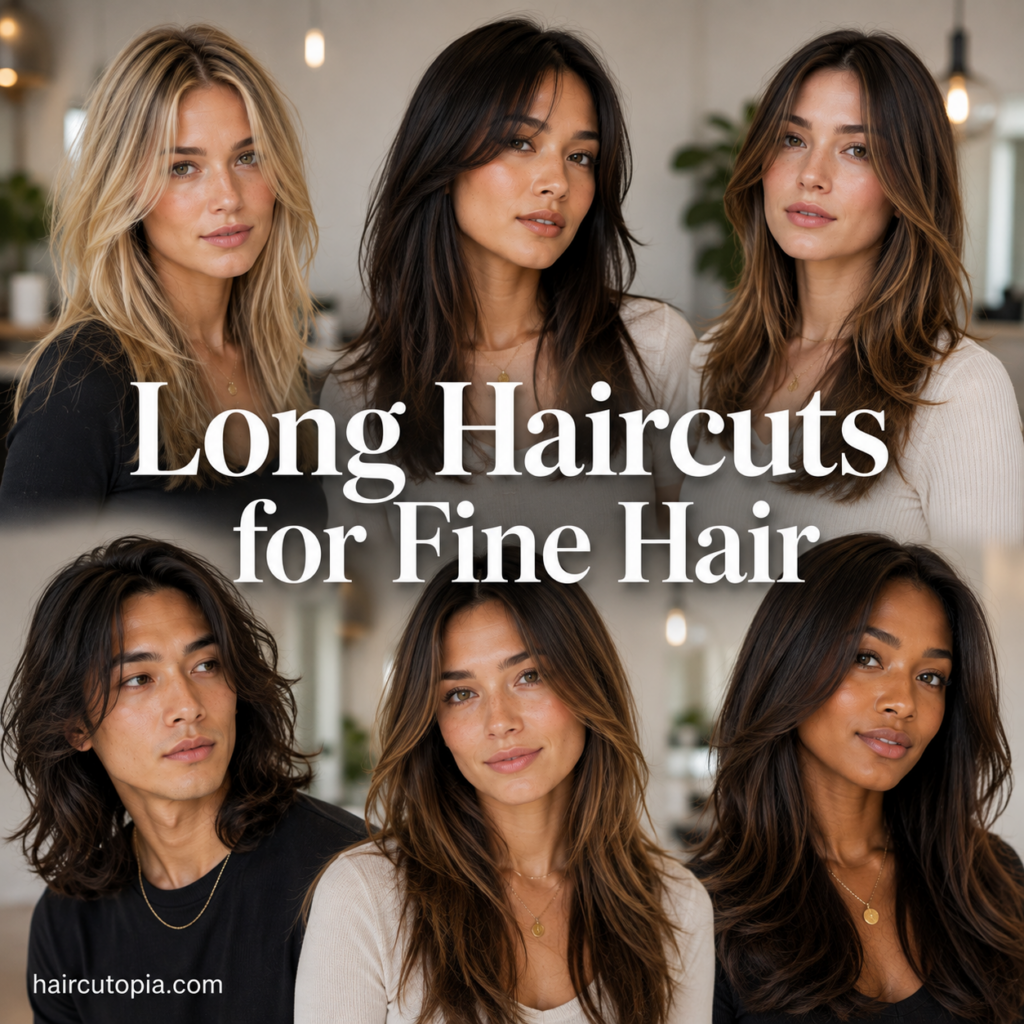 Long Haircuts for Fine Hair: 16 Beautiful Styles That Add Movement Without Losing Fullness
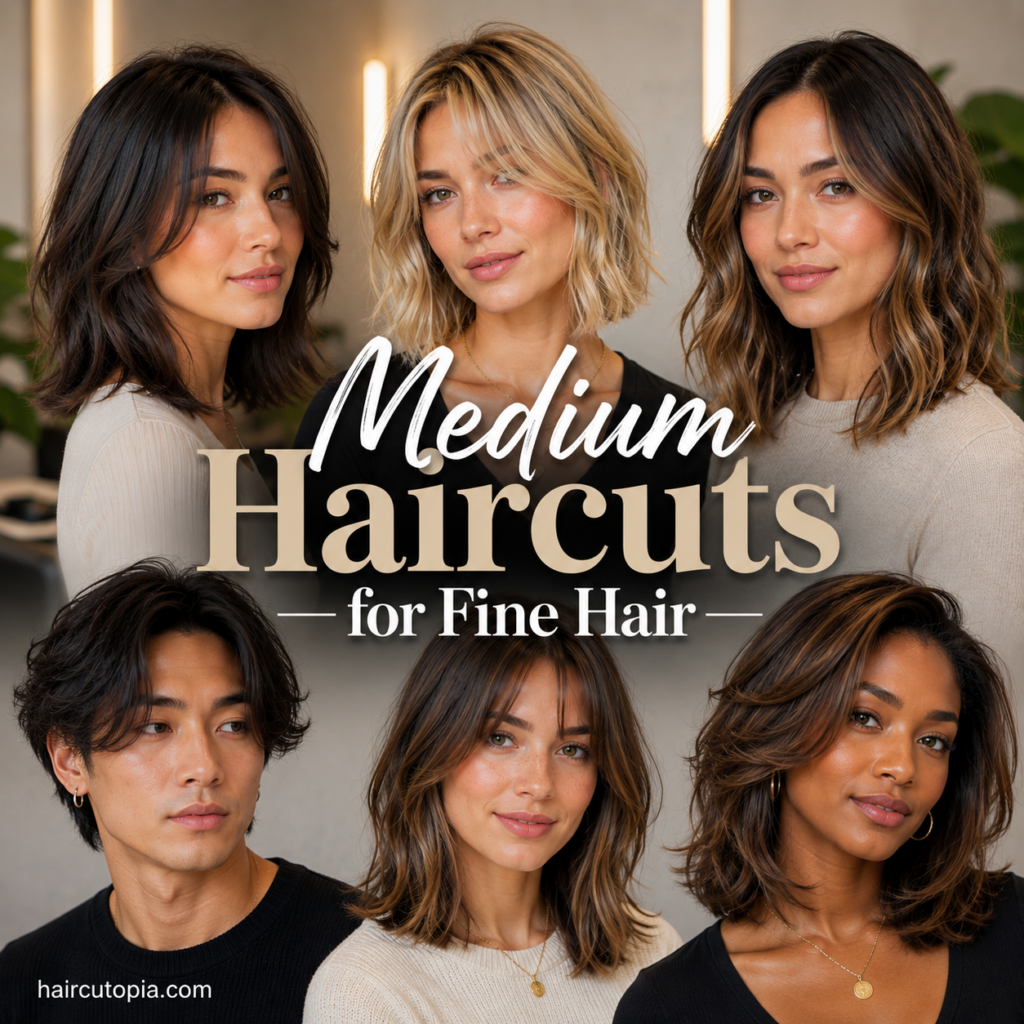 Medium Haircuts for Fine Hair: 16 Flattering Styles That Add Volume and Movement
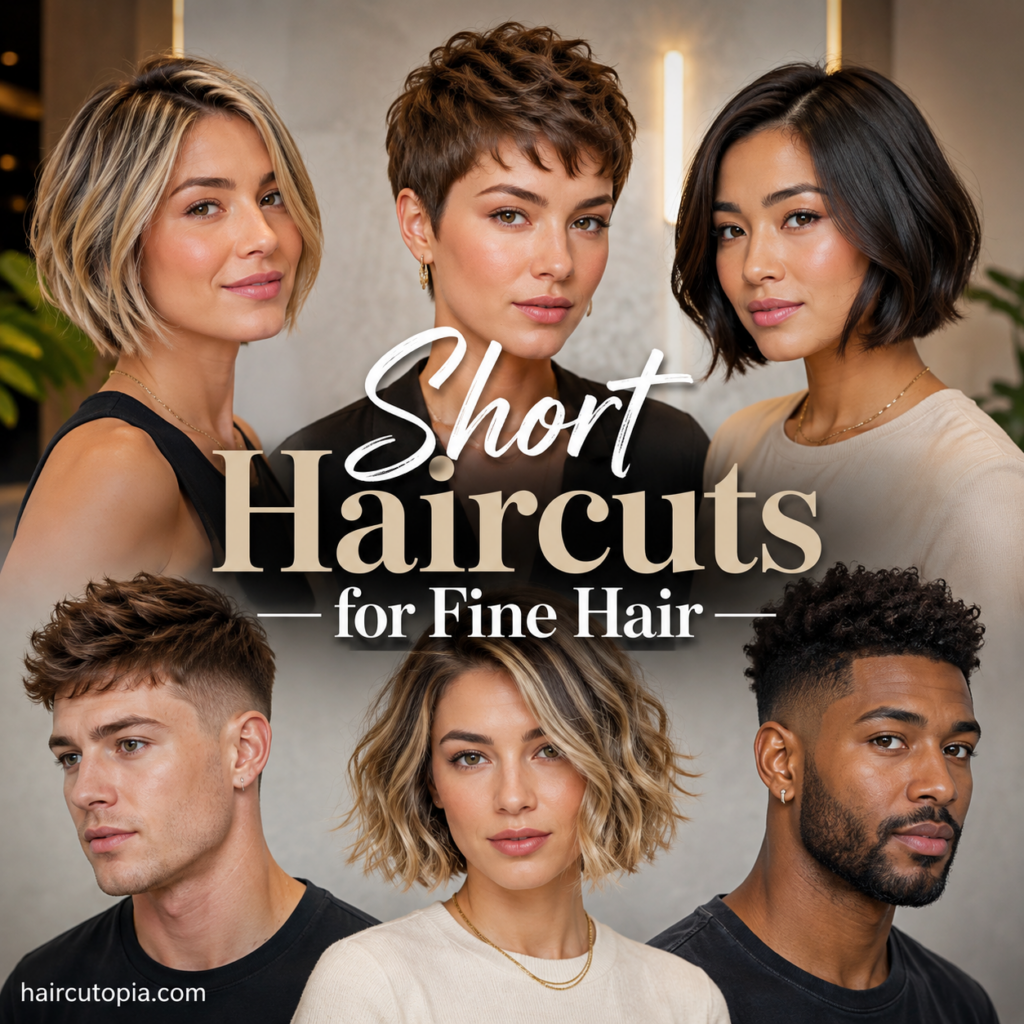 Short Haircuts for Fine Hair: The Best Styles for Volume, Texture, and Easy Maintenance