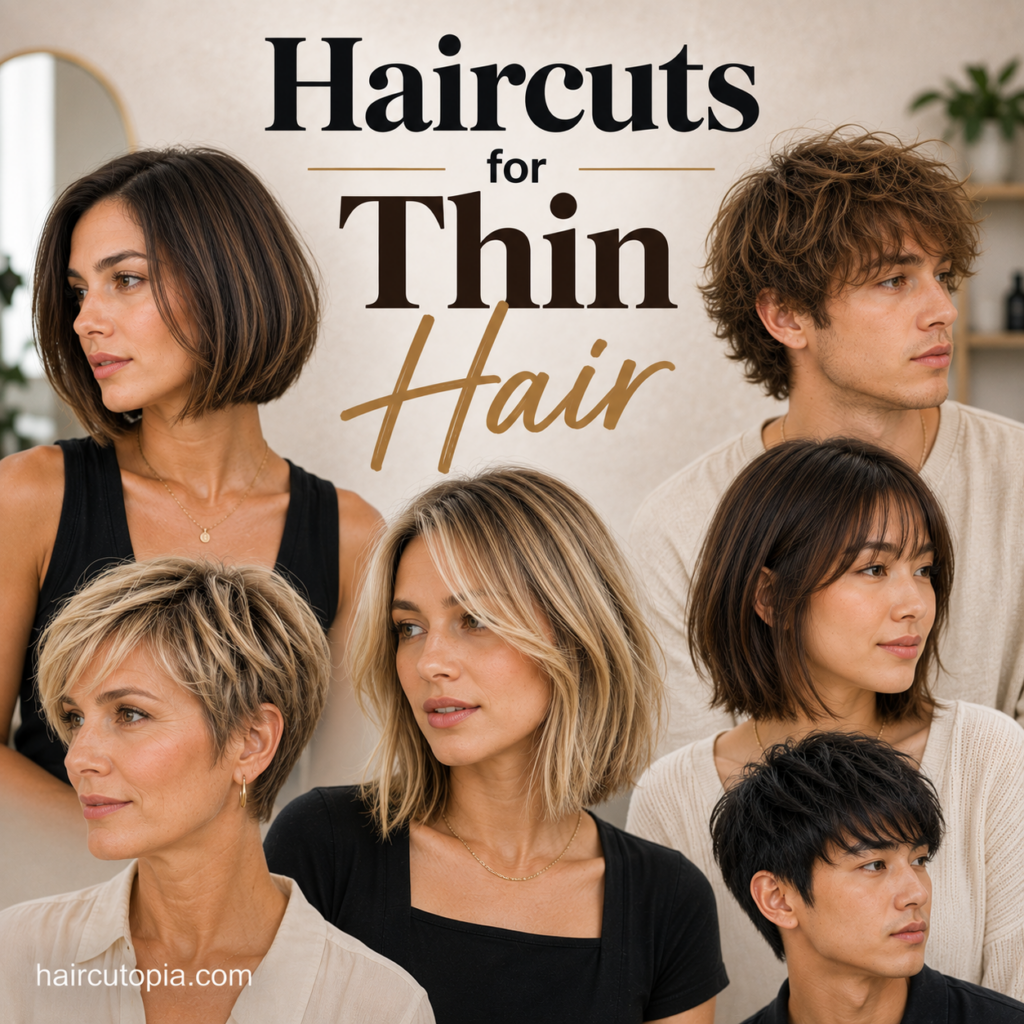
Thin hair can make choosing a haircut surprisingly complicated.
You may want layers for movement, only to discover that too many make the ends look sparse. You might grow your hair long hoping for more styling options, but find that the length emphasizes areas where density is lower. Even a haircut that’s generally described as “volumizing” won’t necessarily work if it removes hair from the places where you need fullness most.
The good news is that the right haircut can make a noticeable visual difference.
Haircuts for thin hair usually work best when they preserve density, create a strong overall shape, and place volume strategically. That might mean a blunt bob, a textured pixie, a collarbone-length cut, subtle layers, or a shorter style that prevents the hair from being weighed down.
The goal isn’t to pretend you have completely different hair. It’s to make the most of the density you have.
Whether your hair is short, medium, long, straight, wavy, or curly, there are plenty of flattering options.
What Is Thin Hair?
Thin hair and fine hair aren’t exactly the same thing.
When we’re talking about thin hair, we’re generally talking about hair density: how much hair is growing across the scalp.
Someone with thin hair has fewer individual strands per area than someone with very dense hair.
Fine hair, on the other hand, describes the diameter of each individual strand.
That means you can have:
- Fine hair with high density
- Fine hair with low density
- Coarse hair with low density
- Thick individual strands with relatively thin overall coverage
This distinction matters when choosing a haircut.
A person with lots of fine strands may be able to support considerably more layering than someone whose overall density is low.
For thin hair, preserving the appearance of fullness is usually the priority.
What Makes a Good Haircut for Thin Hair?
The best haircuts for thin hair tend to create the appearance of a stronger perimeter and more intentional volume.
That often means avoiding unnecessary removal of density.
Helpful haircut features may include:
- Blunt or softly textured ends
- Strategic rather than excessive layering
- Shorter lengths that reduce weight
- Crown volume
- Face-framing pieces used sparingly
- Side or off-center parts
- Textured styling
- Shapes that keep the ends looking substantial
That doesn’t mean everyone with thin hair needs a completely blunt bob.
Layers can still work.
The key is deciding where they actually help.
Best Haircuts for Thin Hair
Some haircuts naturally preserve more density than others.
Here are 15 styles worth considering.
1. Blunt Bob
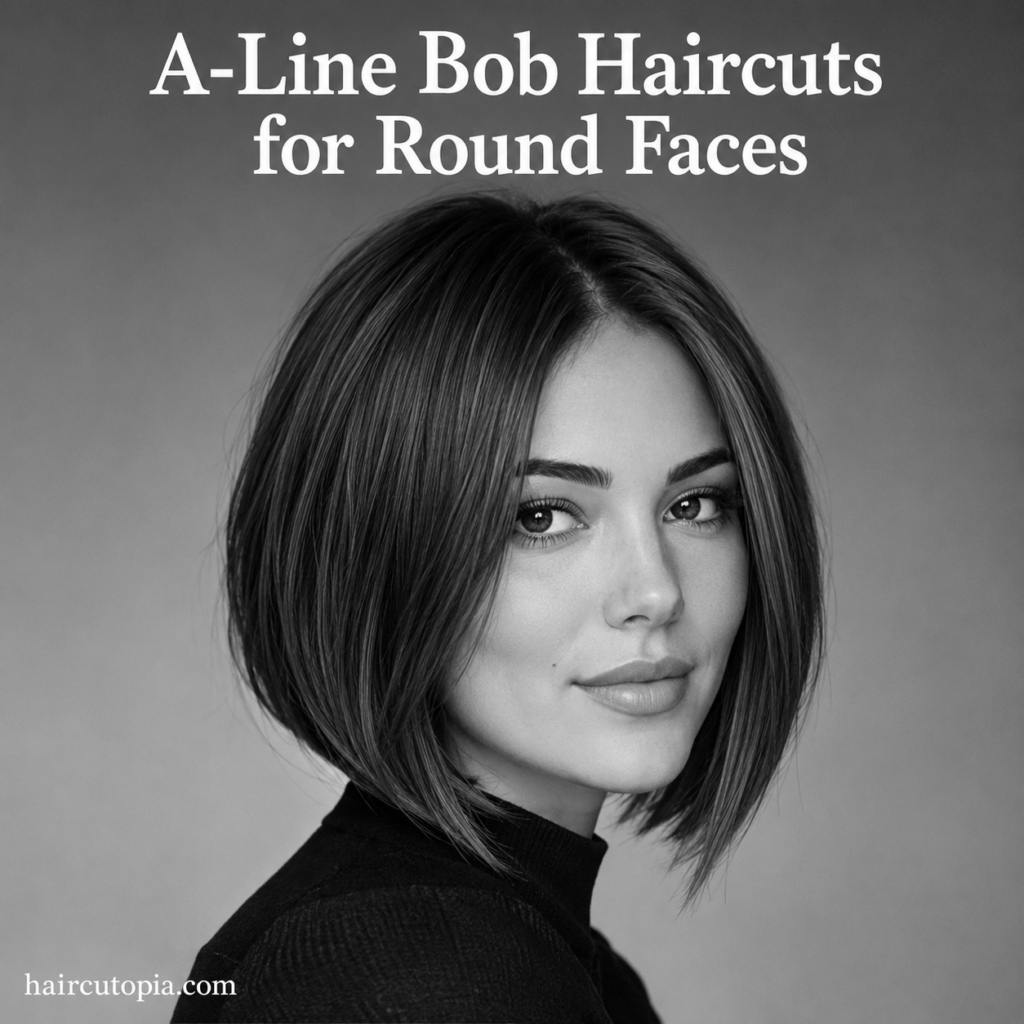
The blunt bob is one of the most reliable haircuts for making thin hair look fuller.
Instead of tapering or heavily layering the ends, the hair is cut into a strong perimeter.
That creates the visual impression of greater density.
Jaw-length and chin-length versions can be particularly effective because shorter hair isn’t being pulled downward by as much weight.
The style can be worn sleek, softly waved, or slightly tousled.
2. Chin-Length Bob
A chin-length bob keeps the hair compact and prevents sparse ends from becoming a major part of the silhouette.
The shorter length can also create more natural lift around the roots.
You can wear it with a center part for a clean finish or shift the part slightly to create additional volume.
Keeping the ends relatively full usually works better than heavily texturizing them.
3. French Bob
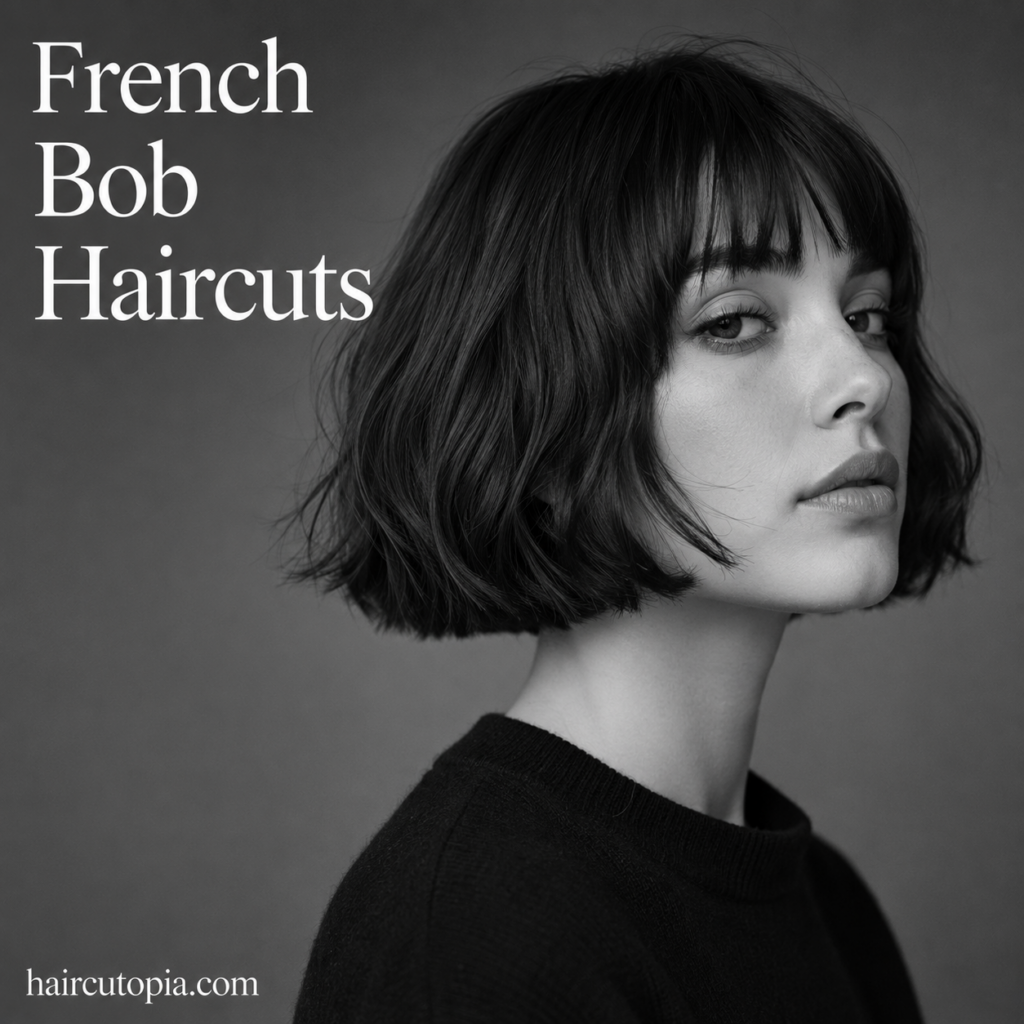
A French bob offers a little more personality than a traditional blunt cut.
It typically falls around the jaw and can be paired with bangs or a soft fringe.
The slightly undone finish is useful for thin hair because the style doesn’t need to sit perfectly flat.
Gentle waves or natural texture can create the impression of additional volume.
4. Textured Bob
A textured bob can work well as long as the texturing is controlled.
The goal isn’t to remove large amounts of hair.
Instead, subtle movement prevents the haircut from appearing flat or rigid.
Light surface texture or minimal layering can give straight or wavy thin hair more dimension while maintaining a strong perimeter.
5. Blunt Lob
If a bob feels too short, a blunt lob provides more length without sacrificing too much fullness.
The haircut typically falls somewhere between the shoulders and collarbone.
A relatively even perimeter makes the ends look denser.
This is a particularly useful option if you still want enough length for a ponytail.
6. Collarbone-Length Cut
Collarbone length is often a practical maximum for hair that becomes noticeably thinner toward the ends.
It’s long enough to feel versatile but short enough to remove older, sparse sections.
You can keep it mostly one length or add very subtle face-framing pieces.
A softly tousled finish can provide additional movement.
7. Bixie Cut
The bixie sits between a bob and a pixie.
Because the overall length is short, the hair isn’t pulled down as much, which can help create lift.
The additional length compared with a traditional pixie gives you more styling flexibility.
You can create texture around the crown and front while keeping the sides relatively neat.
8. Textured Pixie
A textured pixie can make thin hair look much more intentional.
Shorter lengths reduce weight, while small sections of texture create separation and dimension.
Rather than flattening the hair against the scalp, you can style it slightly upward or forward.
This is also a practical option if you prefer a quick styling routine.
9. Long Pixie
A long pixie keeps additional length through the crown and fringe.
That extra hair can be swept to one side, pushed back, or styled with texture to create the impression of more volume.
The sides and back remain shorter, which keeps the overall silhouette clean.
For many people with thin hair, this provides a good balance between fullness and manageability.
10. Short Shag
A short shag can work for thin hair when the layering isn’t excessive.
Strategic crown layers create lift and movement.
The important part is preserving enough density around the perimeter.
A very heavily razored shag may make sparse ends more noticeable, while a softer version can create texture without sacrificing too much fullness.
11. Soft Layered Lob
Layers aren’t off-limits.
A lightly layered lob can create movement while keeping the bottom relatively full.
Instead of cutting layers throughout the entire head, your stylist may focus on a few sections around the front or crown.
This approach works especially well for thin hair with some natural wave.
12. Shoulder-Length Cut with Minimal Layers
If you prefer medium hair, a shoulder-length cut with very subtle layering can provide versatility without removing too much density.
The perimeter remains substantial while small adjustments create movement.
This is a good option if a completely blunt cut feels too heavy or rigid for your style.
13. Wavy Bob
Waves create dimension.
That can make a bob appear fuller than the same haircut worn completely straight and flat.
Natural waves work beautifully, but you can also create loose bends with styling.
Avoid separating the hair into too many tiny pieces.
Larger, soft waves tend to maintain the appearance of density better.
14. Curly Bob
Curly thin hair can still have plenty of visual volume.
A shorter curly bob allows the curl pattern to create fullness without requiring a large amount of hair.
The shape matters.
Careful layering can prevent the top from becoming flat while preserving density through the perimeter.
15. Rounded Short Cut
A rounded short haircut creates fullness through shape rather than length.
This can work particularly well for curly, coily, or highly textured thin hair.
The stylist maintains volume around the head while keeping the silhouette balanced.
Instead of trying to stretch the hair downward, the cut uses natural texture to create dimension.
Short Haircuts for Thin Hair
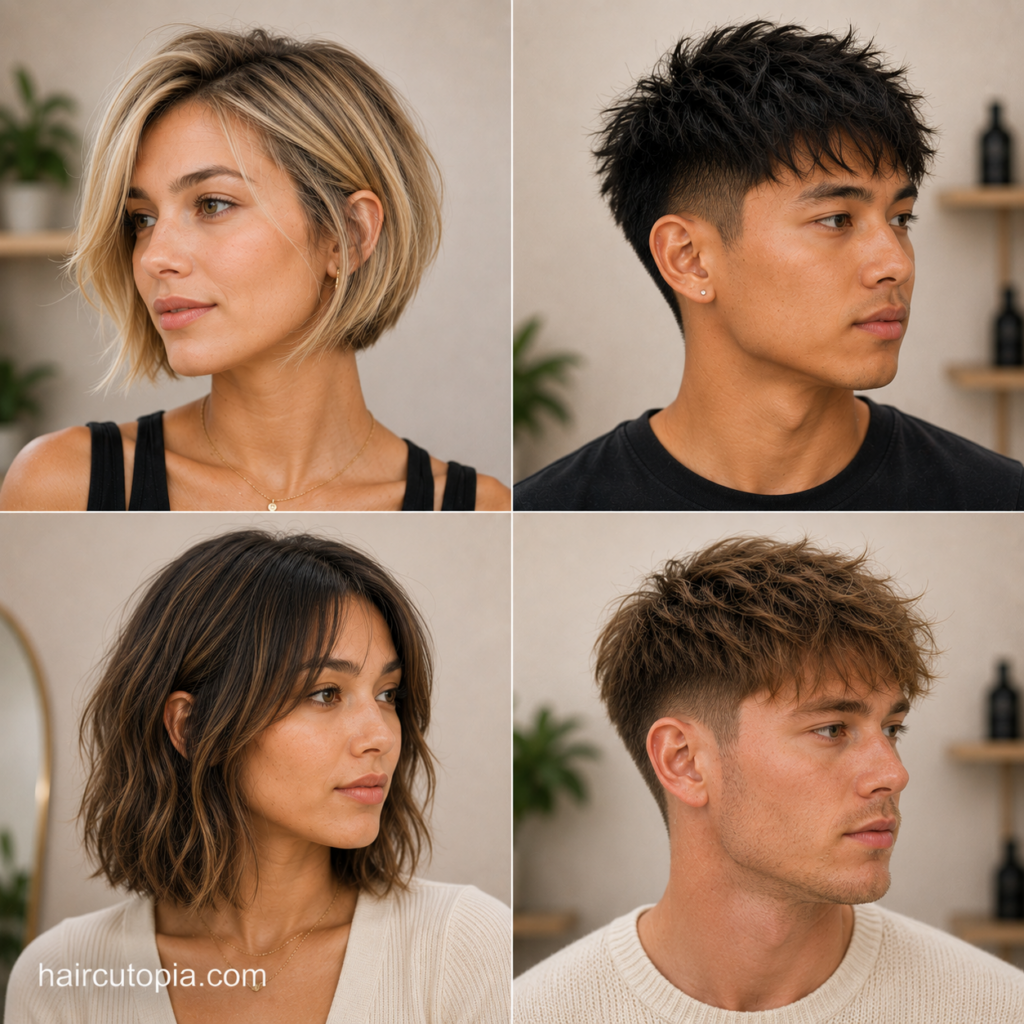
Short hair is often particularly flattering when density is low.
Removing length reduces weight, which can help the roots lift more easily.
Shorter cuts also eliminate thin or wispy ends that may make longer hair appear less dense.
Strong options include:
- Blunt bobs
- Chin-length bobs
- French bobs
- Bixie cuts
- Long pixies
- Textured pixies
- Soft short shags
Short doesn’t automatically mean more volume, though.
The haircut still needs enough hair in the right places.
Aggressive thinning or excessive texturizing can work against you.
Medium Haircuts for Thin Hair
Medium hair offers more styling flexibility while still allowing you to maintain a relatively strong perimeter.
Shoulder and collarbone lengths are especially useful.
Consider:
- Blunt lobs
- Collarbone-length cuts
- Soft layered lobs
- Shoulder-length cuts
- Wavy medium styles
If the ends begin looking noticeably sparse as the hair grows past the shoulders, taking a few inches off can sometimes make the entire haircut appear fuller.
Long Haircuts for Thin Hair
You don’t have to cut thin hair short.
Long hair can work, particularly if your density remains relatively consistent through the ends.
The challenge is preserving fullness.
Good approaches include:
- Mostly one-length cuts
- Soft U-shaped perimeters
- Minimal long layers
- Subtle face-framing pieces
- Long cuts with a fuller baseline
Heavy layering through the bottom can make long thin hair appear even thinner.
If you want movement, concentrate layering around the front or use very subtle internal shaping.
Haircuts for Thin Straight Hair
Thin straight hair tends to show density clearly because the strands lie relatively close together.
A strong perimeter can help create the impression of more hair.
Good options include:
- Blunt bobs
- Chin-length cuts
- Blunt lobs
- Collarbone-length cuts
- Long pixies
Styling can also make a noticeable difference.
A little lift at the roots or a slight bend through the lengths can prevent straight thin hair from appearing overly flat.
Haircuts for Thin Wavy Hair
Thin wavy hair has built-in dimension from its natural movement, which can be a major advantage when creating the appearance of greater fullness.
You may be able to introduce slightly more layering than someone with completely straight thin hair because the waves help create fullness.
Consider:
- Wavy bobs
- Textured bobs
- Soft shags
- Lightly layered lobs
- Shoulder-length wavy cuts
Avoid removing so much density that the waves separate into sparse-looking sections.
Haircuts for Thin Curly Hair
Thin curly hair can appear voluminous even when overall density is relatively low.
The curl pattern creates space between strands, making shape especially important.
Curly bobs, rounded short cuts, and lightly layered medium styles can all work well.
Avoid automatically adding lots of layers simply because the hair is curly.
If density is low, preserving enough hair through the perimeter remains important.
Haircuts for Thin Frizzy Hair
Thin frizzy hair requires balancing frizz control with the need to preserve volume. You may want products and techniques that smooth the hair, but too much product can weigh it down.
The haircut should provide a strong foundation.
Blunt bobs, lobs, long pixies, and lightly layered cuts are good options.
Avoid excessive thinning.
If your density is already low, removing additional internal weight usually isn’t necessary.
Should Thin Hair Be Layered?
It can be, but less is often more.
Layers can create:
- Crown lift
- Movement
- Face framing
- Texture
- Shape
But every layer also removes some hair from the perimeter.
For low-density hair, that matters.
Instead of heavily layering the entire haircut, consider targeted layering.
A few longer layers around the crown or face may provide the movement you want without leaving the ends looking sparse.
Is a Blunt Cut Better for Thin Hair?
Often, yes.
A blunt perimeter keeps more strands at approximately the same length.
That makes the baseline appear stronger and fuller.
It’s one reason blunt bobs and lobs are so commonly recommended for thin hair.
But blunt doesn’t have to mean severe.
You can still add subtle movement, waves, or a small amount of internal texture while preserving the overall shape.
Are Bobs Good for Thin Hair?
Bobs are one of the strongest options.
Shortening the hair removes thin ends and reduces weight at the roots.
A jaw-length or chin-length bob can create a compact, dense-looking silhouette.
Blunt bobs provide maximum visual fullness, while lightly textured versions create more movement.
The right version depends on your texture.
Are Pixie Cuts Good for Thin Hair?
Yes.
Pixies can make low-density hair look deliberate rather than sparse.
Short hair can be styled upward, forward, or to the side, creating dimension.
A long pixie is particularly versatile because additional hair through the crown and fringe gives you more styling options.
If you’re concerned about scalp visibility, talk with your stylist about where you want to preserve extra length.
Are Shags Good for Thin Hair?
They can be, but this is one style where restraint matters.
Shags rely on layering.
If your hair is already low density, aggressive layering may leave the perimeter too thin.
A soft shag with strategic crown layers is usually safer than an extremely razored version.
Wavy or curly thin hair may support the shape particularly well because natural texture contributes additional visual volume.
Bangs for Thin Hair
Bangs can create the impression of additional hair around the face, but they also require borrowing density from farther back on the head.
That tradeoff matters.
Good options may include:
- Wispy bangs
- Curtain bangs
- Side-swept bangs
- Light bottleneck bangs
- Long fringe
Very heavy bangs may remove too much hair from the rest of the haircut.
A lighter fringe is often easier to balance.
Best Haircuts for Thin Hair by Face Shape
Hair density should remain the main consideration, but face shape can help you refine the silhouette.
Round Faces
Longer bobs, side parts, and face-framing pieces can create vertical movement.
Avoid assuming you need excessive crown height. A balanced shape usually looks more natural.
Oval Faces
Oval faces work with most lengths.
Pixies, bobs, lobs, and longer cuts are all possibilities.
Choose based primarily on density, texture, and maintenance.
Square Faces
Soft waves and slightly textured edges can contrast nicely with a stronger jawline.
Consider wavy bobs, collarbone-length cuts, and side-swept fringe.
Heart-Shaped Faces
Chin-length bobs and styles with movement around the jaw can create balance.
Curtain or side-swept bangs can also work well.
Long Faces
Bobs, medium cuts, waves, and fringe can add horizontal movement.
Extremely long, flat hair may emphasize length if there’s little volume around the sides.
These are guidelines, not restrictions.
A haircut you genuinely like matters more than following a face-shape formula.
Haircuts for Thin Hair Over 40, 50, and 60
Hair density can change over time, but that doesn’t mean everyone needs to cut their hair short at a certain age.
The same principles still apply.
Preserve density where you need it and choose a length that keeps the ends looking healthy and substantial.
Popular options include:
- Blunt bobs
- Soft pixies
- Bixies
- Collarbone-length cuts
- Lightly layered lobs
- Short textured styles
Long hair can still work if the perimeter maintains enough fullness.
Age doesn’t determine your haircut. Hair behavior and personal preference do.
Low-Maintenance Haircuts for Thin Hair
A low-maintenance haircut should create shape without requiring constant styling.
Good options include:
- Blunt bobs
- Long pixies
- Collarbone-length cuts
- Soft wavy bobs
- Lightly layered lobs
Your natural texture matters.
A blunt bob may be extremely easy for someone with straight hair but require more work for someone whose hair curls unpredictably.
Choose a style that cooperates with the way your hair dries naturally.
How to Make Thin Hair Look Fuller
The haircut provides the foundation, but styling can enhance the effect.
Create Root Lift
Hair that lies completely flat against the scalp can make lower density more noticeable.
A little lift around the roots can create separation and dimension.
Change Your Part
Hair can become accustomed to falling in one direction.
Moving your part slightly may create immediate lift.
A side or off-center part can also visually redistribute density.
Add Soft Texture
Gentle waves or bends create space between strands.
That can make the overall hairstyle appear fuller.
Avoid Heavy Products
Too much oil, cream, wax, or serum can collapse volume.
Start with lightweight products and use only what your hair actually needs.
Don’t Overwork the Hair
Constant brushing and manipulating can flatten the style you’ve created.
Once you have the shape you want, leave it alone as much as possible.
Styling Products for Thin Hair
Product selection matters because low-density hair can become weighed down quickly.
Depending on your texture and desired style, useful options may include:
- Lightweight mousse
- Volumizing foam
- Root-lifting spray
- Light texturizing spray
- Lightweight styling cream
- Flexible-hold hairspray
You don’t need all of them.
Using several volumizing products at once can create buildup without necessarily making the hair look fuller.
Start simple.
What to Ask Your Stylist
A useful consultation should focus on density rather than simply asking for “more volume.”
Tell your stylist:
- Which areas feel the thinnest.
- Whether your ends become sparse at longer lengths.
- How you normally style your hair.
- Whether you use heat.
- Where your hair naturally parts.
- Whether you want bangs.
- How much maintenance you’re comfortable with.
- Whether previous layers made your hair look thinner.
- What you like about your current length.
Ask how the proposed haircut will affect the perimeter.
That’s particularly important before adding layers.
Common Haircut Mistakes with Thin Hair
A few choices can unintentionally emphasize low density.
Adding Too Many Layers
Layers aren’t bad, but excessive layering removes hair from the ends.
A strong perimeter is often more flattering.
Over-Thinning the Hair
Thin hair generally doesn’t need aggressive thinning.
Removing additional internal density can make the haircut look sparse.
Growing Hair Past Its Fullest Length
Some hair maintains density beautifully at long lengths.
Other hair becomes progressively thinner toward the ends.
If the bottom several inches look noticeably sparse, trimming them can make the overall haircut appear much fuller.
Choosing Extremely Heavy Bangs
Thick bangs require taking a substantial section of hair from the front and crown.
That can leave the surrounding areas looking less dense.
Flattening the Roots
A sleek style can look beautiful, but if your goal is fullness, pressing the hair tightly against the scalp may work against you.
How Often Should Thin Hair Be Trimmed?
The haircut matters more than density.
As a general guide:
- Pixies: around 4–8 weeks
- Bobs: around 6–10 weeks
- Lobs and medium cuts: around 8–12 weeks
- Long hair: around 8–12 weeks or longer
Thin ends can become more noticeable as they grow out.
If your perimeter starts looking uneven or sparse, a small trim may restore the shape even if you don’t want to lose much length.
How to Choose the Best Haircut for Thin Hair
Start by looking at where your density is strongest.
If your hair looks full around the shoulders but becomes sparse below them, a medium cut may give you a stronger overall appearance.
If your roots become flat under longer hair, a bob or pixie may create more lift.
Then consider texture.
Straight thin hair may benefit from a strong blunt perimeter. Wavy hair can use natural movement to create dimension. Curly hair may look fuller with a carefully rounded shape.
Finally, think about your real routine.
Don’t choose a haircut that requires daily curling if you know you normally air-dry and leave the house.
The most flattering haircut is usually the one that makes your natural density look intentional without requiring you to constantly fight your hair.
Final Thoughts
Thin hair doesn’t mean you’re limited to one haircut.
Pixies can create lift and texture. Bobs and lobs can make the perimeter look substantially fuller. Medium cuts provide versatility, while longer hair can still work when density remains strong through the ends.
The biggest consideration is usually how much hair the haircut removes.
Layers, texturizing, and thinning techniques can all be useful, but they should have a clear purpose. If maintaining fullness is your priority, preserving density through the perimeter often matters more than creating lots of movement.
Work with your natural texture, choose a length where your hair looks its fullest, and don’t assume more layers automatically mean more volume.
Sometimes the simplest shape creates the biggest difference.