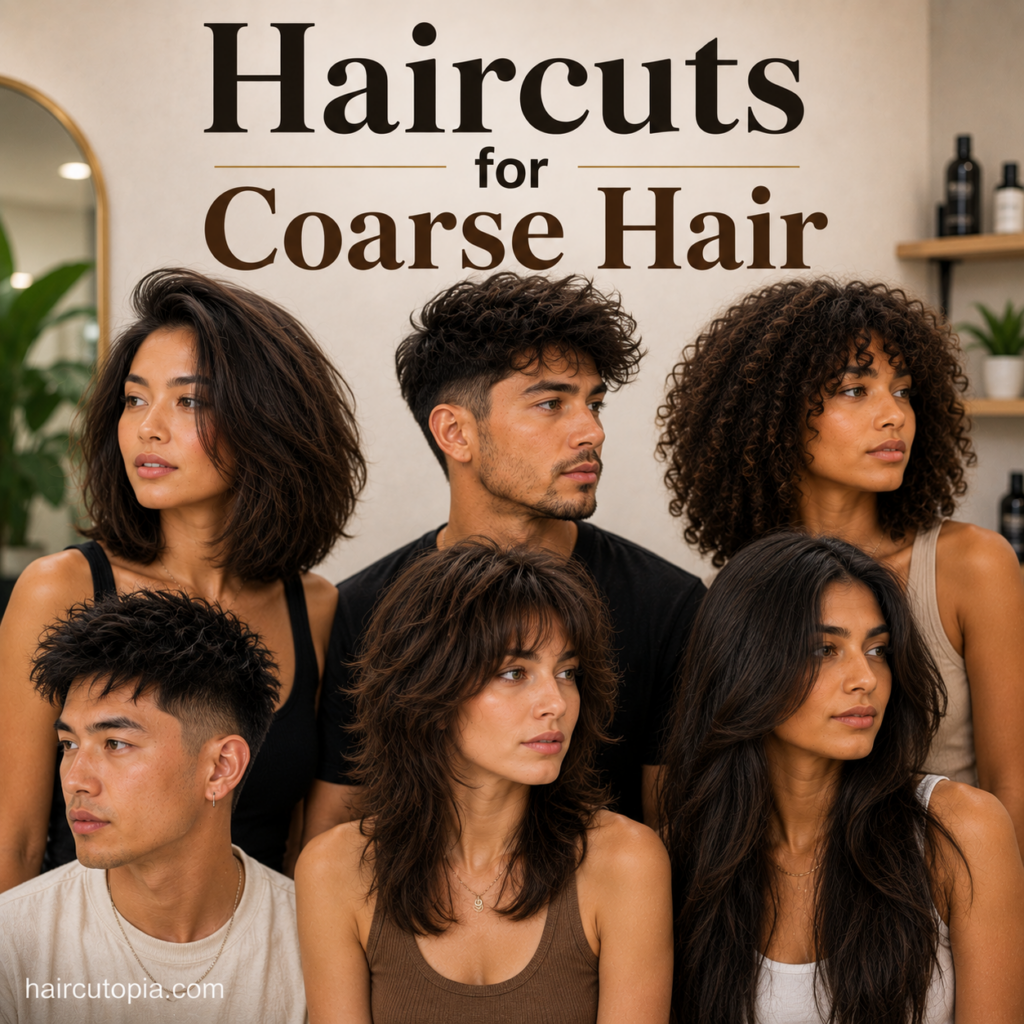
Coarse hair has presence.
Individual strands are thicker in diameter, which can give a haircut noticeable structure, body, and texture. That can be a huge advantage. Bobs can look substantial, layers have plenty of movement, and longer styles often maintain a strong silhouette.
But coarse hair can also become bulky, heavy, dry, or difficult to shape when the haircut isn’t working with it.
The answer isn’t automatically thinning it out.
A good haircut for coarse hair is more strategic. It considers where the hair needs weight, where it needs movement, and how the natural texture behaves when length is removed.
That might mean a layered bob, textured crop, shoulder-length shag, long layered cut, or a relatively blunt style with carefully placed internal shaping.
Whether your coarse hair is straight, wavy, curly, short, or long, the right haircut can make it much easier to manage without taking away what makes the texture distinctive.
What Is Coarse Hair?
Coarse hair describes the diameter of the individual strands.
A coarse strand is thicker than a fine or medium strand.
That doesn’t necessarily mean you have a huge amount of hair.
Hair thickness and hair density are different.
You can have:
- Coarse strands with high density
- Coarse strands with medium density
- Coarse strands with low density
- Fine strands with very high density
This distinction matters when choosing a haircut.
Someone with coarse, extremely dense hair may benefit from substantial weight redistribution. Someone with coarse strands but lower density may need to preserve more of the hair they have.
The diameter of the strand alone doesn’t determine how much hair should be removed.
What Does Coarse Hair Feel Like?
Coarse strands often feel substantial when you run them between your fingers.
Depending on texture and condition, coarse hair may also:
- Hold shapes well
- Have noticeable natural volume
- Feel resistant to certain styling techniques
- Require more moisture
- Become bulky at the ends
- Develop frizz
- Take longer to dry
- Need more time to become fully saturated with water
- Hold curls or bends differently from fine hair
Not everyone with coarse hair experiences all of these characteristics.
Straight coarse hair behaves very differently from coarse curls or coils.
That’s why texture needs to be considered along with strand diameter.
What Makes a Good Haircut for Coarse Hair?
The best haircuts for coarse hair create intentional shape without removing weight indiscriminately.
Useful features can include:
- Long layers
- Internal layering
- Face-framing pieces
- Textured ends
- Graduation
- Rounded shaping
- Strategic weight removal
- Strong perimeters
- Crown layers
The goal depends on your hair.
Very dense coarse hair may need weight distributed throughout the shape.
Lower-density coarse hair may look better with a stronger perimeter and fewer layers.
The haircut should make the hair easier to control without leaving it feeling overly thinned.
Best Haircuts for Coarse Hair
Coarse strands can support a wide variety of styles.
Here are 15 haircuts worth considering.
1. Textured Pixie
A textured pixie takes advantage of the natural structure of coarse strands.
Instead of trying to make every piece lie completely flat, the haircut uses separation and movement through the top.
The sides and back can remain relatively short while extra length at the crown provides styling flexibility.
This works particularly well if your hair naturally has some wave or bend.
2. Long Pixie
A long pixie provides more control than an extremely short crop.
Keeping additional length through the crown and fringe allows coarse strands to be swept, tucked, or styled into texture.
This can also make strong growth patterns easier to manage.
If your hair tends to stick outward when very short, leaving slightly more length may help it settle into the desired shape.
3. Bixie Cut
The bixie combines the compact feel of a pixie with some of the length and movement of a bob.
Coarse hair gives this haircut plenty of structure.
Internal shaping can prevent the style from becoming too bulky around the sides.
The result can be sleek, tousled, or naturally textured depending on your hair pattern.
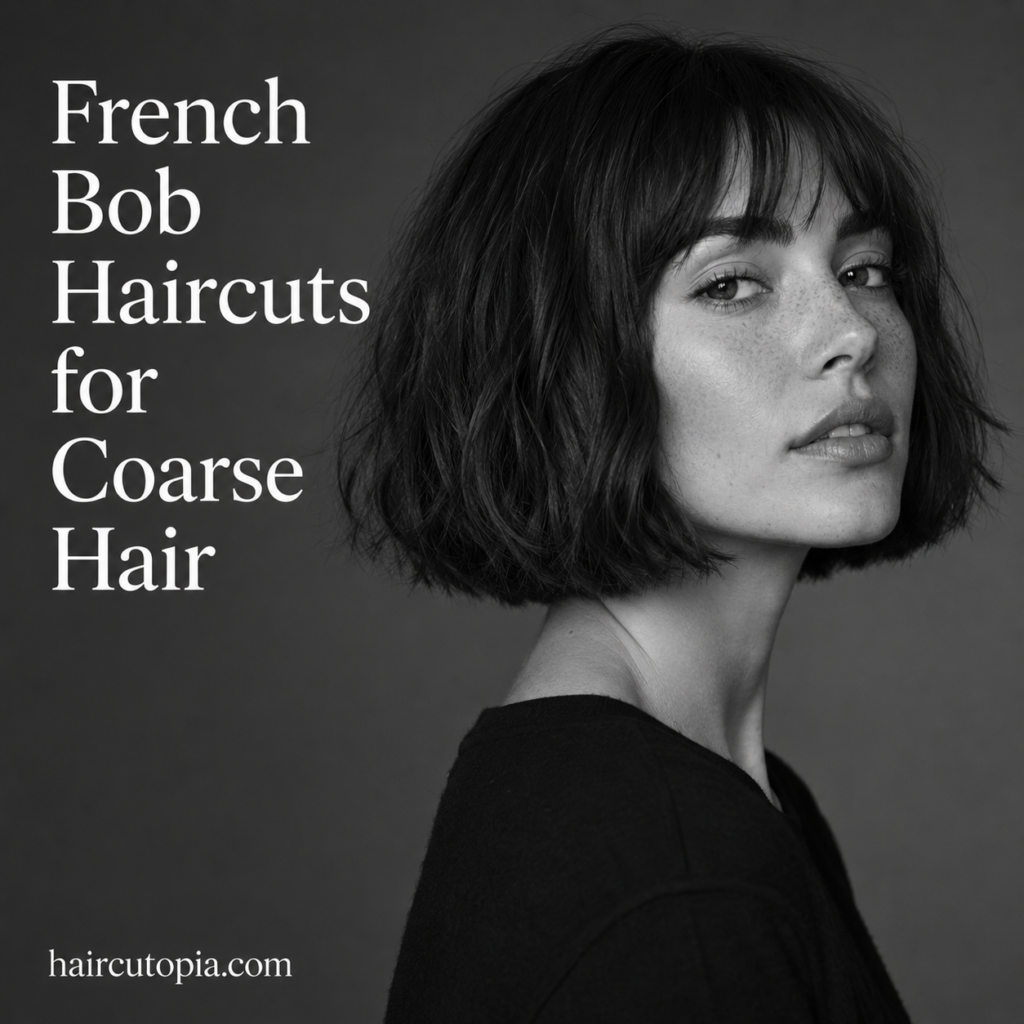
4. Layered Bob
A layered bob is one of the most versatile options for coarse hair.
Layers break up a heavy silhouette and create movement throughout the cut.
The exact amount of layering depends on density.
Very dense coarse hair may benefit from significant internal shaping, while lower-density hair usually needs a more conservative approach.
5. Textured Bob
A textured bob softens the strong outline that coarse hair can naturally create.
Rather than making the perimeter completely uniform, subtle texture adds movement around the ends.
The key is avoiding uncontrolled thinning.
The haircut should still maintain a recognizable shape.
6. Graduated Bob
A graduated bob uses shorter sections in the back that gradually transition into longer sections.
This creates structure and can redistribute weight.
Coarse straight or slightly wavy hair often holds the shape particularly well.
If your hair is extremely dense, additional internal shaping may prevent the lower sections from becoming too heavy.
7. Layered Lob
The layered lob provides more length while still creating movement.
It typically falls around the shoulders or collarbone.
Long layers can reduce the feeling of one solid block of hair without producing an overly feathered appearance.
This is a practical choice if you want enough length to tie your hair back.
8. Shoulder-Length Layers
Shoulder-length hair gives coarse strands enough weight to remain controlled while still allowing movement.
Layers can prevent the bottom from becoming excessively bulky.
This length also works with straight, wavy, and curly textures.
Keep the layers longer if you prefer a smoother silhouette.
9. Soft Shag
A shag can work extremely well with coarse hair because the strands have enough structure to show the layering.
A softer version uses longer layers around the crown and sides.
This creates movement without producing an extremely dramatic silhouette.
It’s especially flattering on coarse wavy hair.
10. Wolf Cut
The wolf cut creates more obvious separation between shorter crown layers and longer sections underneath.
Coarse hair can support this strong layered shape.
Wavy and curly textures add even more movement.
If your hair tends to expand dramatically when shortened, keep the crown layers slightly longer for more control.
11. Butterfly Haircut
The butterfly haircut uses shorter face-framing layers that transition into longer sections.
It’s a strong option for medium and long coarse hair because it creates movement without sacrificing overall length.
The shorter front pieces can lighten the area around the face while the back maintains fullness.
12. Medium Layered Cut
A medium layered haircut is one of the easiest ways to balance coarse hair.
The length provides control while the layers prevent the ends from becoming too heavy.
You can keep the layering subtle for a polished look or increase it for more movement.
This style works with many natural textures.
13. Long Layered Cut
Long layers redistribute weight while preserving length.
This is particularly useful for dense coarse hair.
Instead of allowing all the hair to terminate around the same point, layers create movement throughout the lower sections.
The result can feel lighter without looking thin.
14. U-Shaped Long Cut
A U-shaped perimeter creates a soft outline while maintaining substantial length.
The center remains longer, with the sides gradually becoming shorter.
Coarse hair gives the perimeter plenty of visual strength.
Long internal layers can be added if additional movement is needed.
15. Long Shag
A long shag combines length with noticeable layering.
Shorter crown and face-framing sections create movement, while longer pieces preserve the overall silhouette.
This works especially well for coarse hair with natural wave or curl.
If your hair is relatively straight, the layers will appear more defined and deliberate.
Short Haircuts for Coarse Hair
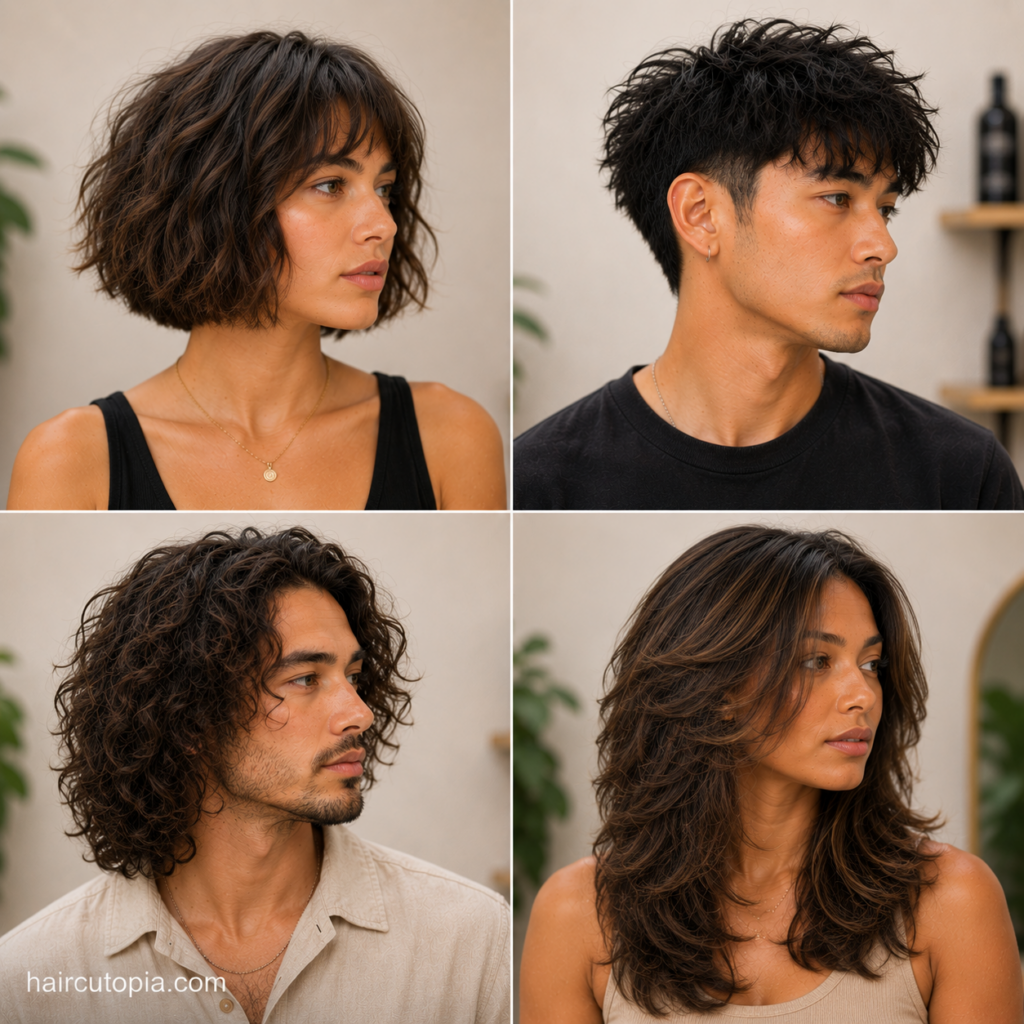
Short hair can work beautifully with coarse strands, but growth patterns become important.
Coarse hair may have enough structure to stand away from the scalp when cut very short.
That can be useful if you want texture.
It can be frustrating if you’re expecting the hair to lie completely flat.
Good options include:
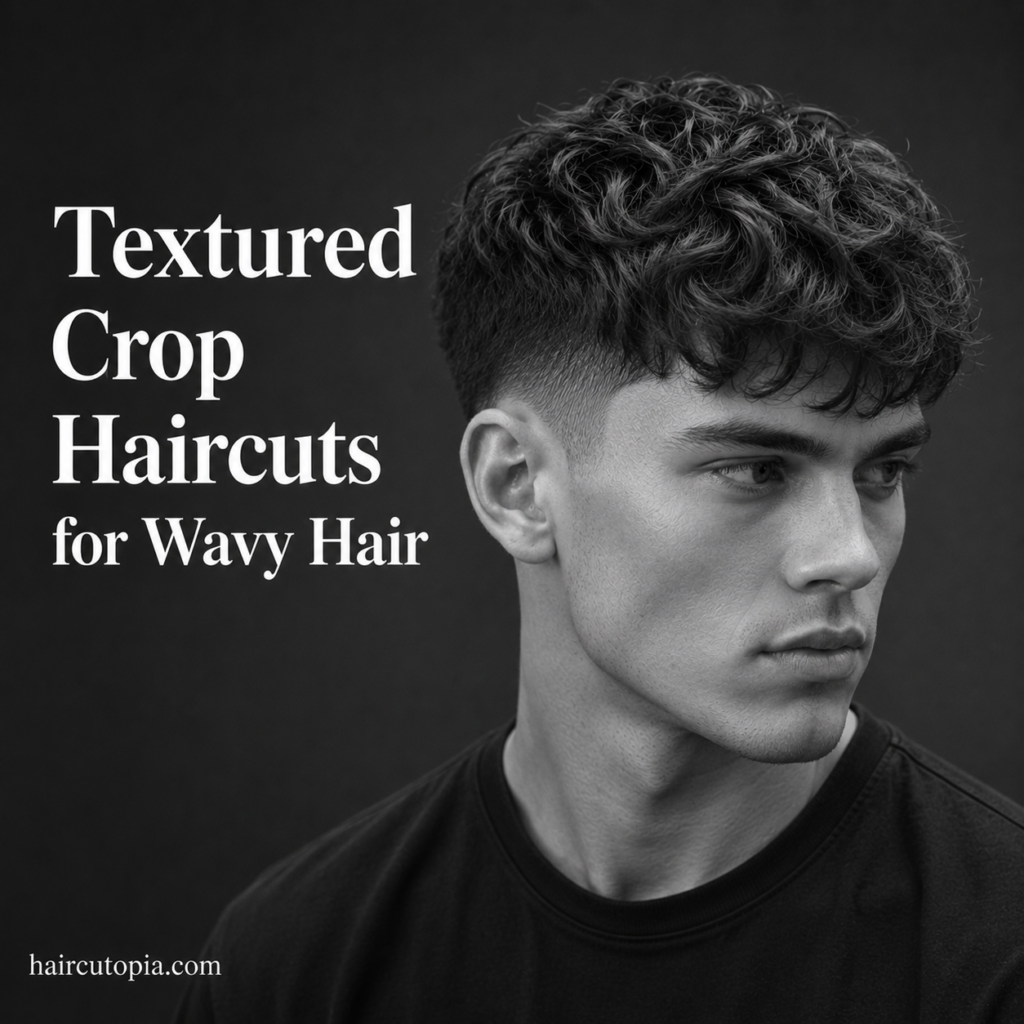
- Textured pixies
- Long pixies
- Bixies
- Layered bobs
- Textured crops
- Graduated bobs
- Short shags
Ask your stylist how your hair is likely to behave once the weight is removed.
Sometimes leaving an extra inch creates a completely different result.
Medium Haircuts for Coarse Hair
Medium length is particularly versatile for coarse hair.
There’s enough weight to provide control, but the hair isn’t so long that it becomes difficult to manage.
Consider:
- Layered lobs
- Shoulder-length layers
- Soft shags
- Medium layered cuts
- Butterfly-inspired cuts
- Textured medium styles
This length also provides room for strategic weight removal without dramatically changing the overall silhouette.
Long Haircuts for Coarse Hair
Long coarse hair can look full and dramatic.
The main challenge is managing weight.
Long layers are often useful because they redistribute some of that density while preserving the length.
Good choices include:
- Long layered cuts
- U-shaped cuts
- Butterfly cuts
- Long shags
- Long face-framing layers
- Soft V-shaped cuts
A completely blunt long cut can also work, particularly if your density isn’t extremely high.
For very dense hair, some internal shaping may make the style more manageable.
Haircuts for Straight Coarse Hair
Straight coarse hair shows the haircut’s structure clearly.
It can create sharp, polished shapes, but it may also become bulky if too much weight collects at the perimeter.
Good options include:
- Graduated bobs
- Layered bobs
- Textured lobs
- Medium layers
- Butterfly cuts
- Long layers
Internal shaping can reduce bulk while allowing the exterior to remain relatively smooth.
Avoid automatically using aggressive thinning techniques.
The placement of weight removal matters.
Haircuts for Wavy Coarse Hair
Wavy coarse hair has built-in movement and often works particularly well with layered cuts.
This texture often works particularly well with layered cuts.
Consider:
- Wavy layered bobs
- Shags
- Wolf cuts
- Layered lobs
- Butterfly cuts
- Long layers
Coarse wavy hair may expand when too much weight is removed.
If you want a more controlled silhouette, use longer blended layers rather than lots of very short sections.
Haircuts for Curly Coarse Hair
Curly coarse hair can create a strong, dimensional silhouette.
The haircut should distribute volume without disrupting the natural curl pattern.
Good options include:
- Rounded curly cuts
- Layered curly bobs
- Curly shags
- Medium curly layers
- Long layered curls
- Tapered curly cuts
Shrinkage matters.
Removing length may cause curls to become noticeably shorter and more voluminous.
Plan around the dry result rather than relying only on wet length.
Haircuts for Frizzy Coarse Hair
Coarse strands can also create frizzy hair, especially when the texture is dry, wavy, or curly.
The goal isn’t necessarily to remove as much hair as possible.
Excessive thinning may actually create more short pieces that expand away from the main shape.
Instead, consider:
- Long layers
- Layered lobs
- Soft shags
- Rounded cuts
- U-shaped long cuts
- Medium layered styles
Keeping enough length can provide useful weight and control.
Haircuts for Thick Coarse Hair
If your hair is both coarse and thick in terms of density, managing bulk becomes more important.
This combination can support substantial layering.
Good options include:
- Butterfly cuts
- Shags
- Wolf cuts
- Layered bobs
- Long layered cuts
- Medium layered styles
Strategic internal weight removal may make styling and drying significantly easier.
The goal should be balance, not simply making the hair as thin as possible.
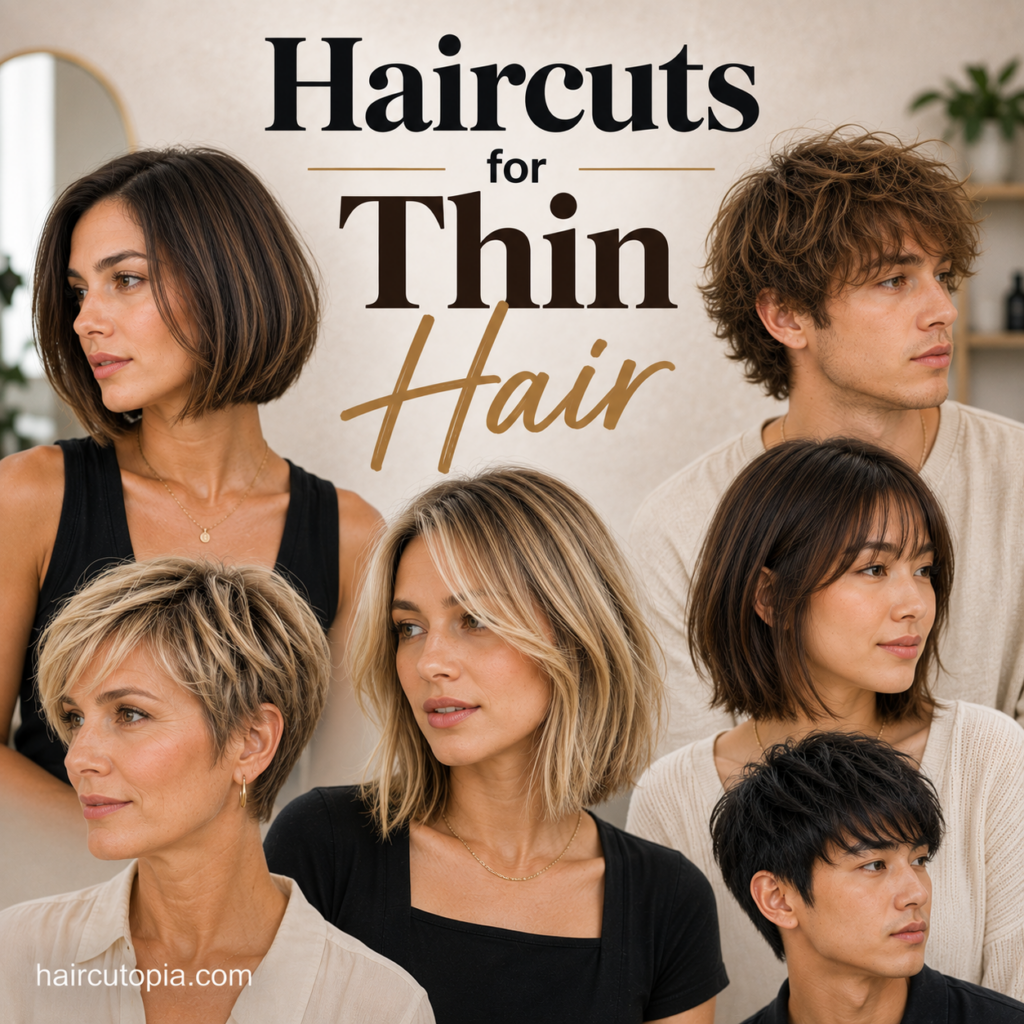
Haircuts for Thin Coarse Hair
Coarse strands don’t automatically mean high density.
If you have coarse individual strands but thin hair with lower overall density, preserving overall fullness becomes important.
Consider:
- Blunt or softly textured bobs
- Lobs with minimal layers
- Long pixies
- Shoulder-length cuts
- Mostly one-length styles
Avoid excessive thinning.
Your strands may feel substantial individually, but the overall haircut still needs enough density through the perimeter.
Haircuts for Fine vs. Coarse Hair
Fine hair and coarse hair sit at opposite ends of the strand-diameter spectrum.
Fine strands are smaller in diameter.
Coarse strands are larger.
That difference affects how hair responds to weight, products, and cutting techniques.
Coarse hair often:
- Holds a stronger shape
- Feels more substantial
- Can tolerate heavier products
- May require more moisture
- Can become bulky at high density
- May need strategic weight redistribution
But density still changes everything.
A person with low-density coarse hair shouldn’t automatically receive the same haircut as someone with extremely dense coarse hair.
Should Coarse Hair Be Layered?
Often, yes.
Layers can help:
- Reduce bulk
- Create movement
- Redistribute weight
- Add shape
- Frame the face
- Encourage waves and curls
But coarse hair doesn’t always need heavy layering.
If your density is lower or you like a strong, solid shape, a relatively blunt cut may work beautifully.
The amount of layering should match both density and texture.
What Layers Are Best for Coarse Hair?
Long blended layers are one of the safest and most versatile choices.
They create movement without producing too many short pieces.
Face-framing layers can reduce weight around the front.
Shorter crown layers create more volume and are common in shags and wolf cuts.
Internal layers can remove bulk without dramatically changing the visible exterior.
The best option depends on where your hair feels heavy.
Should Coarse Hair Be Thinned Out?
Sometimes, but thinning should be strategic.
Coarse hair can feel heavy because the individual strands are substantial, especially when density is also high.
Removing some internal weight can help.
However, aggressive thinning can create:
- Excessive short pieces
- Frizz
- Uneven volume
- Hair that expands as it grows
- A weak or disconnected perimeter
Rather than asking your stylist to “thin it out,” explain where the hair feels bulky.
That gives them more information to choose the appropriate technique.
Are Bobs Good for Coarse Hair?
Yes.
Coarse strands can give a bob excellent structure.
Popular options include:
- Layered bobs
- Textured bobs
- Graduated bobs
- Chin-length bobs
- Wavy bobs
If your hair is extremely dense, a completely blunt bob may become bulky around the bottom.
Internal shaping can maintain the visible outline while making the haircut easier to manage.
Are Pixie Cuts Good for Coarse Hair?
Pixies can work very well with coarse strands.
The natural structure creates texture and separation.
A long pixie provides more control if your hair tends to stick outward when extremely short.
Pay attention to cowlicks and growth patterns.
Once the hair is short, those patterns become more influential.
Are Shags Good for Coarse Hair?
Yes.
Coarse hair has enough structure to make shag layers visible.
Wavy and curly coarse hair work particularly well because the natural texture reinforces the shape.
If your hair expands easily, avoid making every crown layer extremely short.
A softer shag may provide movement without creating excessive volume.
Are Blunt Cuts Good for Coarse Hair?
They can be.
A blunt perimeter creates a strong, polished silhouette.
This works particularly well if your coarse hair has low or moderate density.
Very dense coarse hair may become heavy at the bottom.
In that case, internal shaping can reduce bulk while preserving the appearance of a blunt exterior.
Bangs for Coarse Hair
Coarse strands can create substantial, defined fringe.
Options include:
- Curtain bangs
- Bottleneck bangs
- Side-swept bangs
- Full bangs
- Textured fringe
- Long face-framing fringe
Growth patterns matter.
A strong cowlick may influence how the bangs naturally separate.
If your hair is wavy or curly, also account for shrinkage before deciding on length.
Coarse Haircuts by Face Shape
Face shape can help refine the silhouette, but it shouldn’t override texture and density.
Round Faces
Longer bobs, layered medium cuts, and face-framing pieces can create vertical movement.
Oval Faces
Most lengths work well.
Pixies, bobs, shags, and long layers are all options.
Square Faces
Soft layers, waves, curtain bangs, and textured medium cuts can add movement around stronger facial angles.
Heart-Shaped Faces
Bobs and lobs with movement around the jaw can create balance.
Face-framing layers are another good option.
Long Faces
Bangs, bobs, shoulder-length cuts, and styles with side volume can create more horizontal emphasis.
These are starting points, not haircut rules.
Low-Maintenance Haircuts for Coarse Hair
A low-maintenance haircut should work with the natural direction and texture of your strands.
Good choices may include:
- Long pixies
- Layered bobs
- Shoulder-length layers
- Long layered cuts
- U-shaped cuts
- Soft shags
Your natural texture matters more than the haircut name.
A layered bob may be effortless for coarse straight hair but require more styling on hair with an unpredictable wave pattern.
Choose something that works when you style your hair normally.
How to Style Coarse Hair
Coarse strands often tolerate richer styling products than fine hair, but that doesn’t mean more is always better.
Prioritize Moisture
Dry coarse hair can become rough or frizzy.
Depending on your texture, a moisturizing leave-in or styling cream may help keep the strands flexible.
Work in Sections
Dense coarse hair can make even product distribution difficult.
Applying products in sections helps reach the underneath rather than coating only the surface.
Use Heat Protection
Coarse hair isn’t immune to heat damage.
Apply appropriate protection before using blow-dryers, flat irons, or curling tools.
Avoid Overloading the Roots
Even coarse hair can become flat when too much heavy product is applied near the scalp.
Concentrate richer products where the hair needs them most.
Let the Haircut Create the Shape
If you’re constantly fighting bulk in the same area, styling may not be the entire problem.
The haircut may need better weight distribution.
What to Ask Your Stylist
Tell your stylist how the hair behaves rather than simply saying it’s “thick.”
Discuss:
- Whether your strands are coarse.
- Your overall density.
- Where the hair feels bulky.
- Whether it expands when shortened.
- Your natural texture.
- Whether you experience frizz or dryness.
- How you normally style it.
- Whether previous thinning techniques worked.
- How much maintenance you’re comfortable with.
If you dislike thinning shears or have had a bad experience with aggressive texturizing, mention that before the haircut begins.
Common Haircut Mistakes with Coarse Hair
Confusing Coarse Hair with Thick Hair
Coarse refers to strand diameter.
Thick usually refers to density in everyday conversation.
You can have coarse hair without having extremely dense hair.
Over-Thinning
Removing too much internal weight can create frizz and unpredictable regrowth.
Making Layers Too Short
Short layers may spring outward, especially on wavy or curly coarse hair.
Ignoring Growth Patterns
Coarse strands can strongly follow cowlicks and natural growth directions.
This becomes particularly noticeable in short cuts.
Removing Weight Without a Plan
The goal isn’t simply to make the hair lighter.
The haircut should maintain a balanced silhouette.
How Often Should Coarse Hair Be Cut?
Maintenance depends primarily on the haircut.
As a general guide:
- Pixies: around 4–8 weeks
- Bobs: around 6–10 weeks
- Medium cuts: around 8–12 weeks
- Long layered cuts: around 8–16 weeks
Highly structured cuts need maintenance sooner.
Long layers and softer shapes generally have more room to grow.
How to Choose the Best Haircut for Coarse Hair
Start by determining your density.
Coarse strands with high density behave very differently from coarse strands with low density.
Then consider your natural texture.
Straight coarse hair may need internal shaping. Wavy coarse hair often responds well to layers. Curly coarse hair needs careful consideration of shrinkage and volume.
Next, decide where you want fullness.
If your hair feels too bulky at the sides, the weight can be redistributed. If you like substantial volume, don’t let someone automatically remove it just because your strands are coarse.
Finally, think about your routine.
A good haircut should make everyday styling easier.
It shouldn’t require an hour of heat styling simply to control the shape created by the cut itself.
Final Thoughts
Coarse hair has a natural strength that can make haircuts look incredibly defined.
Pixies gain texture. Bobs have structure. Medium cuts can hold noticeable layers, while long coarse hair creates a substantial silhouette.
The key is understanding that coarse hair doesn’t automatically mean thick hair.
Strand diameter, density, and natural texture all need to be considered together.
If your hair is extremely dense, strategic layers and internal shaping can reduce unnecessary bulk. If your density is lower, preserving more of the perimeter may be the better approach.
Don’t focus solely on removing weight.
Focus on putting the weight in the right places.
That’s what turns coarse hair from difficult to manage into one of the haircut’s biggest strengths.

Related Posts
 Curly Hairstyles: Ideas for Every Curl Type, Hair Length, and Occasion
 Haircuts for Frizzy Hair: The Complete Guide to Cuts for Every Length and Texture
 Haircuts for Straight Hair: The Complete Guide to Cuts for Every Length and Hair Type
 Haircuts for Thin Hair: The Complete Guide to Fuller-Looking Styles for Every Length