A good work hairstyle has a pretty demanding job description.
It needs to look put together, stay comfortable for hours, survive your commute, and ideally take less time to create than your morning coffee. If you’re working in an office, meeting with clients, hopping between video calls, or simply want your hair out of your face while you concentrate, an updo checks a lot of those boxes.
And professional doesn’t have to mean boring.
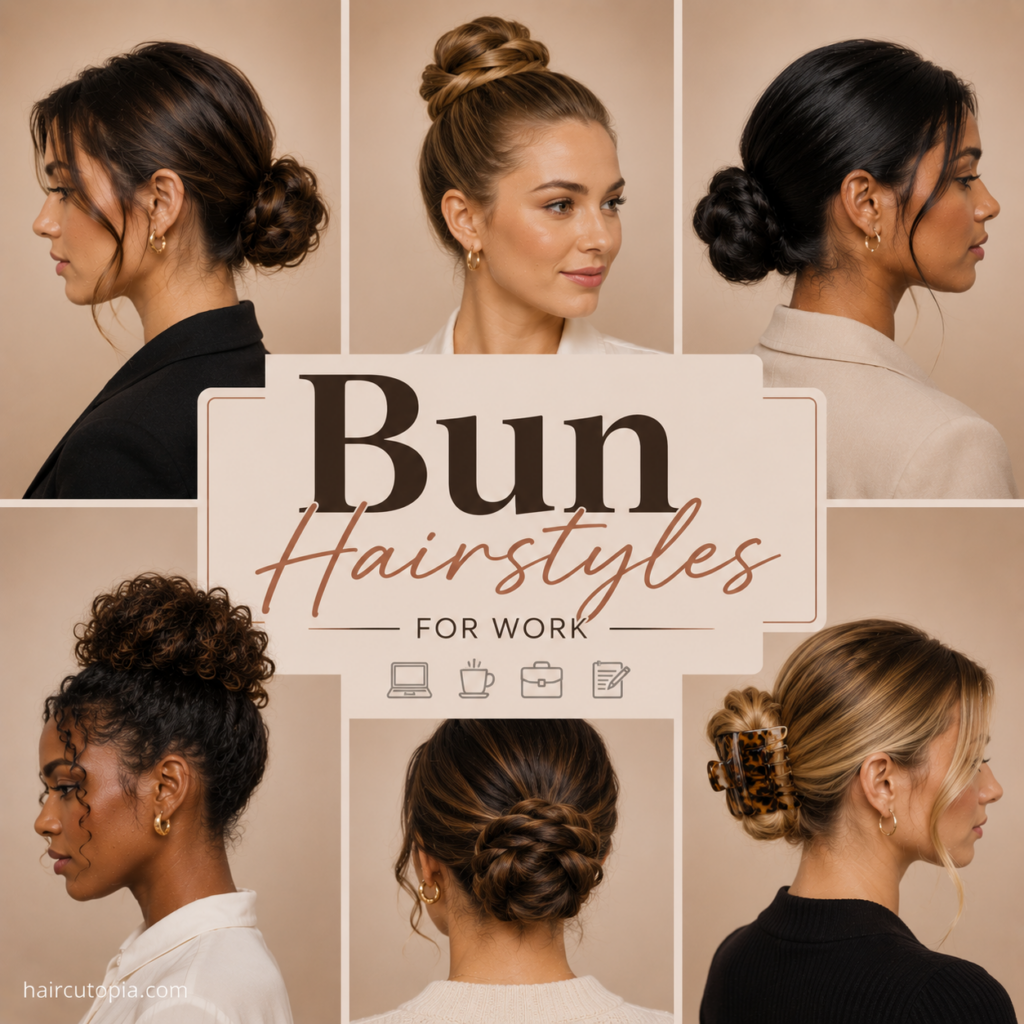
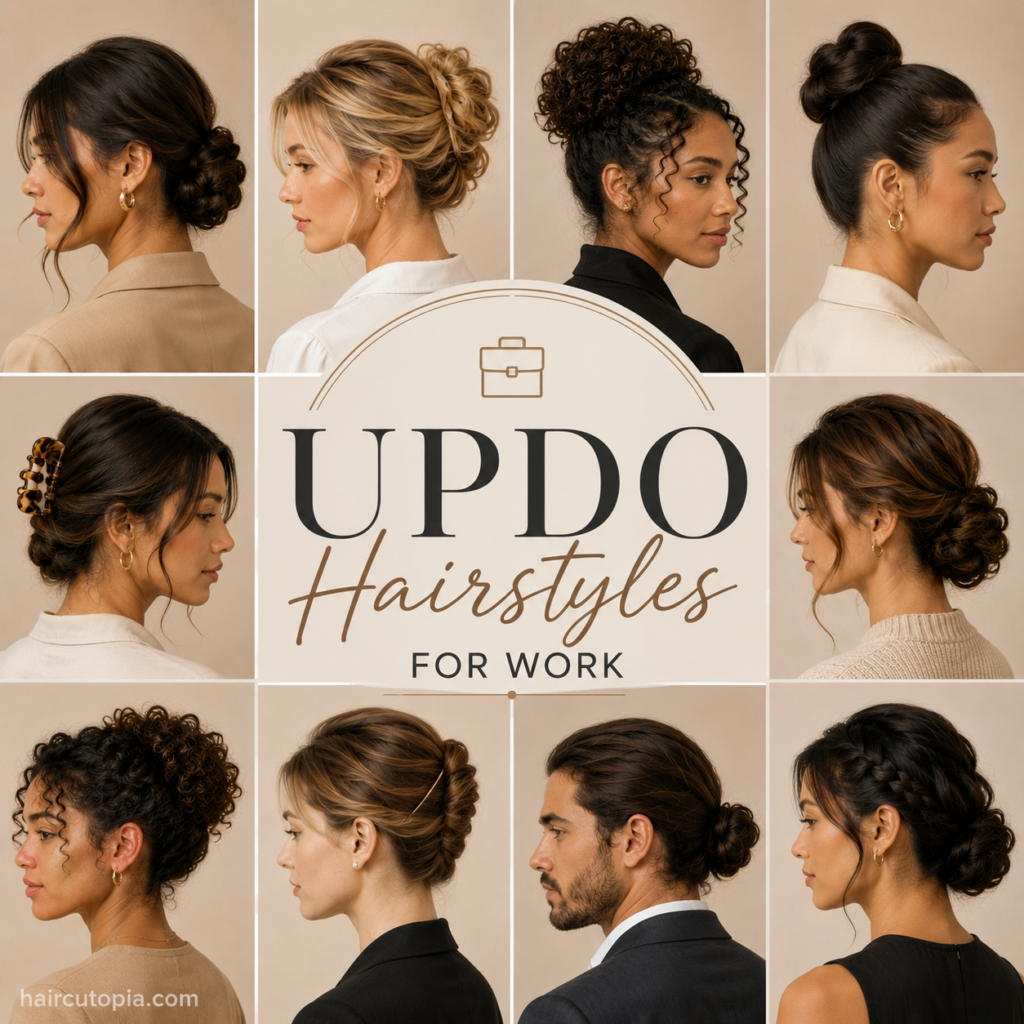
Updo hairstyles for work can range from sleek low buns and classic French twists to relaxed claw clip styles, braids, natural curls, and modern textured buns. The right choice depends on your workplace, your hair, and how much time you’re willing to spend getting ready.
Here are 20 practical options that can take you from the first meeting of the morning to the end of the workday without requiring constant trips to the mirror.
What Makes a Good Updo for Work?
There’s no single hairstyle that’s appropriate for every workplace.
A corporate office may lean more polished, while a creative agency, salon, retail environment, or remote workplace may give you much more freedom.
Still, the best work updos tend to have a few things in common:
- They’re comfortable for extended wear
- They keep hair away from the face when needed
- They stay reasonably secure
- They don’t require constant adjustment
- They can be created without an hour of styling
- They work with your natural hair rather than fighting it
Professional hair doesn’t need to be perfectly slick or completely free of texture. A few natural pieces, curls, waves, or layers can still look intentional and polished.
1. Classic Low Bun
The low bun might be the ultimate work updo.
It’s simple, understated, and works with almost anything you’re wearing.
Create a low ponytail at the nape and twist the length around its base. Tuck the ends underneath and secure them with bobby pins.
You can keep the crown smooth for a more formal workplace or loosen it slightly for a softer look.
Best for:
- Corporate offices
- Client meetings
- Interviews
- Business casual workplaces
- Long workdays
Because the bun sits low, it can also feel more comfortable than a high bun if you have long or thick hair.
2. Sleek Low Bun
When you want something a little sharper, make the low bun sleek.
Create a center or side part and brush the hair smoothly toward the nape.
Secure it into a ponytail, then wrap the length into a compact bun.
Use a small amount of smoothing cream or gel around the hairline if needed.
The clean shape gives this hairstyle a polished appearance without requiring complicated styling.
3. French Twist
The French twist is a classic professional hairstyle, but it doesn’t have to feel overly formal.
Gather your hair toward the center of the back of your head.
Twist the length upward, tuck the ends inside, and secure the twist vertically with bobby pins or a French pin.
For a modern version, don’t make everything perfectly smooth.
A little volume at the crown or a slightly relaxed twist can make the style feel more current while still looking office-ready.
4. Claw Clip Twist
The claw clip has earned its place in the workday hairstyle rotation.
Gather your hair at the back, twist it upward, and secure it with a clip.
For longer hair, fold the excess length downward before clipping it into place.
The key for work is choosing a clip that feels intentional rather than overly casual.
Simple options include:
- Tortoiseshell
- Matte neutral finishes
- Minimal metallic clips
- Solid black or brown
- Clean geometric shapes
A sturdy clip is also important. You don’t want to spend the afternoon repeatedly putting your hair back up.
5. Low Chignon
A chignon gives you the polish of a formal updo without necessarily looking like you’re headed to a wedding after work.
Gather the hair at the nape and create a loose roll or loop.
Tuck the ends underneath and secure them.
Keep the overall shape compact for a professional finish.
If your workplace is less formal, gently loosen the crown or leave a couple of small face-framing pieces free.
6. High Bun
A high bun is practical when you want your hair completely away from your face and neck.
Create a high ponytail and wrap the hair around its base.
Secure the bun with pins or another elastic.
Keep it smooth for a polished look or allow a little natural texture for a more relaxed workplace.
If your hair is thick or very long, avoid making the ponytail excessively tight. Eight hours of tension can turn an innocent-looking bun into a headache.
7. Braided Low Bun
Adding a braid makes a basic low bun feel more detailed without making it inappropriate for work.
Create a low ponytail and braid the length.
Wrap the braid around the base and secure it with pins.
Keep the braid relatively neat for a traditional office or loosen it slightly if your workplace has a more relaxed dress code.
This is also a good way to control long hair because the braid keeps the length contained before you form the bun.
8. Twisted Low Updo
If you have layers that constantly escape from a regular bun, try working in sections.
Take hair from each side and twist it toward the back.
Pin the twists near the nape, then gather or twist the remaining hair underneath.
This gives you more control over shorter pieces.
It also creates enough detail to look styled without feeling overly elaborate for the office.
9. Low Ponytail Updo
Start with a low ponytail and create an opening directly above the elastic.
Flip the ponytail through that opening.
You can leave the hair as a twisted ponytail or continue rolling the remaining length upward.
Tuck the ends inside the original twist and secure them with pins.
The result resembles a soft chignon but is surprisingly easy to create.
10. Curly Work Updo
Curly hair doesn’t need to be straightened or slicked down to look professional.
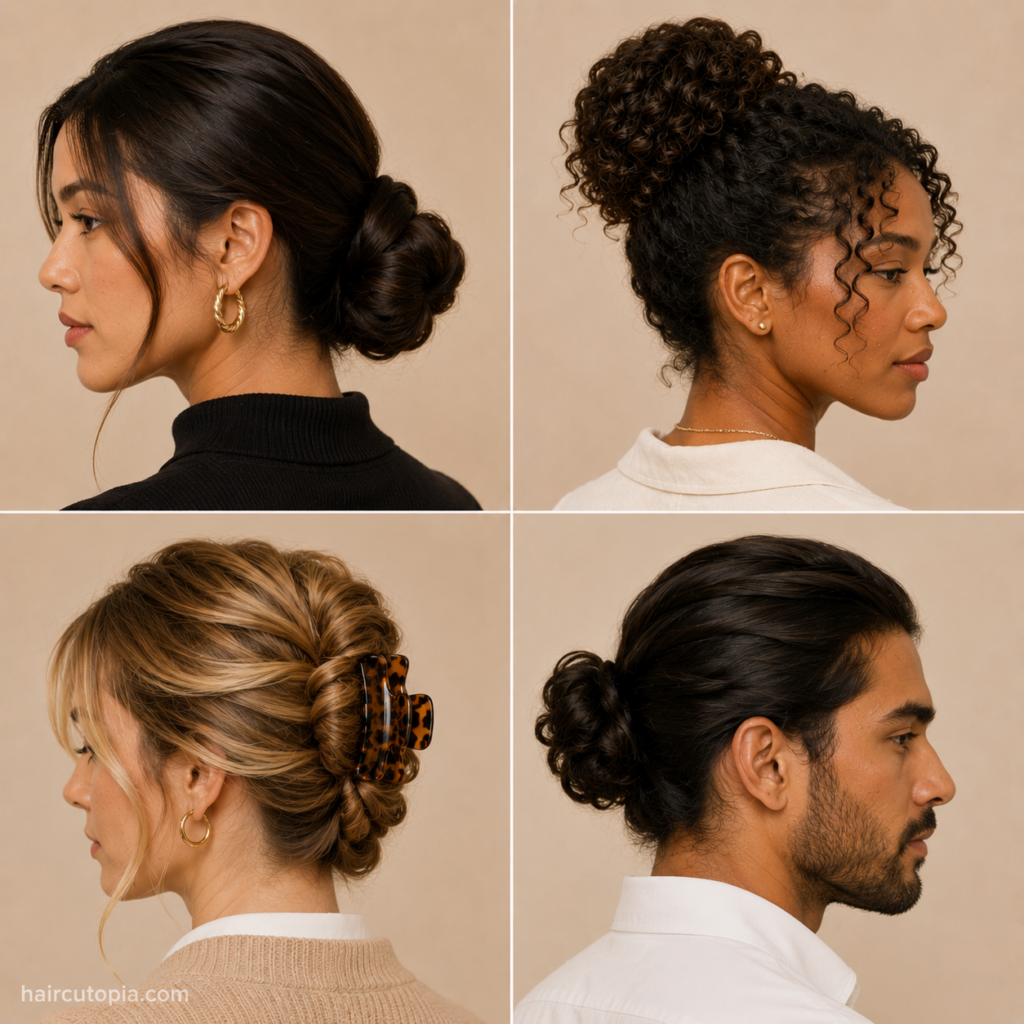
Gather your curls loosely toward the back or crown and secure them while preserving their natural shape.
You can use an elastic as the foundation or pin individual sections.
Leave a few curls around the hairline if that’s how you normally wear your hair.
The goal is a secure, intentional shape—not removing the texture that makes your hair your hair.
11. Textured Low Bun
A textured low bun is a nice middle ground between sleek and messy.
Start with your natural waves or add a little texture before styling.
Gather the hair at the nape and loosely wrap it into a bun.
Pull gently at a few sections to create volume without making the style look unfinished.
This works particularly well in business casual and creative workplaces where a perfectly slick hairstyle isn’t necessary.
12. Half-Up Bun
Not every work hairstyle needs to get all your hair off your shoulders.
A half-up bun keeps the front sections controlled while allowing the rest of your hair to remain down.
Gather the top section into a ponytail and twist it into a small bun.
Wear the remaining hair straight, wavy, or naturally curly.
For work, positioning the bun toward the back of the crown usually creates a more understated appearance than placing it directly on top of the head.
13. Side-Part Low Bun
A side part can change the character of a simple low bun.
Create your part before pulling the hair back.
Sweep both sides toward the nape and form a compact bun.
You can keep the front completely smooth or allow the heavier side of the part to fall naturally.
It’s an easy way to make your regular low bun feel different without learning a new hairstyle.
14. Rope Braid Bun
If traditional braiding isn’t your strongest skill, try a rope braid.
Create a ponytail and divide it into two sections.
Twist the sections and wrap them around each other, then secure the end.
Wrap the finished rope braid around the ponytail base and pin it.
The twist adds subtle texture while keeping the overall hairstyle clean enough for professional settings.
15. Low Knotted Updo
A knotted updo has a modern, minimalist feel.
Create a low ponytail and divide it into two sections.
Tie the sections into a loose knot.
Tuck the remaining ends underneath and secure them with pins.
Longer hair may allow you to create a second knot before tucking the ends away.
From the outside, the hairstyle looks much more complicated than the actual technique.
16. Work Updo With Bangs
You don’t need to pin your bangs back just because the rest of your hair is up.
Straight bangs can look polished with a sleek low or high bun.
Curtain bangs pair naturally with chignons and softer styles, while longer bangs can be swept to the side.
If you want everything away from your face, twist longer bangs toward the sides and pin them into the updo.
Either approach can work. The important thing is that the front looks intentional rather than like you spent the morning fighting with it.
17. Work Updo With Face-Framing Pieces
A couple of face-framing pieces can soften a professional updo without making it look too casual.
Before putting your hair up, leave a small section near each temple.
Create your bun, chignon, or twist.
Then adjust the front sections.
You can leave them straight, follow your natural texture, or add a slight wave.
Keep them relatively subtle for work. You want them to frame your face without constantly falling into your eyes while you’re trying to read your screen.
18. Braided Crown Into a Low Bun
If your workplace allows a little more creativity, combine braids with a low bun.
Create a braid on one or both sides of the head and direct it toward the back.
Gather the remaining hair into a low bun.
Tuck the braid ends into the bun and pin them securely.
Keeping the braid relatively smooth creates a more understated result than dramatically pulling it apart for volume.
19. Easy Updo for a Busy Morning
You have seven minutes until you need to leave.
This isn’t the morning for an elaborate French twist.
Create a low ponytail, twist the length around the base, and secure it with a few pins.
Then smooth the most visible flyaways and move on with your life.
If your hair doesn’t cooperate with buns, use a claw clip instead.
A simple hairstyle that stays in place is far more useful than an ambitious one that makes you late.
20. Five-Minute Professional Updo
For something that looks a little more detailed, try this quick rolled style.
- Create a low ponytail.
- Make a small opening above the elastic.
- Flip the ponytail through the opening.
- Roll the remaining length upward.
- Tuck the ends into the twist.
- Secure the roll with several bobby pins.
- Smooth or loosen the crown as needed.
Once you’ve done it a few times, the entire process can take about five minutes.
The finished result works with business casual clothing but can also look polished enough for meetings or presentations.
Updo Hairstyles for Different Work Environments
“Work appropriate” means different things in different places.
The hairstyle that feels completely normal at a design studio might feel more relaxed than what you’d choose for a formal corporate meeting.
Instead of following arbitrary rules, match the level of polish to your actual environment.
Corporate and Formal Offices
For conservative or traditional workplaces, clean and relatively simple styles are easy choices.
Consider:
- Sleek low buns
- Classic low buns
- French twists
- Smooth chignons
- Low knotted updos
- Neat braided buns
These hairstyles keep the overall silhouette controlled without drawing unnecessary attention away from the rest of your professional appearance.
Business Casual Workplaces
You have considerably more flexibility.
Low textured buns, claw clip twists, curly updos, half-up buns, and softer chignons can all work.
A little texture or a few face-framing pieces generally won’t make a hairstyle feel unprofessional when the overall look is intentional.
Creative Workplaces
Creative offices tend to give you the most room to experiment.
Braids, natural textures, decorative clips, unusual bun placements, and more expressive styles can all fit comfortably.
That doesn’t mean the hairstyle needs to be complicated. It simply means you don’t have to default to the same low bun every day.
Remote Work and Video Calls
Working from home changes the equation.
You may care less about what the back of your hairstyle looks like and more about how it appears from the front.
Half-up buns, claw clip styles, high buns, and low twists are all practical.
If you’re on video frequently, pay particular attention to the hair around your face.
And yes, the hairstyle can be significantly more polished than whatever is happening below the camera frame.
Work Updos for Short Hair
Short hair may not fit into a traditional bun, but you still have options.
Try:
- Mini low buns
- French twists
- Half-up styles
- Small claw clips
- Twisted-back sections
- Pinned curls
- Braided sides
- Low pinned updos
If the shortest layers won’t reach the back, don’t force them.
Secure the longest section first, then twist or pin the shorter pieces individually.
A few natural pieces around the face can also work well as long as they aren’t distracting you throughout the day.
Work Updos for Medium Hair
Medium-length hair is particularly easy to put up for work.
There’s usually enough length for buns, chignons, twists, and braids without the weight of very long hair.
Good options include:
- Low buns
- French twists
- Claw clip styles
- Braided buns
- High buns
- Twisted updos
- Low chignons
- Half-up buns
Shoulder-length layers may require a few extra bobby pins around the nape.
Work Updos for Long Hair
Long hair gives you plenty of styling options, but comfort becomes more important.
A tightly wrapped high bun can become heavy after several hours.
Try low buns, braided styles, chignons, and sectioned updos that distribute the hair more evenly.
If you prefer a claw clip, choose one large and sturdy enough for your hair.
For very long hair, twist it upward and fold the extra length down before securing the clip.
Work Updos for Different Hair Types
Your natural hair texture should help determine which style will be easiest to maintain throughout the day.
Work Updos for Fine Hair
Fine hair can become flat when pulled tightly against the head.
A little dry shampoo or texturizing spray can add grip and volume before styling.
Try textured low buns, braided buns, French twists, and half-up styles.
Avoid over-tightening the bun if you want it to appear fuller.
Work Updos for Thick Hair
Thick hair needs strong support.
Use sturdy elastics, strong bobby pins, and claw clips designed to hold more hair.
Dividing the hair into multiple sections can also reduce the weight concentrated in one area.
Low buns and chignons are often particularly comfortable for long workdays.
Work Updos for Curly Hair
Natural curls can create beautiful professional updos without being straightened.
Try high curly buns, low pinned styles, half-up looks, or loosely gathered curls.
Preserving some curl definition can give the hairstyle shape and dimension.
Work Updos for Straight Hair
Straight hair naturally lends itself to sleek, structured styles.
Low buns, French twists, knotted updos, and chignons all work well.
If your hair is very smooth, add a little texture product so your pins don’t slide out.
Work Updos for Wavy Hair
Waves provide enough texture to make relaxed updos easy.
Try low buns, twisted styles, chignons, and claw clip updos.
You don’t need to brush away all the natural movement before styling.
How to Make a Work Updo Last All Day
The best office hairstyle is one you can mostly forget about after leaving home.
A few techniques can help.
Start with a secure foundation
If your updo begins with a ponytail, make sure it feels secure before creating the bun or twist.
The foundation should hold the hairstyle. Hairspray shouldn’t have to.
Give slippery hair some texture
Freshly washed hair can sometimes slide out of pins.
A small amount of dry shampoo, mousse, or texture spray can provide additional grip.
Anchor your bobby pins
Catch part of the section you’re securing and slide the pin into the hair underneath.
For stubborn areas, cross two pins into an X.
Pay attention to the nape
Shorter pieces around the nape often escape first.
Secure them separately if necessary rather than repeatedly trying to force them into the main bun.
Keep emergency supplies nearby
If your hairstyle occasionally needs a midday rescue, keeping a few basics at work isn’t a bad idea.
Consider storing:
- Bobby pins
- An extra hair tie
- A small claw clip
- Mini hairspray
- Comb
- Small smoothing product
You probably won’t need them every day, but you’ll appreciate having them when an elastic unexpectedly gives up at 2:15.
How to Keep a Work Updo Comfortable
Security matters, but so does your scalp.
A hairstyle that’s painful by lunchtime isn’t a good work hairstyle.
If you have long or thick hair, try positioning the bun lower or distributing the hair across multiple sections.
Avoid pulling excessively around the hairline.
You can also rotate between high and low styles throughout the week rather than placing tension in exactly the same area every day.
If a hairstyle immediately feels too tight, fix it before leaving home.
It’s probably not going to become more comfortable six hours later.
How to Make an Updo Look More Professional
You don’t need to remove every hint of personality from your hairstyle.
Instead, focus on a few finishing details.
Make the shape intentional
Check the front and sides before leaving.
A slightly crooked bun may only need one additional pin.
Control distracting flyaways
A few natural pieces are fine.
If strands are repeatedly falling into your face or sticking out from the bun, secure or smooth them.
Hide basic elastics
Wrap a small section of hair around a visible elastic if you want a cleaner finish.
Choose accessories thoughtfully
Simple clips, pins, and barrettes can look completely appropriate at work.
If your workplace is conservative, understated designs are usually the easiest option.
Don’t overdo the styling products
Professional doesn’t mean your hair needs to look frozen in place.
Use enough product to control the style while allowing your hair to retain some natural movement.
Work Updos and Hair Accessories
Accessories can make your morning routine considerably easier.
A good claw clip can replace several bobby pins, while a decorative barrette can secure hair and add detail at the same time.
Work-friendly options include:
- Neutral claw clips
- Tortoiseshell clips
- Minimal metallic barrettes
- Simple hairpins
- Matte hair accessories
- Small decorative combs
- Headbands
What works best depends on your workplace.
In a creative environment, you may have plenty of freedom to experiment. In a more traditional office, simpler accessories may blend more naturally with business attire.
Frequently Asked Questions About Updo Hairstyles for Work
What is the best updo hairstyle for work?
A low bun is one of the most versatile choices because it’s simple, comfortable, and easy to adapt to different workplace dress codes. French twists, chignons, braided buns, and claw clip styles are also good options.
Are messy buns professional enough for work?
They can be, depending on the workplace. A softly textured bun with an intentional shape usually looks more polished than a very loose bun with pieces falling out everywhere. Business casual and creative workplaces generally allow more flexibility.
Are claw clips appropriate for work?
In many workplaces, yes. A clean, sturdy claw clip in a neutral, metallic, or tortoiseshell finish can look polished while keeping hair securely in place. Workplace expectations vary, so consider your environment.
What is an easy five-minute work hairstyle?
A low bun, claw clip twist, twisted ponytail updo, or simple rolled chignon can usually be created in about five minutes once you’re familiar with the technique.
How should I wear long hair to work?
You can wear long hair down or choose a low bun, chignon, braid, ponytail updo, French twist, or claw clip style. If your hair is heavy, lower styles may feel more comfortable over a full workday.
Can curly hair look professional in an updo?
Absolutely. Curly buns, pinned updos, half-up styles, and loosely gathered curls can all look polished while maintaining the hair’s natural texture.
What updo works best for an interview?
A low bun, sleek low bun, French twist, or simple chignon is a dependable choice if you prefer wearing your hair up. More important than the specific hairstyle is that it feels comfortable and allows you to focus on the interview rather than adjusting your hair.
How do I stop my work updo from giving me a headache?
Avoid pulling the hair excessively tight and consider positioning heavy buns lower on the head. If you have thick or long hair, dividing it into sections can distribute the weight more comfortably.
Final Thoughts on Updo Hairstyles for Work
The best work hairstyle is one that makes your morning easier rather than adding another complicated task to it.
For some people, that’s a sleek low bun. For others, it’s natural curls pinned loosely at the back, a French twist, or a claw clip that takes 30 seconds to put in.
Your workplace matters, but so do comfort, hair texture, and personal style.
There’s no reason professional hair has to mean wearing the exact same tightly pulled bun five days a week.
Build a small rotation instead. Keep one quick hairstyle for rushed mornings, one polished option for important meetings, and a few comfortable styles for regular workdays.
Then keep an emergency hair tie in your desk.
Because apparently those things can vanish without ever leaving the room.