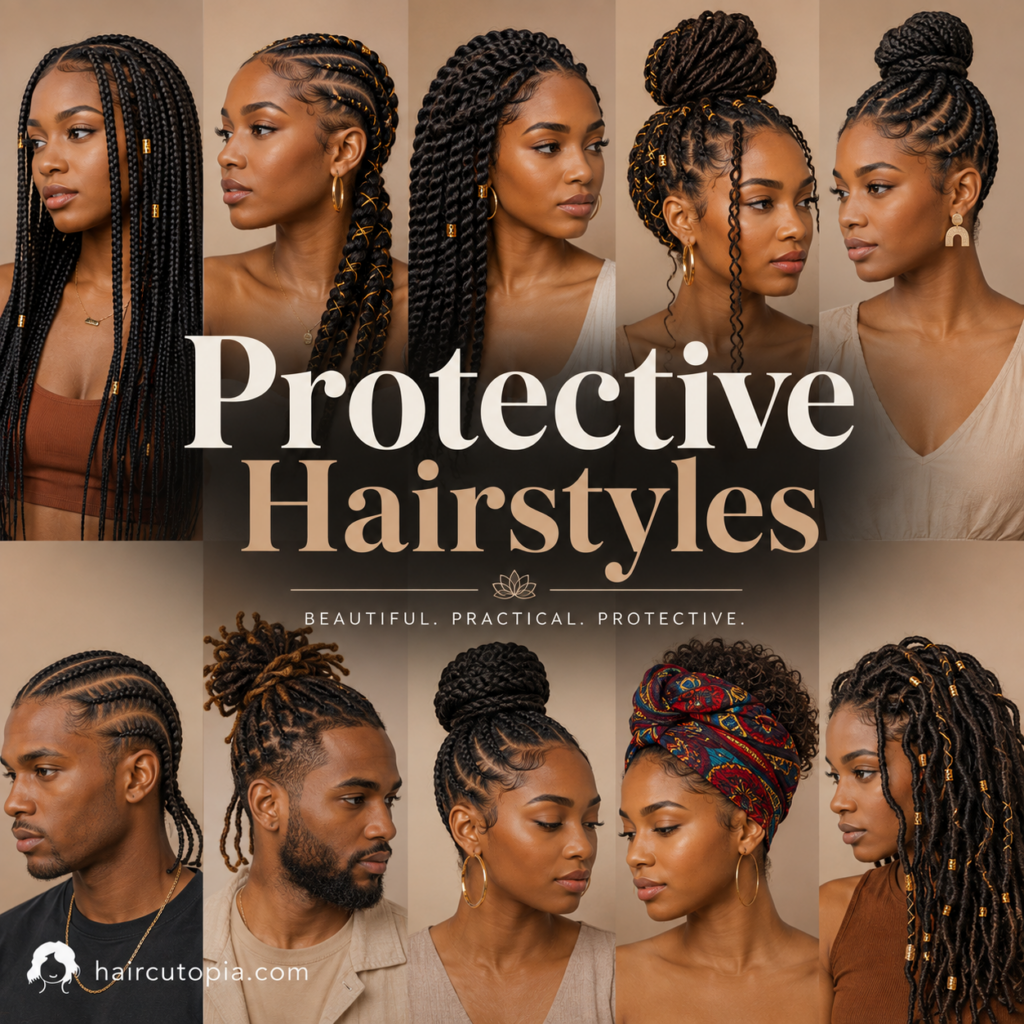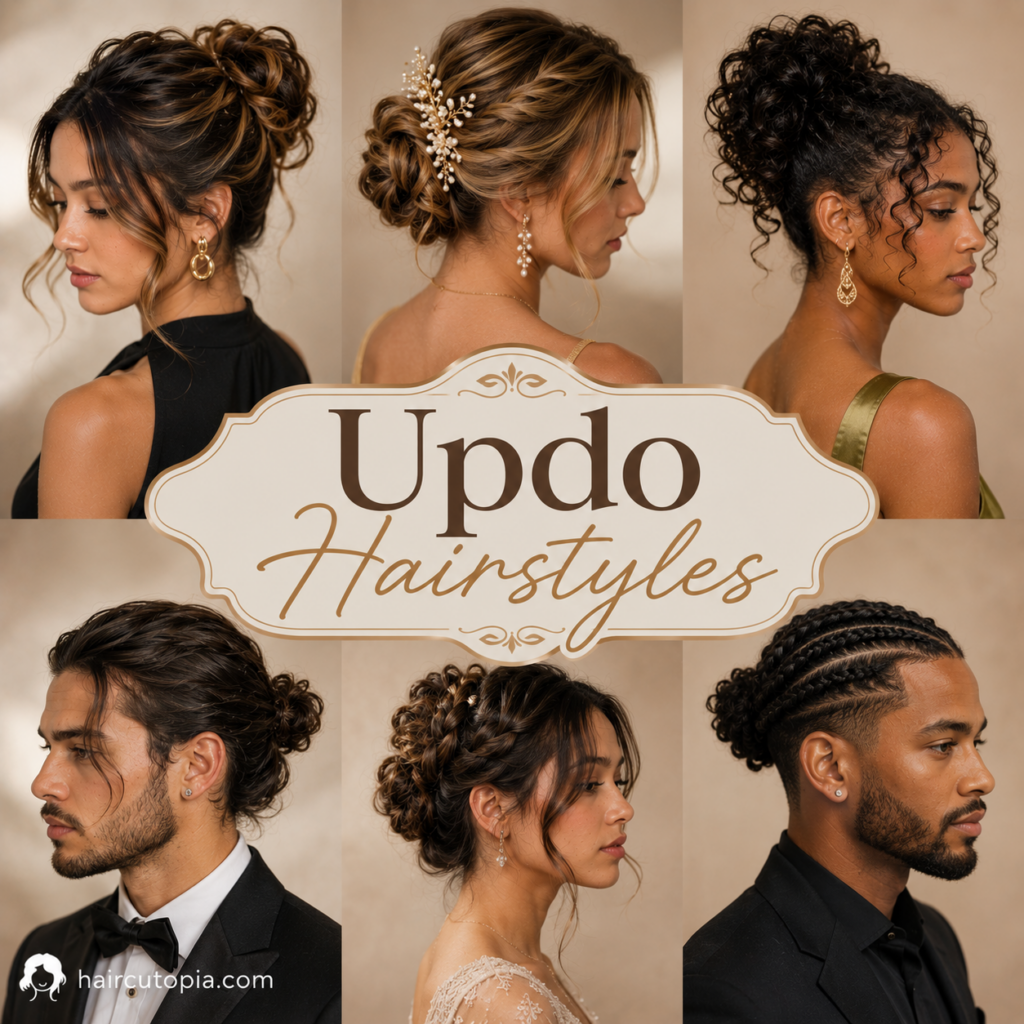
Getting ready for work is easier when your hair isn’t another major decision you have to make every morning.
That’s one of the biggest advantages of a good protective hairstyle. Braids, twists, cornrows, locs, and tucked natural styles can reduce daily manipulation while giving you a look that’s easy to maintain throughout a busy workweek.
And “work appropriate” doesn’t mean boring.
A braided bob can look sharp and modern. Knotless braids can be worn loose one day and pulled into a low ponytail the next. Twists bring natural texture into the workplace, while cornrows and flat-twist styles are especially practical when you want your hair completely out of the way.
Whether you work in an office, remotely, in healthcare, hospitality, retail, or somewhere with a more relaxed dress code, there are plenty of protective hairstyles that can fit comfortably into your routine.
What Makes a Protective Hairstyle Good for Work?
The best protective hairstyle for work isn’t necessarily the most formal one. It’s a style that fits the realities of your job.
For many people, that means something that’s:
- Comfortable for a full workday
- Easy to manage in the morning
- Secure without excessive tension
- Compatible with your workplace and job duties
- Simple to pull back when necessary
- Manageable under required headwear or equipment
- Easy to maintain between workdays
- Versatile enough for life outside of work
If you’re at a desk all day, you may have very different needs from someone who works in a kitchen, hospital, warehouse, salon, or outdoors.
Think about what your hair actually has to do during your shift before choosing the style.
Best Protective Hairstyles for Work
From straightforward braids to natural updos, these styles combine practicality with enough versatility to work in a wide range of professional environments.
Medium Knotless Braids
Medium knotless braids are one of the easiest protective hairstyles to incorporate into a work routine.
They’re long enough to style but don’t have to be excessively heavy. Wear them loose with a middle or side part, gather them into a low ponytail, or pull back just the front sections.
Shoulder-to-chest length is particularly practical.
You get enough length for versatility without constantly dealing with braids getting caught behind your chair, under a bag strap, or inside a jacket.
Short Knotless Braids
If you want even less hair to manage, take knotless braids shorter.
A shoulder-length or bob-style version keeps the overall shape neat while eliminating much of the weight of longer extensions.
Short braids also tend to be easier to manage when you’re frequently moving around during the workday.
A clean center part gives them a balanced appearance, while a side part can create a softer look.
Box Braids
Box braids are a workplace staple because they’re so adaptable.
Depending on the length and thickness, they can be worn:
- Down
- In a low ponytail
- Half-up
- Swept to one side
- In a loose bun
- Pinned away from the face
Medium box braids tend to provide the best balance for everyday wear.
Very long braids can still work, but consider whether you’ll need to pull them back frequently during your job.
Braided Bob
A braided bob is a great choice if you like the convenience of braids but don’t want much length.
The braids can stop around the jaw, shoulders, or collarbone.
A blunt braided bob has a strong, structured shape, while slightly varied lengths create something softer.
Because the style is already defined, it doesn’t require much morning effort. Take off your bonnet or scarf, adjust the part, and you’re basically ready.
Mini Twists
Mini twists are ideal if you want to wear your natural hair while reducing daily styling.
Once installed, they can be left loose or styled in simple ways throughout the week.
Depending on your length, try:
- A center part
- A side part
- A low ponytail
- A half-up style
- A loose bun
- One side pinned back
They’re also lightweight, which can make them comfortable during long shifts.
Two-Strand Twists
If you don’t want to spend the time required for mini twists, larger two-strand twists are a simpler alternative.
The finished look can be structured or intentionally soft depending on section size and technique.
Natural twists work especially well in workplaces where you want something practical without adding extensions.
Larger twists may need refreshing sooner than mini twists, but they’re also considerably quicker to install and remove.
Flat Twists
Flat twists keep the hair close to the scalp, making them particularly useful if your work requires headwear.
They can run straight back, curve toward one side, or lead into a bun or tucked section.
A few larger flat twists can create a clean, understated look without requiring an intricate design.
You can also combine flat twists with individual twists for more styling flexibility.
Straight-Back Cornrows
Few styles are as practical as simple straight-back cornrows.
They stay secure, keep the hair away from your face, and don’t require much styling each morning.
They’re particularly useful for active jobs where loose hair becomes inconvenient.
Straight-back cornrows can be created with natural hair or extensions depending on the desired length.
Keeping them relatively simple also makes them easier to maintain.
Cornrows Into a Low Bun
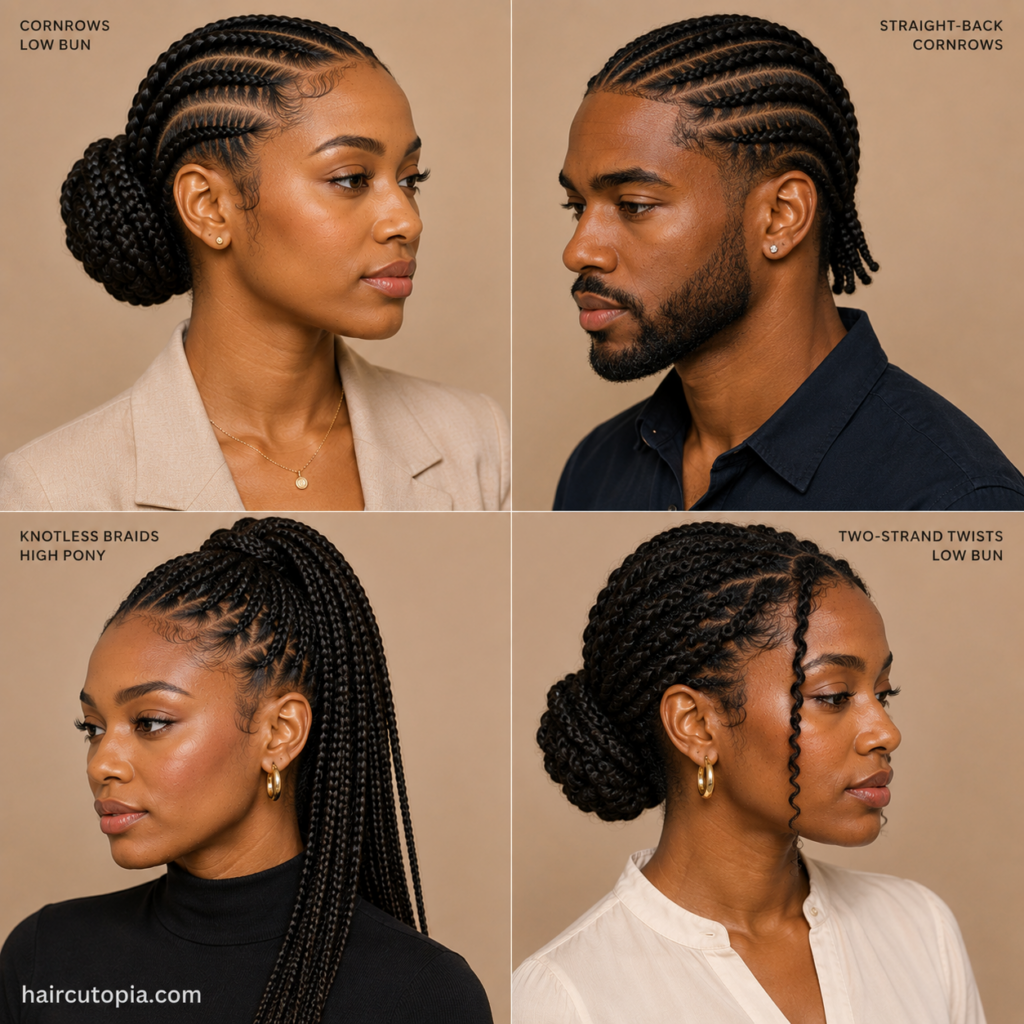
If you want a style that stays completely secured, try cornrows leading into a low bun.
The scalp braids keep the front and sides controlled while the bun keeps the remaining length contained.
This can be especially useful for jobs where hair needs to remain away from your face or shoulders.
Keep the bun comfortable rather than pulling everything as tightly as possible.
Side-Swept Cornrows
Side-swept cornrows add more visual interest without sacrificing practicality.
The braids can curve toward one side or transition into individual braids or twists.
Because the hairstyle is already structured, there’s little need for additional morning styling.
It’s a good option when you want something distinctive without creating a complicated daily routine.
Senegalese Twists
Senegalese twists have a smooth, rope-like finish that works beautifully for everyday professional styling.
Medium-length twists are particularly versatile.
Wear them loose, gather them into a low ponytail, or sweep them over one shoulder.
The defined texture creates a polished look without requiring the hair to be completely slicked down.
Marley Twists
If you prefer more texture, Marley twists offer a fuller appearance.
They can be installed at short, medium, or long lengths, although medium styles tend to be easiest for work.
Chunkier Marley twists make a stronger statement and require fewer individual sections. Smaller twists provide more movement and can be easier to gather into different styles.
Passion Twists
Passion twists have a softer, more relaxed texture than many traditional twist styles.
They’re a good fit for workplaces with a more casual or creative environment, but they can also be styled neatly for other professional settings.
A center part, low ponytail, or simple half-up style can keep them controlled during the workday.
Medium lengths are generally easiest to manage.
Faux Locs
Faux locs can be surprisingly versatile for work.
Short or medium locs require very little daily styling and provide plenty of texture.
Wear them down or pull the front sections away from your face.
If you choose long faux locs, pay attention to weight—especially if you’ll need to keep them tied back for hours at a time.
Soft Locs
Soft locs have a flexible, relaxed appearance that can transition easily between work and your personal life.
A medium-length version offers enough hair for a ponytail or half-up style without becoming difficult to manage.
For a simple workday look, use a center or side part and leave them loose.
You don’t need to create a new hairstyle every morning.
Low Twisted Bun
A low bun is one of the simplest protective styles for natural hair.
Instead of slicking the hair tightly against the scalp, gently gather it toward the nape and tuck or twist the ends.
This creates a contained hairstyle without extensions.
It’s also useful when you need a style that won’t interfere with headsets, hats, or other equipment worn higher on the head.
Tucked Natural Updo
A tucked updo keeps the ends secured while creating a polished silhouette.
Medium and longer natural hair can be rolled or folded inward and pinned into place.
The finished style can be as simple or detailed as you want.
A low tucked roll works well for everyday wear, while multiple rolled sections can create something more decorative.
Braided Crown
A braided crown keeps the hair completely away from the face and neck.
Depending on your length, you can use your natural hair or add extension hair.
It’s especially practical if you don’t want any loose braids hanging down during your shift.
The crown shape also transitions easily from work into an evening event without needing much restyling.
Crochet Protective Styles
Crochet techniques can create braids, twists, locs, and curly protective styles.
Because the natural hair is generally braided underneath, the style can remain relatively secure during the workday.
For maximum practicality, choose a manageable length and volume.
Extremely full crochet styles may look great but can become inconvenient if you need your hair contained during work.
Protective Hairstyles for Office Work
If you primarily work at a desk, comfort and morning convenience are often the biggest considerations.
Medium knotless braids, mini twists, braided bobs, Senegalese twists, and soft locs are all versatile options.
You can generally leave these styles loose while working and pull them back when necessary.
A few particularly easy office styles include:
- Shoulder-length knotless braids
- Medium box braids
- Mini twists
- Low twisted buns
- Braided bobs
- Flat-twist updos
- Medium Senegalese twists
Think about your chair, too.
Very long braids can get trapped between your back and the chair or pulled when you lean forward. Medium lengths eliminate much of that annoyance.
Protective Hairstyles for Remote Work
Working from home gives you more freedom, but that doesn’t necessarily mean you want to deal with your hair every morning.
Mini twists, chunky twists, cornrows, and simple flat twists are great low-effort options.
They’re also practical for video calls.
If you suddenly need to look a little more put together, changing the part, adding a headband, or pinning back the front can take less than a minute.
Remote work can also be a good time to choose natural protective styles that you might refresh more frequently rather than committing to a long extension installation.
Protective Hairstyles for Active Jobs
If your work involves frequent movement, you may want a style that stays contained.
Cornrows, flat twists, short braids, braided buns, and tucked styles can all be practical choices.
Consider hairstyles that:
- Stay away from the face
- Don’t require frequent adjustment
- Aren’t excessively heavy
- Can handle some movement
- Allow the scalp to dry after sweating
- Don’t interfere with required equipment
Long loose braids can become inconvenient if you’re bending, lifting, or moving throughout the day.
A shorter or secured style may be more comfortable.
Protective Hairstyles for Healthcare Workers
Healthcare environments can involve long shifts and workplace requirements that make practical styling especially important.
Depending on your specific role and employer requirements, cornrows, flat twists, braided buns, short braids, and tucked natural styles may be useful options.
If you frequently wear caps or other head coverings, flatter styles may be more comfortable.
Consider:
- Straight-back cornrows
- Flat twists
- Low braided buns
- Short knotless braids
- Mini twists gathered back
- Tucked natural updos
Always follow your employer’s hygiene, safety, and dress requirements when deciding how to wear your hair.
Protective Hairstyles for Food Service and Hospitality
Jobs involving food preparation may require hair to be restrained according to workplace or local safety requirements.
A protective style can make that easier.
Cornrows, low buns, flat twists, and short braids can be particularly practical because there’s less loose hair to contain.
If you’re wearing a hair covering for most of your shift, consider how bulky the hairstyle will be underneath it.
A beautiful oversized bun may not be the most convenient choice if you’re trying to fit it inside required headwear for eight hours.
Protective Hairstyles for Jobs That Require Hats or Helmets
This is where hairstyle height becomes important.
High buns, thick twists at the crown, and bulky braided updos may interfere with properly fitting headwear.
Flatter options usually work better:
- Cornrows
- Flat twists
- Short braids
- Low buns
- Low ponytails
- Tucked styles
Required safety equipment should fit correctly. Don’t compromise the fit of a helmet or other protective gear just to preserve a hairstyle.
Protective Hairstyles for Long Workdays
A hairstyle can feel fine at 8 a.m. and very different by hour nine.
For long shifts, weight and tension matter.
Lightweight braids, natural twists, cornrows, and medium-length styles are often easier to tolerate than extremely long or heavy extensions.
Also consider how often you’ll need to adjust the hair.
The less you have to think about it throughout the day, the better.
Protective Hairstyles Without Extensions for Work
You don’t need extension hair to create a work-friendly protective style.
Natural hair options include:
- Mini twists
- Two-strand twists
- Flat twists
- Cornrows
- Low twisted buns
- Braided crowns
- Tucked rolls
- Natural braided updos
- Bantu knots
Without added hair, styles tend to be lighter and may be easier to wash and remove.
They’re also useful if you prefer changing your hairstyle more frequently.
How to Choose the Best Protective Hairstyle for Your Job
Start with your actual work environment.
A hairstyle that works perfectly for someone sitting at a computer may be frustrating for someone constantly moving around.
Consider Your Workplace Requirements
Some jobs have specific hair policies for hygiene or safety.
Know those requirements before installing a style that you plan to wear for several weeks.
If hair needs to be secured, make sure your chosen style can comfortably be tied or pinned back.
Think About Headwear
Do you regularly wear a hat, helmet, headset, surgical cap, or other equipment?
Consider where that equipment sits.
Low styles and scalp braids are usually easier to accommodate than high buns.
Consider Length
Long braids offer lots of styling flexibility, but they’re also more hair to manage.
If you’re constantly tying them back, a shorter style might make your workday easier.
Pay Attention to Weight
A heavy protective style can become uncomfortable after several hours.
This matters even more if you frequently wear your hair up.
Choose an amount of extension hair that feels manageable rather than automatically going for maximum fullness.
Think About Morning Maintenance
How much time do you actually want to spend on your hair before work?
If the answer is “almost none,” choose a style that already has a defined shape.
Braided bobs, cornrows, twists, and medium braids are particularly useful here.
How to Style Protective Hair Quickly Before Work
You don’t need a complicated morning routine.
Try this simple approach:
- Remove your bonnet or scarf.
- Check the roots and part.
- Gently adjust any flattened sections.
- Wear the style down or loosely secure it.
- Add a simple accessory if desired.
- Leave.
That’s it.
A protective hairstyle doesn’t need to become a completely different hairstyle every morning.
How to Maintain Protective Hairstyles During the Workweek
Keeping things simple is usually the best approach.
Protect Your Hair at Night
Use a satin or silk bonnet, scarf, or pillowcase to reduce friction.
Protecting the style overnight can save you considerable time the next morning.
Keep Your Scalp Clean
Your scalp still needs care, especially if your job is physically active.
Sweat, oil, and product can accumulate around the roots.
Cleanse as appropriate for your hair, scalp, and protective style, and allow the hair and scalp to dry thoroughly.
Don’t Overuse Styling Products
You shouldn’t need to layer gel, oil, and edge products onto your hair every morning.
Repeated product use can create buildup and make the style more difficult to maintain.
Use products when they serve a purpose.
Change Where You Apply Tension
If you wear braids in the same tight ponytail five days a week, the same areas experience repeated tension.
Alternate between wearing the hair loose, half-up, or in a low ponytail when possible.
Can Protective Hairstyles Be Professional?
Yes.
Braids, twists, locs, cornrows, and natural protective hairstyles can all be worn professionally.
Professionalism isn’t determined by whether someone’s natural hair is braided, twisted, loc’d, or textured.
From a styling perspective, focus on whether your hairstyle is comfortable, functional for your job, and compatible with any legitimate workplace safety or hygiene requirements.
You don’t need to straighten your natural hair or hide its texture to create a polished appearance.
How to Make a Protective Hairstyle Look More Polished for Work
If you prefer a more refined look, small adjustments can make a difference.
Try:
- A clean center or side part
- A low ponytail
- A simple half-up style
- Pinning the front sections back
- A low bun
- Minimal hair accessories
- Keeping braid or twist ends neat
You don’t have to slick every hair into place.
A polished style can still have natural texture and softness.
Common Mistakes to Avoid
A work hairstyle has to be comfortable enough to wear for hours at a time.
Avoid these common problems:
- Installing braids or twists too tightly.
- Choosing extensions that are unnecessarily heavy.
- Wearing the same tight ponytail every day.
- Installing a high bun when you regularly need to wear headwear.
- Choosing extremely long hair for a job where it constantly needs to be restrained.
- Ignoring scalp discomfort during long shifts.
- Allowing sweat and product buildup to accumulate indefinitely.
- Prioritizing appearance over required safety equipment.
Your hairstyle should work with your job rather than creating another obstacle during the day.
Frequently Asked Questions
What are the best protective hairstyles for work?
Medium knotless braids, box braids, mini twists, cornrows, flat twists, braided bobs, low buns, Senegalese twists, and tucked natural updos are all versatile options.
The best style depends on your job duties, workplace requirements, hair, and personal preferences.
What protective hairstyle requires the least morning maintenance?
Cornrows, braided bobs, medium braids, and twists can require very little morning styling once they’re installed.
In many cases, you can simply remove your nighttime covering and make a few small adjustments.
What protective hairstyles work under hats?
Cornrows and flat twists are among the easiest because they sit close to the scalp.
Low buns, short braids, and low ponytails may also work depending on the hat and hairstyle.
If the hat is required safety equipment, proper fit should always come first.
Are braids appropriate for an office?
Yes. Braids can be styled in many ways that work well in office environments, including wearing them loose, in a low ponytail, half-up, or in a bun.
What protective hairstyles are good for long shifts?
Lightweight styles that don’t require frequent adjustment are generally easiest.
Consider cornrows, flat twists, mini twists, medium braids, short locs, or a comfortable low bun.
What are good work protective hairstyles without extensions?
Mini twists, two-strand twists, flat twists, cornrows, braided crowns, tucked updos, and low twisted buns can all be created using natural hair.
Should I wear my protective hairstyle up every day for work?
Not necessarily.
If your job doesn’t require your hair to be secured, alternating between loose and tied-back styles can reduce repeated tension in the same areas.
If your hair does need to be restrained, keep the style comfortable and avoid pulling the hairline excessively tight.
Can protective hairstyles work for job interviews?
Absolutely.
Choose a style that makes you feel comfortable and confident while allowing you to focus on the interview rather than constantly adjusting your hair.
Braids, twists, locs, cornrows, and natural updos can all create polished interview looks.
Final Thoughts
The best protective hairstyles for work make your day easier.
Maybe that’s a braided bob that needs almost no attention in the morning. Maybe it’s straight-back cornrows that stay completely out of the way. Or perhaps you prefer medium knotless braids because you can wear them loose at your desk and quickly pull them back when necessary.
There’s no single hairstyle that’s right for every workplace.
Think about your schedule, job duties, required equipment, and how much time you realistically want to spend on your hair before each shift. Then choose a style that fits those needs without unnecessary weight or tension.
A good work hairstyle shouldn’t demand your attention all day.
Ideally, you style it, get to work, and forget about it.