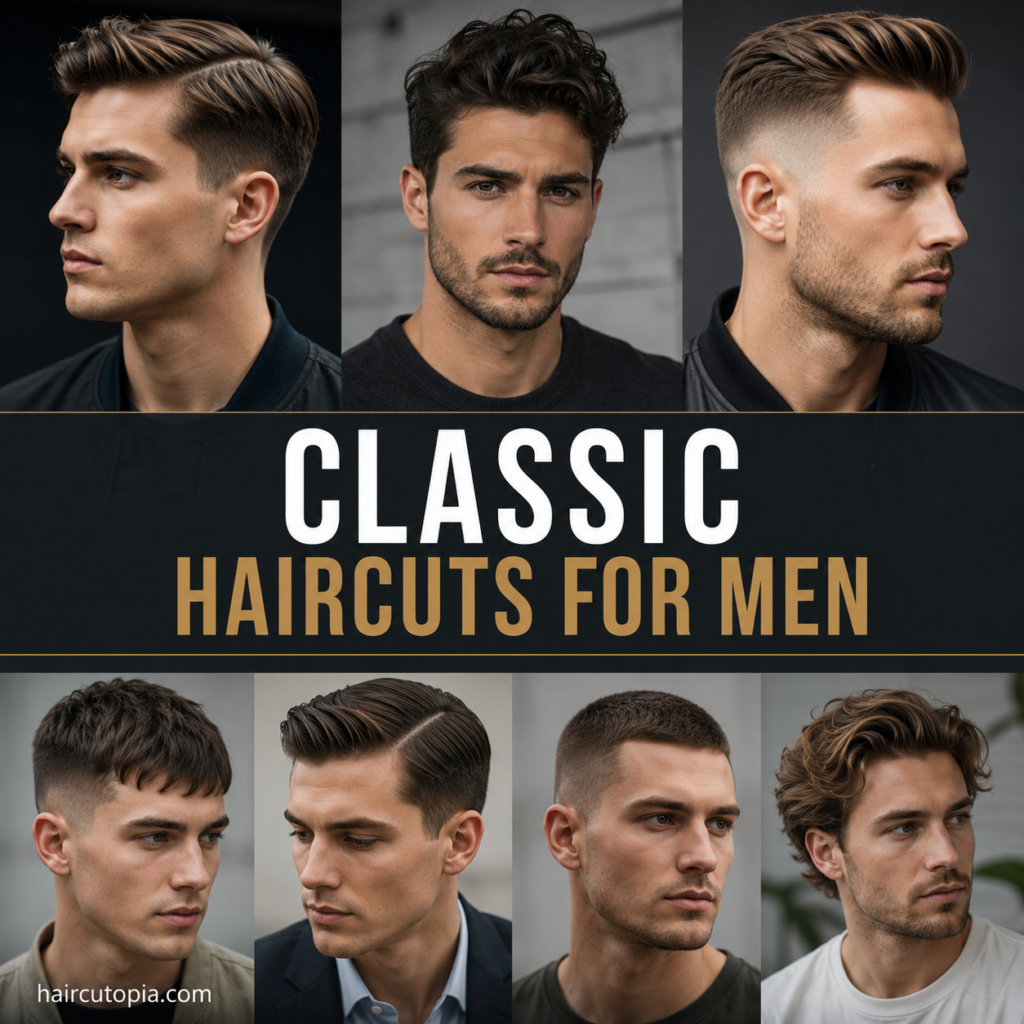
Hair trends come and go, but some men’s haircuts never really disappear. They might get a modern update, a different texture, or a slightly sharper finish, but the foundation stays the same.
That’s the appeal of a classic haircut. It doesn’t depend on whatever happens to be popular this month. A good classic cut can look just as appropriate with a T-shirt and jeans as it does with a suit, and many styles can be adjusted to work with different hair types, face shapes, and lifestyles.
From the clean crew cut to the polished side part, these classic haircuts for men have earned their staying power.
What Makes a Men’s Haircut a Classic?
A classic haircut usually has a few things working in its favor: simplicity, versatility, and a shape that looks good without relying on an extreme trend.
Many traditional men’s cuts feature shorter sides with additional length on top. What changes from style to style is how that length is shaped and styled.
Classic haircuts also tend to:
- Work across different age groups
- Transition easily between casual and professional settings
- Pair well with different beard styles
- Offer several styling options
- Look good with subtle modern updates
- Remain recognizable even as trends change
That doesn’t mean a classic haircut has to look old-fashioned. Small changes to the taper, texture, length, or finish can make an established style feel completely current.
1. The Side Part
The side part is one of the most recognizable classic men’s hairstyles. Hair is divided along its natural part and typically styled neatly to one side.
Traditional versions have relatively conservative sides and a smooth finish. A modern side part can be worn with more texture on top and a tighter taper around the ears and neckline.
Best for
The side part works especially well with straight, wavy, and moderately thick hair. It can also create a structured appearance that complements rounder and oval face shapes.
How to style it
Apply a small amount of pomade, cream, or styling paste to slightly damp or dry hair. Establish the part with a comb, then direct the top to the side.
For a more relaxed look, use your fingers instead of a comb and allow some natural texture to show.
2. The Crew Cut
Simple, practical, and easy to maintain, the crew cut has remained a staple of men’s grooming for generations.
The hair is kept short on the sides and back, while the top is left slightly longer. The front usually has just enough length to provide a little shape.
A crew cut is particularly useful if you want something short without going all the way down to a buzz cut.
Why it still works
The crew cut has a clean silhouette that doesn’t require elaborate styling. It also leaves enough length on top for a barber to adjust the shape to better complement your features.
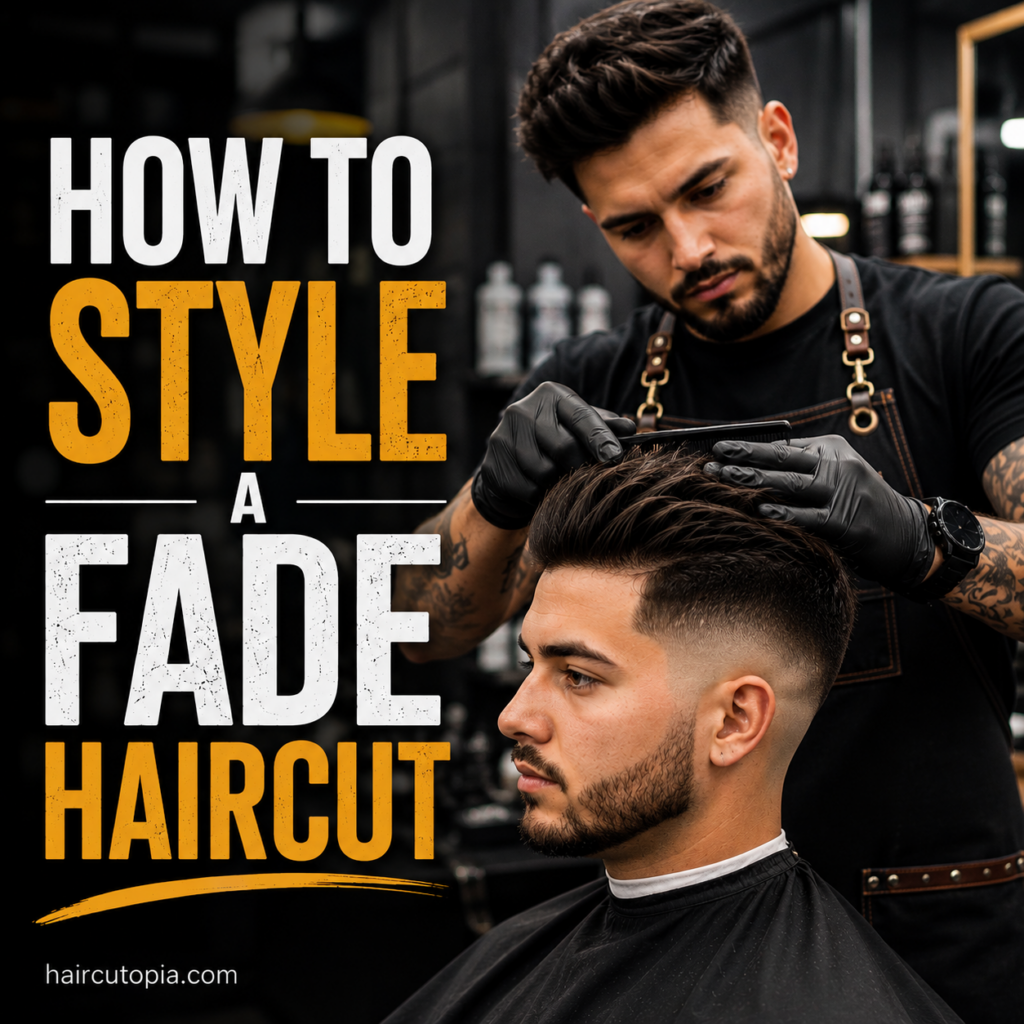
Try it with a traditional taper for a timeless appearance or a low fade for a more contemporary finish.
3. The Ivy League
Think of the Ivy League as the crew cut’s slightly longer, more polished relative.
There is enough length through the front and top to create a subtle side part, while the sides remain neat and controlled.
The result falls somewhere between casual and dressy.
Best for
An Ivy League haircut is a strong option for men who want short hair but still want the ability to change how it is styled. Depending on the occasion, you can wear it neatly parted or slightly textured.
A light styling cream or matte paste is generally enough to keep it in place.
4. The Buzz Cut
Few haircuts are as straightforward as the buzz cut.
Hair is clipped very short across the head, usually with minimal difference in length between the top and sides. Despite its simplicity, small details make a noticeable difference.
A precise hairline, clean neckline, and well-blended sideburns can turn a basic buzz cut into an intentionally sharp style.
Is a buzz cut low maintenance?
Daily styling is about as easy as it gets. However, keeping a buzz cut consistently sharp usually means getting it trimmed more frequently.
Because there is very little hair to reshape the silhouette, the haircut also places more emphasis on the natural shape of the head and facial features.
5. The Classic Taper
The classic taper is less about one exact hairstyle and more about the way the hair gradually becomes shorter toward the ears and neckline.
Unlike many skin fades, a traditional taper usually retains visible hair around the lower sides and back. The transition is softer and more understated.
That subtlety is exactly why it has lasted.
A classic taper can be combined with:
- A side part
- Textured hair
- A pompadour
- A quiff
- An Ivy League
- Slicked-back hair
If you like a clean haircut but don’t want dramatically faded sides, the classic taper is worth considering.
6. Slicked-Back Hair
Slicked-back hair has been worn in countless variations over the decades.
The basic idea is simple: leave enough length on top to direct the hair backward and away from the forehead.
Traditional versions often have a smooth, glossy finish. Modern versions tend to be looser, with more texture and less shine.
How to make it look modern
Instead of coating the hair with heavy gel, try a lighter pomade, styling cream, or matte product. Work it backward with your fingers and allow a little natural movement.
The result still has the unmistakable slicked-back shape without looking overly rigid.
7. The Pompadour
The pompadour is all about height and volume through the front.
Hair is swept upward and backward, creating a fuller shape above the forehead. Although the pompadour has gone through numerous transformations, its distinctive silhouette remains instantly recognizable.
Modern pompadours are often paired with tapered or faded sides, while traditional versions maintain more length around the head.
What hair works best?
Medium to thick hair usually makes creating volume easier, although the right blow-drying technique and styling product can help finer hair achieve a similar effect.
The longer the pompadour, the more styling it generally requires.
8. The Quiff
The quiff shares some characteristics with the pompadour but usually feels less structured.
Rather than sweeping all of the top backward, the front is lifted and styled upward or slightly back. The remaining hair can have considerably more natural movement.
That makes the quiff an easy bridge between classic and contemporary styling.
For a natural-looking finish, blow-dry the front upward and use a small amount of matte clay or paste to create separation.
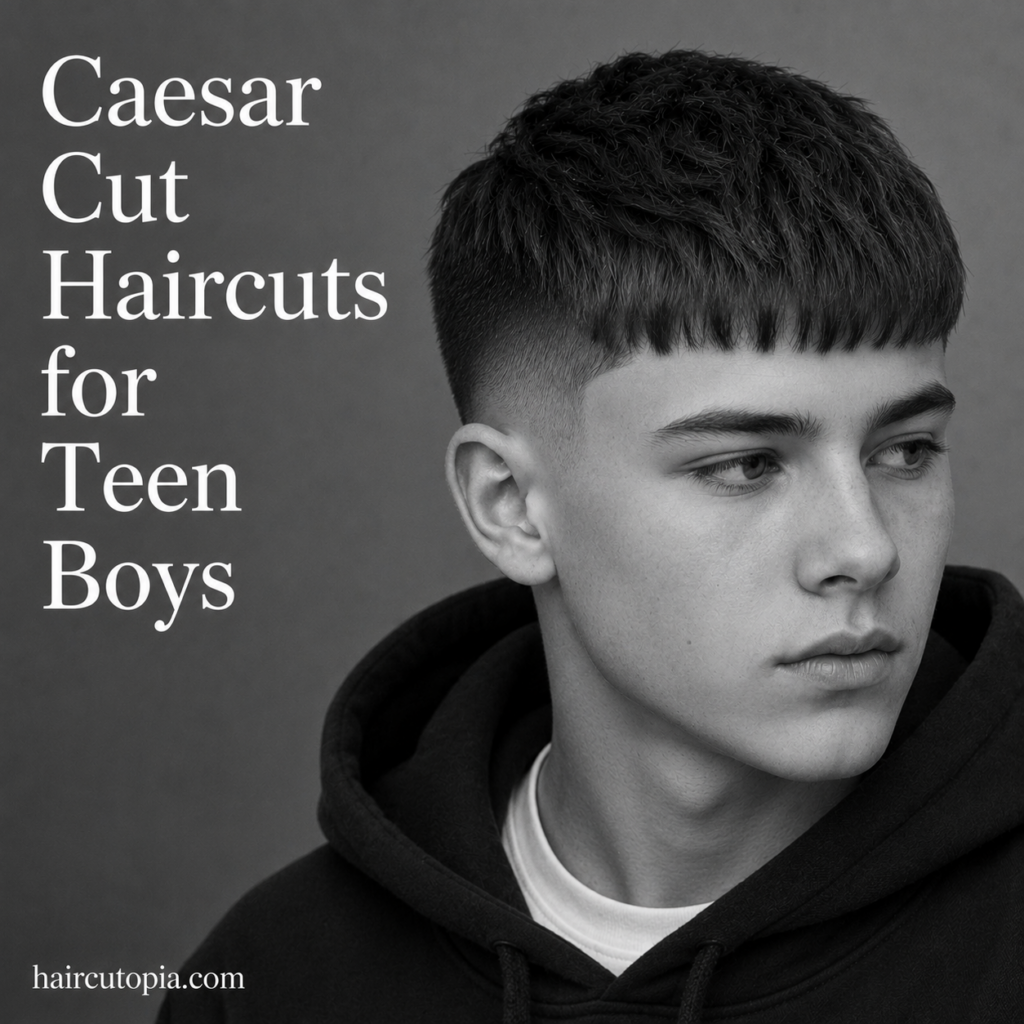
9. The Caesar Cut
The Caesar cut features short hair with a small fringe directed forward across the forehead.
It is traditionally worn fairly uniform in length, although modern versions often introduce additional texture and tighter sides.
One advantage of the Caesar is that it doesn’t require much length to create a distinctive shape.
Why choose a Caesar cut?
It can be a good choice if you prefer:
- Short styling time
- A defined fringe
- A neat overall shape
- Textured rather than swept-back hair
A barber can also vary the fringe length and texture so the cut feels less rigid.
10. The French Crop
The French crop is closely related to other short, forward-styled cuts but generally features more contrast between the top and sides.
The top is textured and directed toward the forehead, ending in either a blunt or slightly irregular fringe.
Although textured crops have become especially popular in modern barbering, the underlying style has been around for much longer.
It works particularly well if you want definition without having to spend much time styling your hair every morning.
11. The Comb Over
Forget the exaggerated version of the comb over that the name sometimes brings to mind. As a classic haircut, the comb over is simply a style in which longer hair on top is directed across to one side.
It can look clean and sophisticated when the proportions are right.
Modern comb overs often feature a taper or fade on the sides, while more traditional versions maintain a softer transition.
For a natural result, avoid using too much product. A little movement generally looks better than hair that has been combed completely flat.
12. The Flat Top
The flat top became especially recognizable through military and mid-century barbering styles, although it has appeared in numerous forms since then.
The hair is cut so the top creates a distinctly level or squared silhouette, while the sides are kept considerably shorter.
This haircut requires precision. The shape itself is the main feature, so regular barber visits are important if you want to maintain the characteristic flat profile.
13. The High and Tight
The high and tight keeps the sides and back extremely short while leaving a small amount of additional length on top.
It has strong military associations, but civilian versions can be softened with a little more length and a gradual blend.
The style is particularly appealing for someone who wants minimal daily maintenance and a very clean outline.
A slightly longer textured top can make the haircut feel less severe while preserving its classic proportions.
14. The Regulation Cut
The regulation cut takes inspiration from traditional military grooming but offers more styling flexibility than a high and tight.
Hair on top is long enough to establish a part and comb neatly to the side, while the sides gradually taper shorter.
It has a polished, disciplined appearance without requiring the hair to be extremely short everywhere.
This makes it a good option for anyone looking for a conservative haircut that still has some personality.
15. The Traditional Scissor Cut
Not every classic haircut needs clippers or a dramatic difference between the sides and top.
A traditional scissor cut keeps more natural length throughout the hair and relies on careful shaping rather than aggressive fading.
The sides may cover more of the temples, and the top can be parted, brushed backward, or worn naturally.
This approach is especially useful if you prefer a softer silhouette or want your haircut to grow out gracefully between appointments.
16. The Bro Flow
Longer men’s hairstyles can be classic too.
The bro flow allows medium-length hair to naturally sweep backward and away from the face. Instead of creating a rigid shape with product, the style works with the hair’s existing movement.
Wavy hair is particularly well suited to this cut, although straight hair can achieve the look with enough length and layering.
Regular trims help prevent the style from becoming bulky around the ears and neckline.
17. Classic Medium-Length Side-Swept Hair
Before extreme fades became a major part of modern barbering, many men’s hairstyles maintained considerably more length around the sides.
A medium-length side-swept haircut preserves that softer shape.
The top can be parted loosely and directed to one side while the sides are trimmed with scissors or gently tapered.
This is a useful option if you want a timeless haircut that feels less sharply defined than many contemporary styles.
18. Short Back and Sides
“Short back and sides” has been a standard barber request for generations, and there is a reason it remains useful.
The concept leaves room for customization. The back and sides are trimmed short, while additional length is maintained on top.
From there, the top can be:
- Parted
- Brushed backward
- Textured
- Swept forward
- Styled into a small quiff
The exact proportions can be adjusted to your hair type and preferred level of maintenance.
Classic Haircuts vs. Modern Haircuts
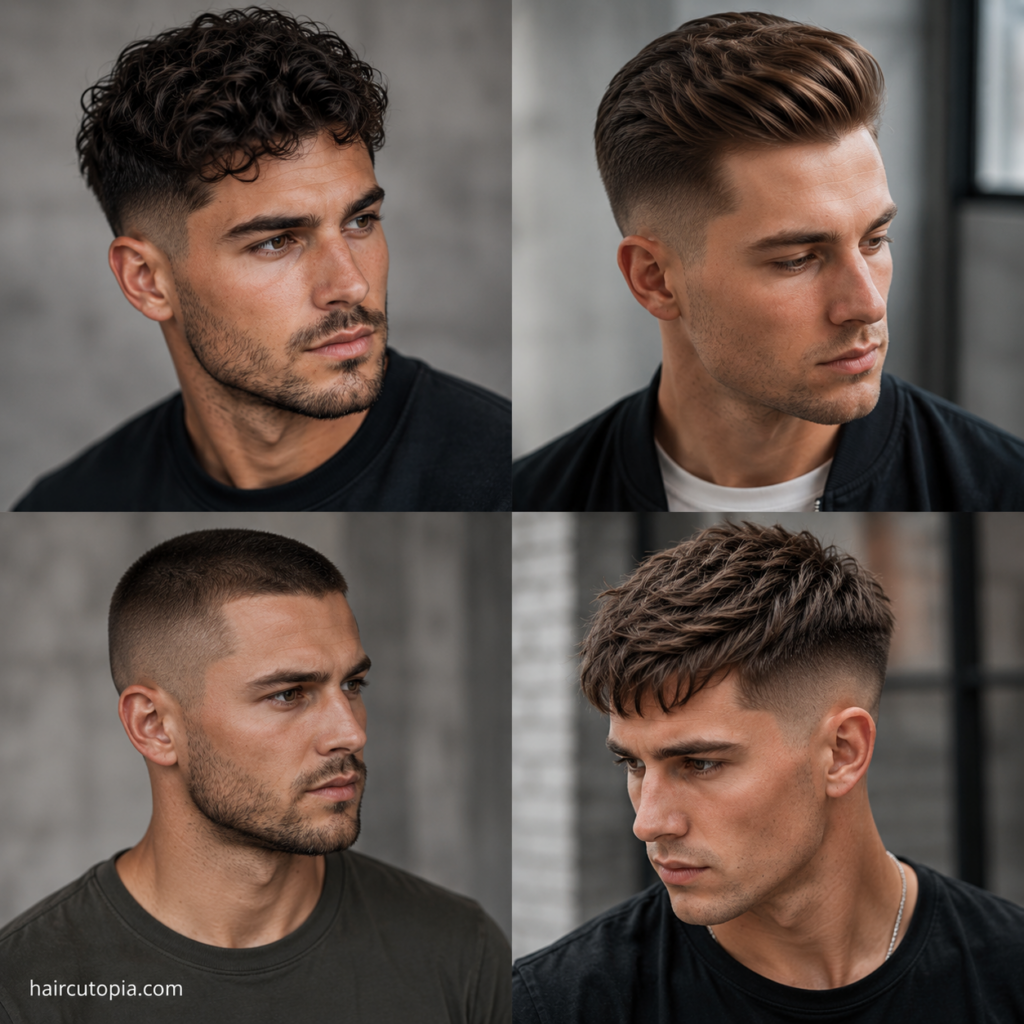
The line between classic and modern haircuts isn’t always clear.
Many of today’s popular styles are simply updated versions of established cuts. A side part paired with a skin fade, for example, combines a traditional top with modern barbering techniques.
Similarly, a pompadour with heavily textured hair feels quite different from its smoother predecessors while retaining the same basic silhouette.
The biggest differences often come down to details.
Classic styling often features
- Softer tapers
- More scissor work
- Defined parts
- Balanced proportions
- Controlled styling
- Moderate contrast between lengths
Modern styling often features
- Skin or high-contrast fades
- Heavier texture
- Messier finishes
- Sharper lineups
- Disconnected sections
- More dramatic differences in length
You don’t necessarily have to choose between the two. Combining classic proportions with modern texture or tapering can give you the best of both.
How to Choose the Right Classic Haircut
A haircut can look great in a photo and still not be the best match for your own hair. Before choosing a style, consider how it will work with your natural texture, density, face shape, and daily routine.
Consider your hair type
Straight hair works well with structured styles such as side parts, comb overs, and slicked-back cuts.
Wavy hair naturally adds movement to quiffs, longer scissor cuts, and textured styles.
Curly hair can also be adapted to classic silhouettes. Instead of forcing curls completely flat, a barber can preserve their texture while maintaining the traditional proportions of the haircut.
Think about maintenance
Be realistic about how much time you want to spend on your hair.
If you prefer to get ready quickly, consider:
- Crew cuts
- Buzz cuts
- Caesar cuts
- French crops
- High and tights
If you don’t mind blow-drying and using styling products, a pompadour, quiff, or slicked-back hairstyle gives you more room to experiment.
Consider how often you visit the barber
Very short cuts and sharp fades tend to show growth quickly.
Longer scissor cuts and softer tapers generally change more gradually as they grow, which can make them easier to maintain if you prefer more time between appointments.
How to Ask Your Barber for a Classic Haircut
The name of a haircut is helpful, but it shouldn’t be the only information you give your barber.
Terms such as “crew cut” or “side part” can mean slightly different things depending on the barber and the version of the style you have in mind.
Explain the details you want, including:
- How much length you want left on top.
- Whether you prefer scissors, clippers, or a combination.
- How short you want the sides.
- Whether you want a taper or fade.
- How you normally style your hair.
- How much maintenance you’re comfortable with.
A reference photo can make the conversation much easier. Look for someone with hair texture and density reasonably similar to yours rather than choosing a photo based only on the finished hairstyle.
Styling Products for Classic Men’s Haircuts
You don’t need a shelf full of products. Choosing one that matches the finish you want is usually more important.
Pomade
Pomade works well for side parts, comb overs, pompadours, and slicked-back styles. Depending on the formula, it can provide anything from a natural sheen to a glossy traditional finish.
Matte clay
Clay adds texture and control with little shine. It’s particularly useful for quiffs, textured crew cuts, and more relaxed interpretations of classic styles.
Styling cream
Cream provides softer control and natural movement. It’s useful for medium-length styles and anyone who doesn’t want their hair to look heavily styled.
Hair wax or paste
Wax and paste offer flexible hold and definition. They work well when you want to reshape your hair throughout the day.
Sea salt spray
For medium or longer hair, sea salt spray can provide texture and volume without creating a highly polished finish.
Keeping a Classic Haircut Looking Sharp
Even a low-maintenance haircut benefits from a little upkeep.
How frequently you need a trim depends heavily on the length and shape of the cut. Very short styles generally lose their crisp outline sooner, while medium-length hairstyles can often tolerate more growth.
Between appointments:
- Keep the neckline and sideburns tidy.
- Avoid using more styling product than necessary.
- Use conditioner if your hair becomes dry.
- Learn how your hair naturally falls before forcing it into position.
- Adjust products as your hair grows longer between cuts.
The goal isn’t necessarily to make every strand perfect. Classic men’s hairstyles often look their best when they are neat but still have some natural movement.
Are Classic Men’s Haircuts Still Trending?
Absolutely. In fact, classic haircuts tend to become more noticeable whenever men’s hair trends shift back toward wearable, versatile styles.
What changes is the interpretation.
A traditional crew cut might gain a low taper. A side part may be styled with a matte finish instead of glossy pomade. A pompadour might become shorter and more textured. A longer scissor cut might be worn with natural waves instead of being carefully combed into place.
These changes keep familiar styles relevant without losing what made them work in the first place.
Final Thoughts on Classic Haircuts for Men
A great men’s haircut doesn’t need to reinvent everything.
The crew cut, side part, Ivy League, pompadour, Caesar, taper, quiff, and other established styles have survived decades of changing trends because they are adaptable. They can be conservative or casual, polished or textured, traditional or modern.
If you’re unsure where to start, focus less on finding the trendiest haircut and more on finding a classic shape that works with your hair.
Once you have that foundation, you can make it your own.