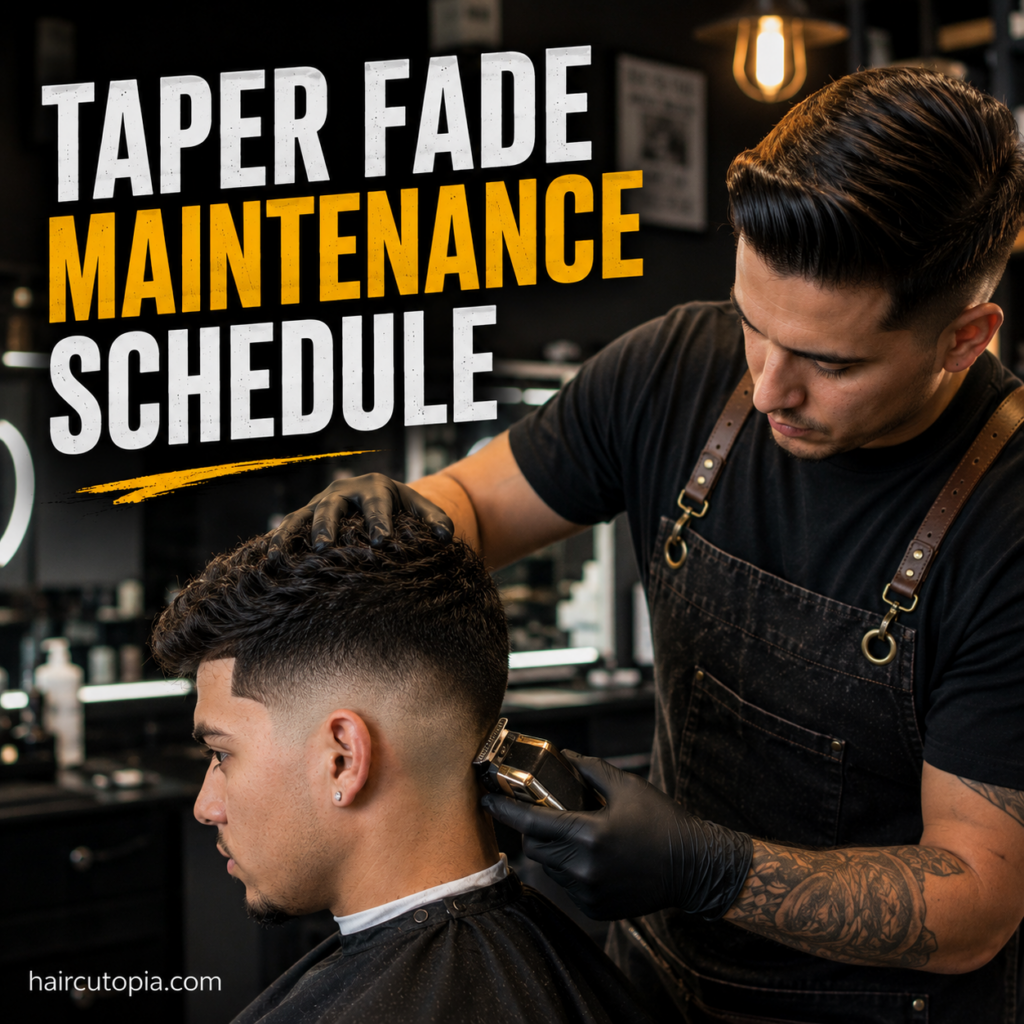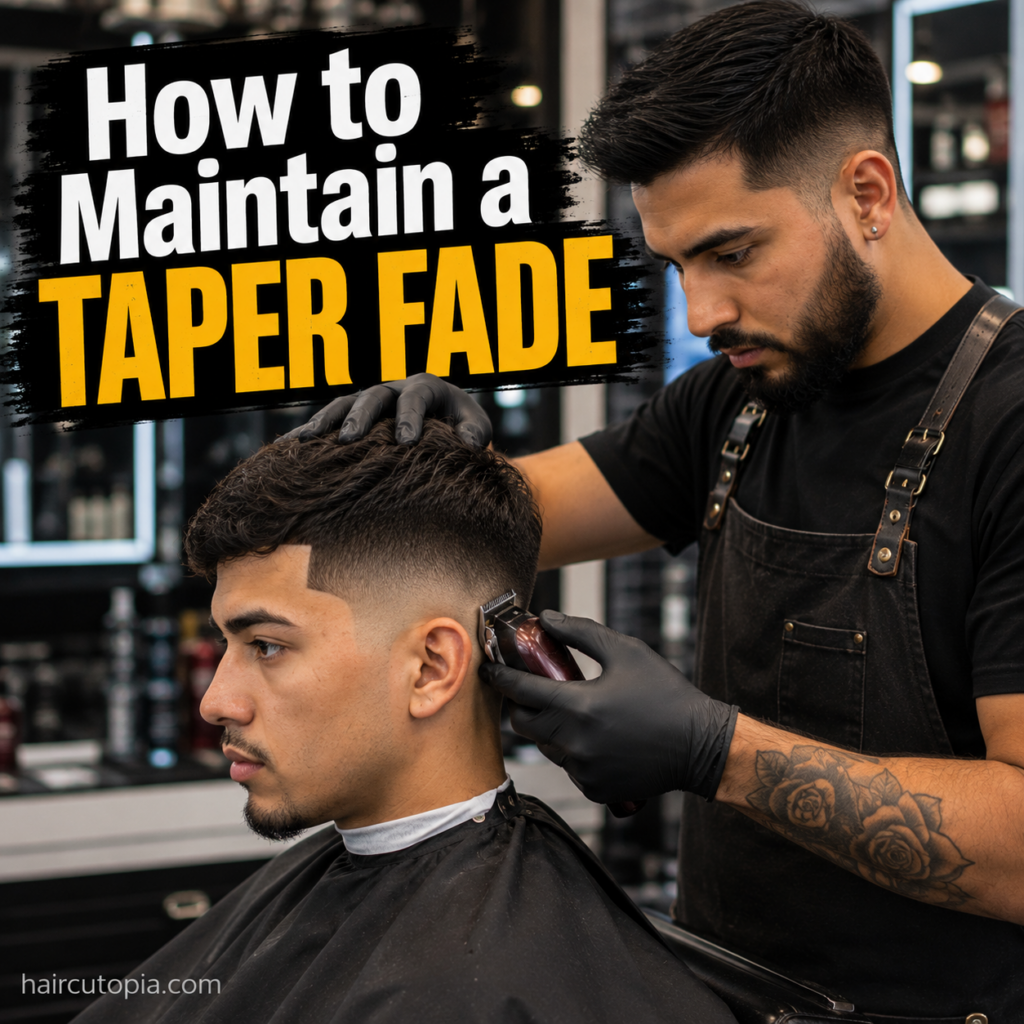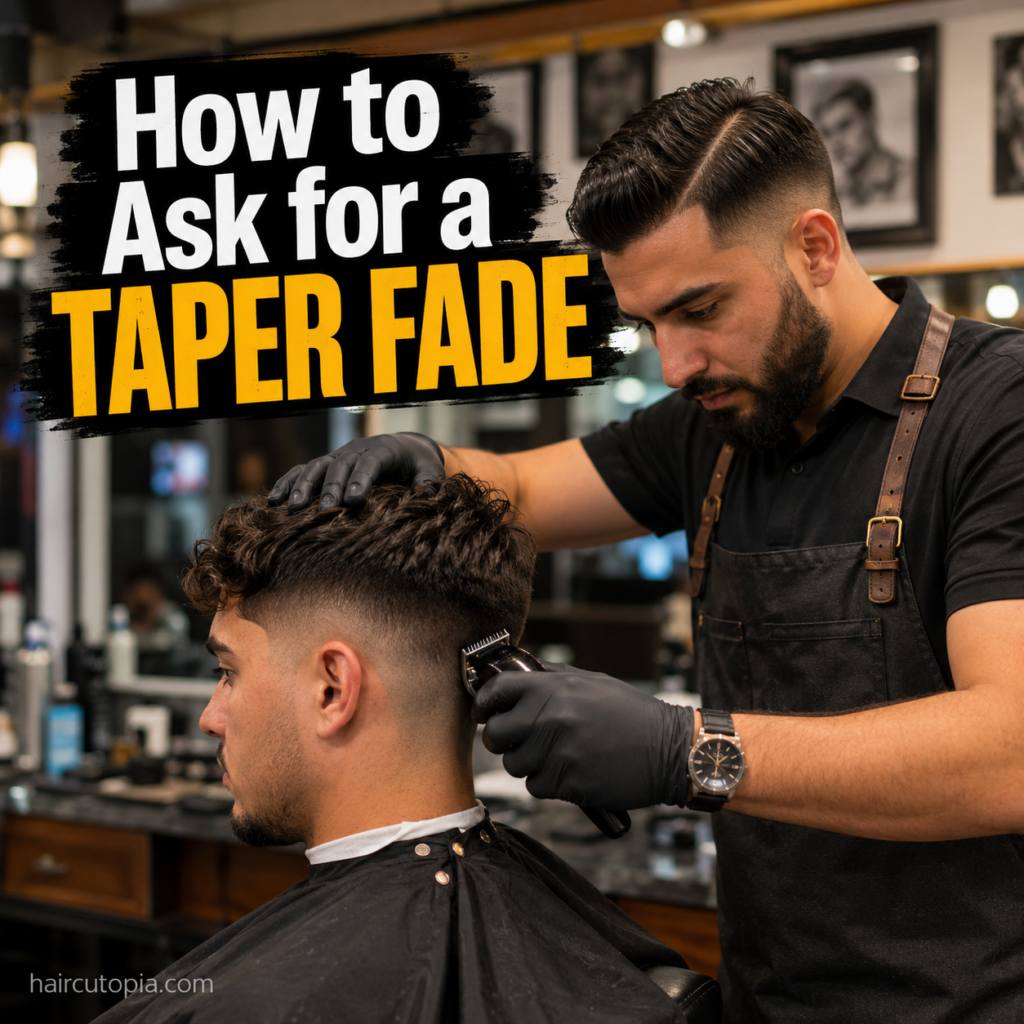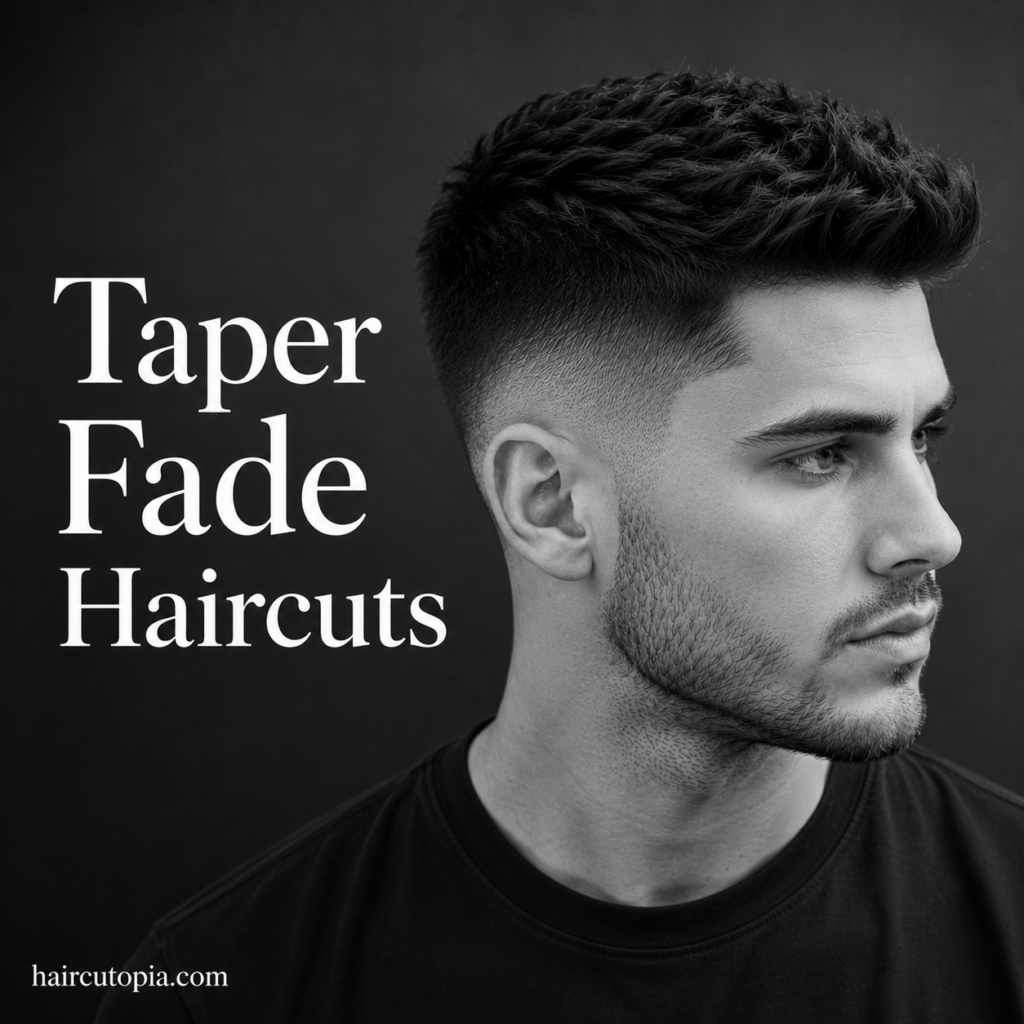
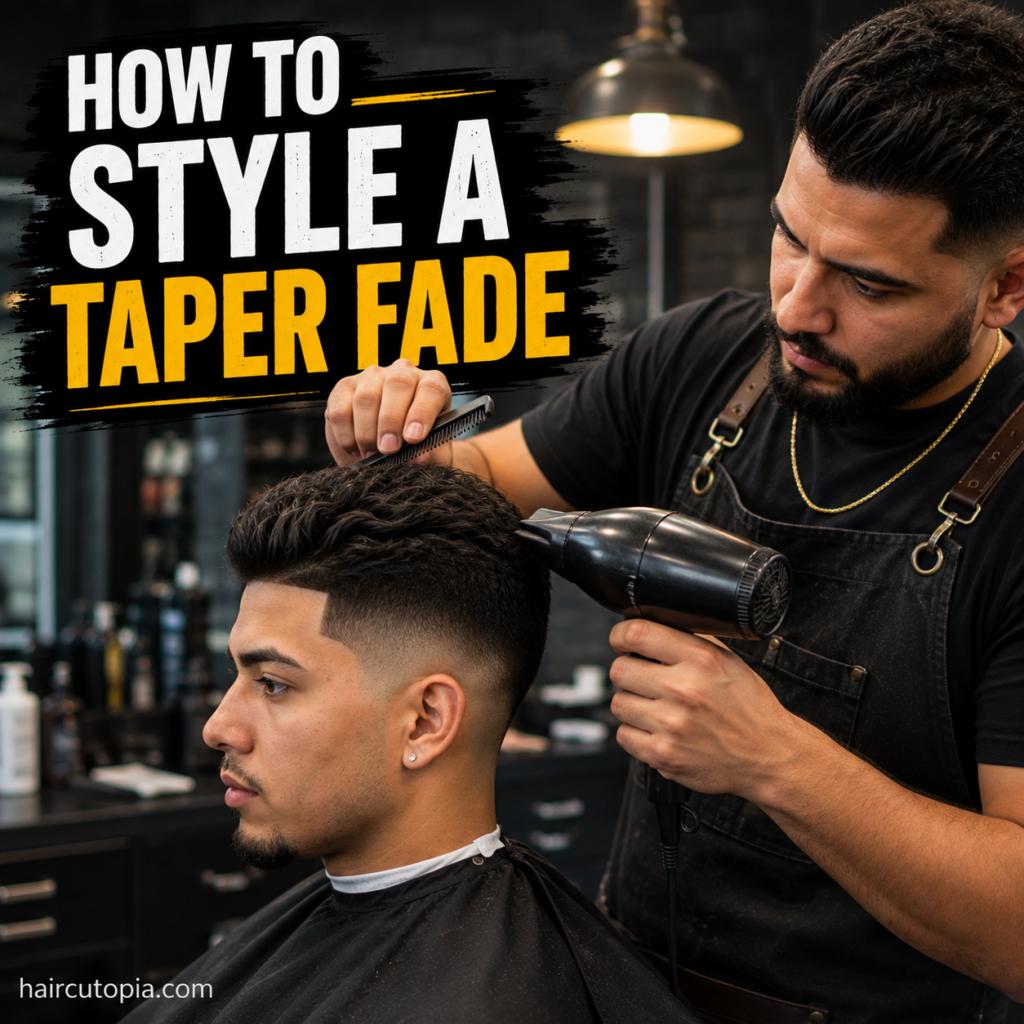
A taper fade does a lot of the work for you. The gradual transition around the temples, sideburns, and neckline gives the haircut a clean foundation, while the longer hair on top determines most of the actual style.
That’s also why two people with taper fades can look completely different. One might wear a messy textured crop, another might have defined curls, and someone else could slick their hair back for a polished finish.
Learning how to style a taper fade is less about styling the fade itself and more about working with the hair that surrounds it. The right technique depends on your hair length, texture, and the look you’re trying to achieve.
Here’s how to get the most out of your taper fade at home.
What Makes a Taper Fade Easy to Style?
Unlike a full fade that removes a larger portion of hair from the sides and back, a taper fade usually concentrates the shortest blending around the temples and neckline.
That leaves plenty of flexibility on top and through the sides.
You can pair a taper with hairstyles such as:
- Textured crops
- Curly tops
- Waves
- Quiffs
- Pompadours
- Side parts
- Comb overs
- Slick backs
- Crew cuts
- Afros
- Longer textured hairstyles
The taper provides the clean edges. Your styling routine creates the shape, texture, volume, or movement above them.
Start With the Right Haircut
Good styling starts before you reach for any product.
If the haircut isn’t designed for the hairstyle you want, you’ll spend every morning fighting against it.
Tell your barber how you normally style your hair. If you want volume, you may need more length on top. If you wear your hair forward, the front needs to be cut differently than it would for a slicked-back style.
The same applies to the sides.
A low taper with fuller sides creates a different silhouette than a higher, more noticeable taper. Neither is automatically better. It depends on the finished look you want.
When getting your haircut, explain:
- How you normally wear the top
- Whether you want volume or a flatter shape
- How much texture you prefer
- Whether you use styling products
- How much time you want to spend styling each morning
A barber can then shape the haircut so your daily routine becomes easier.
Style a Taper Fade Starting With Clean Hair
You don’t necessarily need freshly shampooed hair every time you style it, but heavy buildup can make styling difficult.
Too much old pomade, gel, oil, or wax can weigh down the hair and make it harder to create natural volume.
If your hair feels greasy or coated, wash it according to the needs of your hair and scalp.
After washing, gently towel-dry your hair rather than aggressively rubbing it. Excessive rubbing can create frizz, particularly with wavy, curly, or textured hair.
For many hairstyles, slightly damp hair is an ideal starting point.
Decide What Kind of Finish You Want
Before choosing a styling product, decide what you want your hair to look like.
Do you want it messy and natural? Smooth and controlled? Shiny? Matte? Defined but flexible?
The answer determines which product makes sense.
Matte Finish
A matte finish works especially well with textured crops, messy styles, quiffs, and casual hairstyles.
Look for products such as:
- Matte clay
- Styling paste
- Texture cream
- Matte pomade
These can provide separation and control without making the hair appear overly shiny.
Natural Finish
If you want your hair to look like there’s barely any product in it, use something lightweight.
Options can include:
- Styling cream
- Light paste
- Leave-in conditioner
- Curl cream
- Lightweight mousse
These products can add control while preserving natural movement.
Shiny or Polished Finish
For slick backs, classic side parts, and more traditional barbered styles, a pomade or gel can provide additional shine and definition.
Start with less product than you think you need. You can always add more.
How Much Hair Product Should You Use?
Using too much product is one of the most common styling mistakes.
A large amount doesn’t automatically create stronger hold. It can make hair greasy, sticky, flat, or difficult to restyle.
Start with a small amount—roughly pea-sized for shorter hairstyles.
Rub the product thoroughly between your palms and fingers before applying it. This helps distribute it evenly rather than leaving concentrated patches.
Apply more only if necessary.
Longer or thicker hair will naturally require more product than a short crop, so treat the starting amount as a guideline rather than a strict rule.
Apply Product From Back to Front
It’s tempting to start at the front because that’s the part you see in the mirror.
But putting all the product there first can leave your fringe or hairline looking heavy.
Instead:
- Warm the product between your hands.
- Begin working it through the back and middle of the hair.
- Move toward the sides.
- Finish with the front.
- Use your fingertips for final shaping.
Try to distribute the product through the hair rather than coating only the surface.
Once it’s evenly applied, you can concentrate on shaping the hairstyle.
How to Style a Textured Taper Fade
A textured top is one of the easiest ways to wear a taper fade.
The goal is controlled separation rather than perfectly arranged hair.
Start with slightly damp or dry hair. Apply a small amount of matte paste, clay, or texture product.
Work it throughout the top, then use your fingertips to create separation.
For a casual finish:
- Push some sections forward.
- Lift others slightly upward.
- Pinch small pieces together for definition.
- Avoid making every section look identical.
A little imperfection is what makes textured hairstyles look natural.
If your hair tends to fall flat, blow-drying before applying the finishing product can help create more volume.
How to Style a Curly Taper Fade
Curly hair and taper fades work naturally together because the taper cleans up the edges while allowing the curls to remain the focus.
Start with damp hair.
Apply a curl cream, leave-in conditioner, mousse, or another product appropriate for your curl pattern.
Rather than aggressively combing the hair, work the product through gently.
You can scrunch the curls upward to encourage definition.
For more volume, use a blow dryer with a diffuser on an appropriate heat and airflow setting. Avoid constantly touching the curls while they dry, as this can contribute to frizz and disrupt their shape.
Once dry, lightly separate or position individual curls if needed.
The goal is usually to enhance your natural curl pattern rather than force it into a completely different texture.
How to Style a Wavy Taper Fade
Wavy hair can produce a relaxed style with plenty of natural movement.
A lightweight cream, mousse, or sea salt spray can help emphasize the wave pattern without making the hair overly stiff.
Apply your chosen product to damp hair and work it through with your hands.
You can then:
- Scrunch the hair for more wave definition.
- Push it backward for a loose swept-back look.
- Direct it forward for a textured style.
- Create a loose side part.
If you use a blow dryer, try directing the hair into its intended shape rather than randomly drying it.
How to Style a Straight Hair Taper Fade
Straight hair can work with nearly any taper fade hairstyle, but it may need additional help creating volume or texture.
For a textured finish, apply a lightweight pre-styler or texture product before blow-drying.
Use your fingers or a brush to lift the hair as you dry it.
Once the hair is dry, use a small amount of clay, paste, or pomade to lock in the shape.
For shorter straight hair, finger styling is often enough. Longer styles may benefit from a vent brush, round brush, or comb.
How to Style a Taper Fade With a Quiff
A quiff requires volume toward the front of the head.
Start with damp hair and apply a lightweight pre-styling product if desired.
Then:
- Use a blow dryer while lifting the front upward.
- Direct the hair slightly backward as you dry.
- Continue until the basic shape is established.
- Apply a small amount of styling product.
- Use your fingers or a comb to refine the front.
For a modern quiff, don’t worry about making every strand perfectly smooth. Some texture can keep the hairstyle from looking overly rigid.
How to Style a Slick Back With a Taper Fade
A taper fade can give a slick back cleaner edges while maintaining fullness through the sides.
Start with damp or mostly dry hair.
Apply a pomade, cream, or styling product that provides enough hold for your hair length and texture.
Work the product evenly through the hair, then direct everything backward using your fingers or a comb.
A comb creates a cleaner, more traditional finish.
Your fingers produce a looser, more modern appearance.
If the hair refuses to stay back, use a blow dryer first to establish the direction before adding your finishing product.
How to Style a Side Part or Comb Over Taper Fade
A side part works particularly well when the sides of a taper are left relatively full.
Find your natural part rather than forcing the hair in the opposite direction.
Apply a small amount of styling product and use a comb to establish the part.
From there, direct the longer section across and slightly backward.
For a traditional finish, keep the comb lines neat.
For something more relaxed, use the comb to establish the basic shape and then run your fingers through the hair to loosen it.
How to Style a Short Taper Fade
If your hair is already short on top, styling can be extremely simple.
You may only need a small amount of matte paste or styling cream to keep everything in place.
Work the product evenly through dry or slightly damp hair and use your fingers to establish the direction.
Short styles can be:
- Brushed forward
- Slightly spiked
- Textured
- Side-swept
- Kept natural
Because there’s less length to control, avoid using excessive product. Too much can quickly make short hair look greasy.
How to Style a Longer Taper Fade
Longer hair gives you more options, but it can also require more preparation.
Instead of relying entirely on styling product, use heat and airflow to create the basic shape first.
For example, if you want your hair swept backward, blow-dry it backward.
If you want volume, lift the hair away from the scalp while drying.
Once you’ve established the shape, use product to refine and hold it.
This usually produces a more natural result than applying a large amount of strong product to wet hair and hoping it stays in place.
Should You Blow-Dry a Taper Fade?
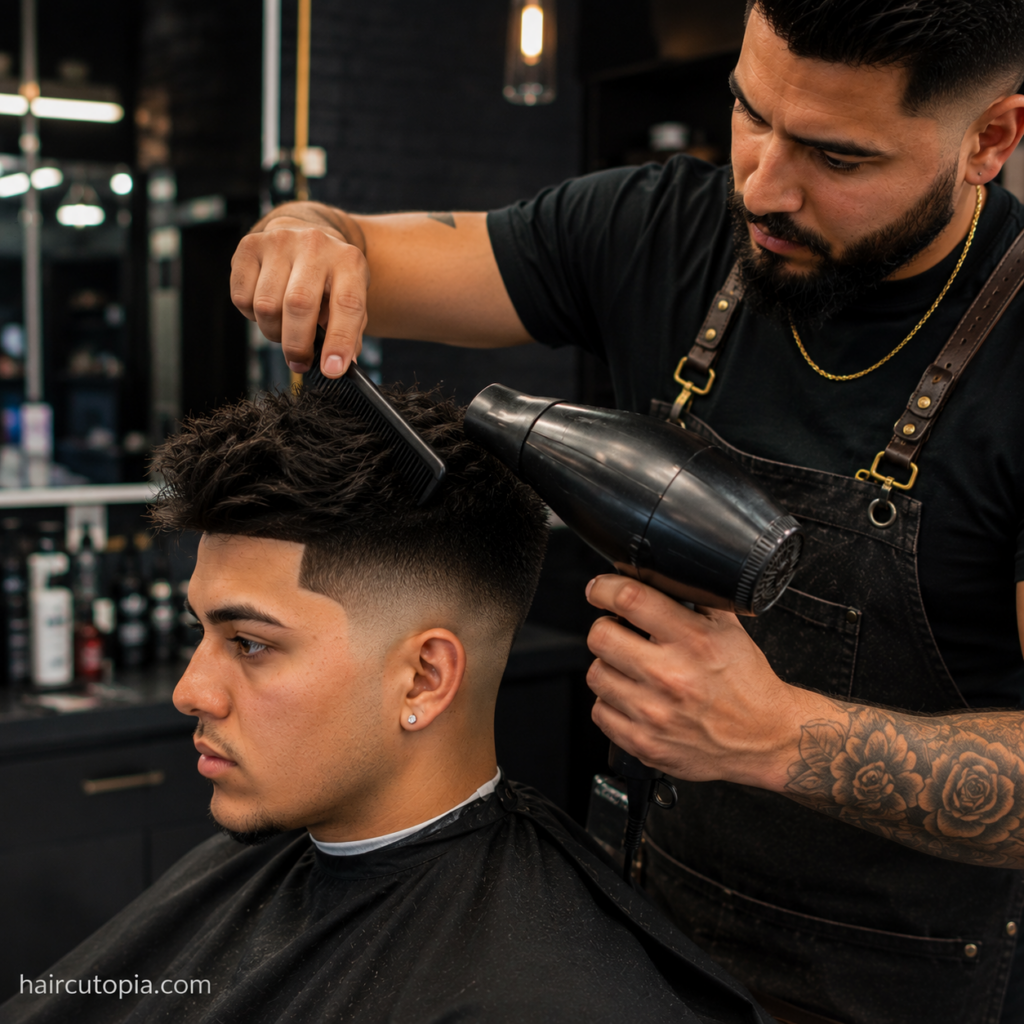
You don’t have to, but a blow dryer can make styling much easier for medium-length and longer hairstyles.
The important thing is understanding that you’re primarily blow-drying the longer hair, not the taper itself.
A blow dryer can help:
- Create volume
- Establish direction
- Control stubborn growth patterns
- Enhance certain textures
- Prepare hair for styling products
Use an appropriate heat setting and avoid holding concentrated heat against one area for too long.
If you frequently use heat, consider a heat-protectant product suitable for your hair.
Comb vs. Brush vs. Fingers
Each styling method creates a slightly different finish.
Use a Comb For
- Side parts
- Comb overs
- Slick backs
- Structured hairstyles
- Precise direction
Use a Brush For
- Creating volume
- Smoothing longer hair
- Directing hair during blow-drying
- Maintaining certain short hairstyles
Use Your Fingers For
- Textured crops
- Messy styles
- Loose quiffs
- Natural curls
- Casual swept-back styles
You can also combine them. For example, use a brush while blow-drying and then finish with your fingers for a less polished appearance.
Keep Styling Product Off the Faded Areas
The faded portions of a taper generally don’t need much styling product.
Applying heavy pomade, clay, or gel directly over very short hair can make it appear greasy and reduce the clean contrast created by the fade.
Focus most of your product on the longer hair.
If you use oils or moisturizing products for your scalp and hair, apply them lightly rather than allowing excess product to collect around the temples and neckline.
How to Restyle a Taper Fade During the Day
Your hairstyle may lose some shape after wearing a hat, exercising, dealing with wind, or simply going through a long day.
You don’t always need to add more product.
Try slightly dampening your hands and reshaping the hair first. Many water-based styling products can be reactivated with a little moisture.
For matte products, simply running your fingers through the hair may restore enough texture.
Adding layer after layer of product can eventually make the hair feel heavy.
How to Style a Taper Fade Without Product
You don’t have to use styling products.
Short hair, curls, waves, and naturally cooperative hair may look perfectly good with nothing more than water, a brush, a comb, or your hands.
Blow-drying can also create shape without a finishing product.
A product-free style will usually have less hold, but that’s not necessarily a problem if you prefer a softer, natural appearance.
The taper itself will still provide structure around the edges.
Common Taper Fade Styling Mistakes
Even a great haircut can look awkward when it’s styled incorrectly.
Using Too Much Product
Start small. Adding product is easy; removing too much usually means washing your hair again.
Choosing the Wrong Product
A high-shine pomade probably isn’t the best choice if you’re trying to create a dry, messy texture. Match the product to the finish you want.
Styling Against the Hair’s Natural Direction
You can change the direction of your hair, but strong growth patterns may require blow-drying and additional hold.
Working with your natural growth is usually easier.
Ignoring Your Hair Texture
A styling routine that works for straight hair may not work for tight curls. Choose techniques and products suited to your actual hair.
Relying on Product Instead of Technique
More product won’t automatically create more volume.
For many hairstyles, proper blow-drying and shaping do more than adding another scoop of clay or pomade.
Forgetting About the Sides
The top might look great, but longer hair surrounding the taper can stick outward as it grows.
A quick brush or comb can help restore the overall silhouette.
A Simple Everyday Taper Fade Styling Routine
You don’t need a complicated collection of products and tools.
For many taper fade hairstyles, a basic routine looks like this:
- Start with clean or manageable hair.
- Lightly dampen it if necessary.
- Apply a pre-styler if your hairstyle benefits from one.
- Blow-dry the hair into its general shape when needed.
- Apply a small amount of finishing product.
- Style with your fingers, comb, or brush.
- Make small adjustments instead of adding more product immediately.
Once you know how your hair behaves, the entire routine may take only a few minutes.
How to Keep Your Taper Fade Looking Good Between Haircuts
Styling becomes harder when the haircut begins losing its shape.
You can extend the polished appearance by:
- Washing and conditioning appropriately
- Avoiding excessive product buildup
- Brushing or combing longer sections
- Keeping curls properly moisturized
- Maintaining your normal styling routine
- Keeping obvious stray neckline hairs under control
- Avoiding unnecessary DIY cutting into the fade
- Getting periodic taper cleanups from your barber
If the fade itself has grown out significantly, styling products won’t recreate the original blend. That’s when it’s time for a barber touch-up.
Final Thoughts
The best way to style a taper fade depends less on the fade and more on what’s happening above it.
A taper gives your haircut clean edges and a smooth transition, while your hair length and texture determine whether you’re creating curls, a quiff, a textured crop, a slick back, or something completely different.
Start with a haircut designed for the way you actually wear your hair. Choose products based on the finish and hold you need, use a blow dryer when it genuinely helps, and don’t overload your hair trying to force it into position.
Most importantly, work with your natural texture instead of treating it like something you need to hide.
Once you understand how your hair responds to different products and techniques, styling a taper fade becomes much simpler—and your haircut will look more like it did when you walked out of the barbershop.