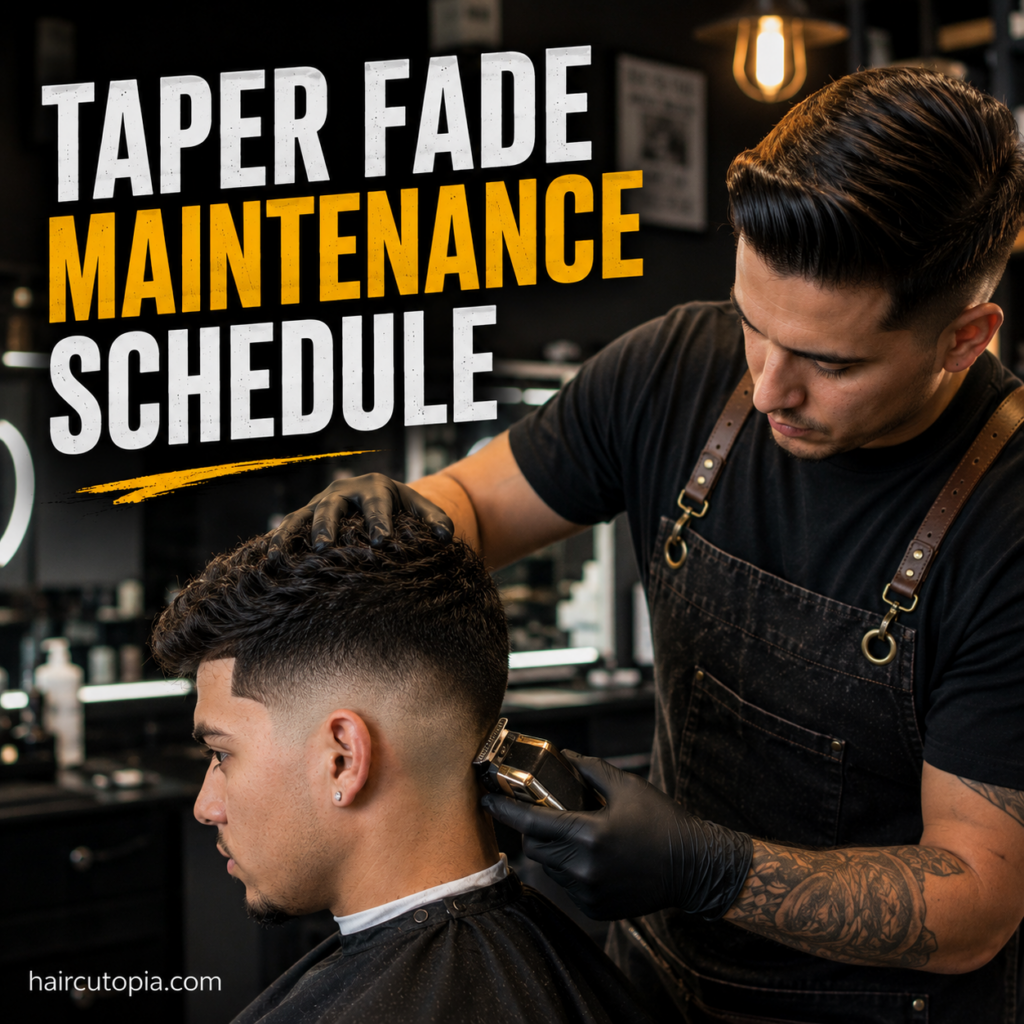
A taper fade can still look good weeks after a haircut, but it won’t look exactly the same as it did when you stepped out of the barber’s chair.
The shortest sections around the temples, sideburns, and neckline begin showing growth first. Sharp edges soften. The transition becomes less noticeable. Eventually, what was once a crisp taper starts blending into the rest of your hair.
So, how often should you get it touched up?
For most people, a taper fade maintenance schedule of about every two to three weeks works well. Someone who wants an extremely fresh appearance may visit the barber more often, while a person who prefers a natural grow-out can wait three or four weeks—or simply get the taper refreshed during a regular haircut.
The right schedule depends on your haircut, hair growth, lifestyle, and how sharp you want the fade to look.
How Often Should You Get a Taper Fade?
A good starting point is every two to three weeks.
That usually gives the hair enough time to grow noticeably without allowing the original shape to disappear completely.
There’s no requirement to follow an exact schedule, though.
Here’s a practical way to think about it:
- Every 1–2 weeks: Very sharp, consistently fresh appearance
- Every 2–3 weeks: Balanced maintenance for most people
- Every 3–4 weeks: More relaxed, natural grow-out
- Every 4–6 weeks: Taper refreshed as part of a full haircut
Your ideal schedule may fall somewhere between these ranges.
Instead of automatically booking based on the calendar, pay attention to what your haircut actually looks like.
Why Does a Taper Fade Grow Out So Quickly?
Hair grows everywhere, but growth is much easier to notice when the hair starts extremely short.
Imagine a section that’s faded almost to skin. Even a small amount of new growth creates a visible shadow.
The longer hair on top may barely seem different during the same period.
That’s why your taper can look grown out even when the rest of your haircut still looks fine.
Growth becomes particularly noticeable around:
- The temples
- Sideburns
- Behind the ears
- The neckline
- Sharp lineup areas
This doesn’t mean your haircut has suddenly gone bad. The contrast created by the fade is simply becoming softer.
Week-by-Week Taper Fade Maintenance Schedule
While everyone’s hair grows differently, a general timeline can help you understand what to expect.
Week 1: Fresh From the Barber
During the first week, your taper should still look very close to its original shape.
The blend is visible, the neckline is clean, and any lineup should remain relatively sharp.
You generally don’t need to do much.
Focus on normal hair care:
- Wash your hair as needed.
- Condition according to your hair type.
- Style the longer hair normally.
- Avoid unnecessary trimming around the fade.
- Keep heavy product buildup away from the hairline.
Trying to “improve” a one-week-old taper with clippers is usually unnecessary.
Week 2: Light Growth Becomes Visible
By the second week, you may begin noticing growth in the shortest sections.
A skin taper will often show this more clearly than a taper that was left slightly darker.
The haircut should still have its basic shape.
At this point, concentrate on presentation rather than cutting.
Brush or comb the sides if they’re beginning to stick outward. Keep the top styled, and clean up only obvious stray hairs that sit outside the established haircut.
If you like your taper extremely sharp, this may be when you schedule a barber cleanup.
Week 3: A Good Time for a Taper Touch-Up
Around the third week, the difference between a fresh taper and a grown-in taper often becomes more noticeable.
The temple area may look fuller. Sideburns can begin losing their shape, and the neckline may no longer look as clean.
For many people, this is the sweet spot for maintenance.
If the top still looks good, you may not need a complete haircut.
Ask your barber for a taper cleanup instead.
They can refresh the faded sections, neckline, and edges while preserving the length elsewhere.
Week 4: The Fade Looks Softer
At four weeks, the taper may still look perfectly acceptable, but it probably won’t have the same contrast it originally had.
This is especially true for very short or skin tapers.
If you prefer a natural appearance, you might be comfortable continuing to grow it.
If you prefer clean barbered edges, it’s probably time for a touch-up.
This is also the point where some people simply schedule their next full haircut.
Weeks 5–6: Full Haircut Territory
By five or six weeks, the rest of the hairstyle may need attention too.
The top may be heavier, the sides can begin losing their intended shape, and the taper itself may be difficult to distinguish.
Instead of getting only the taper refreshed, a full haircut often makes more sense.
Your barber can reshape everything and recreate the taper as part of the service.
Taper Touch-Up vs. Full Haircut
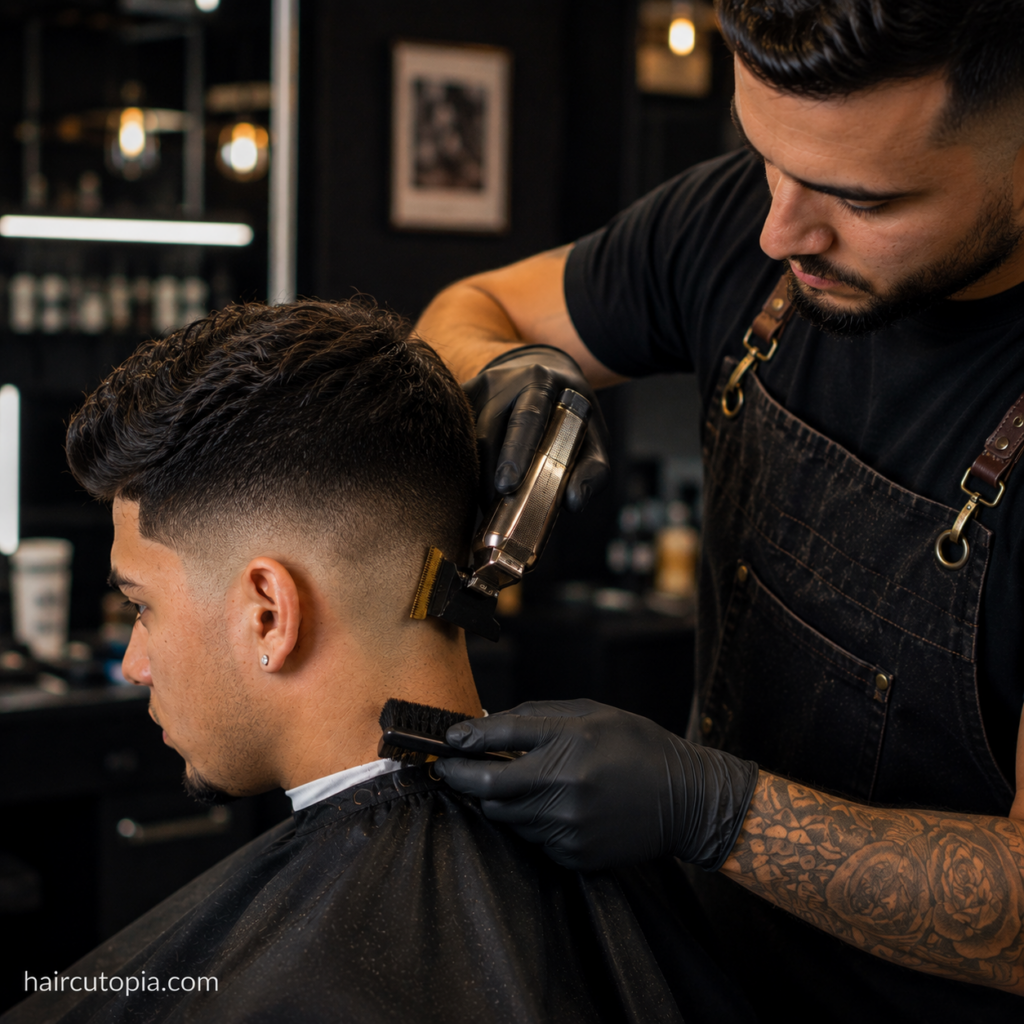
You don’t necessarily need a full haircut every time your taper grows out.
A touch-up focuses on the areas that lose definition fastest.
A taper cleanup may include:
- Re-fading the temples
- Cleaning the sideburns
- Refreshing the neckline
- Removing stray hairs
- Sharpening the edges
- Blending the shortest sections back into the surrounding hair
A full haircut addresses the overall shape as well.
You may need a full haircut when:
- The top is getting too long.
- The sides have become bulky.
- Your hairstyle no longer holds its intended shape.
- You want to change the style.
- The taper has completely grown into the surrounding hair.
If everything except the edges still looks good, there’s little reason to remove length unnecessarily.
Maintenance Schedule for a Skin Taper
A skin taper usually requires the most frequent maintenance if you want to preserve its original appearance.
Because the shortest portion goes down to bare or nearly bare skin, new growth becomes visible quickly.
A typical schedule might be:
- 1–2 weeks for an ultra-fresh appearance
- 2–3 weeks for normal maintenance
- 3–4 weeks if you’re comfortable with visible growth
The fade doesn’t stop looking good after a particular number of days. It simply becomes darker and less defined.
If you’re tired of frequent appointments, consider asking your barber to leave slightly more length at the bottom during your next haircut.
The grow-out may be less obvious.
Maintenance Schedule for a Low Taper Fade
A low taper is generally one of the easier variations to grow out.
Because the faded area stays close to the temples and neckline, much of the sides remain intact.
For many people, a low taper can comfortably go two to four weeks before needing attention.
If your hairstyle is longer, you may even use low taper cleanups as a way to maintain neat edges while growing the rest of your hair.
Tell your barber you want the taper refreshed at the same height rather than gradually moving it upward with every appointment.
Maintenance Schedule for a Mid or High Taper
A more noticeable taper can require slightly more attention because changes in the blend may be easier to see.
The exact schedule depends on how short the fade goes.
A mid or high taper that reaches skin will show regrowth relatively quickly. One that leaves a darker shadow can remain visually blended longer.
If preserving the original contrast matters to you, plan on roughly two to three weeks between touch-ups.
Taper Fade Schedule for Curly Hair
Curly hair can hide some growth extremely well.
The volume and texture above the taper may make a slightly grown-out transition less obvious, particularly with a low taper.
However, the edges can still lose definition.
Rather than focusing entirely on the fade, maintain the curls too.
Between barber appointments:
- Keep curls properly moisturized.
- Use styling products appropriate for your curl pattern.
- Avoid excessive manipulation.
- Protect the hairstyle while sleeping when appropriate.
- Keep the neckline and temple areas neat.
If the curls still have a good shape, a quick taper cleanup can restore the entire haircut without removing much length from the top.
Taper Fade Schedule for Straight or Wavy Hair
With straight or wavy hair, changes in length around the sides may be more noticeable.
As the hair grows, shorter sections can begin sticking outward, especially around the temples and above the ears.
Regular brushing, styling, and occasional taper cleanups can help.
A two-to-three-week maintenance schedule is a reasonable starting point, but you can extend it if the haircut continues growing out evenly.
Does Hair Growth Speed Affect Your Schedule?
Absolutely.
Not everyone’s hair grows at exactly the same rate, and even your own hair may appear to grow faster in certain areas.
If your sideburns and neckline become visibly overgrown after ten days, waiting four weeks simply because someone else does won’t make much sense.
Likewise, if your taper still looks clean after three weeks, there’s no need to rush back to the barber.
Your schedule should respond to your actual growth.
After two or three haircut cycles, you’ll probably have a good idea of when your taper starts looking too grown out for your preference.
How Your Lifestyle Changes Your Maintenance Schedule
How frequently you need a taper isn’t purely about hair growth.
Your lifestyle matters too.
Someone working in a formal or client-facing environment may prefer consistently sharp edges.
You may also want more frequent touch-ups if you’re preparing for:
- A wedding
- Job interview
- Vacation
- Photo session
- Date
- Formal event
- Important meeting
On the other hand, if you work from home or prefer a casual hairstyle, stretching your appointments an extra week may not bother you at all.
There’s no universal standard for how “fresh” your fade needs to be.
Schedule Haircuts Around Important Events
If you’re getting a taper fade for an event, don’t necessarily schedule the haircut hours before you need to leave.
Many people prefer their haircut after it has had a little time to settle.
Scheduling your appointment roughly one to three days before an important event can give you time to wash and style the haircut yourself while still keeping the taper extremely fresh.
If you already know how your haircut looks immediately after an appointment, use your own experience as the guide.
Can You Maintain the Taper at Home Between Appointments?
Basic grooming can extend the clean appearance of a taper.
You can safely focus on things such as:
- Washing and conditioning
- Styling
- Brushing or combing
- Managing curls or waves
- Keeping facial hair groomed
- Removing obvious stray hairs
Actually recreating the fade is different.
A taper uses multiple lengths blended together. Running clippers through the area without understanding the blend can create lines, patches, or an accidentally higher fade.
If you’re inexperienced with clippers, it’s usually better to let the taper soften naturally and have your barber restore it.
Don’t Let Every Touch-Up Make the Taper Higher
This is an easy maintenance mistake to overlook.
If you—or your barber—remove slightly more hair above the existing taper during every cleanup, the faded area can gradually move higher.
Eventually, your low taper may start looking more like a traditional fade.
If you like the original placement, say:
“Keep the taper at the same height. I just want it refreshed.”
That small clarification can help preserve the haircut you’re trying to maintain.
How to Know When Your Taper Needs a Touch-Up
You don’t need to count the days.
Look in the mirror and check the areas that matter.
Your taper may be ready for maintenance when:
- The temple transition is difficult to see.
- The sideburns look bulky.
- The neckline has become noticeably overgrown.
- Hair around the ears looks untidy.
- The edges have lost their shape.
- The fade no longer blends cleanly.
- Styling isn’t making the haircut look fresh anymore.
If the top and sides still look good, get a taper cleanup.
If the entire haircut has lost its shape, get a full haircut.
Sample Taper Fade Maintenance Routine
For someone who wants a consistently clean haircut without visiting the barber every week, a simple schedule could look like this:
Week 0
Get a full haircut and fresh taper fade.
Week 1
Normal washing, conditioning, and styling. No cutting necessary.
Week 2
Continue normal styling and clean up obvious stray hairs if needed.
Week 3
Get a taper cleanup if the edges and fade have noticeably grown out.
Week 4
Continue maintaining the hairstyle at home.
Weeks 5–6
Get another full haircut and reset the cycle.
This schedule isn’t a rule. It’s simply a practical starting point that you can adjust based on your hair.
How to Spend Less on Taper Fade Maintenance
Frequent barber appointments can add up.
If you want to reduce how often you need professional touch-ups, consider choosing a taper that grows out more subtly.
You might:
- Choose a low taper instead of a more prominent one.
- Leave a slight shadow instead of fading completely to skin.
- Avoid an extremely sharp lineup if you prefer natural regrowth.
- Learn basic neckline and grooming maintenance without cutting into the fade.
- Schedule taper cleanups between full haircuts only when necessary.
You can also ask your barber whether they offer lower-priced edge-ups or cleanup services between full appointments.
Should You Book Your Next Taper Appointment in Advance?
If your barber is difficult to book, scheduling your next visit before leaving the shop can make sense.
Once you know your normal maintenance cycle, appointments become easy to predict.
For example, if your taper consistently starts bothering you around the third week, booking every three weeks removes the need to scramble for an appointment.
If your schedule varies, there’s nothing wrong with waiting until the haircut actually needs attention.
A Simple Taper Fade Maintenance Schedule
If you want an easy guideline to remember:
- Week 1: Enjoy the fresh haircut.
- Week 2: Maintain it with normal grooming and styling.
- Week 3: Consider a taper cleanup.
- Week 4: Touch up if you haven’t already.
- Weeks 5–6: Consider a full haircut.
People who want an especially crisp fade can shorten that cycle.
People who like a softer grow-out can extend it.
Final Thoughts
The best taper fade maintenance schedule isn’t determined by a fixed number of days. It’s determined by how your hair grows and how fresh you want the haircut to look.
For most people, a professional taper cleanup every two to three weeks is a practical middle ground. It keeps the temples, sideburns, and neckline defined without requiring a complete haircut every time.
If you’re comfortable with a softer look, three or four weeks may work just fine. And if your taper is simply part of a short hairstyle that you already cut every four to six weeks, you may not need separate touch-ups at all.
Pay attention to your own hair rather than the calendar.
Once you know when your taper typically begins losing its shape, you can build a maintenance schedule around that point—and keep your haircut looking clean without spending more time in the barber’s chair than necessary.