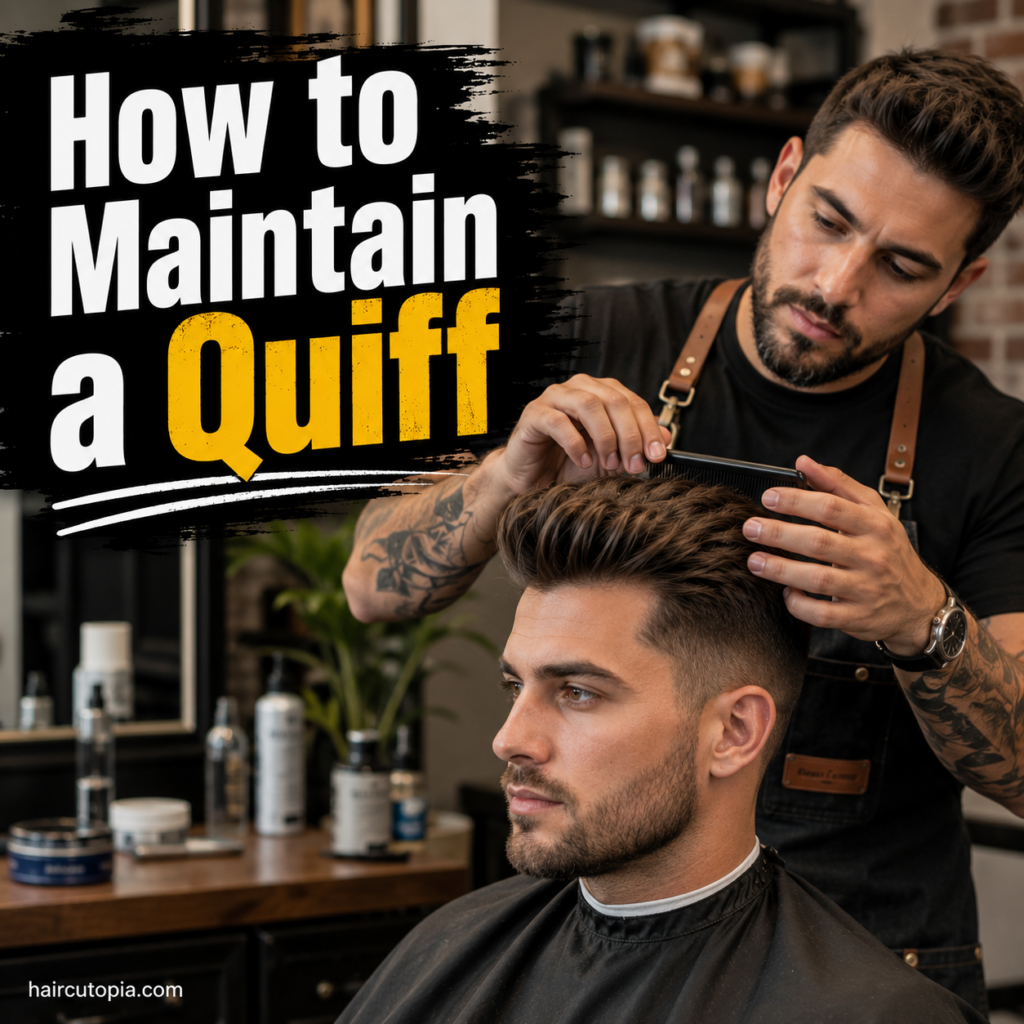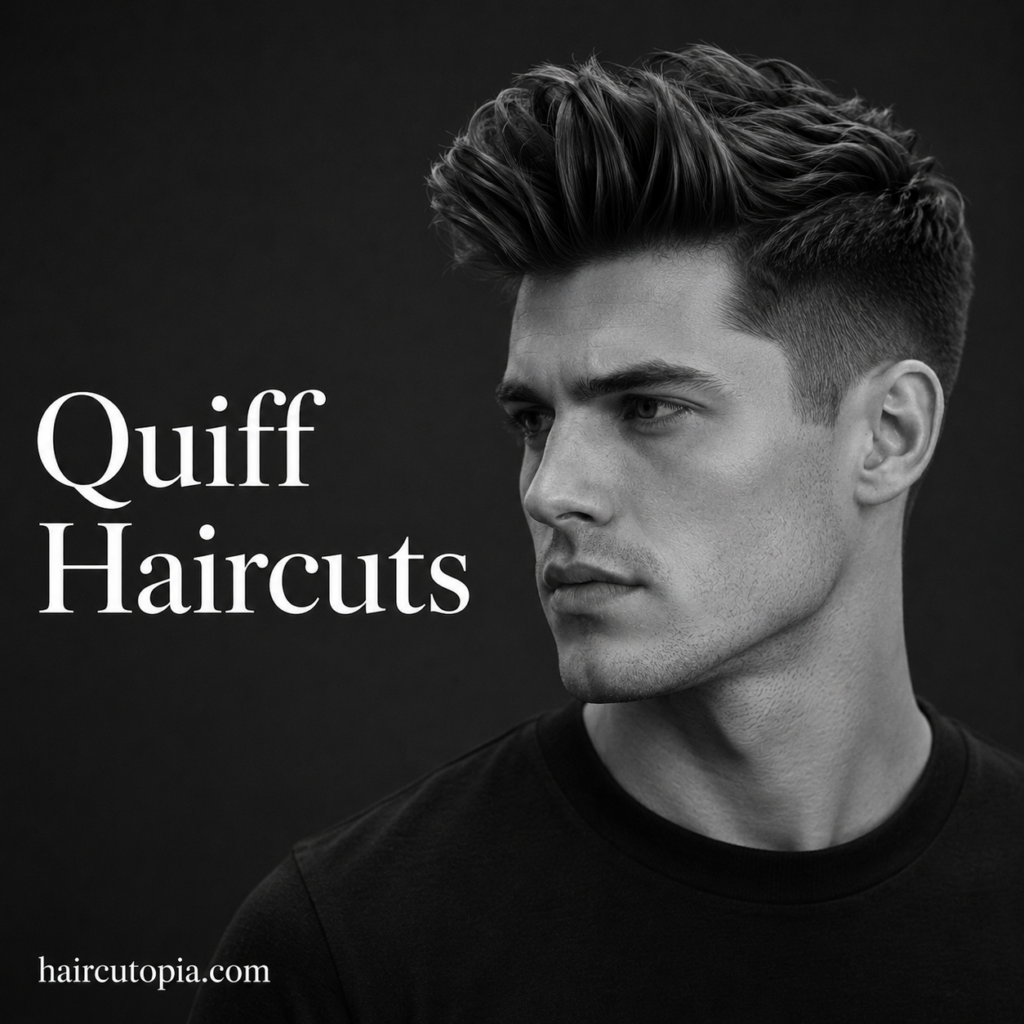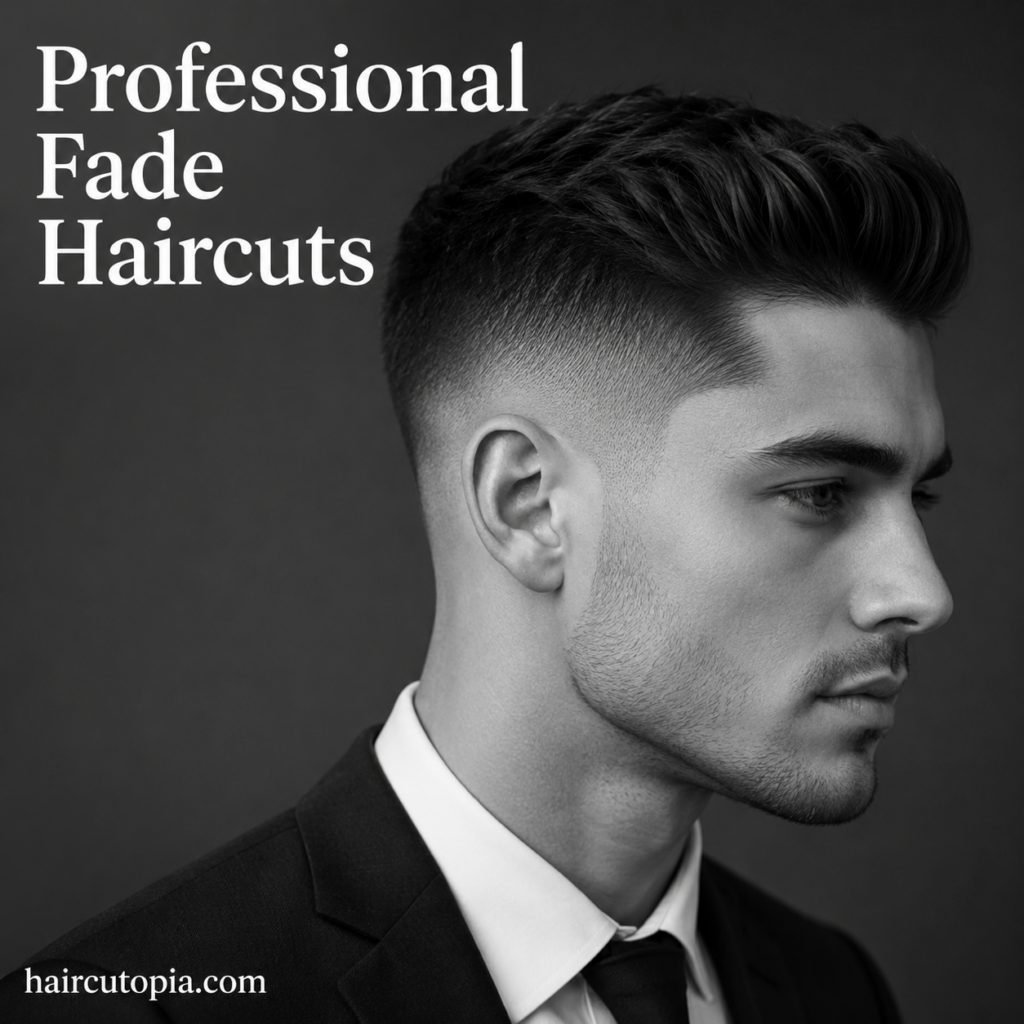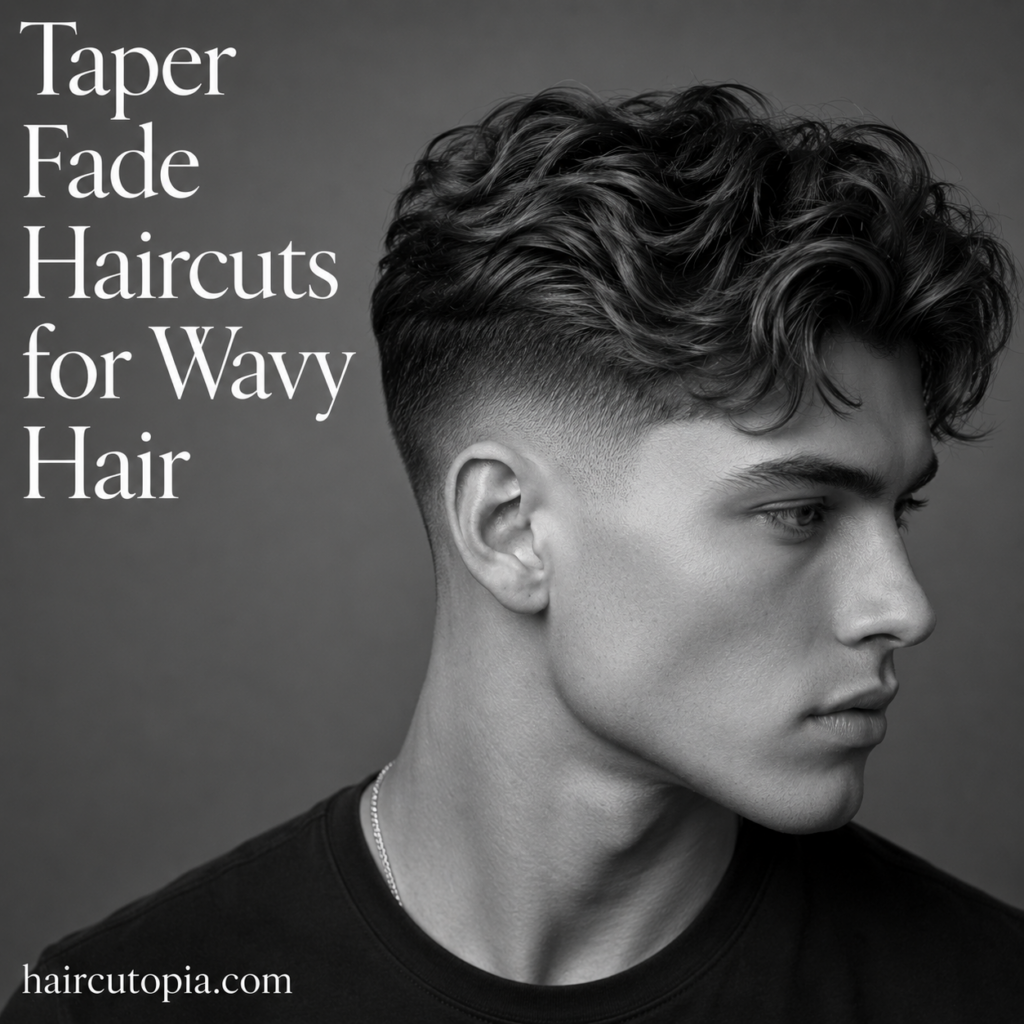
A quiff can still look good several weeks after a haircut, but it rarely looks exactly the same as it did when you left the barbershop.
The sides start filling in. The top gets heavier. That carefully shaped front may suddenly require more effort to keep upright. If your quiff includes a fade, you’ll usually notice the change there first.
Having a maintenance schedule helps you stay ahead of those problems without getting more haircuts than you actually need.
For most quiffs, a full haircut every 3 to 6 weeks is a useful starting point. But your ideal schedule depends on the length of the top, how short you wear the sides, your hair growth, and how polished you want the style to look.
Here’s how to build a quiff maintenance schedule that makes sense for your haircut.
How Often Should You Get a Quiff Cut?
Most people can plan on having their quiff reshaped approximately every 3 to 6 weeks.
That’s a broad range because not all quiffs are cut the same way.
A quiff with a skin fade can begin looking grown out relatively quickly, even though the top still looks fine. A classic quiff with scissor-cut sides tends to grow out more gradually.
As a general guide:
- Skin fade with quiff: every 2 to 3 weeks for a very sharp appearance
- Low or mid fade with quiff: every 3 to 4 weeks
- Tapered quiff: every 3 to 5 weeks
- Short textured quiff: every 3 to 5 weeks
- Classic quiff: every 4 to 6 weeks
- Longer quiff: approximately every 4 to 8 weeks
These aren’t deadlines.
If your haircut still looks good and remains easy to style, there’s no reason to schedule a cut simply because a certain number of days have passed.
Your hair will usually tell you when it’s time.
What Determines Your Quiff Maintenance Schedule?
Two people with similar quiffs can need very different maintenance routines.
Several factors determine how quickly the style begins losing its shape.
How Short Your Sides Are
Short sides show growth faster.
The difference is particularly noticeable with skin fades because the shortest portion begins at or near bare skin. Even a relatively small amount of growth changes the appearance.
Longer tapered or scissor-cut sides don’t have the same dramatic contrast, so they usually grow out more naturally.
If frequent barber visits aren’t appealing, choosing a softer taper instead of a skin fade can reduce the maintenance burden.
How Long You Wear the Top
Longer hair doesn’t necessarily require more frequent cutting.
In fact, a longer quiff may tolerate additional growth quite well.
The problem is weight.
As the top grows, it can eventually become heavy enough that creating volume becomes more difficult. Your barber may need to reshape the top or remove some bulk without significantly shortening it.
How Quickly Your Hair Grows
Hair growth varies from person to person.
If your hair seems to grow noticeably within a couple of weeks, you’ll probably need more frequent cleanup appointments than someone whose haircut changes slowly.
Pay attention to your own growth pattern instead of trying to follow someone else’s schedule exactly.
How Precise You Want the Haircut to Look
There’s a difference between maintaining a quiff and keeping it barbershop-fresh at all times.
If you want a skin fade to remain extremely crisp, you’ll need frequent cleanups.
If you don’t mind the sides growing in slightly, you can wait longer.
Neither approach is wrong. It’s mostly a question of how polished you prefer the haircut to look between appointments.
A Week-by-Week Quiff Maintenance Schedule
Rather than treating every quiff the same, it helps to understand how the haircut typically changes over time.
Week 1: Keep the Barber’s Shape
During the first week after a haircut, your quiff should be relatively easy to manage.
The proportions are fresh, excess weight has been removed, and the sides are at their shortest.
This is a good time to pay attention to how the barber styled your hair.
Try to remember:
- Which direction the front was styled
- How much volume was created
- Whether a brush, comb, or fingers were used
- Which styling product was applied
- Approximately how much product was used
Your main job during the first week is simply recreating the shape.
You generally shouldn’t need another haircut or significant adjustment.
Daily Routine During Week 1
A basic routine is usually enough:
- Lightly dampen the hair if necessary.
- Apply a pre-styler if you use one.
- Blow-dry the front upward and backward.
- Apply a small amount of styling product.
- Shape the quiff with your fingers or a comb.
If the haircut is well suited to your hair, styling should be fairly predictable at this stage.
Week 2: Watch the Sides
By the second week, the top should still be close to its original shape.
The sides may begin showing more noticeable growth, especially if you started with a skin fade or very short taper.
You probably don’t need a full haircut.
Instead, evaluate the overall appearance.
Ask yourself:
- Is the fade still defined enough for me?
- Are the sideburns starting to look untidy?
- Is the neckline growing out?
- Does the top still hold its shape easily?
If everything still looks balanced, keep your normal routine.
People who prefer an extremely sharp skin fade may choose to schedule a quick cleanup around this point.
Week 3: Decide Whether You Need a Cleanup
Week three is when maintenance needs start separating based on haircut type.
A faded quiff may be ready for attention.
A classic or longer quiff may still look completely fine.
If your barber offers cleanup appointments, this can be a useful time to refresh:
- Fade
- Taper
- Sideburns
- Around the ears
- Neckline
The important part is that a cleanup doesn’t necessarily mean cutting the top.
If you like your current quiff length, tell your barber to preserve it.
Should You Get a Full Haircut at Week 3?
Possibly, but not automatically.
A full haircut makes sense if the entire shape is already becoming difficult to manage.
If only the sides look grown out, a cleanup may be enough.
This is particularly useful when you’re trying to grow the top longer.
Week 4: Check the Shape of the Quiff
Around week four, many quiffs begin showing noticeable changes.
The haircut may still look good, but you might find yourself spending more time styling it.
Watch for signs such as:
- The front falling more easily
- Increased bulk through the top
- Sides beginning to flare outward
- A fade losing most of its definition
- More styling product being required
- The quiff becoming harder to shape consistently
This is a common point for a maintenance haircut.
If your quiff still behaves well, however, there’s nothing wrong with waiting.
Weeks 5–6: Reshape if Needed
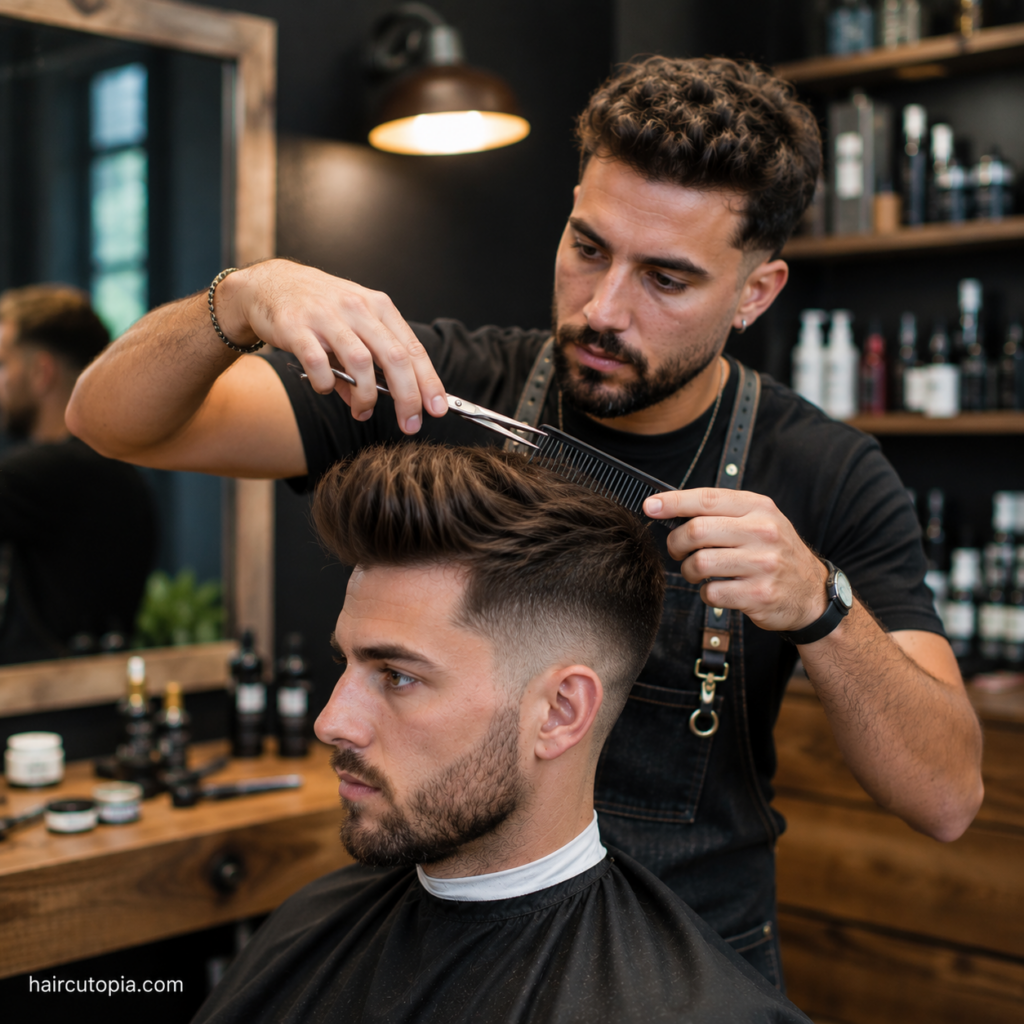
By weeks five and six, many short and medium quiffs benefit from being reshaped.
The goal doesn’t have to be making everything dramatically shorter.
You can ask your barber to:
- Remove excess weight
- Restore texture
- Rebalance the top
- Preserve length at the front
- Clean up the sides
- Refresh the taper
- Reestablish the overall silhouette
If you’re growing a longer quiff, make that clear before the haircut starts.
A maintenance cut should support your growth goal rather than resetting your progress.
Weeks 7–8: Longer Quiffs May Still Work
Longer and more classic quiffs can sometimes reach seven or eight weeks between significant haircuts.
By this point, you’ll probably notice additional weight.
That isn’t necessarily bad.
Some longer quiffs actually become easier to shape as they gain length. Others begin collapsing because the front becomes too heavy.
If you’re still happy with the hairstyle, you can continue growing it.
If styling has become a daily struggle, it’s probably time for a reshaping appointment.
Quiff Maintenance Schedule by Haircut Type
The style on the sides is one of the biggest factors in determining how often you’ll visit your barber.
Skin Fade Quiff
A skin fade creates the highest contrast and usually requires the most frequent maintenance.
For a consistently sharp look:
- Fade cleanup: every 1 to 3 weeks as desired
- Full haircut: approximately every 3 to 5 weeks
- Top reshaping: as needed
You don’t need to cut the top every time you refresh the fade.
Keeping those two maintenance tasks separate can help if you’re growing the quiff.
Low Fade Quiff
A low fade tends to grow out a little more subtly because most of the extremely short section remains lower on the head.
A practical schedule is:
- Fade cleanup: approximately every 2 to 4 weeks
- Full haircut: approximately every 3 to 5 weeks
You may be able to stretch this longer if you don’t mind a softer transition as the fade grows.
Tapered Quiff
A taper is generally easier to maintain than a dramatic fade.
Because only specific areas around the sideburns and neckline are taken very short, the growth can look more natural.
Consider:
- Taper cleanup: every 3 to 5 weeks
- Full haircut: approximately every 4 to 6 weeks
This is a good option for anyone who likes the quiff shape but doesn’t want frequent barber appointments.
Short Textured Quiff
Short quiffs are easy to style, but the haircut’s proportions can change relatively quickly.
As the sides and top grow together, the style can lose some of its intentional shape.
A haircut every 3 to 5 weeks generally keeps a short quiff looking deliberate.
Classic Quiff
Classic quiffs typically have more length through the sides and a softer transition.
That makes growth less obvious.
Many people can maintain this style with a haircut every 4 to 6 weeks.
Longer versions may go beyond that if the shape continues working.
Long Quiff
A long quiff doesn’t necessarily need frequent shortening.
Instead, maintenance becomes more about controlling weight.
You may only need a significant reshape every 4 to 8 weeks.
Tell your barber if you’re intentionally maintaining length. They can remove bulk and clean up the shape without cutting away the front you’ve spent months growing.
Daily Quiff Maintenance
Your barber schedule is only part of maintaining the hairstyle.
Most of the work happens at home.
Fortunately, daily maintenance doesn’t need to be complicated.
Morning
Your routine might include:
- Lightly dampen or reset the hair.
- Apply pre-styling product if needed.
- Blow-dry the roots for volume.
- Direct the front upward and backward.
- Apply a small amount of finishing product.
- Shape with your fingers, brush, or comb.
You don’t necessarily need to shampoo every morning.
If the hair is clean enough and the existing product remains workable, lightly dampening and restyling may be sufficient.
During the Day
A quiff can lose some height after several hours.
Before adding more product, try reshaping the existing product with your fingers.
Lift the front at the roots and guide it back into position.
Constantly adding fresh product can make the hair progressively heavier.
At Night
You don’t need to protect the shape of the quiff while you sleep.
It’s normal for the hairstyle to become flattened overnight.
Instead of trying to preserve it perfectly, reset the hair the following morning.
Weekly Quiff Maintenance
A few tasks are worth checking periodically rather than every day.
Watch for Product Buildup
Clays, waxes, pomades, pastes, and hairsprays can accumulate.
If your hair starts feeling coated or unusually heavy, it may need a thorough wash.
Buildup can also make a quiff harder to style because it adds weight.
Clean Your Styling Tools
Combs and brushes collect hair, oils, and styling products.
Remove trapped hair regularly and clean your tools when buildup becomes noticeable.
There’s little benefit in washing your hair and immediately running a product-covered brush through it.
Check Your Hair’s Condition
Regular blow-drying and styling can leave some hair feeling dry.
Pay attention to changes in texture.
If the hair becomes rough or difficult to manage, review your shampoo, conditioner, heat use, and styling routine.
When Should You Wash a Quiff?
There’s no special shampoo schedule required just because you wear a quiff.
Your scalp and hair type matter more than the hairstyle.
Wash when your hair needs it.
That might mean more frequently if you:
- Have an oily scalp
- Exercise regularly
- Sweat heavily
- Use substantial amounts of styling product
- Experience noticeable buildup
You may wash less frequently if your hair and scalp remain comfortable and manageable.
The goal is to prevent excessive oil and buildup without unnecessarily drying the hair.
When Should You Condition Your Hair?
Conditioning helps keep longer sections of a quiff manageable, particularly if you regularly blow-dry your hair.
Fine hair may need a lightweight conditioner that doesn’t reduce volume.
Thicker, coarse, wavy, curly, or dry hair may benefit from more conditioning.
If your roots become flat easily, concentrate conditioner more toward the lengths and ends rather than applying a heavy amount directly at the scalp.
How Often Should You Restyle a Quiff?
Most people will need to reshape their quiff each morning.
That doesn’t mean performing the complete wash-and-style process every day.
If the hair is still manageable, you can often:
- Lightly dampen the front.
- Reset the roots with a blow dryer.
- Rework the existing styling product.
- Add a small amount of fresh product only if needed.
This can reduce both styling time and product buildup.
Signs You’re Due for a Quiff Haircut
The calendar can help, but your hair is a better indicator.
Consider booking a haircut when:
- The front won’t hold its usual volume
- The top feels noticeably heavy
- The sides are becoming bulky
- Your fade has lost its shape
- The neckline looks untidy
- Styling takes significantly longer
- You’re using more product than usual
- The sides no longer balance the top
- The haircut looks grown out even immediately after styling
If your quiff suddenly becomes difficult after several weeks of styling easily, there’s a good chance the haircut needs attention.
Should You Get a Cleanup or a Full Haircut?
You don’t always need a full haircut.
A cleanup is useful when the top still looks good but shorter areas have grown out.
You might ask for:
- Fade refresh
- Taper cleanup
- Neckline cleanup
- Sideburn cleanup
- Around-the-ear detailing
A full haircut makes more sense when the top has also become heavy or lost its intended shape.
Separating these appointments can be particularly helpful if you’re growing your quiff longer.
How to Maintain Your Quiff While Growing It Out
Growing a quiff doesn’t mean avoiding the barber completely.
Strategic maintenance can actually make the growing process easier.
Tell your barber that your goal is additional length.
Ask them to preserve the front while cleaning up areas that become bulky or awkward.
During the growing phase, your appointments may focus on:
- Keeping the sides controlled
- Removing unnecessary bulk
- Maintaining a usable shape
- Preserving front length
- Blending the growing sections
- Preventing the haircut from looking neglected
Bringing a reference photo of your target length can also help your barber understand where you’re headed.
How to Make Your Quiff Last Longer Between Haircuts
You can’t stop your hair from growing, but you can make the transition between appointments look better.
Focus on keeping the style intentional.
As your quiff grows:
- Adjust how you blow-dry it
- Use slightly different amounts of product
- Embrace additional texture
- Change the direction slightly if necessary
- Keep the hair clean and manageable
- Have only the sides cleaned up if the top still works
Your quiff doesn’t need to look exactly the same during week five as it did during week one.
Sometimes allowing the hairstyle to become slightly looser as it grows produces a more natural result.
Sample Quiff Maintenance Schedule
If you’re unsure where to begin, try this general schedule and adjust it based on your hair.
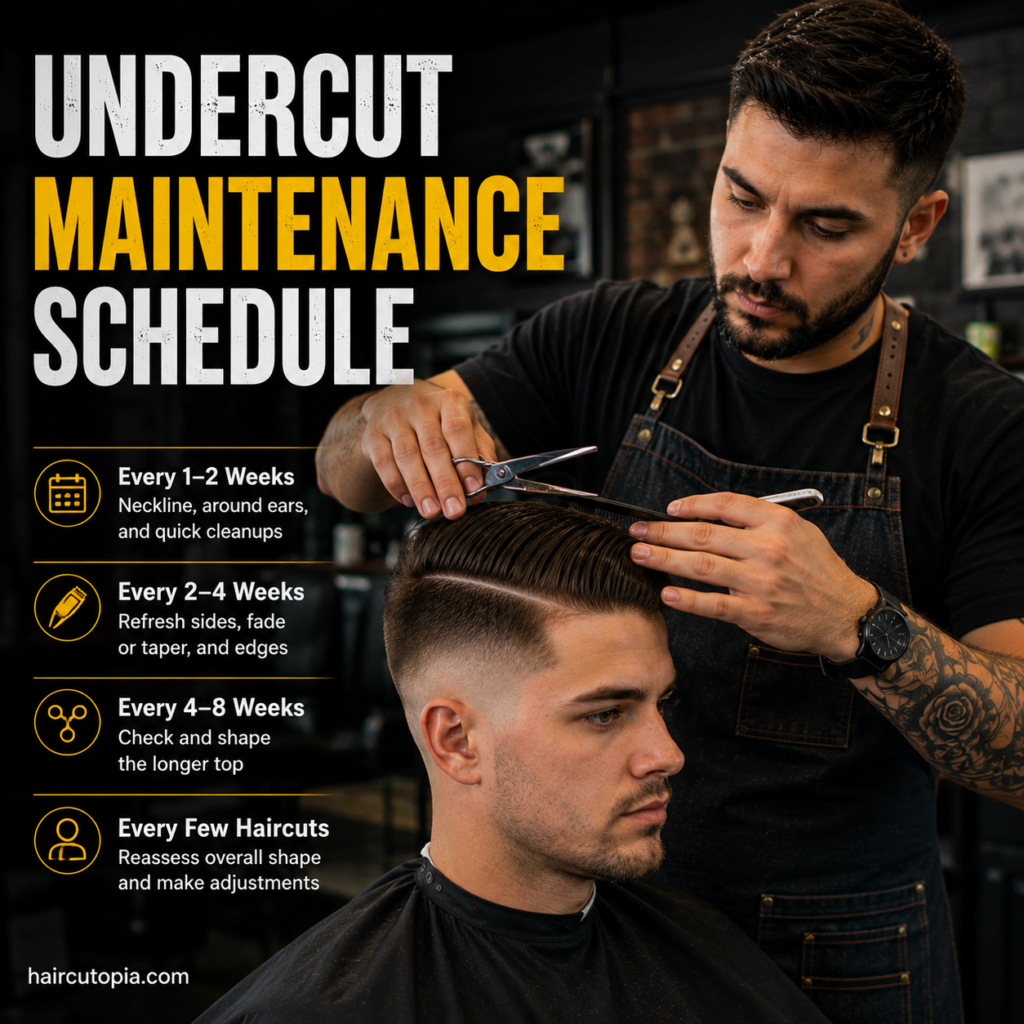
Every Day
- Reset the quiff as needed
- Blow-dry for volume
- Use only enough styling product to maintain the shape
- Reshape with your fingers during the day if necessary
Every Week
- Monitor product buildup
- Clean your comb or brush
- Check whether the hair feels unusually dry or heavy
- Assess how easily the quiff is styling
Every 2–3 Weeks
- Evaluate your fade, taper, sideburns, and neckline
- Get a cleanup if you prefer a consistently sharp appearance
Every 3–6 Weeks
- Evaluate the overall haircut
- Have the quiff reshaped if it’s becoming difficult to style
- Remove excess bulk if needed
- Preserve front length if you’re growing it
Every 6–8 Weeks
Longer quiffs should usually be evaluated for overall balance, even if you don’t want much length removed.
A small amount of reshaping may be enough to make the hairstyle easier to manage again.
The Best Schedule Is the One Your Hair Actually Needs
A maintenance calendar should be a guide, not a rule.
If your quiff still looks good at week six, you don’t need to rush to the barber because an arbitrary schedule says you’re overdue.
Likewise, if your fade looks grown out after two weeks and that bothers you, there’s no reason to wait until week four.
Start by observing how your haircut changes.
After two or three haircut cycles, you’ll probably know exactly when the sides start bothering you and when the top becomes harder to style.
At that point, scheduling becomes easy.
Final Thoughts
A practical quiff maintenance schedule usually falls somewhere between a haircut every 3 to 6 weeks, with more frequent cleanups for fades and potentially longer intervals for classic or longer quiffs.
But the calendar isn’t the most important part.
Pay attention to the haircut’s shape.
If the front still creates volume easily, the top feels balanced, and you’re happy with the sides, your quiff probably doesn’t need much attention yet.
Once styling starts taking longer, the top becomes heavy, or the sides lose their shape, it’s time for a cleanup or reshaping appointment.
Finding that rhythm lets you keep your quiff looking intentional without spending more time—or money—at the barbershop than necessary.