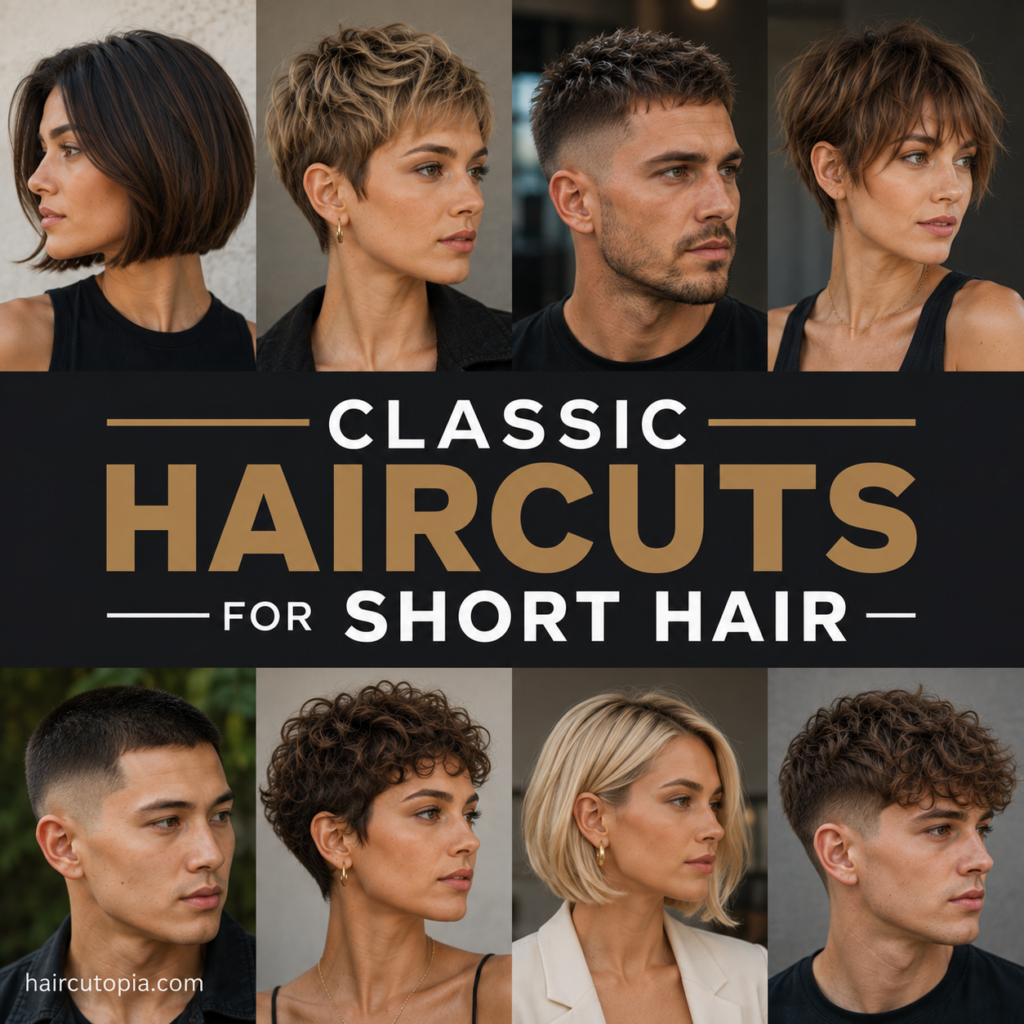
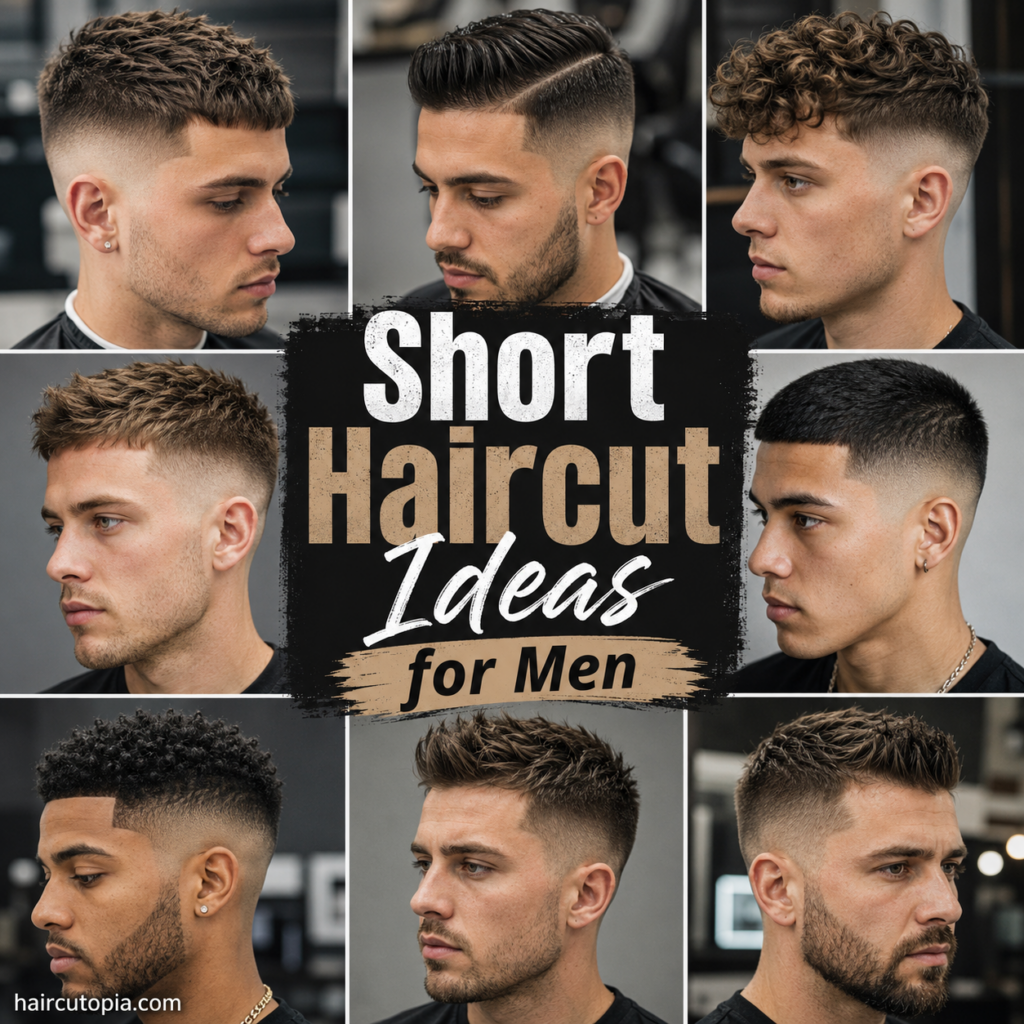
Short haircuts for men are popular for a reason. They’re easy to maintain, work with almost any personal style, and can be adapted to different hair types, face shapes, and lifestyles.
But “short” doesn’t have to mean basic.
A short haircut can be clean and professional, textured and casual, sharp and modern, or somewhere in between. Small changes in the fade, length on top, fringe, texture, and neckline can completely change the finished look.
Whether you want something you can style in seconds or a cut with enough length to experiment with, these short haircut ideas for men can help you narrow down your options before your next barber visit.
Classic Short Haircuts for Men
Some short hairstyles have remained popular for decades because they simply work. They’re versatile, relatively easy to maintain, and usually don’t require complicated styling.
Crew Cut
The crew cut keeps the hair short on the sides while leaving slightly more length on top. The top typically becomes shorter toward the crown, creating a clean and balanced shape.
It’s a great choice if you want something polished without having to spend much time styling your hair every morning.
The crew cut works especially well for men who prefer:
- A clean, traditional appearance
- Minimal daily styling
- Short sides without an extremely dramatic fade
- A haircut suitable for both casual and professional settings
You can also pair a crew cut with a low, mid, or high fade for a more modern finish.
Buzz Cut
Few hairstyles are simpler than the buzz cut.
The hair is clipped very short across the entire head, although the exact length can vary depending on the clipper guard used. Some versions maintain one uniform length, while others incorporate a subtle fade around the sides and back.
A buzz cut puts more emphasis on your face and head shape because there isn’t much hair to alter the silhouette.
It’s also one of the easiest short haircuts to maintain day to day.
Ivy League Haircut
Think of the Ivy League as a slightly longer, more flexible version of the crew cut.
There’s enough length on top to create a subtle side part or brush the hair backward, while the sides remain neat and short.
This extra length makes the Ivy League particularly versatile. You can style it neatly for work and loosen it up for a more casual appearance later.
High and Tight
The high and tight features very short sides with a small amount of additional length on top.
The strong contrast gives the haircut a crisp, structured appearance. While traditionally associated with military-style cuts, modern versions can incorporate fades, texture, and slightly longer tops.
It’s especially practical for men who want very little hair around the ears and neckline.
Short Fade Haircut Ideas
A fade gradually transitions the hair from shorter lengths around the sides and back into longer hair above.
Changing where that transition begins can dramatically affect how the haircut looks.
Low Fade
A low fade begins close to the ears and neckline.
Because most of the sides retain some length, the transition is relatively subtle. This makes the low fade a good introduction to faded hairstyles if you don’t want too much scalp showing.
Pair it with:
- A crew cut
- Textured crop
- Short quiff
- Side part
- Curly top
The result tends to look neat without creating an overly dramatic contrast.
Mid Fade
The mid fade starts higher than a low fade, generally around the middle portion of the sides.
It offers a noticeable contrast without being as bold as a high fade. That middle ground makes it one of the easiest fades to combine with different short hairstyles.
A mid fade can make thicker hair feel cleaner around the sides while keeping enough hair on top for texture and movement.
High Fade
A high fade starts much farther up the sides of the head.
This removes considerably more weight from the sides and creates stronger contrast with the hair on top. Because of that contrast, even relatively short hair can appear more prominent.
A high fade works particularly well when you want the top of the haircut to become the main visual focus.
Skin Fade
With a skin fade, the shortest portion of the haircut transitions all the way down to bare or nearly bare skin.
The transition can be incorporated into a low, mid, or high fade.
Skin fades create a very sharp finish, but that crisp appearance requires regular maintenance. As the hair grows, the fade becomes less defined relatively quickly.
Drop Fade
Rather than following a straight horizontal transition around the head, a drop fade curves downward behind the ear.
That change in shape can add dimension to an otherwise simple short haircut.
It pairs nicely with textured tops, curls, waves, and cropped hairstyles.
Textured Short Haircut Ideas for Men
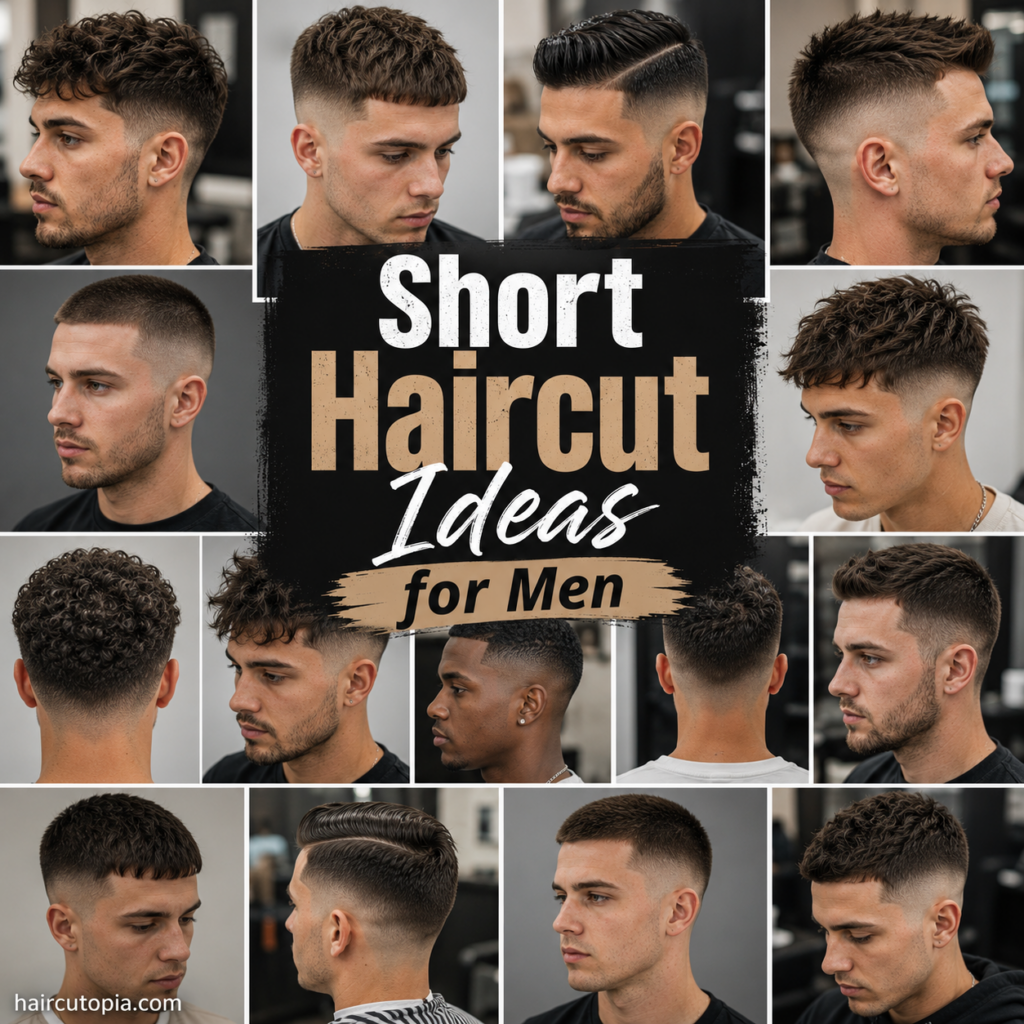
Texture can make short hair look fuller, more relaxed, and less uniform.
Instead of styling every strand into place, textured hairstyles deliberately create separation and movement.
Textured Crop
A textured crop usually combines short sides with a slightly longer, layered top.
The hair can be styled forward, loosely tousled, or given a deliberately messy finish.
This is a useful option for men who like modern hairstyles but don’t want something that requires precise styling every morning.
A small amount of matte styling product can help emphasize individual sections without making the hair look overly shiny.
French Crop
The French crop features short sides and a cropped top that is generally styled forward.
One of its defining characteristics is the fringe at the front.
That fringe can be:
- Straight and blunt
- Lightly textured
- Choppy
- Slightly uneven
- Very short
Changing the fringe can make a French crop look either classic or distinctly modern.
Caesar Cut
The Caesar cut keeps the hair relatively short and even, with the front styled forward into a small horizontal fringe.
It has a compact silhouette and doesn’t require much length to create its recognizable shape.
Modern Caesar cuts are often combined with faded or tapered sides rather than maintaining the same length around the entire head.
Messy Short Hair
Not every short haircut needs a perfectly controlled finish.
Leaving a little extra length on top allows you to create an intentionally messy style with visible texture and movement.
The key is making it look deliberate rather than simply uncombed. A textured haircut and a small amount of lightweight styling product can help create that distinction.
Short Haircuts With More Length on Top
Keeping the sides short while leaving additional length on top gives you considerably more styling flexibility.
You still get the convenience of a short haircut without committing to an extremely close crop. If you want even more length for styles like curtains, bro flow, longer fringes, or swept-back hair, medium haircut ideas for men offer a natural next step.
Short Quiff
A short quiff adds height toward the front of the hair while keeping the overall style relatively compact.
It doesn’t require the dramatic volume of a traditional quiff. Even an inch or two of workable length can be enough to create subtle lift.
Pairing it with tapered or faded sides helps emphasize the shape.
Short Pompadour
The pompadour is normally associated with longer, swept-back hair, but shorter versions can create a similar effect without requiring as much styling.
The front is lifted and directed backward while the sides remain shorter.
A short pompadour works best when you have enough density on top to create some volume.
Short Side Part
A short side-part haircut is a reliable option when you want something polished and easy to wear.
The sides can be tapered or faded, while enough length remains on top to establish a visible part.
For a softer appearance, the part can form naturally. For something sharper, a barber can create more definition along the parting line.
Short Slick Back
You don’t need long hair to create a slicked-back style.
With a few inches on top, the hair can be directed backward while the sides remain short. A matte product creates a more natural finish, while pomade or gel can produce a shinier, more traditional appearance.
Very Short Haircut Ideas for Men
Sometimes convenience is the priority.
Very short cuts minimize styling and can be particularly comfortable during warmer weather or for active lifestyles.
Induction Cut
The induction cut is one of the shortest versions of the buzz cut.
Hair is clipped extremely close and generally kept at a consistent length across the head.
There’s virtually no daily styling involved, although maintaining the extremely short appearance requires frequent trimming.
Burr Cut
A burr cut is another close-cropped buzz style, but it generally leaves slightly more hair than an induction cut.
That small amount of additional length softens the appearance while keeping maintenance minimal.
Buzz Cut With Fade
Adding a fade to a buzz cut gives an extremely simple haircut more shape and contrast.
Instead of keeping one length everywhere, the sides gradually become shorter toward the ears and neckline.
A clean line-up around the forehead and temples can make the style appear even sharper.
Short Haircuts for Thick Hair
Thick hair provides plenty of volume, but too much bulk around the sides can make a short haircut feel heavy.
Removing some of that weight can make the hair easier to manage.
Good short haircut options for thick hair include:
- Textured crop
- Crew cut with fade
- Short quiff
- Ivy League
- High fade with textured top
- Short side part
Layering or texturizing the top can also help prevent thick hair from looking overly dense.
You don’t necessarily need to remove all the length. Strategic weight removal can make a major difference.
Short Haircuts for Fine or Thin Hair
Shorter hairstyles can work very well with fine hair because they reduce the weight that can pull longer strands flat.
Texture is often more useful than trying to create perfectly smooth styling.
Consider styles such as:
- Short textured crop
- Crew cut
- Caesar cut
- Short messy top
- Buzz cut
- Short side-swept style
Matte products are often preferable when you want the hair to appear fuller because heavy, shiny products can cause fine strands to clump together.
Short Haircuts for Curly Hair
Short hair doesn’t mean your natural curl pattern has to disappear.
Keeping some length on top while trimming the sides can make curls easier to manage while still allowing their texture to show.
Short Curly Top With Fade
A fade removes bulk around the sides while leaving curls visible on top.
You can adjust the amount of contrast depending on your preference. A low fade produces a softer transition, while a high or skin fade creates a much bolder outline.
Short Curly Crop
A curly crop maintains enough length for visible curl definition without allowing the hair to become overly heavy.
The front can fall naturally forward or be shaped into a subtle curly fringe.
Short Taper With Curls
If a fade feels too dramatic, consider a taper.
The hair gradually becomes shorter around the sideburns and neckline while more length remains throughout the sides.
This creates a softer, more natural transition.
Short Haircuts for Wavy Hair
Natural waves can add texture without much effort.
Instead of flattening them, choose a haircut that leaves enough length on top for the wave pattern to remain visible.
A textured crop, short quiff, messy top, or tapered cut can all work well.
Lightweight styling products can help define the waves without making them stiff.
Short Haircuts for Straight Hair
Straight hair works with a wide variety of short hairstyles because it can create clean lines and defined shapes.
Popular options include:
- Crew cuts
- French crops
- Ivy League cuts
- Side parts
- Short slick backs
- Buzz cuts
- Short quiffs
If very straight hair tends to sit flat, layering and texturizing can create additional movement.
Short Haircuts With Beards
Your haircut and facial hair don’t have to match in length, but they should feel visually connected.
A fade can create a gradual transition from the haircut into the sideburns and beard. Alternatively, a sharper separation can make both areas appear more defined.
Some popular combinations include:
- Buzz cut with full beard
- Crew cut with short boxed beard
- Textured crop with stubble
- Skin fade with trimmed beard
- Short quiff with medium beard
- Bald head or extremely short buzz with full beard
The right balance depends largely on how much contrast you want between your hair and facial hair.
Choosing a Short Haircut for Your Face Shape
Face shape can be a helpful consideration, but it shouldn’t be treated as a strict rule.
Hair density, texture, growth patterns, facial hair, and personal preference can be equally important.
Round Face
Adding a little height on top while keeping the sides tighter can create a more elongated appearance.
Consider:
- Short quiff
- High fade with textured top
- Side part
- Short pompadour
Square Face
Square faces tend to work with many short styles because a defined jawline naturally complements structured haircuts.
Crew cuts, buzz cuts, textured crops, and fades are all common choices.
Oval Face
Oval faces are generally versatile when it comes to short hairstyles.
You can experiment with crops, fades, side parts, crew cuts, quiffs, and other styles without needing to dramatically alter the proportions of the face.
Long or Oblong Face
Extremely high styles can visually add even more length.
A textured crop, Caesar cut, crew cut, or hairstyle with a modest fringe can provide a more balanced appearance.
Heart-Shaped Face
Cuts that maintain some texture and width can complement a narrower chin.
A textured crop, side-swept top, low fade, or classic taper can all be worth considering.
Low-Maintenance Short Haircuts for Men
If you want to spend as little time as possible styling your hair, focus on cuts that naturally fall into place.
Some of the easiest options include:
- Buzz cut
- Burr cut
- Crew cut
- High and tight
- Short Caesar cut
- Short textured crop
Keep in mind that low daily maintenance doesn’t always mean fewer barber visits.
A skin fade, for example, requires almost no styling but may need frequent touch-ups if you want the transition to remain extremely crisp.
Professional Short Haircut Ideas
Short hairstyles are easy to adapt to professional environments without looking outdated.
The Ivy League, classic crew cut, low taper, short side part, and neatly styled textured crop can all provide a polished appearance.
If you work somewhere with a more traditional dress code, keeping the neckline, sideburns, and area around the ears clean can make a significant difference.
For more relaxed workplaces, additional texture or a slightly longer top can make the haircut feel less formal.
How to Ask Your Barber for a Short Haircut
Showing a reference photo is usually easier than trying to describe every detail verbally.
Still, it helps to know what you want changed.
When talking to your barber, consider discussing:
- How much length you want left on top
- Whether you want scissors or clippers used on top
- How short you want the sides
- Whether you prefer a taper or fade
- Low, mid, or high fade placement
- Whether you want skin exposed
- How you normally style your hair
- How much daily maintenance you’re comfortable with
- Whether you want a natural or sharply defined neckline
- How you want the sideburns finished
Instead of simply saying, “short on the sides and longer on top,” giving a little more detail can help your barber understand the look you’re after.
How to Style Short Hair
One advantage of short hair is that styling usually doesn’t require many products or tools.
A simple routine might look like this:
- Start with clean or slightly damp hair.
- Dry your hair roughly in the direction you want it to sit.
- Use a small amount of styling product.
- Work the product between your palms before applying it.
- Distribute it through the hair rather than concentrating it in one spot.
- Use your fingers or a comb to create the final shape.
For textured hairstyles, finger styling usually creates a more natural appearance.
For side parts, slick backs, and polished styles, a comb can provide more control.
Choosing a Styling Product for Short Hair
The product you use can change the appearance of the same haircut.
Matte Clay
Matte clay can provide texture and hold with relatively little shine. It’s particularly useful for crops, quiffs, and deliberately messy styles.
Paste
Hair paste tends to be flexible and easy to work through short hair. It can be a good everyday option when you want moderate control without an overly rigid finish.
Pomade
Pomade is useful for slick backs, side parts, and classic hairstyles where a smoother finish is desirable.
Different pomades offer different levels of shine and hold.
Styling Cream
Creams generally provide lighter control and can work well when you want hair to retain natural movement.
They can also be useful for curls and waves when heavy products would weigh the hair down.
How Often Should You Get a Short Haircut?
How frequently you need a haircut depends on the style and how polished you want it to remain.
Very short fades and skin fades show growth quickly. If maintaining a sharp outline is important, you may want a cleanup every few weeks.
Longer crew cuts, textured crops, and tapered styles can usually tolerate more growth before losing their intended shape.
Rather than following a strict schedule, pay attention to:
- Hair growing over the ears
- A fade losing its transition
- Excessive weight around the sides
- The neckline becoming untidy
- The top becoming difficult to style
Those are often better indicators that it’s time for another cut.
Short Haircut Trends to Consider
Trends come and go, but many modern men’s hairstyles are variations of established cuts.
Current-looking short styles often emphasize natural texture, softer transitions, and personalized shapes rather than making every haircut perfectly uniform.
You might consider:
- Textured crops with natural finishes
- Low taper fades
- Short curly fringes
- Messy short tops
- Buzz cuts with clean line-ups
- Short cuts with subtle fades
- Natural side parts
- Tapered cuts that preserve texture
The goal doesn’t have to be choosing the trendiest haircut. A better approach is finding a style that fits your hair and then borrowing elements from current trends.
Which Short Haircut Is Right for You?
The best short haircut is one that works with your hair rather than forcing it into a style that requires constant correction.
Before choosing your next cut, think about three things: your natural hair texture, how much maintenance you’re willing to do, and how you actually like to look.
If you want almost no styling, a buzz cut, crew cut, or high and tight may make sense.
If you prefer something modern with more personality, try a textured crop, fade, or short curly style.
And if versatility matters, leaving a little extra length on top opens up options such as a quiff, side part, Ivy League, or short slick back. If your ultimate goal is to grow well beyond those lengths, exploring long haircut ideas for men can also help you choose a target style and plan the transition from short to long hair.
A good barber can also adjust almost any of these short haircut ideas to better suit your hair density, growth pattern, face shape, and personal style.
Frequently Asked Questions About Short Haircuts for Men
What is the most popular short haircut for men?
Crew cuts, buzz cuts, textured crops, fades, and short tapered hairstyles are consistently popular because they can be adapted to many hair types and personal styles.
What is the easiest men’s haircut to maintain?
A buzz cut is one of the easiest hairstyles to maintain on a daily basis because it requires virtually no styling. However, you’ll need regular trims if you want to keep it very short.
What short haircut works with thick hair?
Textured crops, crew cuts, fades, short quiffs, and Ivy League cuts can all work well with thick hair. Removing excess weight from the sides and adding texture on top can make thick hair easier to manage.
Can men with curly hair wear short haircuts?
Absolutely. Short curly tops, curly crops, tapers, and fades can reduce bulk while preserving visible curl definition.
Is a fade the same as a short haircut?
Not exactly. A fade describes how the hair transitions in length around the sides and back. It can be combined with many hairstyles, including crew cuts, crops, quiffs, buzz cuts, and curly styles.
Should I get a low, mid, or high fade?
Choose based on how much contrast you want. A low fade is more subtle, a mid fade creates moderate contrast, and a high fade exposes more of the sides and makes the hair on top stand out more.
What should I tell my barber if I don’t know haircut terminology?
Bring one or more reference photos and explain what you like about them. You can point out the length, fade, texture, fringe, and overall shape you want. Your barber can translate those preferences into the appropriate cutting technique.