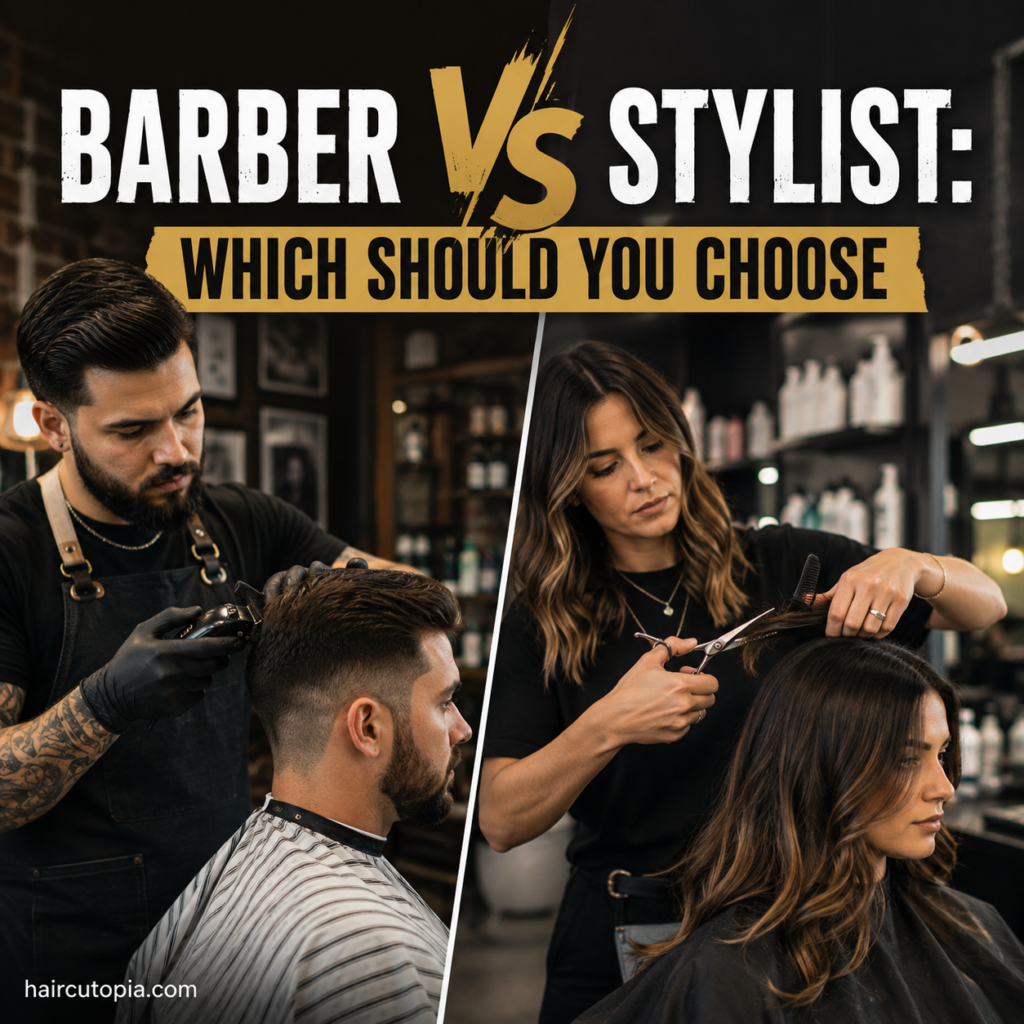
Choosing between a barber and a hairstylist sounds simple until you’re actually trying to decide where to book your next haircut.
If you want a fade, should you automatically go to a barber? What if you have long hair? Can a stylist give you a good men’s haircut? And what happens when you want something that falls somewhere in between—a medium-length style with tapered sides, for example?
The answer isn’t really about whether barbers or stylists are better. They often specialize in different techniques, tools, hair lengths, and finished looks.
Here’s how to decide which one makes the most sense for your hair and the haircut you want.
What’s the Difference Between a Barber and a Stylist?
Traditionally, barbers specialize in shorter hairstyles, clipper work, fades, tapers, beard grooming, and other services commonly associated with barbershops.
Hairstylists typically work with a broader range of hair lengths and often specialize in scissor cutting, layering, styling, coloring, and chemical services.
There’s plenty of overlap.
Some barbers are excellent with medium and longer hairstyles. Some stylists are highly skilled at fades and clipper cuts. Modern salons and barbershops don’t always fit neatly into traditional definitions.
Still, their typical areas of expertise give you a useful starting point.
What Does a Barber Specialize In?
Barbers generally spend a large part of their working day cutting short hair.
That repetition matters.
If someone performs fades, tapers, lineups, and clipper cuts several times every day, they develop a very specific set of skills around those techniques.
Common barber services include:
- Fades
- Tapers
- Buzz cuts
- Crew cuts
- Short textured cuts
- Clipper cuts
- Lineups and edge-ups
- Neckline cleanup
- Beard trimming
- Beard shaping
- Hot towel shaves
- Razor detailing
Many barbers also cut medium-length hair and use scissors extensively. The idea that barbers only know how to use clippers is outdated.
The main distinction is that short, structured haircuts tend to make up a larger percentage of a barber’s everyday work.
What Does a Hairstylist Specialize In?
Hairstylists generally work with a wider range of hair lengths, shapes, and styling techniques.
Scissor work tends to play a larger role, particularly when creating movement, layers, volume, or shape in medium and long hair.
Common salon services include:
- Short, medium, and long haircuts
- Layered cuts
- Scissor cuts
- Blowouts
- Hair coloring
- Highlights
- Balayage
- Texture services
- Bang and fringe shaping
- Styling for special occasions
- Hair treatments
Again, these aren’t hard boundaries.
A stylist who specializes in men’s grooming may perform excellent fades. Likewise, an experienced barber may be very comfortable cutting shoulder-length hair.
The individual professional’s experience matters more than the sign outside the building.
Barber vs Stylist for a Fade
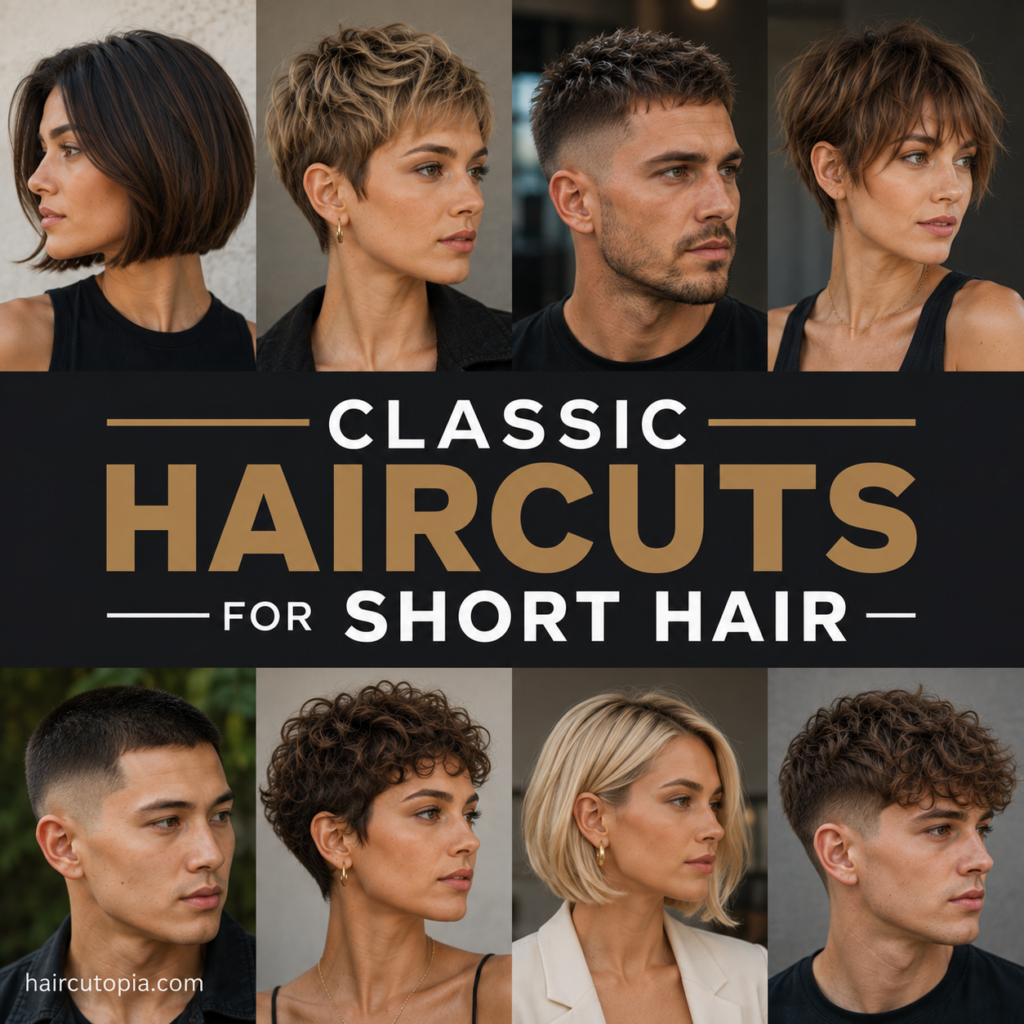
If your main priority is a fade, a barber is usually the more natural choice.
Fades require careful clipper work and smooth transitions between extremely short lengths. Since many barbers perform several fades every day, the technique tends to be a core part of their skill set.
Barbers commonly work with:
- Low fades
- Mid fades
- High fades
- Skin fades
- Drop fades
- Burst fades
- Taper fades
They also tend to be familiar with combining those fades with lineups, beard transitions, textured tops, crops, pompadours, and other popular short hairstyles.
That doesn’t mean a stylist can’t give you a great fade.
If a stylist’s portfolio shows strong fade work and they regularly cut short men’s hairstyles, there’s no reason to avoid them simply because they work in a salon.
For a fade, choose the person with demonstrated fade experience.
Barber vs Stylist for a Taper
A barber is also generally a strong choice for a taper.
Tapers require precise transitions around areas such as the temples, sideburns, ears, and neckline. These are areas barbers work with constantly.
A classic haircut with a subtle taper is especially well suited to traditional barbering.
However, you might prefer a stylist if the taper is only one small component of a much longer or heavily layered hairstyle.
For example, someone with medium-length flowing hair who wants a subtle taper around the neckline may benefit from a professional who regularly works with that overall length and shape.
Barber vs Stylist for Long Hair
For genuinely long hair, a stylist is usually the better starting point.
Long hairstyles often depend heavily on:
- Layering
- Weight distribution
- Movement
- Face framing
- Scissor technique
- Texture
- Maintaining length while reshaping the hair
These are techniques hairstylists frequently use throughout the day.
Long hair can also behave very differently depending on whether it’s straight, wavy, curly, thick, or fine. Someone who regularly works with longer hair will generally have more experience predicting how the finished shape will fall.
That doesn’t mean a barber can’t cut long hair. Some absolutely can.
But if your hair is shoulder length and you’re looking for long layers, you probably don’t want to choose a barber whose portfolio consists almost entirely of skin fades.
Barber vs Stylist for Medium-Length Hair
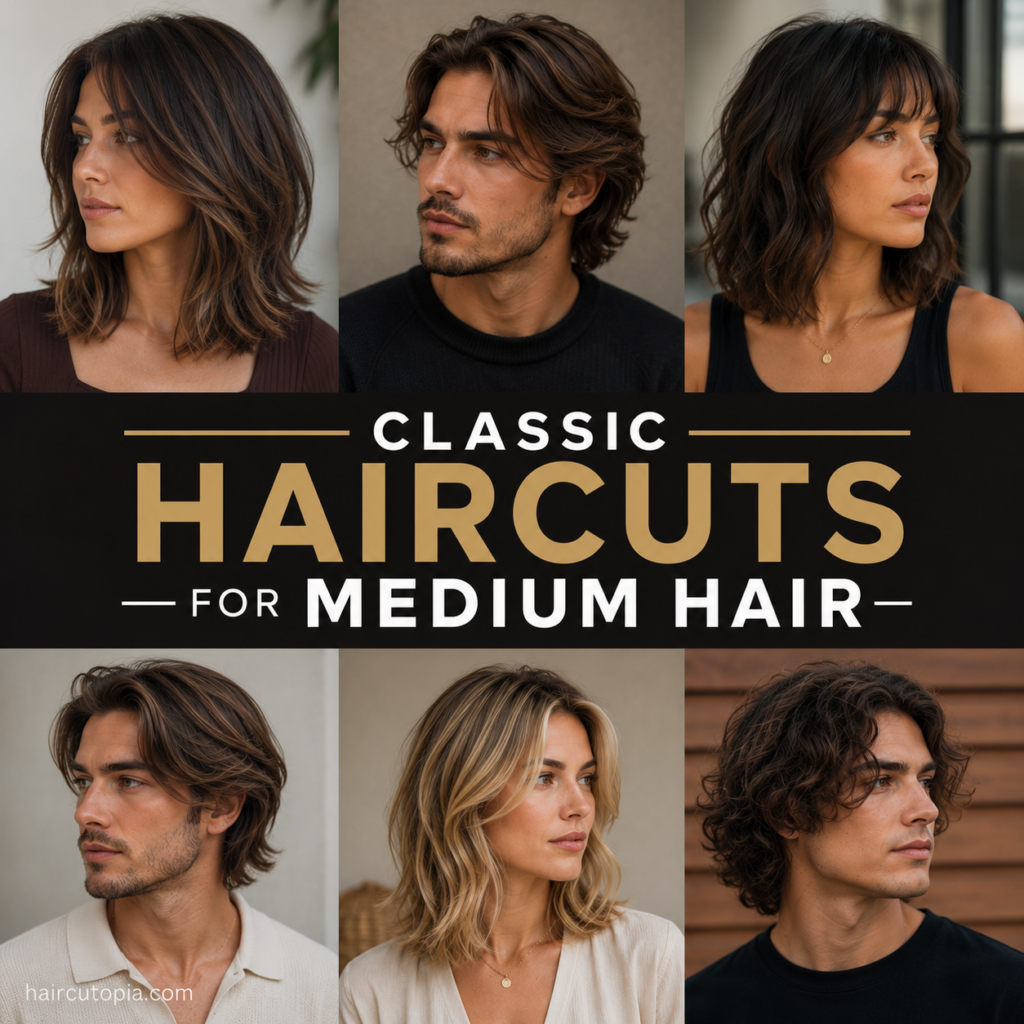
Medium-length hair is where the decision becomes less obvious.
Either professional may be the right choice.
Think about the finished style rather than simply the current length of your hair.
If you’re looking for something like:
- A medium-length slick back
- A textured quiff with tapered sides
- A longer side part
- A classic scissor cut
- A modern pompadour
an experienced barber may be a great fit.
If you want:
- Longer layers
- Lots of movement
- Face framing
- A flowing hairstyle
- Significant reshaping
- More complex scissor work
a stylist may be the better option.
For medium-length hair, portfolios become particularly useful. Find someone who regularly creates hairstyles similar to the one you want.
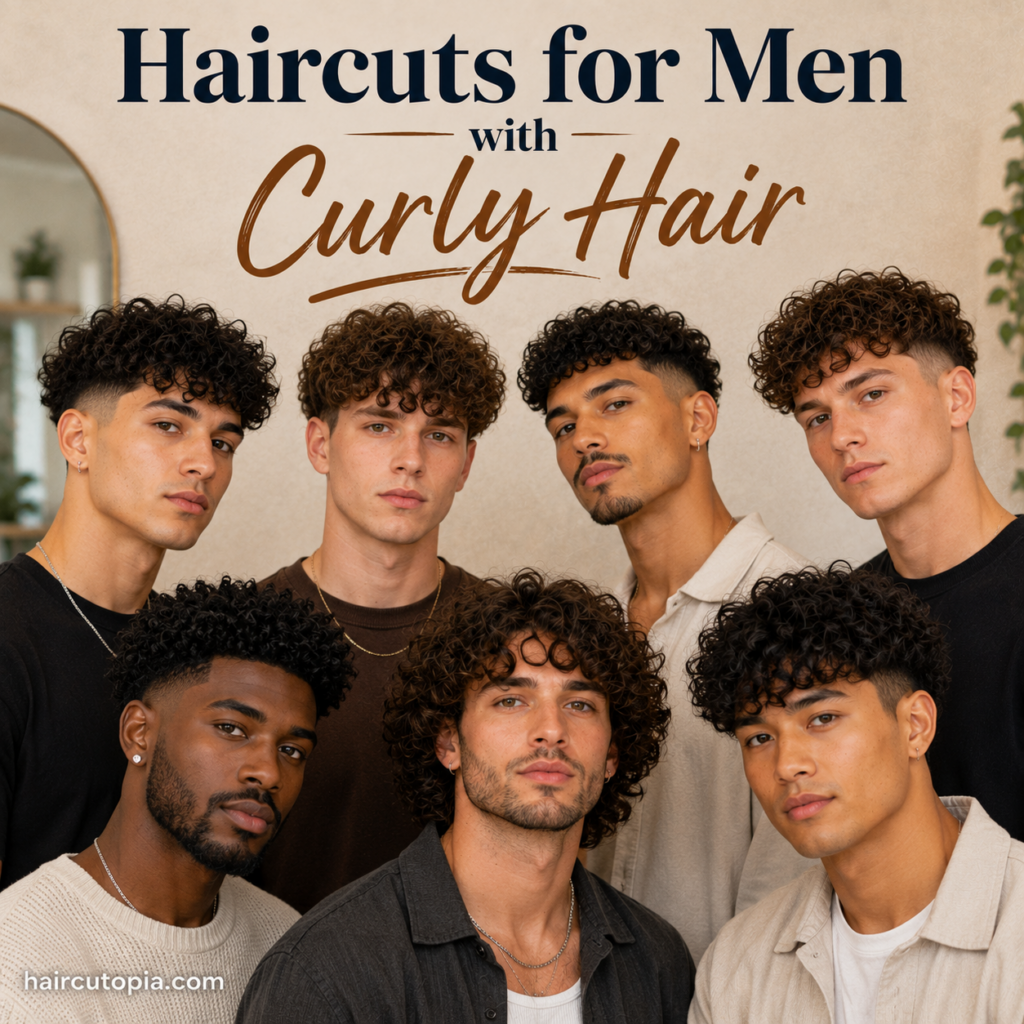
Barber vs Stylist for Curly Hair
Curly hair deserves its own consideration because cutting curls well requires understanding how the hair behaves once it’s dry and styled.
Either a barber or stylist can be excellent with curly hair.
What matters is whether they actually specialize in your curl pattern and desired length.
If you have short curls and want a fade with defined texture on top, a barber experienced with curly hair may be ideal.
If you have longer curls and want shaping, layers, or improved movement, a curl-focused stylist may make more sense.
Look for examples of their previous work on hair similar to yours.
Simply being good at straight hair doesn’t automatically mean someone is equally experienced with curls.
Barber vs Stylist for Thick Hair
Both barbers and stylists regularly work with thick hair, but the right choice depends on what you want done with it.
A barber may be a good fit when you want thick hair controlled through shorter sides, tapering, fading, or structured scissor work.
A stylist may be preferable when you want to preserve substantial length while removing bulk and creating movement.
With thick hair, it’s important that the professional understands how to remove weight without leaving the haircut looking thin, uneven, or difficult to style.
Barber vs Stylist for Thin or Fine Hair
Fine or thinning hair isn’t automatically better suited to either a barber or stylist.
The professional’s experience is more important.
A skilled barber may recommend a shorter style that creates the appearance of greater density and minimizes contrast in thinning areas.
A stylist experienced with fine hair may use careful layering and shaping to create movement and volume without removing too much weight.
In either case, tell them what concerns you about your hair rather than simply asking for a particular haircut.
They may recommend adjustments that make the style work better for your density and growth pattern.
Who Is Better With Clippers?
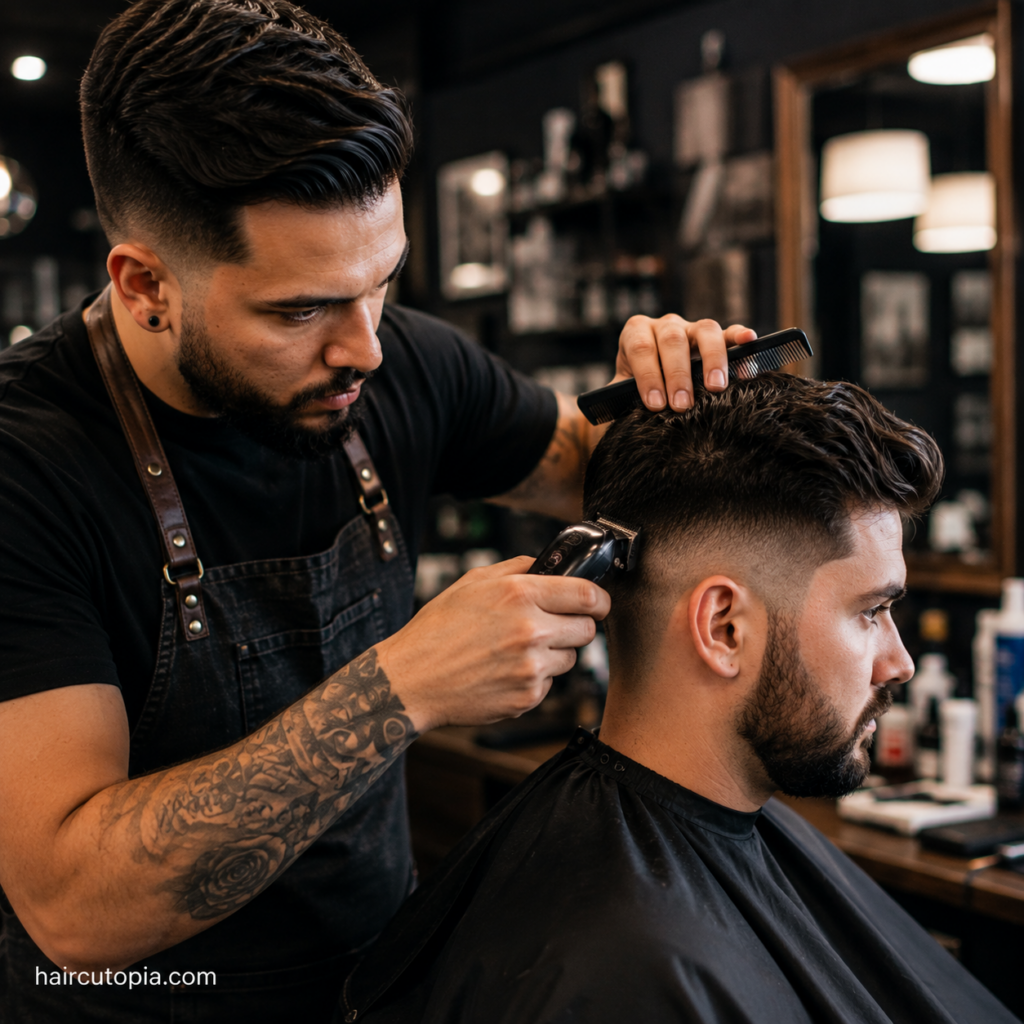
Barbers generally have the advantage when it comes to extensive clipper work.
Clippers are central to many traditional and modern barbering techniques.
Barbers routinely work with:
- Clipper guards
- Adjustable clipper levers
- Trimmers
- Foil shavers
- Clipper-over-comb techniques
- Fade blending
- Hairline detailing
If your haircut is primarily clipper-based, a barber is usually the safest starting point.
However, plenty of stylists—particularly those specializing in short hair—are highly proficient with clippers as well.
Who Is Better With Scissors?
This comparison is more nuanced.
Both barbers and stylists receive training in scissor cutting.
Traditional barbering includes techniques such as scissor over comb, point cutting, layering, graduation, and freehand shaping.
Stylists, however, may spend a greater percentage of their time performing complex scissor work on medium and long hairstyles.
If your haircut relies almost entirely on detailed layering and maintaining substantial length, a stylist will often have more relevant day-to-day experience.
For short scissor cuts, either may be an excellent choice.
Who Should You Choose for a Beard Trim?
This one is easier: generally, choose a barber.
Beard grooming is a traditional barbering service, and many barbers regularly perform:
- Beard trims
- Beard fades
- Beard lineups
- Mustache shaping
- Neck cleanup
- Razor detailing
A barber can also coordinate your beard with your haircut.
For example, the sideburns can gradually fade from your haircut into your beard rather than looking like two unrelated styles.
If beard grooming is an important part of your appointment, look for a barber who specifically includes beard services.
What About a Straight-Razor Shave?
A traditional straight-razor or hot towel shave is generally associated with barbershops.
However, shaving services and licensing requirements vary depending on location, so not every barber offers them.
If you specifically want a straight-razor shave, check the shop’s services before booking rather than assuming it’s included.
Barber vs Stylist for Hair Color
For coloring services, a salon and hairstylist will generally be the more appropriate choice.
Coloring can involve specialized knowledge of:
- Hair color formulation
- Lightening
- Highlights
- Toners
- Balayage
- Color correction
- Previously treated hair
Some barbershops offer coloring or gray-blending services, particularly for shorter hair and beards.
For substantial color changes or more complicated color work, however, look for a stylist or colorist who specializes in that service.
What About a Complete Hairstyle Change?
If you’re making a major change, either a barber or stylist could be appropriate depending on where you’re starting and where you’re going.
Imagine you’ve had shoulder-length hair for several years and now want a short textured crop with a low skin fade.
A barber who specializes in that finished style might be the best person for the transformation.
On the other hand, if you’re growing out a short haircut and want to transition into a medium-length layered style, a stylist may have more experience guiding the shape through different stages of growth.
Choose based on where you want to end up, not just where your hair is now.
Barbershop vs Salon Experience
The atmosphere can also influence your decision.
Traditional barbershops often focus heavily on haircutting and grooming. Appointments may be relatively straightforward: consultation, haircut, styling, and possibly beard work.
Salons frequently offer a broader menu of hair services and may spend more time on washing, styling, coloring, treatments, and longer consultations.
But modern businesses vary enormously.
You’ll find premium barbershops offering lengthy consultations and spa-like grooming services, just as you’ll find casual salons offering fast, straightforward haircuts.
Don’t choose entirely based on stereotypes about the environment.
Is a Barber Cheaper Than a Stylist?
Sometimes, but not always.
Historically, basic barber cuts have often been less expensive than salon services. That’s partly because many barber cuts take less time and don’t involve services such as shampooing, blow-drying, or extensive styling.
Today, pricing varies widely.
A highly sought-after barber in a major city can charge considerably more than a neighborhood salon. Likewise, specialized salon services can cost much more than a standard haircut.
Price can depend on:
- Location
- Experience
- Appointment length
- Demand
- Services included
- Shop or salon positioning
- Complexity of the haircut
Instead of assuming one will be cheaper, check the actual service menu.
How Often Will You Need to Go Back?
The haircut itself has more influence on maintenance frequency than whether you visit a barber or stylist.
Very short, highly defined haircuts tend to show growth quickly.
A skin fade, for example, may lose its freshly cut appearance relatively soon because the shortest sections begin growing immediately.
Longer hairstyles often allow more time between appointments because small amounts of growth don’t dramatically change the overall appearance.
If you don’t want frequent maintenance, tell your barber or stylist.
They may be able to recommend a haircut that grows out more naturally.
How to Choose the Right Barber
Don’t pick a barber solely because they’re nearby or have good general reviews.
Look at their actual work.
A barber may be extremely talented while specializing in a completely different style from what you want.
Before booking, check for:
- Photos of haircuts similar to yours
- Experience with your hair texture
- Consistent fade and taper work if that’s what you want
- Scissor work if you’re keeping length
- Beard work if you want grooming services
- Reviews mentioning the specific services you need
If nearly every photo shows the type of haircut you’re looking for, that’s a good sign.
How to Choose the Right Stylist
The same principle applies to stylists.
Look beyond overall ratings and try to find examples of their individual work.
Pay attention to:
- Hair lengths they regularly work with
- Hair textures represented in their portfolio
- Layering and shaping
- Short haircut experience
- Men’s haircut experience, if relevant
- Color work if you’re considering color
- Styles similar to your reference photos
A salon may have several stylists with completely different specialties, so choosing the individual can be more important than choosing the salon itself.
Should You Bring a Reference Photo?
Yes. Whether you’re going to a barber or stylist, reference photos can make the consultation much easier.
Try to find a photo of someone with hair that’s reasonably similar to yours in:
- Texture
- Density
- Length
- Hairline
- Growth pattern
You don’t need an exact match.
The photo simply gives the professional a visual reference for the length, shape, texture, and overall finish you’re imagining.
You can also point out individual elements you like.
For example:
“I like how short the sides are in this photo, but I’d like to keep my top a little longer.”
That’s much clearer than expecting the professional to copy the entire haircut exactly.
Questions to Ask Before Booking
If you’re unsure whether a particular barber or stylist is right for you, a few simple questions can help.
You might ask:
- Do you regularly cut this type of hairstyle?
- Are you comfortable working with my hair texture?
- Do you do skin fades or taper fades?
- Do you work with longer men’s hairstyles?
- Do you offer beard trimming?
- Do you specialize in scissor cuts?
- Do you offer hair coloring?
- Can I show you a reference photo before we start?
You don’t need to interrogate someone before booking. The goal is simply to confirm that the service you want falls within their normal area of work.
Barber or Stylist? Quick Guide
Here’s a simple starting point:
Choose a Barber If You Want:
- A fade
- A taper
- A buzz cut
- A crew cut
- A short textured haircut
- Extensive clipper work
- A lineup or edge-up
- A beard trim
- A beard fade
- Traditional barbering services
Choose a Stylist If You Want:
- Long layers
- Significant length maintained
- Complex layering
- Face framing
- Long or medium-length reshaping
- Hair coloring
- Highlights or balayage
- More involved styling services
Either May Be a Good Choice If You Want:
- A medium-length haircut
- A short scissor cut
- A side part
- A pompadour
- A quiff
- A slicked-back style
- A haircut for curly hair
- A major hairstyle change
For these overlapping styles, the individual’s portfolio matters more than their job title.
Barber vs Stylist FAQ
Can a stylist do a fade?
Yes. Many stylists are experienced with fades and clipper work, especially those who specialize in short hairstyles. Check their portfolio rather than assuming based on the title “stylist.”
Can a barber cut long hair?
Yes. Barbers are trained in scissor cutting, and some specialize in medium and longer hairstyles. However, if you want extensive layering or shaping on very long hair, a stylist who regularly performs that type of work may have more relevant experience.
Should men go to a barber or salon?
Either can be appropriate. Men who prefer fades, tapers, short clipper cuts, and beard grooming often choose barbers. Those with longer hairstyles or who want coloring and more complex layering may prefer a salon. The haircut matters more than gender.
Should women go to a barber?
Women can absolutely go to barbers. A barber may be an excellent choice for short cuts, fades, undercuts, buzz cuts, and other clipper-focused styles. Choose a professional whose portfolio demonstrates experience with the haircut you want.
Are barbers better at men’s haircuts?
Barbers often specialize in traditionally masculine short hairstyles, but that doesn’t mean they’re automatically better at every men’s haircut. A man with shoulder-length layered hair, for example, may be better served by a stylist who specializes in long hair.
Are stylists better with long hair?
Generally, stylists work with long hair more frequently and may have more day-to-day experience with layering, movement, weight distribution, and maintaining length. Individual experience still matters.
Who is better for curly hair?
Neither automatically. Choose a barber or stylist who has demonstrated experience with your curl pattern and desired hairstyle.
Who should I see for a fade and beard trim?
A barber is generally the natural choice because both fade haircuts and beard grooming are common barbering services.
Can I switch from a barber to a stylist?
Of course. You’re not committed to one type of professional. Your needs may change as your hairstyle changes. Someone growing from a skin fade into shoulder-length hair, for example, may eventually find that a stylist is better suited to the new style.
The Bottom Line
The barber-versus-stylist decision doesn’t have to be complicated.
If you want a fade, taper, short clipper cut, lineup, or beard work, start by looking at barbers. If you’re keeping substantial length, want complex layers, or need coloring services, start with stylists.
For everything in between, focus less on the title and more on the person holding the scissors.
Look at their portfolio. Check whether they regularly work with your hair type. Find examples of the haircut you want. Bring a reference photo and explain how you normally style your hair.
A great barber who specializes in your desired haircut is better than the wrong stylist—and a great stylist with exactly the experience you need is better than the wrong barber.
Choose the professional whose actual work looks most like the hair you want to leave with.