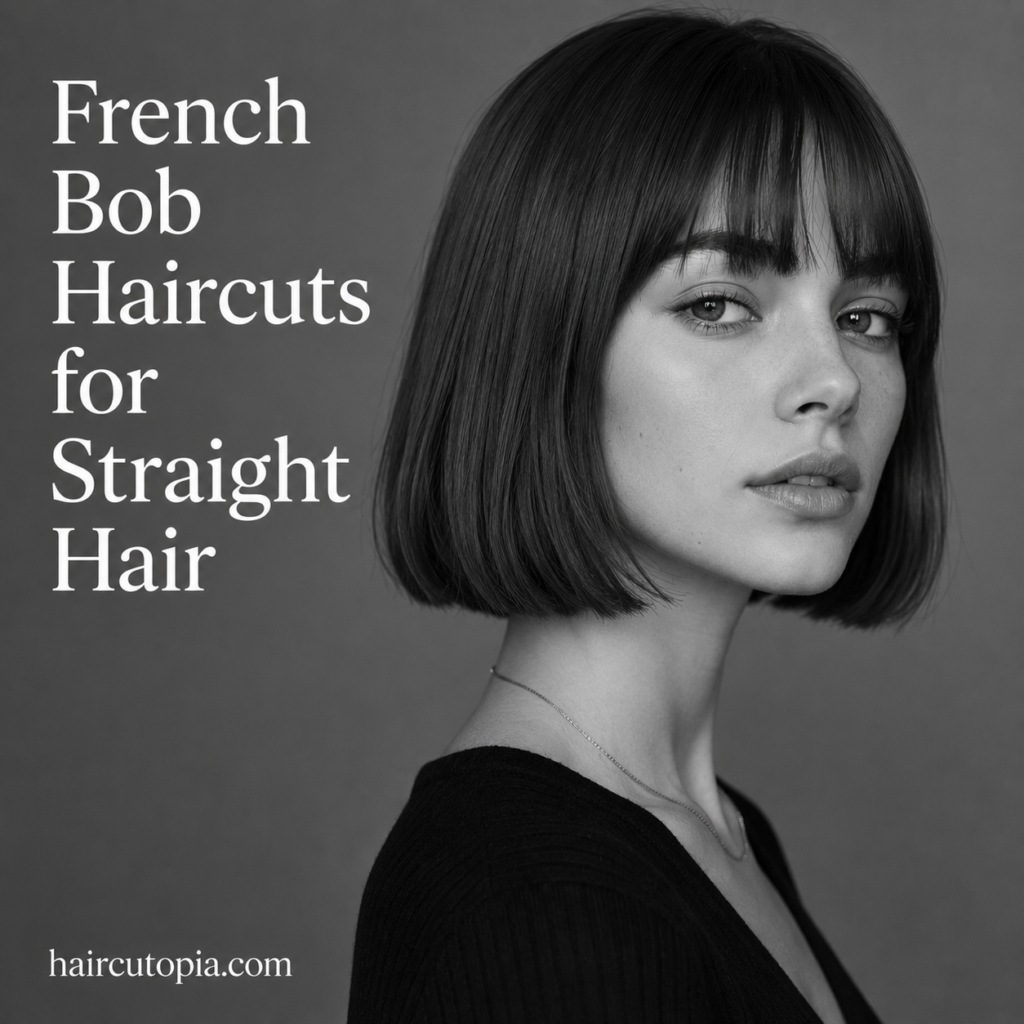
There’s something about a French bob that makes a short haircut feel instantly stylish without looking overdone. On straight hair, the shape becomes especially noticeable. Clean ends, a defined jaw-length silhouette, and a soft fringe can all stand out beautifully when the natural texture of the hair is smooth.
The classic French bob is usually cut around the jaw or slightly above it, often with bangs. Modern versions are much more flexible. You can go blunt and polished, add subtle layers for movement, choose wispy or curtain bangs, or skip the fringe entirely.
Straight hair also makes small details matter. A difference of an inch in length, a softer perimeter, or a slightly different part can completely change how the bob frames your face.
If you’re thinking about going shorter, these French bob haircuts for straight hair offer plenty of inspiration.
What Is a French Bob?
A French bob is a short bob haircut traditionally worn around the jawline, often paired with bangs or a soft fringe.
Compared with longer bob styles, the French bob has a compact silhouette that puts more attention on the face, neck, and jawline.
Typical features include:
- Cheekbone, jaw, or chin-length hair
- A defined bob shape
- Blunt or subtly softened ends
- Optional bangs or fringe
- Minimal, uncomplicated styling
The haircut doesn’t have to follow one exact formula.
Some French bobs look sharp and geometric, while others have softer ends and a slightly undone finish. The best version depends on your hair density, face shape, and how polished you want the haircut to look.
Why French Bobs Work So Well With Straight Hair
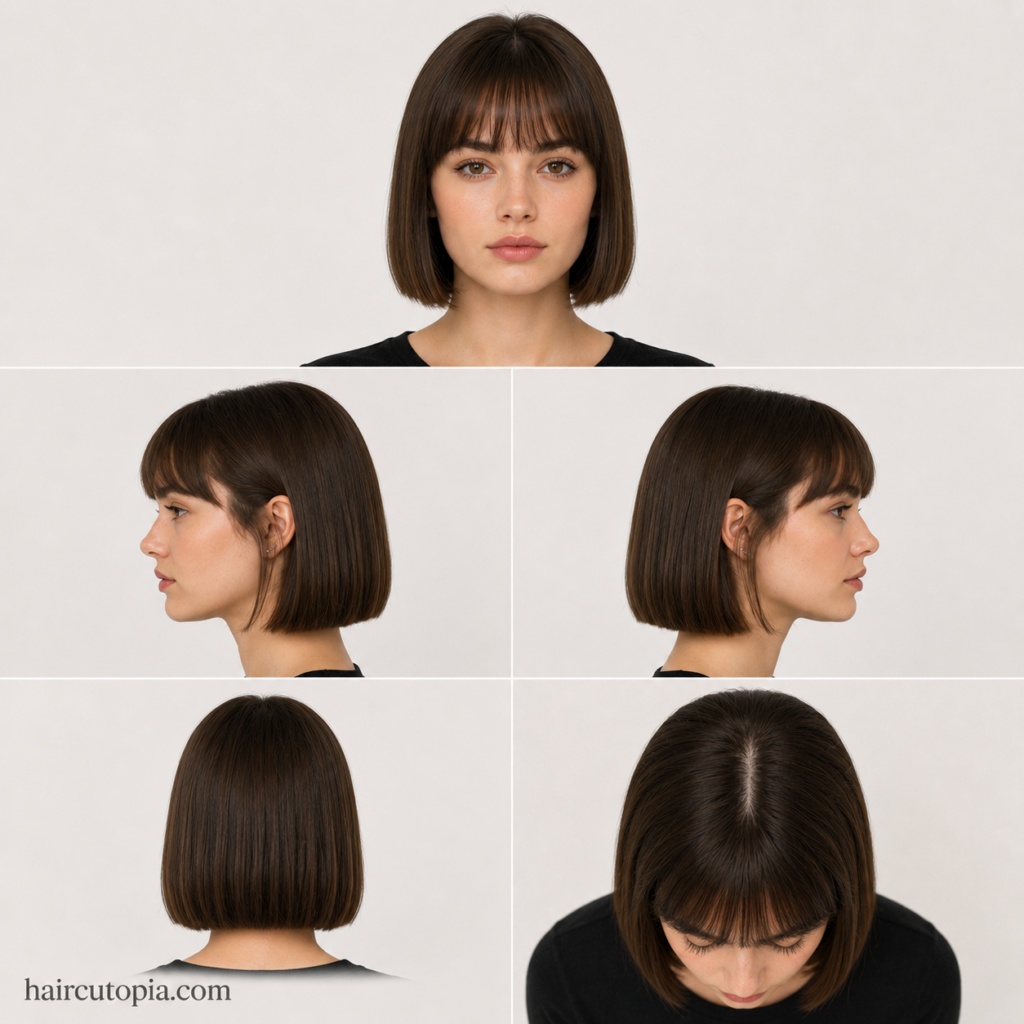
Straight hair naturally showcases the structure of a short bob.
There aren’t curls or strong waves changing the outline, so the length and perimeter of the haircut become more visible.
The Shape Stands Out
One of the defining characteristics of a French bob is its compact shape.
On straight hair, a jaw-length perimeter creates a clear line around the face. This can make even a relatively simple haircut feel intentional and distinctive.
Blunt Ends Look Fuller
Fine or medium straight hair can sometimes look thinner toward the ends when it gets long.
Taking the hair shorter and maintaining a blunt perimeter can create the appearance of a denser baseline.
That doesn’t mean every French bob needs to be completely blunt, but keeping some weight through the ends can be particularly flattering on straight hair.
Bangs Blend Naturally Into the Cut
Straight hair works well with many types of fringe.
You can choose full bangs for a classic appearance, wispy bangs for something softer, or longer curtain bangs if you want more flexibility.
Styling Can Be Simple
If your hair naturally dries fairly straight, you may not need much styling to maintain the basic shape.
A quick blow-dry, a little smoothing product, or simply tucking one side behind your ear may be enough for everyday wear.
Best French Bob Haircuts for Straight Hair
The basic French bob may be simple, but changing the length, fringe, layers, or finish creates very different results.
Here are some of the best variations to consider.
1. Classic Jaw-Length French Bob
The jaw-length French bob is the version most closely associated with the traditional style.
The perimeter sits near the jaw, creating a compact shape that frames the lower half of the face.
On straight hair, this length looks particularly clean because the ends naturally fall into a visible line.
Pair it with bangs for a classic French-inspired look, or leave the forehead open for a more contemporary finish.
2. Blunt French Bob
If you want the haircut itself to make the statement, consider a blunt French bob.
The ends are cut with minimal layering, creating a strong, defined perimeter.
This can be especially effective for fine straight hair because maintaining weight through the bottom can make the ends appear fuller.
The look can be worn extremely sleek or slightly tousled depending on your preference.
3. French Bob With Full Bangs
Full bangs immediately give a short bob a more recognizable French-inspired character.
The fringe can sit around the eyebrows or slightly above them, depending on how dramatic you want the result to be.
On straight hair, bangs tend to display their shape clearly, so the exact length matters.
If your hair has cowlicks around the hairline, talk to your stylist before choosing a very short fringe.
4. French Bob With Wispy Bangs
Wispy bangs are a softer alternative to a full fringe.
Instead of creating a solid line across the forehead, smaller sections of hair are allowed to separate naturally.
This makes the haircut feel lighter and can be particularly useful if you want bangs without covering your entire forehead.
Wispy fringe also tends to blend nicely into a straight French bob as it grows.
5. French Bob With Curtain Bangs
Curtain bangs offer even more flexibility.
They usually part around the center and become gradually longer toward the sides, where they blend into the rest of the bob.
This creates movement around the cheekbones without requiring a short, straight-across fringe.
If you’re unsure about committing to bangs, a longer curtain fringe is a good place to start.
6. Chin-Length French Bob
Not ready for a very short bob?
A chin-length French bob keeps a little extra length while preserving the overall compact shape.
The additional length can make the haircut easier to tuck behind the ears and gives you slightly more styling flexibility.
It’s also a practical transition if you’re going from long or medium-length hair to a short bob for the first time.
7. Short French Bob
A short French bob sits above the jaw and may even approach cheekbone length.
This creates a stronger, more fashion-forward silhouette.
Because straight hair clearly reveals the perimeter, precision becomes particularly important at this length.
Even a relatively small difference in where the ends fall can change the overall appearance of the haircut.
8. Layered French Bob
Layers can give straight hair more movement, especially if it tends to fall flat.
The key is not overdoing them.
A French bob usually benefits from maintaining a recognizable perimeter. Too many short layers can turn the haircut into a completely different style.
Subtle internal layers can remove weight and encourage movement without sacrificing the classic bob shape.
9. French Bob Without Bangs
You don’t need bangs to wear a French bob.
Without a fringe, the haircut feels simpler and often slightly more modern.
You can wear it with a center part for a balanced, symmetrical appearance or move the part to one side for more volume.
Skipping bangs also means fewer fringe trims and an easier growing-out process.
10. Center-Parted French Bob
A center part pairs naturally with a straight bob.
It creates symmetry and puts the focus on the strong outline of the haircut.
This version works particularly well with a blunt or lightly softened perimeter.
You can also tuck both sides behind the ears for a clean, minimal look.
11. Side-Parted French Bob
A side part changes the personality of the haircut without changing its length.
Moving more hair toward one side creates additional volume and breaks up the symmetry of a traditional bob.
It’s a useful option for straight hair that tends to sit flat around the crown.
You can also switch between center and side parts depending on how you want to style the cut that day.
12. Tucked French Bob
One of the simplest ways to style a straight French bob is also one of the most effective: tuck it behind your ears.
You can tuck both sides for a clean finish or just one side for a slightly more relaxed appearance.
This small styling change exposes more of the jawline and can make the haircut look noticeably different without using any heat tools.
13. Soft French Bob
Not every French bob needs a razor-sharp baseline.
A softer version keeps the general jaw-length silhouette while lightly texturizing the ends.
This reduces the severity of the perimeter and creates subtle movement.
If you like the idea of a short bob but don’t want a highly geometric haircut, this can be a good compromise.
14. Sleek French Bob
Straight hair is ideal for a sleek French bob.
Rather than adding lots of texture, the styling emphasizes smoothness, shine, and a controlled perimeter.
The result is polished but still relatively simple.
This style works especially well with a blunt baseline and either a center part or full fringe.
Blunt or Layered: Which Is Better for Straight Hair?
This is one of the most important decisions to make before getting a French bob.
Neither option is universally better.
Your hair density and desired finish should guide the choice.
Choose a Blunter Cut If:
- You want the ends to appear fuller
- Your hair is fine or medium in density
- You like clean, defined shapes
- You prefer sleek styling
- You want a stronger bob silhouette
Consider Subtle Layers If:
- Your hair is very thick
- You want more movement
- Your bob tends to feel heavy
- You prefer a softer finish
- You want to reduce bulk without losing the overall shape
You can also combine the two approaches.
A stylist can maintain a relatively blunt perimeter while adding subtle internal layering. This preserves fullness at the ends while reducing excess weight inside the haircut.
Choosing the Right French Bob Length
A difference of just an inch can noticeably change a short bob.
Before your haircut, think about which facial features you want the perimeter to emphasize.
Cheekbone Length
A cheekbone-length French bob is short, bold, and highly visible.
Because the perimeter ends higher on the face, it can draw attention toward the cheekbones and eyes.
This is one of the more dramatic versions of the haircut.
Jaw Length
Jaw length is the classic option.
It creates a defined frame around the lower half of the face and gives you the recognizable French bob silhouette without going extremely short.
Chin Length
Chin length provides slightly more versatility.
There’s enough hair to tuck behind the ears easily, and the grow-out tends to transition naturally into a traditional bob.
If you’re uncertain about going very short, chin length is often a comfortable starting point.
French Bob Haircuts for Fine Straight Hair
Fine straight hair can be an excellent candidate for a French bob.
Shortening the hair removes length that may be pulling it flat, while a relatively blunt perimeter can make the ends look denser.
For fine hair, consider:
- Keeping layering minimal
- Maintaining fullness around the perimeter
- Using lightweight volumizing products
- Avoiding heavy oils near the roots
- Experimenting with a side part for extra lift
A stylist may still add subtle internal texture, but excessive layering can make already-fine ends appear thinner.
French Bob Haircuts for Thick Straight Hair
Thick straight hair presents a different challenge.
Keeping every strand at exactly the same length can sometimes create too much bulk around the bottom of the haircut.
Strategic weight removal can help.
This might include internal layering, subtle graduation, or carefully texturized sections.
The goal is to control bulk without removing so much hair that the bob loses its shape.
Bangs or No Bangs?
Bangs are closely associated with the French bob, but they’re optional.
Your styling habits should play a role in the decision.
French Bob With Bangs
Bangs can:
- Frame the eyes
- Add softness around the forehead
- Make the haircut feel more traditionally French
- Create additional visual interest
- Balance the proportions of the haircut
The downside is maintenance.
Short bangs can require frequent trims, and some hair types need daily styling to keep the fringe sitting correctly.
French Bob Without Bangs
Skipping bangs keeps things simpler.
You’ll have more freedom to switch your part, tuck your hair behind your ears, and grow the haircut without managing a separate fringe.
If you want some face framing without committing to bangs, longer curtain pieces can bridge the gap.
French Bobs for Different Face Shapes
You don’t need a particular face shape to wear a French bob.
Instead, adjust the details of the haircut to create the effect you want.
Round Faces
A chin-length bob can provide slightly more vertical length around a round face.
A side part or longer curtain fringe can also soften the symmetry of the haircut.
Oval Faces
Oval faces can experiment with many French bob lengths.
A classic jaw-length cut creates a balanced look, while a shorter cheekbone-length bob makes a stronger statement.
Square Faces
A perfectly blunt bob ending directly at a strong jawline can emphasize its shape.
If you prefer something softer, slightly texturized ends or gentle face-framing pieces can reduce the severity of the perimeter.
Heart-Shaped Faces
A bob with fullness around the jaw can complement a narrower chin.
Soft bangs or curtain fringe can also create balance around a wider forehead.
Long Faces
A jaw-length bob creates width around the sides of the face.
Bangs can further change the proportions by breaking up the vertical space across the forehead.
How to Style a French Bob With Straight Hair
Straight hair usually doesn’t require a complicated routine for this haircut.
The goal is often to enhance the shape rather than completely transform your natural texture.
1. Start With Damp Hair
Gently towel-dry your hair until it’s damp rather than soaking wet.
Apply your preferred styling product before drying.
2. Add Lightweight Volume
If your hair tends to sit flat, apply a lightweight volumizing product around the roots.
Avoid overloading the ends with heavy products, particularly if you have fine hair.
3. Blow-Dry the Hair
You can use a paddle brush for a straighter finish or a round brush if you want the ends to curve slightly inward.
Directing the airflow downward can help create a smoother surface.
4. Adjust the Ends
You don’t necessarily need every end to curve inward.
Leaving some pieces straighter can create a more relaxed, contemporary finish.
If needed, a flat iron can refine individual sections rather than the entire head.
5. Finish Lightly
A small amount of smoothing serum can add shine and control flyaways.
For a more relaxed look, use a lightweight texture product instead.
The haircut should still have some natural movement.
How to Keep a Straight French Bob From Looking Flat
Straight hair can occasionally lose volume at shorter lengths, particularly around the roots.
Fortunately, you don’t need to create huge volume to make a French bob look good.
Try:
- Switching your part
- Blow-drying the roots in the opposite direction
- Using lightweight volumizing mousse
- Avoiding heavy conditioner near the scalp
- Tucking only one side behind your ear
- Adding subtle internal layers if your hair is very dense
Even a small amount of lift around the crown can change the overall silhouette.
How Often Should You Trim a French Bob?
A short bob shows growth relatively quickly because its shape depends heavily on where the perimeter sits.
If you want to maintain a precise jaw-length shape, a trim roughly every 6–8 weeks is a common starting point.
You may be able to go longer between appointments if you don’t mind the haircut gradually becoming a chin-length or longer bob.
Bangs can require more frequent maintenance.
A short fringe may need attention before the rest of the haircut does, while longer curtain bangs tend to grow out more easily.
What to Ask for at the Salon
Bringing reference photos is helpful, but don’t rely on the phrase “French bob” alone.
Different stylists may interpret the haircut differently.
Be specific about the features you want.
For example:
“I’d like a French bob that falls around my jaw when dry. I want to keep some fullness through the ends, with minimal layering and a soft fringe.”
Discuss:
- Your preferred finished length
- Blunt versus softened ends
- How much layering you want
- Bang length and density
- Your usual part
- Your natural hair density
- How much daily styling you want to do
Also mention whether you normally air-dry or blow-dry your hair.
A haircut designed around your actual routine will be easier to maintain than one that only looks good after professional styling.
Is a French Bob High Maintenance on Straight Hair?
It depends on what you mean by maintenance.
Daily styling can be relatively easy, particularly if your hair naturally dries straight. Maintaining the exact shape, however, requires more frequent salon visits than most longer hairstyles.
A sleek, blunt French bob may also reveal uneven growth sooner than a softer, textured version.
Bangs add additional upkeep.
If you want the lowest-maintenance version possible, consider a chin-length French bob without short bangs and with a slightly softened perimeter.
You’ll still get the recognizable short-bob shape, but the grow-out will be more forgiving.
Common French Bob Mistakes to Avoid
A little planning can make the difference between a French bob that’s easy to wear and one you’re constantly trying to style.
Going Shorter Than You’re Comfortable With
A jaw-length bob can feel dramatically different if you’re used to long hair.
If you’re uncertain, start around the chin. You can always go shorter at your next appointment.
Adding Too Many Layers to Fine Hair
Layers create movement, but they also remove weight.
If your hair is fine, excessive layering can make the ends look thinner rather than fuller.
Ignoring Your Hairline
Cowlicks and natural growth patterns matter, especially when choosing bangs.
Your stylist should consider how your fringe naturally falls before deciding on its length and density.
Making the Cut Too Heavy for Thick Hair
The opposite problem can happen with thick straight hair.
A completely blunt haircut with no internal weight removal may become bulky around the ends.
Choosing a Cut That Requires Too Much Styling
Think realistically about your routine.
If you rarely use heat tools, choose a version of the French bob that works when your hair naturally dries.
Who Should Consider a Straight French Bob?
A French bob is worth considering if you want a short haircut with a clear, recognizable shape.
It can be especially appealing if you:
- Like short, structured hairstyles
- Want fine hair to appear fuller at the ends
- Prefer relatively simple everyday styling
- Want to highlight your jawline or cheekbones
- Like bangs or face-framing fringe
- Want a haircut that works both sleek and slightly undone
- Don’t mind regular trims
The amount of commitment depends largely on the length you choose.
A chin-length bob provides an easier introduction, while a cheekbone or very short jaw-length French bob creates a much bigger transformation.
Final Thoughts
French bob haircuts for straight hair can range from sharp and polished to soft and understated.
A blunt jaw-length cut puts the focus on clean lines and fullness. Wispy or curtain bangs soften the shape. Subtle layering introduces movement, while a slightly longer chin-length version offers more styling flexibility.
There’s no need to copy one exact version of the French bob.
The best approach is to adapt the haircut to your hair density, face-framing preferences, and everyday routine. Decide how short you genuinely want to go, whether you’re comfortable maintaining bangs, and how much time you normally spend styling your hair.
Get those details right, and a French bob can be surprisingly uncomplicated.
Sometimes the simplest version works best: straight hair, a great jaw-length cut, and just enough movement to keep everything from looking too perfect.

Related Posts
 Short Prom Hairstyles: Chic Ideas for Short Hair on Prom Night
 Haircuts for Long Faces and Straight Hair: 25 Flattering Styles That Create Perfect Balance
 Haircuts for Diamond Faces and Straight Hair: The Most Flattering Styles for Sleek, Balanced Looks
 Haircuts for Heart Faces and Straight Hair: 25 Flattering Styles That Add Shape and Movement