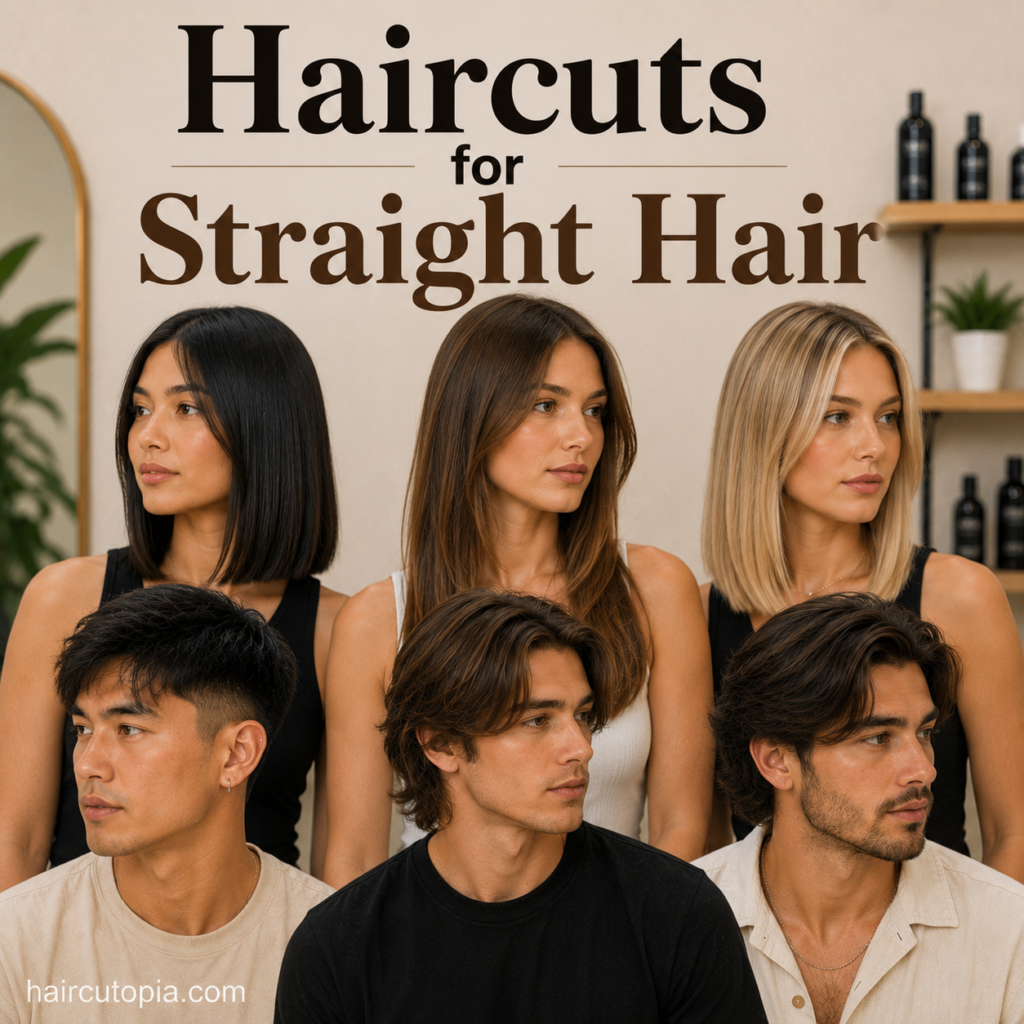
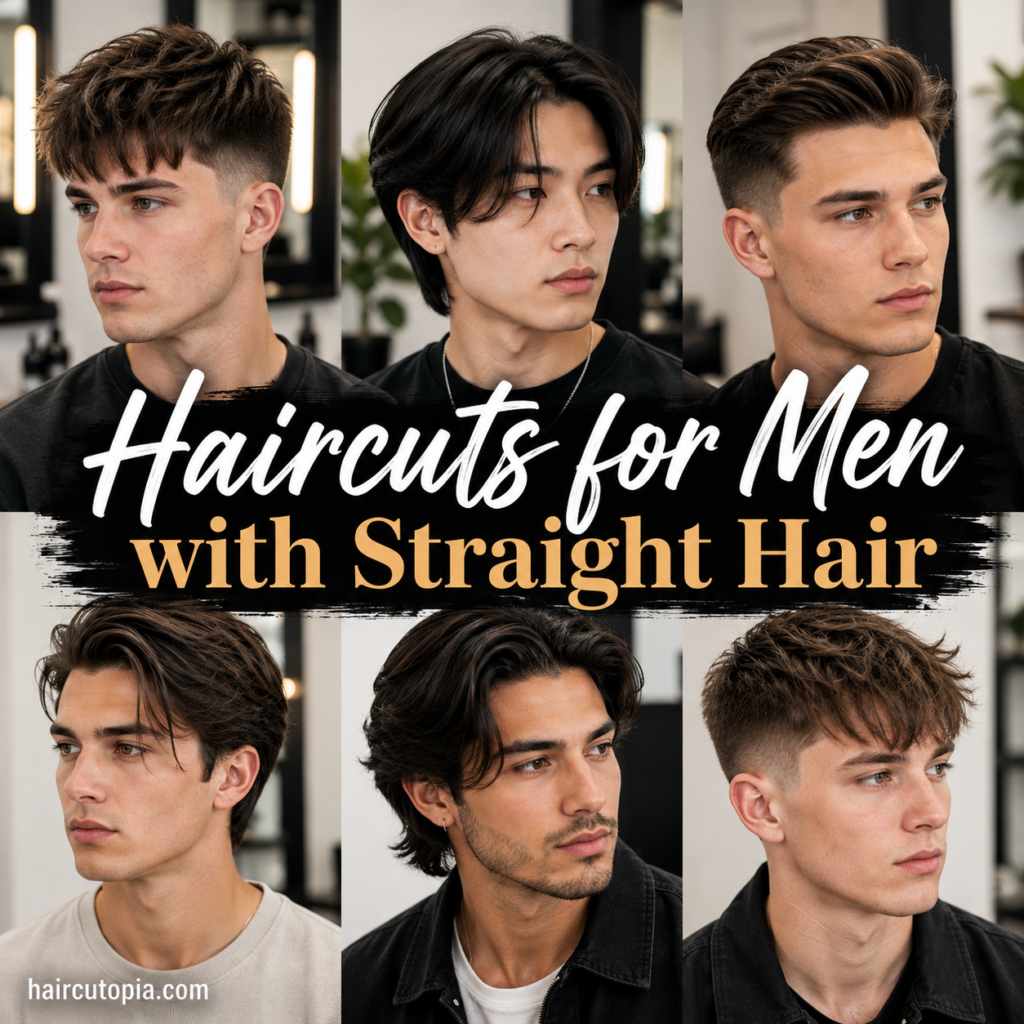
Straight hair can be incredibly easy to work with—until it isn’t.
Depending on its thickness and density, straight hair might sit perfectly with almost no effort, fall completely flat, stick straight out when cut too short, or refuse to hold the texture you’re trying to create. That’s why choosing the right haircut matters just as much as choosing a style you like.
The good news is that men with straight hair have plenty of options. Short fades and textured crops can create definition, medium-length styles offer movement and flexibility, and longer cuts can take advantage of straight hair’s naturally smooth appearance.
The best haircut is ultimately one that works with your hair’s natural behavior, your face shape, and the amount of styling you’re actually willing to do every morning.
Why Straight Hair Works With So Many Men’s Haircuts
Straight hair tends to show the structure of a haircut clearly.
A fade looks sharp because the transition isn’t hidden by curls. A blunt fringe creates a noticeable line. Longer layers remain visible rather than blending into a curl pattern.
That makes straight hair especially versatile for structured cuts.
Depending on your hair’s thickness, straight hairstyles can offer:
- Clean, defined shapes
- Easy side parts
- Visible layers and texture
- Smooth longer styles
- Sharp fades and tapers
- Flexible fringe options
- Relatively predictable styling
Density and strand thickness make a big difference, though.
Fine straight hair usually benefits from cuts that preserve fullness and create lift. Thick straight hair often needs some weight removed so it doesn’t become bulky or stick outward.
Best Short Haircuts for Men With Straight Hair
Short hair is practical, but that doesn’t mean every short haircut behaves the same way.
These styles work particularly well with straight hair.
Textured Crop
The textured crop keeps the sides relatively short while leaving enough length on top to create separation and movement.
Rather than combing the hair perfectly smooth, the top is usually styled forward or slightly messy.
This can be particularly helpful for fine straight hair because texture creates the appearance of more volume.
A matte styling product usually works better than something overly shiny or heavy.
French Crop
The French crop is similar to a textured crop but usually features a more defined fringe at the front.
The fringe may be blunt, lightly textured, or slightly uneven depending on the look you want.
Straight hair works naturally with this style because it tends to fall forward easily.
The sides can be paired with:
- A low fade
- Mid fade
- Taper
- Scissor-cut sides
- Undercut
Keeping the fade subtle generally creates a more classic look, while a higher fade produces stronger contrast.
Crew Cut
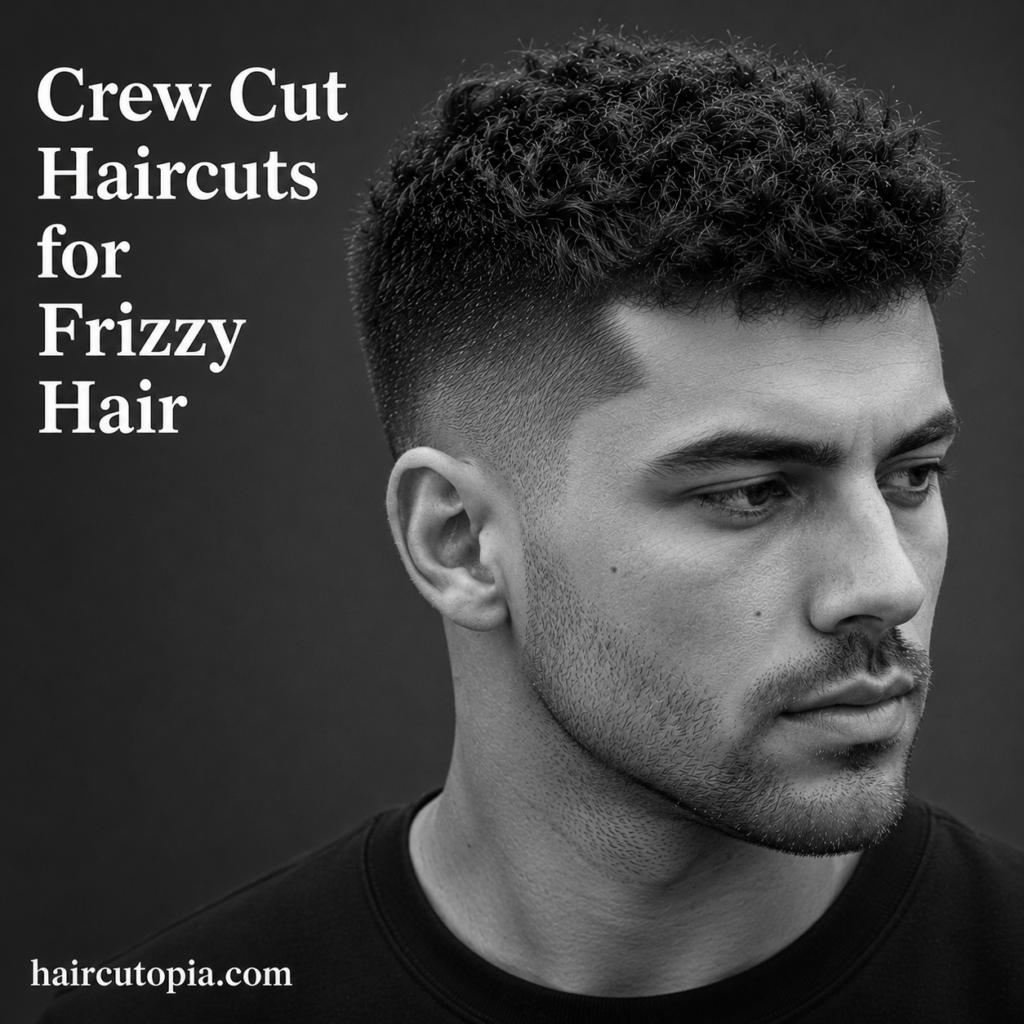
The crew cut is one of the most straightforward options for men who want short hair without going extremely short everywhere.
The hair remains slightly longer toward the front and gradually becomes shorter toward the crown.
This gives you enough length to create some lift at the front while keeping daily maintenance minimal.
It’s especially practical for straight hair that naturally grows upward or forward.
Ivy League
Think of the Ivy League as a longer, more polished version of the crew cut.
There’s enough length on top to create a side part or brush the front slightly upward.
The sides are kept shorter but don’t necessarily need to be faded down to the skin.
It’s a good option if you want something neat enough for professional settings without committing to a highly styled haircut.
Buzz Cut
A buzz cut removes most styling from the equation.
It’s especially useful if you’re looking for something simple and don’t mind having your face and head shape more exposed.
Different guard lengths can produce surprisingly different results.
A slightly longer buzz cut keeps more visible texture, while a shorter version creates a much more minimal appearance.
Caesar Cut
The Caesar features short hair with a small fringe styled forward.
It’s generally more uniform in length than a French crop and can create a clean, compact shape.
Straight hair makes the forward fringe easy to maintain without requiring much styling.
Short Side Part
A classic side part works particularly well with straight hair because the strands naturally create clean lines.
The sides can be tapered rather than dramatically faded, while the top remains long enough to comb to one side.
For a more relaxed version, avoid creating an overly precise part and let the hair fall naturally.
Fade Haircuts for Straight Hair
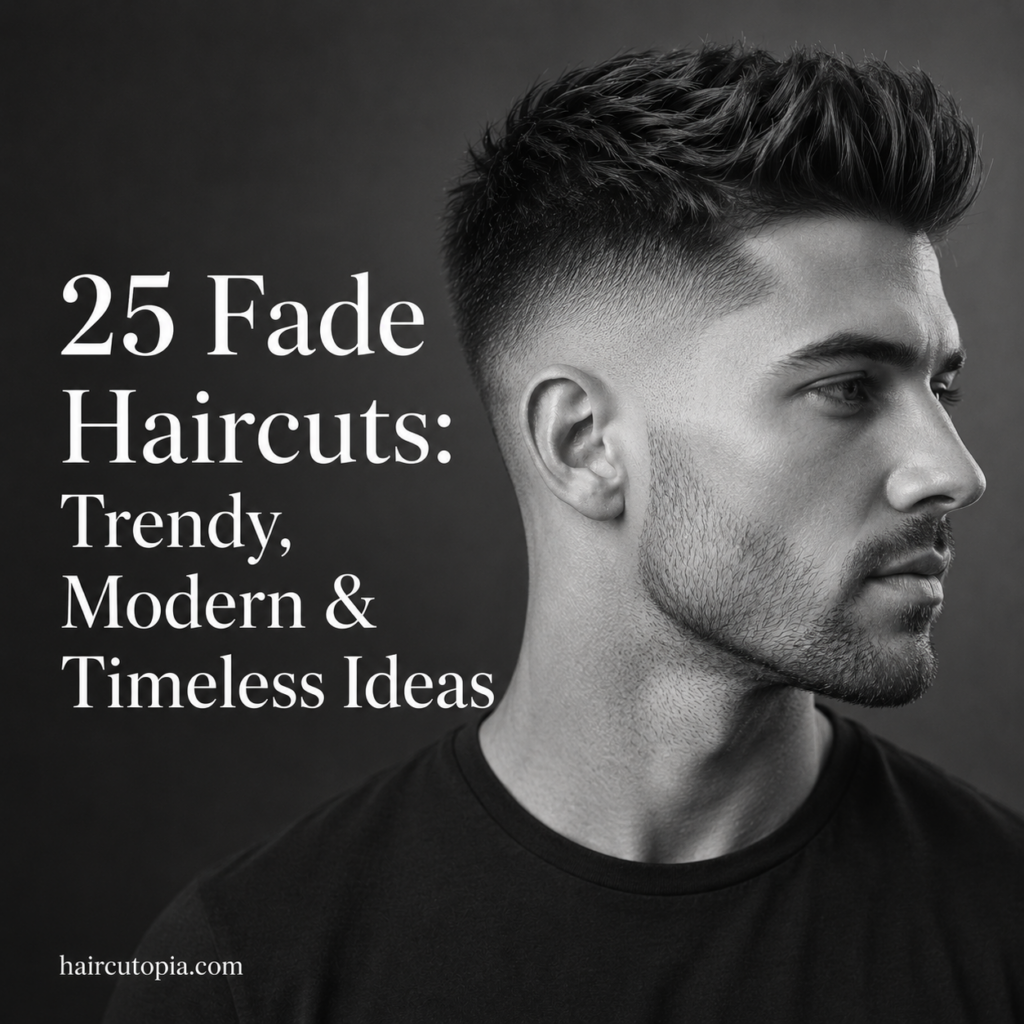
A fade isn’t really a hairstyle by itself. It’s a technique used to transition the sides and back from shorter hair into longer hair.
You can combine a fade with almost any style on top.
Low Fade
A low fade begins closer to the ears and neckline.
Because less of the sides are removed, the overall haircut tends to look softer and more understated.
It pairs well with side parts, textured crops, quiffs, and medium-length tops.
Mid Fade
A mid fade begins higher on the sides and creates more visible contrast.
It’s a versatile middle ground if you want the haircut to look noticeably fresh without going extremely high.
High Fade
A high fade removes much more hair from the sides and emphasizes the length on top.
This creates a stronger, more dramatic shape.
It can work particularly well with thick straight hair because removing the sides reduces bulk.
Taper Fade
A taper fade concentrates the shortest sections around the sideburns and neckline while leaving more weight through the sides.
This generally produces a more natural grow-out than a high skin fade.
If you don’t want to visit the barber constantly, a taper can be easier to maintain.
Medium Haircuts for Men With Straight Hair
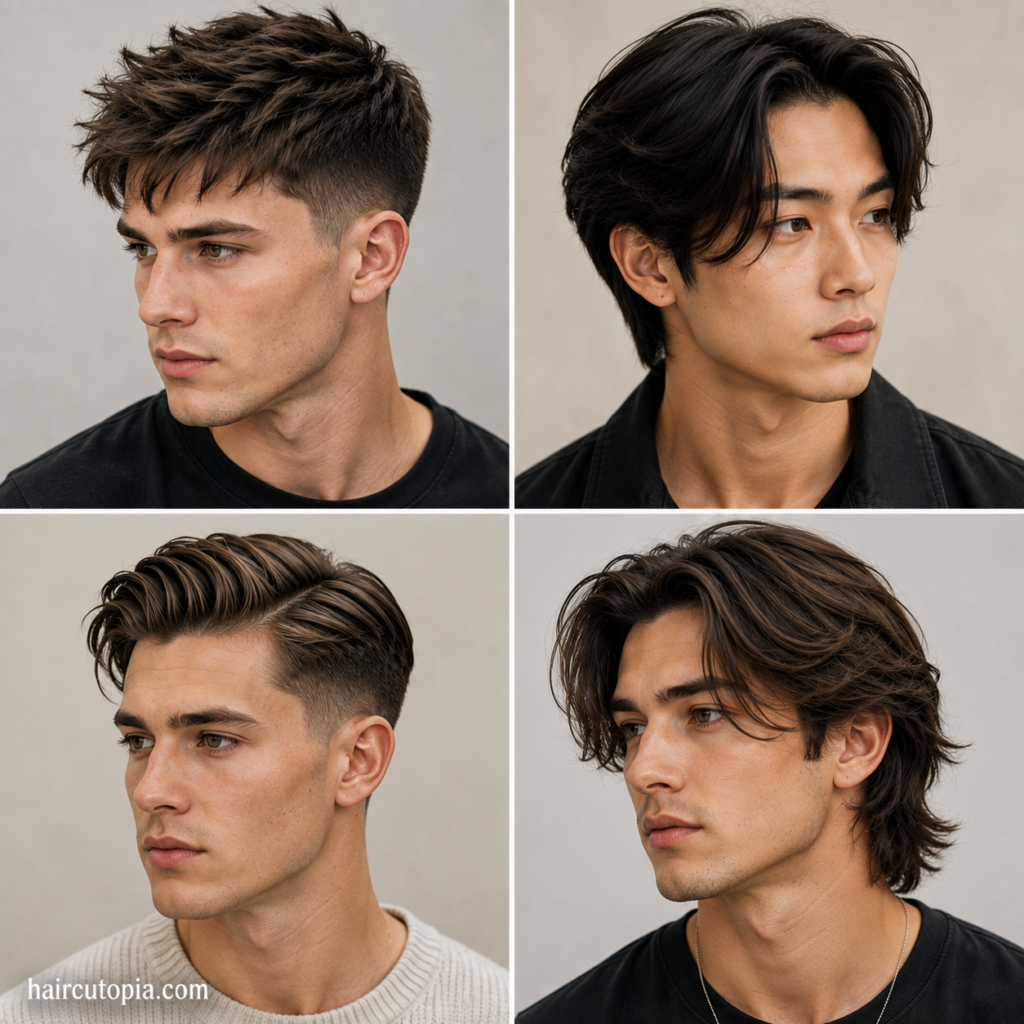
Medium-length straight hair gives you considerably more styling flexibility.
There’s enough length for movement, curtains, swept-back styles, and layers without committing to genuinely long hair.
Middle Part
The middle part has become one of the most recognizable medium hairstyles for men.
Straight hair works especially well with it because the hair naturally falls on either side of the face.
The length can sit around the ears or extend toward the jaw.
A completely flat middle part can sometimes feel heavy, so subtle layers can help create movement.
Curtains
Curtains are closely related to the middle part but usually involve more face-framing movement through the front.
The fringe falls toward either side rather than being pushed entirely away from the forehead.
The style can be clean and controlled or intentionally relaxed.
Bro Flow
The bro flow is designed around the hair’s natural direction rather than forcing it into a rigid shape.
The front is generally pushed away from the face while the sides and back retain medium length.
Straight hair can create a smoother version of the style than wavy hair.
It’s a good option if you’re growing your hair and want something that looks intentional during the awkward in-between stages.
Layered Medium Cut
Layers can prevent medium straight hair from turning into one heavy block.
This is particularly helpful for thick hair.
Strategically removing weight allows the hair to move more naturally around the ears, sides, and back.
Fine hair usually needs fewer layers so that enough density remains.
Medium Side Part
You don’t need short sides to wear a side part.
Keeping medium length throughout creates a softer, more relaxed version of the traditional style.
The hair can be tucked behind one ear, swept back, or allowed to fall naturally around the face.
Longer Haircuts for Men With Straight Hair
Straight hair can look especially striking when grown longer because its smooth texture emphasizes length.
The challenge is keeping it shaped.
Long Layered Hair
Long layers help prevent straight hair from hanging in one heavy curtain.
They can remove weight from thick hair and create movement around the face.
For fine hair, keep the layers longer and more restrained so the ends don’t become too thin.
Shoulder-Length Hair
Shoulder-length hair offers most of the versatility of long hair without requiring extreme length.
It can be:
- Worn loose
- Tucked behind the ears
- Pulled into a low ponytail
- Styled with a middle part
- Swept backward
- Worn in a half-up style
Regular shaping helps keep the ends from looking uneven as the hair grows.
Long Middle Part
A middle part creates symmetry and allows longer straight hair to frame the face naturally.
Adding subtle face-framing layers can keep the front from feeling too heavy.
Modern Shag
A men’s shag uses layers throughout the hair to create movement and an intentionally relaxed shape.
The cut can work from medium to longer lengths.
On straight hair, the layers tend to appear more defined, so it’s worth discussing how dramatic you want them to be before your stylist starts cutting.
Haircuts for Men With Fine Straight Hair
Fine straight hair often sits close to the scalp.
The goal is usually to preserve density while creating some visual lift.
Good options include:
- Textured crops
- Crew cuts
- Ivy League cuts
- Short side parts
- Lightly layered medium cuts
- Short quiffs
Avoid excessive thinning.
If your hair is already fine, removing too much weight can make it appear even less dense.
Styling products matter too. Heavy pomades and oils can quickly flatten fine straight hair, while lighter matte pastes, clays, or volumizing products may provide more control without weighing it down.
Haircuts for Men With Thick Straight Hair
Thick straight hair gives you plenty to work with, but it can become bulky.
When cut very short, some thick straight hair also tends to stick outward instead of lying flat.
That makes length selection especially important.
Useful options include:
- Textured crops
- Tapered cuts
- Medium layers
- Curtains
- Bro flow
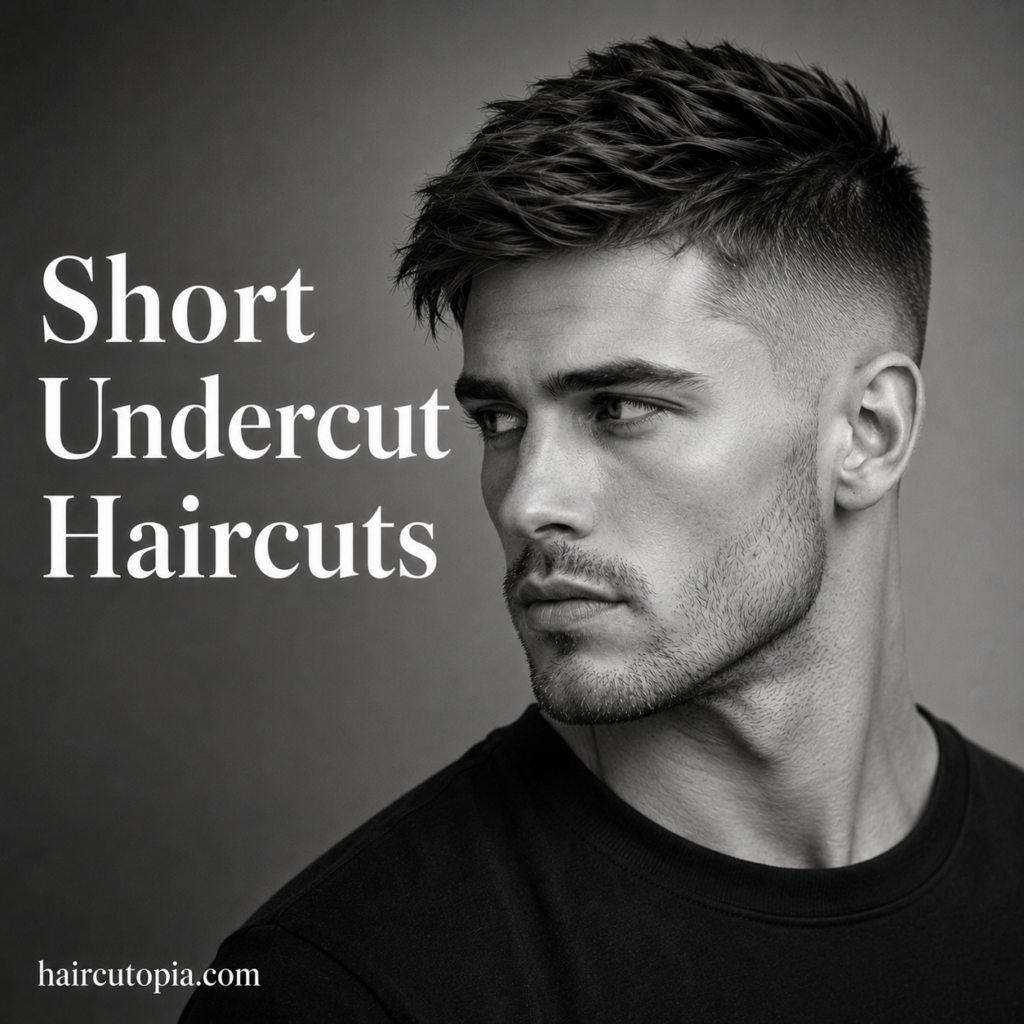
- Undercuts
- Long layered cuts
- Modern shags
Rather than aggressively thinning the entire head, your barber or stylist can remove weight strategically.
This helps preserve the haircut’s shape without creating lots of short pieces that stick out.
Straight Haircuts With a Fringe
A fringe can dramatically change a men’s haircut without requiring much additional length.
Textured Fringe
A textured fringe uses separation rather than a perfectly straight line.
It pairs naturally with crops and shorter sides.
Blunt Fringe
A blunt fringe creates a stronger geometric shape.
Naturally straight hair is particularly suited to this because the edge remains clearly visible.
Long Fringe
Leaving more length at the front gives you several styling options.
You can wear it forward, sweep it sideways, or incorporate it into curtains.
Side-Swept Fringe
A side-swept fringe creates a softer look and can transition naturally into a side part.
It’s also useful when growing out a shorter haircut.
Choosing a Men’s Straight Haircut for Your Face Shape
Face shape can help narrow down your options, but it shouldn’t become a strict rulebook.
Hair density, forehead shape, facial hair, personal style, and natural growth patterns all affect how a haircut looks.
Round Faces
Adding some height on top while keeping the sides relatively controlled can create more vertical emphasis.
Quiffs, textured tops, side parts, and cuts with tapered sides are all worth considering.
Oval Faces
Oval faces can generally accommodate a wide range of styles.
Crops, crew cuts, curtains, side parts, and longer layered styles can all work depending on your hair.
Square Faces
Short structured cuts can emphasize a defined jawline, while medium layered styles can soften the overall appearance.
Crew cuts, Ivy League styles, textured crops, and side parts are all versatile options.
Long or Oblong Faces
Be careful about adding excessive height while cutting the sides extremely short, as that can make the face appear even longer.
Fringes, medium cuts, curtains, and styles with some fullness through the sides may create better balance.
Heart-Shaped Faces
Medium-length styles can add some visual weight around the lower part of the face.
Curtains, side-swept styles, textured fringes, and layered medium cuts are all worth exploring.
How to Add Texture to Men’s Straight Hair
Straight hair doesn’t naturally create the separation that wavy or curly hair does, but you can introduce texture without making the hair look messy.
Start With the Haircut
Texture is easier to create when the haircut supports it.
Point cutting, layering, and strategic weight removal can create separation before you apply any product.
Use Less Product
More product doesn’t necessarily mean more texture.
Too much can cause straight strands to clump together and become heavy.
Start small and add more only if necessary.
Choose the Right Finish
Matte products generally create a more natural textured appearance.
High-shine pomades work better when you’re intentionally going for a slick or classic finish.
Style With Your Fingers
A comb creates uniform lines.
Your fingers create separation.
For crops, fringes, and casual medium styles, finger styling often produces a more natural result.
How to Style Straight Hair for Men
The exact routine depends on your haircut, but a simple approach works for many styles.
- Start with clean or slightly damp hair.
- Apply a lightweight pre-styling product if needed.
- Blow-dry the hair in the direction you want it to sit.
- Use your fingers or a brush to create the basic shape.
- Apply a small amount of finishing product.
- Adjust individual sections rather than adding more product everywhere.
Blow-drying is especially useful for straight hair because it can change the direction and volume before styling products are added.
If your hair always falls forward, for example, blow-drying it backward can make a swept-back style significantly easier to achieve.
Low-Maintenance Haircuts for Men With Straight Hair
If you don’t want to spend much time styling, choose a haircut that follows your natural growth pattern.
Good low-maintenance choices include:
- Buzz cuts
- Crew cuts
- French crops
- Ivy League cuts
- Tapers
- Short textured crops
- Natural medium-length cuts
There’s a tradeoff with very short hair.
Daily styling may be minimal, but maintaining a sharp fade can require more frequent barber visits.
A slightly longer taper may actually require less overall maintenance because it grows out more naturally.
How Often Should Men Get a Haircut?
It depends heavily on the style.
As a general guide:
- Skin fades: around every 2–4 weeks
- Short crops and crew cuts: around every 3–6 weeks
- Tapers and side parts: around every 4–8 weeks
- Medium styles: around every 6–10 weeks
- Long hair: around every 8–12 weeks or as needed
You don’t have to follow an exact schedule.
If you like how your haircut looks as it grows, there’s no reason to cut it just because a certain number of weeks have passed.
What to Tell Your Barber or Stylist
Showing a reference photo is helpful, but don’t stop there.
Explain what you actually like about the haircut.
Talk about:
- How much length you want to keep
- Whether your hair is fine or thick
- Where your hair naturally parts
- Cowlicks around the crown or hairline
- Whether your hair sticks out when short
- How much styling you’re willing to do
- Whether you use a blow-dryer
- How often you want to get haircuts
Also mention what you don’t want.
Saying “I like the top but don’t want the sides this short” is far more useful than simply showing a photo and hoping for the best.
Common Mistakes With Men’s Straight Hair
Straight hair is versatile, but a few common choices can make it harder to manage.
Cutting Thick Hair Too Short
Very thick straight hair may stick outward when it doesn’t have enough length to lie down.
Your barber can adjust the length based on your growth pattern.
Over-Thinning Fine Hair
Fine hair doesn’t necessarily need more weight removed.
Preserving density can make the haircut appear fuller.
Using Too Much Product
Straight hair can become greasy or flat quickly when overloaded with styling products.
Start with a small amount.
Ignoring Your Natural Growth Direction
A haircut that constantly fights your cowlicks or natural part will require more work every morning.
Working with those patterns usually makes styling easier.
Choosing a Fade Without Considering Maintenance
A fresh skin fade looks extremely clean, but that crisp appearance doesn’t last forever.
If frequent barber visits aren’t appealing, a taper or longer scissor-cut side may be a better choice.
Finding the Best Haircut for Men’s Straight Hair
There isn’t one best haircut for every man with straight hair.
A textured crop might be perfect if you want something short and modern. A crew cut or Ivy League works well if you prefer something classic. Curtains and layered medium cuts offer more movement, while shoulder-length styles take advantage of straight hair’s naturally smooth appearance.
Your hair’s density matters just as much as its texture.
Fine straight hair generally benefits from preserving fullness and avoiding excessive thinning. Thick straight hair often needs strategic weight removal and enough length to prevent it from sticking outward.
Most importantly, choose a haircut that fits your actual routine.
If you don’t want to spend 20 minutes blow-drying and styling every morning, don’t choose a haircut that depends on it. A good cut should make your straight hair easier to work with—not give you another chore before you’ve had your coffee.