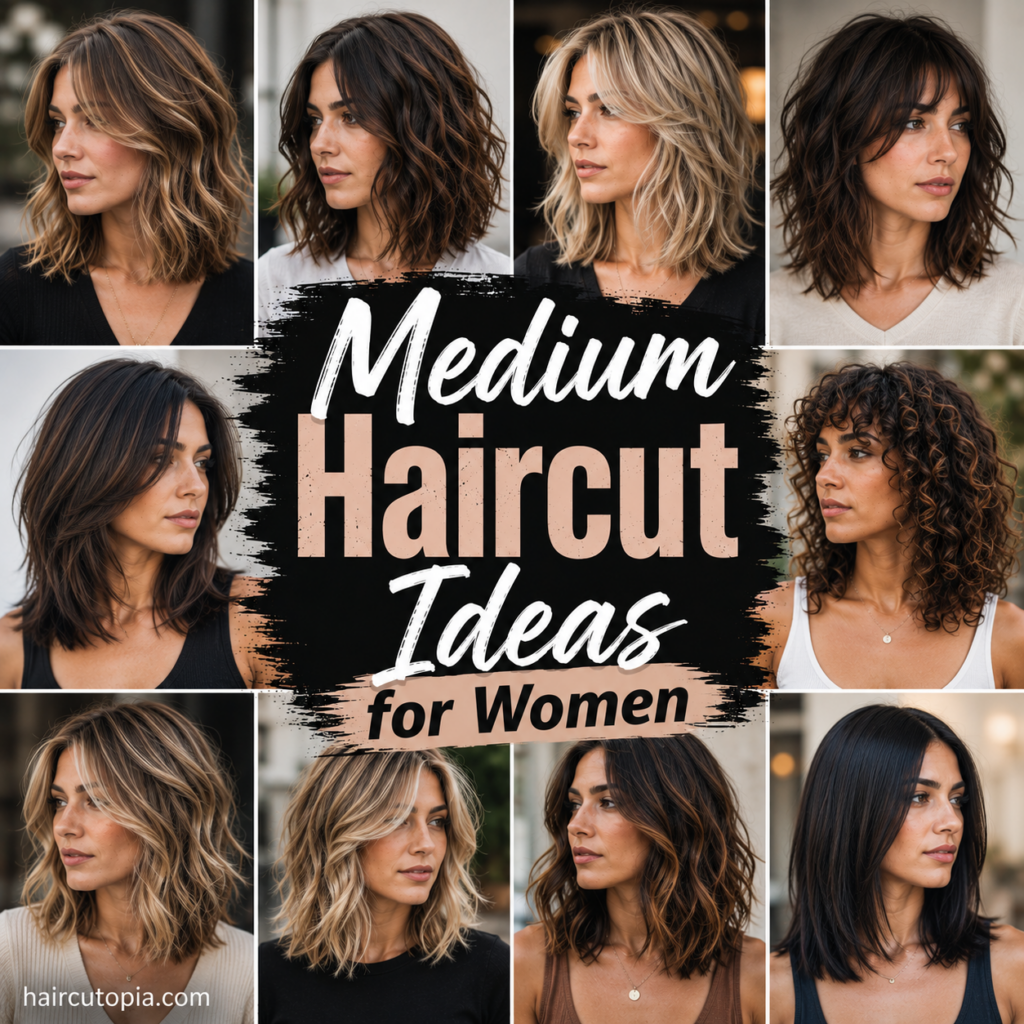
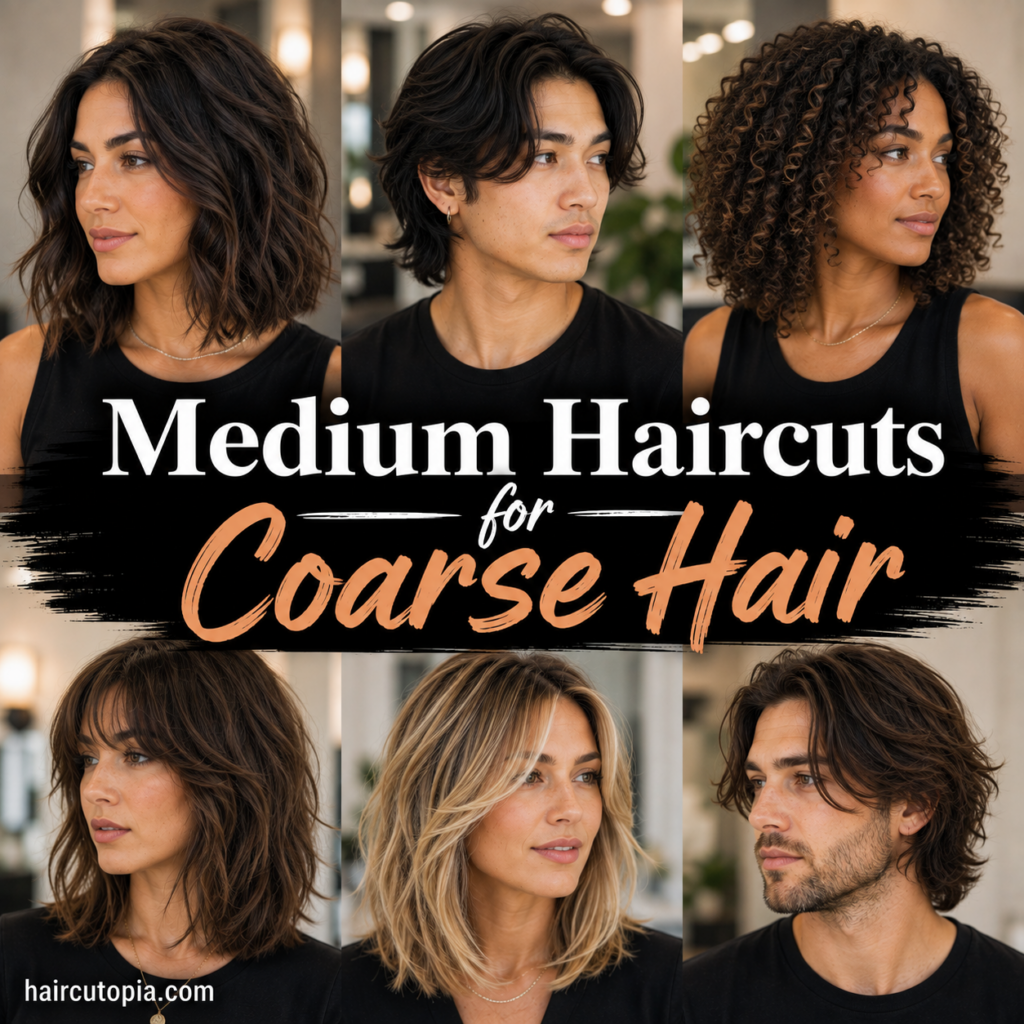
Medium-length hair can be a great match for coarse hair. You keep enough length for the strands to have some weight and movement, but lose the heaviness that can come with growing coarse hair much longer.
That balance matters.
Coarse hair refers to the thickness of the individual strands, and those thicker strands often have plenty of natural body. Depending on your density and texture, that can mean beautiful volume—or more bulk than you know what to do with.
The right medium haircut can make coarse hair feel lighter without stripping away everything that makes the texture distinctive. Layers can remove weight, face-framing pieces can give the front more shape, and a carefully chosen length can help the hair settle instead of expanding outward.
Whether your coarse hair is straight, wavy, curly, or somewhere in between, there are plenty of ways to make medium length work.
Why Medium Length Works Well for Coarse Hair
Medium hair offers something short and long cuts don’t always provide: enough length for gravity to help control coarse strands without the full weight of very long hair.
That’s particularly useful if your hair tends to puff outward when it’s cut short.
At shoulder or collarbone length, coarse strands have more room to fall naturally. At the same time, strategic layering can prevent all that hair from collecting around the bottom and creating a heavy shape.
Medium cuts can offer:
- Less weight than long hair
- More control than very short cuts
- Plenty of room for strategic layering
- Enough length for ponytails and simple updos
- Better movement through dense hair
- Flexibility for bangs and face framing
- Easier grow-out than many short styles
The exact cut should still account for your natural texture and density. Coarse straight hair behaves differently from coarse curls, even though the individual strands may have similar thickness.
Best Medium Haircuts for Coarse Hair
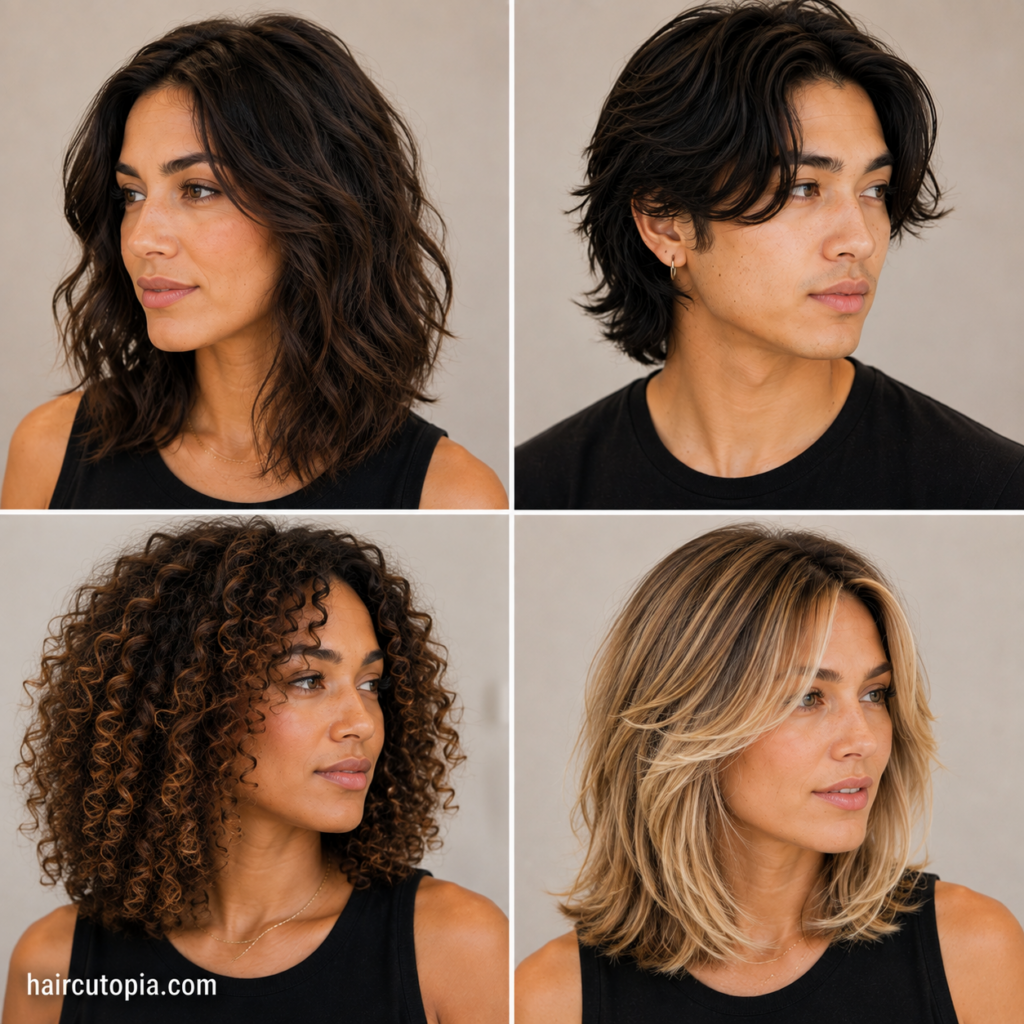
The best medium styles generally create movement while controlling bulk.
That doesn’t mean you need layers everywhere. Sometimes a relatively simple shape with subtle internal weight removal is enough.
Layered Shoulder-Length Cut
A layered shoulder-length haircut is one of the most versatile options for coarse hair.
The overall length remains manageable while layers prevent the hair from becoming one solid mass.
For dense hair, internal layers can remove substantial weight without making the haircut look overly choppy.
If your density is lower, fewer layers may be better. Coarse strands can still look full even with less hair, but removing too much may leave the perimeter looking thinner than you intended.
Collarbone Cut
A collarbone cut provides just enough extra length to help coarse strands settle naturally.
It’s also long enough to pull back, which can be useful if you don’t want your hair down every day.
The cut can be kept relatively blunt or combined with longer layers.
For coarse straight hair, a cleaner perimeter can create a polished appearance. Wavy and curly textures may benefit from more shaping to encourage natural movement.
Long Bob
The long bob, or lob, usually sits somewhere between the shoulders and collarbone.
It offers the structure of a bob without removing so much length that coarse hair begins sticking outward.
A lob can be:
- Blunt
- Layered
- Angled
- Textured
- Paired with bangs
- Combined with face-framing pieces
For very dense coarse hair, subtle internal weight removal can keep a lob from becoming too triangular.
Layered Lob
A layered lob adds more movement than a traditional one-length version.
Instead of creating a heavy perimeter, longer layers distribute the volume through the haircut.
This is particularly useful for coarse wavy hair, where removing some weight may allow the natural pattern to become more visible.
Straight coarse hair can also benefit from layering, although the layers will usually be more obvious.
Angled Lob
An angled lob is shorter toward the back and gradually becomes longer around the front.
Coarse hair can hold this structured shape particularly well.
The angle doesn’t need to be dramatic. A subtle difference between the back and front can create movement while reducing some of the heaviness around the neckline.
For dense hair, your stylist may also remove weight internally to prevent the sides from becoming bulky.
Medium Shag
The shag is practically designed for hair with natural body.
A medium shag uses layers throughout the crown, sides, and ends to create a more relaxed shape.
On coarse hair, the result can have plenty of texture without requiring much effort.
The cut works especially well with naturally wavy hair because the layers allow the wave pattern to move rather than being pulled downward by excess weight.
Straight coarse hair can wear a shag too. The layers simply appear more defined and piecey.
Modern Wolf Cut
The wolf cut combines elements of a shag with a more dramatic difference between the shorter upper layers and longer sections underneath.
Coarse hair has enough substance to hold this type of layered shape.
A softer version is usually easier to maintain than an extremely dramatic wolf cut.
If you want movement without making the haircut feel too disconnected, ask for longer transitions between the layers.
Butterfly-Inspired Medium Cut
Butterfly cuts are often shown on long hair, but the concept can be adapted to medium lengths.
Shorter layers frame the face while longer layers maintain length through the back.
Coarse hair can support this structure particularly well because the strands naturally create body.
If your hair is very dense, removing some internal weight can keep the layers from becoming overly voluminous.
U-Shaped Medium Cut
A U-shaped haircut creates a gentle curve along the back rather than a perfectly straight line.
The center remains slightly longer while the sides gradually become shorter.
This can give coarse hair a softer silhouette without requiring extensive layering.
It’s a useful option if you want shape but prefer keeping more density through the ends.
Medium Cut With Face-Framing Layers
You don’t need to layer your entire head to change the way medium coarse hair looks.
Face-framing layers can add movement around the front while leaving most of the density intact.
The shortest pieces can begin around the cheekbones, jaw, chin, or lower.
Longer face framing tends to require less styling and blends naturally as it grows.
Medium Haircuts for Coarse Straight Hair
Coarse straight hair tends to show the structure of a haircut very clearly.
That makes clean lobs, collarbone cuts, and longer layers particularly effective.
Good options include:
- Layered lobs
- Angled lobs
- Collarbone cuts
- U-shaped cuts
- Face-framing layers
- Soft medium shags
The biggest challenge is often controlling bulk without creating too many short pieces.
If your hair is both coarse and dense, internal layering can remove weight beneath the surface while preserving a smoother outer shape.
Be careful about excessive thinning. Very short internal strands can sometimes push outward instead of lying flat.
Medium Haircuts for Coarse Wavy Hair
Medium length is especially versatile for coarse wavy hair.
There’s enough length to show the wave pattern while layers can prevent excess weight from stretching it out.
Consider:
- Layered shoulder-length cuts
- Medium shags
- Soft wolf cuts
- Layered lobs
- Butterfly-inspired cuts
- U-shaped layered cuts
Where the layers begin can make a major difference.
Shorter layers near the crown can create more volume, while longer layers keep the shape controlled.
If you already have plenty of volume, you may want the shortest layers positioned lower.
Medium Haircuts for Coarse Curly Hair
Coarse curls can create a full, defined shape at medium lengths.
The haircut should distribute volume rather than simply removing as much hair as possible.
Good options include:
- Rounded layered cuts
- Curly shags
- Shoulder-length curly cuts
- Layered lobs
- Face-framing curly cuts
Shrinkage needs to be considered carefully.
Hair that appears shoulder length while wet may sit significantly higher once completely dry.
A stylist familiar with curly hair can evaluate how your curls naturally group and where they settle before determining the final shape.
Medium Haircuts for Dense, Coarse Hair
Having coarse strands and high density means there’s simply a lot of hair.
At medium lengths, that can create substantial bulk around the sides and ends.
The solution isn’t necessarily aggressive thinning.
Instead, consider strategic techniques such as:
- Long internal layers
- Graduated shaping
- Selective weight removal
- Face-framing layers
- A softly shaped perimeter
The goal is to distribute the hair rather than remove density everywhere.
You still want the ends to look healthy and substantial.
Medium Coarse Hair With Bangs
Bangs can work beautifully with medium coarse hair, especially when they’re designed around your natural growth pattern.
Curtain Bangs
Curtain bangs blend naturally into medium layers.
They’re typically shorter near the center and become longer toward the sides, creating movement around the face.
They work particularly well with shags, layered lobs, and butterfly-inspired cuts.
Bottleneck Bangs
Bottleneck bangs are slightly fuller and more structured than traditional curtain bangs.
The center is shorter while the sides gradually lengthen.
Coarse strands give this type of fringe plenty of substance, so your stylist may adjust how much hair is used to prevent the bangs from feeling too heavy.
Side-Swept Bangs
Side-swept bangs are a flexible option if you don’t want a full fringe.
They blend easily into face-framing layers and can be tucked away as they grow.
Textured Bangs
Texturing can prevent coarse bangs from forming one heavy block across the forehead.
A little separation creates a softer appearance while still taking advantage of the hair’s natural density.
Blunt Bangs
Blunt bangs create a stronger statement.
Coarse hair can produce an especially substantial fringe, which can look striking with a medium-length cut.
Keep maintenance in mind. Precise bangs generally need regular trimming and may require more daily styling than longer fringe options.
Choosing a Medium Coarse Haircut for Your Face Shape
Face shape can provide ideas about where to place volume and layers, but it shouldn’t dictate your haircut.
Your natural texture, density, features, and styling preferences are just as important.
Round Faces
Longer face-framing layers and cuts that extend below the chin can create vertical movement.
Angled lobs, collarbone cuts, and medium layers are all worth considering.
Oval Faces
Oval faces generally work with many medium styles.
Lobs, shags, bangs, layered cuts, and shoulder-length styles can all be adjusted for coarse hair.
Square Faces
Soft layers around the face can contrast with a defined jawline.
Medium shags, curtain bangs, layered lobs, and face-framing cuts can create movement.
A blunt or angled lob can also emphasize stronger lines if that’s the look you prefer.
Heart-Shaped Faces
Styles that create some movement around the chin and shoulders can balance a wider forehead.
Curtain bangs, collarbone cuts, and layered lobs can work particularly well.
Long or Oblong Faces
Medium cuts naturally create more width than very long styles.
Bangs, shoulder-length layers, shags, and cuts with movement through the sides can create additional balance.
How to Remove Bulk From Medium Coarse Hair
Bulk management is one of the biggest considerations when cutting coarse hair.
The goal should be creating a balanced shape rather than simply making the hair thinner.
Use Internal Layers
Internal layers remove weight beneath the surface.
This can allow the hair to move more freely while maintaining a smoother exterior.
Place Layers Strategically
If your hair becomes widest around the sides, adding lots of short layers there may create even more volume.
Layer placement should reflect where you want to remove weight and where you want to preserve fullness.
Avoid Excessive Thinning
Thinning shears can be useful, but aggressive thinning may leave coarse hair with short pieces that stick outward.
This can also make wavy or curly textures appear frizzier.
Consider Your Dry Texture
Coarse hair may look dramatically different once it’s completely dry.
This is especially true for wavy and curly textures.
Your stylist should account for expansion, shrinkage, and natural movement before deciding how much weight to remove.
How to Keep Medium Coarse Hair From Looking Puffy
Coarse hair naturally has substance, but unwanted puffiness is different from healthy volume.
A combination of the right haircut and styling routine can help.
Keep Enough Length
Medium length gives coarse hair enough weight to settle.
Going shorter isn’t always the answer when hair feels bulky.
Maintain Moisture
Coarse strands may become dry, especially toward the ends.
Conditioner and appropriate leave-in products can help the hair feel smoother and easier to control.
Don’t Over-Layer
Layers create movement, but too many short layers can create additional volume.
If your hair already has plenty of body, longer layers may be more useful.
Direct the Hair While Drying
If you blow-dry, direct the hair into the shape you want rather than allowing it to expand in every direction before trying to control it with products.
How to Style Medium Coarse Hair
Coarse hair often holds styles well once it’s directed into place.
A simple routine can be enough:
- Start with damp, towel-dried hair.
- Apply leave-in conditioner or a smoothing product if your hair needs additional moisture.
- Use heat protectant before blow-drying or using hot tools.
- Dry the hair in sections, directing it into the desired shape.
- Add a small amount of styling cream, serum, or texture product.
- Concentrate heavier products toward the mid-lengths and ends.
If your coarse hair is naturally wavy or curly, you may prefer air-drying or diffusing rather than smoothing it with a brush.
The goal isn’t necessarily to change your natural texture.
Often, the easiest routine is the one that helps your existing texture look more defined.
Low-Maintenance Medium Haircuts for Coarse Hair
Medium length can be surprisingly low maintenance when the haircut works with your natural texture.
Some practical options include:
- Collarbone cuts
- Long layered lobs
- U-shaped cuts
- Soft medium shags
- Shoulder-length layered cuts
- Longer face-framing layers
Styles with very short layers or precise bangs usually require more maintenance.
If you normally air-dry your hair, tell your stylist before the cut. The shape should work without requiring a professional blowout every morning.
How Often Should Medium Coarse Hair Be Trimmed?
Medium hair usually gives you more flexibility between appointments than a pixie or short bob.
For many styles, trimming every 8–12 weeks is a reasonable starting point.
You may want an appointment sooner if:
- The shape begins feeling bulky
- The ends become dry or damaged
- Layers stop blending well
- Bangs become difficult to manage
- Your haircut starts losing movement
Textured cuts such as shags may grow out more naturally and tolerate longer periods between trims.
What to Ask Your Stylist
A good consultation can make a major difference with coarse hair.
Talk about:
- Your strand thickness
- Your overall hair density
- Whether your hair is straight, wavy, curly, or coily
- Where your hair tends to become bulky
- How much it expands when dry
- Whether humidity changes your texture
- Your natural part and growth patterns
- How you normally style your hair
- Whether you usually air-dry
- How much maintenance you’re comfortable with
If you’re concerned about bulk, don’t simply ask for your hair to be “thinned out.”
Explain where it feels heavy and what you want the finished shape to look like. That gives your stylist more useful information than asking them to remove as much hair as possible.
Common Mistakes With Medium Coarse Hair
The wrong cutting or styling approach can make coarse hair harder to manage.
Over-Thinning the Hair
Removing too much density can create short internal pieces that contribute to puffiness or frizz.
Strategic weight removal is usually more effective.
Adding Too Many Short Layers
Short layers can create volume.
That’s useful when you want lift, but not necessarily when your coarse hair already feels too full.
Ignoring Shrinkage
Wavy and curly coarse hair can become significantly shorter once dry.
The final length should account for that movement.
Using Too Much Product
Coarse strands can handle richer products than some fine hair types, but that doesn’t mean more is always better.
Product buildup can make medium hair feel heavy and dull.
Choosing a Cut Based Only on a Styled Photo
A haircut shown after a professional blowout may behave very differently when air-dried.
Think about how you actually wear your hair most days.
Finding the Right Medium Haircut for Coarse Hair
Medium length gives coarse hair room to move while keeping its natural body under control.
If you prefer a cleaner shape, a collarbone cut, lob, or U-shaped style can keep things polished. If you want more movement, layered cuts, shags, and butterfly-inspired styles can remove weight and bring out your natural texture.
Your density and curl pattern should guide how much layering you add.
Dense coarse hair may benefit from substantial internal weight removal, while lower-density coarse hair often needs more of its perimeter preserved. Straight hair may show every layer clearly, while wavy and curly textures require enough room for their natural patterns to form.
Most importantly, don’t treat your hair’s natural body as something that automatically needs to be eliminated.
The right medium haircut should control the areas that feel bulky while keeping the fullness, movement, and texture that make coarse hair distinctive in the first place.

Related Posts
 Medium Curly Hairstyles: 18 Flattering Ideas for Natural Curls
 Haircuts for Coarse Hair: The Complete Guide to Cuts for Every Length and Texture
 Haircuts for Thick Hair: The Complete Guide to Flattering Cuts for Every Length and Texture
 Short Haircuts for Frizzy Hair: Flattering Styles That Are Easier to Manage