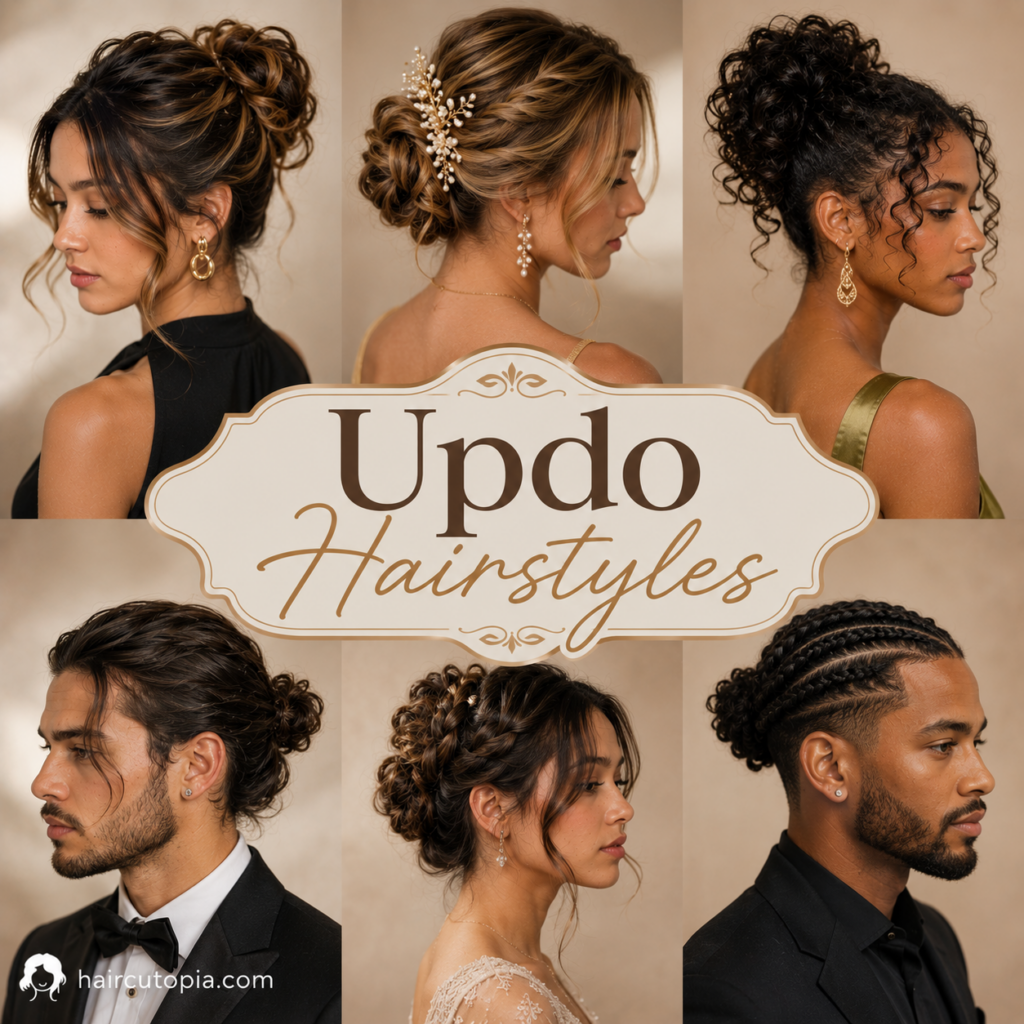
Updo hairstyles can be polished and elegant, loose and romantic, quick and practical, or somewhere in between. That’s part of what makes them so useful. The same basic idea—getting some or all of your hair off your shoulders—can become anything from a five-minute bun to an intricate wedding hairstyle.
And an updo doesn’t have to look perfectly smooth.
Natural curls can become part of the shape. Braids and twists can add detail. Face-framing pieces can soften a formal style, while sleek roots can make a simple bun feel much more polished.
Updos aren’t limited to extremely long hair either. Medium hair can be pinned into surprisingly elaborate styles, and even shorter cuts may have enough length for small buns, twists, half-up styles, and creative pinned looks.
Whether you need something easy for everyday wear or a hairstyle for a wedding, prom, work event, or formal occasion, there are plenty of updo styles to explore.
What Is an Updo Hairstyle?
An updo is a hairstyle in which some or all of the hair is arranged away from its natural hanging position and secured around the head.
That broad definition includes many familiar styles:
- Buns
- Chignons
- French twists
- Braided updos
- Twisted hairstyles
- Pinned curls
- High updos
- Low updos
- Half-up styles
Some updos are tightly structured. Others intentionally allow sections to remain loose.
The defining feature isn’t how formal the hairstyle looks—it’s the way the hair is arranged and secured.
Why Updo Hairstyles Are So Versatile
Updos solve several practical styling problems at once.
They can keep hair away from your face and neck, provide a secure base for accessories, and create a dramatically different silhouette without changing your haircut.
An updo can also highlight:
- Earrings
- Necklines
- Facial features
- Hair accessories
- Natural texture
- Braiding details
Changing the placement alone can completely alter the effect.
A high bun tends to feel more energetic and dramatic. A low bun can appear understated or elegant. Move the style to one side, add texture, or incorporate a braid, and it becomes something different again.
Popular Types of Updo Hairstyles
There are countless variations, but most updos are based on a handful of techniques.
Understanding the basic styles makes it easier to choose one that works for your hair.
Low Bun
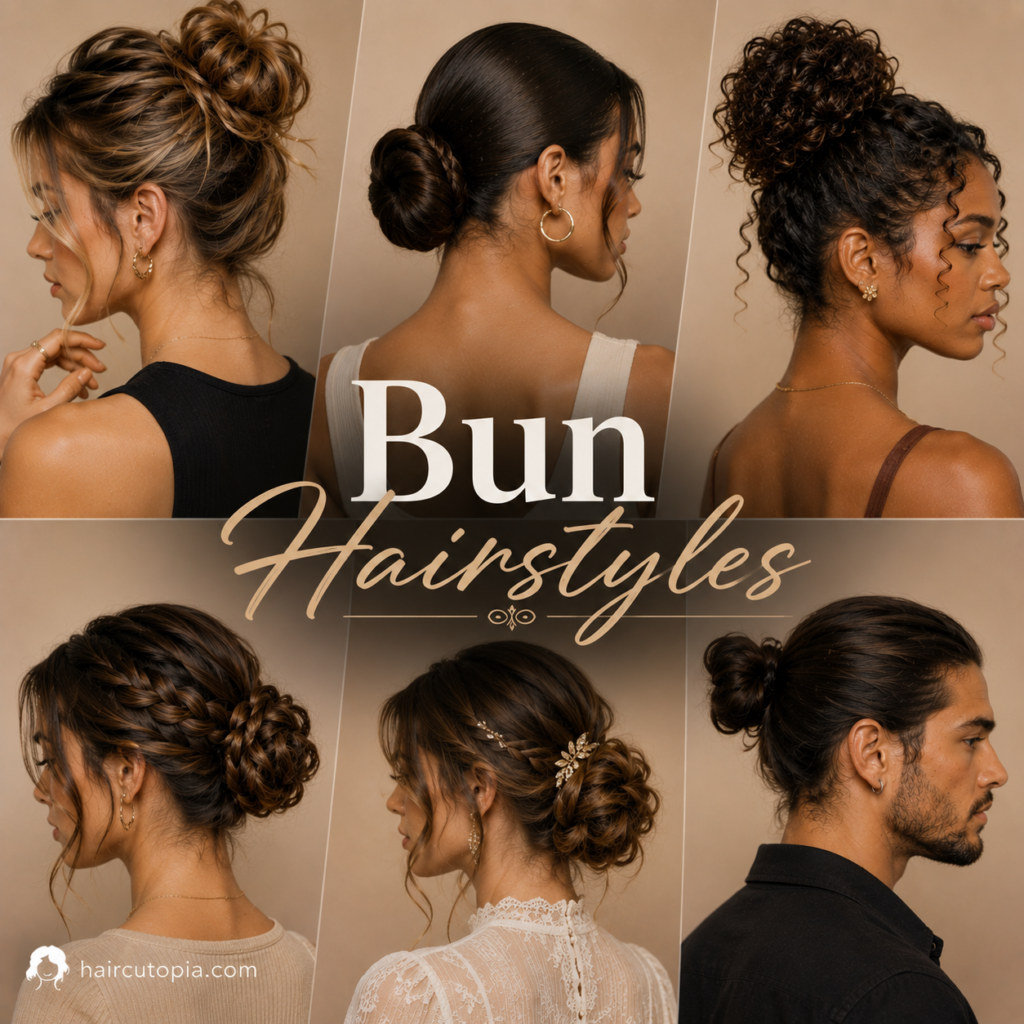
The low bun is one of the most versatile updos, and bun hairstyles can range from sleek and structured to braided, textured, loose, or intentionally messy.
Hair is gathered around the nape and wrapped, twisted, folded, or pinned into a bun.
It can be worn:
- Sleek
- Textured
- Braided
- Twisted
- Loose
- Centered
- Slightly off-center
A smooth low bun can look highly polished, while pulling out a few face-framing pieces creates a softer appearance.
High Bun
A high bun positions the hair near the crown or top of the head.
This keeps the neck completely exposed and creates more height in the overall silhouette.
High buns can be compact and smooth or deliberately oversized and textured.
Chignon
A chignon is generally positioned low on the head and often has a more folded or tucked appearance than a basic wrapped bun.
Some chignons are highly structured. Others are gently twisted and pinned into place.
It’s a classic option for weddings, formal events, and professional settings.
French Twist
A French twist gathers the hair vertically and rolls or folds it inward along the back of the head.
The traditional version is sleek and structured, but modern versions can be softer and more textured.
Messy Updo
A messy updo is intentionally relaxed rather than actually unfinished.
Selected sections may be loosened, curled, twisted, or allowed to fall around the face.
The structure underneath should still be secure.
Braided Updo
Braids can form the foundation of an updo or simply add detail.
You might braid sections before pinning them up, create braids leading toward a bun, or wrap a braid around the finished hairstyle.
Twisted Updo
Twisted updos use sections of hair that are rolled or twisted rather than braided.
They’re useful when you want visual detail without learning a complicated braiding technique.
Updo Hairstyles for Long Hair
Long hair provides plenty of material for elaborate updos.
You can create large buns, multiple braids, detailed twists, and styles with significant volume.
Popular options include:
- High buns
- Low buns
- Chignons
- French twists
- Braided buns
- Crown braids
- Twisted updos
- Voluminous formal updos
- Side updos
- Curly updos
The main challenge with long hair is weight.
If a large amount of hair is concentrated in one place, the hairstyle may become uncomfortable after several hours. Pins and elastics should distribute the weight rather than allowing everything to pull from a small area.
Updo Hairstyles for Medium Hair
Medium-length hair is particularly well suited to updos because there’s usually enough length to pin and twist without an excessive amount of weight.
Options include:
- Low buns
- Small high buns
- Chignons
- Braided updos
- Twisted updos
- French twists
- Claw clip updos
- Half-up buns
- Textured formal styles
If some pieces aren’t long enough to reach the main updo, they can sometimes become intentional face-framing sections rather than something you need to hide.
Updo Hairstyles for Short Hair
Short hair doesn’t automatically rule out updos.
The available options depend on exactly how short your hair is.
Bobs and lobs often provide enough length for:
- Small low buns
- Twisted back styles
- Pinned curls
- Mini French twists
- Half-up buns
- Braided sections
- Claw clip updos
With very short hair, the focus may shift from gathering everything into one bun to pinning individual sections into an updo-inspired shape.
Decorative clips and pins can also become part of the design.
Updo Hairstyles for Curly Hair
Curly hair naturally adds texture and dimension to updos, making them a versatile extension of many curly hairstyles without requiring the natural curl pattern to be straightened or concealed.
Instead of smoothing every curl away, you can allow the curl pattern to become part of the hairstyle.
Curly High Bun
Gather the curls high on the head and secure them while allowing some natural texture to remain visible.
Selected curls can frame the face.
Curly Low Bun
A low curly bun creates a softer shape around the nape.
The bun can be compact or allowed to retain more volume.
Curly Textured Updo
Individual curls can be pinned into place to build the overall shape.
This works particularly well when you want a formal style without losing your natural texture.
Half-Up Curly Updo
Gather only the upper portion while leaving the remaining curls loose.
This gives you some of the structure of an updo without putting all of the hair up.
Updo Hairstyles for Coily and Textured Hair
Coily and textured hair can be sculpted, twisted, braided, gathered, and pinned into a wide variety of updos.
Ideas include:
- High buns
- Low buns
- Braided updos
- Twisted updos
- High puffs
- Sculpted natural styles
- Cornrow-based updos
- Loc updos
- Protective updos
Some protective hairstyles can also be arranged into updos, particularly when braids, twists, locs, or other structured styles provide the foundation.
Natural volume can become a major part of the silhouette.
When using braids, twists, extensions, or tightly secured sections, avoid unnecessary tension around the scalp and hairline.
An updo should feel stable without being painful.
Updo Hairstyles for Straight Hair
Straight hair can create especially clean lines in an updo.
Popular options include:
- Sleek low buns
- High buns
- French twists
- Chignons
- Twisted updos
- Braided buns
- Minimalist updos
Very smooth hair can sometimes slip while you’re styling it.
If necessary, a small amount of texture product can provide additional grip before pinning.
Updo Hairstyles for Wavy Hair
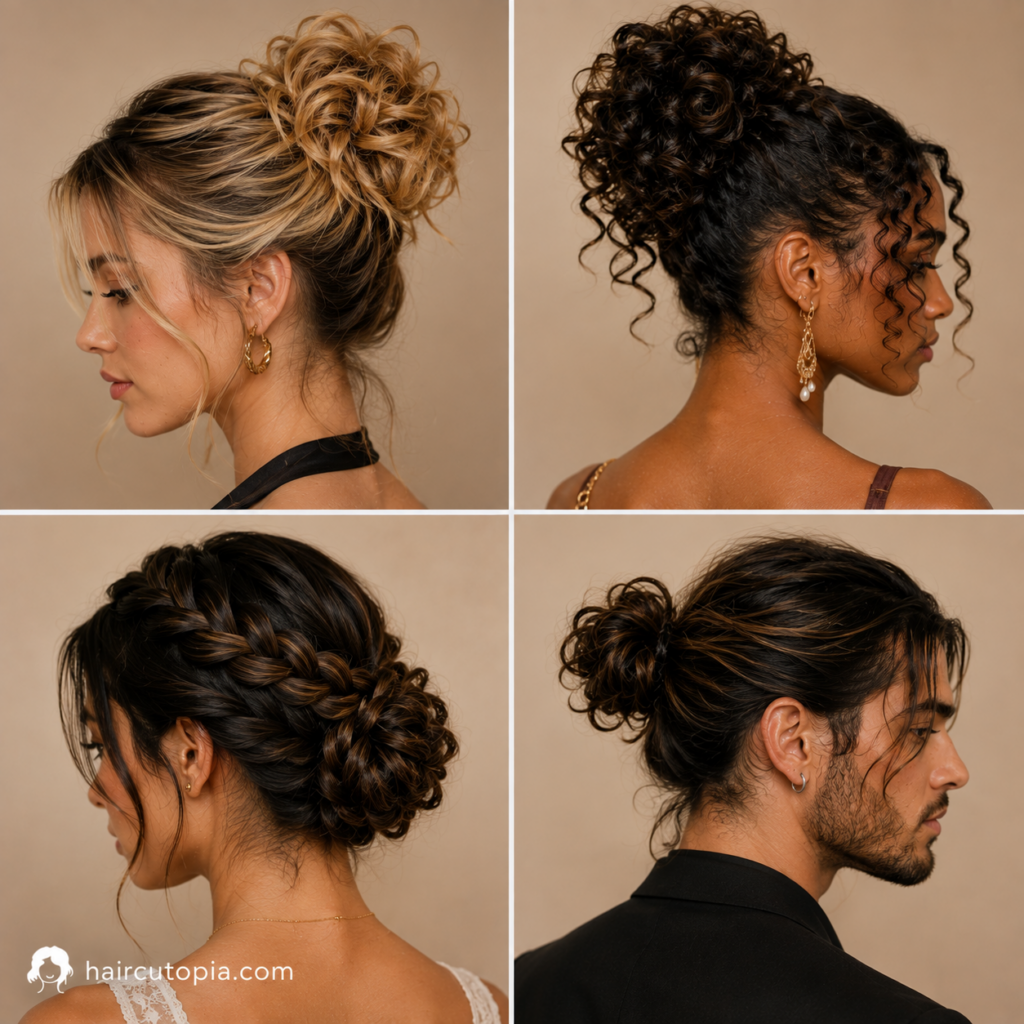
Wavy hair works naturally with relaxed and textured updos.
The existing movement can add dimension without requiring every section to be curled first.
Try:
- Loose low buns
- Textured chignons
- Twisted updos
- Braided buns
- Messy high buns
- Romantic pinned styles
A few loose waves around the face can help blend the updo into the rest of the hairstyle.
Easy Updo Hairstyles
Not every updo needs to take an hour. Many easy hairstyles use the same basic techniques as simple updos, including buns, twists, braids, and claw clips.
Some of the most useful versions can be created with a few basic steps.
Easy Low Bun
- Gather the hair into a low ponytail.
- Twist the length.
- Wrap it around the base.
- Secure it with pins or another elastic.
- Adjust the shape once it’s stable.
Leave it sleek or loosen selected pieces.
Easy High Bun
Gather the hair into a high ponytail, twist or wrap the length around the base, and secure it.
The exact placement can dramatically change how the hairstyle looks.
Claw Clip Updo
Gather the hair at the back, twist it upward, and secure it with a claw clip.
Depending on your length, the ends can be tucked inside or left visible.
Braided Bun
Create a ponytail and braid the length.
Wrap the braid around the base and pin it into position.
Twisted Low Updo
Divide the hair into sections, twist them toward the nape, and pin them together.
Because the sections overlap, the finished style can appear much more complicated than the actual technique.
Messy Updo Hairstyles
A good messy updo still has structure.
The goal is controlled softness rather than a hairstyle that’s actually falling apart.
To create that effect:
- Build and secure the main hairstyle.
- Check that it feels stable.
- Gently loosen selected sections around the crown.
- Pull out a few intentional face-framing pieces.
- Adjust the bun or pinned sections for balance.
It’s usually easier to make a secure updo look relaxed than to build the entire style too loosely from the beginning.
Sleek Updo Hairstyles
Sleek updos emphasize smooth surfaces, clean parts, and precise shapes.
Common examples include:
- Center-parted low buns
- Slicked-back high buns
- Smooth chignons
- Sleek braided buns
- Sculpted twists
These styles can look minimalist even when they require careful preparation.
The contrast between a very smooth front and a larger bun can also create a dramatic effect.
Braided Updo Hairstyles
Braided hairstyles can give updos additional texture and structure, whether the braid forms the foundation of the style or simply adds detail around a bun or pinned arrangement.
There are several ways to combine the two.
Braids Leading Into a Bun
French or Dutch braids can begin near the hairline and continue toward a bun.
The braid becomes part of the overall structure.
Braided Low Bun
Hair can be braided before being wrapped and pinned near the nape.
This adds visible texture to an otherwise simple bun.
Crown Braid Updo
A braid is positioned around the head to create a crown-like effect.
The ends are tucked or pinned so the hairstyle appears continuous.
Multiple-Braid Updo
Several smaller braids can be arranged together and pinned into a larger shape.
This creates more intricate detail without requiring one complicated braid.
Fishtail Updo
A fishtail braid can be loosened and pinned into a bun or side updo.
The woven pattern adds visual detail even when the overall shape is simple.
Twisted Updo Hairstyles
Twists are one of the easiest ways to make an updo look more detailed.
You can twist:
- Two side sections into a low bun
- Several sections into a textured updo
- The entire length into a French twist
- Individual sections around a ponytail base
Twists work particularly well when layers or texture make traditional braiding difficult.
Half-Up Updo Hairstyles
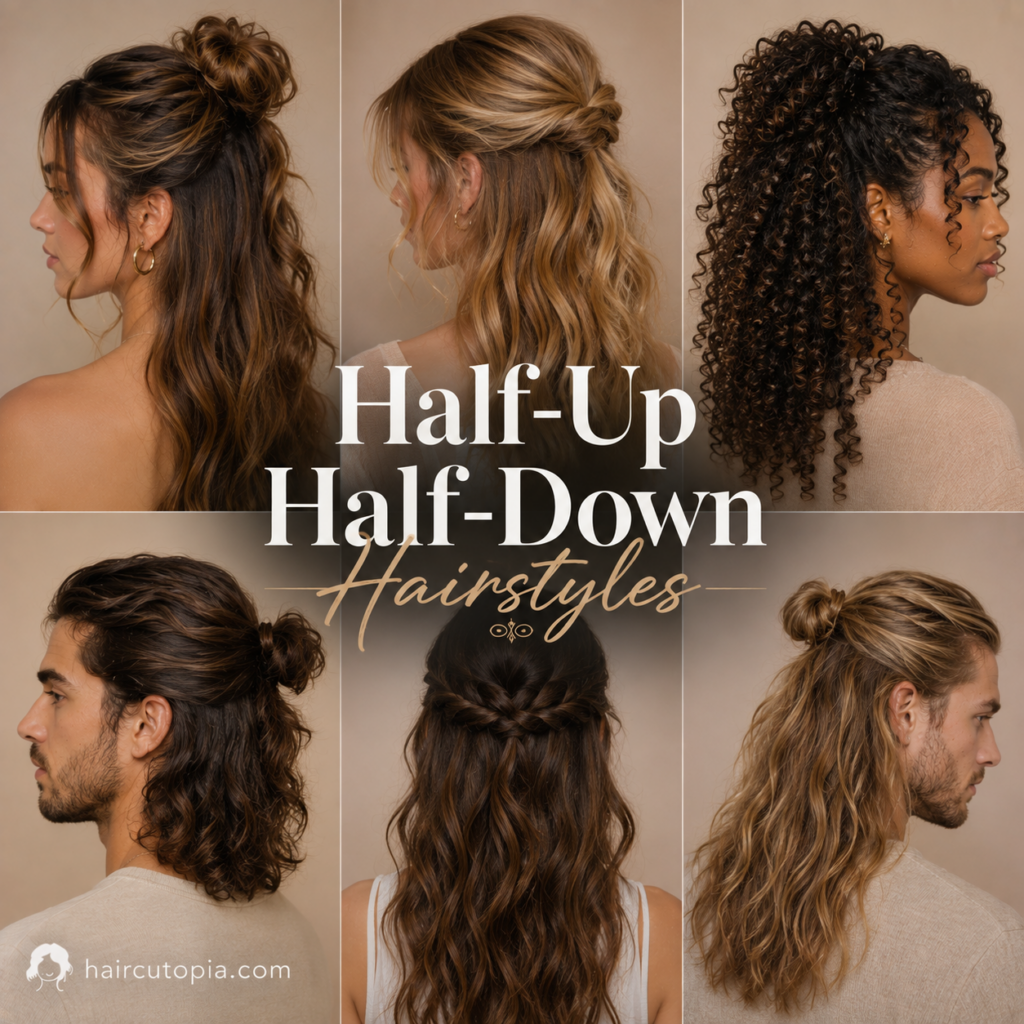
Half-up half-down hairstyles combine some of the structure of an updo with loose hair, making them useful when you want to keep hair away from your face while still showing its length or texture.
They’re useful when you want to keep hair away from your face while still showing its length or texture.
Options include:
- Half-up buns
- Half-up twists
- Braided half-up styles
- Half-up ponytails
- Pinned half-up curls
The lower section can remain straight, wavy, curly, or coily.
Updo Hairstyles With Bangs
Bangs can remain completely visible with an updo.
In fact, putting the rest of the hair up often makes the bangs more prominent.
Curtain Bangs With an Updo
Curtain bangs create soft framing around the face and work especially well with low buns and textured updos.
Full Bangs With an Updo
Straight or textured full bangs can create strong contrast with a high or low bun.
Curly Bangs With an Updo
Curly bangs can blend naturally with loose curls around a textured updo.
Side-Swept Bangs
Side-swept bangs work particularly well with asymmetrical updos and side parts.
Updo Hairstyles With Face-Framing Pieces
Leaving a few pieces loose around the face can dramatically soften an updo.
The pieces might be:
- Straight
- Wavy
- Curled
- Naturally textured
Avoid pulling out too much hair at once.
Start with a small amount and add more if needed.
Intentional face framing generally looks more balanced than randomly pulling strands from every section.
Updo Hairstyles for Weddings
Updos remain popular among wedding hairstyles because they can provide a secure base for veils and accessories while keeping the neckline visible.
Wedding updo ideas include:
- Low chignons
- Textured buns
- Braided updos
- High buns
- Curly updos
- Twisted low styles
- Sleek buns
- Romantic loose updos
The hairstyle should work with the veil, dress, weather, and amount of time it needs to remain in place.
Updo Hairstyles for Prom
Updos are among the most versatile prom hairstyles because they can be classic, romantic, sleek, textured, or dramatic depending on their placement and finish.
Popular choices include:
- Textured high buns
- Low buns
- Braided updos
- Curly updos
- Twisted styles
- Side updos
- Sleek buns
If you plan to dance, make sure the hairstyle feels secure when you move your head rather than only when you’re sitting still.
Updo Hairstyles for Formal Events
Updos are a classic category of formal hairstyles and work particularly well for black-tie events, formal dinners, galas, dances, and other special occasions.
You might choose:
- French twists
- Chignons
- Sleek low buns
- Braided buns
- Sculpted updos
- Curly updos
An updo doesn’t have to be extremely elaborate to look formal.
A simple bun with a clean finish can be enough.
Casual Updo Hairstyles
Updos aren’t reserved for special events.
Everyday options include:
- Messy buns
- Claw clip twists
- High buns
- Low buns
- Half-up buns
- Simple braided buns
These styles are useful for work, school, exercise, errands, or simply keeping long hair out of the way.
Updo Hairstyles for Work
For work, comfort and reliability are often more important than elaborate styling.
Consider:
- Low buns
- French twists
- Claw clip updos
- Braided buns
- Sleek high buns
- Simple twisted styles
How polished the hairstyle needs to be depends on your workplace.
Updo Hairstyles for Hot Weather
One practical advantage of an updo is keeping hair away from the neck.
During hot weather, try:
- High buns
- Braided buns
- Claw clip twists
- High curly updos
- Low buns
- Protective updos
If humidity affects your hair, consider a style that still looks intentional with a little additional texture rather than relying on every strand remaining perfectly smooth.
Updo Hairstyles With Hair Accessories
Accessories can turn a simple updo into a statement hairstyle.
Options include:
- Decorative pins
- Hair combs
- Barrettes
- Pearl pins
- Crystal pins
- Flowers
- Bows
- Headbands
- Hair cuffs
- Decorative claw clips
Placement matters.
A single comb positioned beside a low bun may have more visual impact than several accessories scattered throughout the hairstyle.
Updos With Flowers
Flowers work particularly well with romantic and outdoor-event hairstyles.
They can be positioned:
- Above a low bun
- Alongside a chignon
- Throughout a braided updo
- Around a crown braid
- Behind one ear
If you’re using fresh flowers, choose varieties capable of holding up outside water for the required amount of time.
How to Prepare Hair for an Updo
Good preparation can make an updo easier to build and more secure.
Start With Detangled Hair
Knots make sectioning, twisting, and pinning unnecessarily difficult.
Detangle gently using a method appropriate for your hair texture.
Decide Where the Updo Will Sit
Before styling, determine whether you want the finished hairstyle:
- High
- Low
- Centered
- Off-center
- Toward one side
Placement affects the entire silhouette.
Add Texture When Needed
Extremely smooth hair may need additional grip.
An appropriate styling or texturizing product can help pins and sections remain in place.
Gather Your Tools
You may need:
- Bobby pins
- Hairpins
- Elastics
- Sectioning clips
- Comb
- Brush
- Styling products
- Hairspray
- Hair accessories
It’s much easier to finish an updo when everything is within reach.
How to Secure an Updo Properly
A secure updo doesn’t necessarily require dozens of pins.
The foundation matters more.
If you’re building around a ponytail, make sure the elastic is secure before creating the bun or twists.
When using pins, insert them where they’ll support the weight of the hairstyle rather than simply placing them around the outside.
For larger updos, distribute the support across several areas.
If one pin is carrying most of the tension, the hairstyle is more likely to become uncomfortable or shift.
How to Use Bobby Pins in an Updo
Bobby pins are useful for securing smaller sections and controlling loose pieces.
Instead of randomly adding more pins whenever something moves, identify which section actually needs support.
You can use them to:
- Anchor twists
- Secure loose ends
- Hold face-framing sections temporarily
- Reinforce buns
- Hide shorter layers
Try to keep pins concealed when the hairstyle calls for a seamless finish.
For more casual looks, visible decorative pins can intentionally become part of the design.
How to Make an Updo Look Fuller
You don’t necessarily need extremely thick hair to create a fuller-looking updo.
Try:
- Adding texture before styling
- Loosening the crown after securing the hairstyle
- Gently expanding braids
- Creating loops or twists before pinning
- Spreading the bun outward
- Using strategic sectioning
Work gradually.
Pulling too aggressively can destabilize the entire hairstyle.
How to Make an Updo Last All Day
Start with a stable structure rather than relying entirely on hairspray.
Depending on your hair and hairstyle, you may use:
- Mousse
- Texture spray
- Gel
- Smoothing product
- Pomade
- Hairspray
- Humidity-resistant products
Once the main structure is secure, move your head gently in several directions.
If something already feels loose, fix it before leaving.
How Tight Should an Updo Be?
Secure and tight are not the same thing.
An updo shouldn’t cause persistent scalp pain, headaches, or uncomfortable pulling around the hairline.
Be particularly careful with:
- High ponytail foundations
- Tight buns
- Braided sections
- Extensions
- Heavy accessories
If the hairstyle hurts immediately, adjust it.
You shouldn’t have to wait for your scalp to “get used to” painful tension.
How to Choose the Right Updo
With so many possibilities, a few practical questions can help narrow your options.
What Is the Occasion?
A wedding updo may require more longevity and structure than a bun you’re wearing to work.
How Long Is Your Hair?
Some styles require enough length to wrap or braid, while others can be created by pinning shorter sections individually.
What Is Your Hair Texture?
Choose a style that works with your natural texture rather than assuming it needs to be completely transformed first.
How Much Time Do You Have?
A five-minute bun and a detailed braided updo solve very different styling problems.
How Long Will You Wear It?
Comfort becomes increasingly important the longer the hairstyle needs to remain in place.
Will You Be Wearing Accessories?
Veils, decorative combs, flowers, and other accessories may require specific attachment points.
Common Updo Hairstyle Mistakes
A few issues can make an updo harder to wear or maintain.
Try to avoid:
- Making the hairstyle painfully tight
- Using excessive amounts of product
- Relying on hairspray instead of a secure foundation
- Adding pins without considering where support is needed
- Ignoring the weight of very long hair
- Trying an unfamiliar elaborate style immediately before an important event
- Pulling out too many pieces when creating a messy updo
- Forgetting how the hairstyle looks from the back
- Using accessories that are too heavy
- Fighting your natural texture unnecessarily
Take photos from the front, sides, and back before deciding the style is finished.
Frequently Asked Questions About Updo Hairstyles
What hairstyles are considered updos?
Buns, chignons, French twists, braided updos, twisted hairstyles, pinned curls, and other styles that arrange some or all of the hair away from its natural hanging position can be considered updos.
What is the easiest updo?
A basic high or low bun is one of the easiest updos. Claw clip twists and half-up buns are also relatively simple for many hair types.
Can you create an updo with short hair?
Yes, depending on the length. Bobs and lobs can often be twisted, pinned, or gathered into small low buns and half-up styles. Very short hair may require individual sections to be pinned rather than gathered into one central updo.
Are updos only for formal occasions?
No. Messy buns, claw clip twists, high buns, and other casual updos are commonly worn as everyday hairstyles.
Can curly hair be put into an updo?
Absolutely. Curls can remain visible throughout buns, ponytail-based updos, half-up styles, and more elaborate pinned hairstyles.
How do I keep an updo from falling out?
Create a stable foundation, use pins where structural support is actually needed, and choose elastics and products appropriate for your hair. A hairstyle that isn’t mechanically secure won’t usually be fixed by adding more hairspray.
How can I make an updo look less severe?
Try loosening the crown slightly, leaving intentional face-framing pieces, adding texture, or choosing a lower placement.
Do updos damage hair?
An updo isn’t inherently damaging. However, repeated excessive tension, rough elastics, heavy extensions or accessories, and repeatedly securing hair in the same tight position may contribute to breakage or stress.
Should I wash my hair before creating an updo?
It depends on your hair and the hairstyle. Some hair is easier to style when freshly washed and properly prepared, while very smooth hair may benefit from additional texture. There’s no universal requirement to use unwashed hair for an updo.
Finding an Updo That Works for You
Updo hairstyles can be as simple or elaborate as you want them to be.
A claw clip twist can take a couple of minutes. A sleek low bun can create a polished look with relatively few steps. Braids, curls, twists, and accessories can turn those same basic shapes into hairstyles appropriate for weddings, proms, and formal events.
The key is choosing an updo that works with your actual hair.
Consider your length, texture, density, the occasion, and how long you’ll be wearing the style. Then think about whether you want the result to feel sleek, romantic, textured, casual, or dramatic.
You don’t need every strand perfectly controlled for an updo to look finished.
Sometimes a little texture, movement, and softness are exactly what make the hairstyle work.