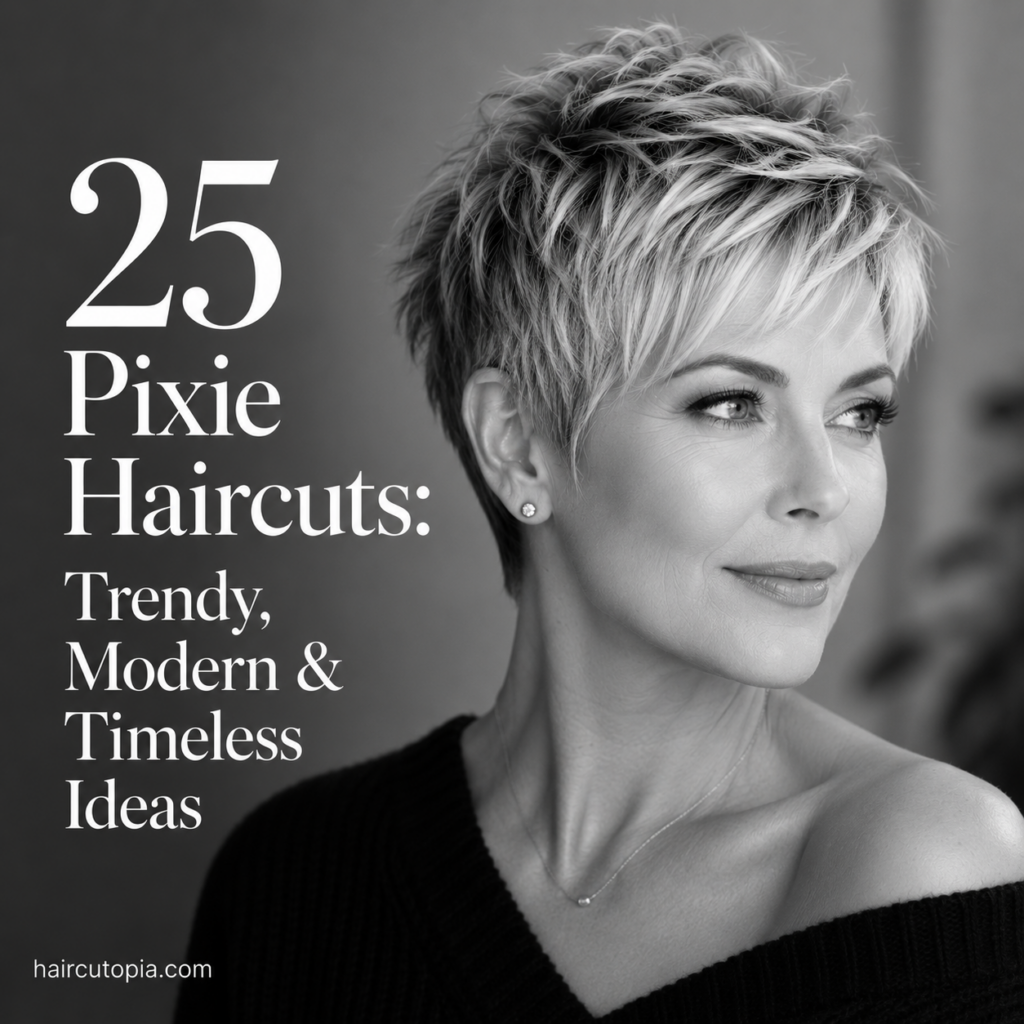
Pixie haircuts have a way of looking completely different from one person to the next. One pixie can feel soft and romantic, while another looks sharp, edgy, and fashion-forward. Add texture, longer bangs, natural curls, or a dramatic side part, and the personality of the haircut changes again.
That versatility is exactly why the pixie has remained popular for so long.
Short hair can highlight your eyes, cheekbones, and jawline while giving the hair a defined shape. Depending on the cut, a pixie can also add the appearance of volume to fine hair or remove unwanted bulk from thick hair.
If you are considering going shorter, these 25 pixie haircuts include trendy, modern, and timeless ideas for different hair textures and personal styles.
1. Classic Pixie Haircut
The classic pixie is simple, balanced, and always stylish.
The sides and back are cut short, while slightly more length is left through the crown and top. The transition between lengths is usually soft rather than dramatic.
This style works particularly well with straight or slightly wavy hair.
For a polished finish, use a lightweight styling cream and gently smooth the hair into place. If you prefer more movement, lift the crown with your fingers while blow-drying.
The classic pixie is a good option if you want a short haircut that does not rely heavily on current trends.
2. Textured Pixie Haircut
A textured pixie uses layers to create movement and separation.
Instead of every strand sitting perfectly smooth, individual sections move in slightly different directions. This creates a relaxed, modern appearance.
Texture can also make fine hair appear fuller.
Apply a small amount of matte styling paste to dry hair. Use your fingertips to pinch several sections around the crown and fringe.
Avoid defining every layer.
A slightly imperfect finish is part of the style.
3. Long Pixie Haircut
A long pixie keeps additional length through the top, fringe, or sides.
It is an excellent choice if you want short hair without committing to an extremely cropped style.
The extra length creates styling flexibility.
You can:
- Sweep the fringe to one side
- Tuck hair behind the ears
- Create soft waves
- Add crown volume
- Wear the hair sleek
- Style the top with texture
A long pixie can also be easier to grow out because it naturally transitions toward a short bob.
4. Layered Pixie Haircut
Layers can completely change the shape of a pixie.
Short crown layers create lift, while longer layers add softness and movement.
The layering pattern should be customized to your hair density.
Fine hair usually benefits from carefully placed layers that preserve fullness. Thick hair may need internal layering to remove excess weight.
A good layered pixie should naturally fall into shape with minimal styling.
5. Pixie Haircut With Side-Swept Bangs
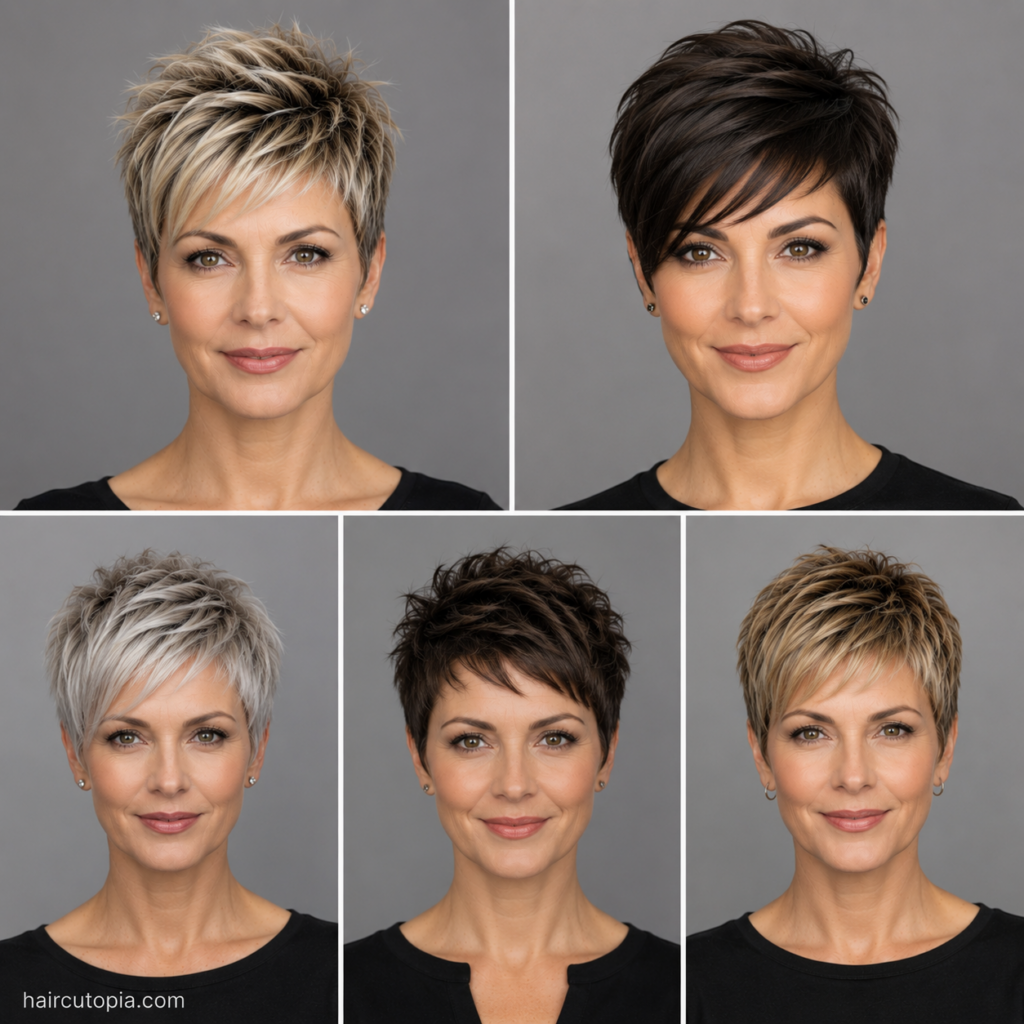
Side-swept bangs add softness to a short haircut.
The fringe moves diagonally across the forehead and draws attention toward the eyes.
Longer bangs can be styled smooth or lightly textured.
They also provide flexibility on days when you want a slightly different look.
Create a deeper side part for more drama or keep the part subtle for a softer appearance.
6. Pixie Haircut With Wispy Bangs
Wispy bangs are lighter than traditional fringe.
Small pieces of hair fall naturally across the forehead rather than creating one heavy line.
This makes the haircut feel soft and relaxed.
Wispy fringe can work particularly well with fine hair because it does not require a large amount of density.
The bangs are also relatively easy to grow out because they blend naturally into the surrounding layers.
7. Choppy Pixie Haircut
A choppy pixie features visibly separated layers.
The ends may appear slightly uneven by design.
This creates an edgy, casual appearance.
Straight or slightly wavy hair often works well with this style.
Use a matte styling paste to define several pieces around the crown.
Twist or pinch the sections with your fingertips.
Do not overwork the hair. The choppy texture should feel natural.
8. Messy Pixie Haircut
The messy pixie is intentionally tousled.
Hair moves in different directions, creating a relaxed hairstyle that does not need to look identical every day.
This is a particularly forgiving style.
A little bedhead can actually help.
To style a messy pixie, lightly dampen the hair and apply texture cream.
Lift the crown with your fingers and allow individual sections to fall naturally.
9. Tapered Pixie Haircut
A tapered pixie gradually becomes shorter around the sides and neckline.
The smooth transition creates a clean silhouette.
The top can remain longer and textured.
This contrast gives the haircut shape without creating a harsh difference in length.
Tapered pixies look especially polished when the neckline is regularly maintained.
10. Asymmetrical Pixie Haircut
An asymmetrical pixie uses noticeably different lengths on each side.
One side may be cut close to the head while the opposite side features longer fringe.
The contrast creates movement and visual interest.
Asymmetry can be subtle.
Even a slightly longer side bang can make a classic pixie feel more contemporary.
For a dramatic appearance, keep one side significantly shorter.
11. Undercut Pixie Haircut
An undercut pixie removes length underneath the longer top sections.
The sides, back, or both may be clipped short.
This creates a noticeable contrast.
Undercuts can also make extremely thick hair easier to manage by removing bulk.
The longer top can be worn smooth, textured, or swept to one side.
Keep in mind that the clipped sections need regular trims to maintain a sharp appearance.
12. Curly Pixie Haircut
Natural curls bring personality and movement to a pixie.
The haircut should be shaped around the curl pattern rather than forcing the curls into a straight hairstyle.
A curly pixie often keeps more length through the crown.
The curls create natural volume while shorter sides control the silhouette.
Curl shrinkage is important.
A stylist experienced with curly hair can account for how much shorter the hair appears when dry.
13. Wavy Pixie Haircut
Natural waves create softness in a pixie haircut.
A longer layered style gives the waves enough room to form.
Instead of smoothing every bend, allow the natural texture to become part of the hairstyle.
Apply a lightweight wave cream to damp hair.
Scrunch gently and air-dry.
Once the hair is dry, separate several sections with your fingertips.
14. Sleek Pixie Haircut
A sleek pixie creates a polished, smooth appearance.
The hair may be styled with a defined side part or brushed gently away from the forehead.
This style works especially well with naturally straight hair.
Use a lightweight smoothing cream to control flyaways.
Avoid applying too much serum.
Short hair can quickly appear oily when overloaded with shine products.
15. Spiky Pixie Haircut
The modern spiky pixie focuses on texture and movement.
Unlike heavily gelled styles from previous decades, today’s version usually has softer separation.
Short crown layers are lifted with the fingers.
A matte styling paste provides definition without creating a wet appearance.
Start with a small amount of product.
Add more only where additional hold is needed.
16. Soft Feminine Pixie Haircut
A pixie can feel soft and romantic.
Longer fringe, feathered layers, and gentle edges create a feminine silhouette.
The hair may naturally frame the forehead and temples.
Subtle waves can add even more softness.
Use a lightweight styling cream and allow the hair to move naturally.
Avoid excessive hairspray if you want a flexible finish.
17. Pixie Haircut With Volume on Top
Extra crown volume creates a dramatic shape.
Height draws the eye upward and can visually lengthen the face.
The sides are typically kept closer to the head.
To create volume:
- Apply root spray to damp hair.
- Blow-dry the crown upward.
- Lift the roots with your fingers or a small brush.
- Finish with lightweight texture spray.
Avoid heavy oils near the crown.
They can flatten the hairstyle.
18. Shaggy Pixie Haircut
The shaggy pixie combines short hair with loose, layered movement.
The layers are typically longer and less structured than those in a traditional pixie.
This creates a casual, slightly undone appearance.
Wavy hair works particularly well with this style.
A texture spray can enhance the natural movement.
The shaggy pixie is also forgiving as it grows because the haircut already has a relaxed silhouette.
19. Pixie Bob Haircut
The pixie bob sits between a traditional pixie and a short bob.
It keeps additional length around the sides and back.
The shape feels fuller and softer than a cropped pixie.
This is a great option if you are nervous about cutting your hair extremely short.
The pixie bob also offers more styling flexibility.
You may be able to create waves, tuck the sides behind your ears, or style the hair smooth.
20. Feathered Pixie Haircut
A feathered pixie uses light layers that move away from the face.
The technique creates softness and visible movement.
Feathered styles work particularly well with straight or slightly wavy hair.
A round brush can help direct the layers while blow-drying.
For a more casual appearance, use your fingers instead.
Finish with a flexible hairspray.
21. Side-Parted Pixie Haircut
A deep side part can completely change a pixie haircut.
The part creates asymmetry and directs more volume toward one side.
This simple styling change works with classic, long, and textured pixies.
Use a comb to create the part while the hair is damp.
Blow-dry the hair in the desired direction.
A small amount of styling cream can help keep the fringe in place.
22. Pixie Haircut for Fine Hair
A pixie can create structure in fine hair.
Removing excessive length prevents the strands from becoming weighed down.
The best pixie haircuts for fine hair often include:
- Short crown layers
- A slightly longer top
- Soft texture
- Side-swept fringe
- Tapered sides
- Minimal aggressive thinning
Lightweight styling products are important.
Try a volumizing mousse or root spray.
Heavy waxes can cause fine hair to separate and appear flatter.
23. Pixie Haircut for Thick Hair
Thick hair provides plenty of density for a pixie.
Proper weight removal is essential.
Without internal layering, the haircut may become bulky around the sides.
A stylist can remove weight underneath the visible layers.
Tapered sides and subtle undercuts can also help control thickness.
The top can remain longer, allowing the natural density to create volume and texture.
24. Silver and Gray Pixie Haircut
Silver and gray hair can look striking in a pixie.
Natural color variations become more noticeable when the hair is short and layered.
White, silver, charcoal, and darker strands create natural dimension.
Texture can highlight those differences even further.
Gray hair may feel dry or coarse.
Use moisturizing hair products and limit excessive heat.
Purple shampoo can help control unwanted yellow tones when used occasionally.
25. Low-Maintenance Wash-and-Wear Pixie
A wash-and-wear pixie is designed around your natural hair pattern.
The goal is to reduce daily styling.
Straight hair may work well with a classic tapered shape.
Wavy hair can benefit from soft layers.
Curly hair needs enough length for the curls to form naturally.
Tell your stylist how you actually style your hair.
If you normally air-dry, the haircut should look good air-dried.
A true low-maintenance pixie should not require you to completely change your natural texture every morning.
How to Choose the Right Pixie Haircut
With so many pixie haircut ideas, choosing one can feel overwhelming.
Start with your natural hair texture.
A haircut that works beautifully with straight hair may require significantly more effort on tight curls.
Next, think about your daily routine.
Ask yourself:
- How much time do I spend styling my hair?
- Do I normally air-dry or blow-dry?
- Am I comfortable using styling products?
- How often can I visit the salon?
- Do I prefer polished or relaxed hairstyles?
Your answers can quickly narrow down your options.
Choosing a Pixie Haircut for Your Face Shape
Face shape can be a helpful guide, but it is not a strict rule.
Round Face
Consider crown volume, asymmetrical fringe, and shorter sides.
These elements can create a longer visual line.
Oval Face
Oval faces can usually wear a wide range of pixie haircuts.
Classic, textured, sleek, and cropped styles are all options.
Square Face
Soft layers and wispy bangs can balance a defined jawline.
Avoid overly boxy shapes if you want a softer appearance.
Heart-Shaped Face
Longer fringe can help balance a wider forehead and narrower chin.
Side-swept pixies work particularly well.
Long Face
Look for texture and volume around the sides.
Extremely tall crown volume may visually lengthen the face further.
How to Ask Your Stylist for a Pixie Haircut
Bring several reference photos to your appointment.
Try to find examples with hair texture similar to yours.
Then explain which details you like.
You might say:
- “I like the texture through the crown.”
- “I want longer side-swept bangs.”
- “I prefer a soft neckline.”
- “I want the sides tapered.”
- “I usually air-dry my hair.”
The more specific you are, the easier it is for your stylist to adapt the haircut to your hair.
How Often Should You Trim a Pixie Haircut?
Most pixie haircuts benefit from trims every four to eight weeks.
Very short tapered pixies may need maintenance closer to four weeks.
Long pixies and shaggy styles can often grow for six to eight weeks or longer.
If frequent salon appointments are inconvenient, choose a softer haircut that grows out naturally.
The areas around the ears and neckline usually reveal growth first.
Best Styling Products for Pixie Haircuts
Short hair usually requires less product than expected.
Useful styling products include:
- Lightweight mousse for volume
- Root spray for lift
- Texture spray for movement
- Matte paste for definition
- Styling cream for softness
- Curl cream for natural curls
- Smoothing serum for sleek styles
- Flexible hairspray for light hold
Start with a small amount.
You can always add more product.
Too much product can quickly flatten a pixie.
Are Pixie Haircuts High Maintenance?
Pixie haircuts are often quick to style but may require regular salon maintenance.
Daily routines can be extremely simple.
Some pixies only need water and a small amount of styling cream in the morning.
However, short hair reveals growth quickly.
A sharply tapered neckline may lose its shape after several weeks.
If you want less salon maintenance, consider a long pixie, shaggy pixie, or soft layered style.
Final Thoughts on Pixie Haircuts
Pixie haircuts continue to be popular because there is no single way to wear them.
A classic pixie feels timeless. A textured or choppy cut creates modern movement. Curly and wavy pixies celebrate natural texture, while undercuts and asymmetrical styles offer something bolder.
The best pixie haircut is the one that works with your hair and your lifestyle.
Think about your natural texture, styling routine, and how frequently you want to maintain the haircut.
Then choose the details that feel most like you.
With the right shape, a pixie can be stylish, flattering, and surprisingly easy to wear.
Related Posts
 Long Bob Haircuts for Older Women: Elegant, Flattering Styles That Never Go Out of Fashion
 Long Layers Haircuts for Women Over 40: 25 Timeless Styles That Add Movement and Youthfulness
 Lob Haircuts for Diamond Faces: 25 Flattering Styles That Highlight Your Best Features
 Textured Bob Haircuts for Older Women: 25 Elegant Styles That Never Go Out of Fashion