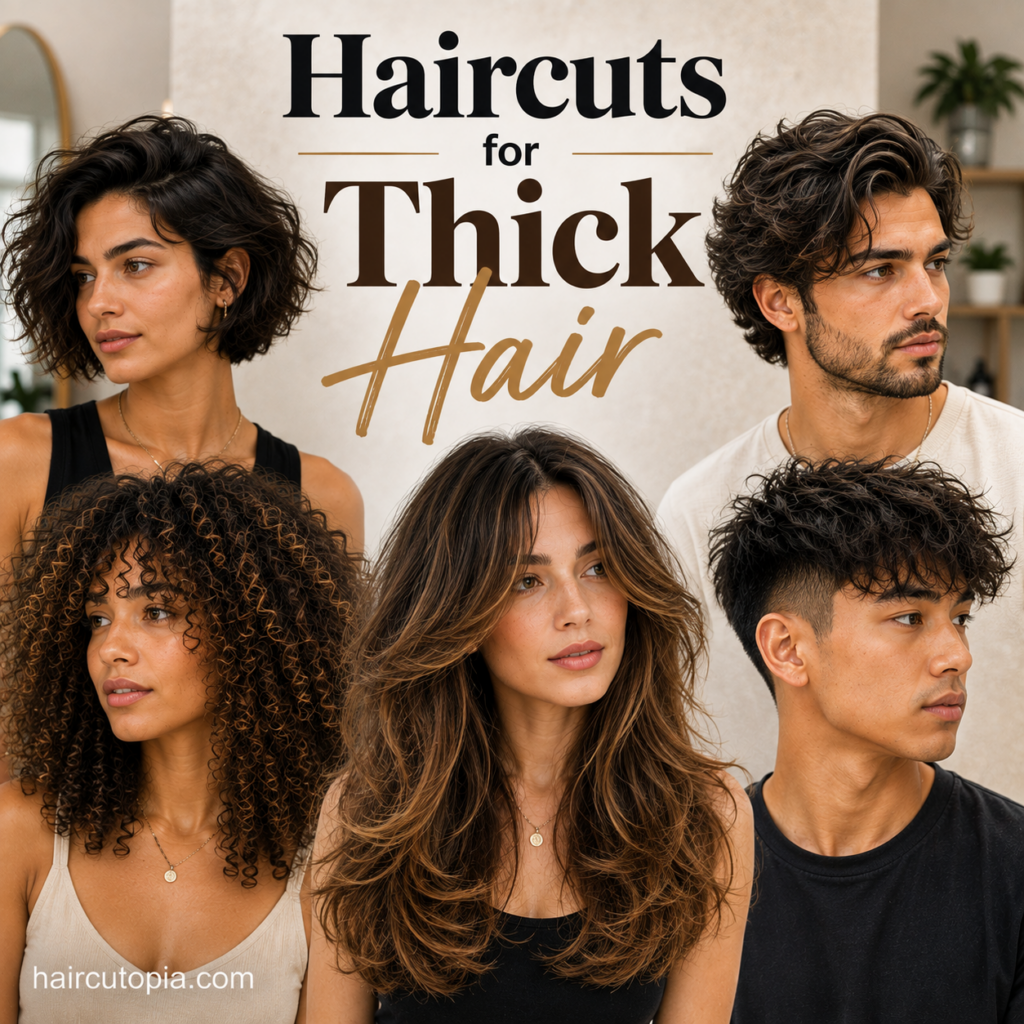
Thick hair is often described as something everyone wants, but anyone who actually has a lot of hair knows there’s another side to it.
It can feel heavy. It can take forever to dry. Short cuts may become wider than expected, while long hair can start to feel like it’s pulling everything downward. And when a haircut doesn’t distribute the weight properly, you may end up with a shape that’s bulky at the bottom, flat at the top, or simply difficult to style.
The right haircut changes that.
A good haircut for thick hair isn’t necessarily about removing as much hair as possible. It’s about putting the volume in the right places. Layers, length, graduation, and strategic weight removal can all help create a shape that feels lighter without leaving the hair thin, choppy, or overly fluffy.
Whether your thick hair is straight, wavy, curly, coarse, fine-stranded, short, or waist-length, there are plenty of ways to make that natural density work in your favor.
What Is Thick Hair?
People often use “thick hair” to describe several different things.
Technically, thickness can refer to the diameter of an individual strand, but in everyday conversation, people usually mean they have a lot of hair.
That’s hair density.
Someone can have fine individual strands but an extremely high number of them. Another person might have coarse individual strands but lower overall density.
Both may describe their hair as thick, yet they can need very different haircuts.
When choosing a haircut, consider both:
- The thickness of individual strands
- The overall density of your hair
- Whether your texture is straight, wavy, curly, or coily
- How much volume your hair naturally creates
- Whether it becomes wider or flatter as it grows
- How easily it holds a shape
Understanding how your particular hair behaves is more useful than simply telling your stylist, “I have thick hair.”
What Makes a Good Haircut for Thick Hair?
The best haircuts for thick hair create balance.
You usually want to keep enough density for the hair to look full while removing or redistributing weight where it becomes excessive.
That might involve:
- Long or blended layers
- Internal weight removal
- Face-framing pieces
- Graduation
- A shaped perimeter
- Strategic shorter sections
- Leaving additional length in areas that tend to puff up
The goal isn’t always to make thick hair look thinner.
Sometimes a fuller shape is exactly what makes the haircut work.
A rounded curly cut, for example, may deliberately preserve volume while distributing it more evenly. A blunt bob may retain considerable density because that strong perimeter is part of the look.
The right approach depends on your texture and the style you’re trying to achieve.
Best Haircuts for Thick Hair
Thick hair gives you enough density to support everything from dramatic pixies to heavily layered long cuts.
Here are some of the most versatile options.
1. Textured Bob
A textured bob removes some of the heaviness associated with a completely blunt shape.
Subtle layers or internal texture can prevent the bottom from becoming too bulky while preserving the recognizable bob silhouette.
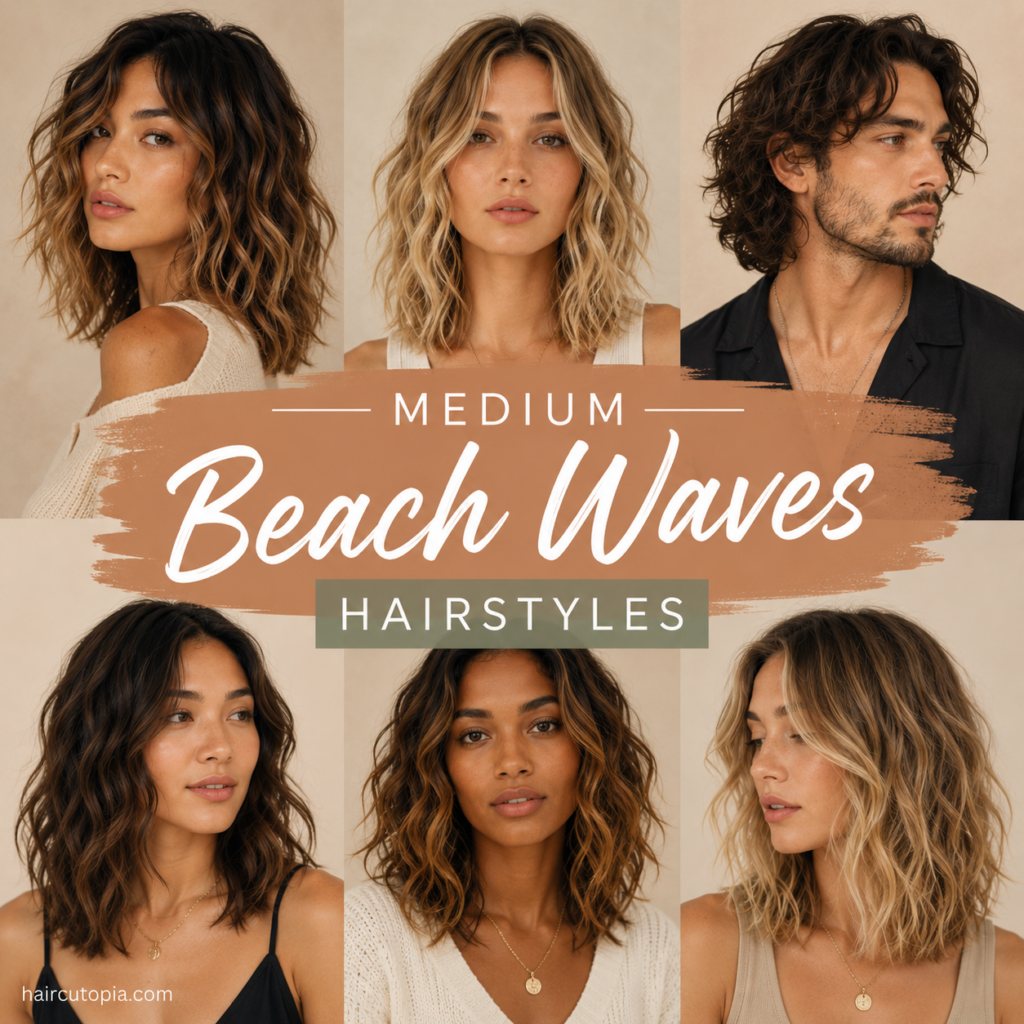
This works particularly well for thick wavy hair.
A slightly tousled finish also means you don’t need every strand perfectly positioned.
2. Layered Bob
If a one-length bob feels too heavy, layers can create significantly more movement.
The shortest layers don’t necessarily need to be dramatic.
Soft, blended layering can reduce weight while keeping the haircut polished.
For hair that tends to expand when cut short, maintaining some length around the perimeter can help prevent the shape from becoming overly round or wide.
3. French Bob
The French bob usually sits around the jaw and has a relaxed, slightly undone appearance.
Thick hair can give this cut a naturally substantial shape.
Depending on your density, your stylist may remove some internal weight so the haircut doesn’t become overly triangular.
It can be worn straight, wavy, or softly tousled.
4. Bixie Cut
The bixie combines elements of a bob and pixie.
It leaves more movement and length than a traditional pixie while removing much of the heaviness associated with a bob.
For thick hair, that makes it particularly useful.
Layering through the crown and sides can create texture while keeping the overall shape compact.
5. Long Pixie
A long pixie lets you take advantage of thick hair’s natural body.
The top remains long enough to sweep, tousle, curl, or style with texture, while shorter sides and back remove a considerable amount of weight.
This can be easier to manage than an extremely short pixie if your hair tends to stand upright when cut close.
6. Textured Pixie
Thick hair gives a textured pixie plenty of dimension.
Rather than trying to flatten the hair, the cut uses its natural density to create separation and movement.
You can keep additional length through the crown or fringe and taper the sides for a cleaner silhouette.
7. Collarbone-Length Lob
The collarbone-length lob is one of the safest options if you want to remove length without going dramatically short.
There’s still enough weight to keep thick hair controlled, while the shorter overall length makes washing, drying, and styling easier.
Long internal layers can remove bulk without making the outside of the haircut look heavily layered.
8. Shoulder-Length Layered Cut
Shoulder length works beautifully with thick hair because it provides room for layering.
Instead of allowing all the density to collect at the ends, longer layers redistribute movement through the haircut.
This is particularly useful for thick straight and wavy hair.
9. Medium Shag
A shag takes advantage of thick hair rather than trying to hide it.
Layers around the crown, face, and length create movement and allow the natural density to become part of the style.
The amount of layering can be adjusted significantly.
A dramatic shag creates lots of volume around the crown, while a softer version maintains more weight through the bottom.
10. Butterfly Haircut
The butterfly haircut is particularly well suited to thick medium or long hair.
Shorter face-framing sections blend into longer layers, creating movement without sacrificing the appearance of length.
Because thick hair has enough density to support multiple layers, the shape can look full rather than wispy.
If your hair is prone to puffiness, keep the shortest layers a little longer.
11. Long Layered Haircut
Long layers are a classic solution for thick hair.
They reduce heaviness while preserving overall length.
Instead of allowing the hair to fall as one dense curtain, layering creates movement through the middle and ends.
The exact starting point matters.
Layers beginning around the chin or shoulders will behave very differently from layers beginning near the crown.
12. U-Shaped Long Cut
A U-shaped perimeter keeps the center back slightly longer while gradually shortening toward the sides.
This creates a softer outline than a completely blunt cut.
On thick hair, it can remove some visual heaviness while maintaining fullness through the ends.
Long layers can be added for even more movement.
13. V-Shaped Long Cut
A V-shaped cut creates a more dramatic point through the center back.
This works especially well on very long, dense hair because it breaks up a heavy horizontal perimeter.
Layers can enhance the effect.
If maintaining maximum fullness through the ends is important, choose a softer V rather than an extremely narrow point.
14. Long Shag
A long shag can transform heavy hair that feels flat around the top.
Layers create lift and movement while maintaining length through the bottom.
Wavy and curly textures work particularly well because their natural movement reinforces the shape of the haircut.
15. Rounded Curly Cut
Thick curly hair doesn’t necessarily need to be made smaller.
A rounded cut deliberately uses volume.
The stylist shapes the layers so fullness is distributed evenly around the head instead of collecting at the bottom.
The result can be dramatic, balanced, and much easier to style because the haircut works with the curl pattern.
Short Haircuts for Thick Hair
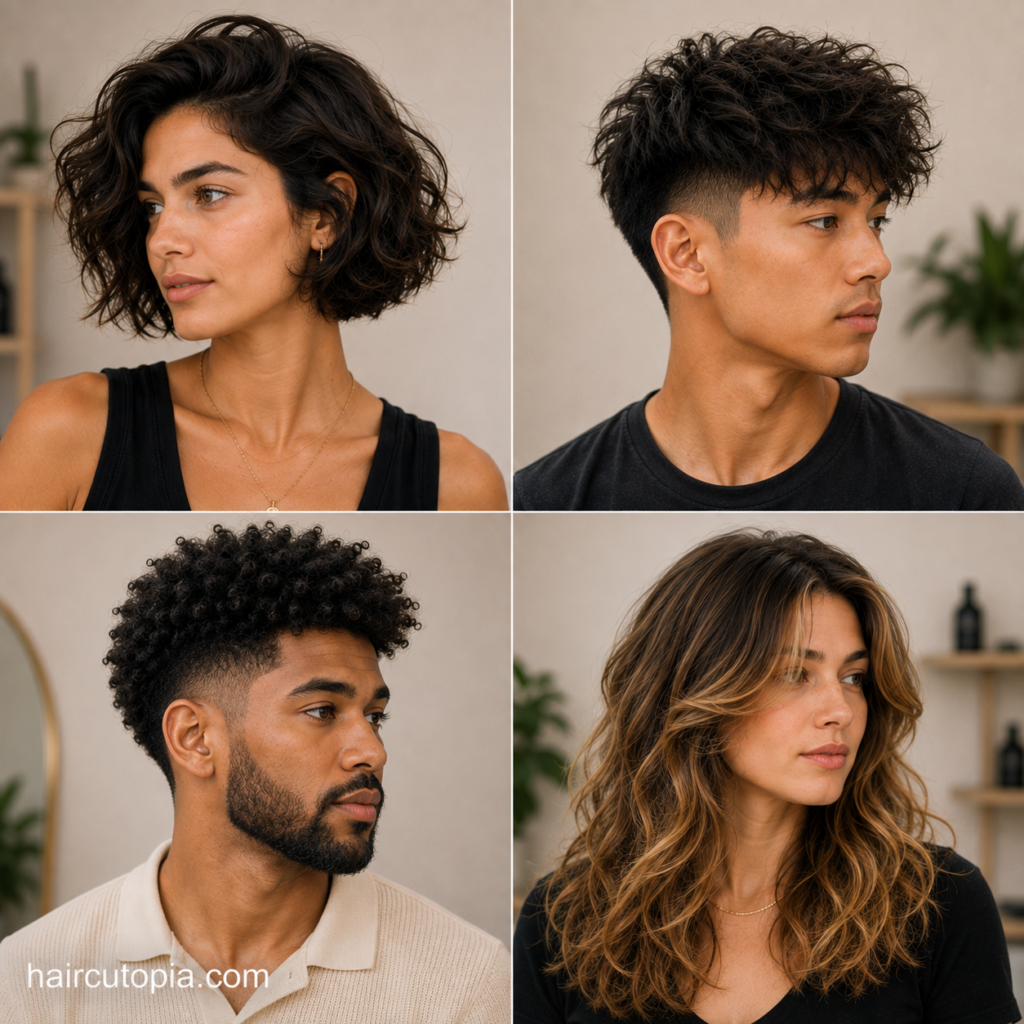
Going short can remove a huge amount of physical weight from thick hair.
That can make washing and drying significantly easier.
But there’s a tradeoff.
Length provides weight, and weight helps some hair types lie down. Once that length disappears, thick hair may stand outward or upward more than expected.
That’s why the shape matters.
Good short options include:
- Textured pixies
- Long pixies
- Bixie cuts
- Layered bobs
- Textured bobs
- Short shags
- Cropped curly cuts
If your hair becomes particularly wide when short, keeping additional length through the top or perimeter may give you more control.
Medium Haircuts for Thick Hair
Medium length is arguably one of the easiest ranges for thick hair.
There’s enough length to provide weight, but not so much that the hair becomes exhausting to wash and style.
Medium hair also gives your stylist plenty of room to distribute density.
Strong options include:
- Collarbone-length lobs
- Layered shoulder-length cuts
- Medium shags
- Butterfly cuts
- Wavy lobs
- Curly layered cuts
This length is also practical if you like wearing your hair up.
You can still create ponytails, buns, and other pulled-back styles while enjoying a lighter overall haircut.
Long Haircuts for Thick Hair
Long thick hair can look incredibly full and healthy, but it can also become heavy.
A completely one-length cut may pull the roots flat while creating a dense block of hair through the bottom.
Layers are one of the easiest ways to change that.
Long blended layers, U-shaped cuts, butterfly styles, and long shags can redistribute weight while maintaining length.
If you prefer a fuller perimeter, internal layers can remove some bulk without dramatically changing the exterior shape.
Haircuts for Thick Straight Hair
Straight thick hair tends to show the structure of a haircut clearly, so choosing a cut that works with both its density and naturally smooth texture is especially important.
That can make blunt cuts particularly striking, but excessive density may also create a heavy appearance.
Depending on your desired style, consider:
- Blunt lobs with subtle internal layering
- Long layered cuts
- Collarbone-length cuts
- Bixies
- Long pixies
- U-shaped long hair
Because straight hair doesn’t naturally hide uneven layering as easily as curls or waves, clean blending is especially important.
Haircuts for Thick Wavy Hair
Thick wavy hair has natural movement built in, and the right cut can help emphasize that texture while keeping excess density under control.
The right haircut helps those waves form without allowing all the volume to collect in one area.
Layers are particularly useful.
Good choices include:
- Textured bobs
- Wavy lobs
- Medium shags
- Butterfly cuts
- Long layered cuts
- Long shags
If your waves become much stronger after drying, your stylist should account for that before deciding where each layer should fall.
Haircuts for Thick Curly Hair
With thick curly hair, the goal isn’t necessarily removing volume. It’s controlling the silhouette.
It’s controlling the silhouette.
Without enough shaping, dense curls can become bottom-heavy. Removing too much hair, however, may create excessive expansion.
Rounded cuts, curly bobs, layered medium styles, and long curly layers can all work well.
Shrinkage is especially important.
A curl that hangs to the shoulder while wet might sit considerably higher once completely dry.
Haircuts for Thick Coarse Hair
Coarse hair refers to the diameter of the individual strands rather than how many hairs you have, which is why coarse texture and thick density aren’t necessarily the same thing.
When coarse strands are combined with high density, the result can feel particularly substantial.
Cuts that preserve enough length for control while removing strategic bulk are often effective.
Consider:
- Long layers
- Shoulder-length layered cuts
- Textured lobs
- Soft shags
- Butterfly cuts
- Long pixies with additional top length
Your stylist may use different cutting techniques depending on how rigid or flexible your individual strands are.
Haircuts for Thick Frizzy Hair
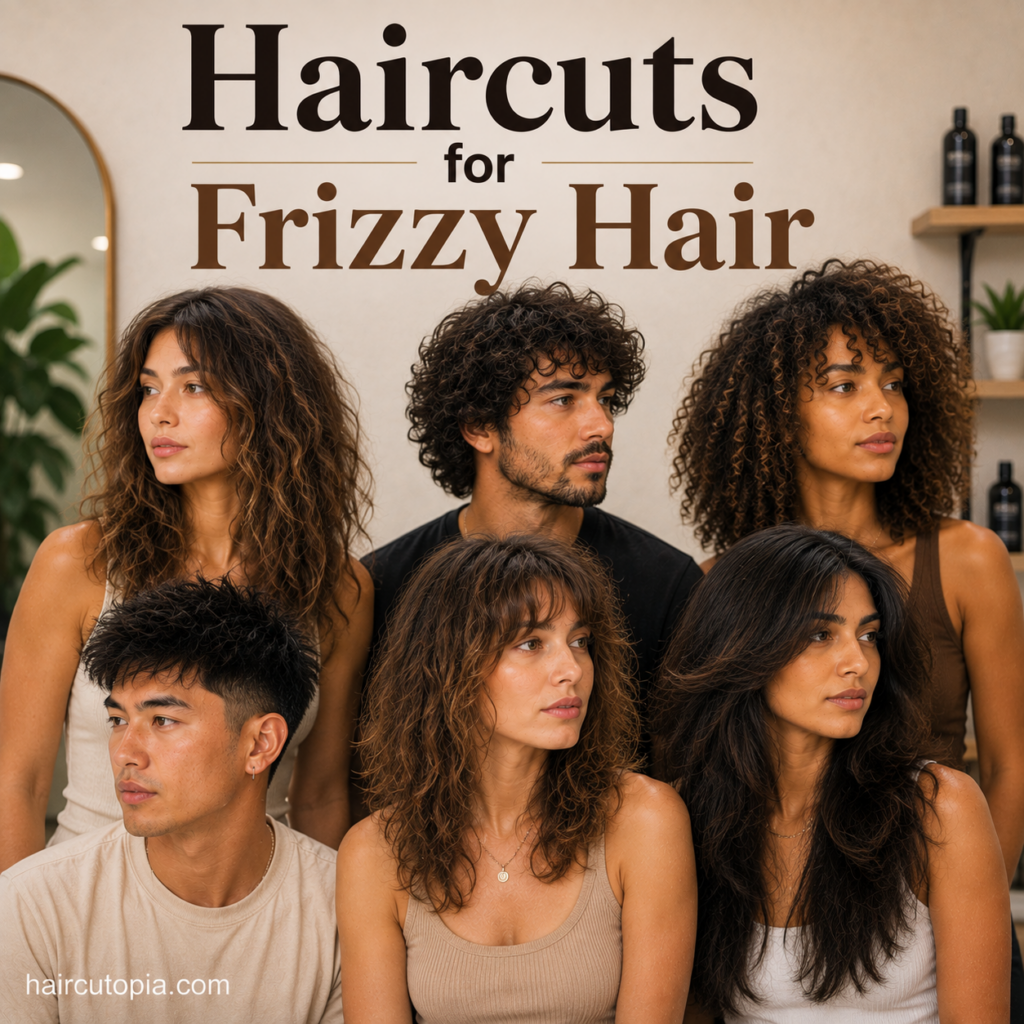
For thick frizzy hair, managing density and controlling expansion often need to be considered together.
Removing too much weight can sometimes make thick frizzy hair expand even more.
Longer blended layers are often easier to manage than lots of short layers when reducing volume is the priority.
Good options include:
- Textured lobs
- Long layered cuts
- Soft shags
- Butterfly cuts
- Rounded curly cuts
- Collarbone-length styles
Rather than asking for aggressive thinning, explain where your hair becomes excessively bulky.
Targeted weight removal can produce a more predictable result.
Should Thick Hair Be Layered?
Often, yes.
Layers can help:
- Reduce heaviness
- Create movement
- Redistribute volume
- Encourage waves and curls
- Add lift around the crown
- Prevent the ends from becoming excessively bulky
But that doesn’t mean every thick haircut needs dramatic layers.
Blunt cuts can look excellent on thick hair too.
The decision comes down to the silhouette you want and how your hair naturally behaves.
If your current hair feels heavy but you like the full appearance, subtle internal layering may be enough.
What Type of Layers Are Best for Thick Hair?
There isn’t one universal layer pattern.
Long layers are generally a versatile starting point because they remove some weight without creating lots of short pieces.
Face-framing layers can add movement around the front without changing the entire haircut.
Internal layers remove bulk while keeping the exterior relatively full.
Shorter crown layers create more lift and are commonly used in shags and heavily textured styles.
Think about the result you want rather than simply asking for “lots of layers.”
Should Thick Hair Be Thinned Out?
Sometimes, but thinning needs to be approached carefully.
Removing targeted weight can make very dense hair significantly easier to manage.
Removing too much can create a different problem.
Shorter internal strands may spring outward, particularly on wavy, curly, coarse, or frizz-prone hair.
Instead of asking your stylist to thin everything, identify where the haircut feels excessively heavy.
That gives them more information to work with.
Is a Blunt Cut Good for Thick Hair?
It can be.
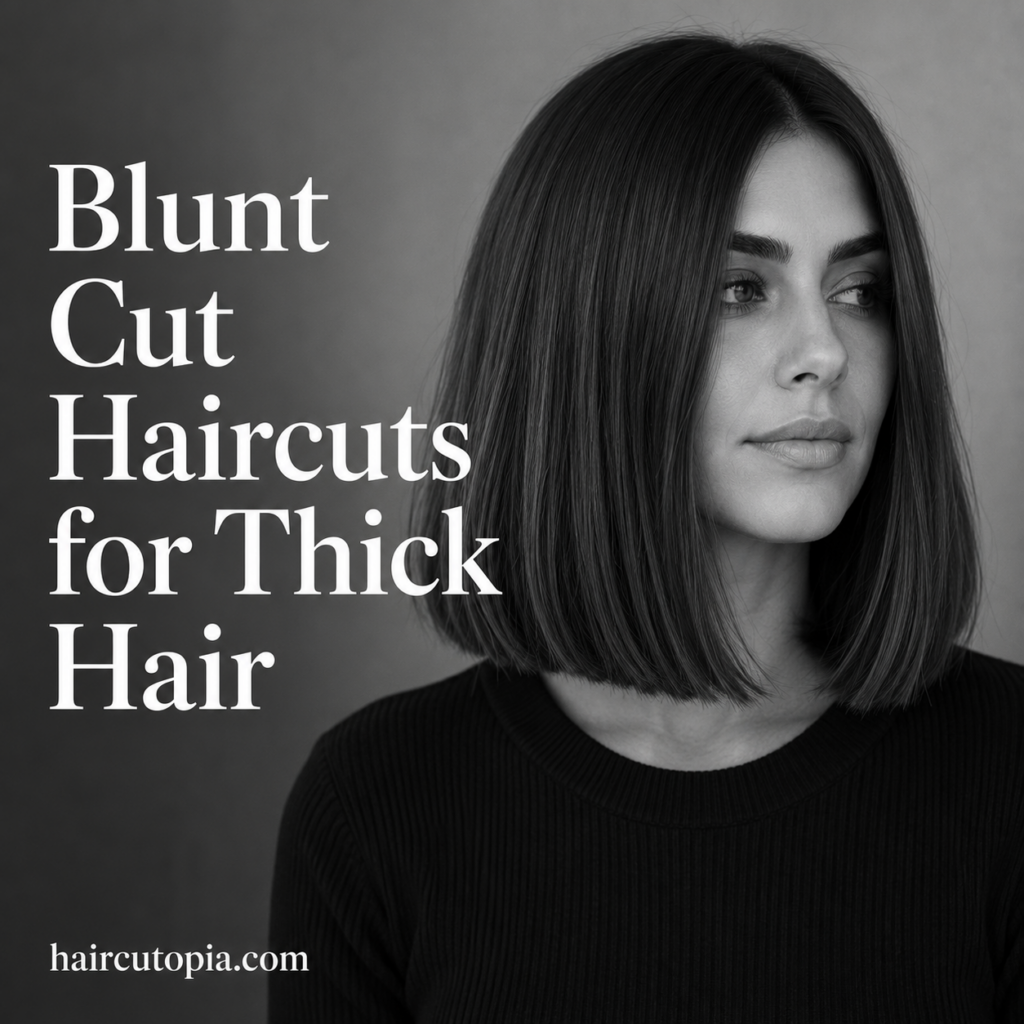
Blunt cuts create a strong, full perimeter that looks especially polished on straight or slightly wavy hair.
However, a completely blunt cut on extremely dense hair can become bulky around the bottom.
Your stylist may use subtle internal layering while keeping the visible perimeter blunt.
That gives you the clean appearance of a one-length cut without quite as much weight.
Are Shags Good for Thick Hair?
Yes, especially if you want movement.
Thick hair provides enough density to support the multiple layers that define a shag.
The style can be adjusted depending on how much volume you want.
A dramatic shag uses shorter crown layers for noticeable lift.
A soft shag keeps the layers longer and more blended.
Wavy and curly thick hair often works particularly well because the natural texture adds even more dimension.
Are Pixie Cuts Good for Thick Hair?
They can be excellent.
A pixie removes a significant amount of hair, making the overall style feel lighter.
Thick hair also provides plenty of body through the top.
The important consideration is how your hair behaves without length weighing it down.
If it tends to stand straight outward when short, a longer pixie may be easier to control than an extremely close crop.
Are Bobs Good for Thick Hair?
Bobs can work extremely well with thick hair.
The shape just needs to account for density.
A completely blunt jaw-length bob creates a bold silhouette, while a textured or layered bob removes some weight.
Longer bobs provide additional weight and tend to be easier to manage if your hair expands.
The right choice depends on whether you want to emphasize fullness or reduce it.
Bangs for Thick Hair
Thick hair gives you plenty of density for bangs.
That opens up several options:
- Curtain bangs
- Side-swept bangs
- Bottleneck bangs
- Full fringe
- Wispy bangs
- Long grown-out fringe
Curtain bangs are especially versatile because they blend easily into face-framing layers.
If your hair is wavy or curly, consider how much the fringe will shrink when dry.
Bangs also require more frequent trimming than the rest of most haircuts, so factor maintenance into the decision.
Best Haircuts for Thick Hair by Face Shape
Hair type should usually be the starting point, but face shape can help fine-tune the cut.
Round Faces
Cuts that create vertical movement can help visually lengthen the overall shape.
Consider longer face-framing layers, collarbone-length cuts, long bobs, and layered long hair.
Oval Faces
Oval faces tend to work with a wide variety of lengths.
Pixies, bobs, shags, lobs, and long layers are all options.
Your hair texture and preferred maintenance level may matter more than face shape.
Square Faces
Soft movement around the jaw can create contrast with stronger angles.
Waves, face-framing layers, curtain bangs, and textured lobs can all work well.
Heart-Shaped Faces
Styles that create movement around the jaw and lower face can balance a wider forehead.
Chin-length bobs, curtain bangs, shoulder-length layers, and soft waves are worth considering.
Long Faces
Extremely long, flat hair can emphasize vertical length.
Medium cuts, shags, curtain bangs, and styles with movement around the sides can create more balance.
These aren’t rigid rules. If you love a haircut that supposedly isn’t “ideal” for your face shape, that doesn’t mean you shouldn’t wear it.
Low-Maintenance Haircuts for Thick Hair
A low-maintenance haircut is one that works reasonably well with the way your hair naturally dries.
That definition is more useful than simply choosing the shortest haircut possible.
For thick hair, good low-maintenance options may include:
- Collarbone-length lobs
- Long blended layers
- Soft shags
- Textured bobs
- Medium curly cuts
- Long wavy layers
If you have to straighten, curl, or blow-dry the entire haircut every morning to make the shape work, it probably isn’t low maintenance for you.
How to Style Thick Hair
The haircut does much of the work, but styling habits still matter.
Start With Damp Hair
Apply styling products before your hair has fully dried.
Thick hair can become much harder to reshape once it has already settled into its natural pattern.
Work in Sections
Dense hair makes it easy to apply product only to the outer layer.
Dividing your hair into a few sections helps distribute styling products more evenly.
Don’t Automatically Use More Product
Having more hair doesn’t always mean you need a huge amount of styling product.
Too much cream, oil, or gel can create buildup and make thick hair feel even heavier.
Start conservatively and add more where needed.
Consider Drying Time
Thick hair can hold moisture for a long time.
If you blow-dry, work in sections rather than repeatedly heating the outside while the interior remains damp.
For waves and curls, a diffuser can help maintain natural texture.
Use Heat Protection
If you regularly use a blow dryer, flat iron, or curling tool, apply an appropriate heat protectant first.
This is particularly important with long hair, where the ends may have been exposed to years of styling.
What to Ask Your Stylist
The phrase “my hair is too thick” doesn’t tell your stylist exactly what you want changed.
Be specific.
Tell them:
- Where your hair feels the heaviest.
- Whether it becomes wider when cut shorter.
- How you normally style it.
- Whether you air-dry or blow-dry.
- How much time you want to spend styling.
- Whether you need to be able to tie it back.
- How your hair reacts to humidity.
- What you dislike about your current shape.
- Whether previous thinning or layering worked well for you.
Reference photos are useful too, especially when the person in the photo has a similar density and texture.
Common Haircut Mistakes with Thick Hair
Thick hair is forgiving in some ways, but a few choices can make it considerably harder to manage.
Removing Too Much Hair
It may feel tempting to remove as much bulk as possible.
But once too much weight is gone, the remaining hair can behave unpredictably.
Adding Too Many Short Layers
Short layers create volume.
If that’s what you want, great.
If you’re trying to make your hair feel calmer and less expansive, longer layers may be a better choice.
Ignoring Natural Texture
A cut designed for straight hair may behave very differently when worn naturally wavy or curly.
Choose inspiration that resembles your real texture.
Going Too Short Without Considering Volume
Removing length also removes weight.
If your hair becomes wider as it gets shorter, discuss that with your stylist before making a dramatic chop.
Keeping Too Much Weight
The opposite problem exists too.
If thick hair is never layered or shaped, it can become flat at the roots and extremely dense at the bottom.
Balance is the goal.
How Often Should Thick Hair Be Cut?
Your haircut determines the schedule more than your density.
As a general guide:
- Pixies: around 4–8 weeks
- Short bobs: around 6–10 weeks
- Lobs and medium cuts: around 8–12 weeks
- Long layered hair: around 8–12 weeks or longer
You don’t need to follow a strict calendar.
If the haircut still has a good shape and the ends feel healthy, you may be able to wait longer.
If it suddenly feels heavy, difficult to style, or unbalanced, that’s usually a better indication that it’s time for a trim.
How to Choose the Best Haircut for Thick Hair
Start with texture.
Thick straight hair behaves differently from thick curls. Wavy hair may become significantly more textured when weight is removed. Coarse strands may require a different approach from fine strands with high density.
Then decide what you want your haircut to accomplish.
Do you want less volume? More movement? Faster drying? More definition? A shorter styling routine?
Those goals aren’t always the same.
Finally, be realistic about maintenance.
A dramatic layered cut may look incredible, but if it requires styling you don’t enjoy doing, it may not be the best everyday haircut.
The best haircut is one that still feels like a good decision several weeks after leaving the salon.
Final Thoughts
Having thick hair gives you a lot of options.
You have enough density to support short pixies, substantial bobs, heavily layered shags, butterfly cuts, long layers, and full curly shapes.
The challenge isn’t finding a haircut that works with thick hair. It’s deciding how you want that density to behave.
If your hair feels too heavy, strategic layers can create movement. If it becomes overly wide, preserving some length may help. If you love your natural fullness, a haircut can shape that volume instead of removing it.
Don’t focus solely on getting rid of bulk.
The best haircuts for thick hair use that fullness deliberately, creating a shape that’s easier to manage while still taking advantage of one of your hair’s most defining characteristics.