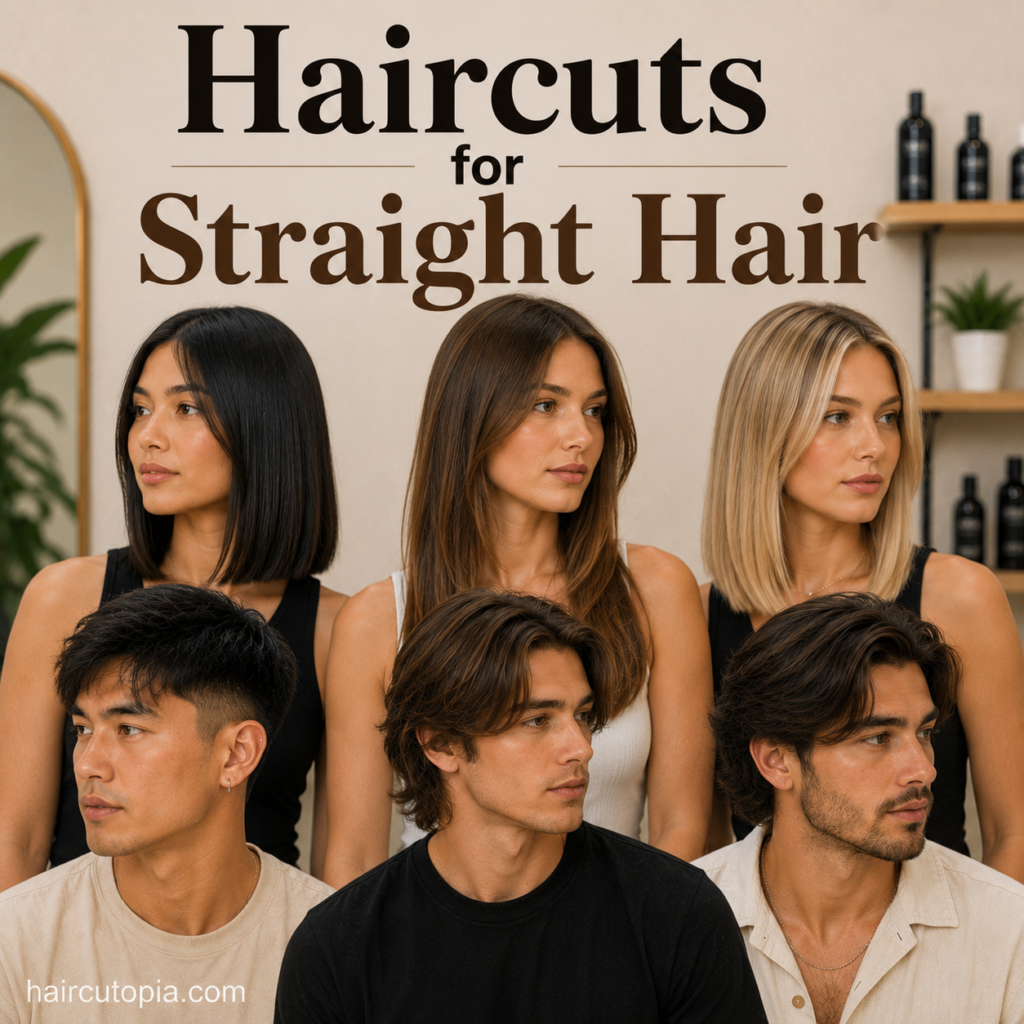
Straight hair has a way of showing exactly what a haircut is doing.
Clean lines look especially sharp. Layers are easy to see. A blunt perimeter can look incredibly polished, while subtle face-framing pieces can completely change how the hair moves around the face.
That precision is one of straight hair’s biggest strengths.
It can also make choosing a haircut a little less forgiving.
If the hair is cut too heavily, it may fall flat. Too many layers can make fine or thin ends look sparse. Very thick straight hair can feel bulky without enough shaping, while long straight hair may become weighed down around the roots.
The right haircut creates balance.
Whether you prefer a short pixie, classic bob, shoulder-length layers, a shag, or long polished hair, the goal is to choose a shape that works with your density, strand thickness, and everyday styling routine.
What Is Straight Hair?
Straight hair naturally falls without forming a consistent wave, curl, or coil pattern.
That doesn’t mean every strand is perfectly straight. Some people have small bends around the ends or slight changes in texture near the hairline, while a more consistent S-shaped pattern may fall into the wavy hair category instead.
Straight hair is commonly grouped into Type 1 hair, with categories ranging from very straight and fine to straighter textures with more body.
But the category alone doesn’t tell you which haircut will work.
You also need to consider:
- Hair density
- Strand diameter
- Natural volume
- Growth patterns
- Cowlicks
- How easily the roots become flat
- Whether the ends become bulky or wispy
- How much styling you’re willing to do
Two people with straight hair can need completely different cuts.
Understanding Straight Hair Types
Straight hair is often described as Type 1A, 1B, or 1C.
These aren’t rigid categories, but they can be useful starting points.
Type 1A Straight Hair
Type 1A hair is typically very straight and often fine.
It tends to lie close to the scalp and may have limited natural volume.
Shorter cuts, blunt perimeters, and carefully placed layers can help create more visible shape.
Heavy products can easily weigh this texture down.
Type 1B Straight Hair
Type 1B is straight but generally has a little more natural body.
The hair may still fall smoothly while holding bends and styled volume more easily than very fine, pin-straight hair.
This texture works with a wide variety of haircuts, including bobs, lobs, medium layers, and longer styles.
Type 1C Straight Hair
Type 1C hair is generally straight but often has more body and may include thicker or coarser strands.
It can feel substantial and may become bulky at longer lengths.
Layers and strategic weight removal can create movement without sacrificing the clean appearance of straight hair.
What Makes a Good Haircut for Straight Hair?
Straight hair puts the structure of a haircut on display.
That makes precision important.
Useful haircut features may include:
- Strong blunt perimeters
- Long blended layers
- Face-framing pieces
- Crown layers
- Internal weight removal
- Textured ends
- Graduation
- Clean geometric shapes
Which features you need depends on your hair.
Fine straight hair may benefit from keeping more strands at a similar length.
Thick straight hair may need more layering to prevent the haircut from becoming heavy.
The best cut should create shape even before you reach for styling tools.
Best Haircuts for Straight Hair
Straight hair works at virtually every length.
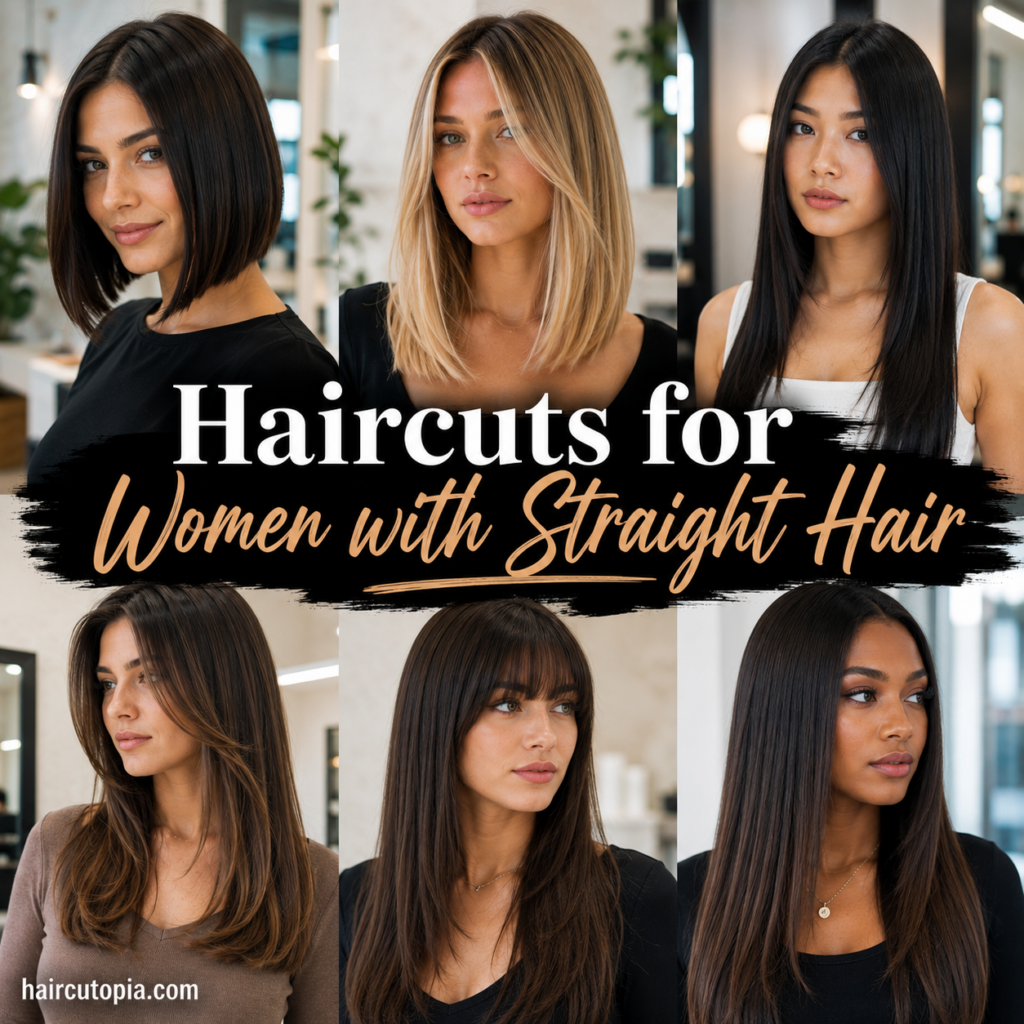
Here are 15 haircut ideas that take advantage of its naturally clean appearance.
1. Classic Pixie
A classic pixie creates a defined silhouette with minimal length.
Straight hair emphasizes the structure of the haircut, making tapered sides and a shaped top especially noticeable.
The top can be worn smooth, slightly lifted, or swept to one side.
This is a good choice if you want a haircut that feels deliberate without requiring long styling sessions.
2. Long Pixie
A long pixie keeps more length through the crown and fringe.
That extra hair provides considerably more styling flexibility.
You can wear it sleek, create side-swept movement, tuck sections behind the ears, or add texture through the top.
Fine straight hair may benefit from the reduced overall weight, while thick straight hair may need some internal shaping.
3. Bixie Cut
The bixie falls between a pixie and bob.
It keeps some of the compact shape of short hair while providing additional movement around the sides and back.
Straight hair makes the different lengths easy to see, which gives the style a defined, modern finish.
Soft layering prevents it from feeling too heavy.
4. Blunt Bob
Few haircuts show off straight hair as effectively as a blunt bob.
The strong baseline creates a clean silhouette and can make the ends appear fuller.
Jaw-length, chin-length, and slightly longer versions all work.
Fine hair often benefits from the visual density of a blunt perimeter, while thicker hair may require subtle internal weight removal.
5. Chin-Length Bob
A chin-length bob frames the face while keeping the haircut compact.
It can be worn with a center part for symmetry or shifted to one side for additional volume.
Because the length is short, it may also reduce some of the weight that causes straight hair to lie flat.
The style works especially well if you like polished, uncomplicated shapes.
6. French Bob
A French bob usually falls around the jaw and often includes fringe.
While it’s frequently shown with some texture, straight hair gives the style a sharper interpretation.
A light fringe can soften the shape, while a blunt perimeter maintains structure.
This is a strong option if you want a short haircut with more personality than a traditional bob.
7. Blunt Lob
The blunt lob offers many of the advantages of a bob without going as short.
It typically falls somewhere between the shoulders and collarbone.
A strong perimeter keeps the haircut looking substantial and polished.
This is particularly useful for fine or thin straight hair, but it can also work for thicker hair with internal shaping.
8. Collarbone-Length Cut
Collarbone length is one of the most versatile choices for straight hair.
It’s long enough to tie back but short enough to maintain movement.
You can keep it mostly one length or introduce subtle face-framing sections.
This haircut also works well if you’re transitioning between a bob and longer hair.
9. Shoulder-Length Layers
Medium-length straight hair can become heavy when everything is cut to one length.
Long layers create movement while preserving most of the overall density.
The layers can begin around the chin or lower depending on how much movement you want.
This is a practical everyday haircut that still offers plenty of styling options.
10. Straight Shag
A shag isn’t limited to wavy or curly hair.
On straight hair, the layers become more visible and graphic.
Shorter crown sections create lift, while longer layers maintain movement through the bottom.
The haircut can be styled sleek or slightly tousled.
If your hair is thin, choose a softer shag so the perimeter doesn’t become too sparse.
11. Straight Wolf Cut
The wolf cut creates more obvious contrast between shorter layers around the crown and longer sections underneath.
Straight hair emphasizes that contrast.
This makes the haircut feel more dramatic than a traditional layered cut.
It’s a good option if you want visible texture and movement rather than a smooth one-length shape.
12. Butterfly Haircut for Straight Hair
The butterfly haircut combines shorter face-framing sections with longer layers.
On straight hair, the layered structure is clearly visible.
The style can create movement around the face without requiring you to sacrifice much overall length.
It’s especially useful for medium and long straight hair that feels heavy around the front.
13. Long Straight Layers
Long layers provide movement while preserving length.
They can prevent long straight hair from feeling like one solid sheet.
Keep the layers subtle if your density is lower.
Thicker hair can generally support more variation between the shortest and longest sections.
14. U-Shaped Long Cut
A U-shaped perimeter creates a softer outline than a completely straight baseline.
The center remains longer while the sides gradually shorten.
This gives long straight hair some shape even without extensive layering.
You can combine the U-shaped perimeter with long layers or keep the interior relatively simple.
15. Long Blunt Cut
A long blunt haircut creates a strong, polished baseline.
It works particularly well when the ends are healthy and density remains consistent through the length.
Fine and thin straight hair may look fuller with this approach because fewer strands are removed through layering.
For very thick hair, subtle internal weight removal can keep the haircut manageable without changing the visible perimeter.
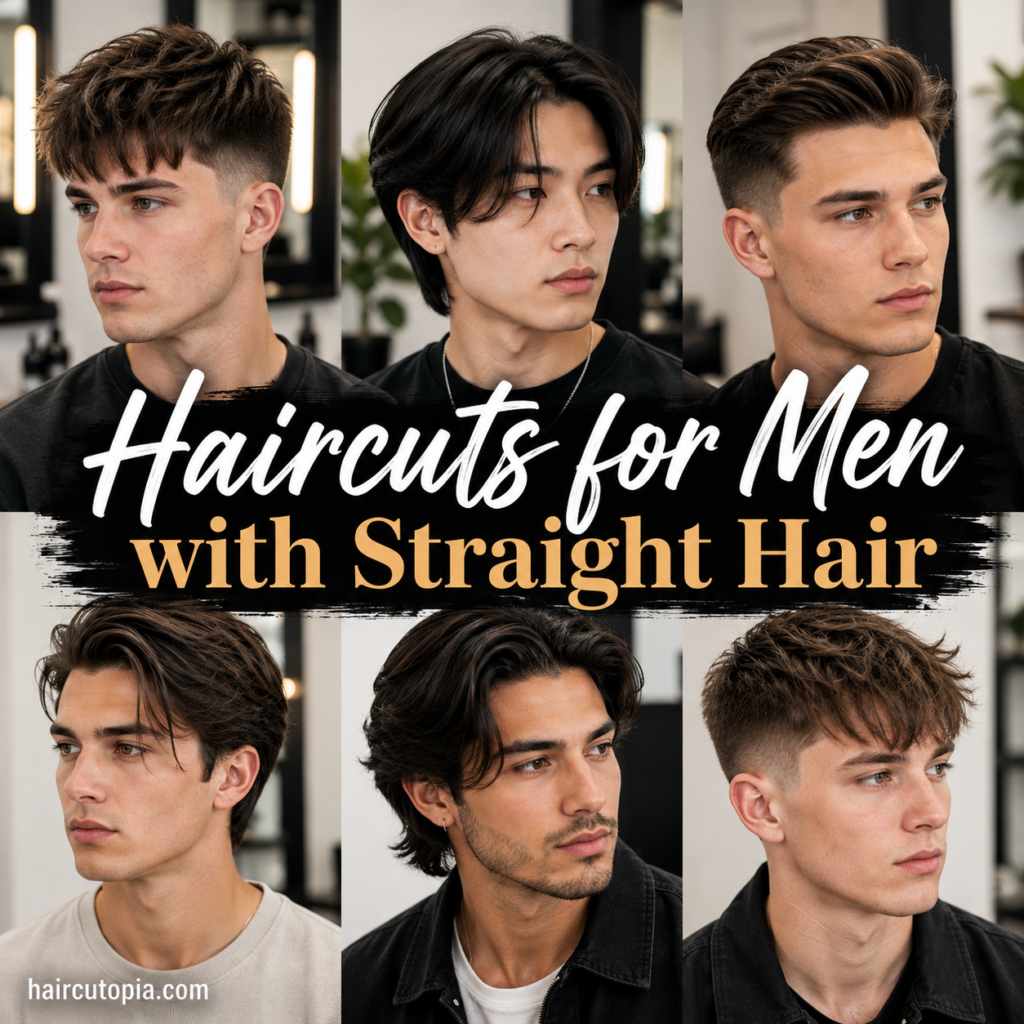
Short Haircuts for Straight Hair
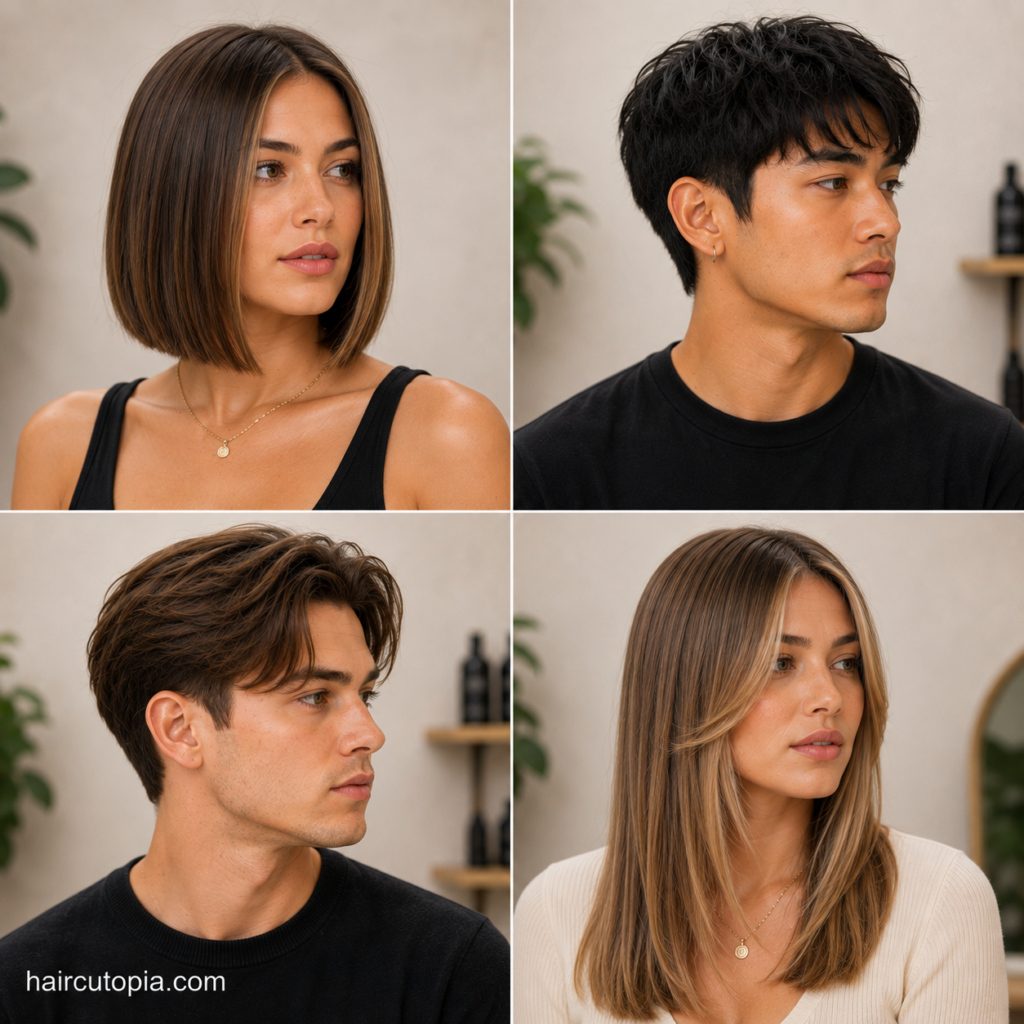
Short straight hair can look extremely polished because the haircut’s structure remains visible.
Good options include:
- Classic pixies
- Long pixies
- Bixies
- Blunt bobs
- Chin-length bobs
- French bobs
- Short textured crops
Shorter hair also reduces weight.
That can create more natural lift for straight hair that tends to fall flat.
If you have strong cowlicks or growth patterns, discuss them with your stylist before going very short.
They become more noticeable when there isn’t enough length to weigh them down.
Medium Haircuts for Straight Hair
Medium length provides plenty of versatility.
You can wear the hair down, pull it back, add waves, or style it sleek.
Popular options include:
- Blunt lobs
- Collarbone-length cuts
- Shoulder-length layers
- Soft shags
- Butterfly cuts
- Medium one-length styles
This length is particularly useful if you want movement without committing to a short haircut.
Long Haircuts for Straight Hair
Long straight hair can create a sleek, dramatic silhouette.
The challenge is preventing it from feeling heavy or flat.
Good options include:
- Long blended layers
- Butterfly cuts
- U-shaped cuts
- Long blunt cuts
- Long face-framing layers
- Soft V-shaped cuts
The right amount of layering depends on density.
If your hair is fine or thin, too many layers may make the bottom look sparse.
Thick straight hair can usually support more weight removal.
Haircuts for Type 1A Straight Hair
Very straight Type 1A hair can lie close to the scalp.
The goal is often to create shape without relying on heavy products.
Consider:
- Blunt bobs
- Chin-length bobs
- Long pixies
- Blunt lobs
- Collarbone-length cuts
Shorter lengths can reduce weight and create more natural lift.
A strong perimeter also helps fine Type 1A strands look more substantial.
Haircuts for Type 1B Straight Hair
Type 1B hair generally has enough natural body to work with a wide variety of cuts.
Good options include:
- Bobs
- Lobs
- Medium layers
- Butterfly cuts
- Long layered styles
- Shags
This texture can usually support movement without becoming excessively flat or bulky.
Haircuts for Type 1C Straight Hair
Type 1C hair often has more body and may include thicker strands.
The main challenge can be bulk.
Consider:
- Layered bobs
- Medium layers
- Shags
- Butterfly cuts
- Long layered cuts
- U-shaped cuts
Strategic internal shaping can make dense straight hair easier to manage without creating an obviously thinned appearance.
Haircuts for Thick Straight Hair
Thick straight hair can become heavy, particularly at medium and long lengths.
Layering helps redistribute that weight.
Good options include:
- Layered lobs
- Butterfly cuts
- Shags
- Long layers
- U-shaped cuts
- Textured bobs
Avoid removing weight randomly.
The goal is to create a deliberate shape rather than simply making the hair thinner.
Haircuts for Fine Straight Hair
Fine straight hair tends to show the perimeter clearly.
Blunt and relatively simple shapes can create the appearance of more substantial ends.
Consider:
- Blunt bobs
- Chin-length cuts
- Blunt lobs
- Long pixies
- Collarbone-length cuts
- Mostly one-length long cuts
If you want layers, keep them strategic.
Fine hair with high density can support more layering than fine hair with lower density.
Haircuts for Thin Straight Hair
Thin straight hair usually benefits from preserving fullness through the perimeter.
Strong options include:
- Blunt bobs
- Blunt lobs
- Chin-length bobs
- Long pixies
- Shoulder-length cuts with minimal layers
Avoid excessive thinning or aggressive texturizing.
If your density is already low, removing more hair may make the scalp or sparse ends more noticeable.
Haircuts for Coarse Straight Hair
Coarse straight hair has thicker individual strands and can create a substantial silhouette.
It often benefits from movement and strategic weight removal.
Consider:
- Layered bobs
- Textured lobs
- Medium layers
- Shags
- Butterfly cuts
- Long layers
A completely blunt cut can still work, but extremely dense coarse hair may need internal shaping to prevent the ends from feeling too bulky.
Should Straight Hair Be Layered?
It can be.
Layers create:
- Movement
- Crown lift
- Face framing
- Reduced bulk
- A softer perimeter
- More styling versatility
But straight hair doesn’t require layers.
Blunt cuts are one of its strengths.
If you like a clean, graphic shape, keeping more hair at one length may be exactly what you want.
What Layers Are Best for Straight Hair?
Long blended layers are the most versatile.
They create movement without producing an extremely choppy appearance.
Face-framing layers are useful if you want shape primarily around the front.
Shorter crown layers create more volume and are common in shags and wolf cuts.
Internal layers can reduce bulk while leaving the exterior relatively smooth.
Choose layers based on what you want them to accomplish.
Is a Blunt Cut Good for Straight Hair?
Yes.
Straight hair is especially well suited to blunt cuts because the clean baseline is easy to see.
Blunt bobs, lobs, and long cuts can all create a polished finish.
They’re particularly helpful for fine or thin hair because keeping more strands at the same length makes the ends appear fuller.
Thick straight hair may still need hidden internal shaping.
Are Bobs Good for Straight Hair?
Bobs are one of the strongest choices for straight hair.
The natural texture emphasizes the geometry of the cut.
Options include:
- Blunt bobs
- French bobs
- Chin-length bobs
- Layered bobs
- Angled bobs
- Textured bobs
Fine hair may benefit from a blunt version.
Thick hair can handle more layering and graduation.
Are Pixie Cuts Good for Straight Hair?
Absolutely.
Straight hair allows the shape of a pixie to remain clearly defined.
A short classic pixie creates a clean silhouette, while a long pixie provides more movement through the fringe and crown.
Fine straight hair may gain lift from losing excess length.
Thicker hair may need additional texturizing to keep the shape manageable.
Are Shags Good for Straight Hair?
Yes.
A straight shag has a different look from a curly or wavy shag because the layers are more visible.
That can create a cool, deliberately textured effect.
If you want lots of crown movement, shorter layers can provide it.
If you prefer something subtler, choose a soft shag with longer blended sections.
Bangs for Straight Hair
Straight hair works particularly well with bangs because the fringe tends to maintain a predictable shape.
Options include:
- Blunt bangs
- Curtain bangs
- Wispy bangs
- Bottleneck bangs
- Side-swept bangs
- Micro bangs
- Long fringe
Density matters.
Heavy bangs require taking more hair from the top and front of the head.
If your density is lower, a lighter fringe may preserve more fullness elsewhere.
Straight Haircuts by Face Shape
Face shape can help refine your haircut, but it doesn’t need to dictate it.
Round Faces
Longer bobs, side parts, and face-framing layers can create vertical movement.
Oval Faces
Most straight hairstyles work well.
Pixies, bobs, lobs, shags, and long cuts are all possibilities.
Square Faces
Soft layers, curtain bangs, and slightly longer bobs can introduce movement around angular features.
Heart-Shaped Faces
Chin-length bobs and styles with movement around the jaw can create balance.
Curtain bangs can also work well.
Long Faces
Bangs, bobs, and shoulder-length styles can create more horizontal emphasis.
Long hair can still work, particularly with face-framing movement.
These are suggestions rather than rules.
Low-Maintenance Haircuts for Straight Hair
Straight hair can be particularly easy to maintain when the haircut works with its natural fall.
Good options include:
- Blunt bobs
- Long pixies
- Blunt lobs
- Collarbone-length cuts
- Long blunt cuts
- Subtle long layers
The simpler the shape, the less styling you may need.
If your hair naturally dries straight and smooth, a strong haircut can do most of the work.
How to Add Volume to Straight Hair
Straight hair can sometimes lie flat, particularly when it’s fine or long.
A few changes can create more movement.
Reduce Excess Length
Long hair creates weight.
Removing a few inches may allow the roots to lift more naturally.
Add Strategic Layers
Crown or face-framing layers can create movement without requiring a heavily layered haircut.
Change Your Part
Moving your part can create immediate root lift.
Even shifting it slightly may help.
Use Lightweight Products
Heavy creams and oils can flatten straight hair.
Start with mousse, foam, root spray, or other lightweight products if volume is the goal.
Blow-Dry for Lift
Directing the roots away from their normal growth direction while drying can create temporary volume.
What to Ask Your Stylist
A good consultation should cover more than the length you want.
Tell your stylist:
- Whether your roots tend to fall flat.
- Whether your hair feels bulky at the ends.
- Your overall density.
- Whether your strands are fine, medium, or coarse.
- How often you use heat.
- Whether you air-dry regularly.
- How much maintenance you want.
- Whether previous layers worked for you.
- How you normally part your hair.
If you’re considering bangs or a pixie, point out any cowlicks or strong growth patterns.
Common Haircut Mistakes with Straight Hair
Adding Too Many Layers to Low-Density Hair
Straight hair makes sparse ends particularly visible.
If density is low, preserve more hair through the perimeter.
Ignoring Bulk in Thick Hair
A completely one-length cut may become overly heavy when the hair is extremely dense.
Strategic shaping can make the haircut easier to manage.
Using Too Much Thinning
Thinning shears and texturizing techniques can be useful, but excessive removal may create flyaways or uneven growth.
Choosing a Cut That Depends on Daily Styling
If you normally air-dry, choose a haircut that still has a recognizable shape without a round brush or flat iron.
Ignoring Cowlicks
Short hair and bangs can expose growth patterns that longer hair previously concealed.
Discuss them before cutting.
How Often Should Straight Hair Be Cut?
Maintenance depends mostly on the haircut.
As a general guide:
- Pixies: around 4–8 weeks
- Bobs: around 6–10 weeks
- Lobs and medium cuts: around 8–12 weeks
- Long cuts: around 8–16 weeks
Precise blunt shapes may need maintenance sooner because uneven growth becomes more noticeable.
Long layered styles usually have more flexibility.
How to Choose the Best Haircut for Straight Hair
Start with density and strand thickness.
If your hair is fine or thin, a stronger perimeter may create more visual fullness.
If it’s thick or coarse, layers and internal shaping may make the haircut easier to manage.
Next, think about volume.
If your roots are constantly flat, shorter lengths or strategic layering may help.
Then consider your natural growth patterns.
Cowlicks and parting patterns can affect short cuts and bangs.
Finally, choose something that fits your actual routine.
If you rarely style your hair, a haircut that only looks good after a professional blowout isn’t going to make everyday life easier.
Straight hair already gives you clean lines and a naturally polished foundation.
The right haircut should take advantage of that rather than make you work against it.
Final Thoughts
Straight hair is incredibly versatile.
A pixie can highlight precise structure. A blunt bob creates a strong, polished silhouette. Medium layers add movement, while shags and wolf cuts create more visible texture. Long hair can remain sleek and simple or gain dimension through carefully placed layers.
The key is balancing the haircut with your density and strand thickness.
Fine or thin straight hair often benefits from stronger perimeters. Thick and coarse hair may need more strategic weight removal. Medium-density hair gives you room to experiment with both.
You don’t need to add waves or curls for straight hair to have personality.
Sometimes clean lines, healthy movement, and a haircut that falls naturally are more than enough.