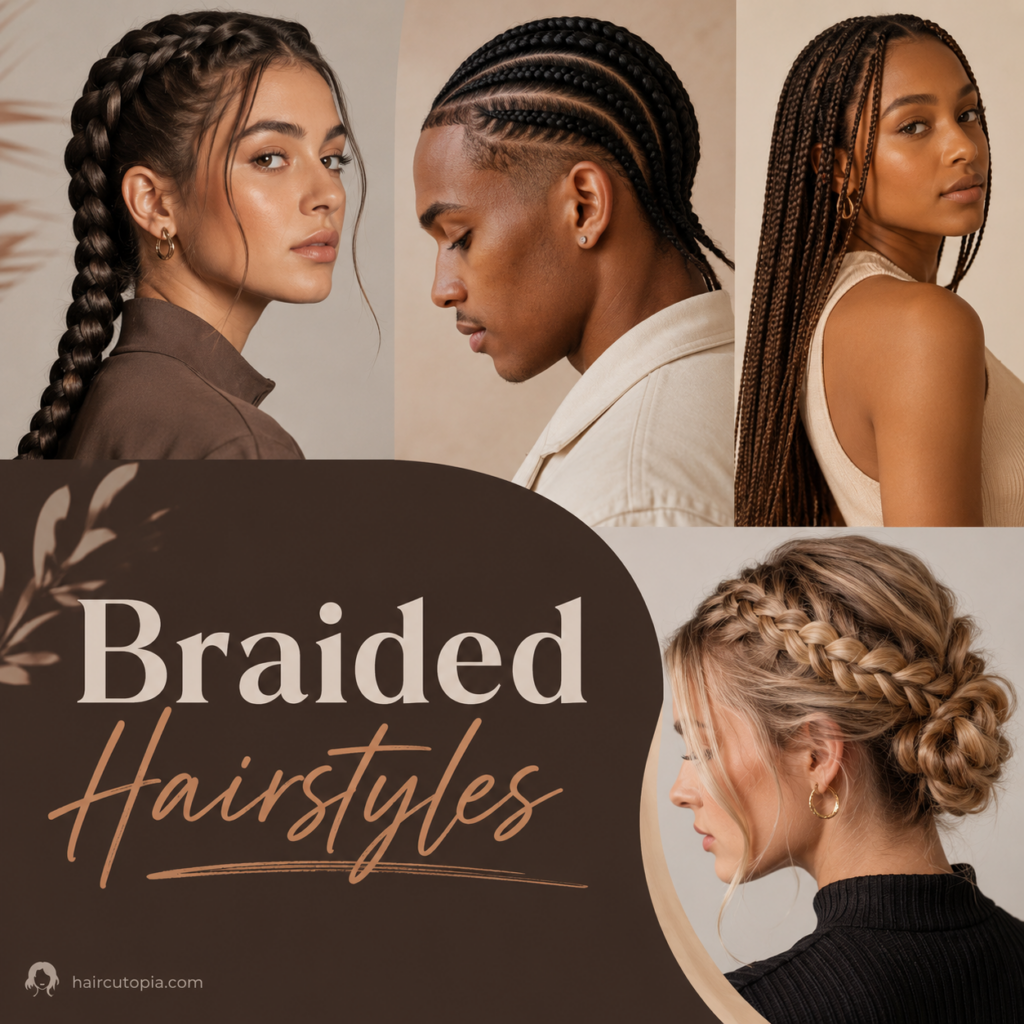
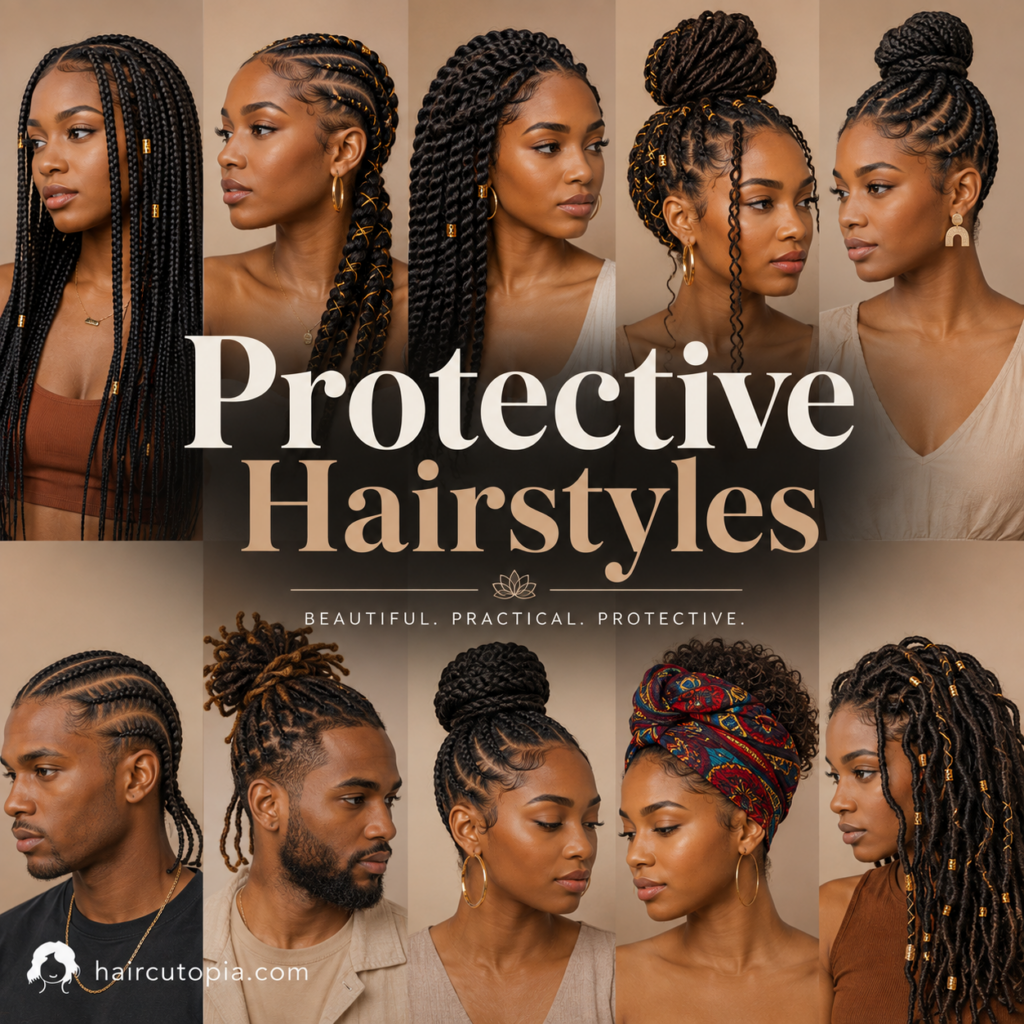
Protective hairstyles can be practical, creative, and incredibly versatile. Braids can fall past the shoulders or be gathered into a bun. Twists can be chunky and relaxed or smaller and more defined. Cornrows can stay simple or become part of a much more intricate design.
But there’s an important distinction to make: a hairstyle isn’t protective just because it has a certain name.
The real goal is to reduce unnecessary manipulation and help protect vulnerable parts of the hair, particularly the ends. A style that’s painfully tight, too heavy, neglected for too long, or difficult to remove without breakage isn’t doing your hair many favors.
That’s why choosing a protective hairstyle involves more than finding a look you like.
Your hair’s length, density, texture, condition, lifestyle, and tolerance for tension all matter. So does what happens before the style goes in, how you care for your hair while wearing it, and how gently you take it down.
From box braids and twists to cornrows, buns, wigs, loc-inspired styles, and simpler low-manipulation options, here’s what to know before choosing your next protective hairstyle.
What Is a Protective Hairstyle?
A protective hairstyle is generally designed to reduce repeated manipulation and limit exposure of vulnerable hair, especially the ends.
Depending on the style, the hair may be:
- Braided
- Twisted
- Tucked away
- Wrapped
- Covered
- Gathered into a bun
- Worn underneath a wig
- Incorporated into another low-manipulation style
Protective styling is especially associated with curly, coily, and textured hair, where minimizing repeated manipulation can be an important part of maintaining length and reducing breakage.
That doesn’t mean every protective style works for every person.
A successful style should protect the hair without creating excessive tension on the scalp or hairline.
Protective Hairstyles vs. Low-Manipulation Hairstyles
The terms are sometimes used interchangeably, but there’s a useful difference.
A protective hairstyle generally keeps some or all of the hair—particularly the ends—secured or tucked away.
A low-manipulation hairstyle focuses more broadly on reducing how often you need to restyle, comb, brush, or otherwise handle the hair.
For example, a wash-and-go may reduce daily styling for some people, but the ends remain exposed. A tucked bun keeps the ends more protected.
Neither approach is automatically better.
The best choice depends on your hair and what you’re trying to accomplish.
Benefits of Protective Hairstyles
A well-chosen protective style can simplify your routine while giving your hair a break from frequent styling.
Potential benefits include:
- Less daily manipulation
- Reduced need for frequent detangling
- Protection for the ends
- Easier morning routines
- Versatile styling options
- Less frequent use of heated styling tools
- Convenient long-lasting hairstyles
- Easier management during travel or busy periods
Protective styling doesn’t make hair grow faster than its natural growth rate.
Instead, reducing unnecessary breakage may make it easier to retain more of the length you grow.
When a Protective Hairstyle Isn’t Actually Protective
This is one of the most important things to understand about protective styling.
A style can look beautiful and still place too much stress on the hair.
Warning signs include:
- Persistent scalp pain
- Headaches
- Excessive pulling around the hairline
- Redness or irritation
- Small bumps around tightly secured sections
- A feeling that the style is unusually heavy
- Difficulty moving the hairstyle comfortably
- Significant breakage during removal
Some tenderness immediately after a complicated hairstyle doesn’t mean severe damage is inevitable, but persistent pain shouldn’t be treated as something you simply have to tolerate.
If a hairstyle feels excessively tight, address it rather than waiting for it to “loosen up.”
Popular Types of Protective Hairstyles
Protective styling includes far more than one type of braid, but braided hairstyles remain one of the broadest categories, with options ranging from individual braids and cornrows to crowns, braided buns, and more elaborate styles.
Some of the most popular options include:
- Box braids
- Knotless braids
- Cornrows
- Twists
- Flat twists
- Bantu knots
- Protective buns
- Halo braids
- Crochet styles
- Wigs
- Faux locs
- Braided updos
Each comes with different installation time, maintenance needs, weight, tension, and longevity.
Box Braids
Box braids are individual braids typically created from sections divided across the scalp.
They can vary considerably in:
- Size
- Length
- Parting pattern
- Color
- Thickness
- Styling
Small Box Braids
Smaller braids can provide lots of styling flexibility, but installation and removal usually take longer.
Because more individual sections are involved, it’s especially important that the braids aren’t installed with excessive tension.
Medium Box Braids
Medium braids offer a balance between styling flexibility and installation time.
They can be worn down or rearranged into ponytails, buns, and half-up half-down hairstyles, giving you different looks without completely taking down the braids.
Jumbo Box Braids
Larger sections can create a bold look with fewer individual braids.
However, braid size alone doesn’t determine how heavy the finished hairstyle will be. Length and added hair also affect the overall weight.
Knotless Braids
Knotless braids are created using a technique that gradually incorporates additional braiding hair rather than beginning with a larger knot at the base.
The result often has a flatter transition from the scalp into the braid.
Knotless braids can be:
- Short
- Medium
- Long
- Small
- Medium-sized
- Jumbo
As with any braided style, the technique should not rely on painful tension to keep the braids secure.
Cornrow Hairstyles
Cornrows are braided close to the scalp in continuous rows.
The pattern can be simple or highly detailed.
Options include:
- Straight-back cornrows
- Side cornrows
- Feed-in braids
- Curved patterns
- Cornrows into a bun
- Cornrows into a ponytail
- Cornrows combined with loose braids
Cornrows can also serve as a foundation underneath wigs and some crochet styles.
Because the braids sit directly against the scalp, tension is particularly important.
Twist Hairstyles
Twists are another versatile option for protective and low-manipulation styling.
Instead of weaving three strands together as you would with a traditional braid, twists generally wrap sections around one another.
Two-Strand Twists
Two-strand twists can be created using natural hair or with added hair depending on the desired result.
They can be worn loose, pinned up, or gathered into buns and ponytails.
Senegalese Twists
Senegalese twists typically create a smooth, rope-like appearance.
They can vary in length and thickness.
Marley Twists
Marley twists generally have a more textured appearance that can blend naturally with certain coily hair textures.
Passion Twists
Passion twists have a looser, more bohemian texture.
Their intentionally imperfect finish gives them more movement than highly uniform twists.
Flat Twists
Flat twists are created close to the scalp and can be used as a complete hairstyle or combined with buns, puffs, and loose sections.
Bantu Knots
Bantu knots divide the hair into sections that are twisted or wrapped into small knots across the head.
They create a distinctive hairstyle on their own and can also be used as a setting technique.
When the knots are released, the resulting texture is commonly called a Bantu knot-out.
Avoid twisting each section so tightly that the scalp feels uncomfortable.
Halo and Crown Braids
Halo braids wrap around the head to create a crown-like shape.
The hairstyle can be created using natural hair or with added hair depending on the technique and available length.
Because the ends can be tucked away, halo braids can function as a protective option while also creating a polished updo.
Protective Bun Hairstyles
If your goal is simply to reduce daily styling rather than install a long-term style, some easy hairstyles can also support a lower-manipulation routine when they’re comfortable, gentle on the hair, and don’t require constant restyling.
Some bun hairstyles can provide a simple low-manipulation option when the ends are tucked away and the hair isn’t secured with excessive tension.
A bun can provide a simple low-manipulation option when the ends are tucked and the hairstyle isn’t excessively tight.
Try:
- Low buns
- High buns
- Braided buns
- Twisted buns
- Double buns
- Loose tucked buns
The main advantage is flexibility.
Unlike long-term braided styles, a simple bun can easily be repositioned or taken down when necessary.
Protective Updo Hairstyles
Updo hairstyles can combine several protective techniques, particularly when braids, twists, locs, or tucked sections are arranged into a bun, crown, or other secured shape.
Ideas include:
- Braided buns
- Twisted updos
- Cornrow updos
- Halo braids
- Loc updos
- Flat-twist updos
An updo can also keep long braids or twists off the shoulders when desired.
Just be careful about adding excessive tension by pulling an already installed style into an extremely tight secondary hairstyle.
Crochet Hairstyles
Crochet techniques typically involve creating a braided foundation and attaching hair through or around those braids.
Depending on the hair and method used, crochet styles can resemble:
- Curls
- Twists
- Braids
- Locs
- Loose textured hair
One advantage is that much of the natural hair remains braided underneath.
However, the foundation should still be comfortable, and the added hair shouldn’t create excessive weight.
Faux Locs
Faux locs create the appearance of locs without requiring the natural hair to be permanently loc’d.
They come in many variations, including:
- Traditional faux locs
- Soft locs
- Distressed locs
- Butterfly locs
Length and added hair can make some loc styles relatively heavy.
Consider the overall weight before choosing extremely long versions, particularly if your hair is fine or your scalp is sensitive.
Wigs as a Protective Hairstyle
Wigs can provide styling versatility while allowing natural hair underneath to remain relatively undisturbed.
However, simply wearing a wig doesn’t automatically make the routine protective.
Pay attention to:
- The hairstyle underneath
- Scalp cleanliness
- Friction around the hairline
- Adhesives or attachment methods
- Wig fit
- Moisture needs
- How frequently the natural hair is cared for
A wig that’s constantly rubbing or pulling at the same areas can create its own problems.
Protective Hairstyles for Natural Hair
Natural hair can be styled protectively without adding extensions.
Options include:
- Two-strand twists
- Flat twists
- Bantu knots
- Braided buns
- Cornrows
- Halo braids
- Tucked updos
- Natural-hair mini twists
Using only your natural hair can reduce the additional weight associated with some extension styles.
It also gives you more direct access to the hair and scalp.
Protective Hairstyles With Extensions
Extensions can add length, volume, color, and styling possibilities.
They may be incorporated into:
- Box braids
- Knotless braids
- Twists
- Cornrows
- Faux locs
- Crochet styles
More hair isn’t always better.
Very long or dense extensions can become heavy, especially once gathered into a ponytail or bun.
Choose a length and amount that your natural hair and scalp can comfortably support.
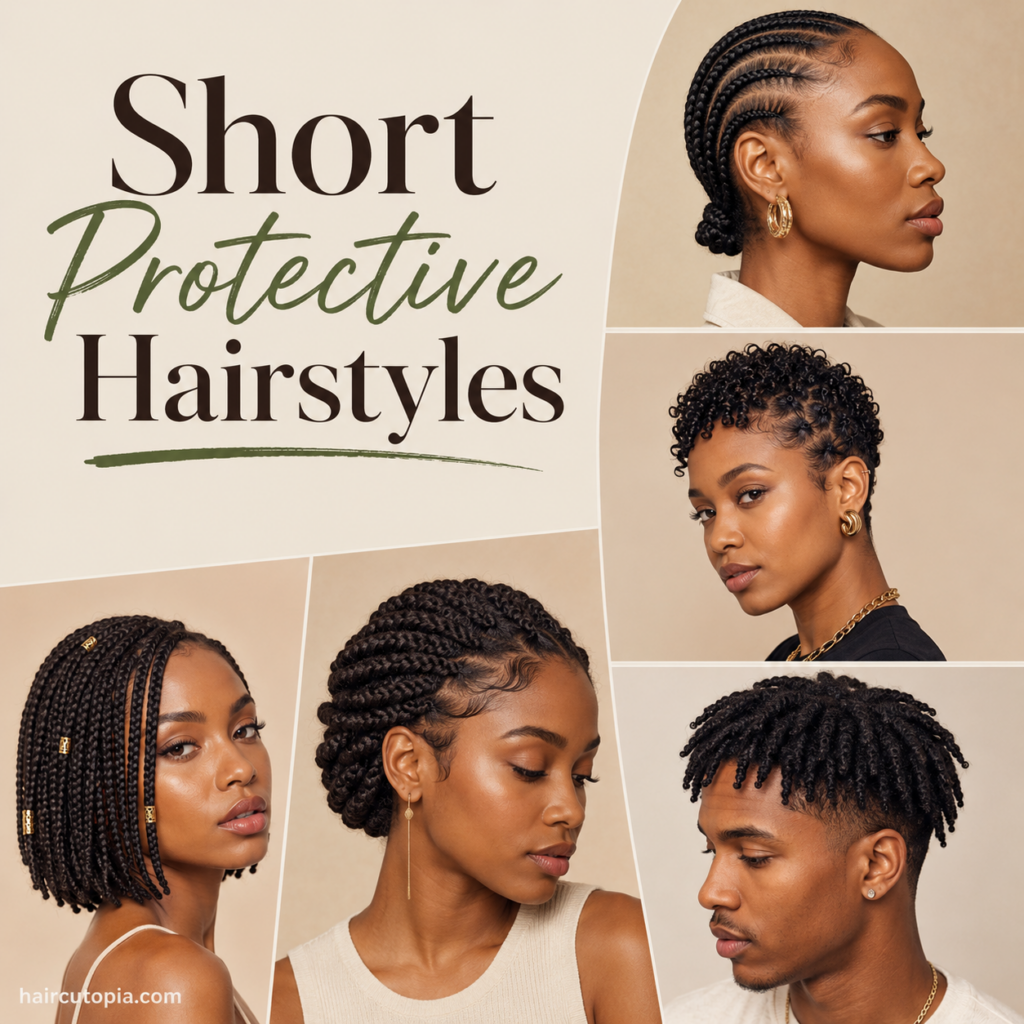
Protective Hairstyles for Short Hair
Short natural hair can still be worn in protective or low-manipulation styles.
Depending on the available length, options may include:
- Cornrows
- Flat twists
- Mini twists
- Bantu knots
- Small braids
- Wigs over a comfortable foundation
- Extension-based styles
Very short hair may not be long enough for every technique.
A stylist experienced with your hair length can help determine which options can be installed without forcing excessive tension.
Protective Hairstyles for Medium Hair
Medium hair provides enough length for many natural-hair protective styles.
Try:
- Two-strand twists
- Braids
- Cornrows
- Flat twists
- Bantu knots
- Protective buns
- Halo braids
- Updos
You can also incorporate extensions when additional length or volume is desired.
Protective Hairstyles for Long Hair
Long hair opens up even more possibilities but can also create additional weight.
Options include:
- Long natural twists
- Braided buns
- Crown braids
- Cornrow updos
- Tucked buns
- Large twists
- Braided updos
The goal doesn’t always need to be making long hair look even longer.
Sometimes folding, tucking, or pinning the length into a compact style is the more practical option.
Protective Hairstyles for Kids
Protective hairstyles for children should prioritize comfort and simplicity.
Styles might include:
- Loose braids
- Twists
- Cornrows
- Braided ponytails
- Simple buns
- Beaded braids
Children shouldn’t be expected to tolerate painful styling.
Keep the hairline comfortable, avoid unnecessarily heavy extensions, and choose a style that fits the child’s routine and activity level.
Accessories should also be appropriate and securely attached.
Protective Hairstyles for Men
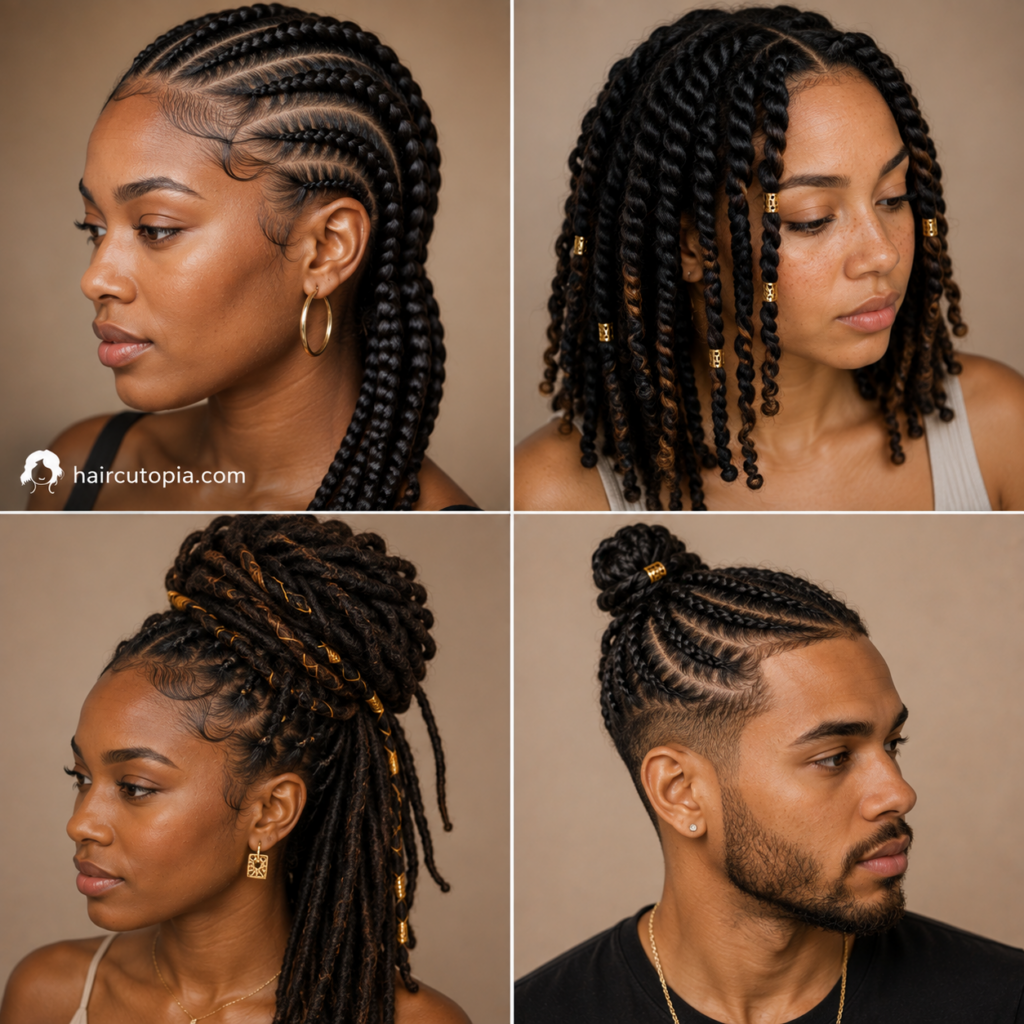
Protective hairstyles aren’t limited to women.
Men with sufficient length can wear:
- Cornrows
- Box braids
- Two-strand twists
- Loc styles
- Braided buns
- Twisted updos
The same principles apply.
A style shouldn’t need excessive tension to look neat.
Protective Hairstyles for Work
Protective hairstyles can easily be adapted to professional environments.
Depending on your workplace and personal style, options include:
- Low braided buns
- Twisted updos
- Short or medium box braids
- Cornrows
- Knotless braids
- Loc updos
- Natural twists
Long braids or twists can also be incorporated into low ponytail hairstyles or buns when you want them contained, although the secondary style should remain loose enough to avoid unnecessary tension.
Protective Hairstyles for School
For school, convenience and durability can be especially useful.
Options include:
- Braids
- Twists
- Cornrows
- Buns
- Ponytail-based braided styles
- Bantu knots
The hairstyle should be comfortable enough to wear throughout the school day and practical for sports or other activities.
Protective Hairstyles for Exercise
A good workout hairstyle keeps hair controlled without adding unnecessary tension.
Depending on your existing protective style, you might wear:
- Braids in a loose ponytail
- Twists gathered back
- A braided bun
- Cornrows
- A low bun
After heavy sweating, scalp care becomes particularly important.
Don’t assume that a protective style means the scalp can be ignored until takedown.
Protective Hairstyles for Summer
Protective styles are popular during summer because they can reduce the amount of daily styling required.
Braids and twists are especially convenient for travel and busy schedules.
Summer options include:
- Knotless braids
- Box braids
- Cornrows
- Twists
- Braided buns
- Crochet styles
Heat, sweat, swimming, and sun exposure can still affect the hair and scalp, so adjust your maintenance routine accordingly.
Protective Hairstyles for Sleeping
Most people don’t create an entirely separate protective hairstyle just for sleeping, but nighttime protection can help reduce friction.
Depending on your hair and existing style, you might use:
- Loose braids
- Twists
- A loose bun
- A pineapple-style arrangement
- A satin or silk bonnet
- A satin or silk scarf
- A smooth pillowcase
Avoid making a nighttime hairstyle painfully tight.
Sleep should give your scalp a break, not add more tension.
How to Prepare Hair for a Protective Style
What you do before installation matters.
The exact routine depends on your hair and the style, but preparation often includes several basic steps.
Clean the Hair and Scalp
Starting with a clean scalp can be helpful, especially if the style will remain installed for an extended period.
Use products appropriate for your hair and scalp.
Detangle Carefully
Remove knots gently before braiding or twisting.
Working with severely tangled hair can make installation harder and takedown more damaging.
Address Moisture Needs
Use a conditioning and moisturizing routine appropriate for your hair.
Avoid assuming that loading the hair with excessive product will automatically keep it moisturized for weeks.
Check the Hair and Scalp
If your scalp is already irritated or your hair is unusually fragile, an elaborate long-term style may not be the best immediate choice.
How Long Should You Keep a Protective Hairstyle?
There isn’t one universal timeline for every protective style.
How long a style can reasonably remain installed depends on:
- The hairstyle
- Your scalp
- Your hair
- How quickly buildup develops
- Installation quality
- Your activity level
- How well the style is maintained
A hairstyle lasting longer doesn’t automatically make it better.
Leaving a style installed well beyond the point where the hair and scalp can be properly maintained may make takedown and detangling more difficult.
If you’re unsure how long a particular style is appropriate for your hair, ask an experienced stylist who can assess it directly.
How to Maintain Protective Hairstyles
Protective doesn’t mean maintenance-free.
Keep the Scalp Comfortable
Pay attention to itching, irritation, buildup, and discomfort.
Your scalp still needs care while the hairstyle is installed.
Avoid Excessive Restyling
Constantly pulling braids or twists into tight ponytails and buns can defeat part of the purpose of reducing manipulation.
Protect the Style at Night
A bonnet, scarf, or smooth pillowcase can help reduce friction and preserve the hairstyle.
Pay Attention to the Hairline
The edges are often exposed to the greatest amount of pulling.
Avoid repeatedly tightening loose sections simply to keep the style looking freshly installed.
Washing Hair in Protective Styles
Whether and how you wash an installed protective style depends on the style itself, your scalp, and the materials involved.
Some braided and twisted styles can be cleaned while installed.
Focus on the scalp and rinse products thoroughly.
Avoid aggressive scrubbing that causes unnecessary tangling or disrupts the foundation.
Make sure the hair and scalp can dry properly afterward.
If you’re unsure how to clean a particular installed style, ask the stylist who created it for maintenance instructions.
How to Reduce Frizz in Protective Styles
Some frizz is normal.
Hair grows, strands move, and a style that’s been worn for several weeks won’t look exactly the way it did on installation day.
To help maintain the appearance:
- Protect the style at night
- Avoid excessive handling
- Use products appropriate for the style
- Keep unnecessary friction to a minimum
Trying to eliminate every bit of frizz by repeatedly tightening the hairstyle can create more problems than the frizz itself.
Sleeping With Braids and Twists
Long braids and twists can be uncomfortable if they’re trapped underneath you while sleeping.
Depending on the length, loosely gather them upward or position them so they aren’t being repeatedly pulled.
A bonnet or scarf can help keep the style contained.
Avoid tying the braids tightly against the scalp for the entire night.
Swimming With Protective Hairstyles
Some protective hairstyles can be practical for swimming, but chlorine, salt water, repeated wetting, and prolonged dampness still need to be considered.
After swimming:
- Rinse as appropriate
- Clean the scalp and hair when needed
- Allow the style to dry thoroughly
- Avoid leaving heavy braids damp for extended periods
If swimming will be a frequent part of your routine, choose a style that’s practical to clean and dry.
How to Take Down a Protective Hairstyle
Takedown deserves just as much patience as installation.
Rushing through weeks of braids or twists can lead to unnecessary breakage.
Take Your Time
Work section by section.
Don’t schedule takedown when you only have a few minutes available.
Be Careful When Cutting Extensions
Know exactly where your natural hair ends before cutting extension hair.
When in doubt, cut much farther down than you think necessary.
Detangle Gradually
Shed hair naturally accumulates while the style is installed.
Seeing loose hair during takedown doesn’t automatically mean all of it is breakage.
Carefully separate and detangle each section using a method appropriate for your hair.
Don’t Panic About Shedding
Hair that would normally have shed throughout the day can remain trapped inside braids or twists.
When the style is removed, several weeks of shed strands may become visible at once.
Should You Take a Break Between Protective Styles?
Some people move directly from one protective style to another, while others prefer a period with their hair loose or in simpler low-manipulation styles.
There’s no universal schedule.
What matters is the condition of your hair and scalp.
If you notice:
- Persistent tenderness
- Hairline stress
- Unusual breakage
- Scalp irritation
- Excessive dryness
- Thinning areas
give the hair and scalp attention rather than immediately covering the issue with another style.
Persistent or significant hair loss, scalp pain, sores, or other concerning symptoms should be evaluated by a qualified healthcare professional.
How to Choose a Protective Hairstyle
A style that works beautifully for someone else may not be right for your hair.
Consider several factors first.
Your Hair Density
Fine or lower-density hair may not comfortably support the same amount of extension hair as thicker hair.
Your Hair Length
Some styles need enough natural hair for a secure foundation.
Others can work with relatively short hair.
Your Scalp Sensitivity
If your scalp is sensitive, prioritize lighter styles and lower tension.
Your Lifestyle
Think about:
- Exercise
- Swimming
- Work
- Travel
- Sleeping
- Styling time
A hairstyle that looks great but constantly interferes with your routine won’t feel very practical.
Maintenance Requirements
Ask yourself whether you’re realistically willing to maintain the hairstyle for as long as you plan to wear it.
Installation and Removal Time
Some protective styles require many hours to install and several more to remove.
Factor that time into your decision.
How to Tell If Braids Are Too Tight
Braids should feel secure, but persistent pain isn’t a requirement for neat styling.
Possible signs of excessive tension include:
- Strong pulling
- Headaches
- Persistent soreness
- Redness
- Bumps
- Difficulty sleeping comfortably
- Pain when moving the braids
If you’re getting your hair professionally styled, speak up during installation if a section feels too tight.
It’s much easier to correct tension while the braid is being created than after the entire hairstyle is finished.
How to Protect Your Edges
The hairline is particularly vulnerable because the hairs around it may be finer and subjected to repeated styling.
To reduce unnecessary stress:
- Avoid excessive tension
- Don’t repeatedly tighten braids around the edges
- Be careful with heavy extensions
- Avoid pulling installed braids into extremely tight ponytails
- Change the placement of secondary styles
- Handle the hairline gently during takedown
Neat edges aren’t worth persistent discomfort or unnecessary pulling.
Protective Hairstyles and Hair Growth
Protective hairstyles don’t directly change how quickly hair grows from the scalp.
Their potential benefit for length comes from retention.
If a hairstyle reduces breakage and unnecessary manipulation, you may retain more of the length your hair naturally grows.
That’s different from accelerating the biological growth rate.
Think of protective styling as one tool within a broader hair-care routine rather than a shortcut to rapid growth.
Protective Hairstyles and Hair Breakage
A protective style can reduce some forms of breakage while creating others if it’s poorly chosen or installed.
Breakage may become more likely when:
- The style is excessively tight
- Extensions are too heavy
- Hair is handled roughly during installation
- The style is repeatedly pulled into tight updos
- Takedown is rushed
- Tangled hair is aggressively combed afterward
Technique matters as much as the hairstyle itself.
Protective Hairstyles With Accessories
Accessories can add color and detail to braids, twists, and loc-inspired styles.
Options include:
- Beads
- Hair cuffs
- Rings
- Thread
- Scarves
- Decorative clips
- Headbands
Make sure accessories aren’t sharp, excessively heavy, or constantly catching on the hair.
Sometimes a few strategically placed details work better than covering the entire hairstyle.
Common Protective Hairstyle Mistakes
Protective styling works best when protection remains the priority.
Try to avoid:
- Assuming pain is normal
- Choosing excessively heavy extensions
- Ignoring scalp irritation
- Leaving a style installed simply because it still looks acceptable
- Neglecting the hair underneath
- Repeatedly tightening the edges
- Constantly restyling braids into tight ponytails
- Sleeping without considering friction or tension
- Rushing through takedown
- Cutting extensions without knowing where your natural hair ends
- Expecting protective styles to make hair grow faster
- Installing another tight style when the scalp is already irritated
A hairstyle doesn’t become more protective simply because you keep it installed longer.
Frequently Asked Questions About Protective Hairstyles
What is the most protective hairstyle?
There isn’t one hairstyle that’s universally the most protective. A good option reduces manipulation and protects vulnerable hair without creating excessive tension, weight, or maintenance problems.
Are box braids a protective hairstyle?
They can be. Box braids reduce daily manipulation and can keep the hair contained, but overly tight or heavy braids may place unnecessary stress on the hair and scalp.
Are knotless braids protective?
Knotless braids can function as a protective style when they’re installed and maintained appropriately. They still shouldn’t cause persistent pain or excessive pulling.
Are cornrows protective?
Cornrows can be protective because they keep the hair braided close to the scalp and reduce daily manipulation. Installation tension and maintenance remain important.
Are twists a protective hairstyle?
Two-strand twists, flat twists, and extension-based twist styles can all be used for protective or low-manipulation styling.
Can protective hairstyles damage your hair?
Yes, if they’re excessively tight, heavy, poorly maintained, or removed roughly. “Protective” describes the goal of the hairstyle, not a guarantee that damage is impossible.
Do protective hairstyles make hair grow faster?
They don’t directly increase the natural growth rate. Their potential benefit is reducing breakage so that more of the hair’s existing growth is retained.
Can you wash your hair while wearing a protective style?
Many protective styles can be cleaned while installed, although the appropriate method depends on the hairstyle and your hair and scalp needs.
How long should you leave braids in?
There isn’t one ideal duration for everyone. The appropriate length of time depends on the style, hair, scalp, buildup, maintenance, and installation quality.
Should braids hurt when they’re first installed?
A hairstyle may feel different immediately after installation, but strong or persistent pain shouldn’t be considered necessary for a successful style.
Can men wear protective hairstyles?
Yes. Cornrows, braids, twists, loc styles, and braided updos can all be worn by men with suitable hair length.
What are easy protective hairstyles without extensions?
Two-strand twists, flat twists, cornrows, tucked buns, braided buns, Bantu knots, and halo braids are among the options that can be created using natural hair.
Finding the Right Protective Hairstyle for You
The best protective hairstyle isn’t necessarily the one that lasts the longest, uses the most braiding hair, or looks the most elaborate.
It’s the one that works with your actual hair and scalp.
For one person, that might be knotless braids that simplify several weeks of styling. For someone else, it could be natural two-strand twists, cornrows, or a simple tucked bun that can be taken down whenever necessary.
Pay attention to comfort.
Consider the weight of extensions. Protect your hairline. Maintain your scalp while the style is installed, and give yourself enough time to remove everything carefully.
Most importantly, remember what “protective” is supposed to mean.
The hairstyle should make caring for your hair easier while reducing unnecessary manipulation—not create a new source of tension, discomfort, or breakage.