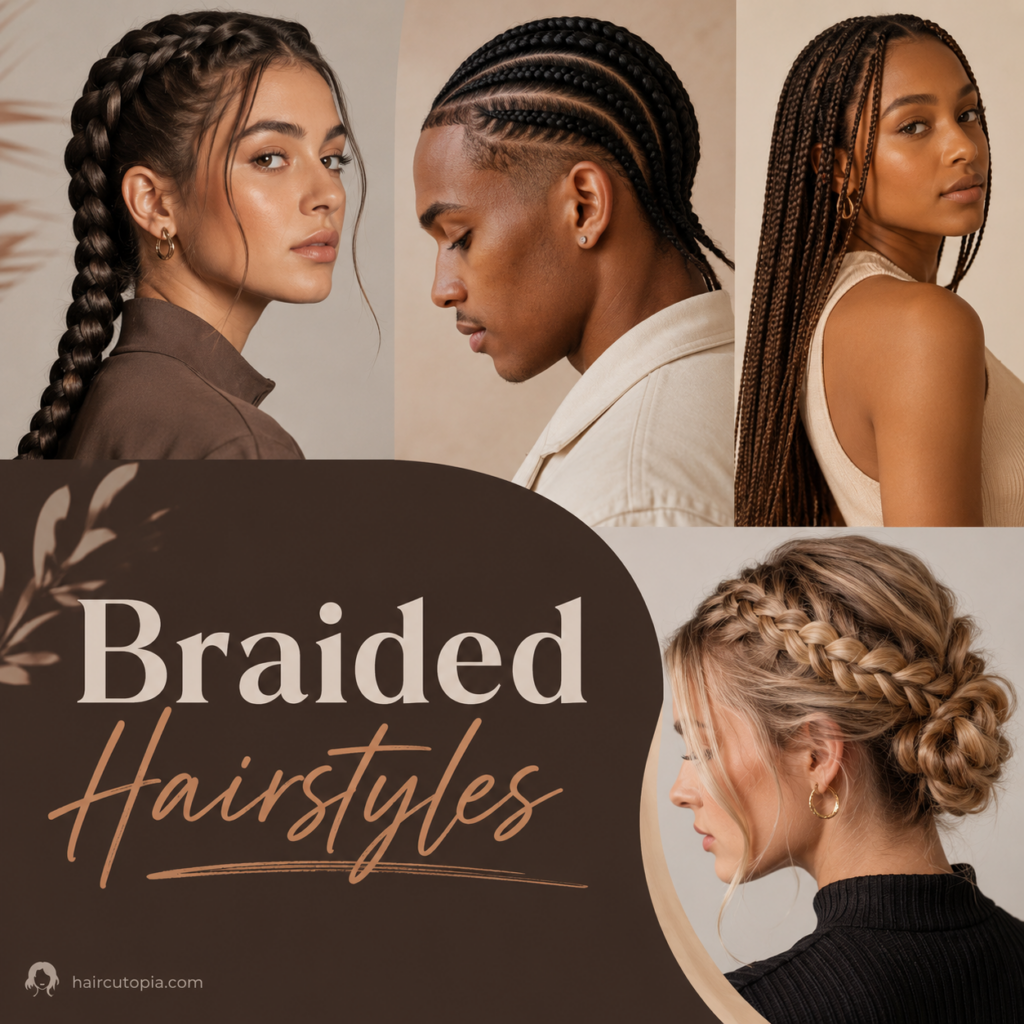
Braided hairstyles can be simple enough for an everyday look or detailed enough to become the centerpiece of an entire style. From classic three-strand braids and French braids to box braids, cornrows, fishtails, and elaborate braided updos, there are countless ways to work braids into your hair.
Part of what makes braids so versatile is that they aren’t limited to one hair type, length, or occasion. A loose side braid can feel relaxed and casual, while a polished braided bun can work beautifully for a wedding or formal event. Braids can also be incorporated into ponytails, half-up styles, protective hairstyles, and looks designed specifically for curly or textured hair.
If you’re looking for inspiration, understanding the main types of braided hairstyles can make it much easier to find a style that works for your hair and the look you want to create.
What Are Braided Hairstyles?
Braided hairstyles are created by weaving sections of hair together in a repeating pattern. The simplest version uses three sections, but many braiding techniques use additional strands, extensions, twists, or different weaving patterns.
Some braids hang freely from the scalp, while others are created directly against it. Braids can also be combined with buns, ponytails, curls, waves, and other styling techniques.
Depending on the style, braids may be worn for a few hours, an entire day, or for an extended period as a protective style.
Why Braided Hairstyles Are So Popular
Braids have remained popular because they can be adapted in so many ways.
They can be:
- Casual or polished
- Loose or tightly structured
- Simple or intricate
- Worn up or down
- Created with natural hair or extensions
- Used as part of a protective hairstyle
- Adapted for short, medium, or long hair
- Combined with curls, waves, buns, and ponytails
Braids are also useful when you want a hairstyle that keeps some or all of your hair away from your face.
The same basic technique can produce dramatically different results depending on the size of the braid, its placement, hair texture, and how tightly or loosely the sections are woven.
Popular Types of Braided Hairstyles
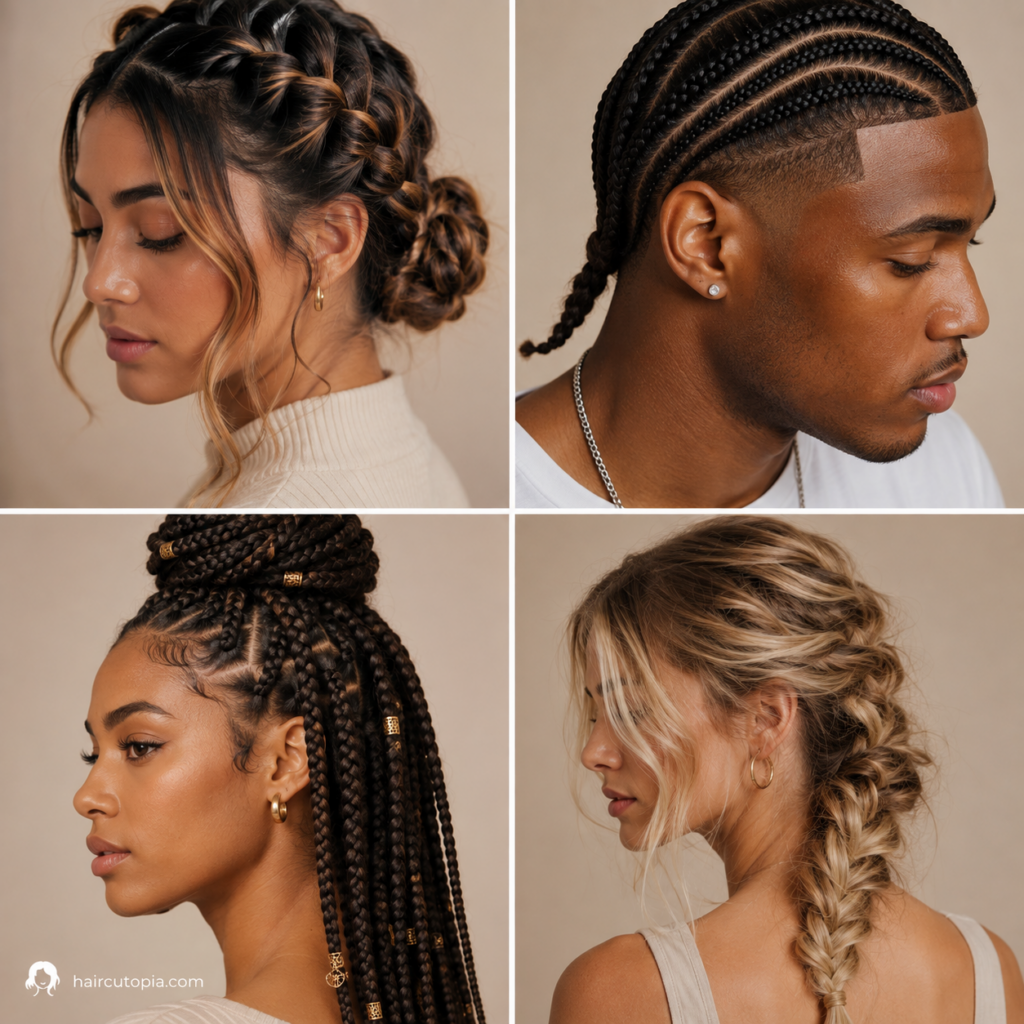
There isn’t one single type of braid. Learning the differences between common braiding techniques can help you narrow down which styles you want to try.
Three-Strand Braid
The traditional three-strand braid is one of the easiest techniques to learn.
Hair is divided into three sections, with the outside sections alternately crossing over the center section. The result is the familiar woven braid that works especially well for medium and long hair.
A three-strand braid can be worn:
- Down the back
- Over one shoulder
- In a ponytail
- As smaller accent braids
- Wrapped into a bun
- As part of a half-up hairstyle
Loosening the braid slightly after securing it can create a softer, fuller appearance.
French Braid
A French braid begins near the scalp and gradually incorporates additional hair as the braid continues.
Because the hair is added throughout the process, the braid stays close to the head before transitioning into a traditional braid once there is no more loose hair to incorporate.
French braids can be worn as one central braid, two braids, side braids, or incorporated into updos.
Dutch Braid
A Dutch braid uses a technique similar to a French braid, but the sections cross underneath rather than over one another.
This makes the braid appear raised from the surface of the hair.
Dutch braids are especially useful when you want the braid itself to stand out. Gently pulling apart the outer edges after braiding can make the style look even larger and more dimensional.
Fishtail Braid
A fishtail braid creates a detailed woven pattern using two main sections of hair.
Small pieces are repeatedly taken from the outside of one section and crossed over to the opposite section.
Although the finished braid can look complicated, the basic technique is relatively straightforward once you establish a rhythm.
Fishtail braids work particularly well for relaxed, romantic, bohemian, and slightly undone hairstyles.
Rope Braid
A rope braid is typically made by twisting two sections of hair and wrapping them around each other.
It’s one of the simpler alternatives to a traditional braid and can create a clean, defined look without requiring a complicated weaving technique.
Rope braids can be incorporated into ponytails, buns, and half-up hairstyles.
Waterfall Braid
A waterfall braid allows sections of hair to fall through the braid instead of incorporating every strand.
The cascading pieces create the “waterfall” effect.
Because much of the hair remains loose, waterfall braids pair naturally with curls and waves. They’re often used for romantic hairstyles, special occasions, and half-up looks.
Crown Braid
A crown braid wraps around the head to create a halo-like shape.
Depending on the technique, the braid may be created directly around the scalp or formed from longer braids that are wrapped and pinned into position.
Crown braids can range from sleek and polished to loose and romantic.
Halo Braid
Halo braids also encircle the head, creating a continuous braided appearance.
While crown and halo braids are sometimes used interchangeably, individual techniques can differ depending on how the hair is sectioned, braided, and positioned.
The finished style keeps most of the hair secured and can make a striking alternative to a traditional updo.
Milkmaid Braids
Milkmaid braids are generally created by making two braids and wrapping them across or around the top of the head.
The result has a distinctive romantic appearance that can be styled neatly or loosened for a softer finish.
Box Braids
Box braids are individual braids created from sections of hair that are commonly divided into square or box-shaped parts.
They are frequently created with added braiding hair, although techniques and styling options vary.
Box braids can be worn in many lengths, sizes, and configurations, including:
- Long box braids
- Short box braids
- Bob-length braids
- Jumbo box braids
- Small box braids
- Ponytails
- Buns
- Half-up styles
Because box braids can remain in place for an extended period, proper installation and ongoing scalp and hair care are important.
Knotless Braids
Knotless braids are individual braids typically created by gradually feeding extension hair into the braid instead of beginning with a prominent knot at the root.
This technique can create a flatter, more seamless appearance at the scalp.
Knotless braids are available in different sizes and lengths and can be styled into buns, ponytails, half-up looks, and other arrangements.
Cornrows
Cornrows are braided close to the scalp in continuous rows or patterns.
They can be created in straight lines or arranged into more elaborate designs using curves, geometric parts, and different braid sizes.
Cornrows may be worn on their own or incorporated into other braided and protective styles.
Fulani Braids
Fulani braids are inspired by traditional hairstyles associated with Fulani communities in Africa.
Modern variations often feature combinations of cornrows and individual braids, frequently with distinctive parting and braid placement.
Accessories such as beads may also be incorporated into some versions of the style.
Goddess Braids
The term “goddess braids” can refer to different braided looks depending on the styling technique, but they often emphasize larger, visually prominent braids or braids combined with loose, flowing pieces.
Some modern versions incorporate curls throughout the hairstyle for additional softness and texture.
Micro Braids
Micro braids are extremely small individual braids.
Their size can provide considerable styling versatility, but installation and removal can require significantly more time than larger braided styles.
Because the sections are so small, careful handling is particularly important.
Braided Hairstyles for Different Hair Lengths
Hair length can influence which braided hairstyles are easiest to create, but you don’t necessarily need extremely long hair to wear braids.
Braided Hairstyles for Short Hair
Short hair can still accommodate braids, particularly when the braid begins near the scalp.
Possible options include:
- Small French braids
- Dutch accent braids
- Side braids
- Crown-inspired braids
- Braided bangs
- Half-up braids
- Cornrows
- Braided styles with extensions
Smaller sections are often easier to control when working with limited length.
Bobby pins and a light styling product can help secure shorter pieces that don’t naturally stay inside the braid.
Braided Hairstyles for Medium Hair
Medium-length hair provides enough length for many traditional braiding techniques without having an excessive amount of hair to manage.
Options include:
- French braids
- Dutch braids
- Fishtail braids
- Braided ponytails
- Half-up braids
- Braided buns
- Crown braids
- Side braids
This length is particularly versatile if you enjoy changing hairstyles frequently.
Braided Hairstyles for Long Hair
Long hair provides the greatest amount of material for creating elaborate braided designs.
You can experiment with:
- Extra-long three-strand braids
- Fishtail braids
- Multiple braids
- Braided ponytails
- Large braided buns
- Crown braids
- Braided updos
- Combination braids
- Loose romantic braids
Longer hair can also create more visual impact when the braid itself is intended to be the main feature of the hairstyle.
Braided Hairstyles for Different Hair Textures
Texture affects how a braid behaves, but braided hairstyles can be adapted for straight, wavy, curly, and coily hair.
Braids for Straight Hair
Straight hair can create very clean, defined braid patterns.
If the hair is extremely smooth or slippery, however, sections may slide apart while you’re working.
A small amount of texturizing product can provide additional grip.
Loosening the braid after securing it can also prevent the finished hairstyle from appearing overly tight or flat.
Braids for Wavy Hair
Natural waves can add texture and volume to braided hairstyles.
Slightly imperfect sections often blend naturally into the finished style, making wavy hair particularly well suited to relaxed braids, side braids, and romantic braided updos.
Braids for Curly Hair
Braids can also be worked into many curly hairstyles, allowing natural curls to remain visible while adding structure around the crown, sides, or front of the style.
Depending on the hairstyle, curls can either be incorporated completely into the braid or intentionally left loose around the face, ends, or throughout portions of the style.
Working carefully while detangling and sectioning can help minimize unnecessary pulling.
Braids for Coily and Textured Hair
Braiding has deep historical and cultural significance across many Black and African communities, and numerous braiding traditions have developed across generations and regions.
Cornrows, box braids, knotless braids, and other braided styles can provide extensive styling versatility for coily and textured hair.
When braids are worn as a protective style, installation should still avoid excessive tension. A protective hairstyle shouldn’t require sacrificing scalp comfort or hair health.
Braided Hairstyles for Different Occasions
One of the biggest advantages of braids is how easily they can move between casual and formal settings.
Everyday Braided Hairstyles
Everyday braids usually work best when they’re comfortable and relatively easy to create.
Good options include:
- Single three-strand braids
- Side braids
- Two braids
- Braided ponytails
- Small accent braids
- Half-up braids
A few loose pieces around the face can make a simple braid feel more relaxed.
Braided Hairstyles for Work
For professional settings, structured braids can keep hair controlled while still adding visual interest.
Consider:
- Low braided buns
- Sleek braided ponytails
- Simple French braids
- Neat crown braids
- Braided low ponytails
How polished the style needs to be will naturally depend on your workplace and personal preference.
Braided Hairstyles for Weddings
Braids are especially popular for wedding hairstyles because they pair easily with curls, updos, accessories, and different levels of formality.
Popular approaches include:
- Braided chignons
- Loose side braids
- Braided crowns
- Braided low buns
- Half-up braids with curls
- Braided updos with face-framing pieces
The braid doesn’t always have to dominate the hairstyle. A small braid incorporated into an updo can add detail without becoming the main focus.
Braided Hairstyles for Prom and Formal Events
Braids are also a popular addition to prom hairstyles, where they can add texture and detail without requiring the entire hairstyle to be braided. Formal braided hairstyles often combine the structure of an updo with softer details.
For other special occasions, braids can also be incorporated into formal hairstyles, including polished buns, low chignons, ponytails, and elaborate updos.
Possible styles include:
- Fishtail updos
- Braided buns
- Dutch braid updos
- Braided ponytails
- Crown braids
- Side-swept braids
- Half-up braided curls
Hair accessories can further change the overall effect.
Braided Ponytails
Adding a braid can turn basic ponytail hairstyles into more detailed looks, whether the braid becomes the ponytail itself or simply adds texture around the base or sides.
There are several ways to combine the two.
You might braid the entire ponytail, create braids leading into the ponytail, wrap a small braid around the base, or incorporate several smaller braids throughout the style.
The placement of the ponytail matters too.
A high braided ponytail tends to feel more dramatic, while a low braided ponytail creates a softer and often more understated look.
Braided Buns
Braided buns combine braiding with classic bun hairstyles, creating options that can range from quick everyday styles to intricate formal looks.
One simple approach is to braid a ponytail and then wrap the braid around its base to form a bun.
More elaborate versions may incorporate French or Dutch braids leading into the bun or use multiple braids pinned together to create an updo.
Braided buns can be worn high, low, centered, or slightly to one side.
Half-Up Braided Hairstyles
Half-up half-down hairstyles are ideal when you want to show off your hair’s length or texture while still keeping the front sections controlled, and adding braids can give these styles even more detail.
Braids can be added in several ways:
- Two side braids joined at the back
- A single crown-style braid
- Small accent braids
- Waterfall braids
- Dutch braids
- Braids leading into a half-up bun or ponytail
Leaving the lower portion straight, wavy, or curly can dramatically change the finished look.
Braiding can also add structure and texture to updo hairstyles, from loose romantic arrangements to polished buns, chignons, crowns, and pinned styles.
Loose and Messy Braided Hairstyles
Not every braid needs perfectly smooth sections.
Loose braids intentionally emphasize softness, volume, and texture.
After creating the braid, gently pulling at the outer edges can make individual sections appear wider. This technique is sometimes called pancaking the braid.
For an intentionally undone appearance, a few face-framing pieces can also be left loose.
There is an important difference between relaxed and unstable, however. Secure the braid first and then loosen selected sections rather than making the entire braid so loose that it falls apart.
How to Choose a Braided Hairstyle
With so many options, choosing a braid can feel harder than actually creating one.
Start with a few practical considerations.
Consider Your Hair Length
Some styles require enough length to cross and secure multiple sections.
If your hair is shorter, scalp-based braids and smaller accent braids may be easier than long freestanding braids.
Consider Your Hair Texture
Think about how easily your hair holds a braid and whether you want to emphasize or smooth your natural texture.
The same braid can look completely different on straight, wavy, curly, and coily hair.
Think About the Occasion
A five-minute braid for running errands doesn’t need the same level of structure as a hairstyle intended to last through a wedding.
For everyday wear, prioritize comfort and simplicity.
For formal occasions, you may want additional structure, pins, styling products, or accessories.
Decide How Much Time You Have
Some braids take only a few minutes.
Others can require considerably more time, particularly styles involving multiple sections, detailed parting, extensions, or intricate updos.
Choose something realistic for the time and experience you have available.
Consider How Long You’ll Wear It
A braid intended for one afternoon has different requirements from a protective style intended to remain installed for an extended period.
Long-term styles require greater attention to installation, scalp care, nighttime protection, maintenance, and eventual removal.
How to Prepare Your Hair for Braiding
Good preparation can make braiding significantly easier.
1. Start With Detangled Hair
Knots make it difficult to maintain clean sections and consistent tension.
Work through tangles gently before beginning.
Depending on your hair type and routine, detangling may be easier on dry, damp, or conditioned hair.
2. Decide on Your Parting
If the braid begins at the scalp, determine where you want the hairstyle positioned before you start.
Creating clean sections at the beginning is easier than trying to correct them halfway through the braid.
3. Add Grip When Needed
Freshly washed, silky hair can sometimes be difficult to braid because strands slide out of place.
A small amount of an appropriate styling or texturizing product can make sections easier to control.
Avoid unnecessarily coating the hair with large amounts of product.
4. Gather Your Tools
Depending on the hairstyle, you may need:
- Hair elastics
- Bobby pins
- Sectioning clips
- A comb
- A brush
- Edge or styling product
- Texturizing product
- Hairspray
- Hair accessories
Having everything nearby prevents you from having to abandon partially completed sections.
How to Make Braids Look Fuller
If you want a larger, more dimensional braid, you don’t necessarily need extremely thick hair.
After securing the braid, gently tug outward on the edges of individual sections.
Work gradually from the bottom toward the top rather than pulling aggressively in one area.
You can also create the illusion of fullness by:
- Starting with textured or wavy hair
- Using larger sections
- Loosening the braid strategically
- Avoiding excessive tension
- Choosing dimensional braiding techniques such as Dutch or fishtail braids
The goal is to expand the visible braid without causing it to lose its structure.
How to Keep Braided Hairstyles Neat
How long a braid stays neat depends on the hairstyle, hair texture, activity level, weather, and how the hair was prepared.
For temporary braided hairstyles, you can help maintain the look by using secure elastics and pins and applying styling products selectively where needed.
For braids worn for longer periods, maintenance may include protecting the hair while sleeping, caring for the scalp, minimizing unnecessary manipulation, and keeping the style from becoming overly dry or stressed.
Avoid continually tightening a braid simply because a few strands become loose. Excessive tension can be uncomfortable and potentially damaging.
Braided Hairstyles and Hair Tension
Braids should feel secure, but they shouldn’t cause persistent pain.
Very tight braiding can place unnecessary tension on the scalp and hairline. Repeated tension may contribute to breakage and, over time, traction-related hair loss.
Pay particular attention to sensitive areas around the temples and hairline.
Warning signs that a style may be too tight include:
- Persistent scalp pain
- Headaches associated with the hairstyle
- Excessive pulling around the hairline
- Small bumps or irritation
- Difficulty moving the scalp comfortably
If a braid feels painfully tight, don’t assume you simply need to “get used to it.”
Accessories for Braided Hairstyles
Accessories can completely change the personality of a braid.
Depending on the style and occasion, options include:
- Decorative pins
- Ribbons
- Bows
- Headbands
- Clips
- Beads
- Cuffs
- Flowers
- Pearls
- Decorative combs
A simple braid can become formal with a few carefully positioned accessories, while colorful ribbons or clips can make the same technique feel playful and casual.
Avoid accessories that are excessively heavy or that repeatedly snag the hair.
Easy Braided Hairstyle Ideas to Try
If you’re not sure where to begin, start with hairstyles that use familiar techniques.
Try:
- A loose three-strand side braid
- Two classic braids
- A low ponytail with the ponytail braided
- Two small front braids with the rest of the hair down
- A half-up hairstyle with two braids joined at the back
- A simple French braid
- A braided low bun
- A loose fishtail braid
- A Dutch braid ponytail
- A braid wrapped around the base of a ponytail
Once you’re comfortable controlling sections and maintaining consistent tension, more complicated braids become much easier to learn.
Frequently Asked Questions About Braided Hairstyles
What is the easiest braid for beginners?
A traditional three-strand braid is generally the easiest place to start. Once you’re comfortable alternating the three sections, you can progress to French, Dutch, fishtail, and other braiding techniques.
Can you braid short hair?
Yes. Short hair can be braided, although available styles depend on the exact length and texture. French braids, Dutch braids, cornrows, side braids, and small accent braids can work particularly well because they incorporate hair along the scalp.
Should you braid wet or dry hair?
It depends on your hair type and the desired result. Hair is generally more fragile when wet, so avoid excessive pulling or tension. If you braid damp hair to create waves after it dries, make sure you’re handling the strands gently.
How do you stop layers from sticking out of a braid?
Shorter layers naturally have a greater tendency to escape. Styling product can provide additional grip, while bobby pins can secure pieces around the braid. Slightly looser, textured styles can also make escaped layers look intentional rather than out of place.
How can I make my braid look thicker?
Secure the braid and gently pull outward on its outer sections. This expands the braid visually and can create a much fuller appearance. Work gradually so you don’t pull strands completely out of the braid.
Are braids considered protective hairstyles?
Some braided hairstyles can function as protective styles when appropriately installed and maintained. However, simply putting hair into a braid doesn’t automatically make a hairstyle protective. Excessive tension, poor maintenance, or leaving a style installed improperly can still contribute to breakage or scalp problems.
How tight should braids be?
Braids should be secure enough to hold their shape without causing persistent pulling or pain. Tightness isn’t necessary for a braid to look neat, and painful tension shouldn’t be considered a normal part of the styling process.
Can braids damage your hair?
Braiding itself isn’t inherently damaging, but excessive tension, rough handling, improper removal, very heavy extensions, or repeatedly stressing the same areas can contribute to breakage. Gentle technique and appropriate maintenance are important, especially for styles worn long term.
Finding the Right Braided Hairstyle
The best braided hairstyle isn’t necessarily the most complicated one.
A good braid should work with your hair length and texture, suit the occasion, and feel comfortable enough to wear for as long as you need it.
For something simple, a three-strand braid, braided ponytail, or half-up braid may be all you need. If you want more visual detail, French, Dutch, fishtail, crown, and braided updo techniques provide plenty of room to experiment. Protective braided styles offer another extensive range of possibilities, from cornrows and box braids to knotless braids and other traditional and contemporary techniques.
Once you understand the basic types of braids and how they differ, it’s much easier to find a style that fits the look you’re trying to create.
Related Posts
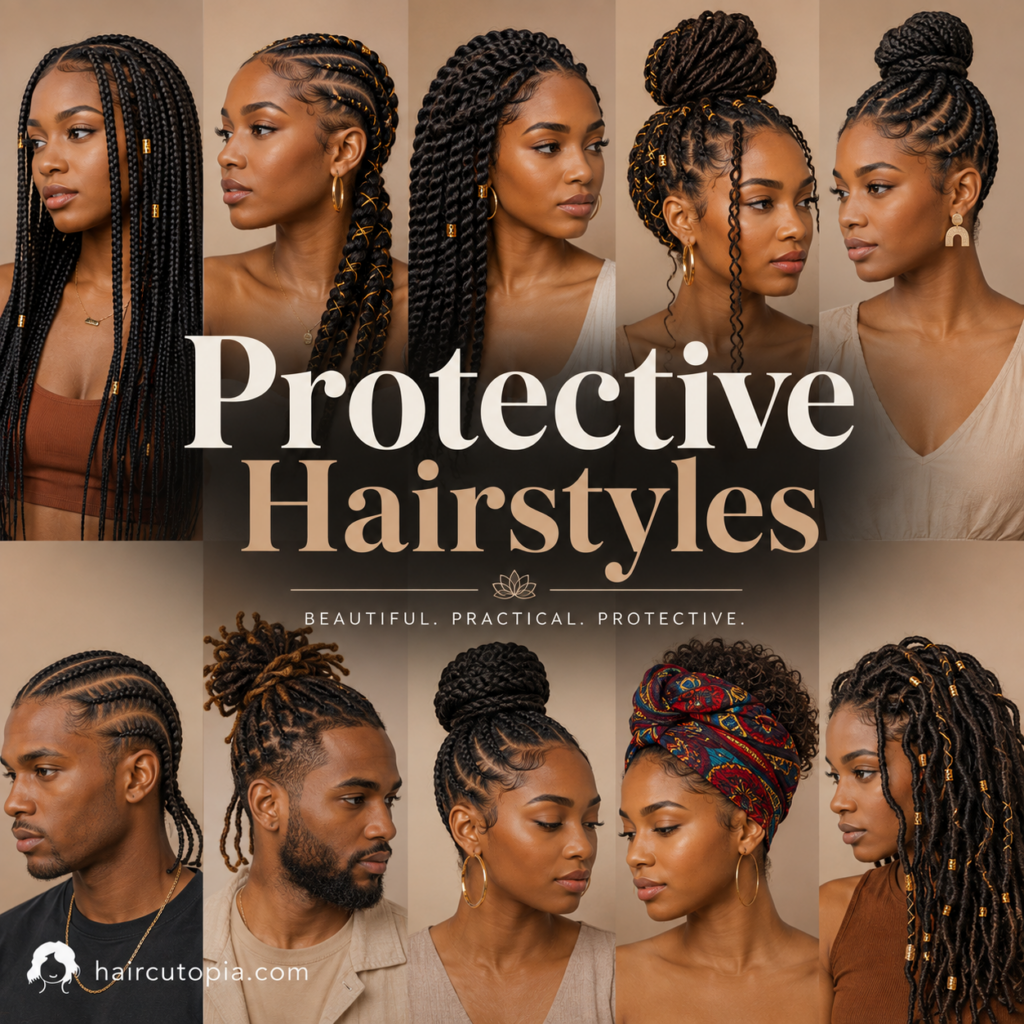 Protective Hairstyles: Ideas, Benefits, Maintenance, and Choosing the Right Style
 Protective Hairstyles for Special Events: Elegant Braids, Twists, Locs, and Updos
 Elegant Protective Hairstyles: Polished Braids, Twists, Locs, and Updos
 Long Protective Hairstyles: Beautiful Braids, Twists, Locs, and More