A buzz cut may be one of the easiest haircuts to live with day to day, but keeping it looking freshly cut is another story.
When your hair is only a fraction of an inch long, even a week of growth can make a noticeable difference. A skin fade starts losing contrast, a sharp lineup becomes softer, and an even buzz cut gradually takes on a fuller shape.
So, how often should you actually get a buzz cut?
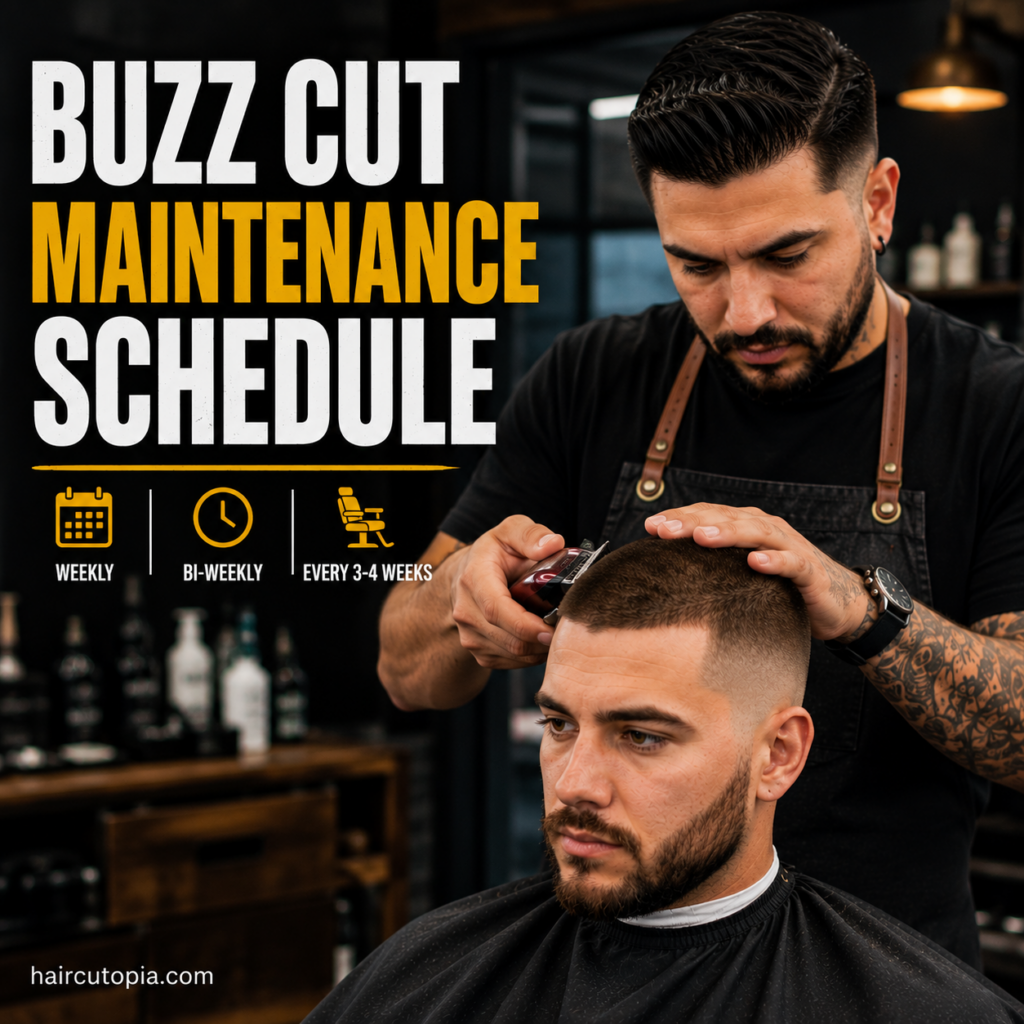
For most people, a good buzz cut maintenance schedule falls somewhere between every two and four weeks. Very short cuts and skin fades may need attention sooner, while longer, uniform buzz cuts can often go considerably longer without looking untidy.
Here’s how to find a maintenance schedule that fits your haircut, hair growth, and tolerance for a little grow-out.
Quick Buzz Cut Maintenance Schedule
If you just want a starting point, use this schedule:
- #0–#1 buzz cut: Every 1–2 weeks for a consistently close appearance
- #2–#3 buzz cut: Every 2–3 weeks
- #4–#5 buzz cut: Every 3–4 weeks
- #6–#8 buzz cut: Every 3–5 weeks
- Buzz cut with skin fade: Fade cleanup every 1–2 weeks
- Buzz cut with low, mid, or high fade: Approximately every 2–3 weeks
- Buzz cut with taper: Approximately every 2–4 weeks
- Buzz cut with sharp lineup: Edge cleanup approximately every 1–2 weeks
These aren’t deadlines. They’re practical starting points.
If you like some grow-out, extend the schedule. If you want your haircut to look almost exactly as it did when you left the barber, you’ll need more frequent appointments.
Why Buzz Cuts Need Regular Maintenance
Hair grows gradually, but growth is much easier to see when the starting length is extremely short.
Imagine adding roughly the same amount of new growth to a #1 buzz cut and to hair that’s several inches long.
On longer hair, the change may barely register. On a very short buzz cut, it can noticeably change the haircut’s proportions.
The effect is especially obvious around:
- The neckline
- Sideburns
- Temples
- Around the ears
- The shortest portion of a fade
- A sharply defined hairline
This is why a buzz cut can be extremely easy to style but still require relatively frequent haircuts.
How Fast Does a Buzz Cut Grow Out?
Human scalp hair commonly grows around half an inch per month on average, although the actual rate varies from person to person.
Age, genetics, general health, and individual hair growth cycles can all influence how quickly your hair appears to grow.
You don’t need to measure it.
Instead, pay attention to how long it takes before your particular buzz cut stops looking the way you want.
For one person, that might happen after 10 days. Someone else may be perfectly happy at four weeks.
Your ideal maintenance schedule is based less on the calendar and more on your preferred appearance.
Maintenance Schedule by Buzz Cut Length
The shorter the starting length, the faster new growth tends to change the appearance of the haircut.
#0 and #1 Buzz Cut: Every 1–2 Weeks
A #0 or #1 is extremely short.
At this length, your scalp and head shape are highly visible, and relatively small amounts of growth can make the cut look noticeably fuller.
If you want to preserve that freshly buzzed appearance, trimming every one to two weeks is reasonable.
You can wait longer if you don’t mind the transition into a slightly longer buzz.
#2 Buzz Cut: Every 2–3 Weeks
A #2 leaves approximately 1/4 inch of hair.
It still looks distinctly short, but the additional length makes growth a little less dramatic than it is with a #0 or #1.
A two-to-three-week schedule works well for many people who want to keep the cut consistent.
#3 Buzz Cut: Every 2–3 Weeks
A #3 leaves approximately 3/8 inch.
This length tends to provide more coverage while still maintaining the simple shape associated with a buzz cut.
You can maintain it every two to three weeks for consistency or let it reach four weeks if you prefer a more relaxed schedule.
#4 Buzz Cut: Every 3–4 Weeks
At approximately 1/2 inch, a #4 has enough length that a little additional growth usually doesn’t transform the haircut immediately.
For many people, every three to four weeks is enough.
A #4 is also a practical option if you like the simplicity of a buzz cut but don’t want to visit the barber every couple of weeks.
#5 to #8 Buzz Cut: Every 3–5 Weeks
Longer buzz cuts provide more room for growth before the change becomes dramatic.
At these lengths, your natural hair texture and growth pattern also become more noticeable.
Some areas may begin sticking up or growing in different directions before the overall length becomes a problem.
A trim every three to five weeks is a useful starting point, but the haircut may transition into other short styles as it grows.
Maintenance Schedule for a Buzz Cut With a Fade
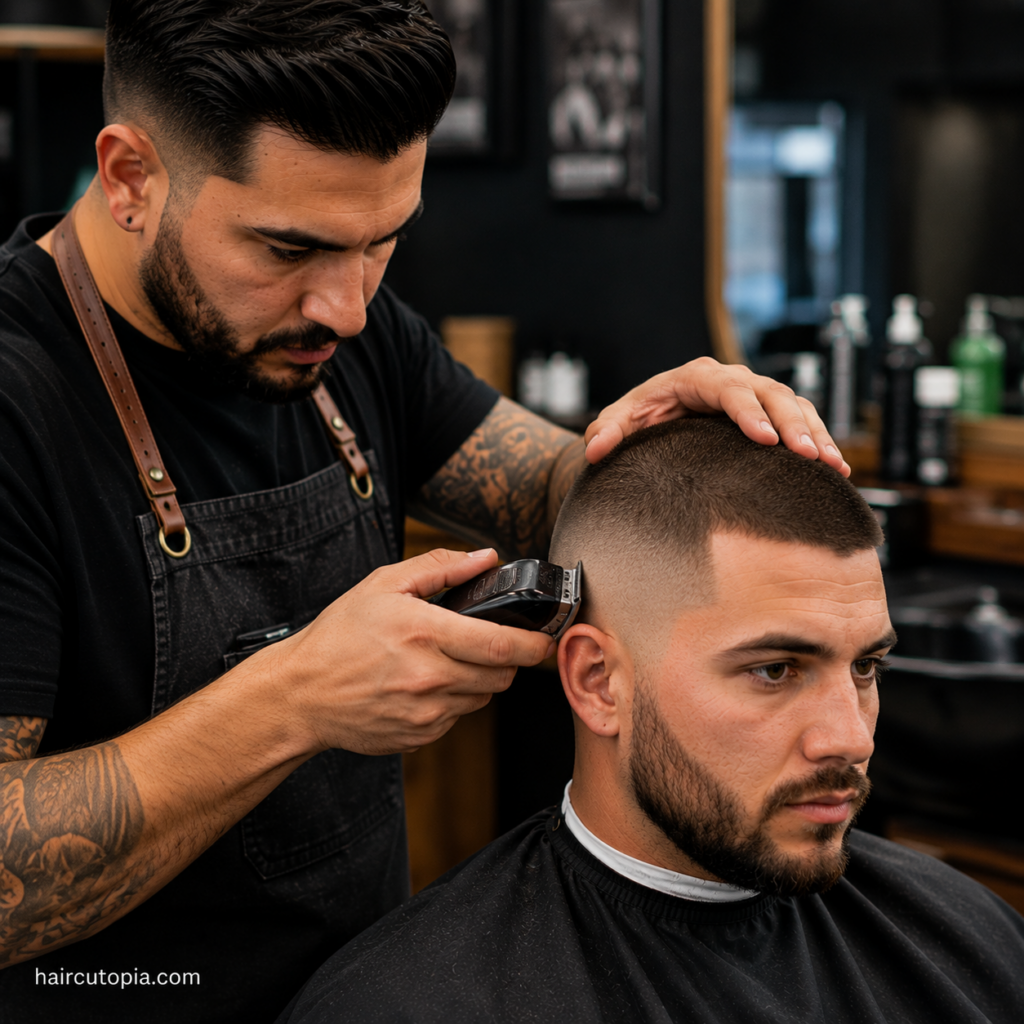
Adding a fade usually increases the maintenance required.
The top may still look perfectly fine while the sides begin losing their contrast.
Skin Fade: Every 1–2 Weeks
A skin fade starts at bare or nearly bare skin.
That creates dramatic contrast when it’s fresh, but it also makes new growth obvious.
If you want the fade to remain extremely crisp, a weekly or biweekly cleanup may be appropriate.
You don’t necessarily need the entire buzz cut redone each time. A barber may be able to refresh the fade while leaving the top alone.
Low Fade: Every 2–3 Weeks
A low fade keeps the transition close to the ears and neckline.
Because less of the sides are taken extremely short, the grow-out can feel somewhat softer than with a high skin fade.
A cleanup every two to three weeks works well for a consistently neat appearance.
Mid Fade: Every 2–3 Weeks
A mid fade creates more noticeable contrast through the middle of the sides.
As those shorter sections grow, the blend gradually becomes less defined.
Around two to three weeks is a practical maintenance interval for many people.
High Fade: Every 1–3 Weeks
A high fade removes more hair from the sides and puts greater emphasis on the contrast between the top and sides.
If the shortest area is taken down to skin, you may notice grow-out within the first week.
Someone who likes a sharp high fade might return every one to two weeks. If you’re comfortable with a softer fade, two to three weeks may be enough.
Maintenance Schedule for a Buzz Cut With a Taper
A taper is usually easier to grow out than a full fade.
Instead of fading a large portion of the sides and back, the shortest transitions are concentrated around areas such as the sideburns and neckline.
That means the overall haircut can retain its shape for longer.
A taper cleanup every two to four weeks will work for many people.
If the top is longer, you may even be able to clean up the taper without shortening the rest of the haircut.
How Often Should You Maintain a Lineup?
A lineup can lose its freshly cut appearance before the rest of the buzz cut does.
That’s because a lineup depends on a clean, defined edge.
As new hairs appear along the front and temples, that sharp border begins looking softer.
For a consistently crisp lineup, you may want a cleanup every one to two weeks.
However, don’t repeatedly push the front edge farther into your natural hairline just to make it look straighter.
If you’re maintaining the lineup yourself, follow the existing shape rather than creating a new one each time.
Weekly Buzz Cut Maintenance Routine
You don’t need to cut your hair every week to maintain it.
A simple weekly check can help you decide whether anything actually needs attention.
Once or Twice a Week
Check:
- Hair around the ears
- Sideburns
- Neckline
- Front hairline
- Fade growth
- Scalp condition
- Any noticeably uneven areas
You don’t necessarily need to fix everything you notice.
The purpose is simply to catch the point when the haircut starts looking untidy to you.
Throughout the Week
Wash your hair according to your scalp and lifestyle.
If you’ve exercised heavily or become sweaty, rinsing or washing your scalp may make sense. Someone with a dry scalp may prefer less frequent shampooing.
Buzz cut maintenance isn’t just about clipper work. Clean hair and a comfortable scalp contribute significantly to the overall appearance.
A Simple Month-Long Buzz Cut Maintenance Schedule
If you wear a #2 to #4 buzz cut, a typical month might look something like this.
Week 1: Fresh Haircut
Your buzz cut should require almost no maintenance.
Focus on normal washing and scalp care.
If you have a fresh skin fade, avoid unnecessarily irritating freshly clipped areas.
Week 2: Check the Edges
You may begin noticing growth around the neckline, ears, sideburns, or fade.
If you like a very polished haircut, this is when you might schedule a quick cleanup.
Otherwise, leave it alone.
Week 3: Decide Whether It’s Time for a Trim
A #2 or #3 may now look noticeably longer.
The fade may also be significantly softer.
This is a common point for a maintenance haircut if you prefer consistent length.
Week 4: Full Refresh
For many #3, #4, and longer buzz cuts, the fourth week is a natural time for a full trim.
If the haircut still looks good to you, there’s nothing wrong with extending the schedule.
Barber Maintenance vs. Home Maintenance
A simple buzz cut is one of the easier hairstyles to maintain at home.
But that doesn’t mean every buzz cut is equally easy to recreate.
Home Maintenance Works Well For
DIY maintenance is most practical when you have:
- One guard length all over
- A simple neckline
- Minimal blending
- No complicated fade
- Experience using clippers
If you normally wear a #3 all over, for example, maintaining the length yourself can be relatively straightforward.
Barber Maintenance Is Better For
Professional maintenance becomes more useful when you have:
- A skin fade
- A detailed taper
- Multiple blended lengths
- A sharp lineup
- Difficult crown growth
- A haircut that requires precise symmetry
You can still perform small cleanups between appointments without trying to recreate the entire haircut.
How to Extend the Time Between Barber Visits
If frequent barber appointments aren’t appealing, choose a buzz cut that grows out gracefully.
A slightly longer, more uniform cut generally requires less maintenance than an extremely short cut with a skin fade.
You can also extend the life of your haircut by:
- Keeping the neckline tidy
- Cleaning stray hairs around the ears
- Maintaining sideburns
- Keeping facial hair groomed
- Washing your scalp appropriately
- Avoiding heavy product buildup
- Choosing a natural hairline instead of a sharp lineup
- Choosing a taper instead of a skin fade
These small choices can make a substantial difference in how quickly the haircut appears overdue.
How Often Should You Wash a Buzz Cut?
There’s no special shampoo schedule just because you have a buzz cut.
Wash based on your scalp, hair type, activity level, and product use.
Someone who exercises daily may need to rinse or wash more frequently than someone with a less active routine.
Likewise, an oily scalp may tolerate frequent washing better than a scalp prone to dryness.
Watch for signs that your routine needs adjusting, such as:
- Excess oil
- Product buildup
- Dryness
- Flaking
- Itching
- Irritation
Persistent or severe scalp problems are better discussed with a dermatologist rather than solved by repeatedly changing your haircut schedule.
Don’t Forget Sun Protection
Very short buzz cuts expose significantly more scalp than longer hairstyles.
If you’ve recently gone from longer hair to a #0, #1, or skin fade, areas of your scalp may be receiving much more direct sunlight than they’re accustomed to.
When spending extended time outdoors, consider appropriate sun protection such as a hat or sunscreen suitable for exposed skin.
Scalp care should be part of your buzz cut maintenance routine, especially during sunny weather.
Signs It’s Time to Refresh Your Buzz Cut
You don’t need to count the days since your last haircut.
Your mirror can usually tell you when it’s time.
Consider a trim when:
- The sides have lost their shape.
- Your fade is no longer visible enough for your preference.
- Hair around the ears looks untidy.
- The neckline has grown out.
- Your lineup has become noticeably soft.
- The top no longer looks evenly buzzed.
- Your hair is long enough that it requires more styling than you want.
- You simply prefer how the haircut looks shorter.
That last point matters.
Haircut maintenance is largely personal. There isn’t a medically or cosmetically required interval for keeping a buzz cut at one particular length.
What Is the Lowest-Maintenance Buzz Cut?
If minimizing barber visits is your priority, avoid combining several high-maintenance details.
A very short buzz cut with a skin fade and sharp lineup may require little morning styling, but keeping it looking freshly cut can mean frequent appointments.
A longer uniform buzz cut with a natural hairline is usually easier to let grow.
For example, a #3 or #4 all over can transition gradually as it gets longer without immediately losing a carefully constructed fade.
A simple taper is another option if you want some definition around the edges without committing to frequent skin-fade maintenance.
Common Buzz Cut Maintenance Mistakes
Following the Calendar Too Strictly
If your haircut still looks good at three weeks, you don’t need a trim simply because a schedule says you do.
Use the schedule as a guide.
Cutting It Too Short to Save Time
It can be tempting to choose an extremely short guard so you can wait longer before your next haircut.
But if you don’t actually like how the shorter length looks, the extra time between trims isn’t worth it.
Choose the haircut you want first. Then build the maintenance schedule around it.
Overcorrecting Your Own Hairline
Small DIY cleanup sessions can gradually change the hairline if you remove more hair each time.
When you’re unsure, leave the front edge for your barber.
Trying to Rebuild a Fade Yourself
Maintaining an even buzz cut and creating a smooth fade require different levels of clipper technique.
Unless you’re comfortable blending multiple lengths, focus home maintenance on simple cleanup rather than repeatedly trying to repair the fade.
How to Create Your Own Buzz Cut Maintenance Schedule
Instead of guessing how often you need a haircut, track one complete grow-out cycle.
Start immediately after a fresh haircut.
Then check the haircut after:
- One week
- Two weeks
- Three weeks
- Four weeks
Take a quick photo at each stage if you want an easy comparison.
At some point, you’ll look at the haircut and think, “This is longer than I want.”
That’s your maintenance interval.
If that happens around day 18, schedule your haircuts roughly every two to three weeks. If you’re still happy after a month, there’s little reason to visit the barber every two weeks.
Once you know your preferred interval, maintenance becomes almost automatic.
Final Thoughts on Your Buzz Cut Maintenance Schedule
For most people, maintaining a buzz cut every two to four weeks provides a good balance between keeping the haircut neat and avoiding constant barber visits.
But the details matter.
A #1 with a skin fade and sharp lineup may start looking grown out within a week or two. A #4 cut evenly all over can remain presentable much longer.
Instead of searching for one perfect schedule, pay attention to how your particular haircut grows.
Keep the edges tidy, care for your scalp, protect exposed skin from the sun, and schedule your next trim when the haircut stops looking the way you want it to.
That’s the simplest buzz cut maintenance schedule there is.