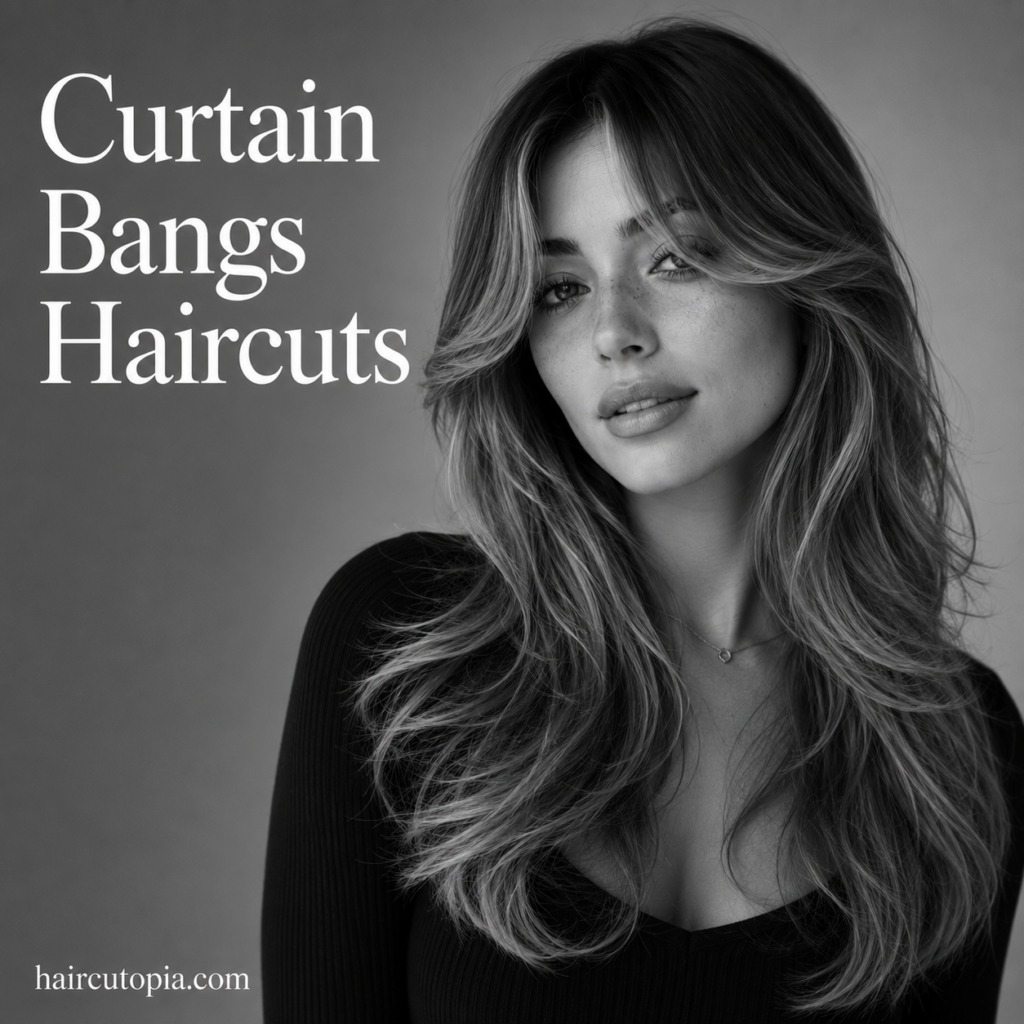
Curtain bangs have a way of changing a haircut without making the rest of your hair feel completely different.
They add shape around the face, create movement through the front, and can make even a simple long or medium-length cut feel more intentional. Unlike a straight-across fringe, curtain bangs usually open through the center and become gradually longer toward the sides.
That softer shape is a big part of their appeal.
You can wear them short and noticeable, long enough to brush the cheekbones, wispy and light, or full and voluminous. They can blend into face-framing layers or stand out as a more defined fringe.
They also work with far more hair types than the polished blowout photos might suggest.
Straight hair can wear them sleek or flipped. Waves give them a relaxed finish. Curly and coily textures can create their own version of the curtain shape without needing to imitate straight fringe.
Still, curtain bangs aren’t completely effortless.
Their length, density, natural growth pattern, and how much you’re willing to style them all matter.
Before reaching for the scissors, here’s what you should know about choosing, styling, and maintaining curtain bangs.
What Are Curtain Bangs?
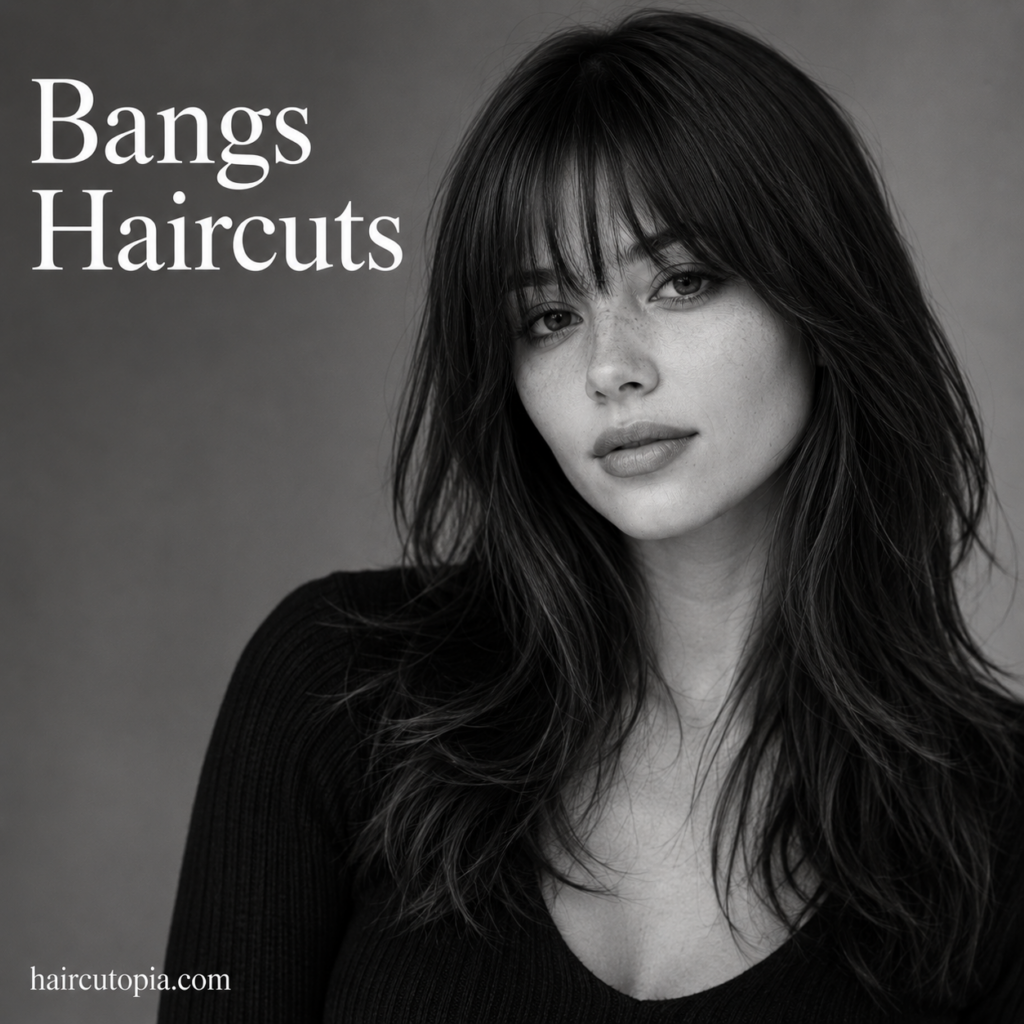
Curtain bangs are a type of fringe that typically parts near the center and becomes longer toward the sides of the face.
Instead of creating one horizontal line across the forehead, the bangs open outward.
The shape resembles curtains being pulled apart, which is where the name comes from.
Curtain bangs commonly feature:
- A center or slightly off-center opening
- Shorter pieces near the middle
- Longer outer edges
- Softly blended transitions
- Movement around the cheekbones
- A connection to face-framing layers
The exact length can vary considerably.
Some curtain bangs are short enough to cover much of the forehead.
Others begin closer to the eyes or cheekbones and behave more like very short face-framing layers.
That’s why two haircuts labeled “curtain bangs” can look completely different.
What Makes Curtain Bangs Different From Regular Bangs?
Traditional bangs can take many forms, but more conventional straight-across styles often create a continuous fringe across the forehead.
Curtain bangs intentionally separate.
The center is generally shorter, while the outer sections become progressively longer.
This creates more movement around the sides of the face.
Curtain bangs also tend to blend into the surrounding haircut more gradually than blunt fringe.
That can make them easier to grow out.
As they gain length, the outer sections often begin looking like face-framing layers rather than overgrown bangs.
Why Are Curtain Bangs So Popular?
Curtain bangs offer a way to refresh many women’s haircuts without requiring you to change most of your existing length.
They can make a long haircut look completely refreshed from the front.
They also offer considerable flexibility.
Depending on their length, curtain bangs can be:
- Parted in the middle
- Worn slightly off-center
- Swept toward the sides
- Blown outward
- Worn with natural texture
- Blended into layers
- Tucked away as they grow
Longer curtain bangs are especially versatile.
They provide the effect of fringe when styled forward but can often be pushed away from the face when you want a more open look.
Popular Types of Curtain Bangs
Curtain bangs aren’t one specific length or shape.
Small changes can make them feel dramatically different.
Classic Curtain Bangs
Classic curtain bangs are shorter toward the middle and gradually lengthen toward the outer edges.
They usually open around the center of the forehead.
The outer pieces may reach the cheekbones or longer.
When styled, they sweep away from the face and connect naturally with the surrounding hair.
This version creates the recognizable curtain shape without requiring an extremely short fringe.
Long Curtain Bangs
Long curtain bangs typically begin around the eyes, cheekbones, or even lower.
They offer a softer introduction to bangs.
Long curtain fringe can be especially useful if you:
- Have never had bangs before
- Want easier grow-out
- Wear your hair tied back frequently
- Want less forehead coverage
- Prefer face-framing movement
Because they’re longer, they can often be tucked behind the ears or blended into the rest of the haircut.
Short Curtain Bangs
Short curtain bangs bring the fringe higher onto the forehead.
The center pieces may sit around or above the eyebrows while the sides gradually become longer.
This creates a stronger bang effect.
Short versions generally require more frequent trims and more commitment than long curtain bangs.
They may also respond more noticeably to humidity, cowlicks, and natural growth patterns.
Wispy Curtain Bangs
Wispy curtain bangs use less hair.
The fringe is intentionally light and airy rather than dense.
This creates softer forehead coverage and allows some skin to remain visible through the bangs.
Wispy curtain bangs can work particularly well if you:
- Have fine hair
- Want subtle fringe
- Prefer a softer appearance
- Don’t want to remove much density from the front
They can also be easier to blend into surrounding layers.
Full Curtain Bangs
Full curtain bangs use a denser section of hair.
They create more substantial coverage and a stronger shape.
Thick hair can often support this naturally, although other densities can wear fuller fringe depending on how much hair is brought forward.
A fuller curtain bang may require more styling to keep the sections moving in the intended direction.
Feathered Curtain Bangs
Feathered curtain bangs emphasize outward movement.
The pieces are styled to sweep away from the face, often with a round brush or roller.
This creates a soft, flowing finish that works particularly well with layered hair.
Curly Curtain Bangs
Curly curtain bangs follow the same general idea without requiring the hair to become straight.
The center may remain shorter while the outer curls become progressively longer.
The curtain effect comes from the overall shape and opening rather than perfectly symmetrical pieces.
Shrinkage needs to be considered carefully when choosing the length.
How Long Should Curtain Bangs Be?
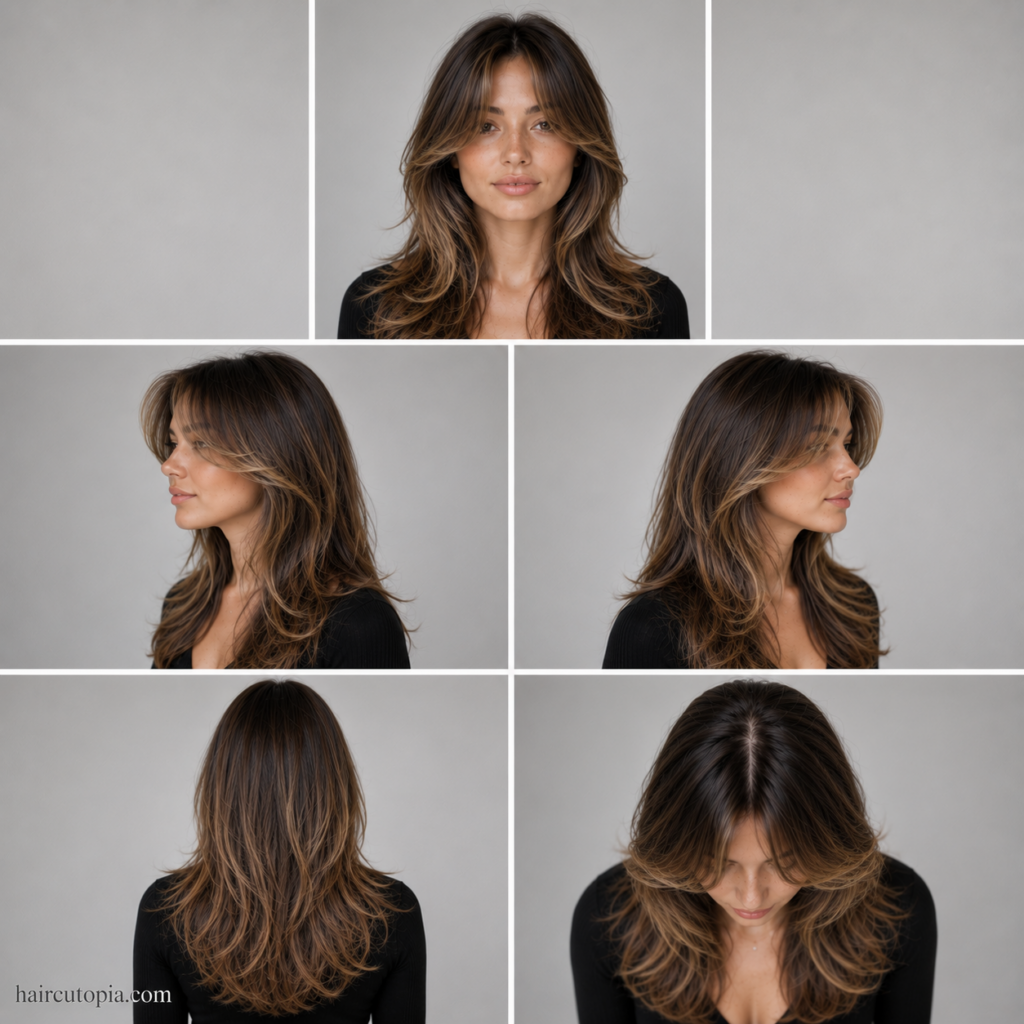
Length determines how much your curtain bangs behave like traditional fringe versus face-framing layers.
Eyebrow-Length Curtain Bangs
Curtain bangs around eyebrow level create a stronger fringe.
They provide more forehead coverage and make the bangs a prominent part of the haircut.
This length usually requires regular styling and trimming.
Eye-Length Curtain Bangs
Bangs falling around the eyes create a softer effect.
The center can still provide noticeable fringe while the sides sweep outward.
You’ll need enough movement in the cut to keep the hair from constantly falling directly into your eyes.
Cheekbone-Length Curtain Bangs
Cheekbone curtain bangs are among the most versatile.
They frame the upper face without creating heavy forehead coverage.
They can be styled outward, tucked away, or gradually blended into longer layers.
Jaw-Length Curtain Bangs
Once the shortest pieces approach the jaw, the style begins moving toward long face framing.
You can still create a curtain effect with styling, but the fringe becomes much less traditional.
This is an excellent choice if you want very low-commitment bangs.
Short vs. Long Curtain Bangs
The best length depends largely on how much commitment you want.
Short curtain bangs generally provide:
- More forehead coverage
- A stronger fringe effect
- More frequent trims
- More noticeable grow-out
- Greater styling needs
Long curtain bangs generally provide:
- Softer framing
- Easier grow-out
- More styling flexibility
- Easier blending with layers
- Less commitment
If you’re unsure whether you’ll enjoy bangs, starting longer is usually the safer approach.
You can always shorten them.
Curtain Bangs for Short Hair
Curtain bangs can work beautifully with short hair.
On shorter styles, curtain fringe can soften the front, add movement to a bixie, or create a longer front section on a pixie-inspired cut.
On short hair, curtain bangs may become a more prominent part of the overall silhouette because there isn’t as much length behind them.
They can pair particularly well with:
- Bobs
- Short bobs
- Bixies
- Long pixies
- Short layered haircuts
- Shag-inspired cuts
The outer sections should connect naturally with the surrounding haircut rather than appearing isolated.
Curtain Bangs for Medium Hair
Medium hair gives curtain bangs plenty of room to blend.
Shoulder and collarbone lengths can support short, long, wispy, or fuller curtain fringe.
The outer sections can transition into:
- Face-framing layers
- Long layers
- Feathered sections
- A relatively blunt perimeter
Medium hair is also long enough to create a strong contrast between shorter fringe and the rest of the haircut without making the difference feel extreme.
Curtain Bangs for Long Hair
Curtain bangs are an easy way to make long hair feel different without cutting the overall length.
Long hair can sometimes look relatively uniform around the front.
Adding fringe creates movement much higher.
The bangs may connect with cheekbone, jaw, or chin-length face-framing pieces before blending into the longer hair.
This creates a gradual progression rather than a sudden jump from short bangs to very long lengths.
Curtain bangs work particularly well with long hair when you want a noticeable transformation but aren’t ready to lose several inches.
Curtain Bangs for Fine Hair
Fine hair can wear curtain bangs, but density matters.
Bringing too much hair forward may leave the surrounding sections looking thinner.
Fine hair often works well with:
- Wispy curtain bangs
- Long curtain bangs
- Smaller fringe sections
- Soft transitions
- Lightweight styling products
You don’t need thick fringe to create the curtain shape.
A relatively small amount of hair can be enough.
Avoid heavy styling creams or excessive product around the bangs if your hair becomes weighed down easily.
Curtain Bangs for Thick Hair
Thick hair can support fuller curtain bangs.
There’s generally enough density to create substantial fringe without making the rest of the haircut feel sparse.
Thick curtain bangs may benefit from thoughtful weight distribution.
Too much bulk can make the fringe difficult to separate and style.
The goal isn’t necessarily to thin the bangs aggressively.
Instead, they should have enough movement to open naturally while still maintaining their shape.
Curtain Bangs for Straight Hair
Straight hair creates a clean curtain shape.
The challenge is getting the bangs to move away from the face rather than hanging straight downward.
Depending on your natural growth pattern, you may need:
- A round brush
- Blow-dryer
- Roller
- Styling brush
- Light-hold product
Longer straight curtain bangs can often be worn with minimal styling.
Shorter versions usually need more direction.
The cut itself establishes the shape, but styling helps create the recognizable outward sweep.
Curtain Bangs for Wavy Hair
Natural waves can give curtain bangs an effortless appearance.
Instead of creating a perfectly polished curve, the fringe can follow the existing wave pattern.
Shorter sections may become wavier once some weight is removed.
That means the bangs may sit higher than expected after cutting.
A slightly longer starting point can provide more flexibility.
You can air-dry them for a relaxed finish or smooth them with a round brush when you want a more defined curtain shape.
Curtain Bangs for Curly Hair
Curly curtain bangs can create beautiful movement around the forehead and cheekbones.
The key is planning around shrinkage.
A curl that appears eye-length when stretched may sit much higher when dry.
The bangs should be evaluated according to their natural finished position.
Curly curtain fringe doesn’t need to create two perfectly symmetrical wings.
The opening can follow the natural curl pattern.
The overall goal is shorter curls near the center with longer pieces gradually framing the sides.
Curtain Bangs for Coily Hair
Coily textures can create their own version of curtain fringe.
The bangs may form a soft opening through the center or slightly to one side while shorter coils frame the forehead and longer pieces transition toward the temples.
Because shrinkage can be substantial, conservative cutting is important.
The shape should be planned around:
- Dry length
- Density
- Coil pattern
- Natural part
- Desired volume
Curtain bangs don’t need to imitate straight-hair styling to work.
The defining feature is the opening and gradual framing shape.
Curtain Bangs for Different Face Shapes
Curtain bangs are highly customizable, which means they can be adapted rather than chosen according to rigid face-shape rules.
Think about where you want the fringe to create movement.
Curtain Bangs for Oval Faces
Oval faces can experiment with most curtain bang lengths.
Short fringe creates more forehead coverage, while cheekbone-length bangs emphasize the sides of the face.
Choose based on the overall haircut and the amount of maintenance you want.
Curtain Bangs for Round Faces
Long curtain bangs can create vertical and diagonal movement around the face.
Cheekbone or jaw-length versions are popular options.
Shorter fringe can also work if you prefer more volume around the upper face.
There’s no requirement that curtain bangs make the face look narrower.
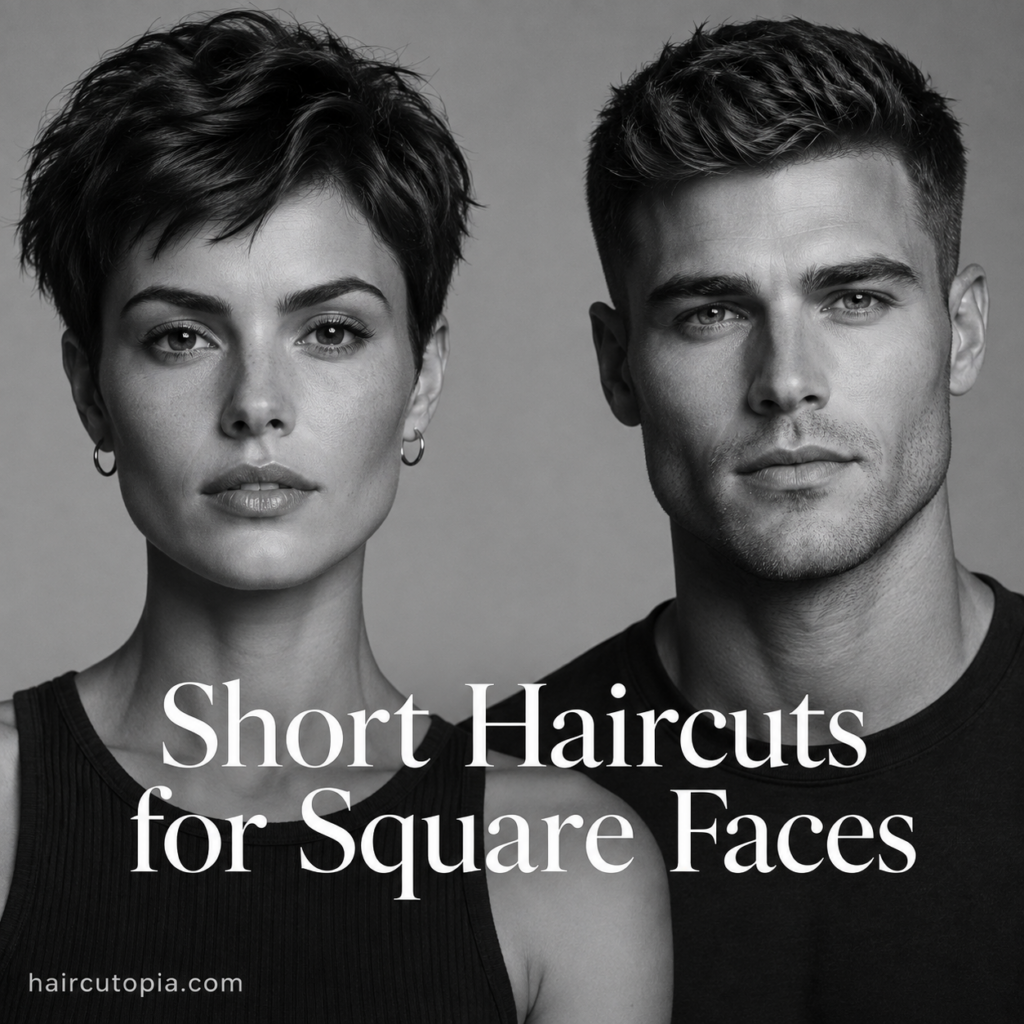
Curtain Bangs for Square Faces
Softly curved curtain bangs can create movement around a defined forehead and jaw.
Longer outer sections can blend into layers around the cheekbones and jaw.
You can keep the fringe wispy for softness or fuller for a stronger statement.
Curtain Bangs for Heart-Shaped Faces
Curtain bangs naturally create movement around the forehead and cheekbones.
Longer sides can continue toward the jaw, creating a gradual frame.
Both wispy and fuller versions can work.
Curtain Bangs for Long Faces
Curtain bangs can add a horizontal element across the upper face.
Shorter versions provide more forehead coverage, while longer versions create volume around the cheekbones.
Choose the placement according to where you’d like the haircut to feel fuller.
Curtain Bangs With Layered Hair
Layered haircuts and curtain bangs naturally complement each other because the fringe can gradually connect with surrounding layers instead of ending abruptly.
A typical progression might move from:
- Short center fringe
- Longer outer fringe
- Cheekbone layers
- Jaw-length layers
- Longer sections
This creates continuous movement around the front.
The layers don’t have to be dramatic.
Even subtle layering can make curtain bangs feel more integrated.
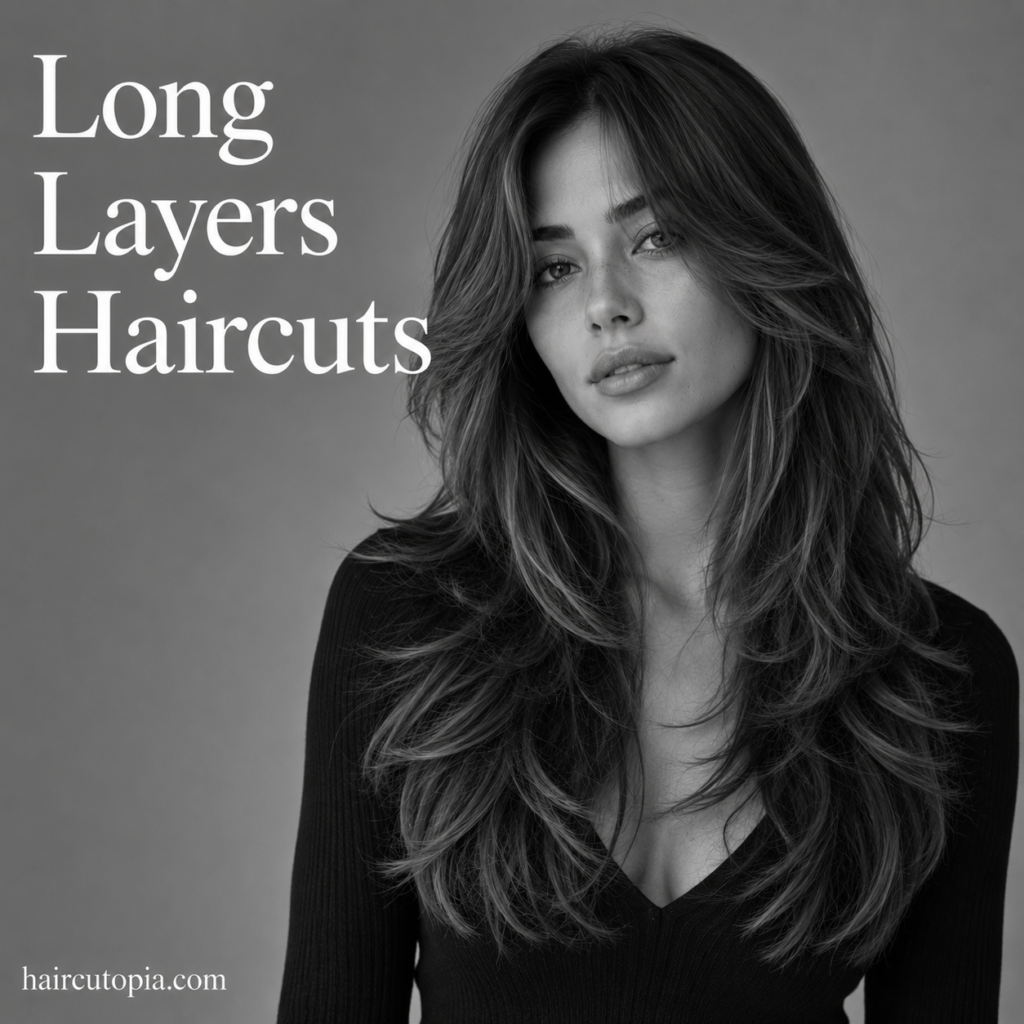
Curtain Bangs With Long Layers
Long layers create movement throughout the lower portions of the haircut while curtain bangs add shape much higher around the face.
This combination works especially well when you want to preserve overall length.
The bangs can connect with a few face-framing pieces before transitioning into longer layers.
The result feels cohesive without requiring heavy layering through the crown.
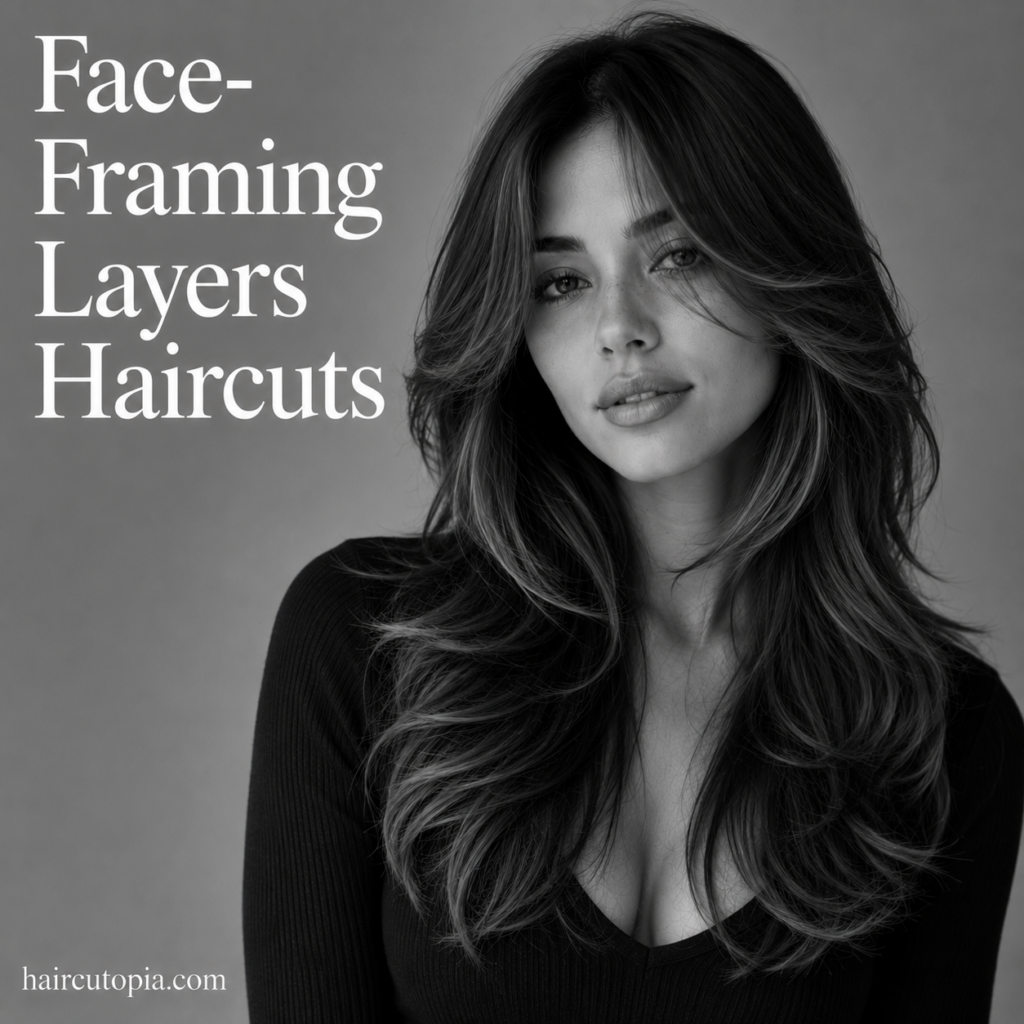
Curtain Bangs With Face-Framing Layers
Face-framing layers provide the bridge between curtain bangs and the rest of the hair.
Without that transition, short curtain bangs can sometimes feel disconnected from very long hair.
Adding intermediate lengths creates a smoother progression.
For example:
Curtain bangs → cheekbone framing → jaw layers → chin layers → longer hair.
You don’t need every one of those lengths.
The idea is simply to avoid a sudden jump unless that’s intentionally the look you want.
Curtain Bangs With a Butterfly Cut
Curtain bangs fit naturally into butterfly haircuts because the style already emphasizes shorter front and upper layers with longer lengths underneath.
Curtain bangs can become the shortest part of that progression.
When styled with a blowout, the fringe and face-framing layers can sweep outward together.
This creates a highly voluminous finish.
If you prefer something softer, longer curtain bangs can blend into the butterfly layers without creating heavy forehead coverage.
Curtain Bangs With a Shag
Shag haircuts often use fringe as part of their overall layered structure, making curtain bangs a natural option when you want a softer opening around the forehead.
They can provide a more open alternative to heavier shag bangs.
The fringe may be:
- Wispy
- Textured
- Choppy
- Curly
- Feathered
Because shags already contain shorter layers, curtain bangs usually have plenty of intermediate lengths to blend into.
The finished effect can be relaxed rather than perfectly polished.
Curtain Bangs With a Bob
A bob haircut with curtain bangs combines a strong overall shape with softer movement around the front.
The bangs can work with:
- Chin-length bobs
- Short bobs
- Layered bobs
- Textured bobs
- Long bobs
Longer curtain bangs tend to create a subtle effect.
Shorter fringe makes the bangs a stronger part of the haircut.
The sides should be blended carefully because there is less overall length available for the transition.
Curtain Bangs With a Middle Part
A middle part creates the classic curtain-bang appearance.
The fringe separates near the center and moves outward in opposite directions.
This produces relatively symmetrical framing.
However, your part doesn’t have to be mathematically centered.
A slightly off-center opening can look just as natural.
Following your natural growth pattern often makes styling much easier.
Curtain Bangs With a Side Part
Curtain bangs can also work with a side part.
The result becomes less symmetrical.
One section may sweep more dramatically across the forehead while the other blends into the side.
This can be useful if your hair naturally refuses to stay centered.
Rather than fighting your growth pattern every morning, the haircut can be adjusted to work with it.
Curtain Bangs With a Cowlick
A cowlick doesn’t automatically rule out curtain bangs.
It does affect how they’ll behave.
Some cowlicks naturally encourage the hair to separate, which can actually work with a curtain shape.
Others push the fringe strongly in one direction.
Before cutting, look at how the hair naturally dries around your hairline.
Your stylist may adjust:
- The part
- Fringe length
- Amount of hair
- Drying direction
Shorter bangs generally give a strong cowlick less weight to hold them down.
Longer curtain bangs may be easier to control.
Curtain Bangs vs. Face-Framing Layers
Curtain bangs and face-framing layers overlap, but they’re not identical.
Curtain bangs begin higher.
They’re considered fringe because they occupy the forehead or upper-face area.
Face-framing layers generally begin lower.
They might start around the cheekbones, jaw, or chin.
The two often work together.
Curtain bangs create the shortest section, and face framing gradually connects them with the longer hair.
Curtain Bangs vs. Regular Bangs
Regular bangs can describe many different fringe styles.
A classic straight-across bang usually forms a more continuous line over the forehead.
Curtain bangs separate through the middle or slightly off-center.
They also become longer toward the sides.
This gives curtain bangs:
- More movement
- More forehead visibility
- Easier blending
- Greater parting flexibility
- Softer grow-out
Straight-across bangs create a stronger, more defined fringe.
Which one is better comes down to the look and maintenance level you prefer.
Curtain Bangs vs. Side-Swept Bangs
Side-swept bangs generally move predominantly in one direction.
Curtain bangs separate into two sections.
That creates different movement.
Side-swept fringe works naturally with a side part.
Curtain fringe is most commonly associated with a center or slightly off-center opening.
Long curtain bangs can sometimes be styled as side-swept bangs, making them especially versatile.
Curtain Bangs vs. Bottleneck Bangs
Bottleneck bangs and curtain bangs are closely related.
Bottleneck fringe generally creates a narrower, shorter section through the center before widening and becoming longer around the sides.
This creates a shape reminiscent of a bottle neck.
Curtain bangs place more emphasis on the center opening and outward sweep.
In practice, the two styles can overlap considerably.
The exact difference often comes down to how the center and outer sections are shaped and styled.
How to Style Curtain Bangs
Styling curtain bangs becomes much easier once you understand the direction you want the hair to move.
Blow-Dry Them Away From the Face
Use a round brush to lift the fringe and direct it backward.
Once released, the pieces should fall outward rather than directly over the forehead.
Blow-Dry Forward First
Another method is to dry the bangs forward before separating them.
This helps control the roots.
You can then direct each side outward to create the curtain shape.
Use a Large Roller
A roller can create lift and curvature without making the fringe tightly curled.
Roll the bangs away from the face and allow them to cool before releasing.
Style With a Hot Brush
A styling brush can smooth the fringe while creating outward movement.
Avoid repeatedly applying excessive heat to the delicate front sections.
Air-Dry Natural Texture
Wavy, curly, and coily curtain bangs don’t need to be blown straight.
Apply your normal styling products and position the fringe while damp.
Allow the natural pattern to create the finished shape.
What Products Work Well for Curtain Bangs?
Curtain bangs usually benefit from lightweight products.
Useful options may include:
- Heat protectant
- Volumizing mousse
- Root-lifting spray
- Dry shampoo
- Lightweight texture spray
- Curl cream
- Anti-frizz product
- Flexible-hold hairspray
Avoid applying too much heavy conditioner or styling cream directly around the roots of fine fringe.
Bangs sit against the forehead, so they may also become oily faster than the rest of your hair.
Dry shampoo can be useful between washes.
Are Curtain Bangs High Maintenance?
Curtain bangs are generally lower maintenance than very short or blunt fringe, but they aren’t maintenance-free.
Shorter versions require more frequent trims.
They may also need daily styling to maintain their opening and outward movement.
Long curtain bangs are easier.
They can often be:
- Tucked away
- Swept to the sides
- Blended into layers
- Worn with natural texture
Your natural hair pattern makes a major difference.
If your hair naturally parts in the middle and moves away from your face, styling may take very little effort.
If you have a strong cowlick pushing everything in another direction, expect to spend more time controlling the roots.
How Often Should Curtain Bangs Be Trimmed?
Short curtain bangs may need reshaping approximately every 4–6 weeks.
Longer curtain bangs can often go 6–10 weeks or longer.
The exact schedule depends on:
- Starting length
- Hair growth rate
- Desired shape
- Styling habits
- Whether you’re growing them
You don’t necessarily need to trim the entire haircut whenever the bangs need attention.
A quick fringe trim may be enough.
How to Ask Your Hairstylist for Curtain Bangs
Don’t rely on the words “curtain bangs” alone.
Bring reference photos and explain which features you actually like.
Discuss:
- Where you want the shortest center pieces to fall.
- How long you want the outer sections.
- Whether you want wispy or full fringe.
- Where you normally part your hair.
- Whether you have a cowlick.
- Whether you want face-framing layers.
- How much daily styling you’re willing to do.
- Whether you frequently wear your hair pulled back.
Show your stylist how your hair naturally falls before it’s heavily styled.
If you’re nervous, begin longer.
Cheekbone-length curtain bangs can always be shortened after you see how they behave.
Growing Out Curtain Bangs
Curtain bangs are among the easier fringe styles to grow out.
Their longer outer sections already resemble face-framing layers.
As the center gains length, the entire fringe gradually moves in that direction.
During grow-out, you can:
- Move your part
- Sweep the bangs sideways
- Tuck them behind your ears
- Blend them into waves
- Use clips or pins
- Style them as face framing
Eventually, the bangs can become cheekbone, jaw, or chin-length layers.
The transition is generally much softer than growing out a short, blunt fringe.
Who Should Consider Curtain Bangs?
Curtain bangs may be worth considering if you:
- Want to change your haircut without losing overall length
- Like movement around the face
- Want softer fringe
- Want bangs that blend into layers
- Prefer a center or slightly off-center part
- Want easier grow-out than very short bangs
- Like voluminous blowouts
- Want to highlight natural waves or curls
- Are interested in face framing
- Want fringe with multiple styling options
The biggest question isn’t whether you “can” wear curtain bangs.
It’s how long, full, and dramatic you want them to be.
Common Curtain Bang Mistakes to Avoid
Curtain bangs are forgiving compared with some fringe styles, but a few mistakes can make them much harder to manage.
Cutting Them Too Short Immediately
Longer bangs give you room to adjust.
Start conservatively if you’re uncertain.
Ignoring Your Cowlick
Hairline growth patterns can dramatically change how fringe sits.
Plan the cut around them rather than pretending they don’t exist.
Making the Fringe Too Wide
Bringing too much hair into the bang section can remove unnecessary density from the sides of the haircut.
This is especially important with fine hair.
Forgetting About Shrinkage
Waves, curls, and coils can become much shorter after cutting.
Always consider the dry length.
Expecting Them to Look Blow-Dried Naturally
Many curtain-bang inspiration photos involve substantial styling.
If you want that exact finish, you may need a round brush, roller, or hot tool.
Using Too Much Product
Heavy products can cause curtain bangs to collapse or separate into oily-looking sections.
Keep styling lightweight.
Cutting Them Without Considering the Rest of the Haircut
Curtain bangs should connect with something.
Face framing or layers can create a smoother transition into the longer hair.
Frequently Asked Questions About Curtain Bangs
What are curtain bangs?
Curtain bangs are fringe that typically opens near the center and becomes progressively longer toward the sides, creating soft framing around the face.
Are curtain bangs still considered bangs?
Yes.
Even longer versions are generally considered fringe when they begin high enough around the forehead or upper face.
Are curtain bangs good for long hair?
Yes.
They can dramatically change the front of long hair without requiring you to shorten the overall length.
Can short hair have curtain bangs?
Yes.
Curtain bangs can work with bobs, bixies, long pixies, shags, and other short layered styles.
Are curtain bangs good for fine hair?
They can be.
Wispy or lightweight curtain bangs can create movement without removing excessive density from fine hair.
Are curtain bangs good for thick hair?
Yes.
Thick hair can support fuller curtain fringe, although some weight may need to be managed for easier styling.
Do curtain bangs work with straight hair?
Yes.
Straight hair may need some styling to create the characteristic outward movement, particularly with shorter bangs.
Can wavy hair have curtain bangs?
Absolutely.
Natural waves can create a softer, more relaxed version of curtain fringe.
Can curly hair have curtain bangs?
Yes.
The cut should account for shrinkage and the natural curl pattern rather than relying on stretched length.
Can curtain bangs work with a side part?
Yes.
They don’t have to be perfectly center-parted. A slightly off-center or side-parted variation can work with your natural growth pattern.
Are curtain bangs good if you have a cowlick?
They can be, although the length and part should be planned around the cowlick.
Longer curtain bangs are often easier to manage.
What is the difference between curtain bangs and face-framing layers?
Curtain bangs begin higher around the forehead or upper face. Face-framing layers generally begin lower and connect the front sections with the rest of the haircut.
Do curtain bangs require daily styling?
Not always.
Longer bangs and naturally wavy or curly textures may require minimal styling. Shorter curtain bangs on straight hair may need more daily attention.
How often should curtain bangs be trimmed?
Shorter curtain bangs may need trimming around every 4–6 weeks. Longer versions can often go 6–10 weeks or longer.
Are curtain bangs easy to grow out?
Generally, yes.
As they grow, curtain bangs naturally transition into longer face-framing layers.
Final Thoughts on Curtain Bangs Haircuts
Curtain bangs offer something many fringe styles don’t: room to experiment.
You can keep them long and subtle, cut them shorter for a stronger bang effect, make them wispy, wear them full, or let your natural texture determine the finished shape.
And because the outer sections gradually become longer, they can connect naturally with the rest of your haircut instead of feeling like a separate block of fringe.
Length is the biggest decision.
Short curtain bangs create more impact but require more maintenance. Cheekbone-length versions give you the classic framing effect with additional flexibility. Longer curtain bangs move closer to face-framing layers and are generally easier to grow out.
Your natural hair matters just as much.
Straight hair may need help creating the outward sweep. Waves can give the bangs effortless movement. Curls and coils create their own curtain shape, provided shrinkage is considered before cutting.
You also don’t have to commit to the most dramatic version immediately.
Starting longer gives you options.
Once you see how the fringe falls, how it works with your part, and how much styling it needs, you can always go shorter.
That’s one of the reasons curtain bangs remain such a versatile way to change a haircut. They can make a noticeable difference around your face while leaving plenty of flexibility for whatever you decide to do next.