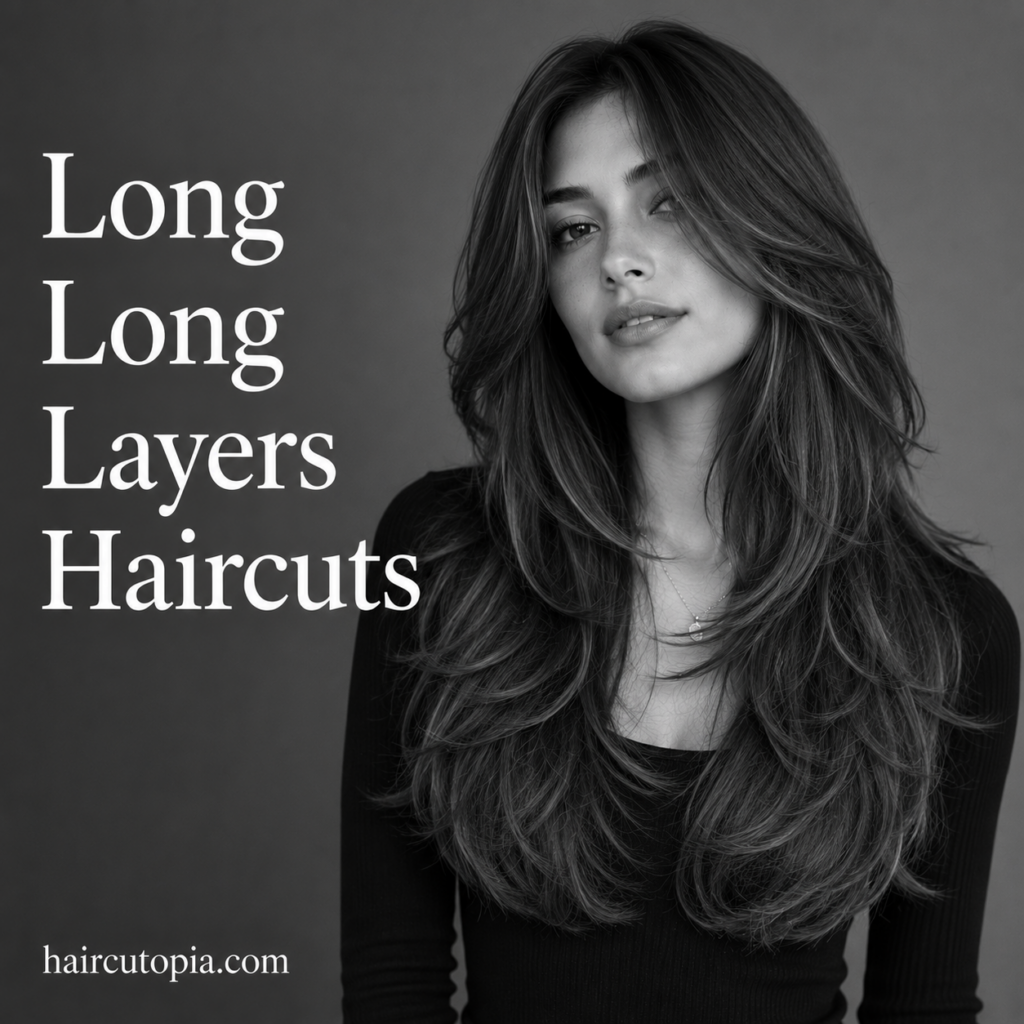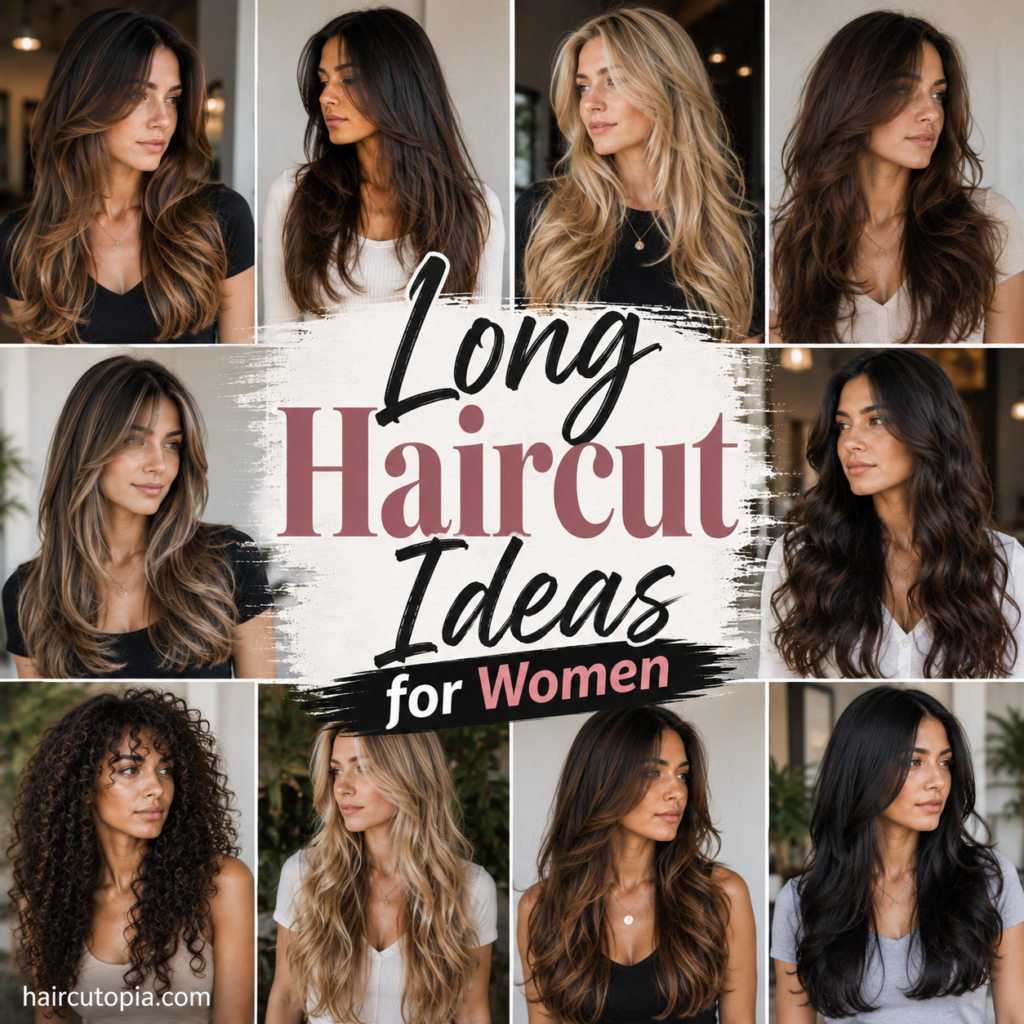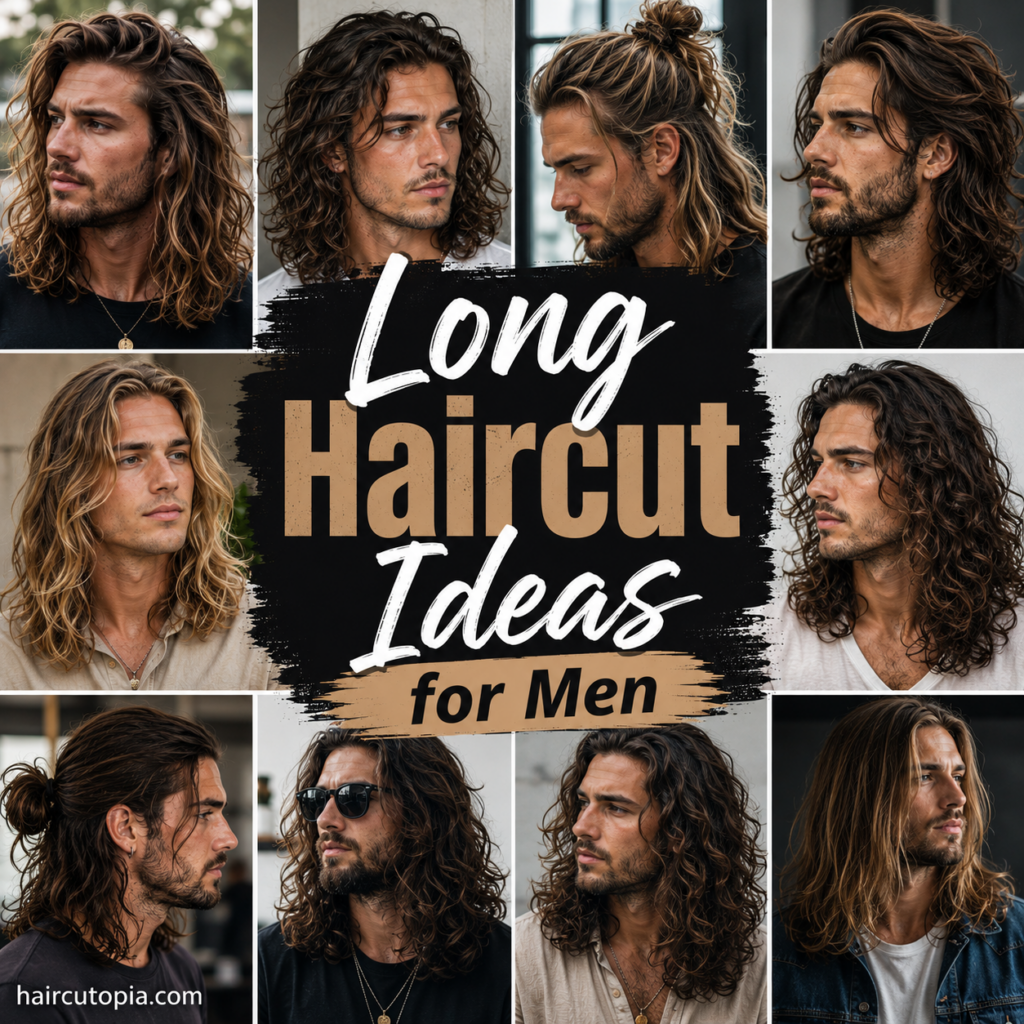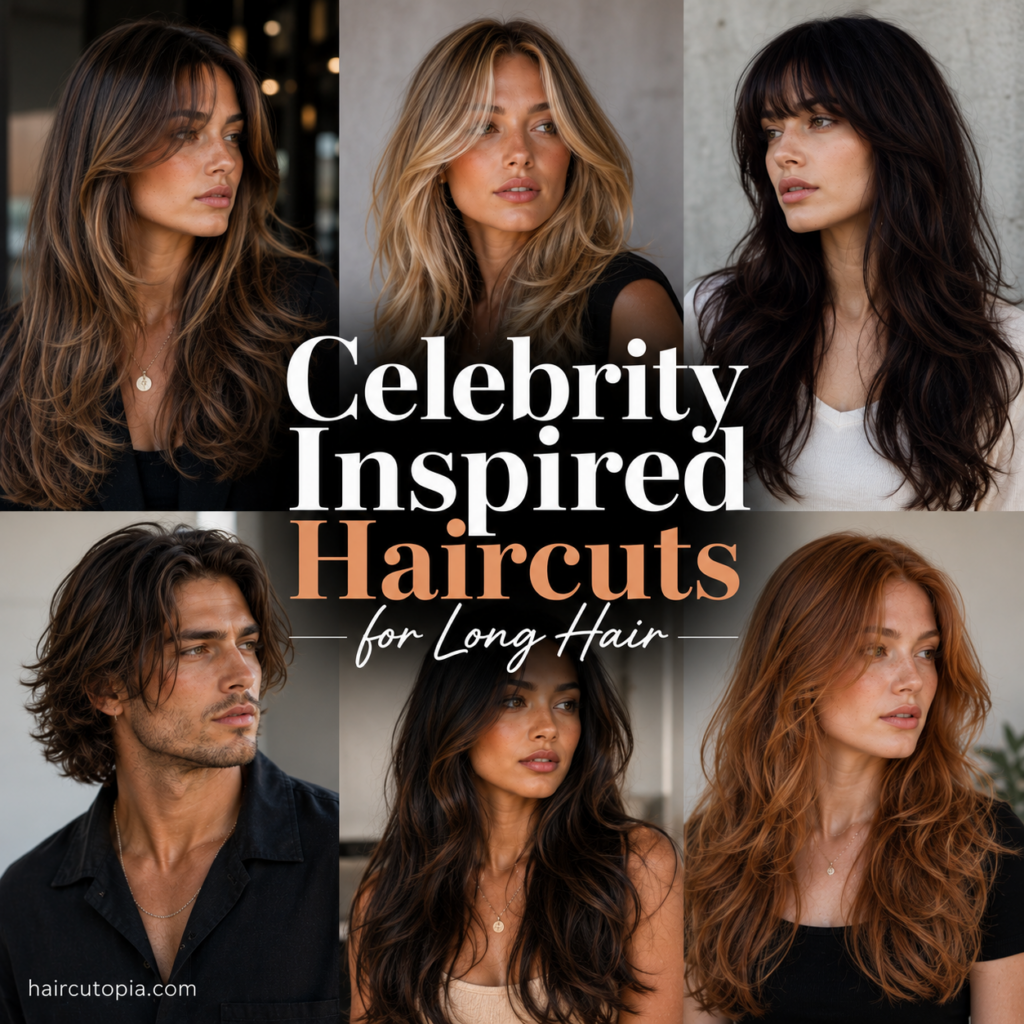
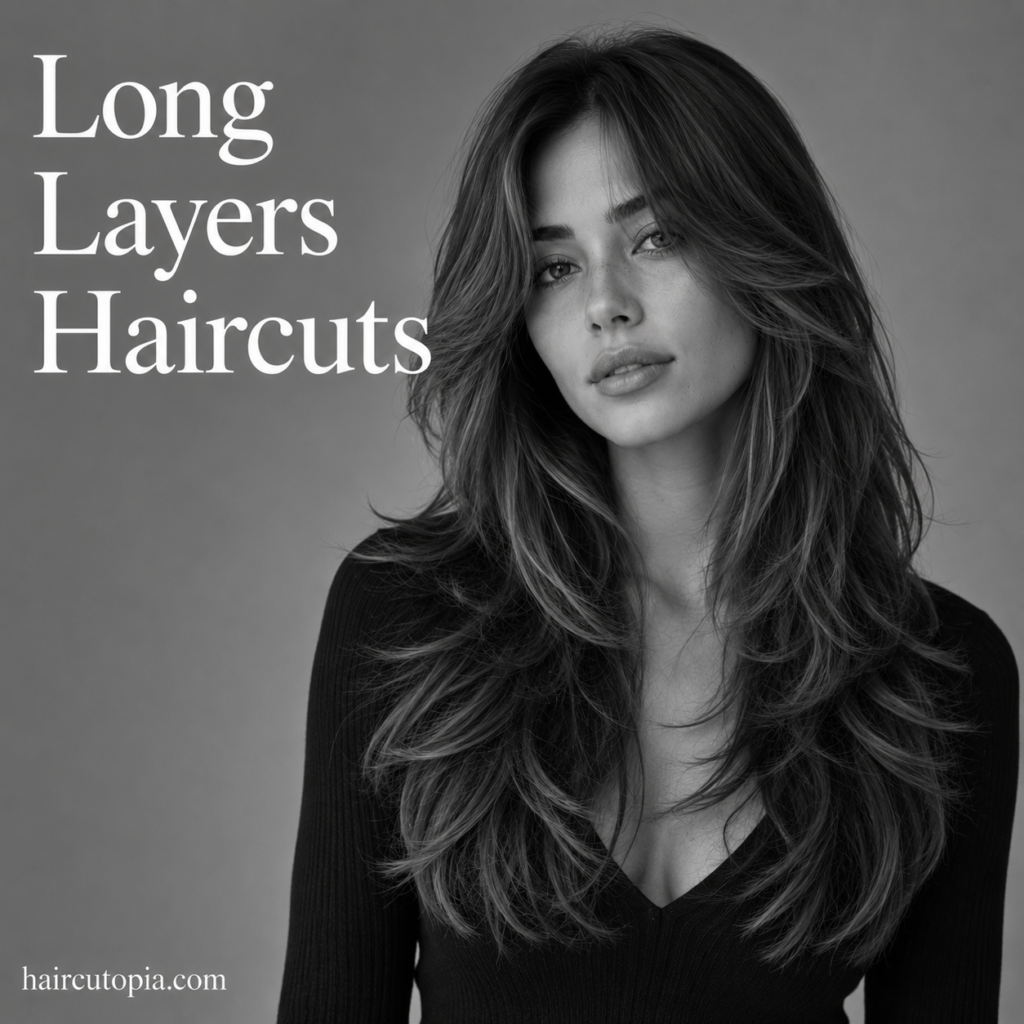
Long layers are one of the easiest ways to give medium or long hair more movement without making it feel dramatically shorter.
Instead of creating a major difference between the shortest and longest sections, long layers keep those transitions relatively gradual. The result is hair that still looks full and long but doesn’t fall as one heavy, solid shape.
That’s especially useful when you like your length.
You might not want short pieces around the crown or a dramatic transformation around your face. You simply want the hair to move better, feel lighter, and have a little more shape.
Long layers can do exactly that.
They work with straight, wavy, curly, thick, and fine hair, although the amount of layering should change depending on your density and texture. They can also be combined with face-framing pieces or bangs when you want more movement around the front.
The important part is deciding where those layers should begin.
Start them higher and you’ll create more visible movement. Keep them lower and the haircut stays fuller and more subtle.
Here’s how long layered haircuts work, the different styles to consider, and what to discuss with your stylist before making the cut.
What Is a Long Layered Haircut?
A long layered haircut is a softer variation of layered haircuts that uses longer sections of graduated length to create movement while preserving the overall length and fullness of the hair.
The shortest layers are generally kept relatively long rather than being cut close to the crown.
That creates a softer transition between sections.
Long layers can:
- Add movement
- Reduce heaviness
- Create shape
- Encourage natural texture
- Add bounce
- Preserve overall length
- Maintain fullness through the ends
- Make long hair easier to style
The layering may begin around the chin, shoulders, collarbone, or even lower depending on the length of the hair.
There isn’t one required starting point.
What matters is that the layers remain long enough to create gradual movement rather than a dramatically stacked or heavily textured shape.
What Do Long Layers Actually Do?
Long hair naturally carries weight.
As it grows, that weight can pull the hair downward and create a flatter silhouette.
This is particularly noticeable with thick hair and natural waves.
Long layers redistribute some of that weight.
Shorter sections are able to move more freely while the longest sections maintain the overall perimeter.
The effect can be subtle.
You may still have hair that looks almost the same length from a distance, but it moves differently when you walk, style it, or run your fingers through it.
That’s the main appeal of long layers.
They change the behavior of the hair without necessarily changing its identity.
Why Choose Long Layers?
Among longer women’s haircuts, long layers offer a good middle ground between one-length hair and more heavily layered styles.
They can provide enough movement to make a noticeable difference without creating extremely short sections.
You might consider long layers if your hair:
- Feels heavy
- Falls flat
- Looks too uniform
- Has natural waves that are being weighed down
- Needs movement through the ends
- Has too much bulk
- Feels difficult to curl or style
- Needs shape without losing much length
They’re also a practical choice if you’re nervous about layers.
Because the shortest pieces remain relatively long, the haircut tends to grow out smoothly.
Popular Types of Long Layered Haircuts
Long layers can be customized much more than the name suggests.
The amount of layering, starting point, and perimeter all influence the finished look.
Classic Long Layers
Classic long layers gradually move from shorter sections into the longest perimeter.
The transitions are soft and connected.
There isn’t usually a dramatic difference between the upper and lower portions of the haircut.
This creates natural movement while keeping plenty of fullness.
Classic long layers work particularly well if you want a timeless haircut that can be styled in several different ways.
Soft Long Layers
Soft long layers are even more subtle.
The differences between sections may be difficult to see when the hair is completely straight.
Movement becomes more obvious when the hair is curled, waved, or blown out.
This is a good option for:
- Fine hair
- First-time layers
- Fuller ends
- Low-maintenance hair
- Easy grow-out
The goal is movement rather than visible separation.
Long Cascading Layers
Cascading layers create multiple flowing levels through the lengths.
The sections gradually become longer as they move down the haircut.
When styled with waves or a blowout, these layers can appear to fall over one another.
Cascading layers are especially effective on long, thick hair because there’s enough length and density to show the progression.
Long Feathered Layers
Feathered layers create a softer, swept appearance through the ends.
The front sections may be styled away from the face, while the longer layers continue the movement through the sides and back.
Modern feathering can be subtle.
It doesn’t have to create the highly structured, flipped finish associated with older feathered hairstyles.
Long Layers With Face Framing
Long layers can be combined with shorter pieces around the face.
The back and sides may remain softly layered while the front begins higher.
This creates more noticeable movement around the cheekbones, jaw, or chin without requiring heavy layering throughout the entire haircut.
Long Layers With Bangs
Bangs can create additional shape around the front while the rest of the hair remains long and softly layered.
Popular options include:
- Curtain bangs
- Wispy bangs
- Side-swept bangs
- Bottleneck bangs
- Long fringe
Longer bangs tend to blend especially naturally into long layers.
Where Should Long Layers Start?
The starting point has a major influence on how noticeable the haircut becomes.
Long Layers Starting at the Chin
Chin-length starting points create stronger movement around the front.
This works particularly well when the layers are connected to face-framing pieces.
On very long hair, the contrast can still be substantial even though the layers are considered long.
Long Layers Starting at the Collarbone
Collarbone layers create a softer transition.
They provide visible movement without introducing much short hair around the upper portion of the head.
This is a versatile option for long hair.
Long Layers Starting at the Shoulders
Shoulder-level layers preserve considerable fullness.
Most of the movement remains through the lower half of the haircut.
This works well if you want a subtle change.
Long Layers Starting Below the Shoulders
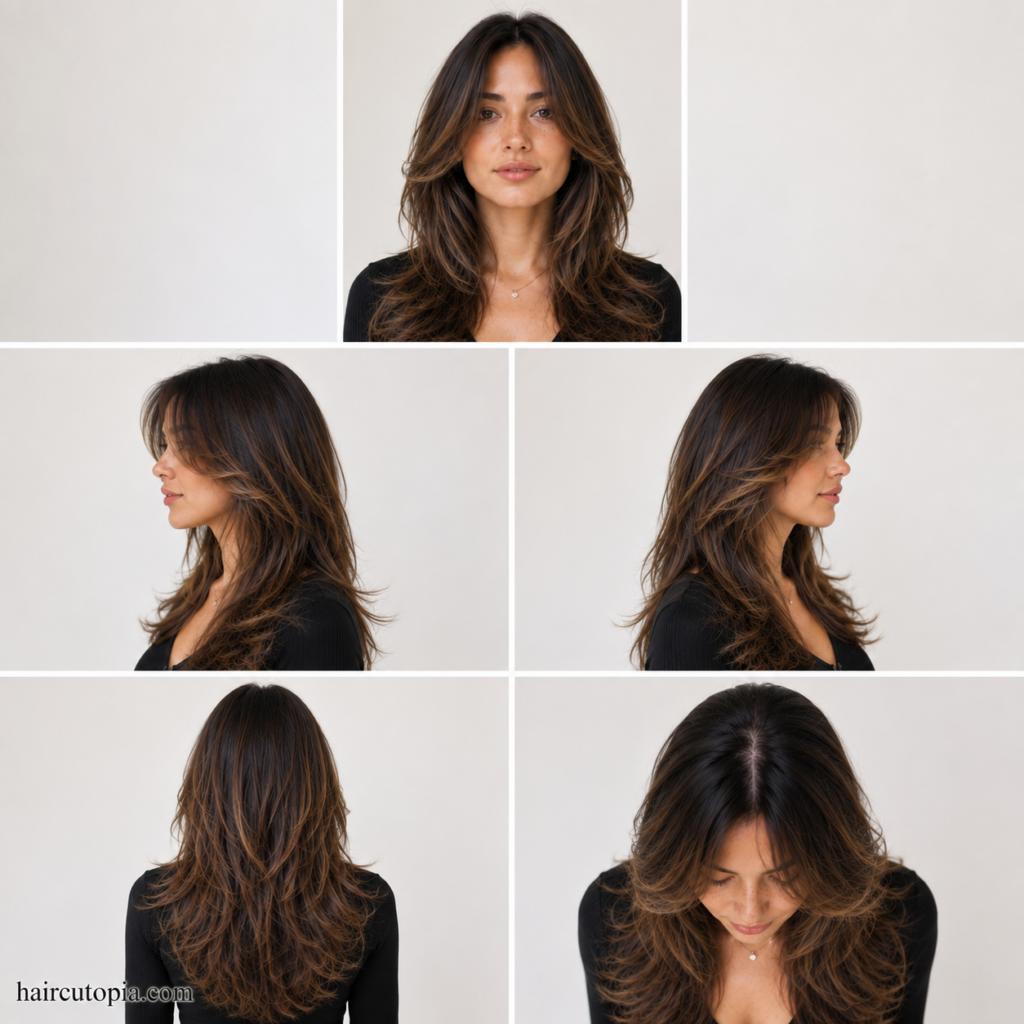
Beginning below the shoulders creates an extremely soft layered effect.
The haircut remains close to one-length through much of the upper portion.
This is particularly useful when preserving density is the priority.
How Many Layers Should You Get?
There’s no ideal number of layers.
Hair isn’t usually divided into a fixed number of steps.
Instead, your stylist creates transitions according to your:
- Hair length
- Density
- Texture
- Desired movement
- Perimeter
- Styling habits
Fine hair may need fewer layers.
Very thick hair may benefit from more internal movement.
The important question isn’t necessarily “How many layers?”
A better question is:
How much difference do you want between the shortest and longest sections?
The greater that difference becomes, the more noticeable the layered effect will be.
Subtle Long Layers vs. Dramatic Long Layers
Even long layers can range from nearly invisible to highly noticeable.
Subtle Long Layers
Subtle layers preserve maximum fullness.
They’re generally:
- Longer
- More blended
- Concentrated toward the ends
- Easy to grow out
- Less dependent on styling
This is a good choice if you want movement without a visibly layered haircut.
Dramatic Long Layers
More dramatic long layers begin higher and create greater separation.
They can produce:
- More bounce
- Greater volume
- Stronger movement
- More visible texture
- A more noticeable change
The layers still remain longer than those found in heavily layered shags or wolf cuts, but the effect is easier to see.
Long Layers for Fine Hair
Fine hair can absolutely have long layers.
The key is preserving density.
If too much hair is removed, the ends can begin looking thin.
Fine hair often benefits from:
- Fewer layers
- Longer starting points
- A stronger perimeter
- Minimal thinning
- Soft face framing
- Lightweight styling
Long layers can create movement without sacrificing the fullness that fine hair needs.
If your hair is both fine and low-density, consider keeping most of the layering toward the bottom.
This allows the haircut to move while maintaining a fuller appearance.
Long Layers for Thick Hair
Thick hair is particularly well suited to long layering.
The additional density allows more weight to be removed without making the perimeter immediately appear thin.
Long layers can make thick hair:
- Feel lighter
- Move more easily
- Hold waves better
- Look less bulky
- Dry more efficiently
- Gain shape through the lengths
The weight removal should still be strategic.
Aggressive thinning isn’t the same thing as good layering.
The goal is to distribute the density rather than simply remove as much hair as possible.
Long Layers for Straight Hair
Straight hair clearly displays the structure of long layers.
When the transitions are soft, the haircut can appear almost one-length until the hair moves.
Styling can make those layers much more noticeable.
Straight long layers can be worn:
- Sleek
- With flipped ends
- In a voluminous blowout
- With loose bends
- With soft waves
- Naturally straight
If your hair is very straight and flat, long layers won’t automatically create dramatic crown volume.
They primarily create movement through the lengths.
For substantial volume higher on the head, shorter layers may be necessary.
Long Layers for Wavy Hair
Long layers can be especially useful for wavy hair.
Long, heavy sections may stretch the wave pattern downward.
Removing some weight allows the waves to move more freely.
Long layering can create:
- Better wave definition
- More movement
- Less bottom heaviness
- A softer silhouette
- More even volume
Wavy hair may become slightly shorter once weight is removed and the pattern springs upward.
Keep that in mind when choosing the shortest layer.
Long Layers for Curly Hair
Long layers can help distribute curls without creating extremely short sections.
This is particularly useful if you want to maintain length.
The layers can prevent all of the volume from accumulating toward the bottom.
Instead, curls can appear at multiple levels throughout the haircut.
Long layers can help create:
- Better shape
- More balanced volume
- Greater curl movement
- Less heaviness
- A softer perimeter
Shrinkage should always be considered.
The layer length should be judged according to where the curl sits when dry, not just where it reaches when stretched.
Long Layers for Coily Hair
Long layers can give coily hair additional shape while preserving substantial length.
Depending on the desired silhouette, layering can distribute volume through the sides and lower sections.
The finished shape may be:
- Rounded
- Cascading
- Elongated
- Full
- Softly graduated
Because shrinkage can vary between different areas of the head, the layers don’t necessarily need to follow identical measurements everywhere.
The dry shape matters more than perfect numerical symmetry.
Long Layers for Medium-Length Hair
You don’t need extremely long hair to have long layers.
Medium hair around the shoulders or collarbone can use longer, blended layers to create movement.
Because there’s less overall length, the layers should generally begin lower if you want to maintain a true long-layered effect.
Starting too high may shift the haircut toward a more heavily layered style.
Medium long layers work particularly well if you want:
- Soft movement
- Fuller ends
- Easy styling
- A subtle layered appearance
- Enough length for ponytails
Long Layers for Long Hair
Long hair gives layers plenty of space to develop.
The shortest pieces can begin around the chin, collarbone, shoulders, or lower while still leaving significant length underneath.
This makes long hair especially versatile.
You can create a subtle layered effect or a much more noticeable cascade without sacrificing the longest sections.
Long layers are particularly useful when very long hair begins to feel heavy.
They can reduce some of that weight while keeping the visual impact of long hair intact.
Long Layers for Very Long Hair
Very long hair can become heavy enough that movement is difficult to see.
Long layers can break up that weight.
Multiple cascading sections create more movement through the mid-lengths and ends.
However, preserving the perimeter becomes increasingly important.
If the difference between the shortest and longest sections becomes too dramatic, very long hair can begin looking thin toward the bottom.
The strongest results usually balance movement with enough density at the ends.
Long Layers for Different Face Shapes
Long layers don’t need to be chosen entirely according to face shape.
Still, the placement of the shortest pieces can influence how the haircut frames the face.
Long Layers for Oval Faces
Oval faces can experiment with most starting points.
Chin, collarbone, and shoulder-level layers can all work.
Your desired amount of movement may be the more important consideration.
Long Layers for Round Faces
Layers beginning around the chin or lower can create vertical movement around the face.
Long face-framing sections can also add shape without creating excessive width near the cheeks.
You can still choose fuller side layers if that’s the look you prefer.
Long Layers for Square Faces
Soft, curved layers can create movement around a defined jawline.
Starting around the chin or collarbone can create a flowing transition into the longer sections.
Long Layers for Heart-Shaped Faces
Layers around the chin and collarbone can add movement through the lower portion of the hairstyle.
Long curtain bangs or face framing can also blend naturally into the overall layers.
Long Layers for Long Faces
Long layers can create side movement, especially when styled with waves or a blowout.
If you want more framing around the upper face, consider pairing them with bangs or shorter front sections.
Long Layers With Face-Framing Pieces
Face framing and long layers often work together, but they aren’t the same thing.
Long layers affect the broader haircut.
Face-framing pieces specifically shorten the sections around the front.
You might keep the back layers beginning around the shoulders while introducing front pieces around the chin.
This creates stronger movement around the face without heavily layering the entire head.
Face framing can also be adjusted independently later.
If you decide you want more drama, the front sections can be shortened without completely redesigning the back.
Long Layers With Curtain Bangs
Curtain bangs can create a smooth transition into long layers.
The fringe is shorter around the center and gradually becomes longer toward the sides.
Those outer pieces can connect with face framing before eventually blending into the long layers.
This creates continuous movement from the front to the back.
Long curtain bangs are especially useful if you want fringe without committing to a short, blunt bang.
They can also be easier to grow out.
Long Layers With Wispy Bangs
Wispy bangs provide light forehead coverage.
They create a softer contrast with long hair than heavier fringe.
Because they’re intentionally airy, they can work particularly well with fine hair and subtle long layers.
Long Layers With Side-Swept Bangs
Side-swept bangs create diagonal movement across the front.
Longer versions can transition almost seamlessly into the surrounding layers.
They work particularly well with a side part.
Long Layers With a Middle Part
A middle part creates balanced movement on both sides.
This works naturally with:
- Curtain bangs
- Chin-length face framing
- Soft waves
- Blowouts
- Long cascading layers
The part doesn’t need to be perfectly centered.
Following your natural growth pattern usually makes everyday styling easier.
Long Layers With a Side Part
A side part changes the way the layers distribute volume.
One side may become fuller while the opposite side falls closer to the head.
This can make a softly layered haircut feel more dynamic without changing the cut itself.
Long Layers vs. Regular Layers
“Layers” is a broad category.
They can be short, long, subtle, dramatic, choppy, or blended.
Long layers specifically keep the shortest sections relatively long.
This generally creates:
- Softer movement
- More fullness
- Less crown volume
- Easier grow-out
- Less dramatic separation
If you want significant texture high on the head, general or shorter layering may be more appropriate.
If maintaining length and fullness is the priority, long layers are usually the better fit.
Long Layers vs. Face-Framing Layers
Long layers and face-framing layers serve different areas of the haircut.
Long layers create movement throughout the lengths.
Face-framing layers concentrate movement around the front.
You can have either one without the other.
For example, long hair may have subtle layers throughout the back but no short pieces around the face.
Another haircut might remain almost one-length in the back while having dramatic face framing.
Combining both creates movement throughout the entire style.
Long Layers vs. Butterfly Cut
Butterfly cuts generally create more contrast than traditional long layers.
They combine noticeably shorter face-framing and upper layers with much longer hair underneath.
Long layers usually transition more gradually.
A butterfly cut tends to emphasize:
- Upper volume
- Dramatic face framing
- Bouncy movement
- Greater separation between lengths
Long layers tend to emphasize:
- Length preservation
- Soft movement
- Fuller ends
- Gradual transitions
There can be overlap, especially with heavily styled long layers.
The distinction is primarily about how short and prominent the upper sections become.
Long Layers vs. Shag Haircuts
Shag haircuts use more noticeable layering, often with shorter crown sections and greater separation through the ends.
Long layers generally maintain a smoother, fuller silhouette.
If you want a soft, flowing effect, long layers may be more suitable.
If you want obvious texture and an intentionally undone shape, a shag moves further in that direction.
Long Layers vs. One-Length Hair
One-length hair emphasizes fullness through the perimeter.
The hair tends to fall as a more solid shape.
Long layers introduce movement while maintaining much of that fullness.
One-length hair may be preferable if:
- Maximum end density is your priority
- Your hair is very fine
- You prefer a strong perimeter
- You want minimal internal movement
Long layers may be preferable if:
- Your hair feels heavy
- You want more movement
- You style with waves
- You have thick hair
- You want a softer silhouette
Some haircuts combine both ideas by maintaining a relatively strong perimeter with subtle long layers above it.
How to Style Long Layers
Long layers become especially visible when the hair has movement.
Voluminous Blowout
A blowout can create bounce throughout the layers.
Use a round brush to shape individual sections and direct the front pieces away from the face if desired.
Loose Waves
Loose waves make the different layer lengths easier to see.
Avoid curling every section identically if you want a softer finish.
Straight and Sleek
Long layers can still look beautiful when straight.
The effect becomes more subtle, emphasizing the smooth transition between lengths.
Flipped Ends
Turning the ends outward can emphasize individual layers.
This creates a soft feathered effect.
Air-Dried Waves
If your hair naturally waves, long layers can allow the pattern to form with less weight.
Apply your preferred styling product and let the haircut create much of the shape.
Natural Curls
Long layers can distribute curls throughout the haircut.
Use products that support your curl pattern without unnecessarily weighing down the shorter sections.
What Products Work Well With Long Layers?
The best products depend on your hair texture and styling routine.
Useful options may include:
- Volumizing mousse
- Root-lifting spray
- Heat protectant
- Lightweight styling cream
- Texture spray
- Curl cream
- Anti-frizz product
- Flexible-hold hairspray
Fine hair may need only a small amount of lightweight product.
Thick or textured hair may need additional moisture and control.
Long layers should move, so avoid making the hair unnecessarily stiff.
Are Long Layers Low Maintenance?
Long layers are generally one of the lower-maintenance forms of layering.
Because the transitions are gradual, a little growth usually doesn’t destroy the shape.
The layers simply become longer and softer.
They’re also versatile enough to work with several styling methods.
You can wear them:
- Straight
- Wavy
- Curly
- Air-dried
- Blown out
- Pulled back
Daily maintenance depends more on the finish you want than on the haircut itself.
A polished blowout requires work.
Natural long layers may require very little.
How Often Should Long Layers Be Trimmed?
Many long layered haircuts can go approximately 8–12 weeks between trims.
Some can comfortably go longer, particularly when you’re growing your hair.
The ideal schedule depends on:
- Hair condition
- Overall length
- Layer starting point
- Hair growth rate
- Face framing
- Bangs
- Desired shape
If your ends remain healthy and the haircut still moves well, you may not need frequent reshaping.
Bangs or shorter front pieces may need attention sooner than the long layers themselves.
How to Ask Your Hairstylist for Long Layers
The phrase “long layers” still leaves room for interpretation.
Reference photos can help, but explain what you’re trying to achieve.
Discuss:
- How much overall length you want to keep.
- Where you want the shortest layer to begin.
- How much movement you want.
- How full you want the ends to remain.
- Whether you want face-framing pieces.
- Whether you want bangs.
- How you usually style your hair.
- Whether you regularly wear ponytails or updos.
If preserving fullness matters, say so clearly.
If your hair feels too heavy, show your stylist exactly where you notice the bulk.
For wavy, curly, or coily hair, discuss where the layers will sit once the hair is completely dry.
The more specific you are, the easier it is to create the right balance.
Going From One-Length Hair to Long Layers
Long layers are a relatively gentle way to move away from one-length hair.
You can preserve the perimeter while introducing movement above it.
The haircut may immediately feel lighter even if very little is removed from the longest sections.
You may notice:
- More movement
- Better wave formation
- Easier styling
- Less bottom heaviness
- Softer ends
- More shape
If you’re nervous, begin with subtle layers toward the bottom.
You can always add more movement at a later appointment.
Growing Out Long Layers
Long layers are generally easy to grow out.
Because the differences between lengths aren’t extreme, the haircut naturally becomes more uniform over time.
If you want to return to one-length hair, allow the shorter sections to grow while gradually trimming the perimeter.
Eventually, the difference disappears.
If you want to keep long layers but simply grow the entire haircut longer, trims can focus on maintaining healthy ends without repeatedly shortening the upper layers.
Who Should Consider Long Layers?
Long layers may be a good choice if you:
- Want to keep your length
- Want more movement
- Prefer soft layering
- Want fuller ends
- Have hair that feels heavy
- Want waves or curls to move more freely
- Prefer easy grow-out
- Don’t want very short crown layers
- Want a versatile haircut
- Like blowouts or loose waves
They’re particularly useful when you want your hair to feel different without looking dramatically shorter.
Common Long Layer Haircut Mistakes to Avoid
Long layers are relatively forgiving, but a few decisions can make a major difference.
Starting the Layers Too High
If the shortest pieces begin much higher than expected, the haircut may no longer feel like long layers.
Be specific about your preferred starting point.
Removing Too Much Density
Fine hair can lose fullness quickly.
Even thick hair can develop sparse ends if too much weight is removed.
Confusing Thinning With Layering
Layers create different lengths.
Thinning removes density.
They aren’t the same technique and don’t produce identical results.
Ignoring Natural Texture
Waves and curls may become shorter and more defined once weight is removed.
Plan for the dry shape.
Expecting Automatic Volume
Long layers create movement, but they don’t necessarily create significant root or crown volume.
That often requires shorter layers or styling.
Choosing a Heavily Styled Reference Photo
Large blowouts can make long layers look much more dramatic.
Try to find examples of the haircut both styled and in a more natural state.
Forgetting About the Perimeter
Long layers should still leave enough density through the bottom to support the overall shape.
Movement shouldn’t come at the expense of healthy-looking ends.
Frequently Asked Questions About Long Layers Haircuts
What are long layers?
Long layers are sections cut at gradually different lengths while keeping the shortest pieces relatively long. They create movement while preserving overall length and fullness.
Are long layers good for long hair?
Yes.
They’re particularly useful for adding movement and reducing heaviness without significantly shortening the overall haircut.
Can medium-length hair have long layers?
Yes.
Shoulder and collarbone-length hair can use longer, blended layers for subtle movement.
Are long layers good for fine hair?
They can be.
Fine hair usually benefits from fewer, softer layers and a fuller perimeter.
Are long layers good for thick hair?
Yes.
Long layers can remove excess weight and create movement while maintaining substantial density.
Do long layers work on straight hair?
Yes.
Straight hair shows the gradual layered structure clearly and can be worn sleek, waved, flipped, or blown out.
Are long layers good for wavy hair?
Yes.
Removing weight can allow natural waves to form more freely.
Can curly hair have long layers?
Absolutely.
Long layers can distribute curls throughout the haircut while preserving overall length.
Do long layers make hair look thinner?
Not necessarily.
Soft long layers can preserve considerable fullness. Excessive layering or thinning, however, can reduce density through the ends.
Do long layers add volume?
They can create movement and some lift by reducing weight, but they generally don’t create as much crown volume as shorter layers.
What is the difference between long layers and face-framing layers?
Long layers create movement throughout the broader haircut. Face-framing layers specifically shorten sections around the front of the face.
What is the difference between long layers and a butterfly cut?
Butterfly cuts usually have shorter, more prominent upper and face-framing layers. Long layers create softer, more gradual transitions.
Where should long layers start?
They can begin around the chin, collarbone, shoulders, or lower. The best starting point depends on your overall length and how much movement you want.
How often should long layers be trimmed?
Around 8–12 weeks works for many long layered haircuts, although longer intervals may be possible depending on hair condition and your goals.
Are long layers easy to grow out?
Yes.
Because the transitions are relatively gradual, long layers tend to blend naturally as they grow.
Final Thoughts on Long Layers Haircuts
Long layers are proof that a haircut doesn’t need to be dramatic to make a real difference.
By changing where some of the weight sits, layers can make long hair move more freely, give waves and curls more room to form, and keep thick lengths from feeling quite so heavy.
At the same time, you can preserve what you probably like most about your hair: the length.
The key is choosing where the movement should begin.
Start around the chin or collarbone for a more noticeable layered effect. Keep the layers closer to the shoulders and ends for something softer. Add face framing when you want more shape around the front, or leave those sections longer when fullness and easy ponytails matter more.
Hair density should guide the amount of layering too.
Fine hair usually needs more restraint. Thick hair can often support additional weight removal. Waves, curls, and coils need enough length to account for how much they spring upward when dry.
Long layers shouldn’t make your hair feel like an entirely different haircut unless that’s what you want.
At their best, they simply make the hair you already love feel lighter, softer, and much easier to move.