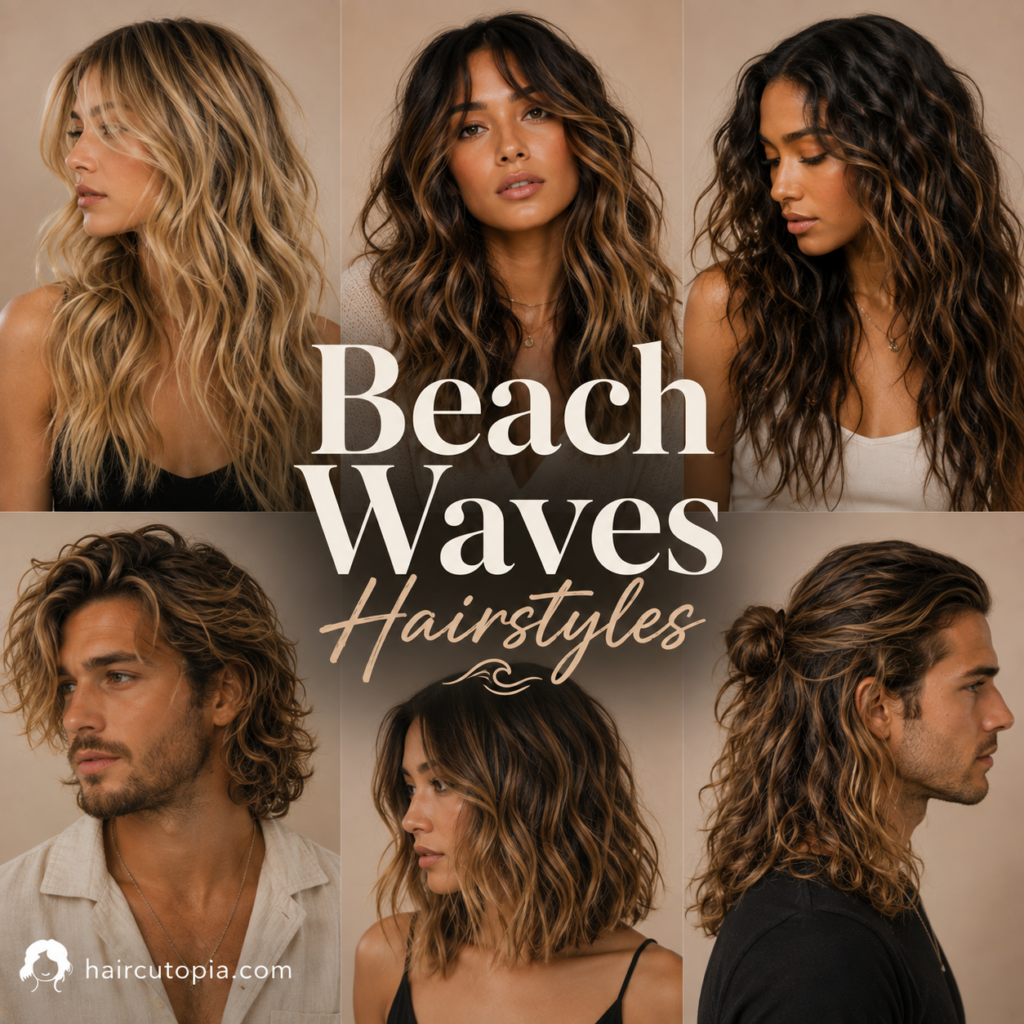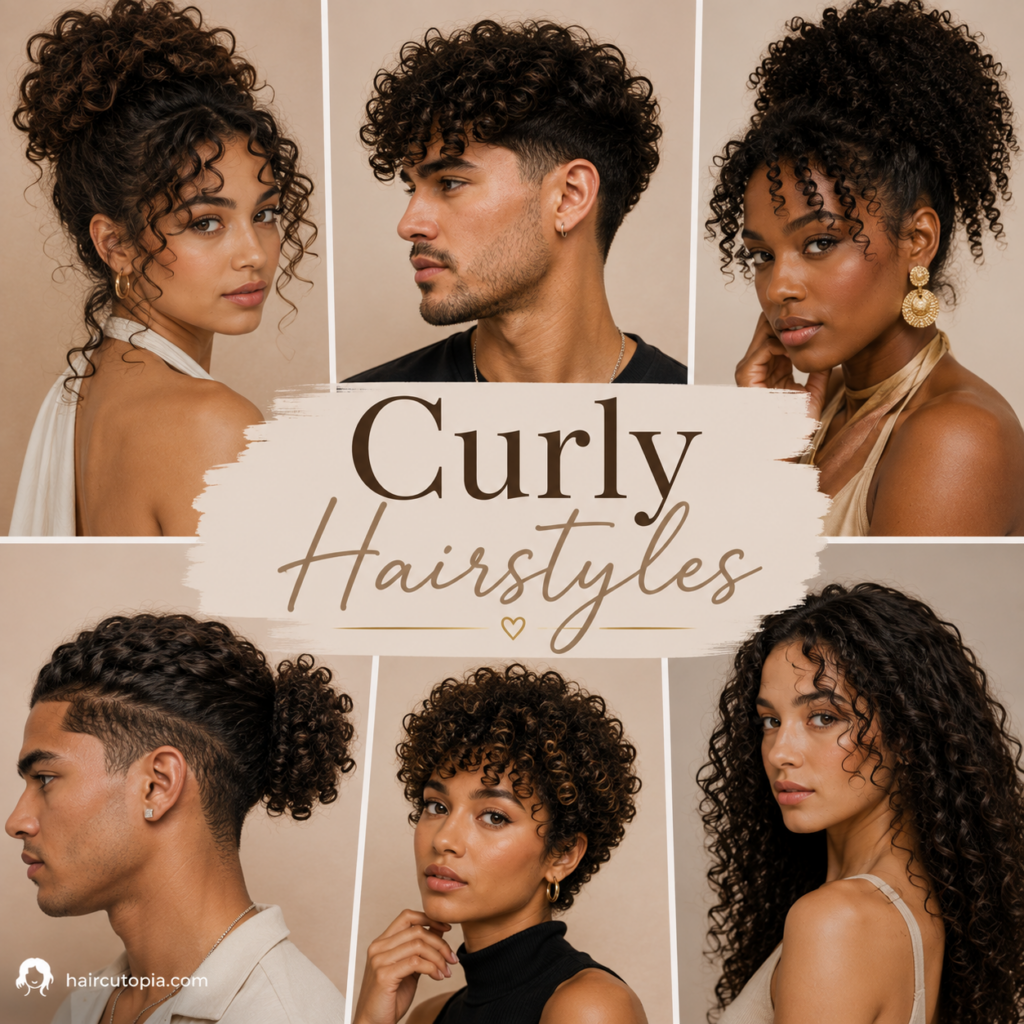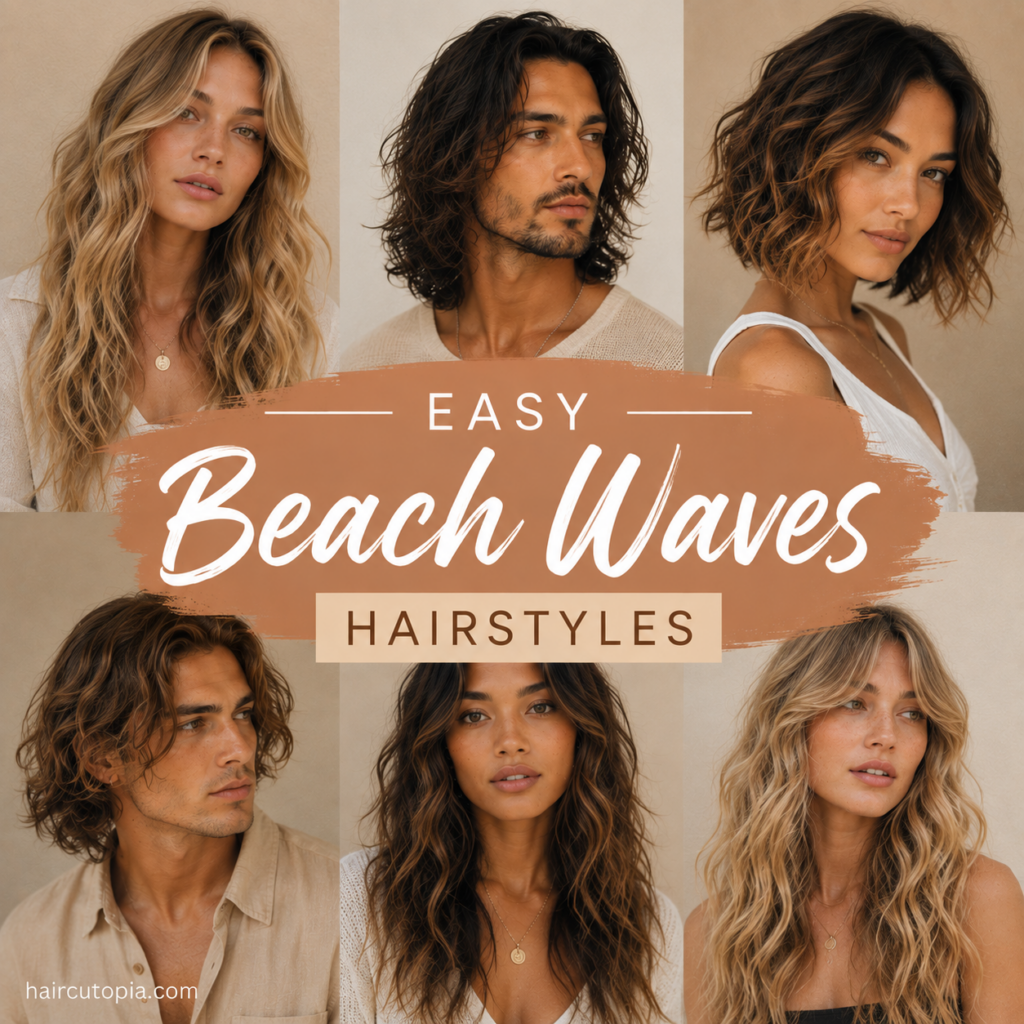
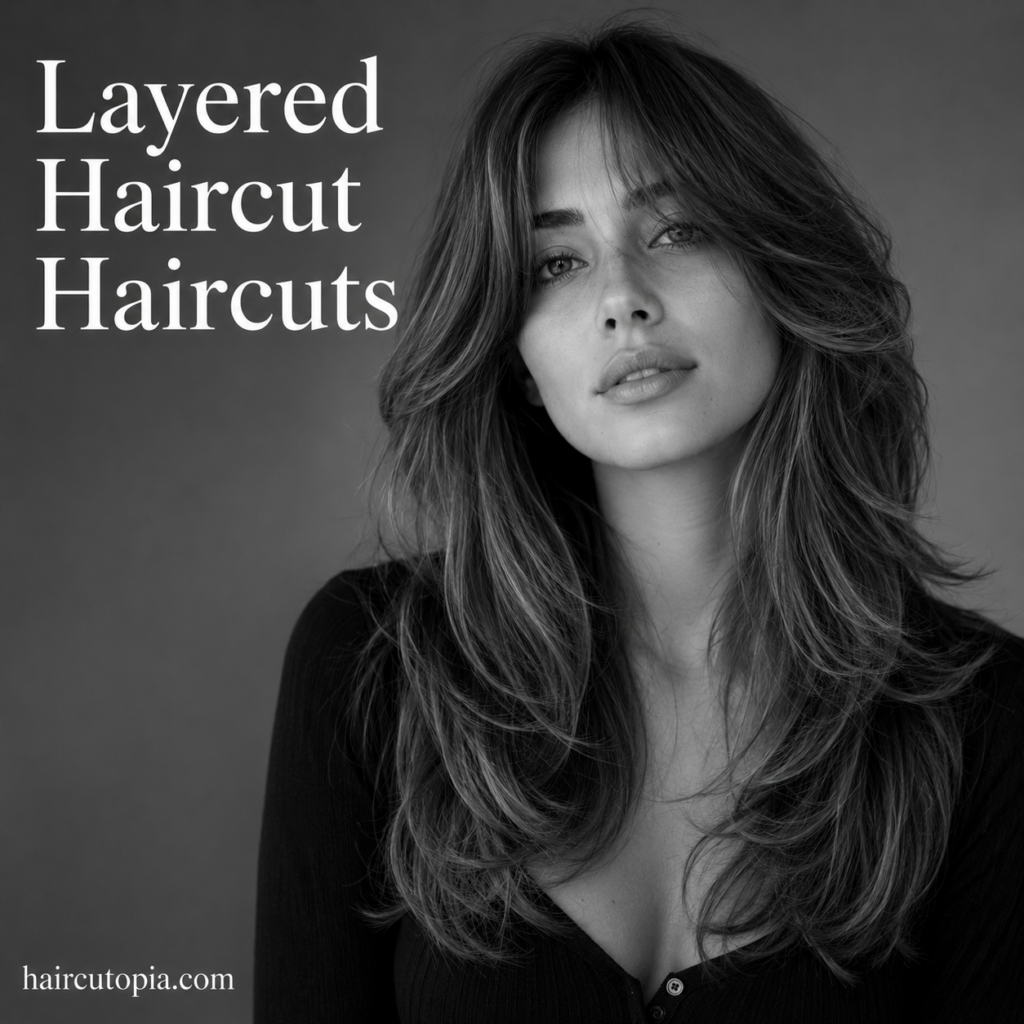
Layers can completely change the way a haircut moves without necessarily changing how long it looks.
That’s what makes them so versatile.
A few carefully placed layers can give heavy hair more movement, help fine hair feel lighter and bouncier, bring out natural waves and curls, or create shape around the face. More dramatic layering can transform the entire silhouette.
And there’s no single way to wear them.
Layers can be long and almost invisible. They can be short and full of volume. They can concentrate around the face, begin at the crown, or flow gradually through the entire haircut.
The trick is choosing layers that work with your hair rather than simply adding as many as possible.
Hair density, texture, overall length, and even how you usually style your hair all affect where those layers should begin and how much weight should be removed.
Whether you’re considering subtle movement or a major layered transformation, understanding the basics can make it much easier to decide what you actually want at your next haircut.
What Is a Layered Haircut?
A layered haircut uses different hair lengths within the same style to create shape, movement, volume, or reduce weight.
Instead of every strand falling toward one uniform perimeter, some sections are cut shorter than others.
Those shorter sections interact with the longer hair underneath.
Depending on the technique, layering can:
- Create movement
- Remove excess weight
- Add volume
- Encourage natural texture
- Frame the face
- Soften the perimeter
- Change the overall silhouette
- Give curls and waves more room to form
Layers can be extremely subtle or intentionally obvious.
A lightly layered haircut may still appear relatively one-length at first glance.
A heavily layered haircut can have dramatic differences between the shortest and longest sections.
Neither approach is automatically better.
The right one depends on what you want your hair to do.
How Do Hair Layers Work?
Hair has weight.
The longer a section becomes, the more that weight can pull it downward.
Cutting some sections shorter reduces that weight and allows those pieces to move more freely.
That’s why layering can create lift.
It can also change how hair stacks and falls over itself.
Shorter layers may sit above longer ones, creating movement throughout the haircut rather than concentrating all of the volume at the bottom.
The effect varies depending on hair type.
Straight hair tends to show the actual cutting lines more clearly.
Waves and curls can make layers appear more blended because the natural texture creates additional movement between lengths.
Why Get a Layered Haircut?
Layering is one of the most versatile ways to customize women’s haircuts because it can change movement, volume, and shape without necessarily changing the overall length.
Sometimes the goal is purely visual. Other times, layers make the hair easier to manage.
You might consider layering if your hair:
- Feels heavy
- Looks flat
- Lacks movement
- Has too much bulk through the bottom
- Needs more shape
- Has waves or curls that are being weighed down
- Feels overly triangular
- Needs more framing around the face
Layers are also useful when you want a noticeable change without dramatically shortening your hair.
Someone with waist-length hair, for example, may be able to keep the longest sections while introducing shorter layers throughout.
The overall length remains, but the haircut looks and behaves differently.
Popular Types of Layered Haircuts
Layering isn’t one specific haircut.
It’s a technique that can create many different styles.
Soft Layered Haircut
Soft layers blend gradually into one another.
There isn’t a dramatic jump between the shortest and longest pieces.
The goal is movement without making the layering overly obvious.
Soft layers work particularly well if you:
- Want a subtle change
- Prefer a polished finish
- Want easy grow-out
- Have fine hair
- Don’t want to sacrifice much density
They can be used at almost any hair length.
Long Layered Haircut
Long layers keep the shortest sections relatively long, creating movement through the mid-lengths and ends without dramatically changing the upper portion of the haircut.
This creates movement through the mid-lengths and ends without dramatically changing the upper portion of the haircut.
Long layers are especially popular for medium and long hair because they preserve fullness while breaking up a heavy silhouette.
They can be subtle or more pronounced depending on where the first layer begins.
Short Layered Haircut
Short hair can also benefit from layers.
In a shorter haircut, layering may be used to create:
- Crown volume
- Texture
- Shape
- Separation
- A softer perimeter
Because there’s less overall length, small changes in layer placement can have a noticeable impact.
Choppy Layered Haircut
Choppy layers are intentionally more visible.
Instead of blending every length seamlessly, the haircut emphasizes separation and texture.
This can create a piecey, relaxed finish.
Choppy layering is commonly used in:
- Short cuts
- Medium-length styles
- Shags
- Textured bobs
- Edgier layered looks
The amount of separation can range from subtle to dramatic.
Feathered Layers
Feathered layers are designed to create a soft, flowing effect.
They’re often styled away from the face, giving the ends a light, sweeping appearance.
Feathering can be especially noticeable around the front.
Modern versions tend to be softer than the highly styled feathered haircuts associated with previous decades.
Invisible Layers
Invisible layers are designed to create movement without making the individual layers easy to see.
Much of the shaping happens within the interior of the haircut.
From the outside, the perimeter can remain relatively full.
This approach can be useful if you want less bulk without a heavily layered appearance.
Face-Framing Layers
Face-framing layers concentrate shorter pieces around the front of the haircut.
They may begin around the:
- Cheekbones
- Jaw
- Chin
- Collarbone
These sections can soften the transition between the face and the overall length.
Face framing can be added to an otherwise minimally layered haircut or incorporated into a fully layered style.
Short Layered Haircuts
Short hair and layers often go hand in hand.
Without layering, some short cuts can become heavy or overly rounded.
Layers can introduce shape and texture.
Depending on the haircut, they may create:
- Volume at the crown
- A tapered silhouette
- Piecey ends
- Movement around the ears
- Softer bangs
- More definition
The shorter the haircut, the more important precise layer placement becomes.
There’s less length available to hide an awkward transition.
Short layers also grow out relatively quickly in proportion to the overall haircut, so maintaining the shape may require more frequent trims.
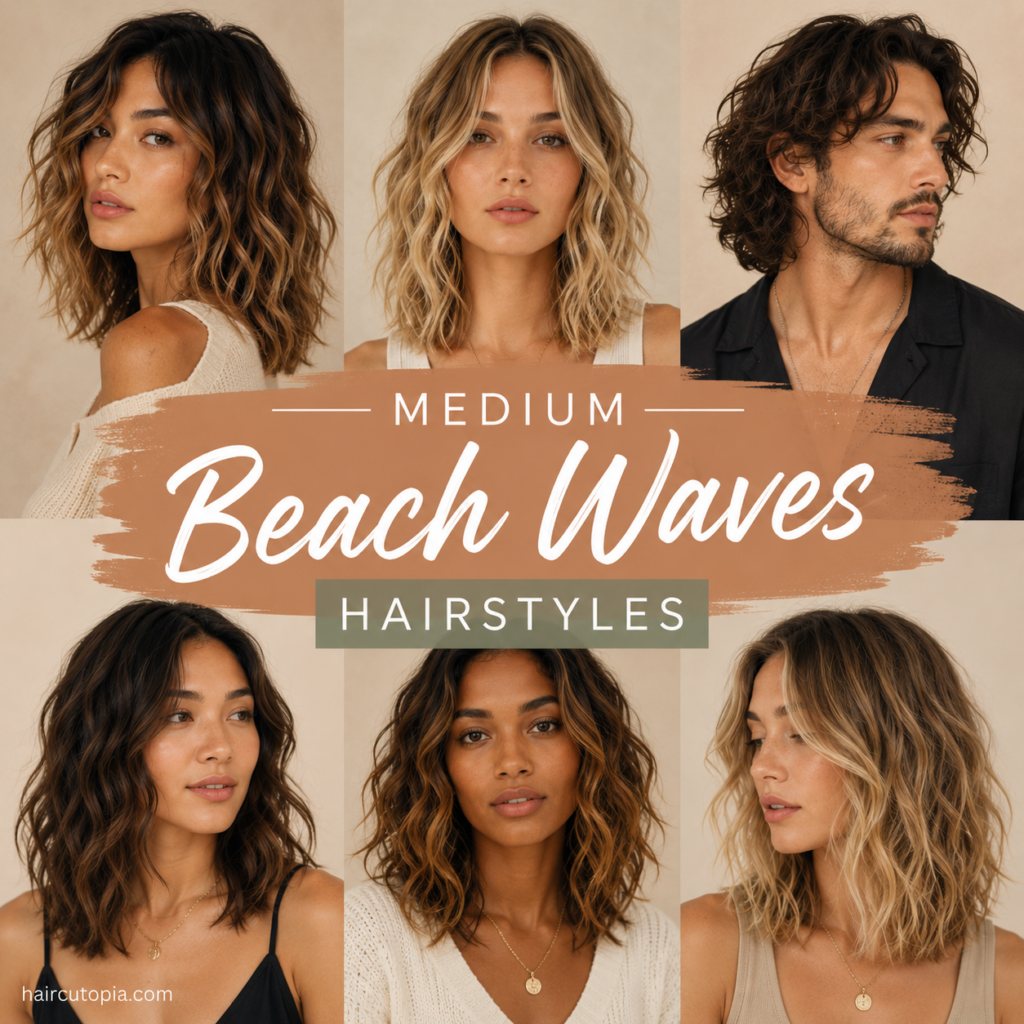
Medium Layered Haircuts
Medium hair offers a lot of flexibility.
Lengths around the shoulders and collarbone are long enough to support multiple layers but short enough that the hair doesn’t carry excessive weight.
Medium layered haircuts can include:
- Long blended layers
- Face framing
- Curtain bangs
- Choppy layers
- Feathered ends
- Internal layering
- Wavy texture
This length can be especially useful if you want noticeable movement while still being able to tie most of the hair back.
If ponytails matter to you, tell your stylist.
The shortest layers should be planned accordingly.
Long Layered Haircuts
Long hair provides the most space for gradual layering.
You can maintain substantial overall length while introducing movement through the upper and middle sections.
Long layers can prevent very long hair from looking like one solid curtain.
They may also make the hair feel lighter.
The main challenge is balance.
If too many layers are added, especially to fine or lower-density hair, the bottom can begin looking thin.
The goal is to create movement without unnecessarily sacrificing the fullness that makes long hair look healthy.
How Short Should Your Layers Be?
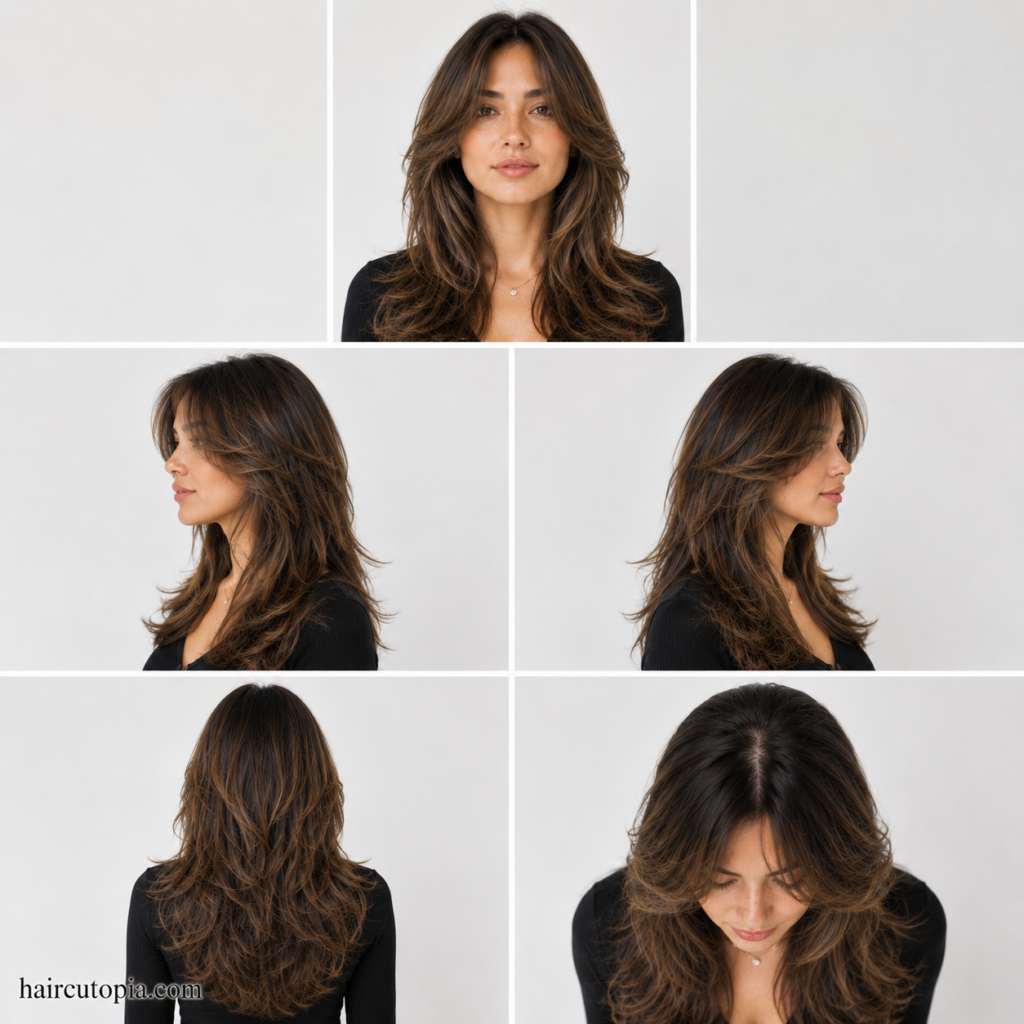
There’s no universal starting point.
The shortest layer has a major influence on the finished shape.
Layers Starting Around the Cheekbones
These create strong movement around the face.
They’re especially noticeable when styled outward or incorporated into face framing.
Layers Starting Around the Jaw
Jaw-length layers still create significant movement but preserve more length around the front.
They can blend naturally into medium and long hair.
Layers Starting Around the Chin
Chin-length layers create a softer transition.
They’re a versatile choice if you want noticeable framing without very short front pieces.
Layers Starting Around the Shoulders
Longer layers create subtle movement.
They’re useful if preserving fullness is a priority or if you’re nervous about heavily layered hair.
Crown Layers
Layers beginning around the crown create additional volume through the upper portion of the haircut.
These can be very effective, but they also produce a more obviously layered shape.
Short crown layers should be chosen carefully because they take time to grow out.
Subtle Layers vs. Dramatic Layers
The difference isn’t simply how many layers you have.
It’s also about how much distance exists between the shortest and longest sections.
Subtle layers typically have:
- Longer shortest pieces
- Softer transitions
- More perimeter fullness
- Less crown volume
- Easier grow-out
Dramatic layers may have:
- Short crown sections
- Strong face framing
- Greater separation
- More texture
- Lighter ends
- More visible movement
If you’re unsure, starting softer is usually the more flexible choice.
Additional layering can always be added.
Putting length back isn’t quite as easy.
Layered Haircuts for Fine Hair
Fine hair can benefit from layers, but more layering doesn’t automatically create more volume.
In fact, removing too much hair can have the opposite effect.
If the ends lose too much density, they may begin looking thin.
Fine hair often works well with:
- Soft layers
- Longer layers
- Limited face framing
- A fuller perimeter
- Minimal thinning
- Subtle crown movement
The goal is usually to create lift without sacrificing density.
Shorter overall haircuts may also naturally create more volume because there’s less weight pulling the hair downward.
If your hair is both fine and low-density, tell your stylist that preserving fullness is a priority.
Layered Haircuts for Thick Hair
Thick hair gives a stylist plenty of density to shape.
Layering can remove bulk, distribute volume, and make the hair feel lighter.
Thick hair may support:
- Multiple layers
- Shorter crown layers
- Strong face framing
- Internal weight removal
- Choppy texture
- Long cascading layers
But thick hair can also become overly voluminous if the wrong sections are shortened.
Removing weight without considering how the hair expands can create unwanted bulk.
The goal should be strategic shaping rather than simply thinning the hair everywhere.
Layered Haircuts for Straight Hair
Straight hair tends to reveal the structure of a layered haircut clearly.
Every change in length is easier to see because there are no waves or curls disguising the transitions.
Soft, well-blended layers can create subtle movement.
Choppy layers produce a more obvious, piecey finish.
Straight layered hair can be styled:
- Sleek
- Voluminous
- Flipped
- Feathered
- Tousled
- With loose bends
If your hair naturally lies flat, layers around the crown can help create lift, although styling may still be necessary for significant volume.
Layered Haircuts for Wavy Hair
Layers can make a major difference in wavy hair.
Long, heavy sections can stretch waves downward.
Removing some of that weight may allow the natural pattern to become more noticeable.
Layering can help create:
- More wave definition
- Crown movement
- Better volume distribution
- Less heaviness through the ends
However, wavy hair may become shorter than expected once weight is removed.
Always consider how the hair behaves when dry.
A section that looks relatively long when wet or stretched may spring upward once the wave returns.
Layered Haircuts for Curly Hair
Curly hair can benefit tremendously from thoughtful layering.
Without enough shaping, curls may accumulate toward the bottom and create a triangular silhouette.
Layers can distribute curls throughout the haircut.
This may create:
- More crown volume
- Better curl definition
- A rounder shape
- More movement
- Reduced bottom heaviness
Shrinkage is one of the biggest considerations.
The shortest layers should be chosen according to where the curls actually sit when dry.
Cutting solely according to stretched length can produce much shorter layers than expected.
Layered Haircuts for Coily Hair
Coily hair can use layering to create a wide range of shapes.
Layers may help build:
- Rounded silhouettes
- Crown volume
- Tapered shapes
- Face framing
- Cascading lengths
Because coily textures can have substantial shrinkage, layer placement should account for the finished dry shape.
Density also matters.
Some sections may naturally appear fuller than others, so the haircut should be shaped around the hair’s actual distribution rather than applying identical layering everywhere.
Layered Haircuts for Different Face Shapes
Layers can change how volume and movement sit around the face.
That makes them easy to customize.
Face shape can be a useful consideration, but it shouldn’t become a restrictive rule.
Layered Haircuts for Oval Faces
Oval faces can experiment with most layer placements.
Short face framing, long layers, curtain bangs, and crown volume can all work.
Hair texture and personal preference may be more important considerations.
Layered Haircuts for Round Faces
Longer face-framing layers can create vertical movement.
Layers beginning around the jaw or chin are popular choices.
Crown volume can also change the overall silhouette.
You can equally choose fuller side layers if you prefer emphasizing softness and volume.
Layered Haircuts for Square Faces
Curved or feathered layers can create movement around a defined jawline.
Face-framing pieces beginning around the cheekbones or jaw can add softness.
More structured layers can also complement strong facial angles.
Layered Haircuts for Heart-Shaped Faces
Layers around the cheekbones, jaw, and chin can distribute movement through the lower portion of the hairstyle.
Curtain bangs can transition naturally into these sections.
Layered Haircuts for Long Faces
Layers that create side volume can add width to the overall silhouette.
Bangs can also introduce horizontal movement across the forehead.
If you’re trying not to emphasize length, avoid concentrating all the volume exclusively at the top.
Layered Haircuts With Bangs
Bangs can connect naturally with the rest of a layered haircut, allowing the fringe to transition gradually into longer pieces around the sides.
Curtain Bangs With Layers
Curtain bangs work especially well with layered hair.
The shortest pieces usually sit closer to the center, while longer sections blend toward the sides.
From there, they can connect directly with face-framing layers.
Wispy Bangs With Layers
Wispy bangs provide lighter forehead coverage.
They complement soft and subtle layering particularly well.
Side-Swept Bangs With Layers
Side-swept fringe creates diagonal movement through the front.
Longer versions can blend seamlessly into the surrounding layers.
Choppy Bangs With Layers
Choppy bangs pair naturally with more textured haircuts.
They create visible separation and work well when the rest of the layers are intentionally piecey.
Layered Haircuts With a Middle Part
A middle part can create balanced movement on both sides of the face.
It works particularly well with:
- Curtain bangs
- Symmetrical face framing
- Long layers
- Butterfly-style layering
The front sections can sweep outward from the center or fall naturally around the cheeks and jaw.
Layered Haircuts With a Side Part
A side part changes how the layers distribute their volume.
One side may appear fuller, while the other sits closer to the head.
This can add natural asymmetry.
It’s also a practical option if your hair strongly prefers one direction.
You don’t need to force a center part simply because it’s common in layered haircut photos.
Layered Haircuts With Face-Framing Pieces
Face framing can completely change the appearance of a layered haircut from the front.
The shortest pieces determine where the eye notices movement.
Cheekbone layers emphasize the upper face.
Jaw-length layers create movement lower down.
Chin-length sections provide a softer transition into long hair.
Face framing can also be styled differently from the rest of the haircut.
Even if you leave most of your hair straight, flipping the front layers away from your face can make the layering much more noticeable.
Layered Haircuts vs. One-Length Haircuts
A one-length haircut keeps more of the hair at a similar perimeter.
This tends to create:
- More density through the ends
- A stronger baseline
- A heavier silhouette
- Less internal movement
A layered haircut distributes the length.
This tends to create:
- More movement
- Less bulk
- Greater texture
- More shape
- Additional styling possibilities
Neither is inherently better.
Fine hair may sometimes benefit from the fullness of a stronger perimeter.
Very thick hair may feel more manageable with layers.
The best choice depends on what your hair needs.
Layered Haircuts vs. Butterfly Cuts
Butterfly cuts are a specific type of layered haircut.
They combine shorter face-framing and upper layers with substantially longer sections underneath.
This creates the flowing, cascading shape associated with the style.
A general layered haircut doesn’t need that contrast.
Layers may be longer, subtler, or distributed differently.
So while every butterfly cut uses layers, not every layered haircut is a butterfly cut.
Layered Haircuts vs. Shag Haircuts
Shag haircuts take layering in a more textured direction.
They often include:
- Shorter crown layers
- More visible separation
- Lighter ends
- Stronger texture
- An intentionally undone finish
General layered haircuts can be considerably more blended.
If you want movement while maintaining a polished silhouette, softer layering may be more suitable.
If you want the layers themselves to become a defining feature, a shag offers more texture.
Layered Haircuts vs. Wolf Cuts
Wolf cuts generally use a stronger difference between the upper and lower sections.
Shorter crown layers create volume on top, while longer, lighter sections remain underneath.
Traditional layering doesn’t require that level of contrast.
It can flow gradually throughout the entire haircut.
Wolf cuts are therefore one of the more dramatic expressions of layering.
Layered Haircuts vs. Blunt Cuts
A blunt cut emphasizes the perimeter.
The ends tend to appear fuller and more uniform.
Layered cuts emphasize movement within the hair.
This creates very different visual effects.
A blunt haircut may be ideal if your priority is maximum fullness through the ends.
Layers may be better if your priority is movement, texture, or weight removal.
You can also combine the two ideas.
Some haircuts maintain a relatively blunt perimeter while using subtle internal layers for movement.
How to Style Layered Hair
The same layered haircut can look very different depending on how it’s styled.
Voluminous Blowout
A round-brush blowout can emphasize the movement between layers.
Directing the front pieces away from the face creates additional separation.
Loose Waves
Waves make the different lengths easier to see.
For a natural finish, avoid making every wave identical.
Straight and Sleek
Straight styling emphasizes the actual cutting structure.
Soft layers will appear blended, while choppy layers become more noticeable.
Air-Dried Texture
Wavy and curly hair can let the layers create shape naturally.
Use products suited to your texture and allow the pattern to develop.
Flipped Ends
Flipping selected layers outward can create a feathered, bouncy finish.
Tousled Texture
A lightweight texture product can create separation through shorter or choppier layers.
Use a small amount at first.
Too much product can remove the movement you’re trying to emphasize.
What Products Work Well for Layered Hair?
There isn’t one product specifically required for layers.
Choose products based on your texture and styling goal.
Options may include:
- Volumizing mousse
- Root-lifting spray
- Heat protectant
- Texture spray
- Lightweight styling cream
- Curl cream
- Anti-frizz product
- Flexible-hold hairspray
Fine hair usually benefits from lighter formulas.
Thick, coarse, curly, or coily hair may need additional moisture and control.
The haircut creates the shape. Products should support that shape rather than overwhelm it.
Are Layered Haircuts High Maintenance?
Not necessarily.
Long, soft layers can be very low maintenance.
They often grow out gradually without suddenly losing their shape.
Short, dramatic layers usually require more attention.
Bangs and strong face framing may also need more frequent trimming.
Daily styling is another consideration.
If you love the look of a highly styled layered blowout but your hair naturally dries very straight and flat, you’ll need to recreate that volume.
If the haircut works naturally with your waves or curls, everyday maintenance may be minimal.
How Often Should Layered Hair Be Trimmed?
Many medium and long layered haircuts can be trimmed approximately every 8–12 weeks.
Shorter layered cuts may need reshaping sooner.
Your ideal schedule depends on:
- Overall length
- Shortest layer
- Bangs
- Hair growth rate
- Hair condition
- Desired shape
- Whether you’re maintaining or growing the layers
If you’re growing out your layers, appointments can focus on maintaining healthy ends while gradually reducing the difference between lengths.
How to Ask Your Hairstylist for Layers
Simply asking for “layers” isn’t very specific.
Two layered haircuts can look completely different.
Reference photos are extremely useful, but you should also explain what you like about them.
Discuss:
- How much overall length you want to keep.
- Where you want the shortest layers to begin.
- Whether you want subtle or dramatic layering.
- How much crown volume you want.
- Whether you want face-framing pieces.
- How full you want the ends to remain.
- Whether you wear your hair naturally or style it.
- How often you wear ponytails or updos.
If you have fine hair, mention that preserving density matters.
If you have thick hair, explain where the bulk bothers you.
If you have waves, curls, or coils, discuss where the layers will sit when your hair is completely dry.
Those details are much more useful than the word “layers” alone.
Growing Out Layered Hair
Layers generally become softer as they grow.
Shorter pieces gain weight and gradually move closer to the longer sections.
If your goal is returning to a more uniform haircut, you don’t need to cut everything to the shortest layer.
Instead, gradually trim the longest sections while allowing the shorter ones to grow.
Over time, the difference between them decreases.
How long the process takes depends on how dramatic the original layering was.
Long, subtle layers can disappear relatively easily.
Very short crown layers take considerably longer to catch up.
Who Should Consider a Layered Haircut?
Layers may be worth considering if you:
- Want more movement
- Want additional volume
- Have hair that feels heavy
- Want to encourage waves or curls
- Like face-framing pieces
- Want a softer perimeter
- Want to keep your overall length
- Prefer a haircut with more shape
- Want to remove bulk from thick hair
- Want more styling flexibility
The key is choosing the right amount of layering.
Layers aren’t an all-or-nothing decision.
Sometimes two or three subtle changes are enough to transform the way your hair falls.
Common Layered Haircut Mistakes to Avoid
Layering can solve a lot of hair problems, but poorly chosen layers can create new ones.
Adding Too Many Layers to Fine Hair
More layers don’t always mean more volume.
Removing excessive density can leave fine hair looking thinner.
Cutting the Crown Too Short
Short crown layers create lift, but they can also produce a much more dramatic shape than expected.
Start longer if you’re uncertain.
Ignoring Shrinkage
Wavy, curly, and coily textures may sit considerably higher after weight is removed.
Plan the haircut around the dry result.
Removing Weight From the Wrong Areas
Thick hair doesn’t necessarily need thinning everywhere.
Weight should be removed according to where bulk actually exists.
Choosing Layers Based Only on a Styled Photo
A voluminous blowout can make layers appear dramatically different.
Look for examples of the haircut in a more natural state as well.
Forgetting How You Wear Your Hair
Short face-framing pieces and crown layers may fall out of ponytails, braids, or buns.
Mention your everyday hairstyles before cutting.
Going Too Dramatic on the First Appointment
You don’t need to begin with the shortest possible layers.
A softer version gives you time to see how your hair responds.
More can always be removed later.
Frequently Asked Questions About Layered Haircuts
What is a layered haircut?
A layered haircut uses different lengths throughout the hair to create movement, shape, volume, texture, or reduce weight.
Do layers make hair look thicker?
They can create the appearance of additional movement and volume, particularly around the crown.
However, excessive layering can make fine or low-density hair appear thinner through the ends.
Do layers make thick hair easier to manage?
They can.
Strategic layering removes excess weight and distributes volume more evenly throughout thick hair.
Are layers good for fine hair?
Yes, when used carefully.
Fine hair often benefits from softer layers that create movement while preserving fullness through the perimeter.
Are layers good for curly hair?
Yes.
Layers can distribute curls throughout the haircut and prevent too much weight from accumulating at the bottom.
Are layers good for straight hair?
Yes.
Layers can add movement and shape to straight hair, although very straight textures may show the individual cutting lines more clearly.
What is the difference between layers and face-framing layers?
General layers can appear throughout the haircut. Face-framing layers specifically describe shorter sections around the front of the face.
What’s the difference between layers and a butterfly cut?
A butterfly cut is a particular type of layered haircut featuring shorter upper and face-framing layers combined with longer cascading sections underneath.
What’s the difference between layers and a shag?
A shag generally uses more prominent layering, crown volume, texture, and separation. Traditional layers can be much softer and more blended.
Do layered haircuts need bangs?
No.
Bangs can complement layers, but they’re completely optional.
Can you have layers without losing much length?
Yes.
The longest sections can remain nearly unchanged while shorter layers are introduced above them.
How often should layered hair be trimmed?
Many medium and long layered styles can go around 8–12 weeks between trims. Shorter or more precise layered cuts may need maintenance sooner.
Are layered haircuts hard to grow out?
Usually not.
The layers gradually become longer and softer. Strategic trims can eventually bring the haircut back toward a more uniform length.
Do layers require styling?
Not necessarily.
Layers designed around your natural texture may require very little styling. More dramatic blowout-style looks generally need additional work.
What length is best for layers?
Layers can work with short, medium, and long hair.
The best length depends on your density, texture, desired shape, and how much movement you want.
Final Thoughts on Layered Haircuts
A good layered haircut isn’t simply about making some pieces shorter than others.
It’s about deciding where you want the hair to move.
Shorter layers can create lift around the crown. Face-framing pieces can completely change the shape around the front. Long layers can give heavy hair movement without sacrificing much length. Strategic layering can help waves and curls form more freely, while subtle layers can give straight hair a softer, less rigid silhouette.
The amount matters just as much as the placement.
Fine hair may need a fuller perimeter and fewer layers. Thick hair can often support greater weight removal. Curly and coily textures need careful consideration of shrinkage. And if ponytails or easy grow-out matter to you, the shortest sections should be chosen with those priorities in mind.
You don’t need the most dramatic version to see a difference.
Sometimes a few well-placed layers are enough.
The best layered haircut is one that gives your hair movement and shape while still feeling like something you can realistically wear every day.