Walking into a barbershop is a lot easier when you know the language. Terms like taper, fade, textured, and number two get thrown around every day, but they aren’t always obvious if you don’t get haircuts often.
Knowing a few basic haircut terms can also help you get closer to the haircut you actually want. Instead of saying, “Short on the sides, but not too short,” you can give your barber a clearer idea of the length, shape, and finish you’re after.
You don’t need to memorize an entire barbering dictionary. This guide covers the haircut terminology you’re most likely to hear in a barbershop, from clipper guard numbers and fades to necklines, texture, and styling.
Basic Haircut Terms to Know
Let’s start with some of the most common words you’ll hear when discussing a haircut.
Taper
A taper gradually shortens the hair as it moves down toward the neckline and around the ears.
Unlike many fades, a traditional taper usually leaves more visible length on the sides of the head. The transition is subtle rather than dramatic.
You might ask for:
- A low taper
- A temple taper
- A neck taper
- A classic taper
Tapers are popular because they create a clean finish without making the entire side of the haircut extremely short.
Fade
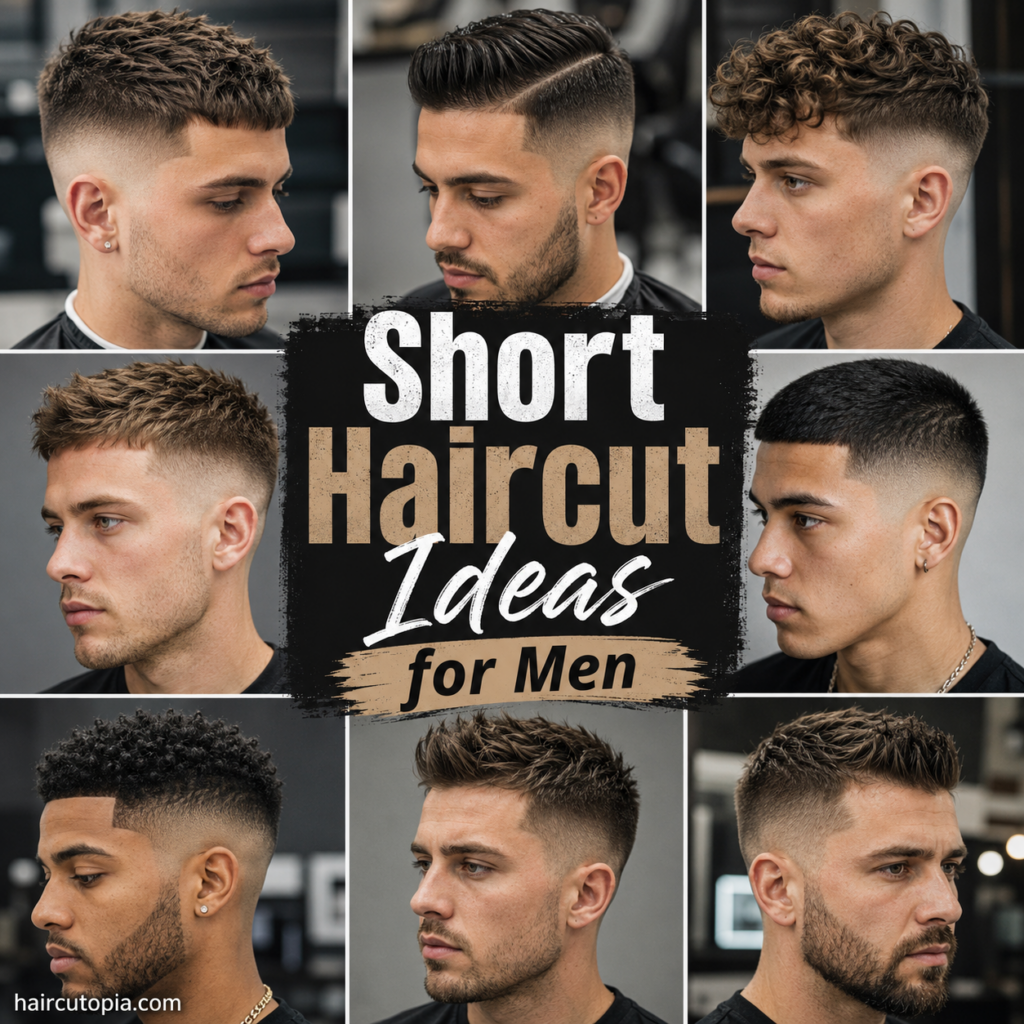
A fade is another gradual transition from longer hair to shorter hair, but it typically becomes much shorter than a traditional taper.
Depending on the haircut, the shortest portion may be clipped extremely close or taken all the way down to the skin.
Common variations include:
- Low fade
- Mid fade
- High fade
- Skin fade
- Drop fade
- Burst fade
- Taper fade
The biggest difference between these styles is where the transition begins and how the fade follows the shape of the head.
Skin Fade
A skin fade, sometimes called a bald fade, transitions the sides and back down to bare or nearly bare skin.
From there, the barber gradually blends the hair into longer lengths higher on the head.
Skin fades create a very sharp, high-contrast appearance. They also tend to look grown out sooner than softer fades because the shortest section starts at skin level.
Taper Fade
A taper fade combines characteristics of a taper and a fade.
Instead of fading a large portion of the sides, the barber usually concentrates the shortest transition around areas such as the temples, sideburns, and neckline.
This can give you the crispness of a fade while keeping more hair along the sides.
Low, Mid, and High Fades Explained
When someone asks for a fade, one of the next questions may be, “How high?”
This refers to where the fade begins transitioning around the head.
Low Fade
A low fade starts relatively close to the ears and neckline.
Because more hair remains higher on the sides, the result is usually subtle compared with a mid or high fade.
Low fades work well when you want clean edges without dramatically changing the overall shape of your haircut.
Mid Fade
A mid fade begins roughly around the middle portion of the sides.
It creates more contrast than a low fade but isn’t as aggressive as a high fade.
For that reason, the mid fade is a versatile choice that can be paired with many hairstyles on top.
High Fade
A high fade begins much farther up the sides of the head.
This removes more hair from the sides and creates strong contrast between the sides and the longer hair on top.
High fades are commonly paired with short, structured, or textured hairstyles.
Drop Fade
A drop fade curves downward behind the ears rather than following a relatively straight line around the head.
The “drop” refers to this lower section toward the back.
The shape can help emphasize the natural contour of the head and works with a wide range of hairstyles.
Burst Fade
A burst fade creates a curved fading pattern around the ear.
Instead of continuing evenly around the entire head, the fade appears to “burst” outward around this area.
You’ll often see burst fades paired with mohawks, faux hawks, mullets, and other styles that retain more length toward the back.
Clipper Guard Numbers and Hair Length
One of the most useful pieces of barber terminology to understand is the clipper guard system.
If your barber asks, “What number do you want on the sides?” they’re talking about the guard attached to the clippers.
In the common U.S. clipper system, the approximate lengths are:
- No guard: extremely close, depending on the clipper and blade setting
- #1 guard: 1/8 inch
- #2 guard: 1/4 inch
- #3 guard: 3/8 inch
- #4 guard: 1/2 inch
- #5 guard: 5/8 inch
- #6 guard: 3/4 inch
- #7 guard: 7/8 inch
- #8 guard: 1 inch
These measurements are useful reference points, but they shouldn’t be treated as an absolute guarantee of the finished length. Clippers, blades, techniques, and hair characteristics can affect the result.
If you’re uncertain, it’s usually safer to start slightly longer. Your barber can always take more hair off.
What Does “On the Sides” Mean?
When someone says they want a “#2 on the sides,” they generally mean they want the sides and often the back cut using a #2 clipper guard.
That doesn’t necessarily describe the entire haircut.
For example, you could have:
- #2 sides with a scissor-cut top
- #2 sides blended into three inches on top
- #2 around the bottom transitioning into longer sides
- A #2 fade that becomes shorter toward the neckline
That’s why giving your barber both the desired length and overall shape is more useful than simply naming a guard number.
Open and Closed Clippers
You may hear barbers talk about an open or closed lever while using adjustable clippers.
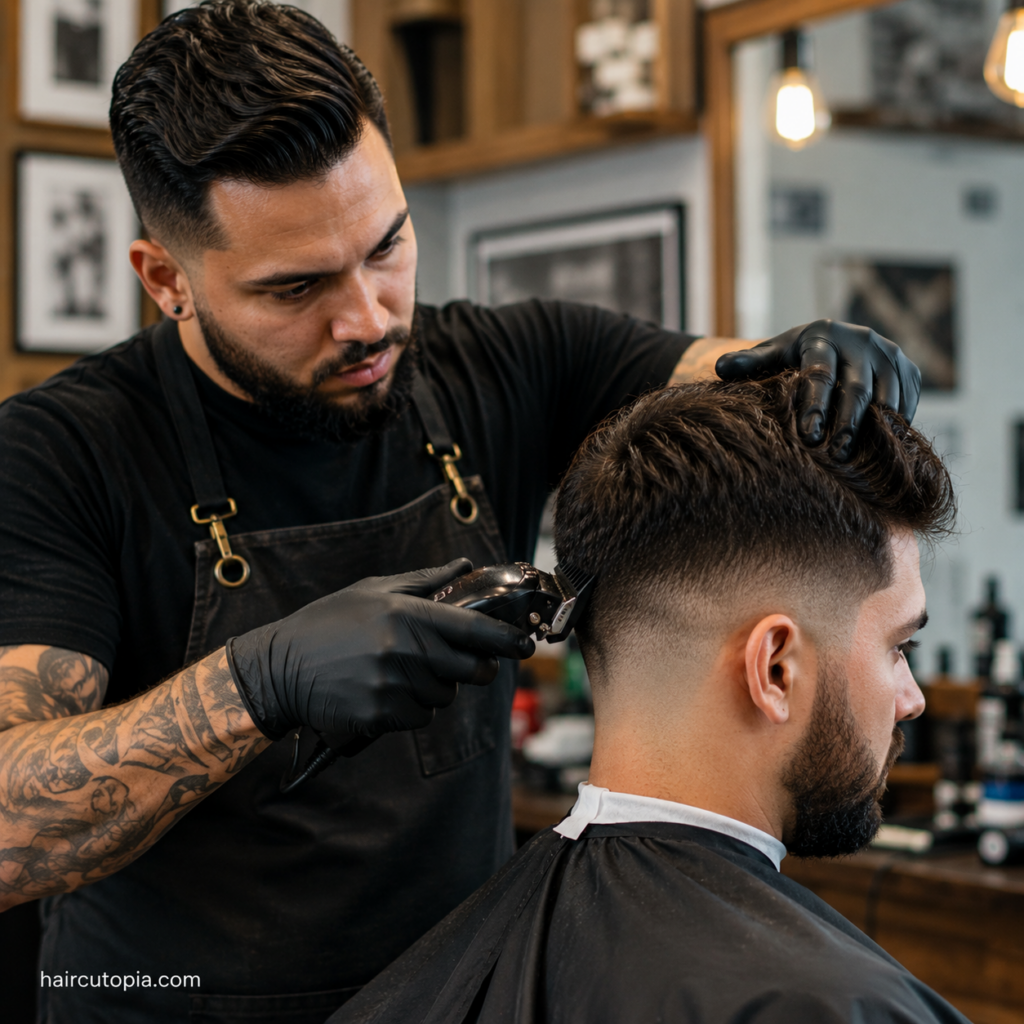
Closed Lever
Closing the clipper lever generally moves the cutting blade into its shortest adjustable position.
This produces a closer cut.
Open Lever
Opening the lever increases the cutting length slightly.
Barbers frequently move between open, closed, and intermediate lever positions while creating smooth transitions.
You usually don’t need to specify lever positions yourself. They’re primarily technical terms barbers use while blending a haircut.
Scissor Cut
A scissor cut means the barber primarily uses scissors rather than clippers to establish the length and shape.
Scissor cutting can leave a softer, more natural finish, especially when the hair is being kept relatively long.
You can also request scissors on the sides if you don’t want the uniformly short appearance that clippers can create.
Scissor Over Comb
Scissor over comb is a barbering technique used to control and blend shorter hair.
The barber lifts the hair using a comb and trims the hair extending beyond it with scissors.
This technique can create a natural transition between different lengths and is especially common in classic men’s haircuts.
Clipper Over Comb
Clipper over comb follows a similar principle, except clippers are used instead of scissors.
The comb controls the hair’s length and angle while the clippers remove the excess.
It’s commonly used for blending and shaping the sides of men’s haircuts.
Understanding Haircut Length on Top
The top of a haircut is often discussed differently from the sides.
Rather than using clipper numbers, your barber might ask how many inches you want left or how you normally style your hair.
For example:
- Very short: roughly 1 inch or less
- Short: around 1–2 inches
- Medium: around 2–4 inches
- Longer styles: 4 inches or more
These aren’t strict definitions. Hair texture, density, shrinkage, and styling can make the same measured length look very different from one person to another.
Instead of relying only on inches, explain what you want the hair to do.
For example:
“I want enough length in front to sweep it back.”
That gives your barber more useful information than a measurement alone.
Texture
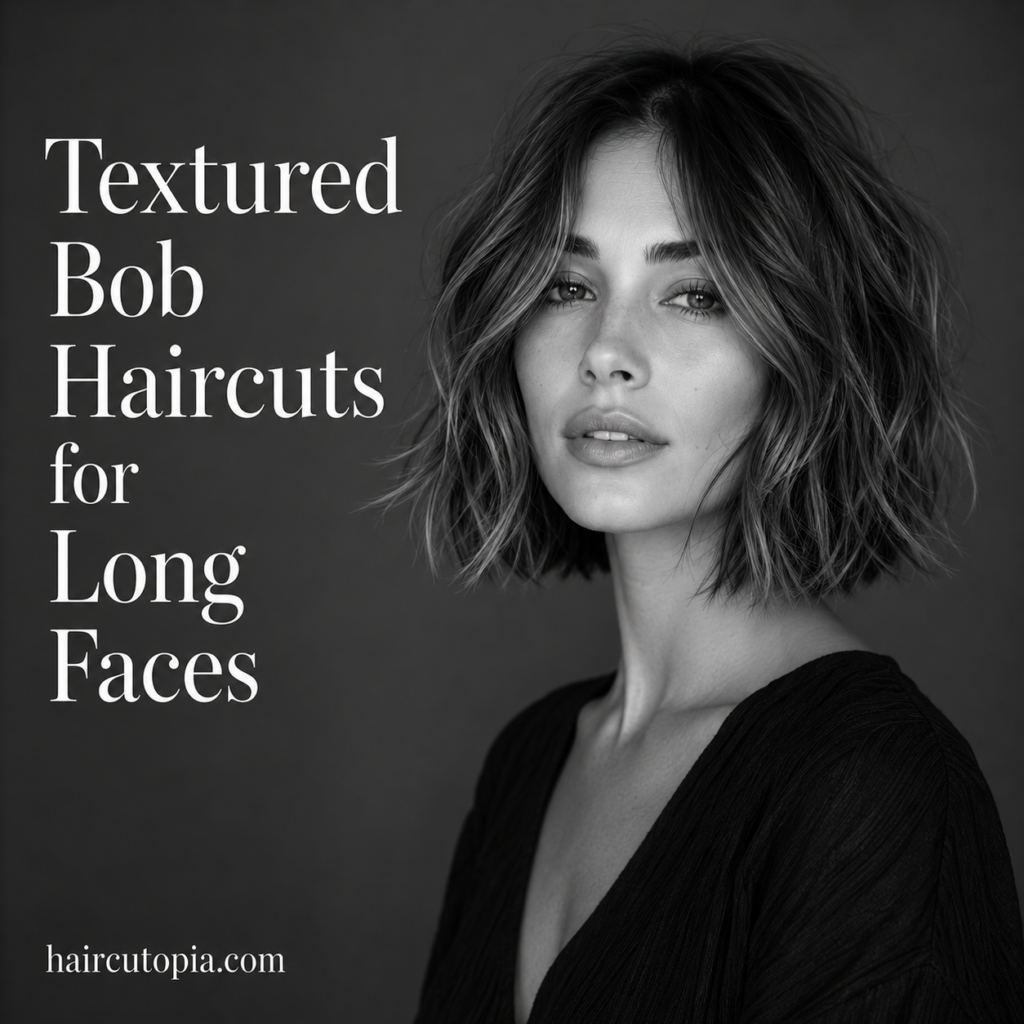
When a barber talks about adding texture, they’re usually referring to removing bulk or cutting the hair in a way that creates more separation and movement.
Textured hair tends to look less uniform and more piecey.
Texture can be especially useful for styles intended to look casual or messy rather than perfectly smooth.
Texturizing
Texturizing can be accomplished using several techniques and tools, including:
- Point cutting
- Texturizing or thinning shears
- Razor techniques
- Channel cutting
- Selective removal of weight
The appropriate method depends on your hair and the desired style.
Point Cutting
Point cutting involves holding the scissors at an angle and cutting into the ends of the hair instead of making a straight horizontal cut.
This helps soften hard lines and create a more natural finish.
Thinning
Thinning removes some of the hair’s density without necessarily making the overall haircut dramatically shorter.
A barber may use thinning or texturizing shears to reduce bulk in particularly dense areas.
However, thinning isn’t automatically appropriate for every hair type. If you’re concerned about losing too much density, tell your barber before they begin.
Layers
Layers create different lengths throughout the hair rather than cutting everything to one uniform length.
They can help create:
- Movement
- Shape
- Volume
- Texture
- Better weight distribution
Longer hairstyles often rely heavily on layering, but shorter men’s cuts can contain layers as well.
Blending
Blending means creating a smooth transition between different lengths of hair.
For example, if you have short clipper-cut sides and several inches of hair on top, the barber needs to connect those lengths without leaving an unintended heavy line.
A well-blended haircut should generally transition smoothly unless the hairstyle intentionally calls for a disconnected look.
Weight Line
A weight line is an area where longer hair creates visible density or a distinct line within the haircut.
Sometimes this is intentional. Other times, the barber will soften or remove it to create a smoother blend.
How much weight is left around the upper sides can significantly affect the overall silhouette of a haircut.
Disconnect
A disconnected haircut intentionally avoids blending certain sections together.
The longer hair on top may remain noticeably separate from the short sides.
The undercut is a classic example.
Rather than gradually transitioning from short sides into the top, the difference between the two sections remains obvious.
Undercut
An undercut features noticeably shorter sides with longer hair on top.
The sides may be clipped to one relatively consistent length or incorporated into a variation of a fade.
The defining characteristic is the strong separation between the longer top and shorter sides.
Graduation
Graduation refers to gradually building weight by cutting the hair at changing lengths or angles.
It’s common in both barbering and hairstyling and can help create shape rather than simply removing length.
You don’t necessarily need to ask for graduation specifically. It’s more useful to understand the term if your barber uses it while explaining how they plan to shape your haircut.
Hairline and Edge Terminology
The details around the edges can have a surprisingly large effect on how fresh a haircut looks.
Lineup
A lineup creates clean, defined lines around areas such as the forehead, temples, and sideburns.
It’s also commonly called an edge-up or shape-up.
The barber may use clippers, trimmers, or a razor to sharpen the perimeter.
Edge-Up
An edge-up generally means the same thing as a lineup: cleaning and defining the visible edges of the haircut.
Terminology can vary depending on the barber and region.
Shape-Up
Shape-up is another common term for defining the hairline and edges.
If you’re unsure whether your barber uses “lineup,” “edge-up,” or “shape-up,” simply describing how sharp or natural you want the hairline is enough.
Natural Hairline
A natural hairline follows your existing growth pattern rather than dramatically reshaping it.
If you’re worried about the front hairline being pushed backward or made too sharp, ask your barber to keep it natural.
Neckline Terminology
The back of the neck is another area where your barber may ask for a preference.
Tapered Neckline
A tapered neckline gradually shortens the hair toward the base of the neck.
It has a soft, natural-looking finish and can grow out less noticeably than a sharply defined neckline.
Rounded Neckline
A rounded neckline creates a curved outline across the bottom of the haircut.
It gives the back a clearly defined shape without the sharp corners of a blocked neckline.
Blocked or Square Neckline
A blocked neckline creates a straighter, more squared-off edge.
It can look very crisp immediately after the haircut, although the natural hairline may become more obvious as the hair grows.
Sideburn Terminology
Your barber may also ask where you’d like your sideburns to end.
Common choices include:
- Top of the ear
- Middle of the ear
- Bottom of the ear
- Longer and natural
- Faded into facial hair
If you have a beard, tell your barber whether you want the sideburns blended into it.
Common Hairstyle Terms
Knowing a few hairstyle names can make describing the top of your haircut easier.
Crew Cut
A crew cut is a short hairstyle with slightly more length toward the front and shorter hair toward the crown and sides.
It can be worn with tapered sides or paired with a fade.
Buzz Cut
A buzz cut is a very short clipper-based haircut.
Some buzz cuts use the same guard across most of the head, while others incorporate fades, tapers, or lineups.
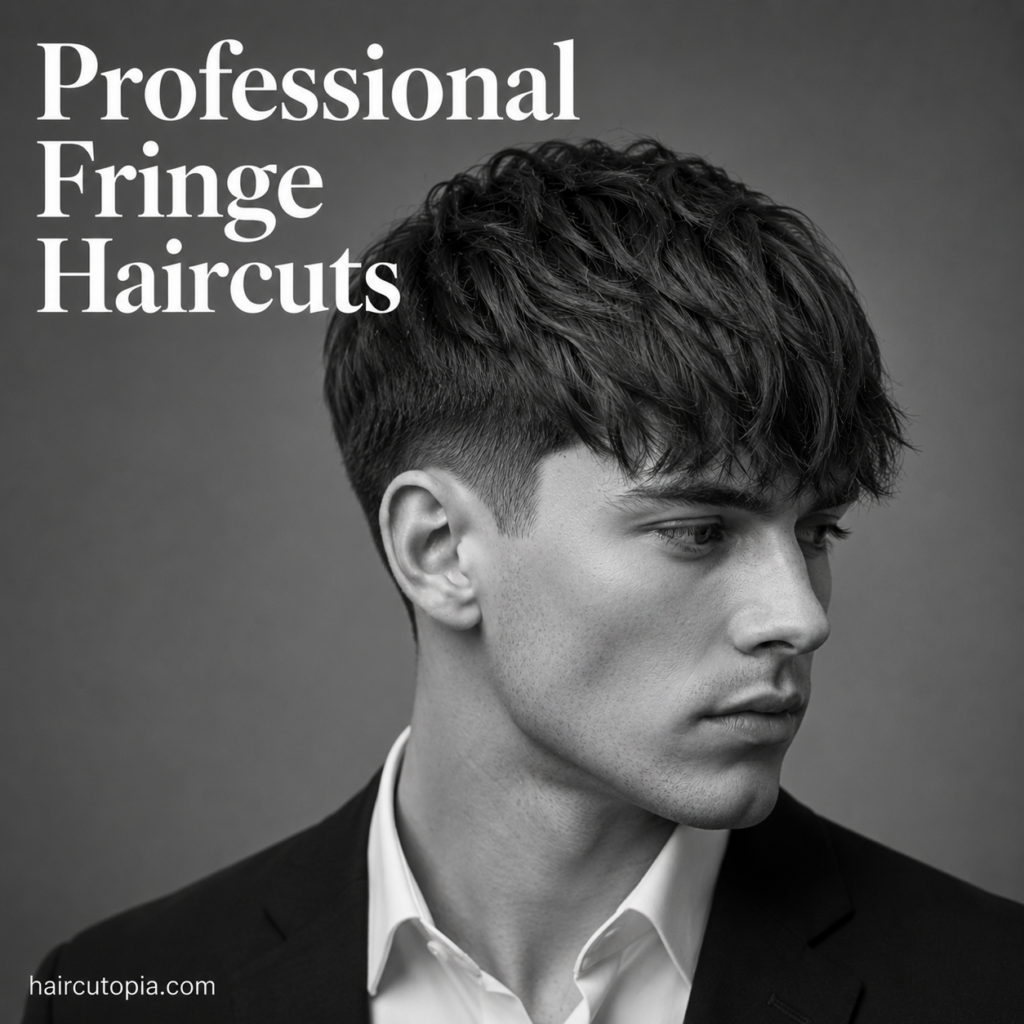
French Crop
A French crop generally features short, textured hair on top with a fringe styled forward.
The sides are typically shorter and may be faded or tapered.
Caesar Cut
The Caesar is characterized by relatively short hair with a short fringe styled forward.
It gets its name from the hairstyle traditionally associated with Julius Caesar.
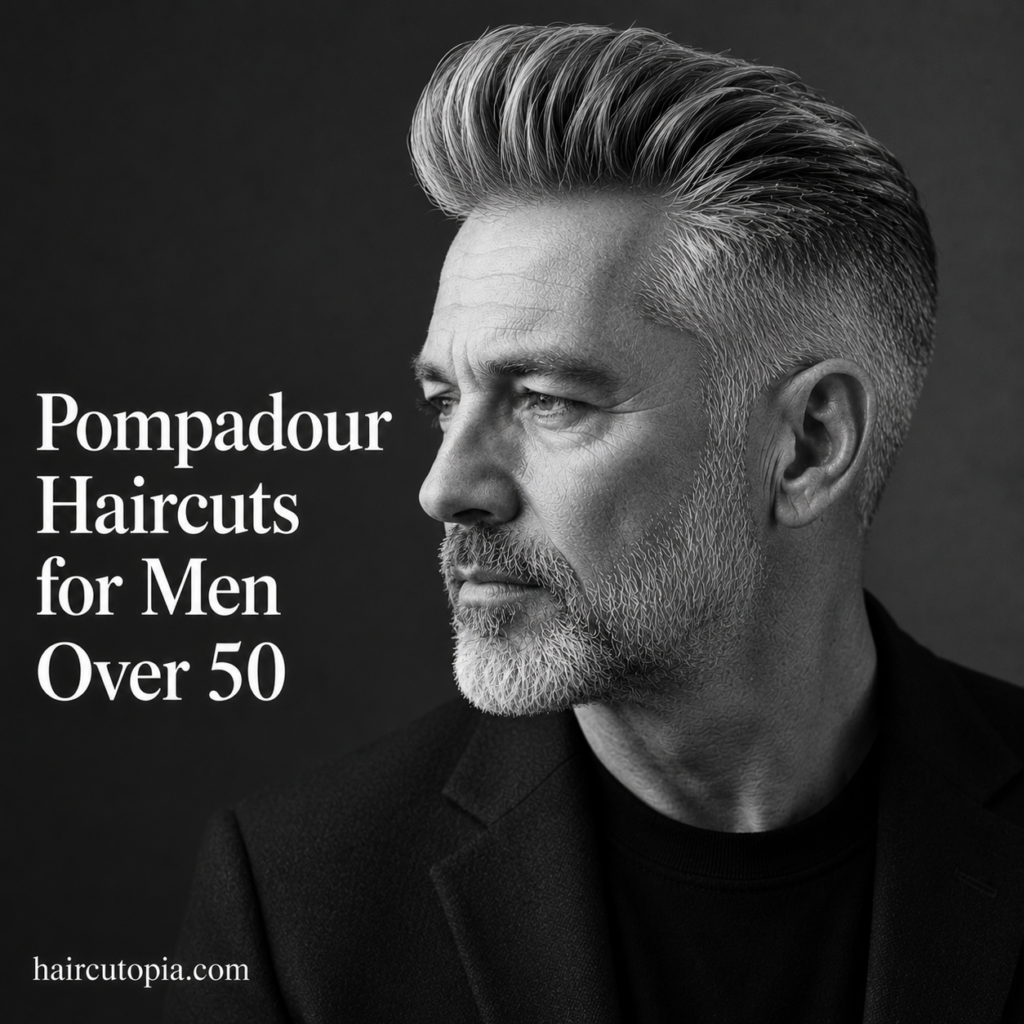
Pompadour
A pompadour features noticeable height and volume toward the front, with the hair styled upward and backward.
The sides can vary from classic scissor-cut lengths to modern fades.
Quiff
A quiff also creates height toward the front, but it often has a looser, less sculpted appearance than a traditional pompadour.
Slick Back
A slick back involves styling the hair away from the forehead toward the back of the head.
Depending on the desired look, it can be neat and polished or loose and textured.
Side Part
A side part separates the hair along one side of the head.
It can follow a natural part or be deliberately emphasized by styling.
Hard Part
A hard part is a shaved or closely trimmed line that emphasizes the part in the hair.
Unlike a natural side part, the line itself is created with barbering tools.
Styling and Finish Terms
Your barber may ask how you want the finished haircut styled.
Understanding a few styling terms can help.
Matte Finish
A matte finish has little to no visible shine.
Clays, pastes, and certain styling creams are commonly used to create this appearance.
High Shine
A high-shine finish gives the hair a glossy, polished appearance.
Traditional pomades and some gels can produce this effect.
Volume
Volume refers to how much height or fullness the hairstyle has.
If your hair tends to sit flat, tell your barber you want a cut that makes it easier to create volume.
Hold
Hold describes how strongly a styling product keeps the hair in position.
Products are often described as having:
- Light hold
- Medium hold
- Strong hold
Hold and shine are separate characteristics. A product can provide strong hold while still having a matte finish.
Natural Finish
A natural finish usually means the hairstyle shouldn’t appear overly sculpted or product-heavy.
It may still involve styling product, but the goal is for the hair to retain natural movement.
Barber Terms That Can Be Confusing
Some haircut terminology sounds more precise than it actually is.
“Short back and sides,” for example, doesn’t specify an exact length.
Neither does “just a trim.”
Two people may have completely different ideas about what those phrases mean.
Other potentially ambiguous terms include:
- Short
- Long on top
- Clean up the sides
- Regular haircut
- Taper
- Trim
- Textured
- Messy
This doesn’t mean you shouldn’t use these words. Just add a little context.
Instead of saying:
“Just trim the top.”
Try:
“Keep most of the length on top and take about half an inch off.”
That’s much harder to misinterpret.
How to Use Haircut Terminology With Your Barber
You don’t need to walk into the shop speaking like a professional barber.
In fact, trying to use highly technical terminology when you’re unsure what it means can make communication harder.
A better approach is to combine a few clear pieces of information.
1. Describe the Sides and Back
Tell your barber whether you want a fade, taper, scissor cut, or consistent clipper length.
If you know the guard number, mention it.
For example:
“#3 on the sides, but taper it shorter around the neck.”
2. Explain What You Want on Top
Give an approximate amount you’d like removed or explain how you style your hair.
For example:
“Take about an inch off the top, but leave enough length in front to style it back.”
3. Mention the Transition
If you want the top and sides smoothly connected, ask for them to be blended.
If you prefer a strong contrast, you can discuss keeping the sections more disconnected.
4. Explain the Finish
Tell your barber whether you prefer the haircut to look:
- Clean and structured
- Natural
- Messy
- Textured
- Voluminous
- Slick
- Matte
This helps the barber understand the final appearance you’re trying to achieve.
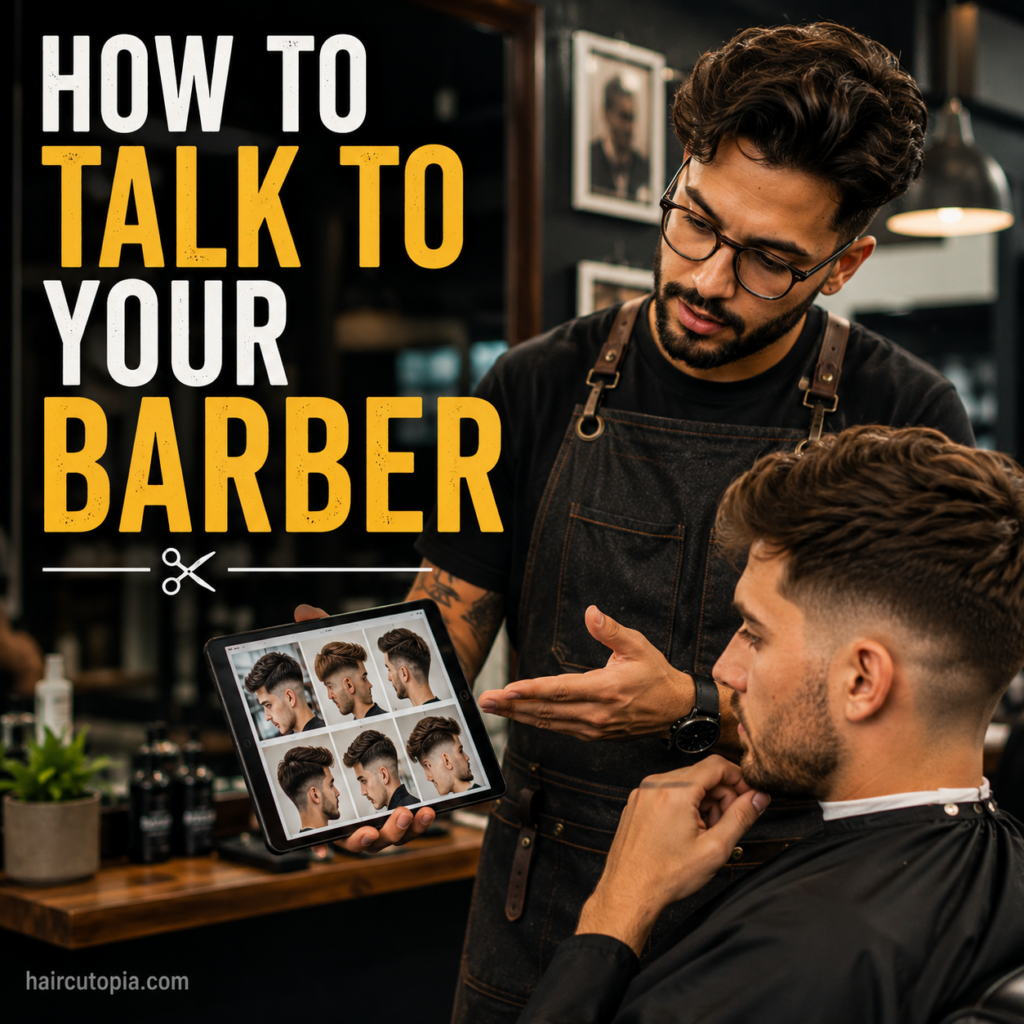
5. Show a Reference Photo
Even when you understand haircut terminology, a photo can remove a lot of uncertainty.
Look for a reference showing someone with a similar:
- Hair texture
- Hair density
- Hairline
- Head shape
- Approximate length
A picture doesn’t guarantee your hair will behave exactly the same way, but it gives your barber a much clearer visual target.
What to Say If You Don’t Know the Terminology
It’s completely fine to describe what you want in everyday language.
You could say:
“I want the sides short but not down to skin. Keep enough length on top that I can push it back, and I don’t want the sides to look too disconnected.”
A good barber can translate that into the appropriate techniques.
You can also ask questions during the consultation.
Useful questions include:
- “How short will that be?”
- “Would you recommend a low fade or taper?”
- “How will this grow out?”
- “Will I need product to style this?”
- “How much length should we leave on top?”
- “Would this work with my hair texture?”
The goal isn’t to prove that you know barber terminology. It’s to make sure you and your barber are picturing roughly the same haircut before the cutting starts.
Haircut Terminology FAQ
What’s the difference between a taper and a fade?
Both involve transitioning from longer to shorter hair. A traditional taper usually concentrates the shortening around the sideburns and neckline while preserving more length on the sides. A fade generally involves a more noticeable transition across a larger portion of the sides and can become extremely short.
What does a #2 haircut mean?
A #2 clipper guard typically leaves approximately 1/4 inch of hair. However, saying “#2 haircut” can be ambiguous because it doesn’t explain whether you want that length everywhere or only on certain sections.
What is a zero fade?
A zero fade generally transitions down to a very short clipper setting without necessarily being shaved completely to bare skin. Exact terminology can vary between barbers, so it’s worth confirming how short your barber considers a “zero.”
Is a skin fade the same as a bald fade?
The terms are often used interchangeably. Both generally describe a fade that transitions down to exposed or nearly exposed skin at its shortest point.
What does “take some weight out” mean?
It usually means reducing excessive bulk or density in part of the haircut without simply making all of the hair shorter. A barber may use texturizing techniques, scissors, or other methods to accomplish this.
What does blending mean in a haircut?
Blending creates a smooth transition between different hair lengths. It’s particularly important where short sides meet longer hair higher on the head.
What should I tell my barber if I don’t know clipper numbers?
Describe how short you want the hair to look or show a reference photo. Your barber can recommend an appropriate guard or cutting technique.
Should I ask for a haircut by name?
You can, but don’t rely on the name alone. Terms like “taper,” “crop,” and even “fade” can be interpreted differently. Explain the length and shape you want and show a reference photo when possible.
The Bottom Line
Learning basic haircut terminology makes communicating with your barber much easier, but you don’t need to know every technical term.
Start with the essentials: how short you want the sides, how much length you want on top, whether you prefer a taper or fade, and how you normally style your hair. Understanding clipper numbers, texture, blending, necklines, and common haircut names gives you an even better vocabulary for explaining the details.
Most importantly, don’t be afraid to describe what you want in plain language. A haircut consultation is a conversation, not a vocabulary test.
When there’s any doubt, combine your description with a good reference photo. Clear communication between you and your barber is ultimately more useful than knowing the perfect name for every technique.