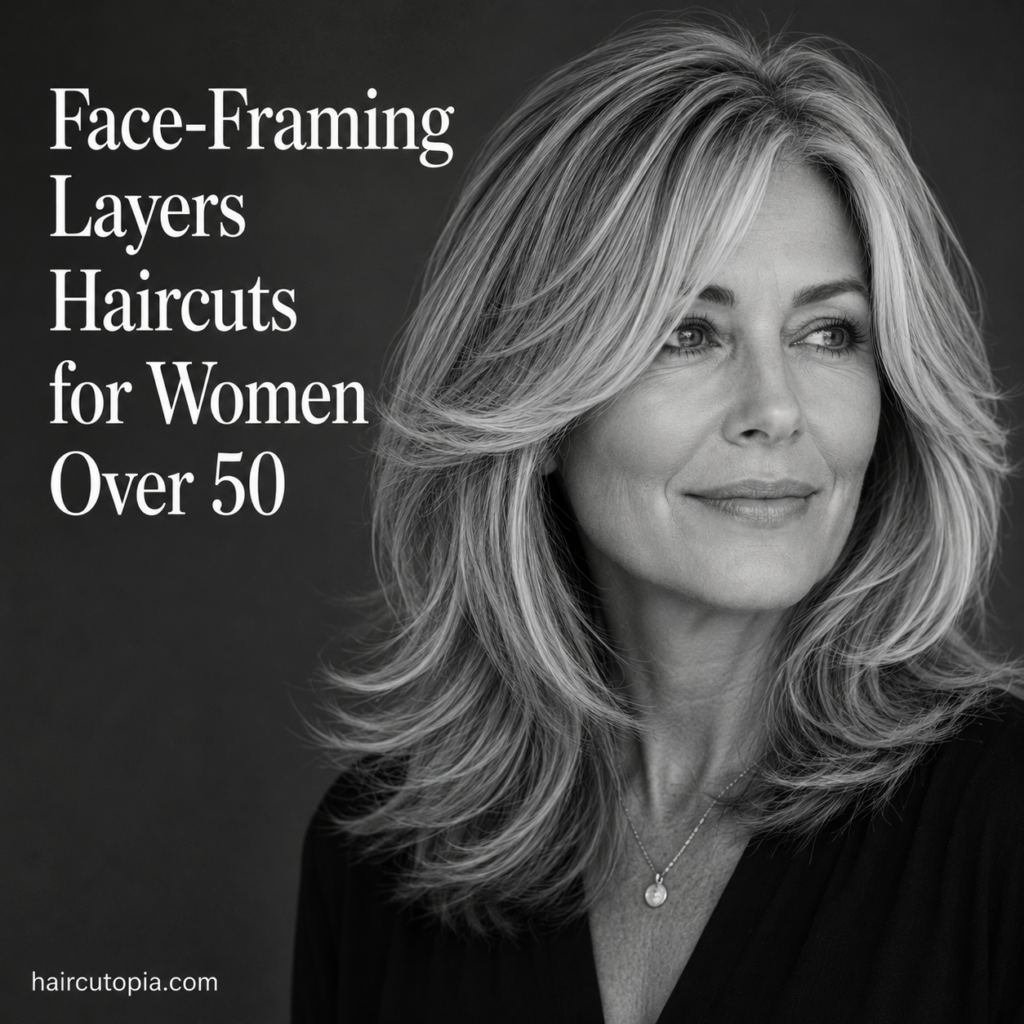
A great haircut doesn’t have to be dramatic to make a noticeable difference. Sometimes, a few well-placed layers around the face are all it takes to create a softer, more flattering look. That’s exactly why face-framing layers remain one of the most popular haircut techniques for women over 50.
These layers bring movement, shape, and dimension to the hair while drawing attention to your eyes, cheekbones, and smile. They can also make thick hair feel lighter, add fullness to fine hair, and give mature hairstyles a fresh, modern update.
Whether you wear your hair short, shoulder-length, or long, face-framing layers can be tailored to complement your face shape, hair texture, and personal style.
What Are Face-Framing Layers?
Face-framing layers are shorter sections of hair cut around the front of the face that gradually blend into the rest of your hairstyle. Instead of creating dramatic layers throughout the entire haircut, this technique focuses on softening the area around the face.
The shortest layers may begin at different points depending on the look you’re after, including:
- Cheekbones
- Jawline
- Chin
- Collarbone
A skilled stylist can customize the layers to enhance your best features while maintaining balance throughout the haircut.
Why Women Over 50 Love Face-Framing Layers
Hair naturally changes over time. It may become finer, drier, or lose some of its natural volume. Face-framing layers help address these changes while creating a timeless, elegant appearance.
Some of the biggest benefits include:
- Add natural movement
- Create the appearance of fuller hair
- Soften facial features
- Reduce heaviness in thick hair
- Blend beautifully with gray or silver hair
- Refresh longer hairstyles without losing much length
- Make styling easier
The result is polished without looking overly styled.
Best Face-Framing Layers Haircuts for Women Over 50
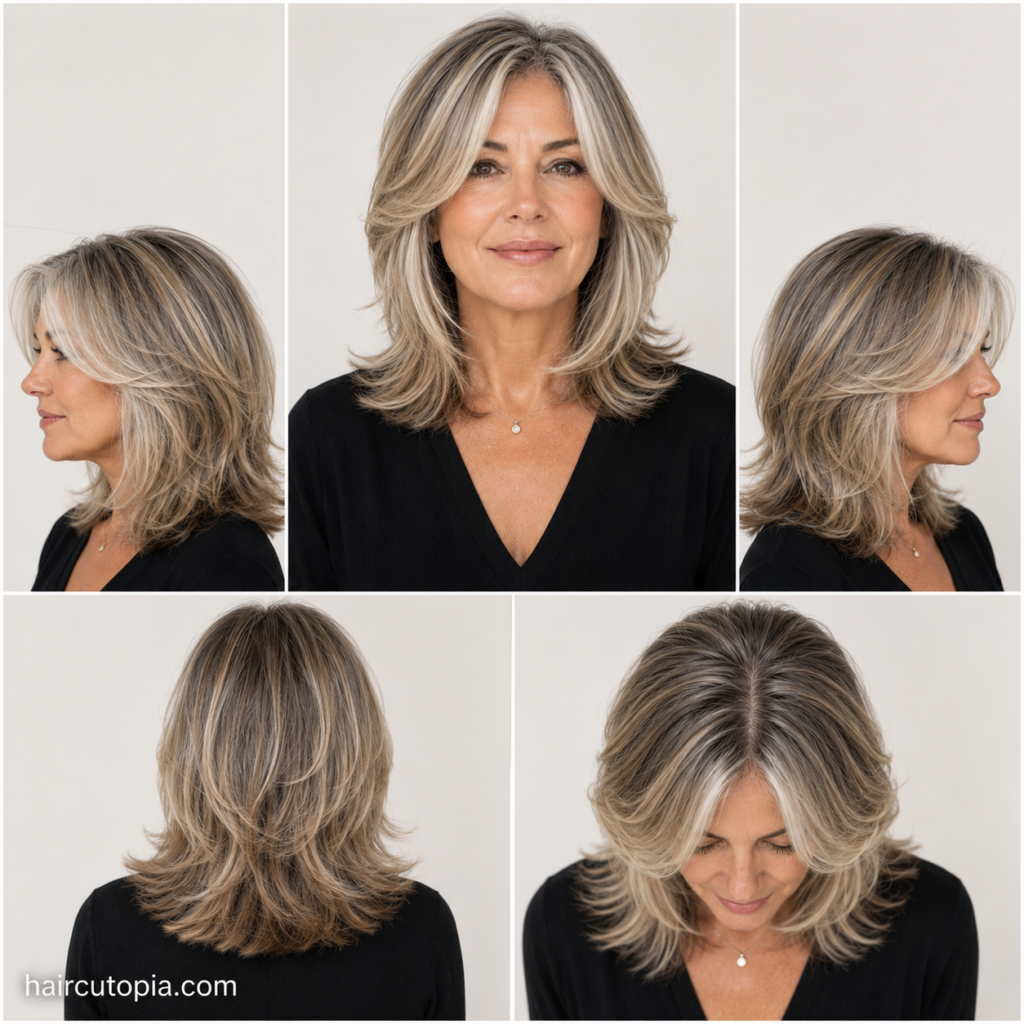
Shoulder-Length Face-Framing Layers
Shoulder-length hair remains one of the most flattering choices after 50.
Adding soft layers around the face gives the haircut movement while keeping it easy to style and maintain.
This style suits nearly every face shape.
Long Layered Hair with Face-Framing Pieces
Long hair can look incredibly elegant at any age.
Face-framing layers prevent long hairstyles from appearing heavy while adding softness around the face.
They’re especially beautiful with loose waves or a smooth blowout.
Layered Lob with Soft Framing
The long bob continues to be a favorite because it combines sophistication with versatility.
Face-framing layers make the lob appear lighter while creating more texture and movement.
Curtain Bangs with Face-Framing Layers
Curtain bangs blend naturally into front layers for a seamless look.
Benefits include:
- Highlight the eyes
- Soften the forehead
- Grow out beautifully
- Pair well with medium and long hairstyles
Butterfly Layers
Butterfly layers feature shorter layers around the face while keeping longer lengths underneath.
This haircut creates:
- Volume
- Dimension
- Airy movement
- A modern finish
It’s an excellent choice for women who want a refreshed look without sacrificing length.
Feathered Face-Framing Layers
Feathered layers create soft, airy ends that move naturally.
They’re especially flattering for:
- Fine hair
- Straight hair
- Medium-density hair
This haircut feels light and elegant rather than bulky.
Chin-Length Face-Framing Layers
Starting the layers around the chin draws attention to the jawline while softening facial contours.
This style works well with:
- Shoulder-length cuts
- Long layered hair
- Medium hairstyles
Curly Face-Framing Layers
Curly hair benefits tremendously from properly shaped layers.
Advantages include:
- Better curl definition
- Reduced bulk
- Improved shape
- Balanced volume
An experienced stylist can tailor the cut to your specific curl pattern.
Side-Swept Bangs with Layers
Side-swept bangs remain one of the most universally flattering options.
Combined with face-framing layers, they create a soft, sophisticated hairstyle that’s easy to wear every day.
Layered Shag with Soft Framing
A modern shag uses textured layers throughout the haircut while maintaining softness around the face.
The result is contemporary without appearing overly edgy.
Choosing Face-Framing Layers by Face Shape
Oval Face
Oval faces work beautifully with almost every variation.
Popular options include:
- Long layers
- Butterfly layers
- Curtain bangs
- Feathered cuts
Round Face
Longer front layers help elongate the face.
Look for:
- Chin-length framing
- Jaw-length layers
- Longer curtain bangs
Avoid very short layers around the cheeks.
Square Face
Soft feathered layers help balance strong jawlines.
Rounded edges create a more delicate appearance.
Heart-Shaped Face
Layers beginning near the chin balance wider foreheads while drawing attention downward.
Curtain bangs are also an excellent addition.
Long Face
Medium-length layers combined with curtain bangs create visual width while maintaining softness.
Best Hair Types for Face-Framing Layers
Fine Hair
Soft layering creates movement without removing too much density.
Lightweight styling products help maintain fullness.
Thick Hair
Layers remove excess weight while improving manageability.
Many women find their styling routine becomes much easier.
Straight Hair
Straight hair highlights every layer beautifully.
The result is polished and sleek.
Wavy Hair
Natural waves emphasize movement throughout the haircut.
Minimal styling is often needed.
Curly Hair
Customized layering helps curls fall naturally while preventing a bulky silhouette.
Hair Color Ideas That Complement Face-Framing Layers
Adding dimension through color can make layers even more noticeable.
Popular choices include:
- Silver blending
- Gray balayage
- Soft blonde highlights
- Honey blonde accents
- Caramel ribbons
- Warm brunette dimension
- Rich chocolate tones
- Soft copper highlights
These techniques create depth without looking overly bold.
Styling Tips for Face-Framing Layers
One reason these haircuts remain so popular is their versatility.
Blow-Dry with a Round Brush
A round brush creates:
- Volume
- Soft curves
- Professional movement
Loose Waves
Large curls beautifully showcase the different layer lengths.
A curling iron or heatless styling method both work well.
Sleek and Straight
Straight styles emphasize clean layering around the face.
Finish with a lightweight shine serum.
Air-Dried Texture
Natural texture pairs beautifully with face-framing layers.
A leave-in conditioner or curl cream helps reduce frizz while maintaining softness.
How Often Should You Trim Face-Framing Layers?
Keeping your layers fresh requires regular maintenance.
General guidelines include:
- Every 8 to 10 weeks for shorter cuts
- Every 10 to 12 weeks for shoulder-length hair
- About every 12 weeks for longer layered styles
Regular trims also help prevent split ends.
How to Ask Your Stylist for Face-Framing Layers
Being specific helps your stylist create the right look.
You can say:
“I’d like soft face-framing layers that blend naturally into my haircut while keeping most of my overall length.”
Also mention:
- Where you’d like the shortest layer to begin
- Whether you’d like curtain or side-swept bangs
- Your daily styling routine
- How much maintenance you’re comfortable with
Bringing reference photos is always a great idea.
Hair Care Tips
Healthy hair enhances every layered haircut.
Follow these simple habits:
- Use moisturizing shampoo and conditioner.
- Apply heat protectant before styling.
- Deep condition once a week.
- Avoid excessive heat styling.
- Use lightweight hair oils sparingly.
- Brush gently to minimize breakage.
- Sleep on a silk or satin pillowcase.
Common Mistakes to Avoid
The right layering technique makes all the difference.
Avoid:
- Too many layers on fine hair
- Starting layers too high
- Ignoring natural hair texture
- Skipping regular trims
- Using heavy styling products that flatten movement
A customized haircut always delivers the most flattering results.
Frequently Asked Questions
Are face-framing layers flattering for women over 50?
Yes. They soften facial features, create movement, and give hairstyles a fresh, elegant appearance that works beautifully with mature hair.
Can women over 50 wear long hair with face-framing layers?
Absolutely. Long hair paired with soft front layers looks modern while preventing the hairstyle from appearing heavy.
Do face-framing layers work with gray hair?
Yes. Gray, silver, and salt-and-pepper hair often look even more dimensional with layered cuts.
Are these layers high maintenance?
No. Most require trims every 10 to 12 weeks and are relatively easy to style at home.
Do face-framing layers make thin hair look fuller?
When cut correctly, they can create the appearance of added volume and movement without making fine hair look sparse.
Final Thoughts
Face-framing layers are one of the most timeless haircut choices for women over 50. They offer the perfect combination of softness, movement, and versatility while enhancing your natural features instead of masking them.
Whether you prefer a sleek lob, shoulder-length layers, long flowing hair, or a textured shag, face-framing layers can be customized to suit your face shape, hair type, and lifestyle. With regular trims, healthy hair care habits, and simple styling techniques, this flattering haircut can keep your look fresh, polished, and effortlessly elegant at any stage of life.
Related Posts
 French Bob Haircuts for Women Over 50: 18 Chic and Modern Ideas
 French Bob Haircuts for Women Over 40: Chic, Modern Styles to Try
 A-Line Bob Haircuts for Women Over 50: 27 Flattering Styles for a Fresh, Modern Look
 Textured Bob Haircuts for Women Over 50: 25 Timeless Styles That Add Volume and Elegance