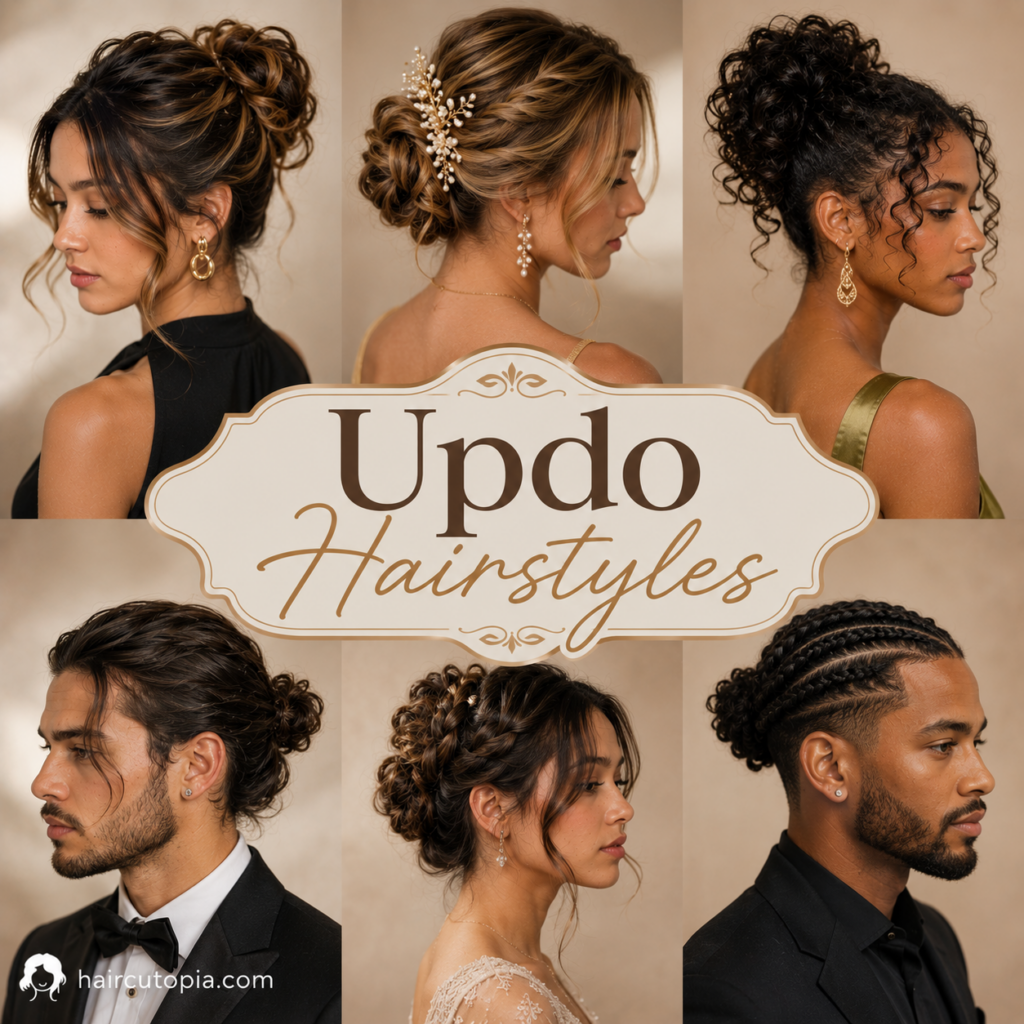
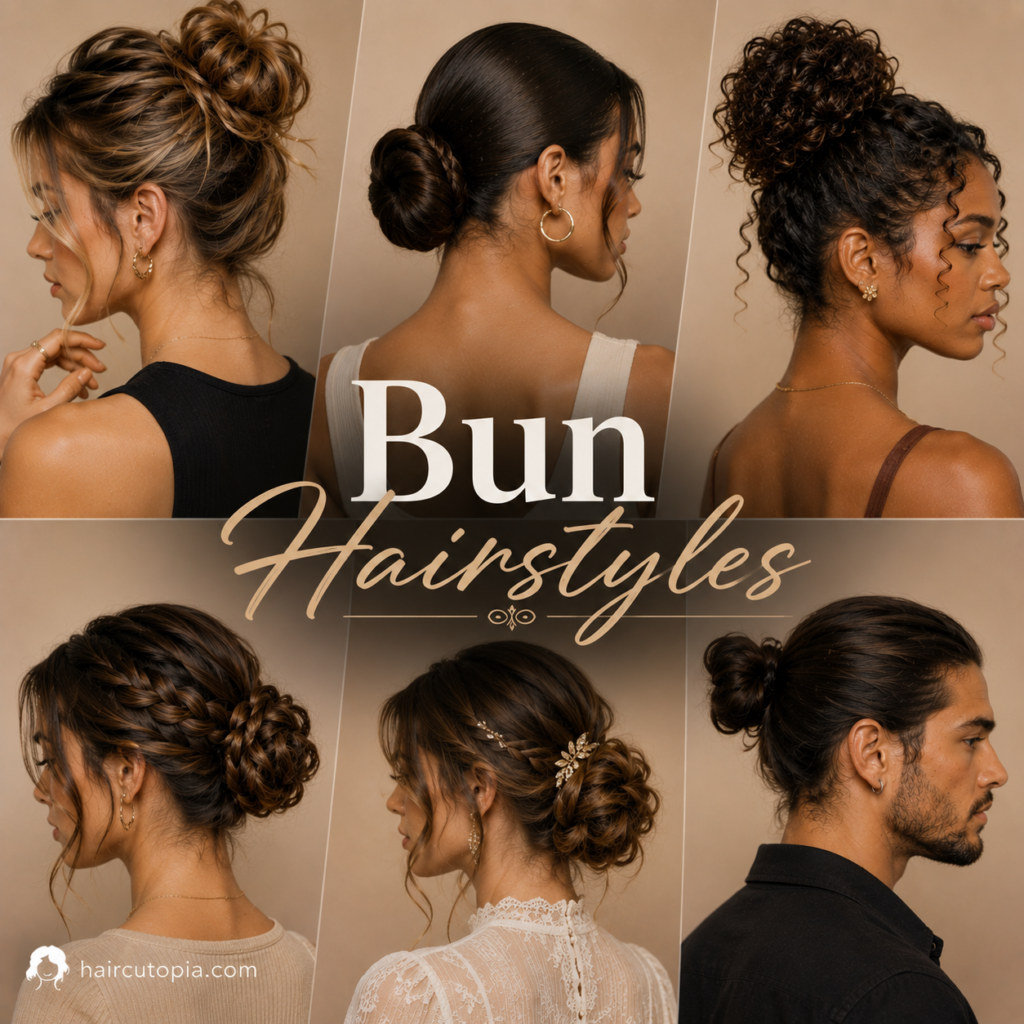
Few hairstyles are as adaptable as the bun.
It can be the hairstyle you put together in two minutes before leaving the house or the carefully styled centerpiece of a wedding look. Wear it high and it can feel playful or dramatic. Move it to the nape and the same basic hairstyle becomes understated and elegant. Add braids, curls, twists, or natural texture, and there are even more possibilities.
That’s what makes bun hairstyles so useful. The basic idea is simple—gather the hair and secure it into a compact shape—but there’s no single way the finished bun has to look.
Buns can be sleek, loose, oversized, braided, curly, messy, twisted, or half-up. They can work with straight, wavy, curly, and coily textures, as well as many medium and long hairstyles. Men with enough length can wear buns too, whether they’re neatly tied back or intentionally relaxed.
From everyday styles to more elaborate updo hairstyles, buns can be adapted to work with your hair, your routine, and the occasion.
Why Bun Hairstyles Are So Versatile
A bun keeps hair contained while leaving plenty of room to change the overall look.
You can adjust:
- Placement
- Size
- Texture
- Volume
- Parting
- Tightness
- Accessories
- Face-framing pieces
- Braided or twisted details
Even moving a bun a few inches can make a noticeable difference.
High buns draw the eye upward and keep the neck completely exposed. Low buns sit closer to the nape and often create a softer silhouette. A side bun introduces asymmetry, while two buns create an entirely different style.
Your natural texture also changes the result.
A curly bun has a different shape from a sleek straight-hair bun, even when both begin with the same basic technique.
Popular Types of Bun Hairstyles
Most bun hairstyles are variations of a few basic structures.
Once you understand those, it’s much easier to experiment.
High Bun
A high bun sits near the crown or top of the head.
It can be smooth and compact or intentionally large and textured.
High buns are particularly useful when you want all of the hair off your neck.
Low Bun
A low bun sits around the nape.
This is one of the most versatile placements because it can easily look casual, professional, romantic, or formal depending on the finish.
Messy Bun
A messy bun uses intentional looseness and texture.
The bun itself may be imperfectly shaped, with selected pieces left around the face or crown.
The important part is keeping the underlying structure secure.
Sleek Bun
A sleek bun emphasizes smooth roots and a clean silhouette.
It can sit high, low, or somewhere in between.
Center parts and slicked-back styles are especially common with this type of bun.
Braided Bun
A braided bun incorporates one or more braids into the hairstyle.
The braid might form the bun itself, lead into it, or wrap around its base.
Twisted Bun
Instead of braiding the hair, the length is twisted before being wrapped and secured.
This is one of the easiest ways to create a bun.
High Bun Hairstyles
High buns create height and keep the hair completely away from the shoulders.
They’re especially practical during warm weather or whenever you want your hair out of the way.
Sleek High Bun
Gather the hair high on the head and smooth the roots toward the base.
Wrap the length into a compact bun and secure it.
A slicked-back version can be worn without a visible part, while a center part creates a more defined front.
Messy High Bun
Start with a secure high ponytail, create the bun, and then loosen selected sections.
This usually works better than making the entire foundation loose from the beginning.
Curly High Bun
Natural curls can create volume and texture throughout a high bun.
Rather than hiding every curl, allow some of the pattern to remain visible.
Braided High Bun
Braid the ponytail before wrapping it around the base.
This adds texture without significantly changing the basic technique.
Low Bun Hairstyles
Low buns are among the easiest bun hairstyles to adapt for different occasions.
A small change in texture or parting can take the same basic bun from casual to formal.
Sleek Low Bun
A sleek low bun creates a clean, minimalist appearance.
It works especially well with:
- Center parts
- Deep side parts
- Slicked-back roots
- Wrapped bases
Keep the bun compact for a more structured look.
Loose Low Bun
A loose low bun keeps more volume through the crown and sides.
Face-framing pieces can make the hairstyle feel even softer.
Textured Low Bun
Waves, curls, twists, or individually pinned sections can create more dimension around the bun.
Braided Low Bun
Create a low ponytail, braid the length, and wrap it around the base.
It’s simple but visually more detailed than a standard twisted bun.
Messy Bun Hairstyles
The messy bun is popular because it doesn’t depend on perfect sectioning or a completely smooth finish.
That doesn’t mean the bun should be falling apart.
A good messy bun combines a stable foundation with intentional looseness.
Classic Messy Bun
Gather the hair, twist or loop it into a bun, and secure it.
Then adjust the shape with your fingers.
Pull out a few pieces only where they improve the silhouette.
Low Messy Bun
Positioning the bun at the nape creates a softer, more relaxed version.
This works especially well with wavy or naturally textured hair.
Messy Bun With Face-Framing Pieces
Leave a few sections loose near the temples or around the front.
Start with less hair than you think you’ll need. You can always loosen another piece later.
Curly Messy Bun
Curly hair naturally creates the irregular texture associated with a messy bun.
Instead of smoothing the curls flat, use their shape to build the bun.
Sleek Bun Hairstyles
Sleek buns focus on clean lines rather than volume through the roots.
They can look polished without being complicated.
Center-Parted Sleek Bun
Create a defined center part before directing the hair toward the bun.
The symmetrical front pairs particularly well with a low placement.
Slicked-Back Bun
Skip the part and direct all of the hair away from the face.
The bun can be high or low.
Sleek Braided Bun
Combine smooth roots with a braided bun for contrast between the polished front and textured back.
Sleek Curly Bun
The roots can remain smooth while curls create volume through the bun itself.
A sleek hairstyle should feel controlled, but it shouldn’t hurt.
If you’re pulling the hair extremely tight to achieve the finish, loosen the foundation and rely on appropriate styling techniques rather than tension alone.
Bun Hairstyles for Long Hair
Long hair gives you plenty of material for larger and more intricate buns.
Ideas include:
- Oversized high buns
- Low buns
- Braided buns
- Twisted buns
- Messy buns
- Double buns
- Formal chignon-style buns
- Side buns
Long hair can also make a bun heavy.
If the style pulls uncomfortably, try lowering the placement or distributing the hair across a wider area.
More pins aren’t always the answer. Sometimes changing the structure makes the bun more comfortable.
Bun Hairstyles for Medium Hair
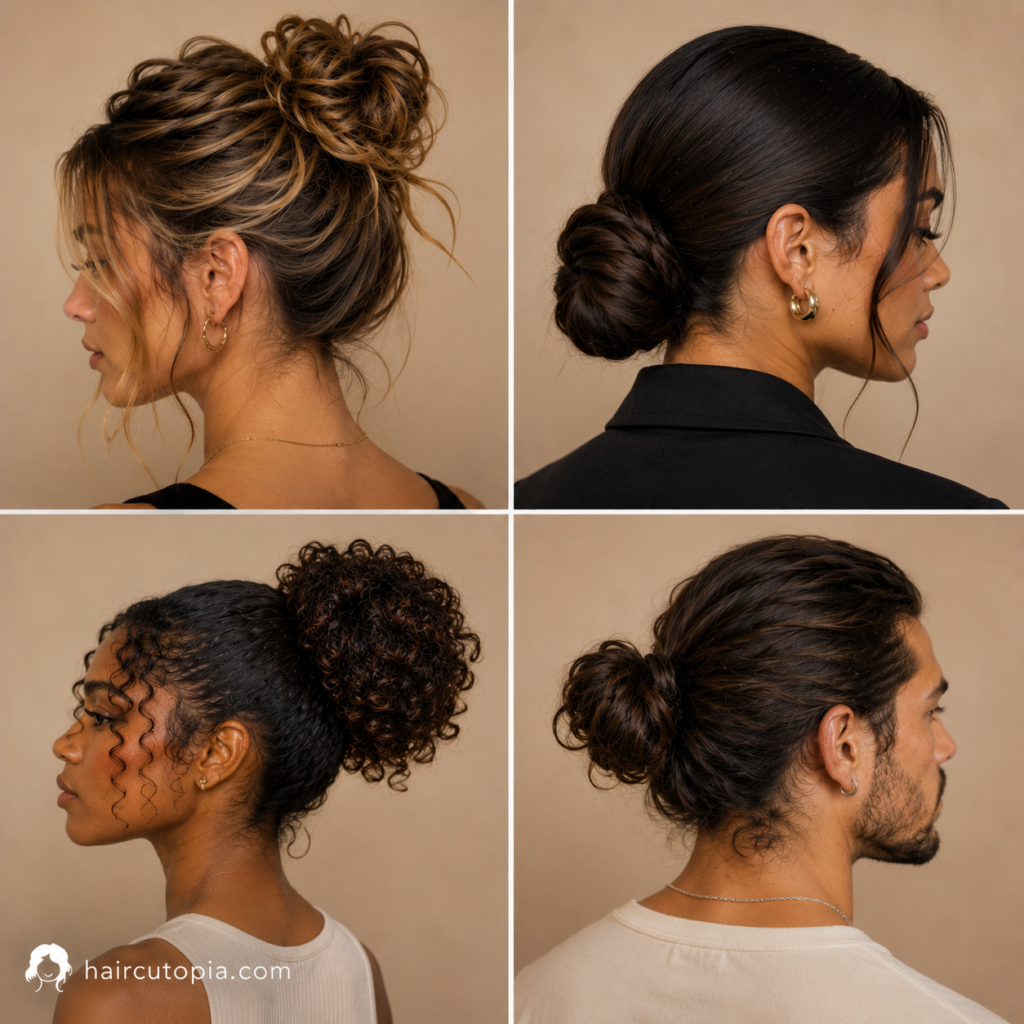
Medium hair is often ideal for buns because there’s enough length to wrap or pin without excessive weight.
Try:
- Small high buns
- Low buns
- Messy buns
- Braided buns
- Half-up buns
- Twisted buns
- Claw clip buns
Shorter layers may not reach the main bun.
They can be pinned back or intentionally left loose depending on the style.
Bun Hairstyles for Short Hair
Whether short hair can form a bun depends on the exact length.
Lobs and longer bobs may have enough hair for:
- Mini low buns
- Small half-up buns
- Twisted low buns
- Claw clip buns
- Double mini buns
If the shortest layers don’t reach the elastic, use pins or allow them to remain loose.
Trying to force every short piece into the bun can create unnecessary tension.
Bun Hairstyles for Straight Hair
Straight hair naturally creates clean lines and works particularly well with sleek buns.
Options include:
- Sleek low buns
- High buns
- Braided buns
- Twisted buns
- Center-parted buns
- Double buns
Very smooth hair may need a little additional grip.
An appropriate texturizing or styling product can help prevent sections from slipping while you’re working.
Bun Hairstyles for Wavy Hair
Wavy hair naturally adds movement to a bun.
Rather than smoothing out all of the texture, you can use it to create dimension.
Try:
- Loose low buns
- Messy high buns
- Braided buns
- Textured side buns
- Half-up buns
Allowing a few natural waves to frame the face can create a softer finish.
Bun Hairstyles for Curly Hair
Curly hair is particularly well suited to buns because the texture naturally creates shape and volume. Buns can also be a practical way to adapt curly hairstyles while keeping much of the natural curl pattern visible.
High Curly Bun
Gather the curls high and arrange them into a bun without completely compressing their texture.
Low Curly Bun
Position the curls near the nape for a softer silhouette.
Curly Messy Bun
Allow selected curls to remain visible throughout the bun and around the face.
Half-Up Curly Bun
Gather only the upper section into a bun and leave the remaining curls loose.
Sleek Curly Bun
Smooth the roots while allowing the bun itself to retain its curl pattern.
The contrast can make the texture stand out even more.
Bun Hairstyles for Coily and Textured Hair
Coily and textured hair can create buns with strong shape and natural volume.
Depending on your hair and current style, options include:
- High natural buns
- Low buns
- Braided buns
- Twisted buns
- Double buns
- Protective buns
- Loc buns
- Cornrow-based buns
Braids and twists can also be gathered into larger buns, allowing many protective hairstyles to be rearranged without completely changing the underlying style.
When creating tightly secured styles, pay attention to the hairline and scalp.
The hairstyle should feel stable without persistent pulling or pain.
Bun Hairstyles for Men
Men’s bun hairstyles can be practical, casual, polished, or intentionally rugged depending on the haircut and finish.
Classic Man Bun
Long hair is gathered toward the back of the head and secured into a bun.
The exact height can vary.
Low Man Bun
A low bun sits closer to the nape and creates a more understated shape.
It works especially well with longer straight or wavy hair.
Messy Man Bun
Natural texture and loose pieces create a more relaxed appearance.
The bun should still be secure enough to stay in place.
Curly Man Bun
Curly hair can be gathered while keeping its texture visible through the bun.
Half-Up Man Bun
Only the upper section is gathered into a bun while the remaining hair stays loose.
This is useful when you want to keep hair away from your face without putting all of it up.
Braided Man Bun
Braids can lead toward the bun or be incorporated into the gathered hair itself.
Half-Up Bun Hairstyles
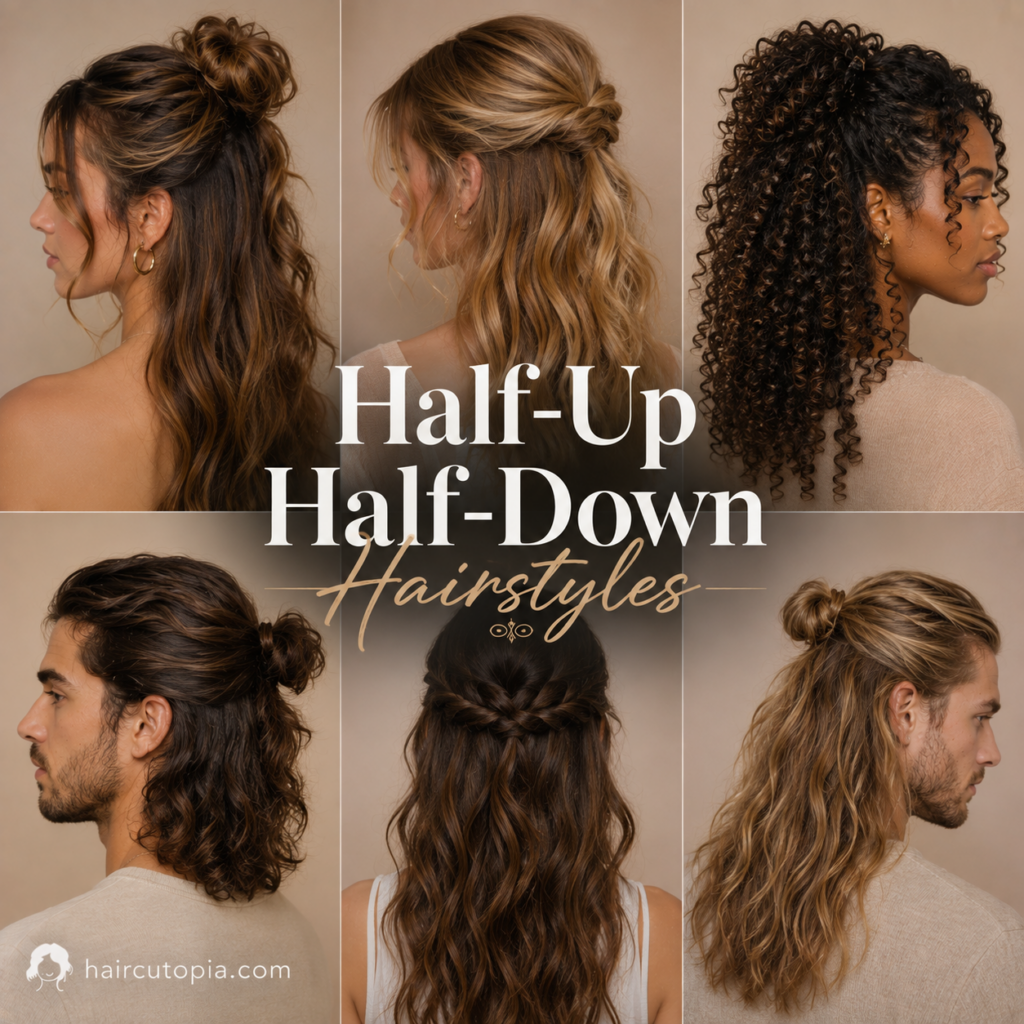
Half-up buns combine the structure of an updo with the movement of loose hair, making them one of the most versatile half-up half-down hairstyles for different lengths and textures.
They work across many textures and lengths.
High Half-Up Bun
Gather the upper section near the crown and create a small bun.
Leave the remaining hair loose.
Low Half-Up Bun
Position the bun farther toward the back for a softer shape.
Curly Half-Up Bun
Use the natural curl pattern to create texture through both the bun and loose hair.
Braided Half-Up Bun
Add one or more braids before gathering the upper section into a bun.
Double Bun Hairstyles
Double buns divide the hair into two sections rather than gathering everything into one.
They can be worn high or low.
High Double Buns
Position one bun on each side near the top of the head.
The finish can be sleek or intentionally messy.
Low Double Buns
Low double buns sit closer to the nape and create a less dramatic silhouette.
Braided Double Buns
Braid each section before wrapping it into a bun.
Curly Double Buns
Natural curls add volume and texture to both buns.
Braided Bun Hairstyles
Braided hairstyles can turn a simple bun into something much more detailed, whether the braid forms the bun itself, leads into it, or wraps around the finished style.
Basic Braided Bun
- Create a ponytail.
- Braid the ponytail.
- Secure the end.
- Wrap the braid around the base.
- Pin it into place.
This is one of the easiest braided bun techniques.
French Braid Into a Bun
A French braid can travel along the scalp before ending in a bun.
Dutch Braid Into a Bun
A Dutch braid creates a more raised braid pattern before transitioning into the bun.
Multiple Braids Into a Bun
Several smaller braids can be gathered and wrapped together.
Braided Bun With Loose Pieces
Leave selected sections around the face to soften the finished style.
Twisted Bun Hairstyles
Twisted buns are straightforward and don’t require braiding skills.
Gather the hair into a ponytail, twist the length, and wrap it around the base.
You can also divide the ponytail into multiple sections and twist them separately before pinning them together.
This creates a more intricate-looking bun using essentially the same technique.
Side Bun Hairstyles
A side bun shifts the hairstyle away from the center and toward one side of the nape.
This asymmetrical placement can make a simple bun feel noticeably different.
Side buns work particularly well with:
- Loose waves
- Braids
- Curls
- Side parts
- Face-framing pieces
They can be casual or formal depending on the finish.
Bun Hairstyles With Bangs
Bangs can remain completely visible when the rest of the hair is in a bun.
Curtain Bangs With a Bun
Curtain bangs naturally frame the face and work with both high and low buns.
Full Bangs With a Bun
Full bangs create contrast with the pulled-back hair.
Curly Bangs With a Bun
Curly bangs can blend into loose curls around a textured bun.
Side-Swept Bangs With a Bun
Side-swept bangs pair especially well with side parts and lower bun placements.
Bun Hairstyles With Face-Framing Pieces
Face-framing sections can soften the transition between the pulled-back hair and your face.
They can remain:
- Straight
- Wavy
- Curly
- Coily
You don’t need identical pieces on both sides.
A little asymmetry can look natural, especially with relaxed buns.
Bun Hairstyles With Accessories
Hair accessories can transform a basic bun without changing the hairstyle itself.
Consider:
- Decorative pins
- Barrettes
- Bows
- Ribbons
- Hair combs
- Flowers
- Pearl pins
- Crystal pins
- Hair cuffs
- Scrunchies
Placement depends on the shape of the bun.
A decorative comb can sit above or beside a low bun, while pins can be distributed through a larger textured style.
Easy Bun Hairstyles
Some buns can be created in only a few minutes, which is why high, low, messy, braided, and half-up buns are common easy hairstyles for everyday wear.
Easy Twisted Bun
Create a ponytail, twist the length, wrap it around the base, and secure it.
Easy Messy Bun
Gather the hair loosely, create the bun, secure it, and adjust the shape afterward.
Easy Braided Bun
Braid a ponytail before wrapping it into a bun.
Easy Half-Up Bun
Gather only the top section and wrap it into a small bun.
Easy Claw Clip Bun
Twist the hair and fold or wrap it before securing the shape with a claw clip.
The easiest option depends on your length and texture, so it’s worth practicing several techniques.
Bun Hairstyles for Work
Buns are practical for work because they keep longer hair controlled throughout the day.
Options include:
- Sleek low buns
- Twisted buns
- Braided buns
- High buns
- Claw clip buns
- Natural textured buns
The appropriate level of polish depends on your workplace.
A bun doesn’t automatically need to be completely smooth to look professional.
Bun Hairstyles for School
For school, comfort and speed usually matter most.
Try:
- Messy buns
- High buns
- Low buns
- Half-up buns
- Double buns
- Braided buns
Choose a style that stays secure without requiring constant adjustment.
Formal Bun Hairstyles
Buns are a natural choice among formal hairstyles because they create a defined silhouette and keep the neck and shoulders visible while offering everything from minimalist to highly detailed finishes.
Popular formal versions include:
- Sleek low buns
- Textured low buns
- Braided buns
- Curly buns
- Side buns
- Sculpted high buns
Formal doesn’t automatically mean complicated.
A carefully finished low bun can look just as appropriate as a much more intricate updo.
Wedding Bun Hairstyles
Buns are especially popular among wedding hairstyles because they can work with veils, combs, flowers, and other accessories while keeping the overall shape secure.
Ideas include:
- Romantic low buns
- Sleek buns
- Braided wedding buns
- Curly buns
- Textured chignons
- High buns
- Side buns
If you’re wearing a veil, decide where it will attach before finalizing the hairstyle.
The bun can sometimes provide a useful anchor point.
Prom Bun Hairstyles
Buns are versatile prom hairstyles because they can be polished, romantic, textured, braided, sleek, or dramatic depending on the placement and finish.
Popular options include:
- High textured buns
- Sleek low buns
- Braided buns
- Curly buns
- Messy formal buns
- Side buns
If you’ll be dancing, check that the bun stays secure while you’re moving—not just while you’re sitting in front of a mirror.
Casual Bun Hairstyles
For everyday wear, simplicity usually wins.
Casual options include:
- Messy buns
- Low twisted buns
- High buns
- Half-up buns
- Claw clip buns
- Loose man buns
These styles don’t need perfect sections or elaborate finishing.
How to Make a Basic Bun
There are many techniques, but a simple twisted bun is a useful place to start.
Basic Bun Tutorial
- Brush or arrange your hair toward the desired placement.
- Secure it into a ponytail.
- Twist the ponytail.
- Wrap the twisted length around the base.
- Tuck the ends underneath.
- Secure the bun with pins or another elastic.
- Adjust the shape.
Once you’ve learned the basic version, you can change the texture, placement, part, and accessories.
How to Make a Bun Look Fuller
A fuller bun doesn’t always require extremely thick hair.
Try:
- Loosening the wrapped sections slightly
- Adding texture before styling
- Expanding a braid before wrapping it
- Using natural curls or waves for volume
- Dividing the ponytail into multiple sections
- Spreading the bun gently after securing it
Make small adjustments.
Pulling aggressively can destabilize the hairstyle.
How to Keep a Bun Secure
Start with a stable foundation.
If you’re using a ponytail, make sure the elastic is secure before building the bun.
Use pins where the hair actually needs support rather than placing them randomly around the outside.
Depending on your hairstyle, you might use:
- Bobby pins
- Hairpins
- Elastics
- Claw clips
- Styling products
- Hairspray
The right combination depends on your hair density and the size of the bun.
How Tight Should a Bun Be?
A bun should stay in place without causing pain.
Persistent pulling, scalp discomfort, or headaches usually mean the hairstyle is too tight or the weight isn’t distributed well.
High buns can be particularly noticeable because the hair is being directed upward.
If the bun feels uncomfortable, try:
- Loosening the base
- Moving it lower
- Making the bun wider
- Repositioning pins
- Reducing heavy accessories
Comfort matters, especially when you’ll be wearing the hairstyle all day.
How to Make a Bun Last Longer
A bun that repeatedly loosens usually needs better structural support rather than simply more hairspray.
Depending on your hair, you may benefit from:
- Texture spray
- Mousse
- Gel
- Smoothing cream
- Pomade
- Hairspray
After finishing, gently move your head from side to side.
If the bun shifts immediately, reinforce the structure before leaving.
How to Choose the Right Bun Hairstyle
With so many variations, start with a few practical questions.
How Long Is Your Hair?
Long hair allows for larger buns and more complicated braiding. Medium hair works well with many classic bun styles, while shorter hair may be better suited to mini or half-up buns.
What Is Your Natural Texture?
Straight hair creates clean lines. Waves add movement. Curls and coils naturally create volume and texture.
There’s no need to make every bun look the same.
Where Do You Want the Bun?
Placement changes the entire silhouette.
Try the hairstyle high, low, or around the middle of the head before deciding which position you prefer.
What Is the Occasion?
A messy bun might be perfect for an ordinary day, while a wedding or formal event may call for additional structure or detail.
How Long Will You Wear It?
If you’ll have the bun in for eight hours, prioritize comfort as much as appearance.
Common Bun Hairstyle Mistakes
Buns are simple, but a few habits can make them uncomfortable or harder on your hair.
Try to avoid:
- Pulling the bun unnecessarily tight
- Repeatedly placing it in exactly the same position
- Using elastics that snag the hair
- Adding excessive numbers of pins
- Ignoring scalp discomfort
- Making a large bun so heavy that it constantly pulls
- Applying more product instead of fixing an unstable foundation
- Forcing short layers into place
- Fighting your natural texture unnecessarily
- Using accessories that are too heavy for the hairstyle
A bun doesn’t need to be perfectly symmetrical to look good.
Frequently Asked Questions About Bun Hairstyles
What are the most popular bun hairstyles?
High buns, low buns, messy buns, sleek buns, braided buns, curly buns, half-up buns, and double buns are among the most versatile options.
What is the easiest bun hairstyle?
A basic twisted bun is one of the easiest. Create a ponytail, twist the length, wrap it around the base, and secure it.
Can short hair go into a bun?
Some short hair can. Lobs and longer bobs may be long enough for small low or half-up buns, while shorter pieces can be pinned or left loose.
How can I make my bun look fuller?
Use natural texture, gently loosen the bun after securing it, expand braids before wrapping them, or divide the hair into multiple sections to create additional shape.
Can curly hair be worn in a bun?
Yes. Curly hair works particularly well with high, low, messy, half-up, and formal buns because the curl pattern naturally adds texture and volume.
Are buns appropriate for formal events?
Absolutely. Sleek low buns, braided buns, textured buns, chignons, and curly buns are all common formal hairstyles.
Can men wear bun hairstyles?
Yes. Men with sufficient length can wear high, low, messy, curly, braided, and half-up buns.
How do I stop my bun from falling out?
Start with a secure foundation and use pins, elastics, or clips where the structure needs support. If the hairstyle is unstable before applying finishing products, hairspray alone usually won’t solve the problem.
Is wearing a bun every day bad for your hair?
Buns aren’t automatically damaging, but repeatedly wearing very tight hairstyles in the same position can place stress on the same sections. Varying placement and avoiding excessive tension can help reduce repeated pulling.
Should a sleek bun feel tight?
No. A sleek appearance comes from controlling the surface of the hair, not from pulling as hard as possible. The hairstyle should remain comfortable.
Finding the Right Bun Hairstyle for You
There’s a reason bun hairstyles keep showing up everywhere from busy mornings to weddings.
The basic structure is incredibly simple, but the possibilities aren’t.
A bun can sit high or low, look sleek or deliberately messy, incorporate braids or twists, showcase natural curls, or keep long hair completely out of the way. It can take two minutes or become an elaborate formal hairstyle.
Start with the version that works naturally with your hair.
Then experiment with placement, texture, volume, parts, face-framing pieces, and accessories. Small changes often make a bigger difference than learning an entirely new technique.
Most importantly, the bun should feel comfortable.
If it stays secure, works with your texture, and looks the way you want it to look, you’ve already found the version that matters.