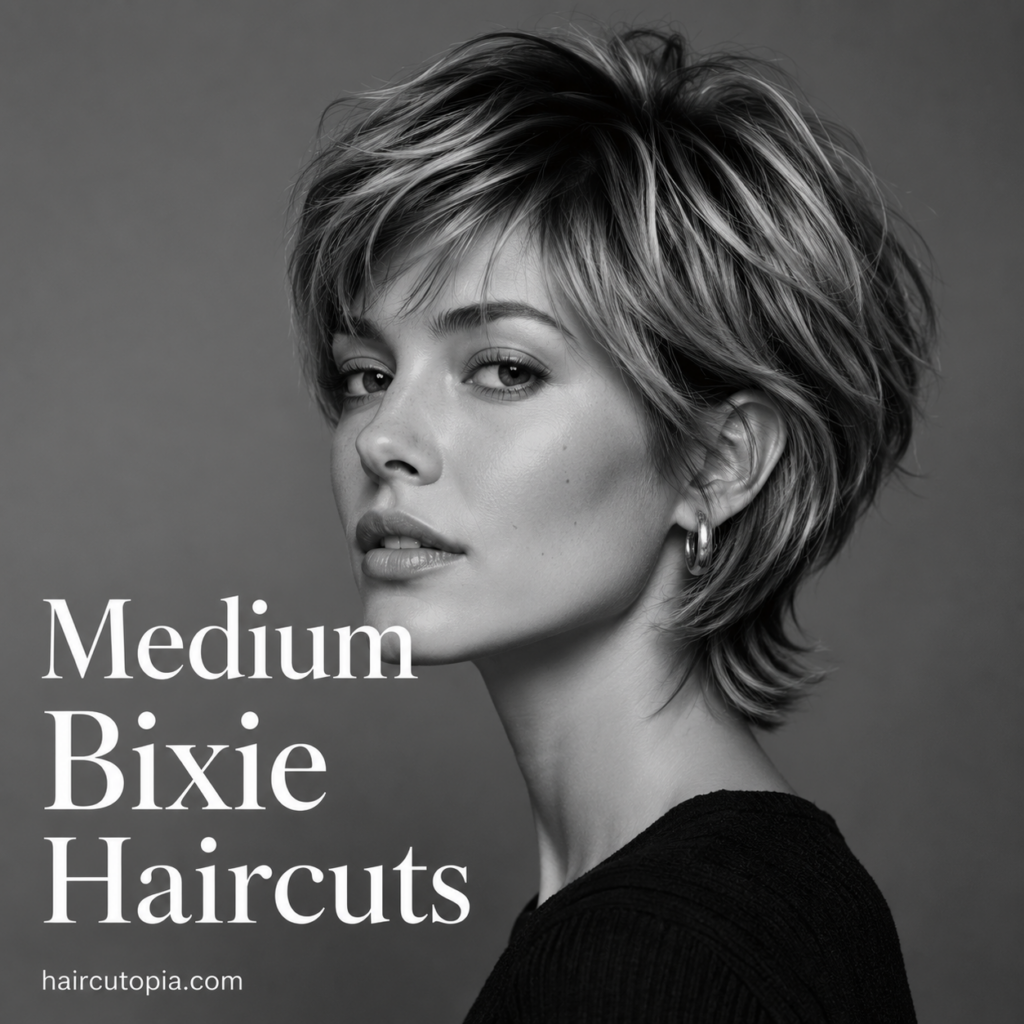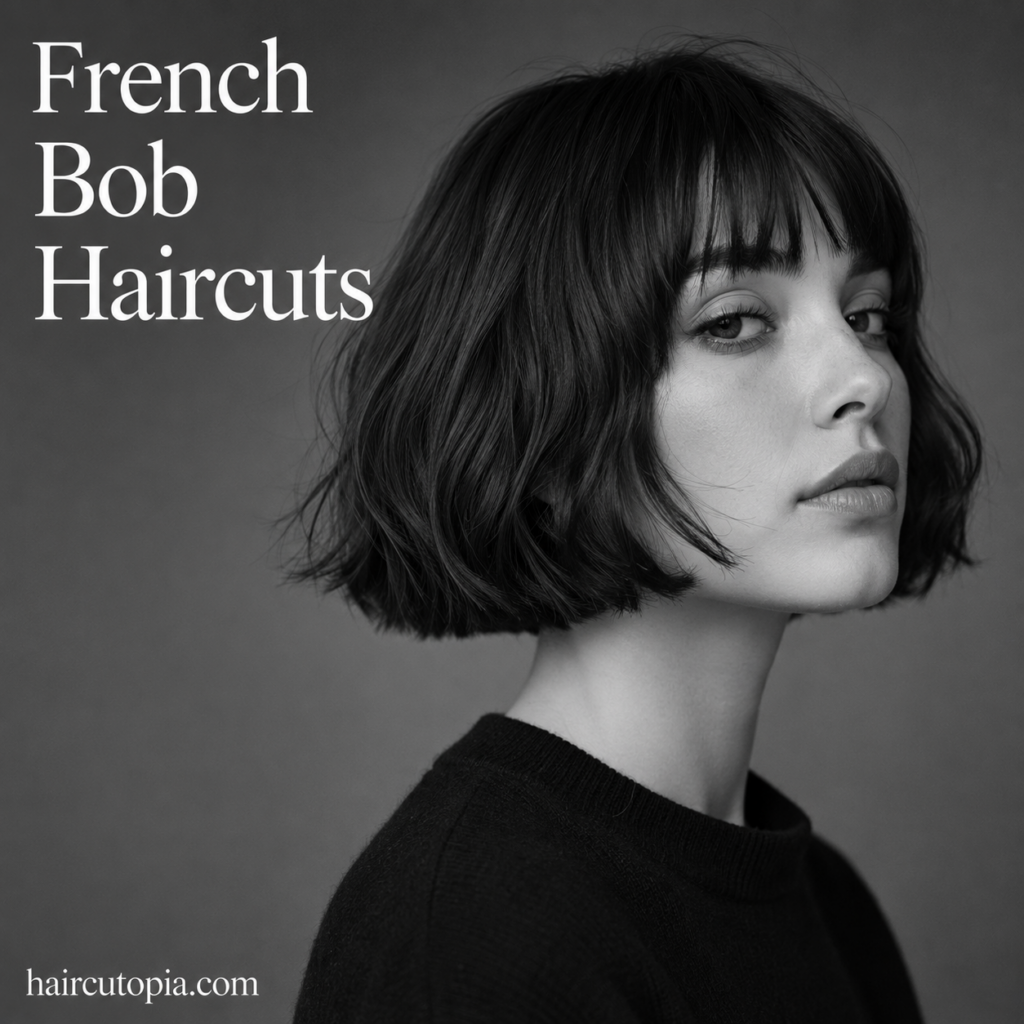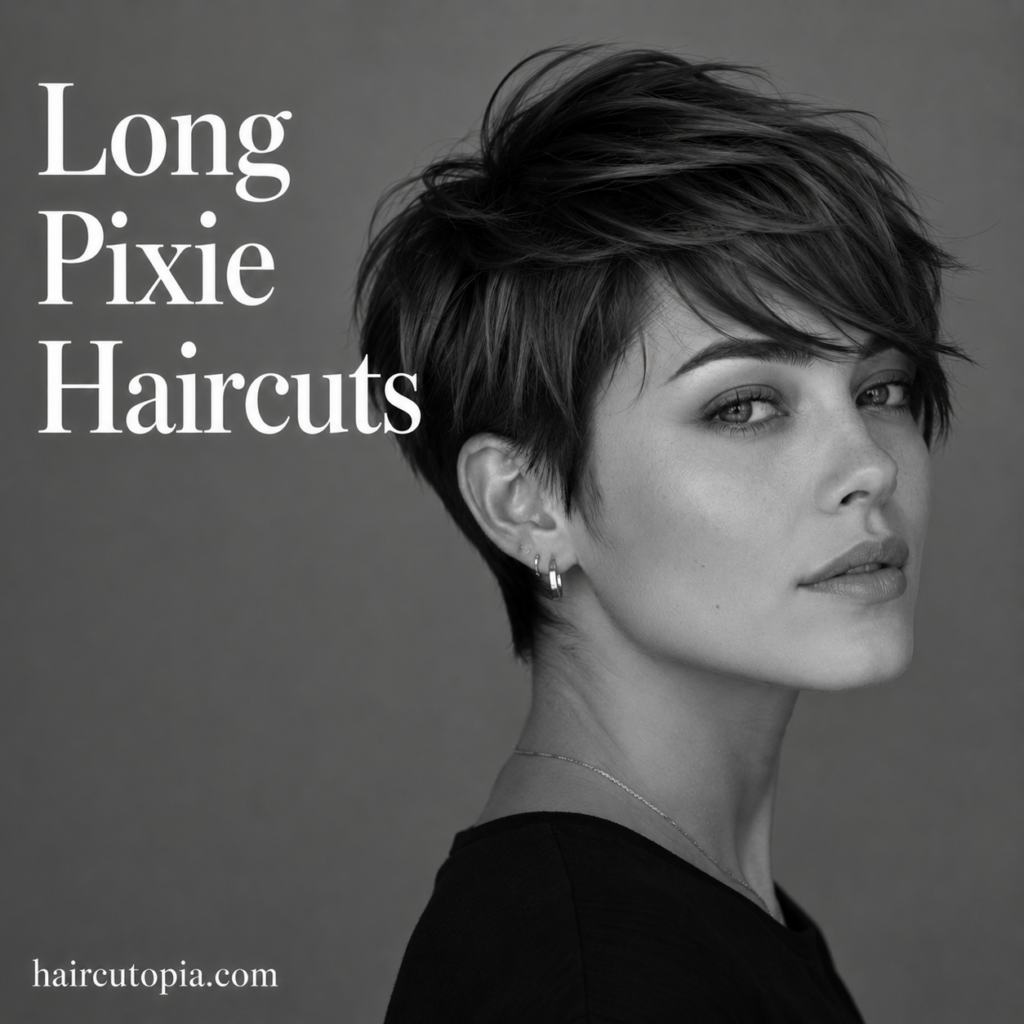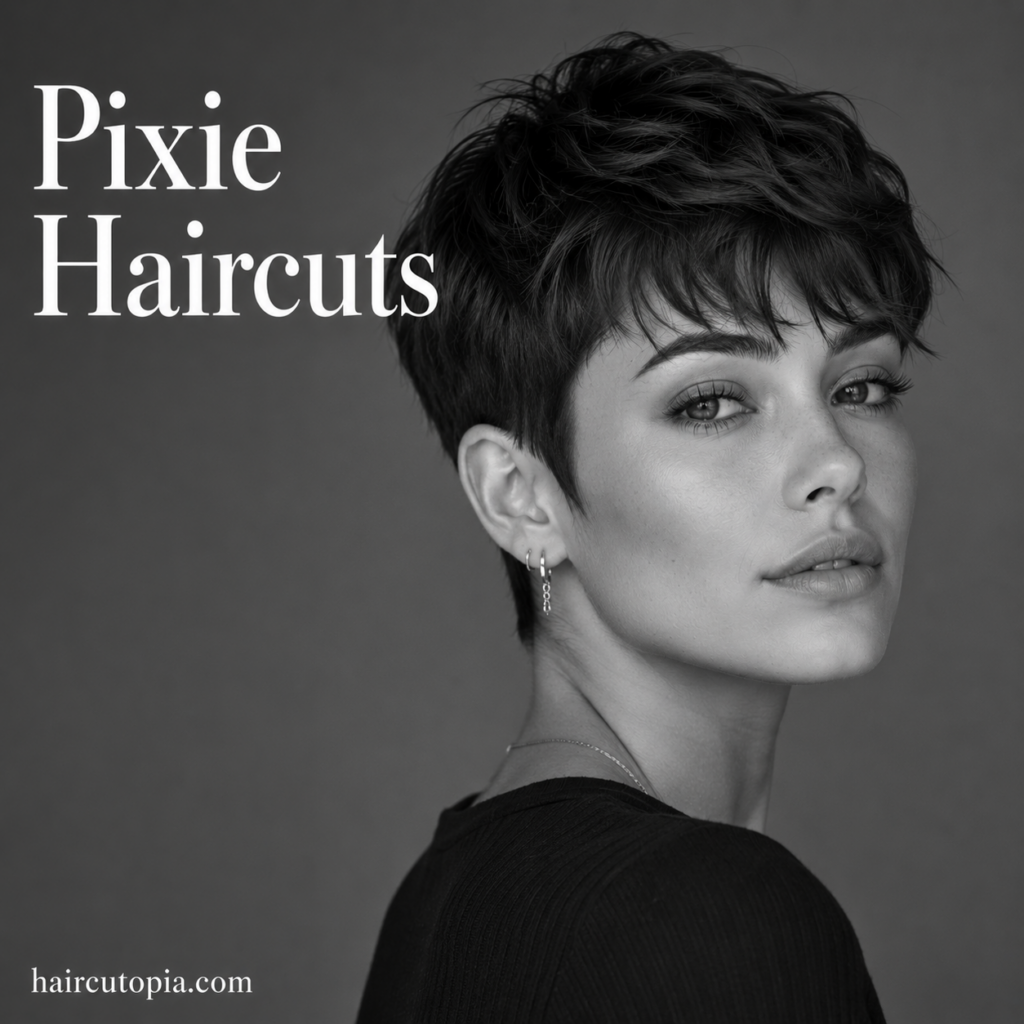
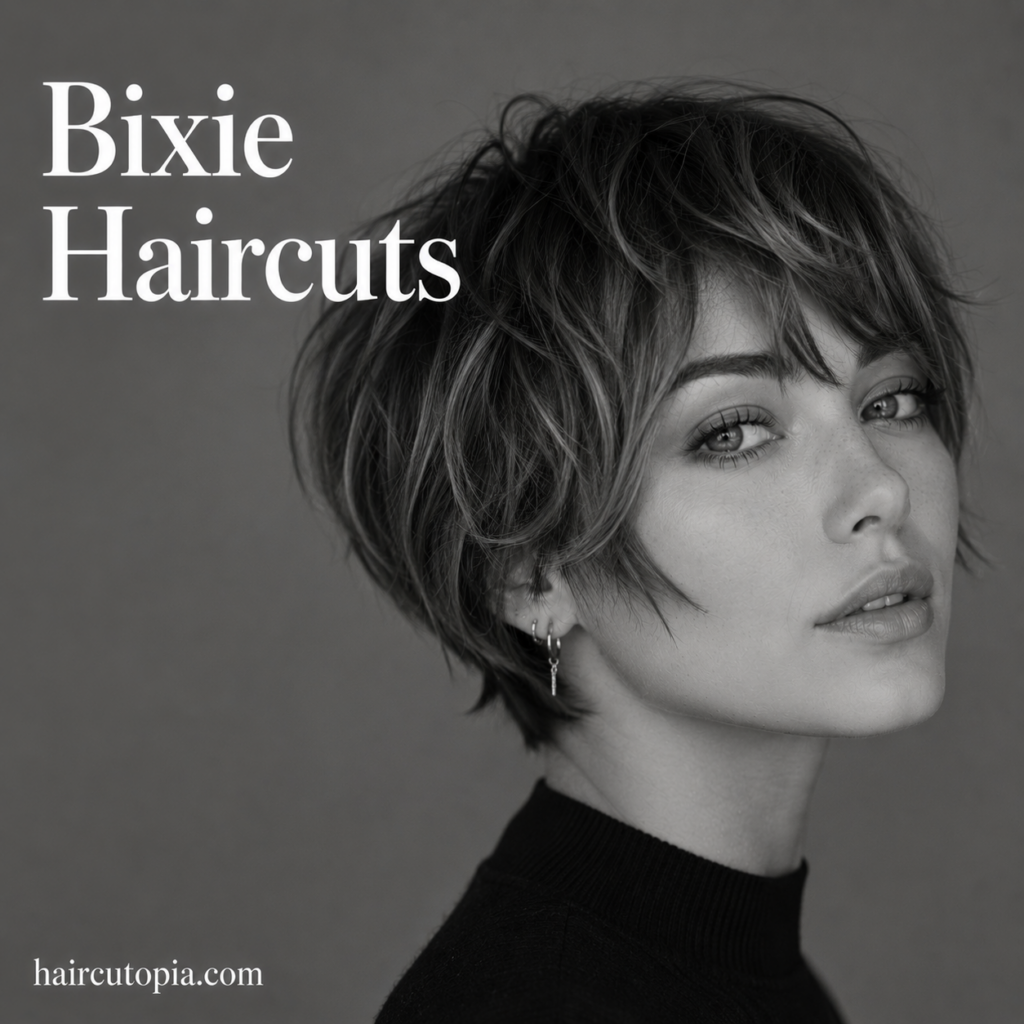
The bixie sits right in that interesting space between a pixie and a bob.
It’s short, but not usually as closely cropped as a traditional pixie. It has some of the fullness and movement of a bob, but without the stronger, heavier perimeter that defines many classic bob haircuts.
That combination gives the bixie its personality.
You can wear it soft and layered, tousled and textured, sleek and polished, or shaped around natural waves and curls. Longer pieces around the ears and neckline create movement, while shorter layers through the crown keep the haircut light.
It’s also a practical option if you like the idea of short hair but aren’t ready for an extremely cropped cut.
A bixie leaves enough length to play with. You can tuck the sides behind your ears, sweep the fringe across your forehead, add volume through the crown, or let natural texture create the shape.
The key is finding the right balance between pixie and bob.
Here’s what to know about bixie haircuts, including the different styles, ideal lengths, hair types, maintenance, styling, and what to ask for at the salon.
What Is a Bixie Haircut?
A bixie is a short haircut that combines elements of a bob with the cropped proportions and movement of a pixie haircut.
The name itself comes from combining the words “bob” and “pixie.”
Compared with a traditional pixie, a bixie generally keeps more length around the sides, ears, and back. Compared with a traditional bob haircut, it tends to have more layering and a lighter, less defined perimeter.
Common characteristics include:
- Short overall length
- Longer pieces around the ears
- Layering through the crown
- A softer neckline
- Textured or feathered ends
- Optional bangs
- More movement than a classic pixie
- Less perimeter weight than a traditional bob
There isn’t one exact formula.
Some bixies lean heavily toward the pixie side and remain quite short. Others retain enough length to look almost like a very short, heavily layered bob.
That’s part of the appeal.
Bixie vs. Pixie: What’s the Difference?
A pixie generally follows the shape of the head more closely.
The sides and back are often cropped or tapered, while additional length may remain through the top and fringe.
A bixie usually keeps more hair around the entire head.
You’ll often see:
- Longer side pieces
- More coverage around the ears
- Additional length through the back
- A fuller silhouette
- More visible layering
A pixie can still have long bangs or a long top, but the underlying shape remains relatively cropped.
With a bixie, the extra length becomes part of the overall perimeter.
The distinction isn’t always dramatic, especially when comparing a bixie with a long pixie. There’s naturally some overlap between the two.
Bixie vs. Bob: What’s the Difference?
A bob generally has a stronger baseline.
Even layered bobs tend to maintain a recognizable perimeter around the jaw, chin, or neck.
A bixie breaks up that perimeter.
Layers are often more noticeable, and the ends may appear softer, lighter, or more feathered.
Think of the difference this way:
A bob tends to emphasize the outer shape of the haircut.
A bixie tends to emphasize movement within the haircut.
That’s not a strict rule, but it’s a useful way to understand the overall effect.
A bixie may also expose more of the ears and neckline than a traditional bob.
Bixie vs. Long Pixie: How Can You Tell Them Apart?
This is where the distinction becomes less obvious.
A long pixie and a short bixie can look remarkably similar.
A long pixie usually keeps the basic cropped structure of a pixie while preserving extra length through selected areas, such as the top or fringe.
A bixie tends to distribute more of that length around the sides and back as well.
If the haircut has:
- A cropped neckline
- Short sides
- A dramatically longer top
…it probably leans more toward a long pixie.
If it has:
- Longer side pieces
- More length behind the ears
- A softer neckline
- A fuller, layered perimeter
…it probably leans more toward a bixie.
You don’t need to obsess over the label when talking to your stylist.
Photos and specific length preferences are much more useful.
Why Bixie Haircuts Are So Popular
Among shorter women’s haircuts, the bixie offers considerable flexibility without requiring the closely cropped proportions of a traditional pixie.
It can give you the lightness of a pixie without taking away quite as much hair.
That makes it appealing for someone transitioning from a bob or longer style.
It’s also convenient if you’re growing out a pixie.
Instead of treating the awkward middle stage as something to endure, the haircut can be intentionally reshaped into a bixie.
Another advantage is texture.
Bixies aren’t usually dependent on a perfectly sharp perimeter. Layers, movement, and slightly undone finishes often make the haircut more interesting.
That can make a bixie feel less rigid than some precision short cuts.
Popular Types of Bixie Haircuts
Small changes in layering and length can create very different versions of the bixie.
Classic Bixie Haircut
A classic bixie balances pixie-like layering with bob-inspired length.
The crown usually has movement, while the sides and back remain long enough to create a softer perimeter.
It shouldn’t feel extremely cropped or heavily structured.
Instead, the overall shape is light and wearable.
This is a good starting point if you want the bixie concept without taking it in an especially edgy or dramatic direction.
Layered Bixie Haircut
Layers are one of the defining characteristics of many bixie cuts, using the same principles found in other layered haircuts to control weight, movement, and volume.
They create movement through the crown and prevent the extra length from becoming heavy.
Longer layers produce a softer silhouette.
Shorter layers can create more volume and visible separation.
Layering can also help the haircut transition naturally between pixie and bob proportions.
Textured Bixie Haircut
A textured bixie emphasizes separation and movement.
The ends aren’t expected to sit in a perfectly uniform line.
Instead, individual sections can move naturally and create a slightly undone finish.
This style works particularly well with:
- Natural waves
- Tousled styling
- Piecey ends
- Air-dried texture
- Lightweight styling products
Texture can also make the grow-out process more forgiving because the haircut doesn’t depend on absolute precision.
Shaggy Bixie Haircut
A shaggy bixie takes layering further, incorporating some of the looser texture and more noticeable layering associated with shag haircuts.
The crown may have shorter, more noticeable layers, while longer sections remain around the sides and neckline.
This creates a deliberately relaxed silhouette.
Shaggy bixies can work beautifully with natural waves because the haircut encourages movement rather than trying to control every strand.
Choppy Bixie Haircut
A choppy bixie has more obvious variation between lengths.
The layers may appear piecey and intentionally irregular.
Compared with a softly layered bixie, this version has more visual texture.
It can be styled with separation through the crown, fringe, and ends for a slightly edgier finish.
Tapered Bixie Haircut
A tapered bixie gradually becomes shorter toward the neckline while maintaining additional length around the crown and sides.
The taper helps control the back without making it as closely cropped as many pixies.
This can be useful for thick hair or anyone who prefers a cleaner neckline.
Bixie With Bangs
Bangs fit naturally into the layered structure of a bixie.
Popular options include:
- Curtain bangs
- Wispy bangs
- Side-swept bangs
- Choppy fringe
- Short textured bangs
- Longer sweeping fringe
Because the haircut already contains different lengths, bangs can blend into the sides without feeling disconnected.
Bixie With Long Side Pieces
Leaving longer sections around the ears creates one of the most recognizable bixie silhouettes.
These pieces can frame the cheekbones or jaw and may be long enough to tuck behind the ears.
They also create a clear visual difference between a bixie and a more closely cropped pixie.
How Long Is a Bixie Haircut?
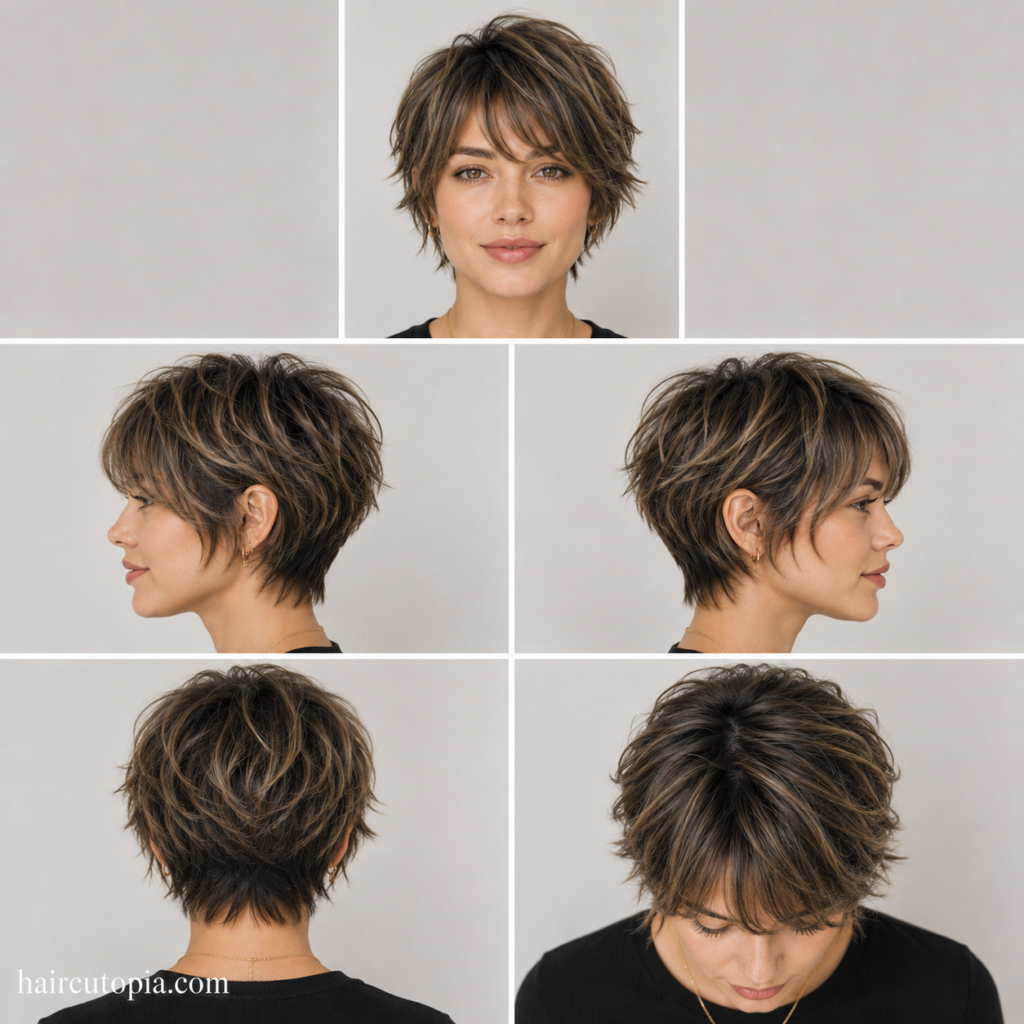
There isn’t one required length.
Most bixies are longer than traditional pixies but shorter and more layered than classic bobs.
Where that length is distributed matters just as much as the measurement.
Short Bixie
A short bixie leans toward pixie proportions.
The neckline remains relatively compact, but additional length is preserved around the crown and sides.
This can be a good choice if you already enjoy pixie cuts but want something softer.
Medium Bixie
A medium bixie creates a more even balance between pixie and bob.
There’s enough length around the sides for movement and ear tucks, while the crown remains layered.
This is probably the most recognizable bixie territory.
Longer Bixie
A longer bixie begins approaching a short layered bob.
The sides and back have more visible length, but the heavy perimeter associated with many bobs is still broken up by layers and texture.
This version can be particularly useful if you’re growing your hair out.
Bixie Haircuts for Fine Hair
A bixie can work very well with fine hair, but the layering needs to be thoughtful.
Shortening the overall length can reduce weight and create more natural lift.
However, removing too much hair through heavy texturizing can make fine strands appear sparse.
Good options include:
- Softly layered bixies
- Side-swept bixies
- Shorter bixies
- Bixies with light crown volume
- Styles with a fuller perimeter
Preserving some density through the sides can help the haircut look fuller.
Styling products should generally remain lightweight.
A small amount of mousse, root-lifting product, or texturizing spray may be enough to create movement without weighing the hair down.
Bixie Haircuts for Thick Hair
Thick hair gives a bixie plenty of natural fullness.
The challenge is making sure that fullness appears in the right places.
Without enough internal shaping, the haircut can become bulky around the sides or back.
Layering can remove weight while maintaining movement.
Thick hair works particularly well with:
- Shaggy bixies
- Textured bixies
- Choppy bixies
- Tapered bixies
- Heavily layered styles
The goal isn’t necessarily to thin the hair aggressively.
Strategic weight removal usually produces a more controlled result.
Bixie Haircuts for Straight Hair
Straight hair makes the layers of a bixie easy to see.
The haircut can be worn sleek for a polished appearance or styled with texture to emphasize individual sections.
Fine straight hair may benefit from lighter layering.
Thick straight hair can often support more substantial shaping.
Depending on the cut, straight bixie hair can be:
- Side-swept
- Tucked behind the ears
- Brushed forward
- Tousled
- Sleek
- Lifted through the crown
A little styling product can completely change the finish.
Bixie Haircuts for Wavy Hair
Wavy hair is particularly well suited to bixie cuts.
The additional length gives waves room to form, while the layers prevent them from becoming weighed down.
A shaggy or textured bixie can require surprisingly little styling if your natural wave pattern already creates movement.
Keep in mind that waves may become stronger after cutting.
Removing length reduces weight, which can allow the hair to spring upward.
Plan the final shape around your dry texture.
Bixie Haircuts for Curly Hair
Curly bixies can create a soft, rounded, or highly textured silhouette.
The key is leaving enough length for the curl pattern to form.
Layers can distribute volume and prevent the haircut from becoming too heavy toward the bottom.
Shrinkage should always be considered.
A section that looks relatively long while stretched may sit significantly higher once the curl contracts.
The final dry shape is more important than the stretched length.
Bixie Haircuts for Coily Hair
Coily textures can create beautiful volume in a bixie.
The sides and neckline can be shaped more closely while additional texture remains through the top.
Or the haircut can preserve more length throughout for a softer, fuller silhouette.
Layering should complement the natural shrinkage pattern rather than fighting it.
Bixie Haircuts for Different Face Shapes
Because the bixie leaves more hair around the face than many pixies, it offers plenty of room for customization.
Face shape can guide the placement of fringe, volume, and side pieces without dictating the haircut.
Bixie Haircuts for Oval Faces
Oval faces can experiment with most bixie variations.
You might choose:
- Curtain bangs
- Side-swept fringe
- Shaggy layers
- Sleek styling
- Full crown volume
- Longer side pieces
Hair texture and personal style can guide the details.
Bixie Haircuts for Round Faces
Longer pieces around the sides can create vertical movement.
Volume through the crown can also change the overall silhouette.
Side-swept bangs introduce diagonal lines around the forehead.
But there’s no need to use the haircut solely to make the face appear longer. A rounded, full bixie can intentionally complement softer facial proportions.
Bixie Haircuts for Square Faces
Soft, feathered layers can contrast with a defined jawline.
Longer side pieces can also create movement around the cheekbones and jaw.
For a stronger look, a more structured bixie can emphasize facial angles instead.
Bixie Haircuts for Heart-Shaped Faces
Bangs and side pieces provide plenty of options for balancing the upper and lower portions of the face.
Curtain bangs can open around the forehead, while longer sections near the ears add movement lower down.
Bixie Haircuts for Long Faces
Side volume and fringe can create more horizontal emphasis.
A bixie with softer crown volume rather than extreme height may also provide the proportions you’re looking for.
Bixie Haircuts With Bangs
Bangs can become a major feature of a bixie or blend quietly into the rest of the layers, depending on their length, weight, and placement.
Bixie With Curtain Bangs
Curtain bangs pair naturally with the bixie’s layered shape.
The shortest sections can open around the center of the forehead and gradually transition into longer side pieces.
This works particularly well with shaggy and wavy styles.
Bixie With Wispy Bangs
Wispy bangs provide light forehead coverage.
They create a softer finish than blunt fringe and can work well with fine hair.
Bixie With Side-Swept Bangs
Side-swept bangs add movement and asymmetry.
Longer versions can blend directly into the side layers and may be tucked away when you want your face more exposed.
Bixie With Choppy Bangs
Choppy bangs complement textured and piecey cuts.
They don’t need to fall into a perfectly straight line, which fits naturally with the bixie’s layered appearance.
Bixie With Short Fringe
Short fringe creates more contrast with longer sections around the sides and back.
This can make the haircut feel more distinctive and put greater emphasis on the eyes and brows.
Bixie Haircuts With a Middle Part
A middle part works particularly well on longer bixies.
The front sections can separate around the face and blend into longer pieces near the ears.
This creates a balanced silhouette and works naturally with curtain bangs.
If your hair doesn’t naturally part in the center, a slightly off-center version may require less daily styling.
Bixie Haircuts With a Side Part
A side part can create additional volume and asymmetry.
It’s particularly useful with longer fringe.
One side can be swept across the forehead while the other is tucked behind the ear.
This simple change can make the same haircut look considerably different.
Sleek vs. Textured Bixie Haircuts
The bixie doesn’t have to look messy.
A sleek version emphasizes:
- Smoothness
- Shape
- Shine
- Direction
- A cleaner silhouette
A textured version emphasizes:
- Movement
- Layers
- Separation
- Volume
- Piecey ends
Many bixie cuts can move between both finishes.
If you want that flexibility, tell your stylist.
The layering should support both smooth and textured styling rather than locking the haircut into one look.
How to Style a Bixie Haircut
The bixie provides more styling flexibility than its short length might suggest.
Tousled and Textured
Work a small amount of lightweight styling product through the hair.
Use your fingers to separate the layers and create movement.
Avoid making everything too uniform.
Smooth and Sleek
Direct the hair into place while blow-drying and finish with a lightweight smoothing product.
This can make the bixie’s shape appear more polished.
Crown Volume
Lift the roots around the crown while drying.
Shorter layers can naturally support additional height.
Natural Waves
If your hair naturally waves, allow the pattern to develop.
A lightweight curl or texture product may be all you need.
Defined Curls
Apply products suited to your curl type and allow the hair to dry with minimal disturbance.
The layers should help distribute the curls throughout the haircut.
Tucked Behind the Ears
This is one of the easiest ways to change a bixie.
Tuck both sides for a cleaner, more compact shape.
Tuck only one side for an asymmetrical finish.
Side-Swept
Direct longer fringe across the forehead.
This works particularly well when the haircut has a deep side part.
Are Bixie Haircuts Low Maintenance?
A bixie can be relatively easy to style, especially when the cut works with your natural texture.
It may also be more forgiving than a highly precise pixie because a little growth can blend into the layered silhouette.
That doesn’t make it maintenance-free.
As the hair grows, the crown can become heavier and the neckline may lose its shape.
Bangs may also need attention before the rest of the haircut does.
Think about maintenance in terms of both salon visits and everyday styling.
A textured, air-dried bixie may require very little work each morning.
A smooth, highly styled version may take more effort even though the haircut itself is short.
How Often Should You Trim a Bixie?
Many bixie haircuts can be reshaped approximately every 6–8 weeks.
A shorter, more precise version may need maintenance sooner.
A shaggy or intentionally grown-in bixie may comfortably go longer.
Your schedule depends on:
- Hair growth rate
- Bang length
- Neckline shape
- Amount of layering
- Hair density
- Desired finished look
- Whether you’re maintaining or growing the cut
If you’re growing toward a bob, trims should gradually support that goal rather than repeatedly returning the haircut to its original length.
How to Ask Your Hairstylist for a Bixie
Because the bixie sits between two haircut categories, simply asking for “a bixie” leaves a lot open to interpretation.
Reference photos are extremely useful.
Discuss:
- How short you want the back.
- How much length you want around the ears.
- Whether you want your ears exposed.
- How much layering you want through the crown.
- Whether the ends should feel soft or choppy.
- What type of bangs you want.
- How you normally style your hair.
- Whether you’re maintaining the bixie or growing it out.
It also helps to explain which direction you want the haircut to lean.
Do you want something closer to a pixie?
Or do you prefer a short, heavily layered bob?
That distinction gives your stylist a clearer target.
Going From a Bob to a Bixie
A bixie can be a great next step if you already have a bob and want to go shorter.
Instead of simply moving the entire perimeter upward, the haircut introduces more layering and removes weight.
The result feels lighter and more textured.
You can also preserve selected areas of length, such as pieces around the ears or longer bangs, which makes the transition less dramatic than going directly to a close pixie.
If you’re unsure, start with a longer bixie.
More length can always be removed later.
Going From a Pixie to a Bixie
A bixie is one of the most useful stages when growing out a pixie.
As the top and sides become longer, your stylist can begin reshaping them into a more intentional layered silhouette.
The back may still need occasional trimming.
Otherwise, it can grow faster than the sides visually and create excess weight around the neckline.
Rather than avoiding haircuts completely, use trims to guide the shape.
The goal is to keep gaining overall length while preventing the haircut from looking accidental.
Growing Out a Bixie
Growing a bixie into a bob is generally easier than growing directly from a very short pixie.
You already have additional length around the sides and back.
As the hair grows, the main goal becomes building a stronger perimeter.
Your stylist may gradually:
- Reduce shorter crown layers
- Preserve side length
- Allow the back to grow
- Adjust face-framing sections
- Blend out shorter pieces
Eventually, the haircut begins to behave more like a short bob as the perimeter becomes stronger and the shorter internal layers gradually grow out.
Patience is still necessary, but the transitions can be relatively smooth.
Who Should Consider a Bixie Haircut?
A bixie may be a particularly good choice if you:
- Want short hair without a close crop
- Like the movement of layered hair
- Are growing out a pixie
- Want to go shorter than a bob
- Prefer enough side length for ear tucks
- Have natural waves or curls you want to emphasize
- Like textured, tousled styling
- Want more flexibility than a traditional pixie
- Prefer a softer perimeter than a classic bob
It’s also a good option if you’re curious about short hair but haven’t decided exactly how short you want to go.
Common Bixie Haircut Mistakes to Avoid
The bixie may look effortless, but the shape still needs to be intentional.
Removing Too Much Length Around the Sides
If the sides become extremely short, the haircut may lose the fuller shape that separates a bixie from a pixie.
Leaving Too Much Weight
The opposite can also happen.
Without enough layering, a bixie may simply look like a short bob.
Over-Texturizing Fine Hair
Fine hair needs enough density to maintain a full appearance.
Too much thinning or texturizing can leave the ends looking sparse.
Ignoring the Neckline
The back of the haircut plays a major role in whether a bixie looks intentional or overgrown.
Choosing a Cut Based Only on Styled Photos
A heavily styled bixie may behave very differently when air-dried.
Choose references that resemble how you realistically plan to wear your hair.
Frequently Asked Questions About Bixie Haircuts
What is a bixie haircut?
A bixie is a short haircut combining elements of a bob and pixie. It typically has pixie-inspired layers with more length around the sides and back.
Is a bixie longer than a pixie?
Generally, yes.
Bixies usually preserve more length around the ears, sides, and neckline than traditional pixie cuts.
Is a bixie shorter than a bob?
Usually.
A bixie tends to be shorter and more heavily layered than a traditional bob, although longer bixies and very short bobs can overlap.
What is the difference between a bixie and a long pixie?
A long pixie generally preserves a cropped pixie structure while adding length through selected areas. A bixie usually distributes more length around the sides and back, creating a fuller silhouette.
Are bixie cuts good for fine hair?
They can be.
Shorter lengths can help create lift, while careful layering adds movement. Fine hair should generally avoid excessive thinning or texturizing.
Do bixie haircuts work with thick hair?
Yes.
Layering can remove excess weight and create movement throughout thick hair.
Can curly hair have a bixie?
Absolutely.
A bixie can give curls plenty of movement while maintaining a short overall shape. Shrinkage should be considered when choosing the length.
Can you wear bangs with a bixie?
Yes.
Curtain, wispy, side-swept, choppy, and short bangs can all work with bixie haircuts.
How often should a bixie be trimmed?
Approximately every 6–8 weeks works for many bixies, although shorter precision cuts may require more frequent reshaping.
Is a bixie easy to grow out?
Generally, yes.
Because it already has more length than a traditional pixie, a bixie can transition naturally toward a short bob.
Are bixie haircuts high maintenance?
Not necessarily.
A textured bixie designed around your natural hair can require relatively little daily styling. Maintaining a precise shape will require regular salon visits.
Final Thoughts on Bixie Haircuts
The bixie works because it doesn’t force you completely into either the pixie or bob category.
It borrows what makes both cuts appealing.
You get the lightness, texture, and crown movement associated with a pixie, but you keep more length around the sides and back. That extra hair creates softness, styling flexibility, and an easier path if you eventually decide to grow your hair longer.
The best bixies aren’t simply halfway-grown pixies or overly layered bobs.
They’re deliberately shaped to sit between the two.
Decide how much length you want around your ears and neckline, how much volume you like through the crown, and whether you prefer soft layers or a choppier finish.
From there, let your natural texture help determine the details.
A good bixie should feel light and easy without looking accidental—and give you enough flexibility to make short hair feel different from one day to the next.