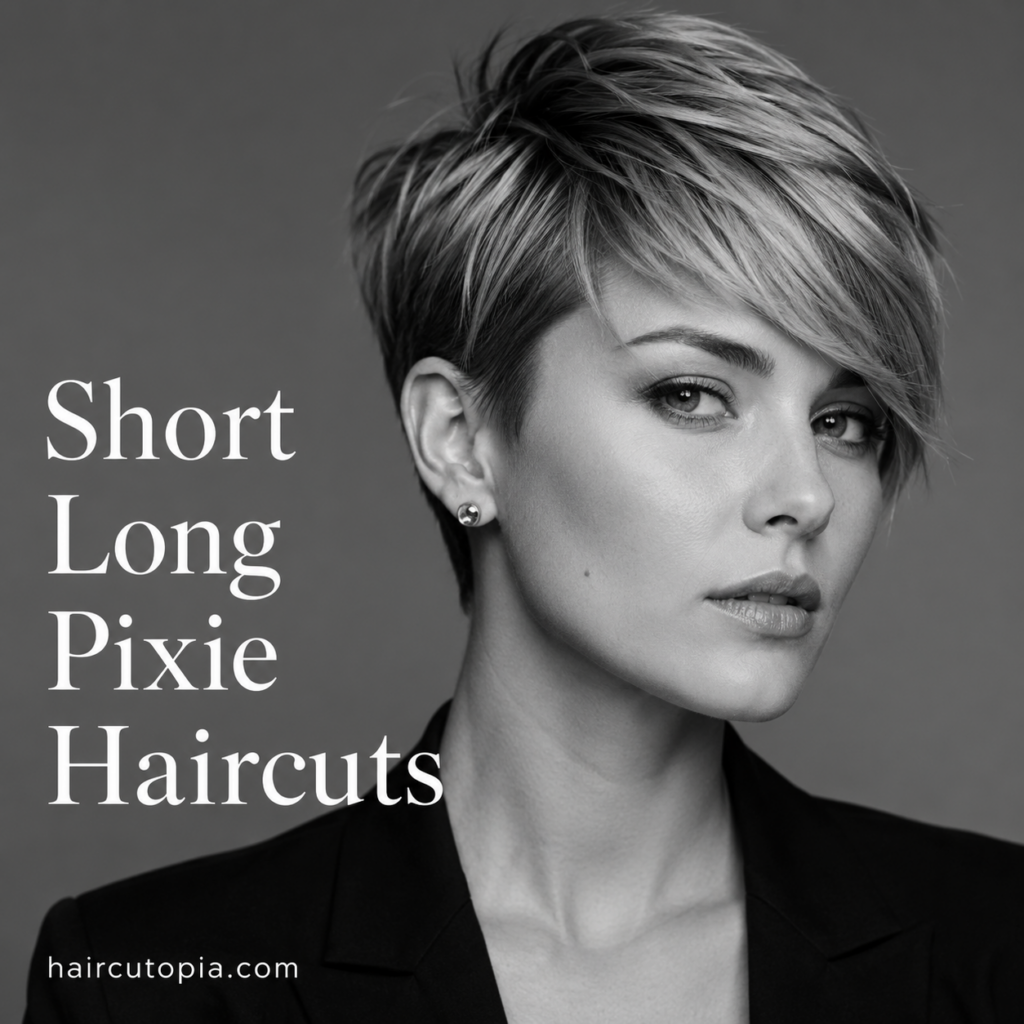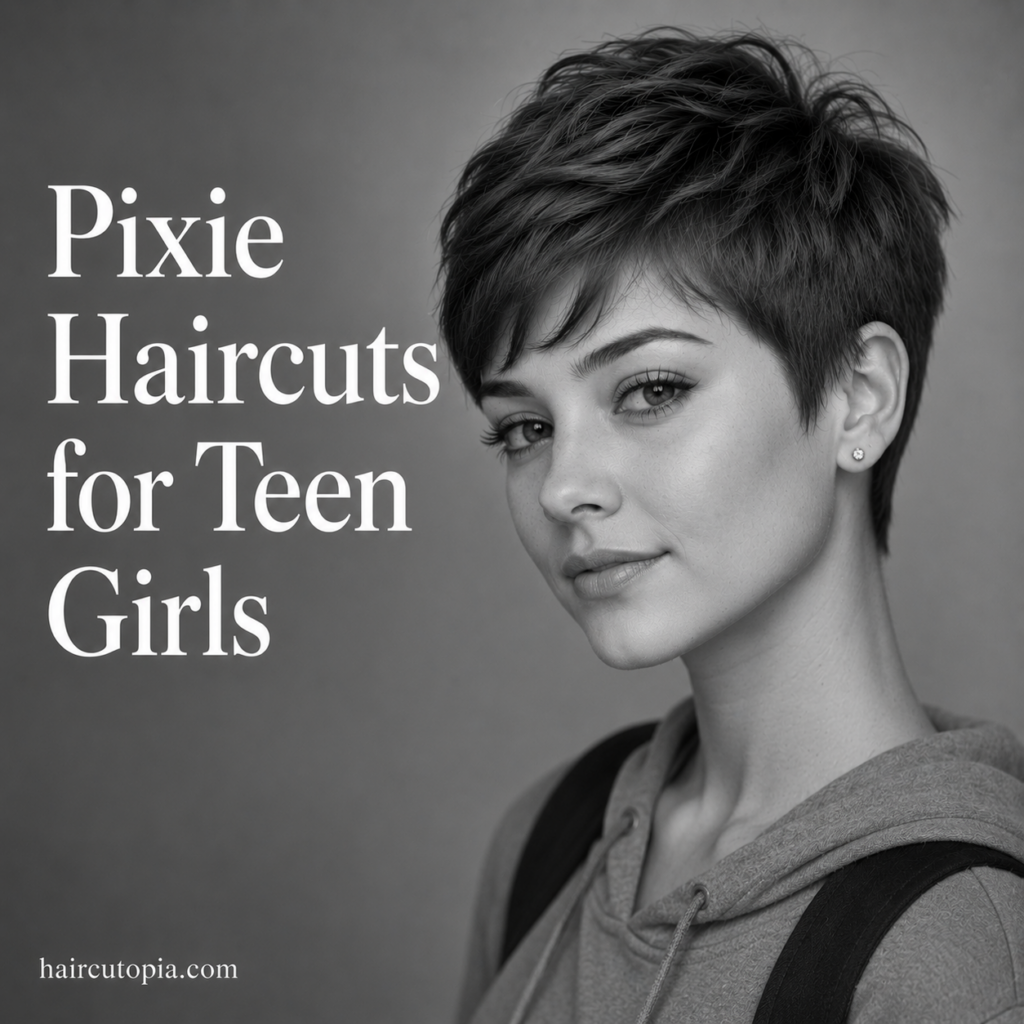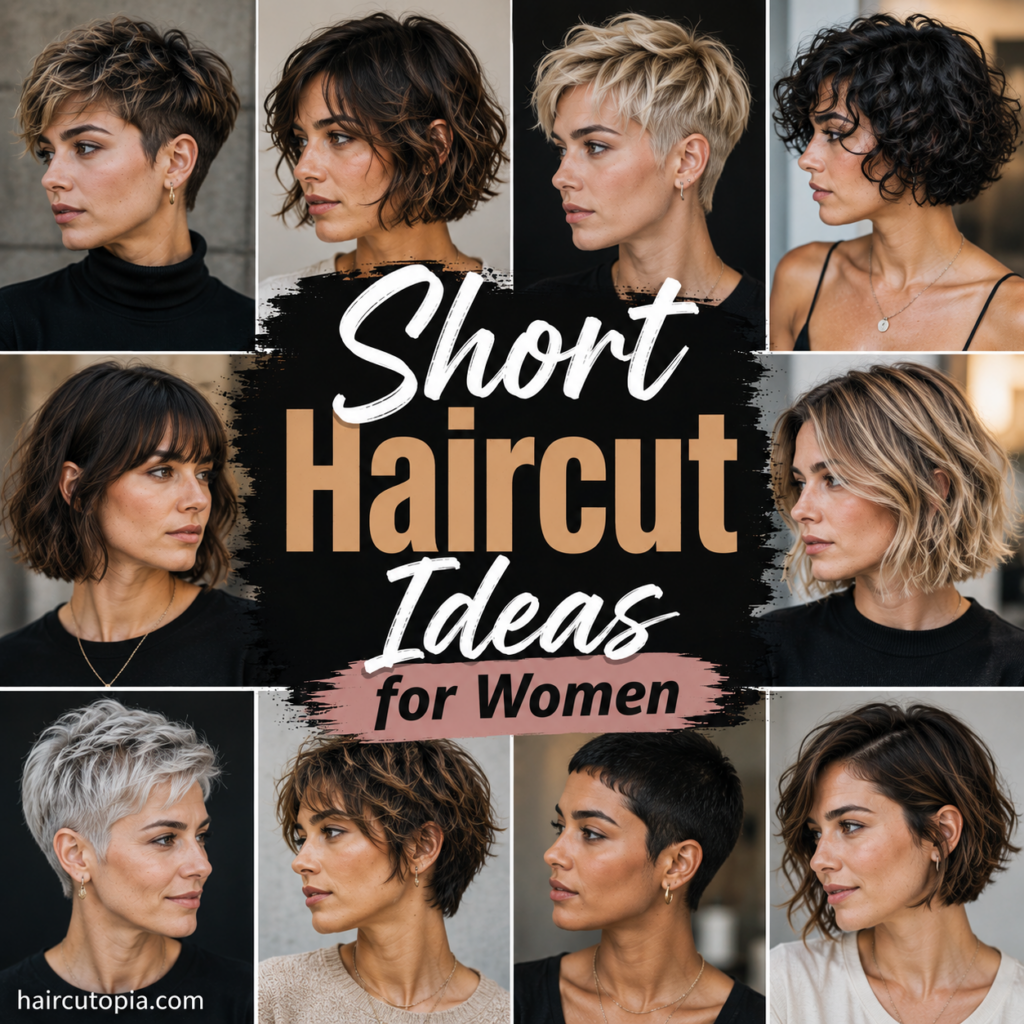
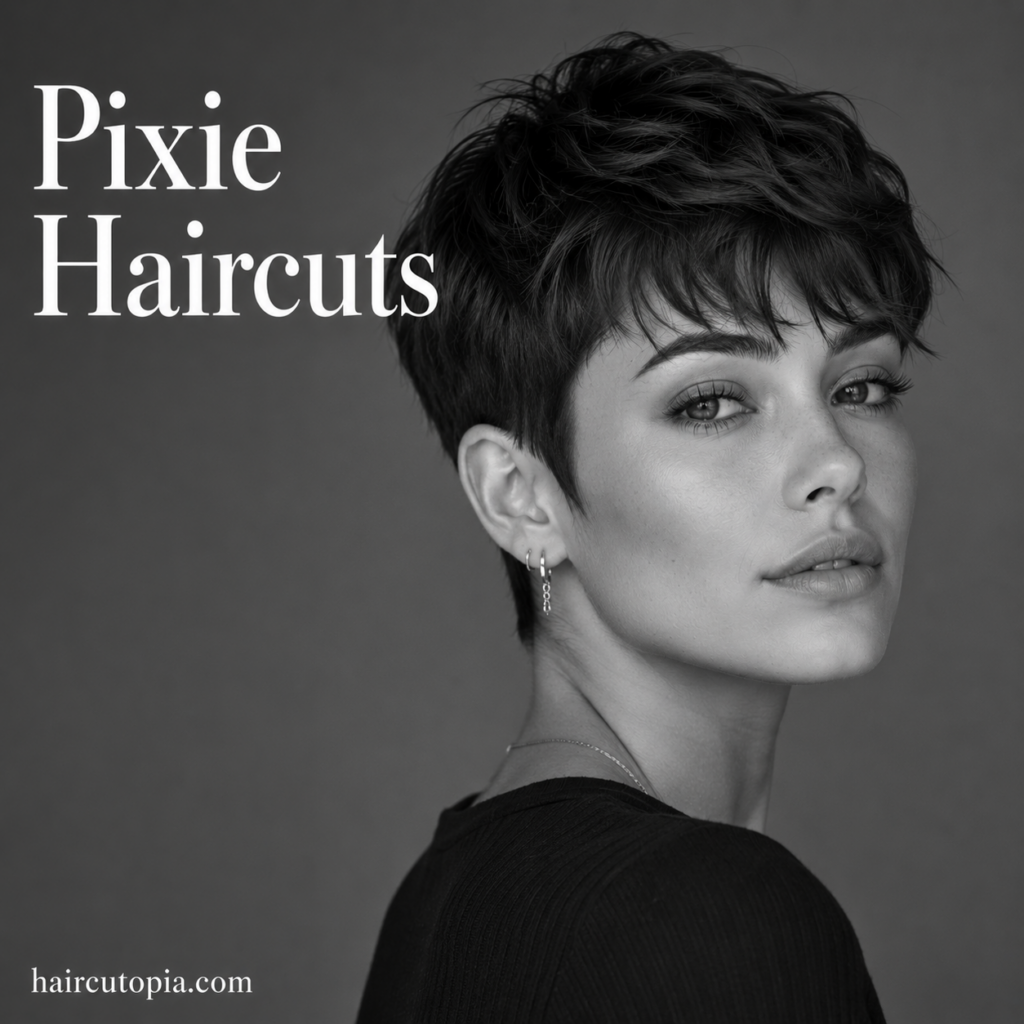
Pixie haircuts may be short, but they leave plenty of room for personality.
A pixie can be soft and understated, textured and playful, sleek and polished, or deliberately edgy. Some versions are cropped closely around the sides and back, while others leave enough length through the top for volume, waves, curls, or sweeping bangs.
That flexibility is easy to underestimate.
Going short doesn’t mean choosing one specific look. The placement of just an inch or two of hair can completely change a pixie. Longer fringe creates softness around the face. Shorter sides make the top appear more dramatic. Layers add movement, while a closely cropped shape can create a clean, minimalist finish.
The right pixie haircut depends on more than face shape. Hair texture, density, growth patterns, styling habits, and how frequently you’re willing to visit the salon all matter.
If you’re considering going short—or simply trying to figure out which pixie style suits you—this guide covers the major variations, maintenance, styling, and everything worth considering before the cut.
What Is a Pixie Haircut?
A pixie is a short haircut typically cropped around the sides and back with slightly more length through the top.
Unlike a bob, which usually maintains a visible perimeter around the jaw or neck, a pixie follows the shape of the head more closely.
That basic structure can be adapted in countless ways.
A pixie may feature:
- Short, tapered sides
- A cropped neckline
- Longer hair through the crown
- Side-swept bangs
- Short textured fringe
- Choppy layers
- Natural curls
- Tousled volume
- Sleek styling
- Close-cropped sections
Some pixies are only a few inches long throughout. Others leave considerably more length through the top and front.
The proportions are what create the finished style.
Why Pixie Haircuts Remain So Popular
Among short women’s haircuts, few styles create as noticeable a transformation as a pixie.
Removing length exposes more of the face, neck, and ears, allowing the haircut itself to become a stronger part of your overall look.
Pixies can also simplify certain parts of a hair routine.
There’s less hair to wash and dry, and some styles need only a small amount of product before they’re ready to go.
But short hair isn’t automatically maintenance-free.
Because the shape is compact, growth becomes visible relatively quickly. A pixie that looks perfectly balanced at one length can feel completely different several weeks later.
Still, for someone who enjoys short hair, that tradeoff can be worthwhile.
The pixie offers something longer styles can’t quite replicate: a haircut where small styling changes can completely alter the silhouette.
Popular Types of Pixie Haircuts
There’s no single definition of what a pixie has to look like beyond its short overall proportions.
Here are some of the most recognizable variations.
Classic Pixie Haircut
The classic pixie keeps the sides and back relatively short while leaving slightly more length through the top.
The shape is neat without necessarily being severe.
It can be styled smoothly for a polished finish or lightly tousled for something softer.
A classic pixie is a good starting point if you want short hair without dramatic undercuts, extreme texture, or exaggerated length differences.
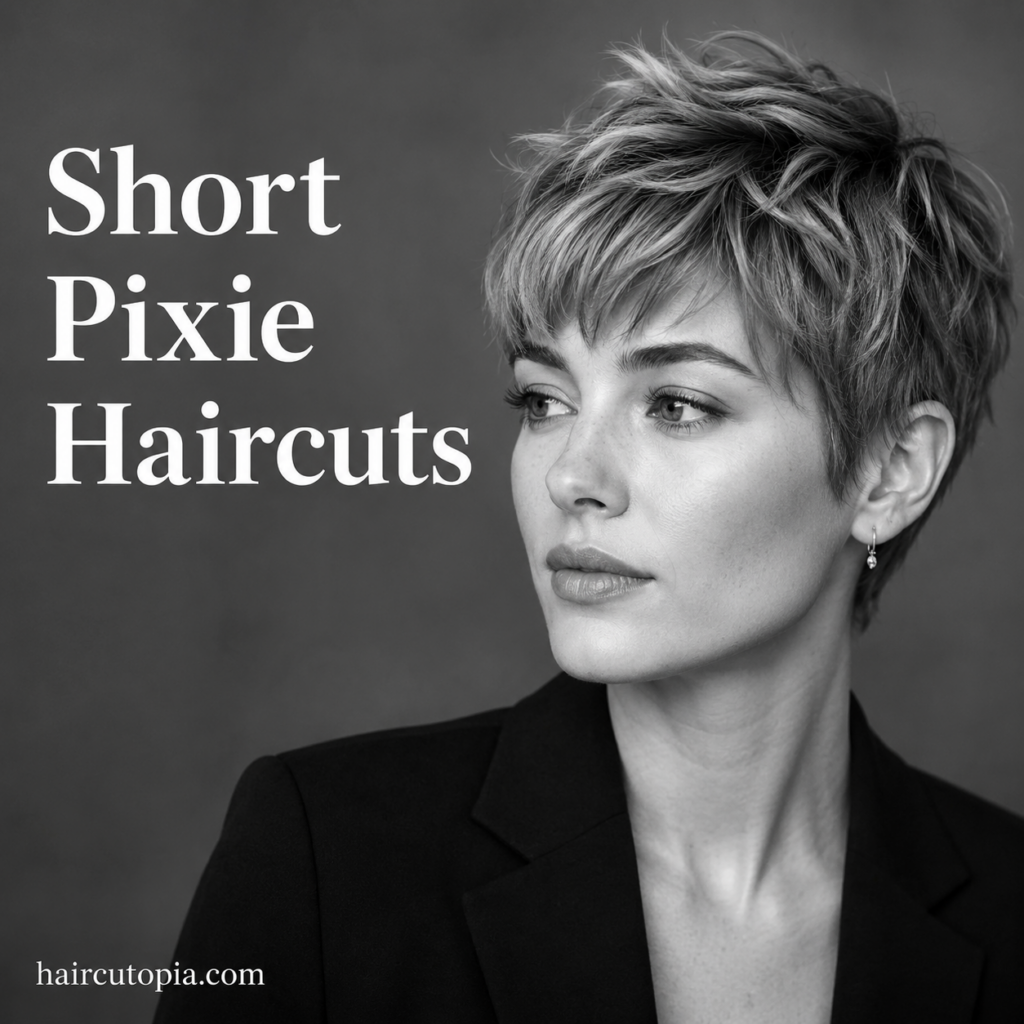
Short Pixie Haircut
A short pixie takes the cropped shape even closer.
The sides, back, and top may all remain relatively short, creating a compact silhouette.
This style puts considerable emphasis on facial features because there isn’t much hair surrounding the face.
Short pixies can be incredibly simple to style, although they usually require regular trims to maintain their proportions.
Textured Pixie Haircut
A textured pixie uses layering and separation to create visible movement.
Instead of lying completely smooth, individual sections can be styled in slightly different directions.
The result may feel:
- Tousled
- Piecey
- Airy
- Messy
- Voluminous
- Softly undone
Texture is particularly useful when you want a pixie to feel relaxed rather than highly polished.
A small amount of styling product can emphasize the separation without making the hair stiff.
Layered Pixie Haircut
Like other layered haircuts, a layered pixie uses variations in length to create more dimension, movement, and control over where volume sits.
Shorter sections can create lift through the crown, while longer layers can provide softness around the front.
Layering can also help distribute the weight of thick hair.
On fine hair, the approach needs to be more strategic. Too much removal can reduce fullness, while carefully placed layers may create the appearance of additional volume.
Choppy Pixie Haircut
A choppy pixie has more obvious separation between sections.
The ends may appear intentionally irregular rather than perfectly blended.
This creates a bolder, more textured finish.
Choppy pixies can work especially well when you like styling that doesn’t need to look identical every day.
The natural variation becomes part of the haircut.
Tapered Pixie Haircut
A tapered pixie gradually becomes shorter toward the neckline and around the ears.
The transition can be soft or more defined.
Tapering creates a clean shape without necessarily requiring the dramatic contrast of an undercut.
It’s also useful for controlling how the haircut grows around the sides and back.
Undercut Pixie Haircut
An undercut pixie creates a stronger difference between the shorter sides or back and the longer hair above.
The undercut can be subtle and partially hidden or become an obvious part of the style.
Leaving more length through the top provides styling flexibility.
You can sweep it to one side, add volume, create texture, or wear it more smoothly depending on the occasion.
Pixie Haircut With Bangs
Bangs can completely change the character of a pixie, especially because fringe becomes such a prominent part of the shape when the sides and back are cropped short.
Longer fringe creates softness and additional styling options.
Short bangs make the overall haircut feel more compact.
Possible combinations include:
- Side-swept bangs
- Wispy bangs
- Textured fringe
- Micro bangs
- Choppy bangs
- Longer sweeping fringe
The right fringe depends on your hairline, growth patterns, texture, and how much daily styling you’re comfortable doing.
How Short Is a Pixie Haircut?
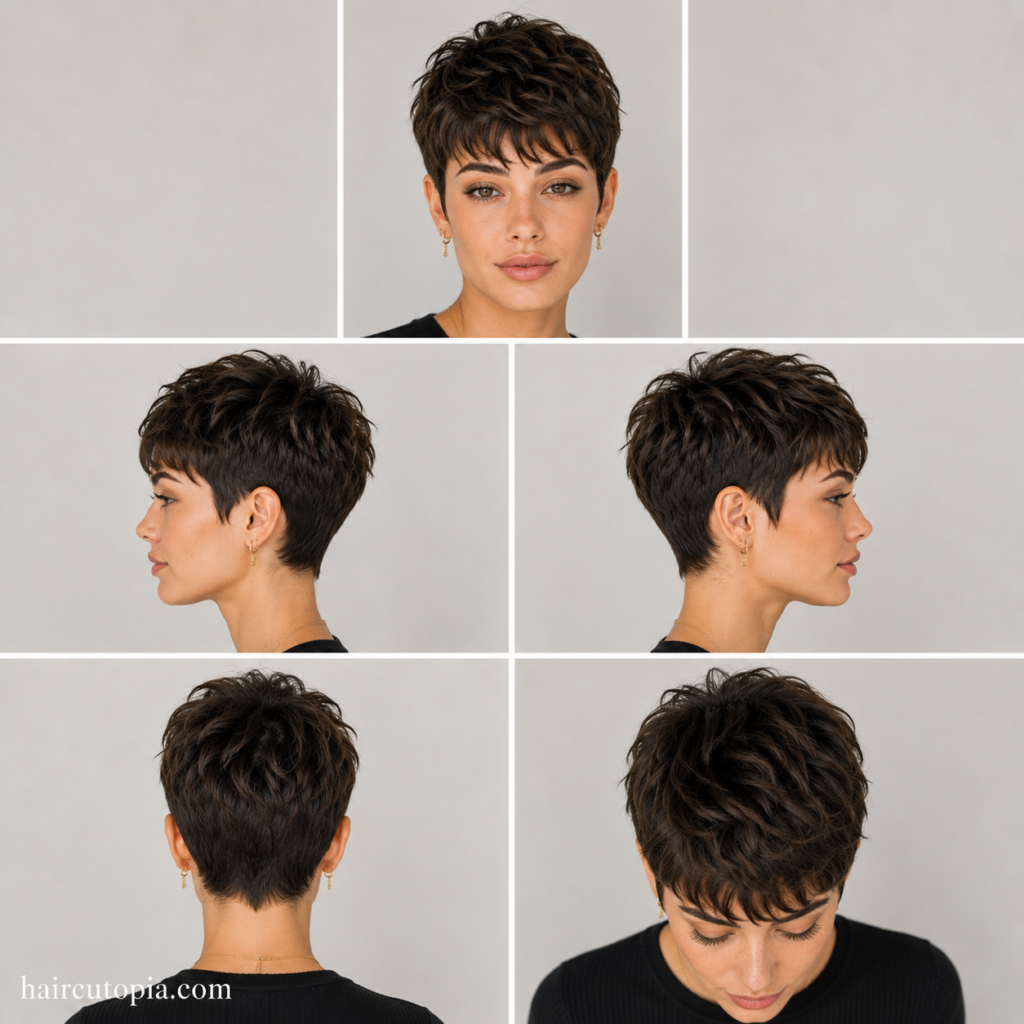
There isn’t one required pixie length.
The sides and back are generally shorter than the top, but the difference varies considerably.
Close-Cropped Pixie
A close-cropped pixie keeps most of the hair very short.
The shape follows the head closely with limited length available for styling.
This can create a clean, confident look with minimal daily styling.
However, because the haircut is so short, growth becomes noticeable quickly.
Traditional Pixie Length
A traditional pixie leaves enough length through the top for light styling while keeping the sides and back cropped.
You may be able to create texture, a small amount of volume, or side-swept movement.
This length offers a good balance between simplicity and flexibility.
Longer Pixie
A long pixie keeps additional length through the top, sides, fringe, or all three.
It can begin approaching bixie territory depending on the overall shape.
Longer pixies provide more styling options and can be a comfortable choice if you’re nervous about going extremely short.
Pixie Haircuts for Fine Hair
Pixies can work extremely well with fine hair.
Removing excess length reduces the weight pulling the hair downward, which can help create more visible lift at the roots.
The right shape can also make fine hair appear fuller.
Consider styles such as:
- Textured pixies
- Softly layered pixies
- Tapered pixies
- Pixies with longer tops
- Side-swept pixies
Volume doesn’t necessarily require aggressive layering.
Strategic layers through the crown can create movement while preserving enough density elsewhere.
Lightweight styling products are usually preferable. Heavy waxes or creams can overwhelm fine strands and flatten the shape.
Pixie Haircuts for Thick Hair
Thick hair provides plenty of material for shaping a pixie.
The challenge is controlling volume.
Without thoughtful weight removal, the sides or crown may become fuller than intended as the haircut grows.
Layering, tapering, or an undercut can help manage density.
Possible options include:
- Layered pixies
- Undercut pixies
- Textured pixies
- Choppy pixies
- Tapered cuts
Thick hair can also support dramatic texture particularly well because there is enough density to create visible separation.
Pixie Haircuts for Straight Hair
Straight hair shows the structure of a pixie clearly.
Sleek, tapered, and precision-cut styles can all work beautifully.
If your hair tends to lie flat, adding texture or shorter crown layers can create more movement.
A longer top can also provide styling flexibility.
You might wear it:
- Smooth and side-swept
- Lifted at the roots
- Tousled
- Piecey
- Brushed forward
Even a small change in direction can make short straight hair look noticeably different.
Pixie Haircuts for Wavy Hair
Natural waves can give a pixie built-in texture.
Instead of trying to straighten the wave pattern, a good haircut can use it to create movement through the top and fringe.
Leaving slightly more length in areas where the wave forms well can make styling easier.
Remember that waves may become stronger when the hair is shortened because there is less weight pulling them down.
Your stylist should consider how the haircut will look once completely dry.
Pixie Haircuts for Curly Hair
Curly pixies can be soft, sculpted, voluminous, or closely cropped.
The curl pattern becomes a major part of the haircut’s shape.
A curly pixie may keep the sides relatively short while preserving additional length through the crown.
Alternatively, the entire haircut can maintain enough length for curls to form throughout.
Shrinkage matters considerably.
Cutting curls too short while stretched or wet can produce a much shorter dry result than expected.
The final shape should be planned around how the curls naturally sit.
Pixie Haircuts for Coily Hair
Coily textures can create striking pixie shapes.
The haircut may follow the natural texture closely or use varying lengths to create more volume through specific areas.
Tapered pixies are one popular approach because they keep the sides and neckline controlled while allowing more texture through the top.
Moisture, definition, and the natural shrinkage pattern should all be considered when determining the final shape.
Pixie Haircuts for Different Face Shapes
Face shape can help guide a pixie, but it doesn’t determine whether you can wear one.
The important variables are where the haircut creates volume, how much fringe is left, and how closely the sides are cropped.
Pixie Haircuts for Oval Faces
Oval faces can experiment with a wide range of pixie shapes.
Close crops, textured styles, longer fringe, and volume through the crown can all work.
Hair texture and personal preference may be more important than face shape when choosing the details.
Pixie Haircuts for Round Faces
A pixie with additional height through the crown can create a more vertical silhouette.
Longer side-swept fringe can also introduce diagonal lines around the face.
But you don’t have to use the haircut to make your face appear longer.
A softer pixie with fuller sides can intentionally emphasize roundness and create an equally appealing result.
Pixie Haircuts for Square Faces
Texture and longer fringe can soften the contrast around a defined jawline.
Alternatively, a close, structured pixie can emphasize strong facial angles.
The haircut can either contrast with your features or reinforce them.
Both approaches can work.
Pixie Haircuts for Heart-Shaped Faces
Pixies can draw attention to the cheekbones and eyes.
Side-swept fringe or softer texture around the forehead can adjust how much emphasis falls on the upper part of the face.
Keeping some fullness around the sides can create additional balance.
Pixie Haircuts for Long Faces
A pixie doesn’t necessarily need lots of height.
Styles with side-swept bangs, fringe, or volume toward the sides can create more horizontal emphasis.
Keeping the crown relatively soft rather than dramatically lifted may also suit the proportions you’re looking for.
Pixie Haircuts With Bangs
Fringe is one of the most important elements of many pixie cuts because it determines how the short shape interacts with the face.
Pixie With Side-Swept Bangs
Side-swept bangs create movement across the forehead.
They also provide more styling flexibility than very short fringe.
You can wear them smooth, add texture, or sweep them farther away from the face.
Pixie With Wispy Bangs
Wispy bangs create a lighter frame.
They’re useful when you want some forehead coverage without the visual weight of full fringe.
The soft finish can complement both classic and textured pixies.
Pixie With Choppy Bangs
Choppy fringe creates more visible separation.
It works naturally with textured and piecey pixie styles.
Because the ends aren’t meant to appear perfectly uniform, this style can feel relaxed and modern.
Pixie With Micro Bangs
Micro bangs create a much bolder look.
The fringe sits high on the forehead and makes the overall haircut feel particularly short.
This combination puts strong emphasis on the eyes, brows, and facial features.
Pixie With Long Bangs
Long fringe creates the greatest contrast with short sides and back.
It can be swept across the forehead, styled with volume, tucked away, or incorporated into a more tousled finish.
Longer bangs are also useful if you want a pixie with more styling variety.
Tapered vs. Undercut Pixie Haircuts
These techniques can look similar from a distance, but they create different effects.
A tapered pixie gradually becomes shorter toward the edges.
The transition is blended.
An undercut creates a more deliberate contrast between very short sections and longer hair above.
Tapering generally produces a softer finish.
Undercutting tends to feel bolder and can remove considerably more weight from thick hair.
Your choice depends on how much contrast you want and how you feel about the grow-out process.
Sleek vs. Textured Pixie Haircuts
The same basic pixie can often be styled in completely different ways.
A sleek pixie emphasizes:
- Shape
- Precision
- Shine
- Clean lines
- Controlled movement
A textured pixie emphasizes:
- Separation
- Volume
- Movement
- Piecey ends
- A relaxed finish
You don’t necessarily need to choose permanently between them.
If your haircut leaves enough length through the top, you may be able to switch depending on how you style it.
Tell your stylist if versatility matters to you.
Pixie Haircuts With a Side Part
A side part can create more volume through one side of the haircut.
It also works naturally with longer bangs.
The part doesn’t need to be perfectly defined. In textured pixies, simply directing more hair toward one side can create the same general effect.
A side part can be especially helpful when working with a natural cowlick rather than trying to fight it.
Pixie Haircuts With a Forward Fringe
Brushing the hair forward creates an entirely different silhouette.
Short textured fringe can make the pixie feel compact and modern.
Longer forward sections can create softness across the forehead.
This approach can also work well when your hair naturally grows forward.
How to Style a Pixie Haircut
Styling short hair often involves less time but more attention to direction.
When the hair is only a few inches long, changing where it sits can alter the entire shape.
Tousled Texture
Apply a small amount of lightweight styling product and use your fingers to create separation.
Focus on movement rather than making every section identical.
Smooth and Sleek
Use a small amount of smoothing product and direct the hair into place while drying.
This finish works particularly well with classic and tapered pixies.
Crown Volume
Lift the hair at the roots while drying to create additional height.
Concentrate volume where you want it rather than making the entire haircut equally full.
Piecey Definition
A small amount of paste or wax can define individual sections.
Short hair doesn’t need much product.
Start with a tiny amount, warm it between your hands, and add more only if necessary.
Natural Waves or Curls
Allow your texture to create the shape.
Use products suited to your wave or curl pattern and avoid disturbing the hair excessively while it dries.
Are Pixie Haircuts Low Maintenance?
Pixies can be low maintenance in one sense and high maintenance in another.
Daily styling can be extremely quick.
You may need only a few minutes and a small amount of product.
Salon maintenance is different.
Short hair shows growth quickly. When the sides and back grow even half an inch, the proportions can begin to change.
A pixie may therefore require more frequent trims than a medium or long haircut.
Before making the cut, think about which type of maintenance matters more to you.
If you’d rather spend less time styling each morning and don’t mind regular salon visits, a pixie can be a great fit.
How Often Should You Trim a Pixie Haircut?
Many pixie cuts benefit from reshaping approximately every 4–6 weeks.
Some longer or intentionally tousled pixies can go longer.
Close crops and highly precise styles may need attention sooner.
Your ideal schedule depends on:
- Hair growth rate
- How short the sides are
- Neckline shape
- Fringe length
- Amount of tapering
- How precise you want the cut to remain
If you’re comfortable with the haircut becoming softer as it grows, you may be able to extend the time between appointments.
How to Ask Your Hairstylist for a Pixie
“Pixie cut” covers too many styles to be a complete salon instruction.
Bring reference photos and discuss the individual elements you like.
Talk about:
- How short you want the sides and back.
- How much length you want through the top.
- Whether you want your ears exposed.
- Your preferred neckline.
- Whether you want bangs.
- How much texture you prefer.
- Whether you want tapering or an undercut.
- How you normally style your hair.
Also point out any cowlicks or growth patterns you’re aware of.
Your stylist will probably notice them, but discussing them helps establish how you want the haircut to behave.
If you’re nervous about going extremely short, say so.
Leaving additional length initially gives you room to adjust.
What to Know Before Going From Long Hair to a Pixie
Going from long hair directly to a pixie is a major change.
The biggest adjustment isn’t always appearance.
Your entire styling routine changes.
You won’t have ponytails or buns to rely on when you don’t feel like styling your hair. Instead, you’ll learn how your short hair naturally behaves.
You may discover:
- Cowlicks you never noticed
- Stronger waves or curls
- Different growth directions
- More volume than expected
- Less volume in certain areas
Your face will also become much more visible without long hair framing it.
If you’re uncertain, you don’t have to make the entire transition at once.
A short bob can act as an intermediate step if you want to experience shorter proportions before committing to the more closely cropped sides and back of a pixie.
Growing Out a Pixie Haircut
Growing out a pixie takes patience, but it doesn’t have to mean months of shapeless hair.
The key is reshaping rather than simply avoiding the salon.
A pixie often progresses through stages such as:
Pixie → long pixie → bixie → short bob → bob.
During the early stages, the back and sides may need occasional trimming while the top and front continue growing.
Eventually, the growing shape can transition into a more defined bob haircut once enough length develops around the sides, back, and perimeter.
This helps prevent the haircut from becoming overly heavy around the neckline.
Tell your stylist you’re growing it out.
That changes the strategy. Instead of returning the haircut to its original pixie shape, each appointment should help move it toward the next stage.
Who Should Consider a Pixie Haircut?
A pixie may be worth considering if you:
- Want a dramatic haircut change
- Enjoy short hairstyles
- Prefer quick daily styling
- Don’t mind regular trims
- Want to emphasize your face and features
- Like experimenting with texture
- Want less hair to wash and dry
- Are comfortable losing ponytail and bun options
- Want a haircut with a strong, recognizable shape
There’s no particular face shape or age required to wear one.
The better question is whether the cut suits your hair, routine, and personal style.
Common Pixie Haircut Mistakes to Avoid
Going short is exciting, but a little planning helps.
Choosing Only From a Photo
A reference image is useful, but the exact haircut may behave differently on your texture.
Use photos to communicate the shape you like rather than expecting an identical result.
Going Too Short Immediately
If you’re nervous, leave a little extra length.
You can always remove more hair.
Putting it back is considerably harder.
Ignoring Your Natural Texture
A pixie designed for straight hair may behave very differently on strong waves or curls.
Work with your texture whenever possible.
Forgetting About Salon Maintenance
If you want your pixie to remain highly precise, expect more frequent appointments than you may have needed with long hair.
Using Too Much Styling Product
Short hair can become overloaded quickly.
Start with a tiny amount and add more gradually.
Frequently Asked Questions About Pixie Haircuts
What is considered a pixie haircut?
A pixie is a short haircut typically cropped around the sides and back with additional length through the top or fringe.
Are pixie haircuts easy to maintain?
Daily styling can be very easy, but pixies often require frequent salon trims to maintain their shape.
How often should a pixie be cut?
Approximately every 4–6 weeks is common, although longer or more relaxed pixies may go longer.
Do pixie cuts work with fine hair?
Yes.
Shorter lengths can reduce weight and help fine hair achieve more lift. Strategic texture and layering can also create the appearance of additional volume.
Can thick hair have a pixie cut?
Absolutely.
Thick hair can support textured and layered pixies particularly well. Tapering or undercutting can help manage excess density.
Can curly hair be cut into a pixie?
Yes.
Curly pixies can be cropped, tapered, layered, or left longer through the crown. Shrinkage should be considered carefully when choosing the final length.
Can you have bangs with a pixie?
Yes. Side-swept, wispy, choppy, micro, and longer bangs can all be incorporated into pixie cuts.
What’s the difference between a pixie and a bixie?
A pixie is generally shorter and follows the head more closely. A bixie combines characteristics of a pixie and bob, leaving more length and movement around the sides and back.
What’s the difference between a pixie and a short bob?
A short bob maintains a more defined perimeter around the head, often near the jaw or chin. A pixie is more closely cropped around the sides and back.
How long does it take to grow out a pixie?
The timeline varies according to your starting length, growth rate, and desired final length.
Regular reshaping can make the transition easier even though it doesn’t necessarily make the hair grow faster.
Are pixie haircuts only for certain ages?
No.
Pixie cuts can work at any age. Hair texture, density, facial features, maintenance preferences, and personal style are much more relevant considerations.
Final Thoughts on Pixie Haircuts
A pixie proves that having less hair doesn’t mean having fewer options.
A close crop can feel clean and minimalist. Longer fringe can make the same basic haircut softer. Layers create movement, an undercut adds contrast, and natural curls or waves can completely reshape the silhouette.
Those details matter because they’re what make a pixie personal.
Before cutting, think about how short you actually want to go, how your natural texture behaves, whether you’re comfortable with frequent trims, and how much styling flexibility you want to preserve.
If you’re uncertain, start slightly longer.
You can always shorten the sides, remove more from the top, or make the fringe more dramatic once you’ve had time to adjust.
The best pixie isn’t simply the shortest or boldest version. It’s the one that works naturally with your hair and still feels like you when you look in the mirror.