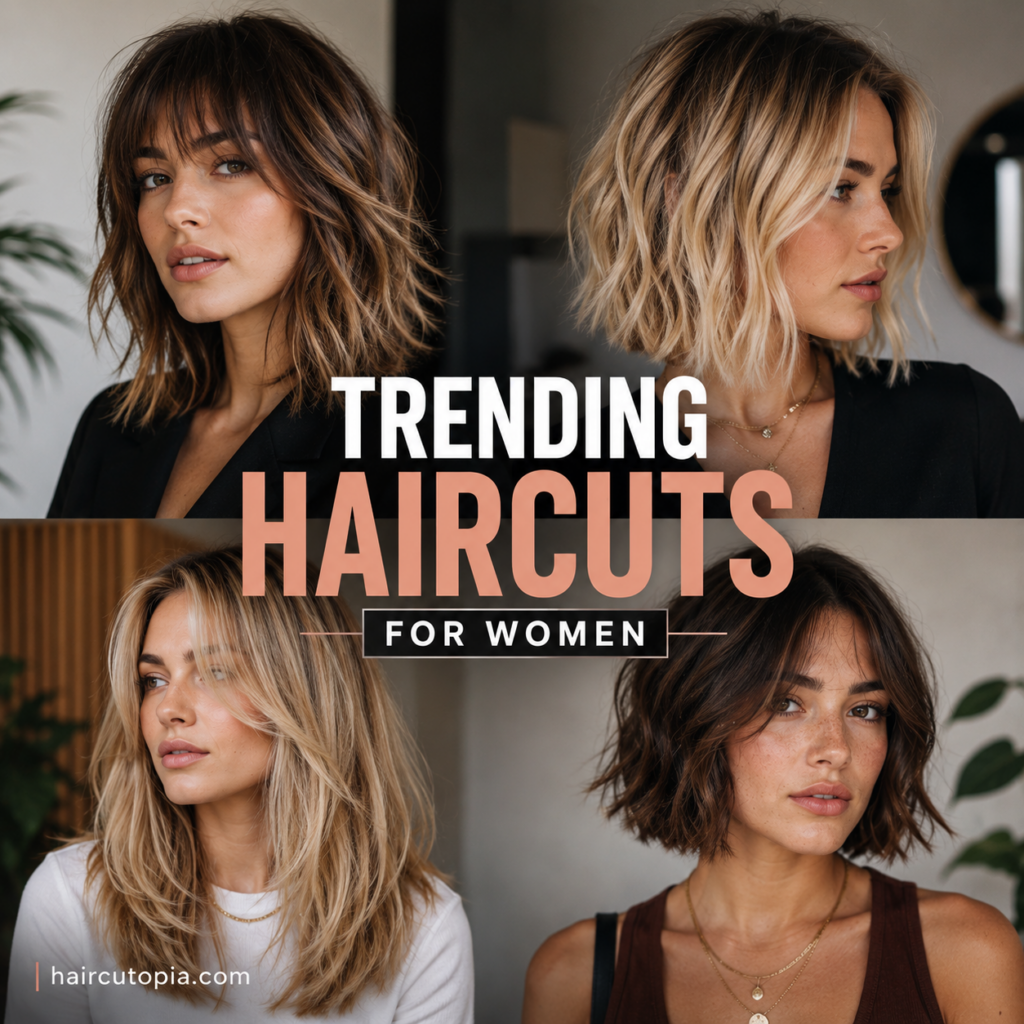
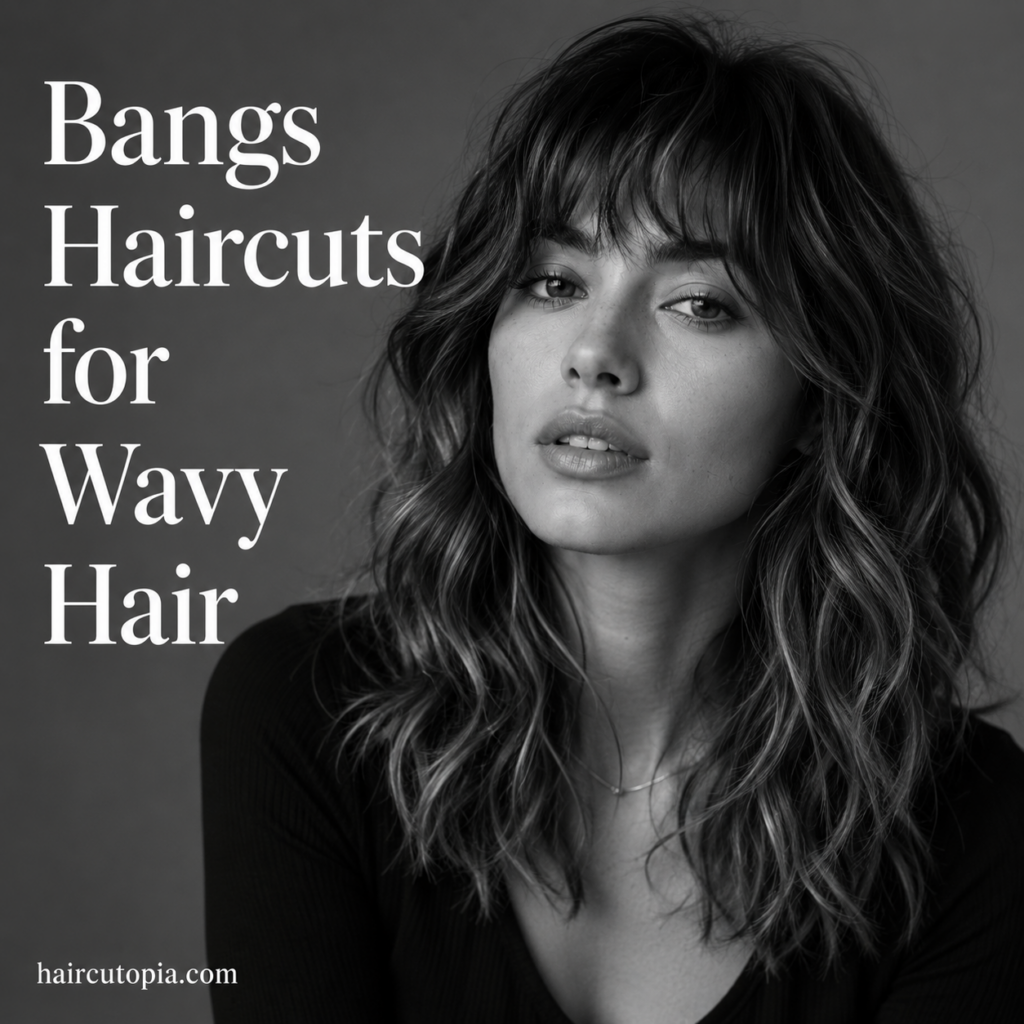
Wavy hair has the best of both worlds. It has natural movement like curly hair while remaining easy to style like straight hair. That versatility makes it an excellent match for bangs.
Whether your waves are soft and loose or more defined, the right bangs can add shape, frame your face, and make your hairstyle look effortlessly stylish. From curtain bangs to textured fringe, there are plenty of flattering options that work beautifully with natural waves.
In this guide, you’ll discover the best bangs haircuts for wavy hair, how to choose the right style for your face shape, and simple tips for styling and maintaining your fringe.
Are Bangs Good for Wavy Hair?
Absolutely.
Wavy hair naturally provides texture and movement, helping bangs look soft instead of stiff or overly structured.
Some of the biggest benefits include:
- Enhance your natural wave pattern
- Frame your face beautifully
- Add movement around the forehead
- Create a relaxed, effortless appearance
- Blend seamlessly into layered haircuts
- Refresh your hairstyle without changing the overall length
Because waves rarely fall perfectly straight, bangs often have a lived-in look that’s both modern and flattering.
Consider Your Wave Pattern
Not all wavy hair behaves the same way.
Loose Waves (Type 2A)
Soft waves pair well with curtain bangs, side-swept bangs, and long layered fringe.
Medium Waves (Type 2B)
These waves work beautifully with textured bangs, bottleneck bangs, and feathered styles.
Defined Waves (Type 2C)
More pronounced waves can support fuller fringe, shag haircuts with bangs, and curly-inspired curtain bangs.
Working with your natural texture makes styling much easier.
Best Bangs Haircuts for Wavy Hair
1. Curtain Bangs
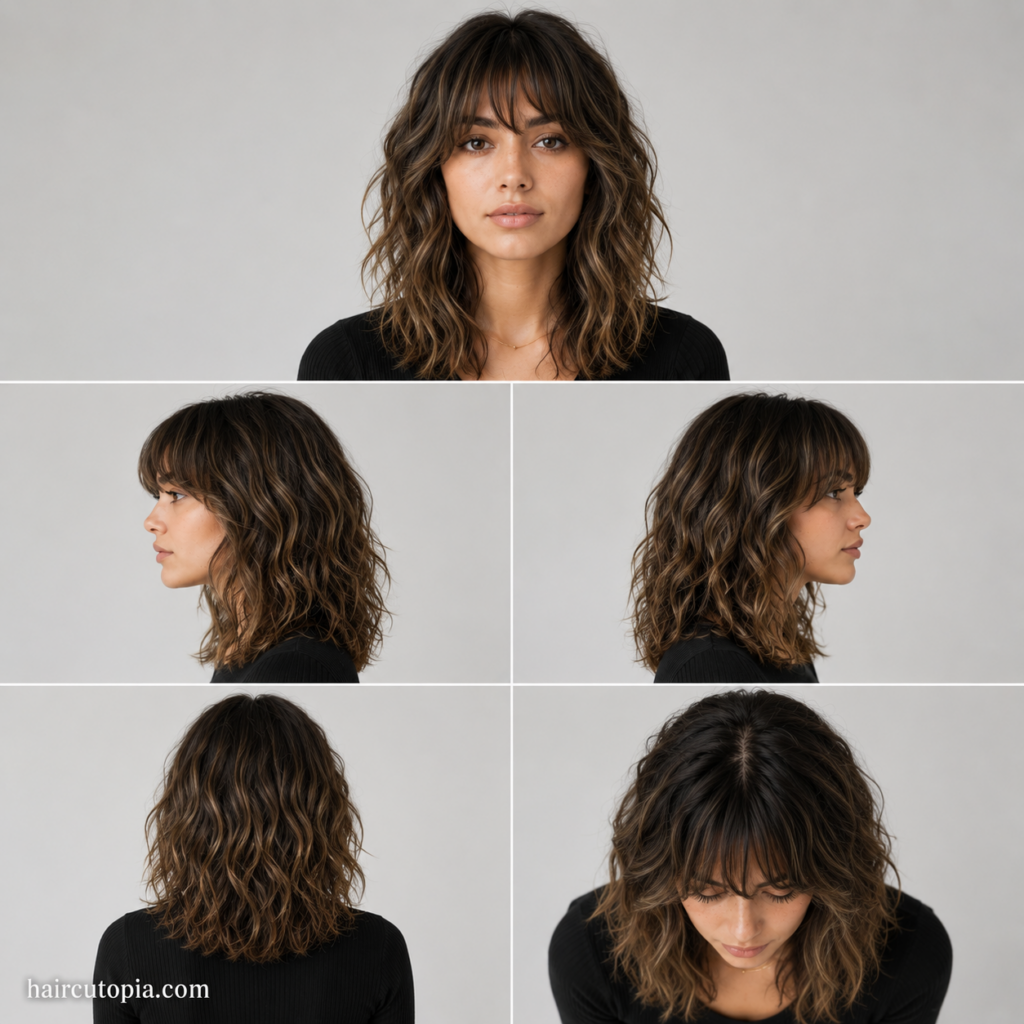
Curtain bangs remain one of the most flattering styles for wavy hair.
The center part allows the waves to fall naturally on both sides of the face, creating soft movement and effortless volume.
This style pairs beautifully with:
- Long layered hair
- Butterfly haircuts
- Shoulder-length cuts
- Beach waves
2. Wispy Bangs
Wispy bangs create a light, airy appearance that complements natural waves.
Instead of forming one solid line across the forehead, they separate into soft pieces that blend beautifully into the hairstyle.
3. Side-Swept Bangs
Side-swept bangs have remained popular for years because they’re versatile and easy to style.
The diagonal shape works with your natural wave pattern while adding softness around the face.
4. Bottleneck Bangs
Bottleneck bangs are shorter near the eyebrows before gradually blending into longer face-framing layers.
Their soft shape works especially well with wavy hair because the natural movement enhances the layered effect.
5. Feathered Bangs
Feathered bangs add texture without looking bulky.
The lightweight layers create gentle movement that complements wavy hair beautifully.
6. Long Layered Bangs
Long bangs flowing into face-framing layers create one of the easiest fringe styles to maintain.
They’re ideal if you enjoy wearing your hair both up and down.
7. Textured Bangs
Textured bangs use point-cutting techniques to create separation and movement.
Rather than appearing perfectly polished, they embrace the relaxed nature of wavy hair.
8. Shag Haircut with Bangs
A modern shag and wavy bangs are a perfect match.
The layers remove weight while the fringe completes the effortless, lived-in style.
9. French Girl Bangs
French-inspired bangs have a relaxed appearance that naturally complements soft waves.
The slightly imperfect finish gives the hairstyle a timeless, effortless feel.
10. Air Bangs
Air bangs offer a delicate alternative to heavier fringe.
Their lightweight texture blends beautifully with fine or medium-density wavy hair.
11. Face-Framing Bangs
Face-framing bangs begin near the brows before blending into longer layers.
They provide many of the benefits of traditional bangs while remaining easy to grow out.
12. Rounded Bangs
Rounded bangs gently curve across the forehead rather than forming a straight line.
The shape complements soft waves and helps create a balanced silhouette.
13. Choppy Bangs
Choppy bangs introduce playful texture through varied lengths.
The style pairs beautifully with beach waves and layered haircuts.
14. Long Side Bangs
Long side bangs remain one of the lowest-maintenance fringe options.
You can tuck them behind your ears, blend them into layers, or style them with your natural waves.
15. Layered Curtain Fringe
Internal layers throughout curtain bangs prevent them from appearing too heavy.
The added texture helps the fringe move naturally with your waves.
16. Bob with Wavy Bangs
A textured bob paired with soft bangs creates a fresh, modern hairstyle.
The shorter length enhances natural body while the fringe softens facial features.
17. Shoulder-Length Waves with Bangs
Shoulder-length hair offers enough weight to control waves while maintaining bounce and movement.
Adding bangs creates an effortlessly balanced hairstyle.
18. Wolf Cut with Wavy Bangs
The wolf cut combines shag-inspired layers with extra volume around the crown.
Soft wavy bangs complete the trendy, textured appearance.
Best Haircuts to Pair with Bangs
Many layered hairstyles naturally complement wavy bangs.
Popular choices include:
- Butterfly haircut
- Layered lob
- Long layers
- Modern shag
- Wolf cut
- Shoulder-length layered cut
- Wavy bob
- Long beach waves
These styles maximize movement while allowing the fringe to blend naturally.
Styling Tips for Wavy Bangs
Styling bangs doesn’t have to be difficult.
Here are a few simple techniques:
- Blow dry bangs first after washing.
- Use a diffuser if enhancing natural waves.
- Apply lightweight styling cream.
- Scrunch gently rather than brushing.
- Finish with a texture spray.
- Refresh waves with water or wave spray between washes.
Products That Work Well
Lightweight products help maintain definition without weighing hair down.
Consider using:
- Sulfate-free shampoo
- Lightweight conditioner
- Sea salt spray
- Wave cream
- Texture spray
- Flexible-hold hairspray
Avoid heavy oils that can flatten your bangs.
Common Mistakes to Avoid
To keep your bangs looking their best, avoid:
- Cutting bangs too short
- Fighting your natural wave pattern
- Using excessive heat daily
- Applying heavy styling products
- Skipping regular trims
- Brushing dry waves aggressively
Working with your natural texture usually produces the best results.
How Often Should Wavy Bangs Be Trimmed?
Most bangs benefit from trims every 4 to 6 weeks.
If you wear longer curtain bangs or side-swept fringe, you may be able to stretch appointments slightly longer.
Regular trims help maintain shape while preventing bangs from becoming difficult to style.
How to Ask Your Stylist for Wavy Bangs
Bring inspiration photos featuring hair with a wave pattern similar to your own.
During your consultation, discuss:
- Your natural wave type
- Whether you air dry or heat style
- Your face shape
- Your preferred maintenance level
- How you typically part your hair
- Any cowlicks around the hairline
These details help your stylist create bangs that fit your lifestyle and natural texture.
Final Thoughts
Wavy hair and bangs are a naturally beautiful combination. Whether you choose curtain bangs, wispy fringe, bottleneck bangs, or a layered shag, the right style can enhance your waves while adding softness, movement, and personality.
The best bangs work with your natural texture rather than against it. With the right haircut, lightweight styling products, and regular trims, you’ll enjoy an effortlessly stylish look that’s easy to maintain and full of natural charm.