
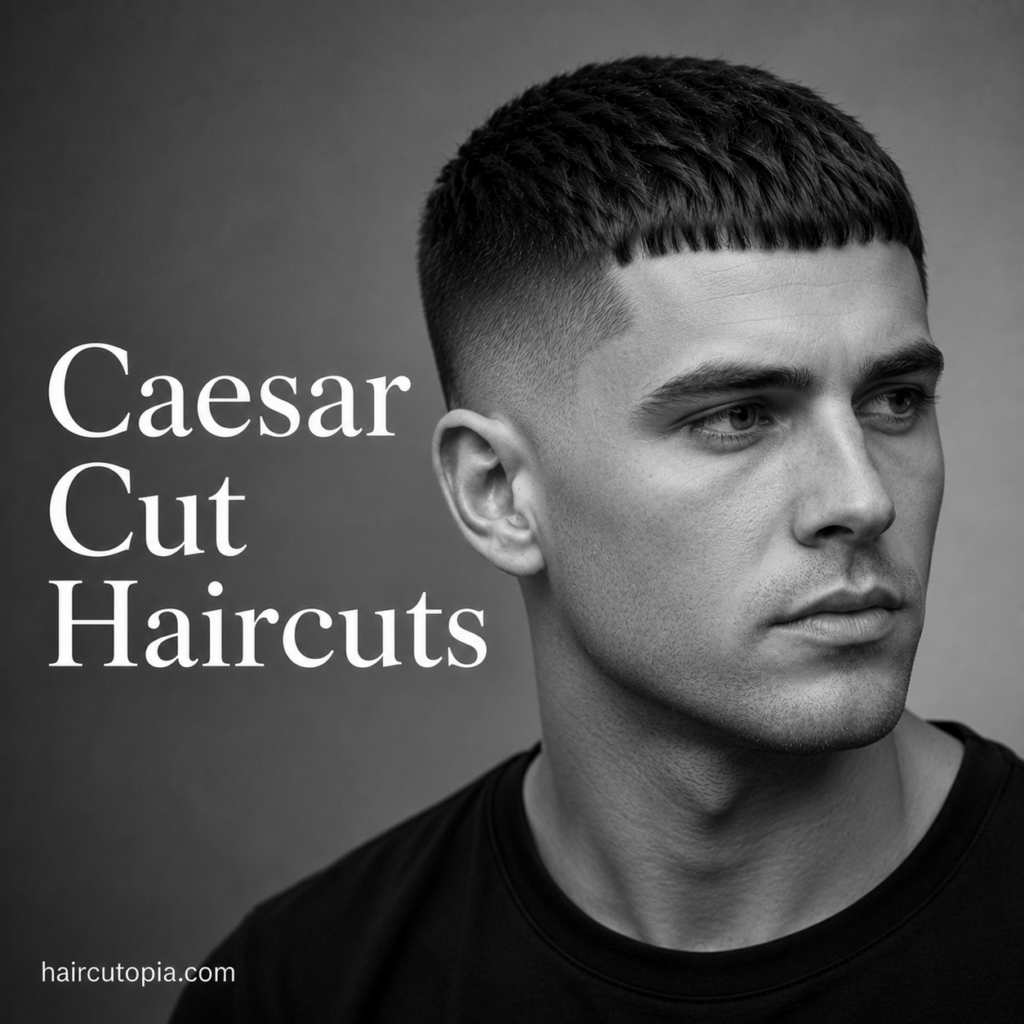
The Caesar cut is one of the oldest men’s haircuts still popular today. Originally inspired by ancient Roman styles, the Caesar cut has evolved into a modern favorite thanks to its clean lines, textured appearance, and easy maintenance. It’s especially popular among men who want a stylish haircut without spending much time styling their hair every morning.
One of the biggest reasons the Caesar cut continues to stand out is its short, forward-combed fringe. That distinctive feature not only gives the haircut its signature look but also makes it a practical option for men with thinning hair, receding hairlines, or naturally thick hair.
Whether you’re looking for a timeless classic or a modern version with a fade, this guide covers everything you need to know about Caesar cut haircuts, including popular variations, styling advice, maintenance tips, and how to choose the best version for your face shape and hair type.
What Is a Caesar Cut?
A Caesar cut is a short haircut with evenly cut hair on top, short sides, and a small horizontal fringe brushed forward across the forehead. The top is typically textured, while the sides can be tapered, faded, or cut to a uniform length depending on the style.
Unlike hairstyles that rely on volume or height, the Caesar cut emphasizes simplicity and clean structure.
Key characteristics include:
- Short length
- Forward-combed fringe
- Textured top
- Clean sides
- Low-maintenance styling
It’s one of the easiest men’s hairstyles to wear while still looking polished.
Why Caesar Cut Haircuts Are So Popular
The Caesar cut has remained relevant for decades because it offers practical benefits that suit many men.
Advantages include:
- Easy to style
- Works with most hair types
- Suitable for thinning hair
- Minimal daily maintenance
- Timeless appearance
- Professional enough for work
- Comfortable in warm weather
Its versatility makes it equally popular among younger men and mature professionals.
The History of the Caesar Cut
The haircut takes its name from Julius Caesar, who was often depicted wearing short hair brushed forward. While historians debate whether he actually wore the hairstyle this way, the name has remained attached to this haircut for generations.
Modern versions have evolved considerably, incorporating fades, textured layers, and contemporary barbering techniques while maintaining the iconic short fringe.
Caesar Cut vs. French Crop
A French crop typically features more texture and a longer fringe than a Caesar cut, giving it greater styling flexibility and a more contemporary finish.
Caesar Cut
- Uniform short top
- Short, straight fringe
- Minimal height
- Classic appearance
French Crop
- More texture
- Longer fringe
- Greater styling flexibility
- Modern finish
If you prefer a cleaner, more structured haircut, the Caesar cut is usually the better choice.
Popular Types of Caesar Cut Haircuts
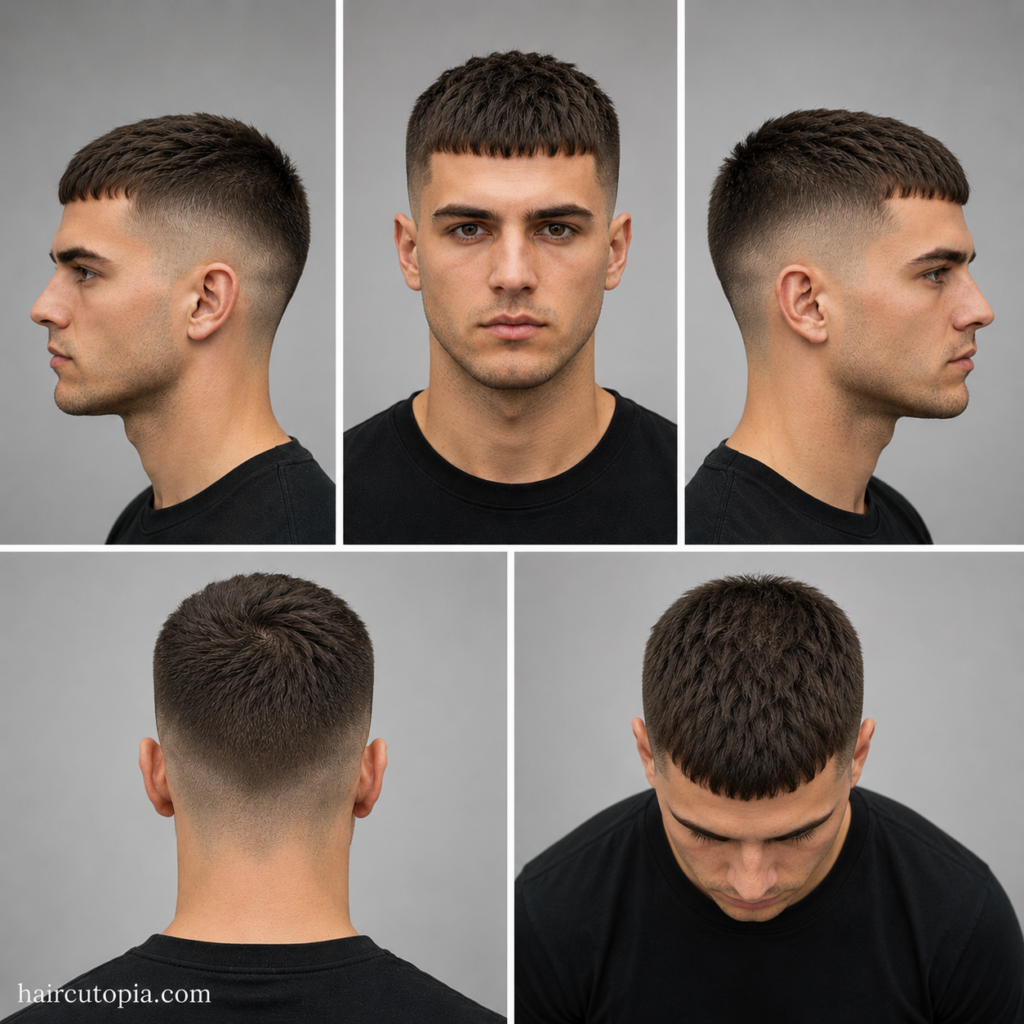
Today’s barbers offer numerous Caesar cut variations.
Classic Caesar Cut
The traditional version features evenly cut hair throughout with a short fringe.
Benefits include:
- Timeless appearance
- Low maintenance
- Clean silhouette
- Easy styling
It’s ideal for men who appreciate classic grooming.
Caesar Cut with Fade
Pairing a Caesar cut with one of several modern fade haircuts adds contrast without changing the style’s signature short top and forward fringe.
Popular options include:
The fade creates more contrast while keeping the hairstyle neat.
Caesar Cut with Taper
A taper fade gives the Caesar cut a softer, more conservative transition than a full fade while still keeping the edges clean.
Advantages include:
- Professional appearance
- Conservative style
- Easy maintenance
Perfect for business settings.
Textured Caesar Cut
Modern Caesar cuts often feature textured layers instead of perfectly even hair.
This creates:
- Natural movement
- Fuller appearance
- Casual finish
Especially beneficial for thick hair.
Short Caesar Cut
The shortest version closely resembles a crew cut but retains the forward fringe.
Ideal for:
- Active lifestyles
- Minimal styling
- Warm climates
Long Caesar Cut
Keeping slightly more length on top allows additional texture while preserving the classic shape.
Modern Caesar Cut Hairstyles
Today’s Caesar cut is far more versatile than many people realize.
Caesar Cut with Low Fade
A subtle fade keeps the haircut clean while maintaining a professional appearance.
Caesar Cut with Skin Fade
A skin fade creates stronger contrast and gives the classic Caesar a modern edge.
Caesar Cut with Beard
One of the most popular combinations.
The short haircut naturally balances:
- Stubble
- Short beard
- Full beard
- Boxed beard
Curly Caesar Cut
Natural curls create additional texture while maintaining the recognizable forward fringe.
Wavy Caesar Cut
Waves add movement without sacrificing the haircut’s clean silhouette.
Messy Caesar Cut
Using matte styling products creates a relaxed finish while preserving the classic shape.
Choosing a Caesar Cut by Hair Type
Straight Hair
Straight hair naturally highlights the clean lines of the Caesar cut.
Recommended variations include:
- Classic Caesar
- Fade Caesar
- Taper Caesar
Thick Hair
A Caesar cut removes unnecessary bulk while maintaining natural fullness.
Great options include:
- Textured Caesar
- Fade Caesar
- Skin fade Caesar
Fine Hair
Short textured layers help create the appearance of greater density.
Many men with thinning hair choose Caesar cuts because the forward fringe softens the hairline.
Wavy Hair
Natural waves create additional movement.
A textured Caesar enhances this effect while remaining easy to style.
Curly Hair
Curly Caesar cuts continue to grow in popularity.
Benefits include:
- Better curl definition
- Easy maintenance
- Cleaner silhouette
Coily Hair
Caesar cuts pair naturally with tightly textured hair.
Adding a fade creates even more definition.
Choosing a Caesar Cut by Face Shape
Oval Face
Nearly every Caesar variation works well.
Round Face
Pair the Caesar with a fade to add more definition around the sides.
Square Face
The structured fringe complements strong jawlines.
Recommended styles include:
- Classic Caesar
- Fade Caesar
- Textured Caesar
Heart Face
The fringe helps balance wider foreheads while softening facial proportions.
Diamond Face
A Caesar cut helps balance prominent cheekbones through its even proportions.
Long Face
The Caesar is one of the best haircuts for long faces because it avoids adding excessive height.
Is the Caesar Cut Good for Thinning Hair?
One reason the Caesar cut has remained popular is its ability to complement thinning hair.
The forward fringe helps:
- Soften a receding hairline
- Reduce contrast
- Create fuller-looking texture
- Maintain an even appearance
While no haircut can reverse hair loss, the Caesar cut often makes thinning less noticeable.
Styling a Caesar Cut
The Caesar cut is one of the easiest hairstyles to maintain.
Popular styling products include:
Matte Clay
Adds:
- Texture
- Natural finish
- Light hold
Hair Paste
Provides:
- Flexible styling
- Soft definition
Hair Cream
Ideal for:
- Curly hair
- Wavy hair
- Frizz control
Most Caesar cuts require only a small amount of product—or none at all.
Caesar Cut Haircuts with Beards
Because the haircut is short, facial hair becomes a larger part of the overall look.
Popular combinations include:
- Caesar cut with stubble
- Caesar cut with short beard
- Caesar cut with full beard
- Caesar cut with boxed beard
- Caesar cut with goatee
A well-maintained beard adds balance and definition.
How Often Should You Get a Caesar Cut?
Regular trims help preserve the clean fringe and structured appearance.
Typical schedule:
- Every 2–3 weeks for faded styles
- Every 3–4 weeks for classic Caesar cuts
- Every 4–5 weeks for longer textured versions
Maintaining the fringe is especially important since it defines the haircut.
How to Ask Your Barber for a Caesar Cut
When discussing the haircut, mention:
- Fringe length
- Fade or taper preference
- Top length
- Texture
- Neckline
- Beard blending
Reference photos help ensure your barber understands exactly which variation you prefer.
Common Caesar Cut Mistakes
Avoid these common issues:
- Letting the fringe grow too long
- Using excessive styling product
- Ignoring regular trims
- Confusing a Caesar with a French crop
- Choosing a style that doesn’t match your hair texture
The Caesar cut looks best when the proportions remain balanced.
Frequently Asked Questions
What is a Caesar cut?
A Caesar cut is a short men’s haircut featuring evenly cut hair on top with a short fringe brushed forward across the forehead.
Is a Caesar cut good for thinning hair?
Yes. Many men choose the Caesar cut because its forward fringe can soften the appearance of a receding hairline and create the illusion of fuller hair.
What’s the difference between a Caesar cut and a French crop?
A Caesar cut has a shorter, more uniform top and a structured fringe, while a French crop generally includes more texture and a longer fringe.
Are Caesar cuts still in style?
Absolutely. Modern Caesar cuts with fades and textured finishes remain popular in barbershops around the world.
How often should you trim a Caesar cut?
Most Caesar cuts benefit from maintenance every three to four weeks, while faded versions may require trims every two to three weeks.
Final Thoughts
The Caesar cut has remained a classic men’s hairstyle because it offers the perfect combination of simplicity, versatility, and timeless style. Whether you choose a traditional version or a modern fade variation, the haircut is easy to maintain, flattering on many face shapes, and adaptable to a wide variety of hair types.
Its signature forward fringe makes it especially appealing for men seeking a practical haircut that also complements thinning hair or a receding hairline. With the right barber and regular maintenance, a Caesar cut delivers a clean, confident appearance that never goes out of style.