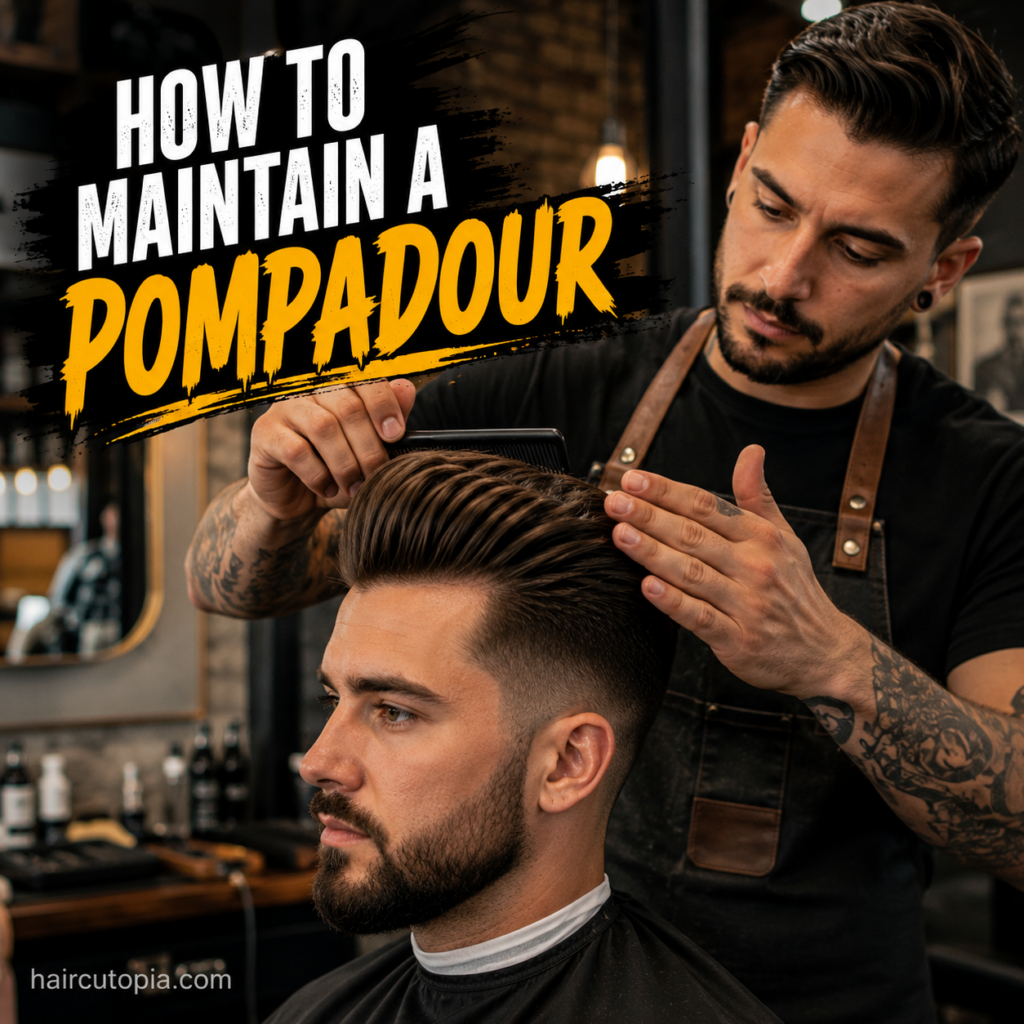
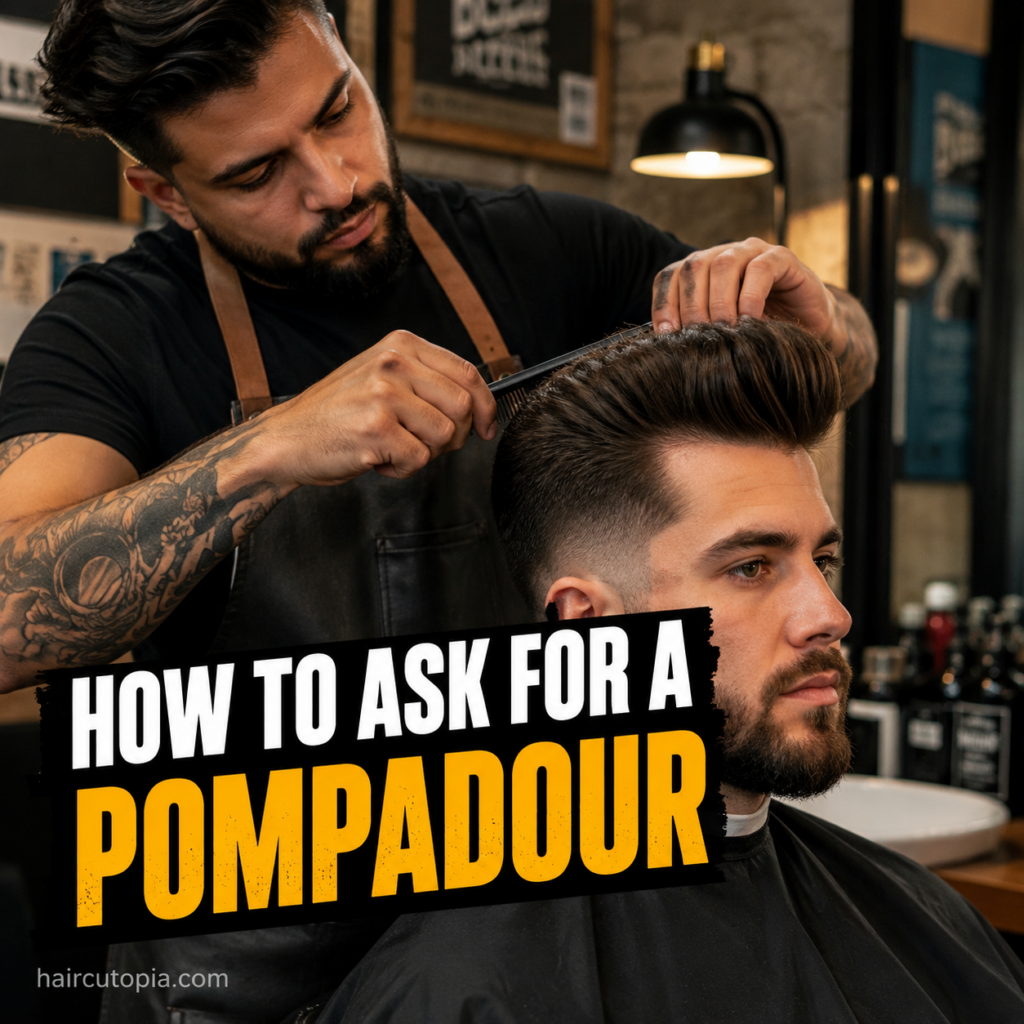
The pompadour is one of those hairstyles that can look completely different depending on how it’s cut. It can be clean and classic, loose and textured, paired with a sharp skin fade, or worn with enough length on the sides to give it an old-school feel.
That flexibility is part of what makes the style so popular. It can also make ordering one at the barbershop a little tricky.
Simply sitting down and saying, “Give me a pompadour,” leaves quite a bit up to the barber. How high should the top be? How short should the sides go? Do you want a fade? Should the finish look polished or natural?
You don’t need to know professional barber terminology to get the haircut you want. You just need to communicate a few important details clearly.
This guide explains how to ask for a pompadour, what to tell your barber, and which decisions to make before the clippers come out.
What Is a Pompadour?
A pompadour is a hairstyle built around longer hair on top that is styled upward and backward, with noticeable volume toward the front.
The sides and back are usually shorter than the top, but exactly how short they are depends on the variation.
A traditional pompadour may keep considerably more length around the sides. Modern versions are often paired with a taper, fade, or undercut for greater contrast.
The defining characteristics are generally:
- Longer hair on top
- Extra length toward the front
- Hair styled upward and backward
- Visible volume through the front
- Shorter or controlled sides and back
The proportions are what really determine how the haircut looks.
What to Tell Your Barber When Asking for a Pompadour
Instead of relying on the haircut name alone, describe how you want each part of the haircut handled.
A useful starting point is:
“I’d like a pompadour with enough length on top to style up and back, with more length at the front. I want the sides [tapered/faded/kept longer], and I’d like the top [clean and structured/textured and natural].”
From there, you can get more specific.
Tell Your Barber How Much Length You Want on Top
The top is the most important part of a pompadour.
You need enough hair to create height and push it backward without the front immediately falling down. The front will typically be left longer than the hair toward the crown.
If you already have sufficient length, tell your barber you want to preserve it rather than simply asking for the top to be shortened.
You might say:
“Keep most of the length on top and just clean it up. I want enough in the front to get good height when I style it.”
If your hair is currently much longer than you want, you can discuss how many inches you would like removed.
When you’re unsure, describing how you plan to style your hair is often more useful than guessing at an exact measurement.
Decide How Much Volume You Want
Not every pompadour needs dramatic height.
A classic pompadour can have a large, sculpted front, while a modern everyday version may have considerably less volume.
Tell your barber whether you want:
- High, noticeable volume
- Moderate everyday volume
- A lower, more relaxed pompadour
- A loose, textured front rather than a sculpted shape
This gives the barber a better idea of how much length and weight should remain through the front.
Choose What You Want on the Sides
The sides can dramatically change the character of a pompadour.
A longer scissor-cut side creates a softer, more traditional appearance. A fade creates sharper contrast and usually makes the pompadour feel more modern.
There isn’t one correct choice.
Pompadour With a Taper
A taper gradually shortens the hair around areas such as the sideburns and neckline while retaining more fullness through the sides.
This is a good choice if you want a clean haircut without exposing too much scalp.
You can ask for:
“A pompadour with a classic taper on the sides and back.”
This tends to produce a versatile haircut that can work in both casual and professional settings.
Pompadour With a Low Fade
A low fade begins relatively close to the ears and neckline.
Because the transition stays low, more hair remains along the upper sides of the head. This can provide a nice balance between a traditional pompadour and a modern fade.
Ask for:
“A pompadour with a low fade, keeping plenty of length and volume on top.”
Pompadour With a Mid Fade
A mid fade creates more noticeable contrast because the transition begins higher on the head.
It gives the haircut a sharper outline without necessarily making the sides as dramatic as a high fade.
This combination works especially well when you want the volume on top to stand out.
Pompadour With a High Fade
A high fade removes much more weight from the sides and creates strong contrast between the top and the rest of the haircut.
You could tell your barber:
“I want a high fade with the top left long enough for a full pompadour.”
Keep in mind that the higher and shorter the fade becomes, the less traditional the overall hairstyle will look.
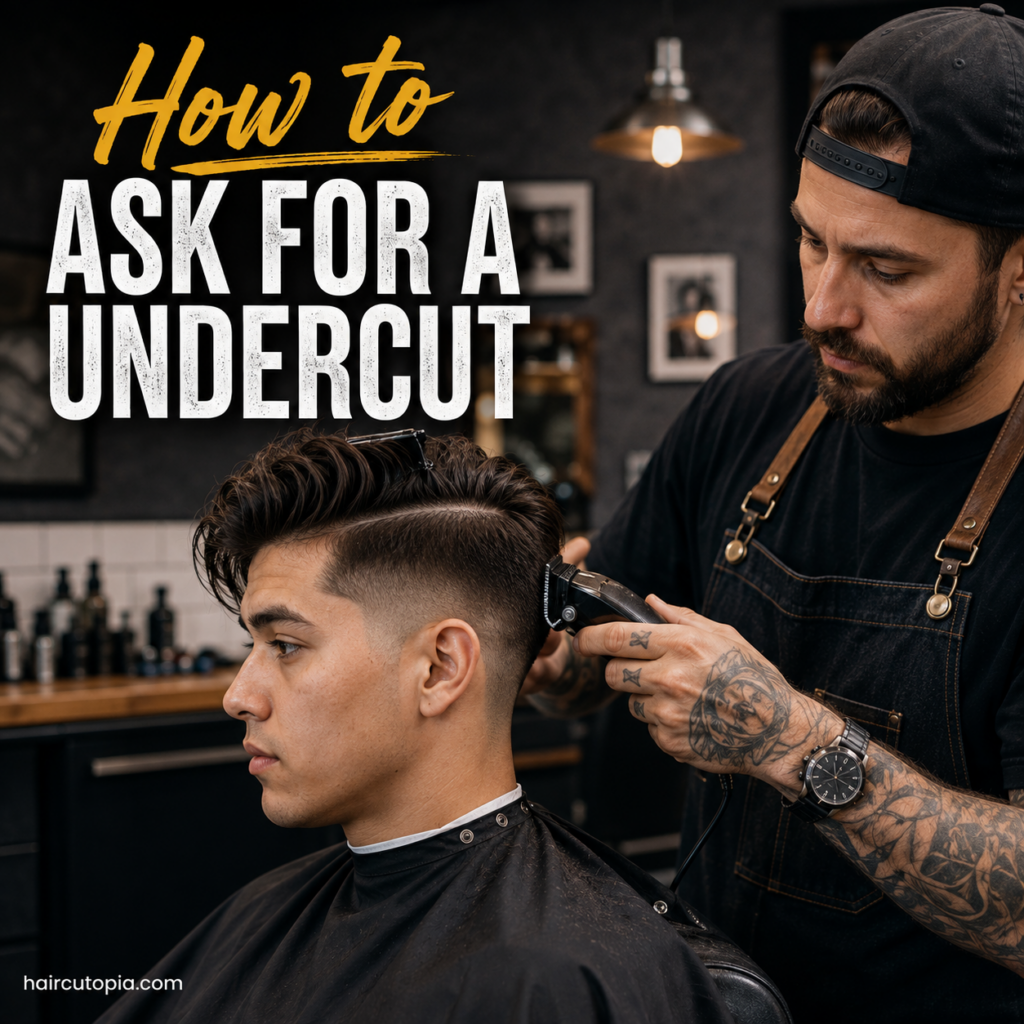
Pompadour With an Undercut
An undercut creates a more abrupt separation between the long top and short sides rather than gradually blending the two together.
Ask your barber for an undercut pompadour if you specifically want that disconnected appearance.
If you aren’t sure whether you want a fade or undercut, show your barber a reference photo instead of trying to choose based solely on terminology.
Know How Short You Want the Fade
If you’re getting a faded pompadour, don’t stop at saying you want a fade.
Tell your barber how short you want it to go.
Common options include:
- Skin or bald fade
- Very short clipper fade
- Longer, softer fade
- Low, mid, or high fade
A skin fade takes the shortest portion down to the skin. That’s considerably different from a fade that begins with some visible hair remaining.
If you don’t like seeing scalp, say so.
Something as simple as “I want a low fade, but don’t take it all the way down to skin” can prevent a major misunderstanding.
Ask for the Right Texture on Top
Texture affects both the appearance of the haircut and how it behaves when you style it.
A highly polished pompadour usually benefits from a more controlled shape. A modern textured pompadour can be cut to encourage separation and movement.
If you prefer a natural finish, tell your barber:
“I want some texture through the top so I can style it loosely rather than having it look too slick.”
For a cleaner style, you might say:
“I want the top to look smooth and structured when it’s styled back.”
Your hair type matters here, so your barber may adjust the technique based on whether your hair is straight, wavy, curly, fine, or particularly thick.
Decide What You Want Around the Neckline and Sideburns
These details don’t define the pompadour, but they influence how finished the haircut looks.
Depending on the cut, you may want the neckline:
- Naturally tapered
- Rounded
- Squared
- Faded into the skin
Your sideburns can also be tapered, faded, or kept more traditional.
If you’re getting a fade, these areas will usually be incorporated into the fade naturally. With a classic pompadour, however, it’s worth discussing how you want the edges finished.
Bring a Reference Photo
A reference photo is one of the easiest ways to communicate with your barber.
Haircut terminology isn’t perfectly standardized. Your idea of a “modern pompadour” could be quite different from someone else’s.
A photo removes much of that ambiguity.
Ideally, choose a reference showing:
- A similar hair type to yours
- A clear view of the top
- Visible sides and fade height
- Approximately the amount of volume you want
- A realistic style you would actually wear
You can also bring multiple photos.
For example, you might like the top from one haircut but prefer the fade from another. Show both and explain exactly which elements you want to combine.
Consider Your Hair Type Before Choosing a Pompadour
The basic idea of a pompadour can work with many hair types, but the finished result won’t look identical on everyone.
Straight Hair
Straight hair can create a clean, defined pompadour and is often relatively easy to direct backward.
Fine straight hair may need lightweight volumizing products to keep the front elevated without weighing it down.
Thick Hair
Thick hair can create impressive volume, but excessive weight can make the hairstyle difficult to control.
Your barber may need to remove some bulk while preserving enough density to maintain the shape.
Avoid automatically asking for aggressive thinning. The goal is manageable volume, not removing so much hair that the pompadour loses its structure.
Wavy Hair
Natural waves can give a pompadour extra movement and texture.
Instead of trying to make every strand perfectly straight, you can ask your barber to work with your natural pattern for a looser finish.
Curly Hair
A curly pompadour can have a distinctive shape with plenty of natural volume.
Tell your barber whether you want to emphasize your curls or create a more controlled silhouette. Showing a reference featuring a similar curl pattern is especially helpful.
Classic vs. Modern Pompadour: Know the Difference
One of the biggest decisions is whether you want a traditional or contemporary interpretation.
Classic Pompadour
A classic pompadour generally has:
- More length through the sides
- Softer transitions
- Substantial volume on top
- A smoother, polished finish
- Less exposed scalp
This is the direction to take if you’re drawn to vintage pompadour styles.
Modern Pompadour
A modern pompadour commonly features:
- Shorter sides
- A taper or fade
- Greater contrast
- More texture
- A slightly looser finish
There are plenty of variations between these two extremes, so you don’t have to commit completely to either look.
What Not to Say to Your Barber
Some requests are simply too vague to reliably produce the result you’re picturing.
Try not to rely exclusively on phrases such as:
- “Just give me a pompadour.”
- “Short on the sides, long on top.”
- “Give me a regular fade.”
- “Make it look like this, but different.”
- “Do whatever you think.”
Giving your barber some creative freedom is perfectly fine. But if there are things you definitely don’t want—such as a skin fade, disconnected sides, or significant length removed from the top—say that before the haircut begins.
A Simple Pompadour Barber Request
If you want an easy script to use at your appointment, try something along these lines:
“I’d like a pompadour with the front left long enough to get some height and style backward. Keep some texture through the top. I’d like a low taper on the sides and back, but I don’t want it taken down to skin.”
For a more modern version:
“I’d like a textured pompadour with plenty of length in the front and a mid fade on the sides. Keep enough weight on top that I can get volume, but remove some bulk so it’s easier to style.”
Those requests give the barber considerably more information than the haircut name alone.
Ask Your Barber How to Style It
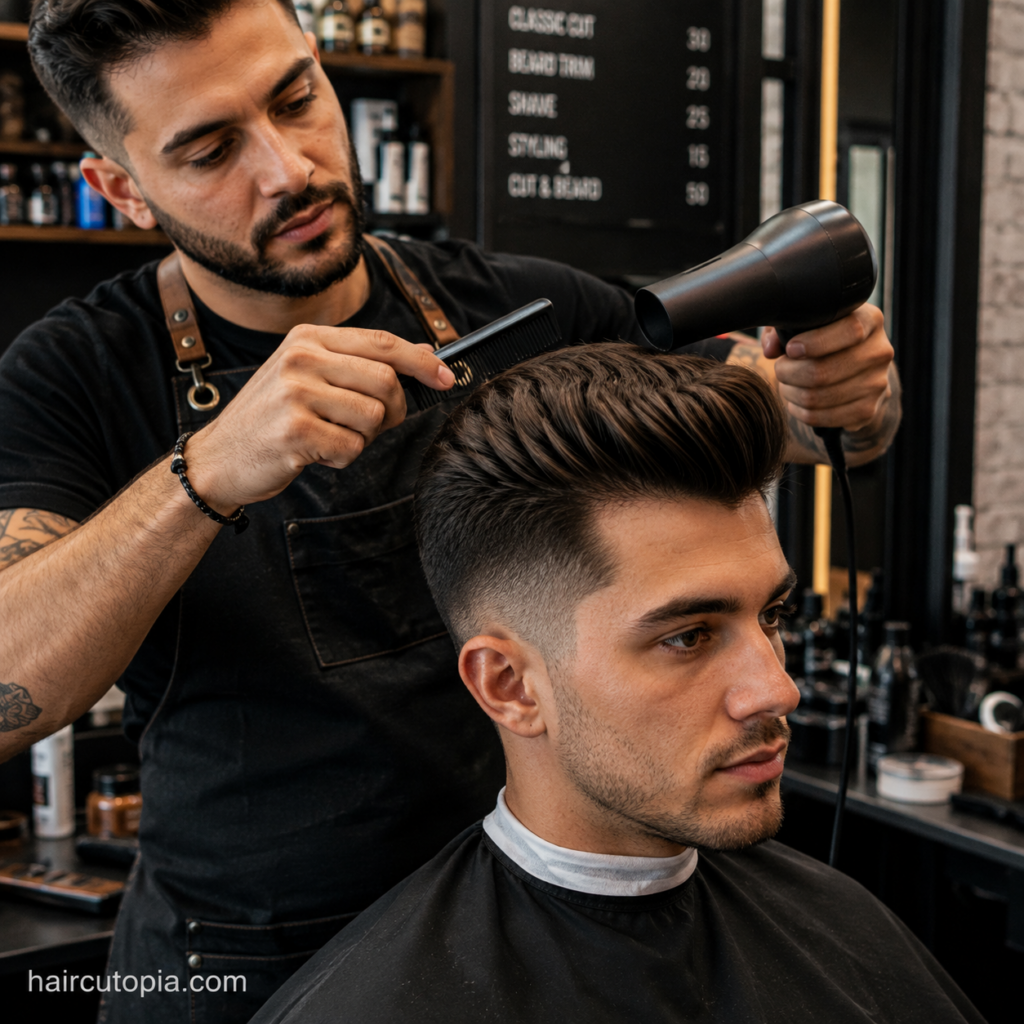
Before leaving the chair, ask your barber to show you how they styled your hair.
Pay attention to:
- How damp your hair is when styling begins
- Whether a pre-styler is used
- The direction of blow-drying
- How the front is lifted
- How much finishing product is applied
- Whether the product is worked from the back toward the front
The haircut itself is only part of achieving a pompadour. Your styling technique will determine whether you can recreate the same look the next morning.
How to Style Your New Pompadour at Home
The exact routine depends on your hair, but a basic approach looks like this:
- Start with clean or slightly damp hair.
- Apply a small amount of pre-styling or volumizing product if needed.
- Use a blow dryer while directing the hair upward and backward.
- Concentrate on creating lift at the front.
- Work a small amount of pomade, clay, paste, or styling cream through the hair.
- Shape the front upward and back.
- Finish with your fingers for texture or a comb for a cleaner appearance.
Start with less product than you think you need. Adding more is easy; removing too much product usually means washing your hair and starting again.
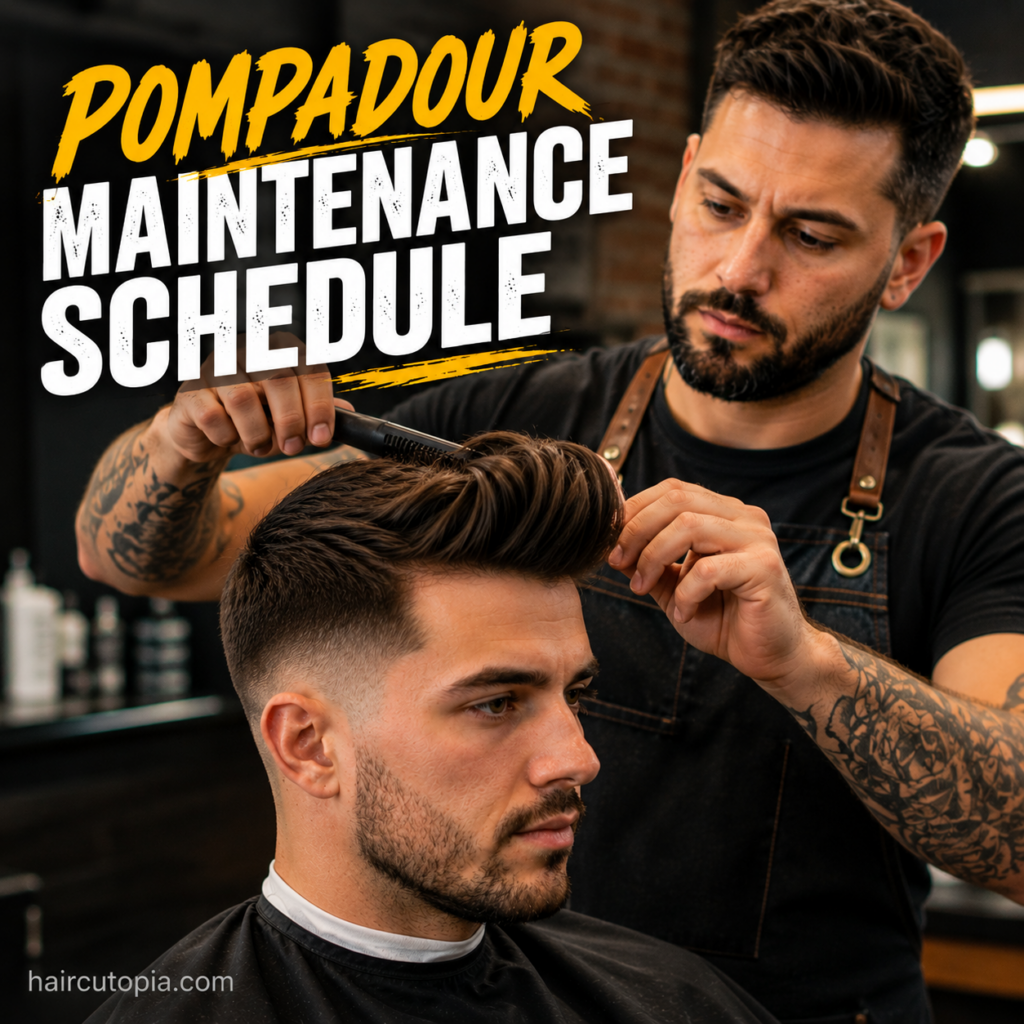
How Often Should You Get a Pompadour Cut?
How frequently you need a haircut depends heavily on the sides.
A pompadour with a tight fade may begin losing its crisp appearance within a couple of weeks. A longer taper or classic scissor-cut version can usually grow out more gracefully.
As a general starting point:
- Tight fades: around every 2–3 weeks
- Softer fades or tapers: around every 3–4 weeks
- Longer classic styles: around every 4–6 weeks
Your personal schedule may be different depending on how quickly your hair grows and how sharp you prefer the haircut to look.
Common Mistakes When Asking for a Pompadour
Even a good reference photo can lead to disappointment if important details aren’t discussed.
Asking for the Sides Too Short
A dramatic skin fade looks great with some pompadours, but it isn’t easy to undo.
If you’re unsure, start slightly longer. Your barber can always take more hair off.
Cutting Too Much From the Front
The front creates the characteristic height of the pompadour.
Removing too much length can make it difficult to achieve the volume you wanted.
Ignoring Your Natural Hair
A reference photo is inspiration, not a guarantee that your hair will behave exactly the same way.
Hair density, growth patterns, texture, cowlicks, and your hairline can all influence the finished style.
Forgetting About Daily Styling
A large, perfectly shaped pompadour generally requires more effort than a short textured version.
Be realistic about how much time you’re willing to spend blow-drying and styling your hair each morning.
If you prefer a quick routine, tell your barber. They may be able to recommend a lower-volume or more textured version that’s easier to maintain.
Questions to Ask Your Barber
A good haircut can be a conversation rather than a one-way request.
If you’re trying a pompadour for the first time, consider asking:
- Do I have enough length for this style?
- Will this work with my hair texture?
- How much length should we leave in the front?
- Would a taper or fade suit this shape better?
- What fade height would work with my head shape?
- Should any bulk be removed from the top?
- What product would work best with my hair?
- How should I blow-dry it?
- How often should I come back for maintenance?
An experienced barber can adapt the general style to your actual hair rather than simply copying a photograph.
Final Thoughts
The best way to ask for a pompadour is to describe the haircut rather than relying on the name alone.
Tell your barber how much length you want on top, how much volume you’re aiming for, how short you want the sides, whether you want a fade or taper, and whether you prefer a polished or textured finish. Then show a reference photo whenever possible.
You don’t need to speak like a barber or memorize clipper terminology. Clear descriptions such as “keep the front long,” “don’t take the fade down to skin,” or “I want enough texture to wear it naturally” are often more useful.
Once you and your barber agree on the shape, the final piece is learning how to style it yourself. Get those two things right, and maintaining a pompadour becomes much easier.