How to Ask for a Pompadour

Barber styling a client's pompadour haircut
Knowing how to describe the length, fade, volume, and finish can help your barber create the pompadour you want.

The pompadour is one of those hairstyles that can look completely different depending on how it’s cut. It can be clean and classic, loose and textured, paired with a sharp skin fade, or worn with enough length on the sides to give it an old-school feel.

That flexibility is part of what makes the style so popular. It can also make ordering one at the barbershop a little tricky.

Simply sitting down and saying, “Give me a pompadour,” leaves quite a bit up to the barber. How high should the top be? How short should the sides go? Do you want a fade? Should the finish look polished or natural?

You don’t need to know professional barber terminology to get the haircut you want. You just need to communicate a few important details clearly.

This guide explains how to ask for a pompadour, what to tell your barber, and which decisions to make before the clippers come out.

Continue reading “How to Ask for a Pompadour”
Crew Cut Maintenance Schedule

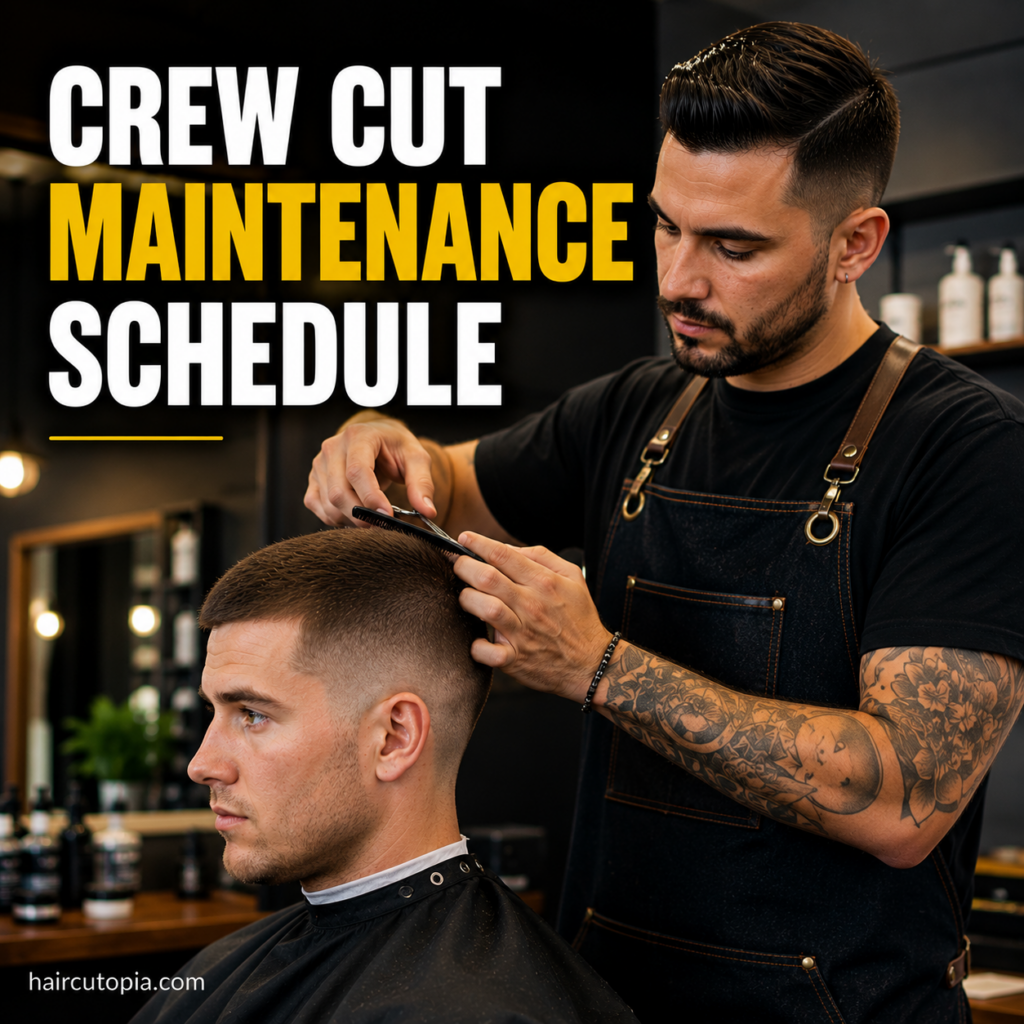
Barber trimming a client’s crew cut as part of regular haircut maintenance
Regular trims every few weeks help maintain the clean shape, fade, and proportions of a crew cut.

A crew cut doesn’t require much daily work, but timing matters if you want to keep that freshly cut shape.

The tricky part is that different parts of the haircut don’t grow out at the same visual pace. Your hair is growing everywhere, of course, but you’ll usually notice it first around the fade, sideburns, ears, and neckline. Meanwhile, the top may still look perfectly fine.

That’s why a good crew cut maintenance schedule isn’t simply “get a haircut every two weeks.” Your ideal routine depends on how short you wear it, whether you have a fade or taper, how quickly your hair grows, and how sharp you like your haircut to look.

For most people, a full trim every two to four weeks works well. Between appointments, a few quick grooming habits can keep things under control.

Here’s a practical crew cut maintenance schedule you can adjust to your haircut and lifestyle.

Continue reading “Crew Cut Maintenance Schedule”

How to Style a Crew Cut

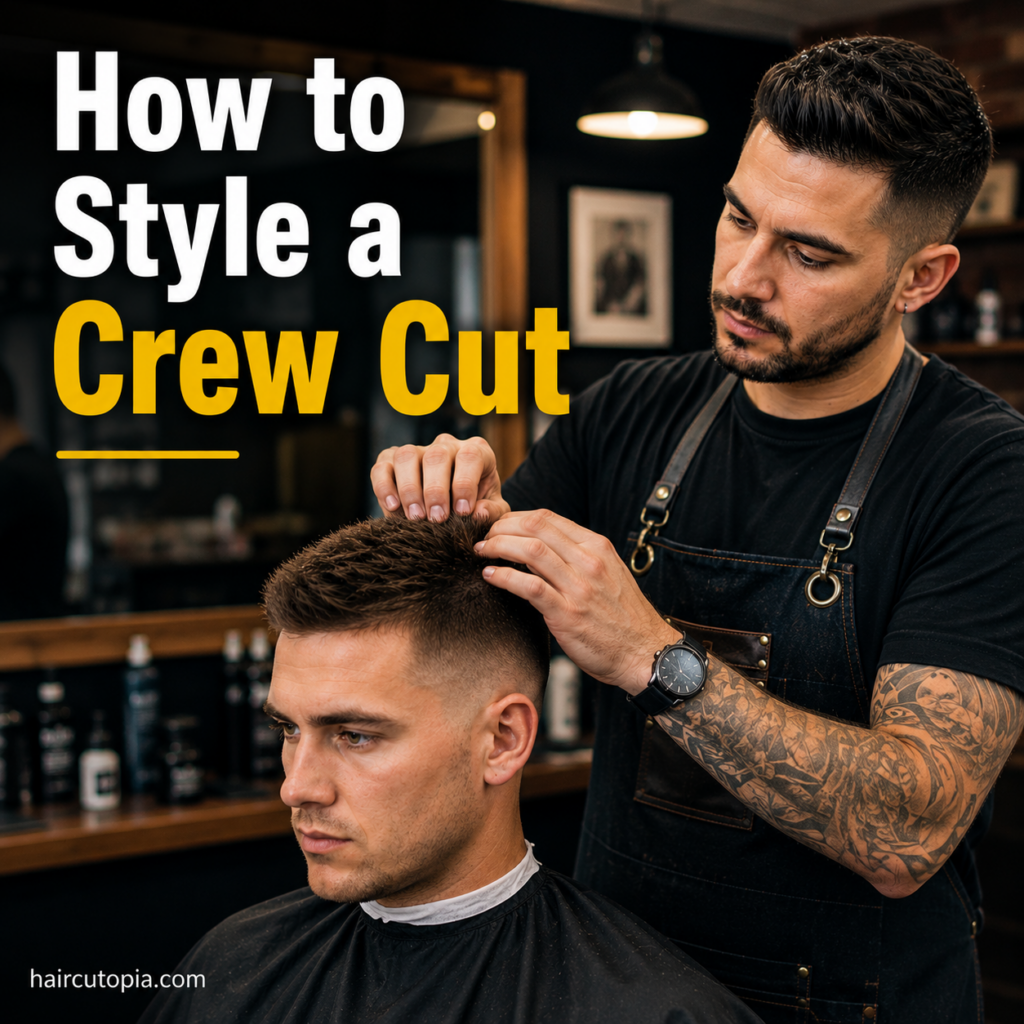
Barber styling a client’s textured crew cut with faded sides
A crew cut can be styled with subtle texture and lift while keeping its clean, low-maintenance shape.

A crew cut is designed to be easy. For some versions, styling can be as simple as running your fingers through your hair and heading out the door.

But if you leave a little more length on top, there’s plenty you can do with it.

A crew cut can look neat and professional, messy and textured, brushed forward, or slightly lifted at the front. The trick is working with the short length instead of piling on styling products meant for much longer hair.

Most of the time, you only need a small amount of product and a minute or two in front of the mirror.

Here’s how to style a crew cut, which products work best, and how to adjust your routine for different hair types and crew cut lengths.

Continue reading “How to Style a Crew Cut”

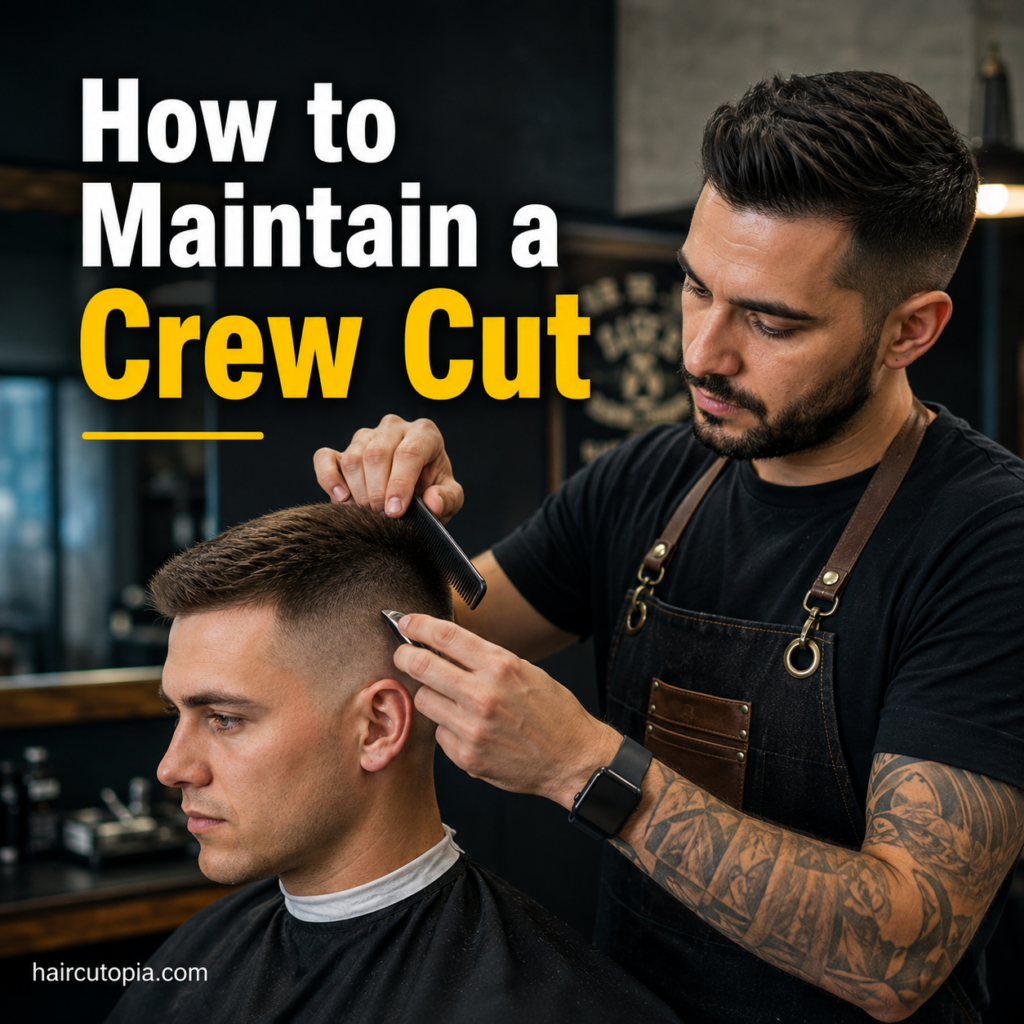
How to Maintain a Crew Cut

Barber maintaining a client’s crew cut with a clean fade and textured top
Regular trims and simple grooming help keep a crew cut looking clean, sharp, and well-shaped between barber visits.

A crew cut is about as low-maintenance as men’s haircuts get, but low-maintenance doesn’t mean no maintenance.

The short sides that make a fresh crew cut look so clean are also the first areas where new growth becomes noticeable. After a couple of weeks, a sharp fade can soften, the neckline starts filling in, and the longer hair on top may stop sitting quite as neatly as it did when you left the barbershop.

Fortunately, keeping a crew cut looking good doesn’t require a complicated grooming routine. Regular trims, basic washing, occasional styling, and a little attention to the neckline and sides are usually all it takes.

Here’s how to maintain a crew cut between barber visits, including how often to get it trimmed, how to style it, and what you can safely clean up at home.

Continue reading “How to Maintain a Crew Cut”

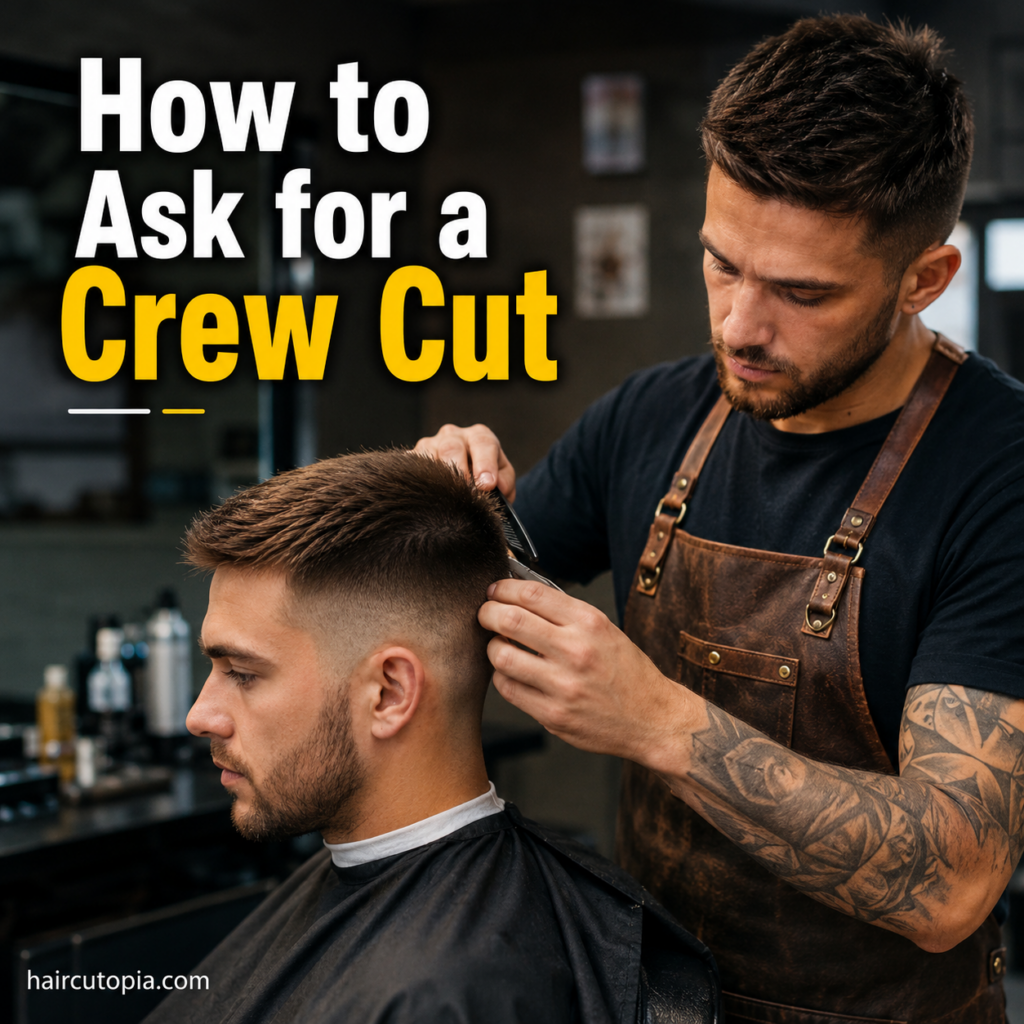
How to Ask for a Crew Cut

Barber cutting a client's crew cut in a modern barbershop
A crew cut can be customized with different lengths, fades, tapers, and texture to suit your preferred style.

The crew cut is one of those hairstyles that sounds simple until you sit in the barber chair and realize there are quite a few ways to wear one. You can go short and military-inspired, leave extra length on top for texture, pair it with a fade, or keep the sides slightly fuller for a more traditional look.

That makes knowing how to ask for a crew cut surprisingly important.

Simply telling your barber, “Give me a crew cut,” will usually get you somewhere close. But a few extra details can make the difference between a haircut you tolerate and one that looks exactly the way you pictured it.

Here’s what to tell your barber, what clipper lengths to consider, and how to choose a crew cut that works with your hair and face shape.

Continue reading “How to Ask for a Crew Cut”

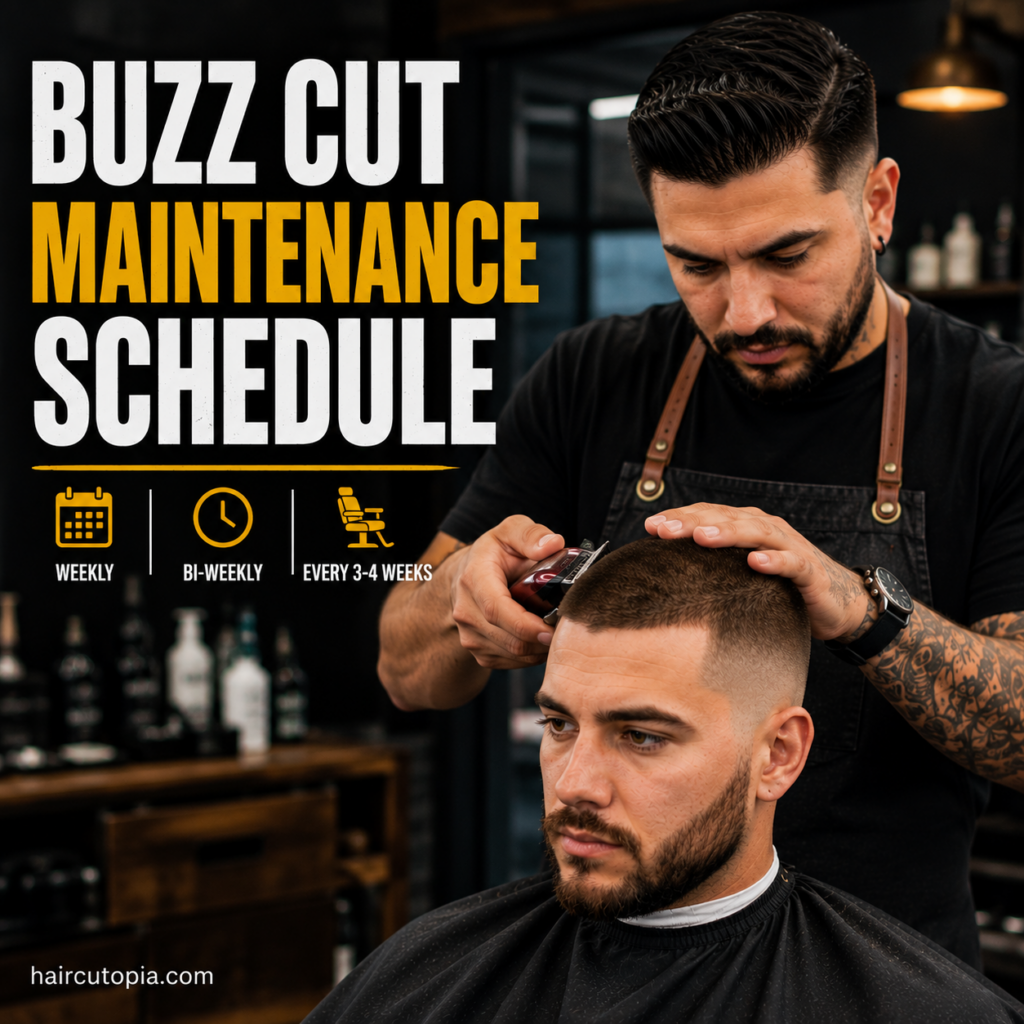
Buzz Cut Maintenance Schedule

Barber trimming a buzz cut as part of a regular maintenance schedule
Most buzz cuts benefit from a trim every two to four weeks, while shorter cuts and skin fades may need more frequent touch-ups.

A buzz cut may be one of the easiest haircuts to live with day to day, but keeping it looking freshly cut is another story.

When your hair is only a fraction of an inch long, even a week of growth can make a noticeable difference. A skin fade starts losing contrast, a sharp lineup becomes softer, and an even buzz cut gradually takes on a fuller shape.

So, how often should you actually get a buzz cut?

For most people, a good buzz cut maintenance schedule falls somewhere between every two and four weeks. Very short cuts and skin fades may need attention sooner, while longer, uniform buzz cuts can often go considerably longer without looking untidy.

Here’s how to find a maintenance schedule that fits your haircut, hair growth, and tolerance for a little grow-out.

Continue reading “Buzz Cut Maintenance Schedule”

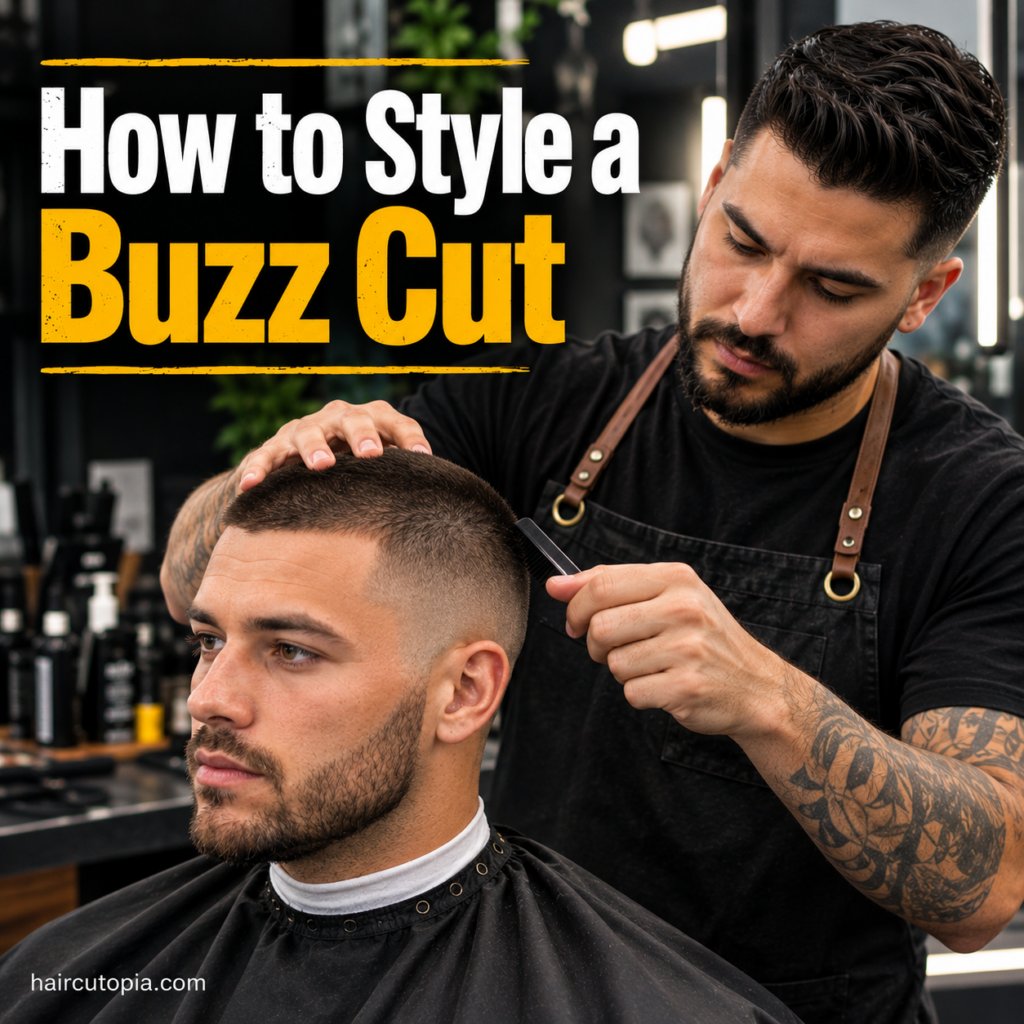
How to Style a Buzz Cut

Barber styling a client's buzz cut in a modern barbershop
A buzz cut needs minimal styling, but the right grooming techniques can add texture and keep the haircut looking sharp.

A buzz cut doesn’t exactly look like a hairstyle that needs much styling. That’s part of its appeal. You can get out of bed, run a hand over your hair, and be ready to go.

But “buzz cut” covers a much wider range of lengths than many people realize.

A very short #1 buzz cut may need almost no styling, while a #4, #5, or longer buzz cut can have enough hair to show texture, change direction, or develop a slightly messy appearance. Add a fade, lineup, beard, or textured top, and there are plenty of ways to change the overall look.

The trick is knowing when to leave your buzz cut alone and when a little styling actually makes it look better.

Here’s how to style a buzz cut without making one of the easiest men’s haircuts unnecessarily complicated.

Continue reading “How to Style a Buzz Cut”

How to Maintain a Buzz Cut

Barber trimming a client's buzz cut with clippers
Regular trims and simple scalp care can keep a buzz cut looking clean and fresh between barber visits.

A buzz cut is about as low-maintenance as hairstyles get, but low-maintenance doesn’t mean no maintenance.

Because the hair is so short, even a little growth can change the shape of the cut. A crisp fade starts to soften, the neckline grows out, and a uniform buzz can begin looking uneven faster than you might expect.

The good news is that maintaining a buzz cut is simple. Keep it trimmed on a regular schedule, take care of your scalp, and use a few basic grooming habits to keep it looking clean between cuts.

Here’s how to maintain a buzz cut without turning an easy haircut into a complicated routine.

Continue reading “How to Maintain a Buzz Cut”

How to Ask for a Buzz Cut

Barber giving a client a buzz cut in a modern barbershop
Knowing your preferred length, guard number, fade, and hairline makes it easier to ask your barber for the buzz cut you want.

A buzz cut sounds like one of the simplest haircuts you can order. After all, the hair is short, the clippers do most of the work, and there usually isn’t much styling involved.

But asking for “a buzz cut” alone leaves quite a bit open to interpretation.

Buzz cuts can be extremely short or leave enough length to show texture. They can be the same length all over, paired with a fade, tapered around the edges, or finished with a sharp lineup. The difference between a haircut you love and one that feels much shorter than expected often comes down to a few details you give your barber before the clippers turn on.

If you’re not sure what to say, here’s how to ask for a buzz cut and communicate exactly what you want.

Continue reading “How to Ask for a Buzz Cut”

Taper Fade Maintenance Schedule: How Often Should You Get a Touch-Up?

Barber refreshing a client's taper fade during a maintenance appointment
Regular taper fade touch-ups can keep the temples, sideburns, and neckline looking clean between full haircuts.

A taper fade can still look good weeks after a haircut, but it won’t look exactly the same as it did when you stepped out of the barber’s chair.

The shortest sections around the temples, sideburns, and neckline begin showing growth first. Sharp edges soften. The transition becomes less noticeable. Eventually, what was once a crisp taper starts blending into the rest of your hair.

So, how often should you get it touched up?

For most people, a taper fade maintenance schedule of about every two to three weeks works well. Someone who wants an extremely fresh appearance may visit the barber more often, while a person who prefers a natural grow-out can wait three or four weeks—or simply get the taper refreshed during a regular haircut.

The right schedule depends on your haircut, hair growth, lifestyle, and how sharp you want the fade to look.

Continue reading “Taper Fade Maintenance Schedule: How Often Should You Get a Touch-Up?”